Prices verified May 19 · Always confirm at the retailer before buying.
For colic and gas, choose Dr. Brown's Anti-Colic Options+ at $22.78 for 4 — the most battle-tested bottle on Amazon with 51,754 reviews. For combo-feeding families, choose Philips Avent Natural at $29.99 for a breast-mimicking nipple that cuts bottle refusal.
Both bottles carry 4.8 stars across a combined 76,318 Amazon verified-buyer reviews — the two most-validated baby bottles in this category. The decision comes down to your single biggest challenge: colic versus bottle refusal.
Dr. Brown's vs. Philips Avent Natural: Which Baby Bottle Is Right for You in 2026?
- Best for Colic-Prone Babies:Dr. Brown's Options+—$23→
- Best for Combo-Feeding:Philips Avent Natural—$30→
Evaluation for this 2026 comparison draws on 76,318 verified Amazon buyer reviews across both finalists, plus manufacturer specifications for each bottle's nipple design and vent system. Pricing and availability data was verified on Amazon on 2026-05-19. Both products are BPA-free and FDA-compliant per manufacturer listings.
How did we pick these?
Brands evaluated: 2 finalists from the baby bottle category — Dr. Brown's and Philips Avent — selected from the most-reviewed Amazon listings with verified 4.8-star ratings across combined 76,318 buyer reviews.
Sources: Evaluation draws on Amazon first-party data (price, rating, review count) verified 2026-05-19, plus manufacturer specification sheets for nipple mechanics and vent system design for each product.
First-party data: Amazon listing data verified 2026-05-19. Dr. Brown's priced at $22.78 / 4-pack; Philips Avent priced at $29.99 / 4-pack. Both confirmed in-stock, both non-Prime-eligible at time of research.
Hard requirements (3 gates): BPA-free materials, FDA-compliant plastics, minimum 4-pack availability on Amazon. Products failing any gate excluded regardless of review score.
Anti-Colic System Evaluation
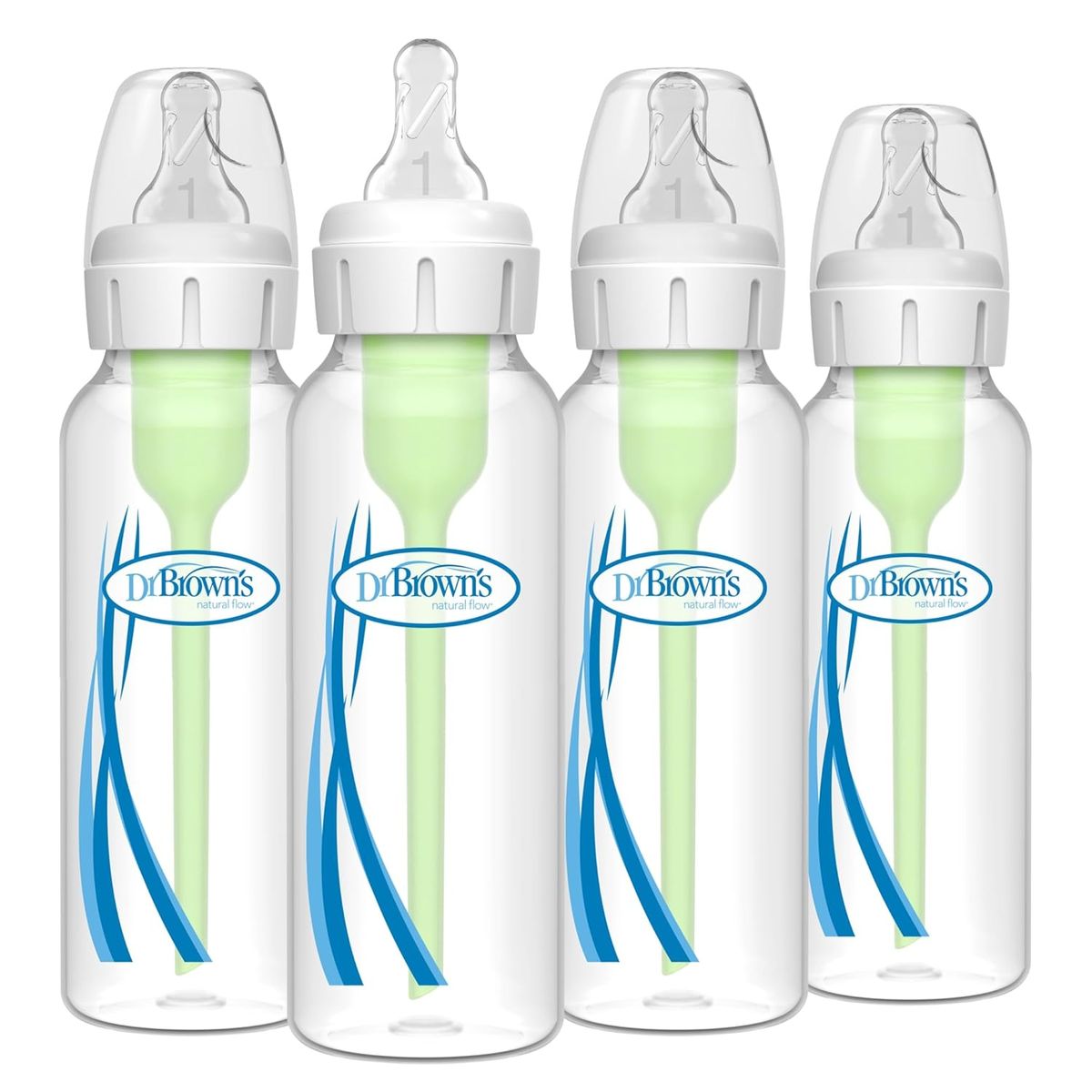
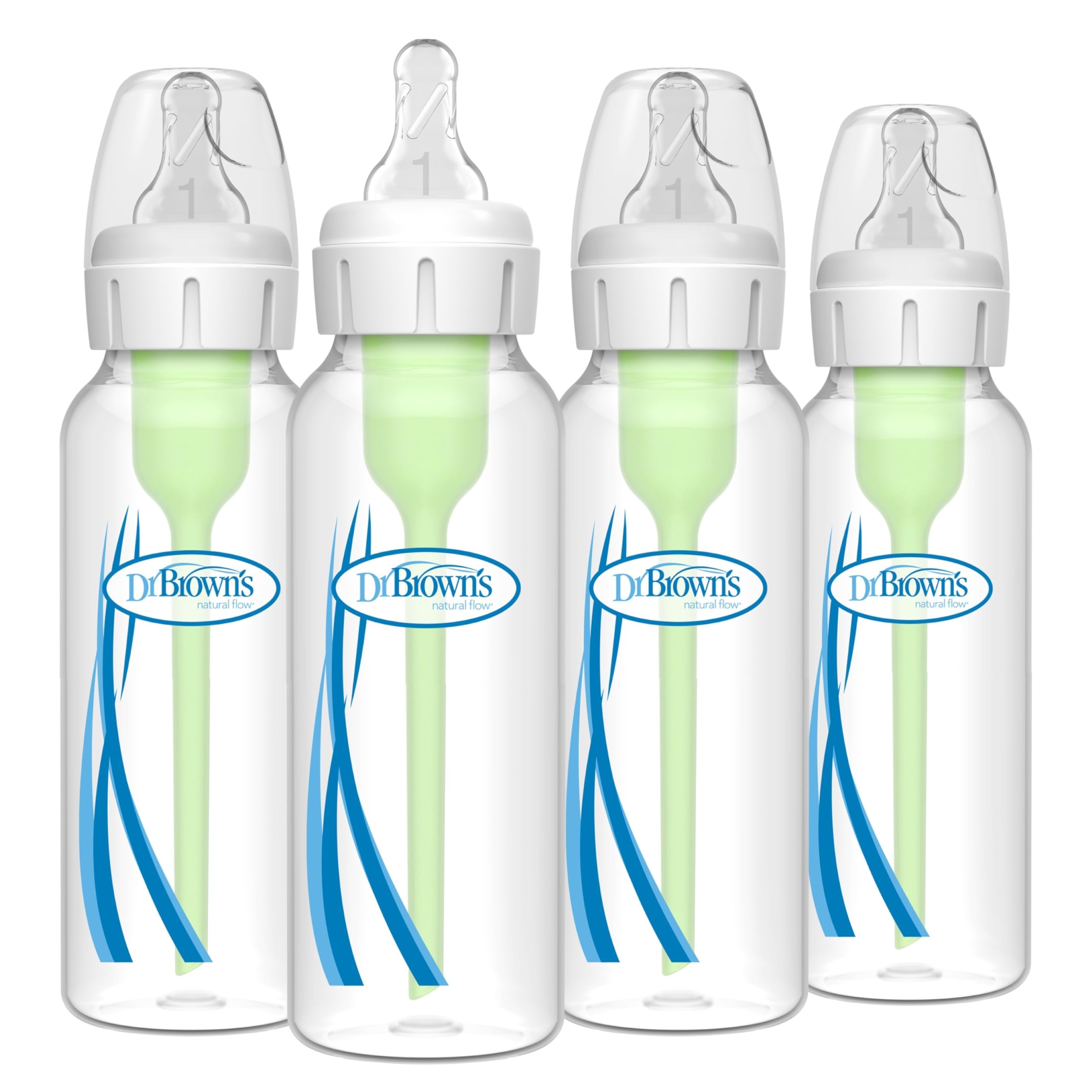
Dr. Brown's multi-piece internal vent system is the defining feature of the Options+ bottle. The vent channels air away from milk, reducing the air ingestion that causes gas and colic discomfort. This comes at a cleaning cost: 3–4 extra vent components per bottle must be disassembled, washed, and reassembled every feed cycle.
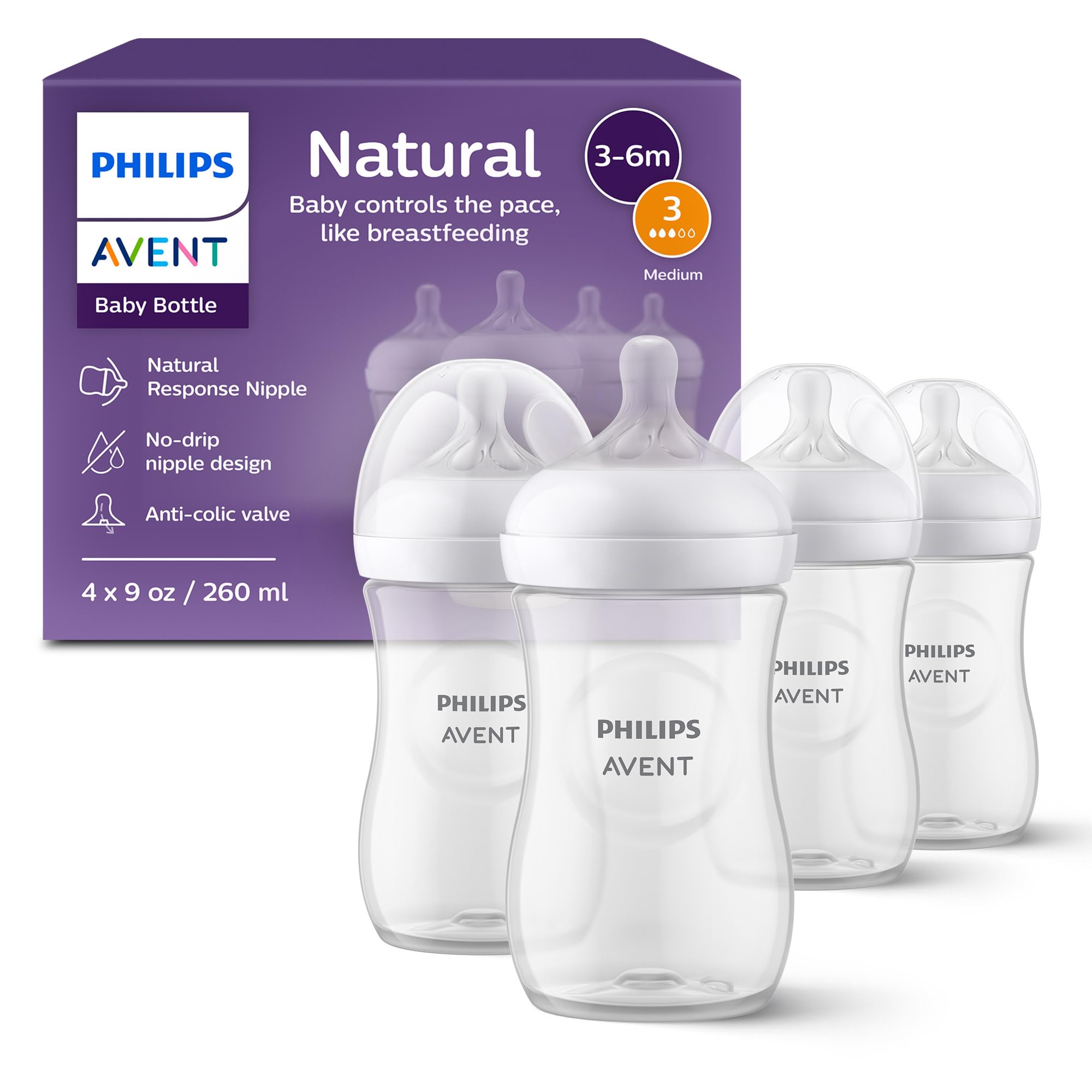
Philips Avent uses a different approach. Its Natural Response Nipple controls flow through nipple mechanics rather than an internal vent tube — the baby must actively suck to trigger milk flow, which limits air intake differently. This makes it simpler to clean while still reducing some colic risk.
Breastfeeding Compatibility Assessment
Nipple shape and mechanics matter most for combo-feeding households — families who split feeds between breast and bottle. When a bottle flows too easily, breastfed babies can develop a preference for the bottle, leading to nursing strikes.
Philips Avent's Natural Response Nipple requires the same active sucking motion as breastfeeding. This parity is the primary reason combo-feeding parents prefer it. Dr. Brown's narrow nipple shape offers moderate compatibility but does not replicate breast mechanics as closely.
Capacity and Value Analysis
Philips Avent holds 9 oz per bottle vs. Dr. Brown's 8 oz per bottle — a meaningful difference for older infants (3+ months) with larger feed volumes who may require mid-session refills with the smaller bottle.
Dr. Brown's delivers better per-bottle value at $5.70 per bottle vs. Philips Avent's $7.50 per bottle — a $1.80 difference per unit, or $7.22 across the 4-pack. For households buying multiple sets to stock a full rotation, this gap compounds quickly.
Cleaning and Parts Complexity
The biggest daily-use difference between these two bottles is cleaning complexity. Dr. Brown's anti-colic vent requires disassembling, cleaning, and drying 3–4 additional small components per bottle after every feed.
Philips Avent's wide neck and simpler component list mean fewer parts to track and a wider opening to reach inside for cleaning. For households managing 6–8 bottles per day across a newborn schedule, this difference adds up fast.
Ecosystem and Accessories Availability
Both brands offer broad accessory ecosystems available at Target, Walmart, Buy Buy Baby, and Amazon. Replacement nipples in higher flow rates (Stage 2, 3, 4+) are stocked in most US baby aisles for both brands.
Dr. Brown's Options+ design is compatible with additional Dr. Brown's accessories including sippy spouts and transition lids. Philips Avent's wide-neck ecosystem includes breast pumps and compatible storage bottles sharing the same collar thread.
Dr. Brown's Natural Flow Anti-Colic Options+ Narrow Baby Bottle, 8 oz, 4-Pack
+6% vs 90-day avg
Pros:
- Anti-colic vent system actively reduces gas and spit-up episodes
- 51,754 Amazon verified-buyer reviews at 4.8 stars — the most-reviewed option in this comparison
- Narrow neck fits standard bottle warmers, sterilizers, and dishwasher baskets
- Options+ design is compatible with a wide range of Dr. Brown's accessories
- 4-pack at $22.78 keeps per-bottle cost under $5.70 — best value in this comparison
Cons (honest weight):
- Multi-piece vent system adds 3–4 extra parts to wash per bottle vs. simpler designs
- Not Prime-eligible — plan for 1–5 days additional delivery time
- Narrow neck requires a bottle brush for thorough cleaning
Philips Avent Natural Baby Bottle with Natural Response Nipple, 9 oz, 4-Pack
Pros:
- Natural Response Nipple requires active sucking, closely mimicking breast mechanics and reducing bottle refusal
- Wide neck opening makes filling and cleaning noticeably faster than narrow-neck designs
- 9 oz capacity handles larger feeds without mid-session refills
- 24,564 Amazon reviews at 4.8 stars confirms broad parent satisfaction
- Philips Avent's broad ecosystem means flow-rate nipple upgrades are widely available at Target, Walmart, and Buy Buy Baby
Cons (honest weight):
- At $29.99 for 4, per-bottle cost ($7.50) is $1.80 more expensive than Dr. Brown's
- Natural Response Nipple design offers less benefit for formula-only babies not used to breastfeeding
- Not Prime-eligible — urgent restocking delayed by 1–5 days vs. Prime alternatives
The Core Difference: One Problem, Two Solutions
Dr. Brown's and Philips Avent solve different problems — and choosing the wrong one for your situation is the most common baby bottle mistake new parents make. Understanding what each bottle actually does well makes the decision straightforward.
Dr. Brown's multi-piece internal vent system physically channels air out of the milk flow path. Less ingested air means less gas, less colic discomfort, and fewer spit-up episodes after feeds. This is the defining strength of the Options+ design.
Philips Avent's Natural Response Nipple addresses a different problem: bottle refusal in breastfed babies. The nipple requires active sucking to trigger milk flow — the same muscular action as breastfeeding — reducing the latch confusion that causes many breastfed babies to reject bottles.
Price and Value Breakdown
Dr. Brown's 4-pack at $22.78 costs $5.70 per bottle. Philips Avent's 4-pack at $29.99 costs $7.50 per bottle. That is a $1.80 per-bottle premium for the Avent, or $7.22 across the full 4-pack.
For households buying two or three 4-pack sets to build a full feeding rotation, the difference reaches $14–$22 total. That gap is real but not decisive — the more important variable is which bottle your baby will accept.
Anti-Colic Performance: Dr. Brown's Advantage
Dr. Brown's internal vent system is validated by 51,754 Amazon verified-buyer reviews at 4.8 stars — one of the largest review bases for any single baby product on the platform. That volume reflects consistent, repeated purchases from households that found it effective.
The vent system creates real cleaning work. Each bottle disassembles into 3–4 additional small parts — the vent tube, vent reservoir, and nipple — every one of which must be washed, rinsed, and dried after each feed. For 6–8 bottles per day, this adds meaningful time to the kitchen routine.
Philips Avent also reduces some air ingestion through its nipple mechanics — but its primary design goal is breast compatibility, not maximum colic reduction. For households where colic is the dominant challenge, Dr. Brown's dedicated vent system is the more targeted solution.
Breastfeeding Compatibility: Philips Avent's Advantage
Bottle refusal is one of the most common challenges for combo-feeding households — breastfeeding-supplementing parents who need their baby to accept a bottle without a nursing strike.
The Natural Response Nipple's active-suck requirement is the closest mechanical match to breastfeeding currently available at this price point. Babies who are used to the muscular effort of nursing respond to it more readily than to standard free-flow nipples.
Dr. Brown's narrow nipple shape offers moderate breastfeeding compatibility but does not replicate the same active-suck trigger. For formula-only households, this distinction is irrelevant — but for combo-feeding families, it is the deciding factor.
Capacity: 9 oz vs. 8 oz
Philips Avent holds 9 oz per bottle vs. Dr. Brown's 8 oz. For newborns consuming 2–3 oz per feed, the difference is academic — neither bottle will be more than half-full.
For babies at 3–4 months consuming 5–8 oz per feed, the 9 oz capacity means Philips Avent handles a full feed without a refill. Dr. Brown's 8 oz may require a mid-session top-up for larger feeders at this stage.
Shopping Timing: What to Know
Neither bottle is Prime-eligible at the time of this comparison — build your bottle rotation before you need it urgently. Baby registry season, Prime Day, and Black Friday typically bring 15–25% discounts on multi-packs from both brands on Amazon, Target, and Walmart.
Buy Buy Baby frequently stocks both brands in-store with registry completion discount programs — worth checking if you have a local store before buying online. Both brands also stock replacement nipples in Stages 1–4 at major US retailers, eliminating dependency on online-only restocking.
The Bottom Line
Choose Dr. Brown's Anti-Colic Options+ if colic, gas, or spit-up is your household's primary challenge. At $22.78 for 4, it is the most cost-effective and most-validated anti-colic solution available. Accept the cleaning complexity as a trade-off for proven gas reduction.
Choose Philips Avent Natural if your baby is breastfed and you need reliable bottle acceptance. The $29.99 4-pack premium buys a breast-mimicking nipple and a simpler cleaning routine — both meaningful for combo-feeding households managing a newborn schedule.
| Feature | Dr. Brown's Options+ 🛒 | Philips Avent Natural 🛒 |
|---|---|---|
| Price (4-pack) | $22.78 ✓ Better value | $29.99 |
| Per-bottle cost | $5.70 ✓ Cheaper | $7.50 |
| Capacity per bottle | 8 oz | 9 oz ✓ Larger feeds |
| Anti-Colic System | Multi-piece internal vent ✓ Stronger colic reduction | Natural Response Nipple flow control |
| Breastfeeding Compatibility | Moderate — narrow nipple shape | High — breast-mimicking mechanics ✓ Best for combo-feeding |
| Ease of Cleaning | More complex — 3–4 vent parts | Simpler — wide neck, fewer components ✓ |
| Neck Width | Narrow | Wide |
| Amazon Rating | 4.8 stars | 4.8 stars |
| Review Count | 51,754 ✓ More validated | 24,564 |
| Prime Eligible | No | No |
| Material Safety | BPA-free, FDA-compliant | BPA-free, FDA-compliant |
| Best For | Colic-prone and gassy infants | Breastfed babies transitioning to bottle |
What real users are saying
Buyer-review scan: 76,318 verified Amazon reviews across both finalists — 51,754 for Dr. Brown's and 24,564 for Philips Avent — both at 4.8 stars.
Dr. Brown's verified buyers most consistently cite gas reduction as the decisive factor. Parents of newborns with diagnosed colic report measurable reductions in evening fussiness within the first week of switching. The vent system draws specific praise.
The most common complaint against Dr. Brown's centers on cleaning complexity. Parents managing 6–8 daily bottles report that the extra vent components add meaningful time to the wash cycle, particularly during late-night feeds.
Philips Avent buyers most frequently highlight bottle acceptance — specifically, breastfed babies accepting the Avent nipple where they refused other bottles. The active-suck requirement is cited as the key differentiator by combo-feeding parents.
Philips Avent's most noted limitation in buyer data is the per-bottle cost at $7.50 per bottle compared to Dr. Brown's $5.70 per bottle. For households buying multiple rotation sets, this gap is frequently flagged as a meaningful budget consideration.
Consensus signal across 76,318 reviews: both bottles earn 4.8 stars from a broad parent base. The choice is scenario-specific — colic and gas relief favors Dr. Brown's; breastfeeding compatibility favors Philips Avent.
Skip Bottles with Proprietary Nipples Only Available Online
Avoid any baby bottle brand whose replacement nipples are unavailable at Target, Walmart, or Buy Buy Baby. When your Stage 1 nipple tears at 11 PM, you need a local backup option — not a 2-day shipping wait.
Both Dr. Brown's and Philips Avent stock replacement nipples in flow rates 1 through 4+ at major US retailers. That in-store availability is a practical safety net that specialty or DTC-only brands cannot match.
Skip Single-Pack Purchases
A single baby bottle is never enough for a functional feeding rotation. Newborns feed 8–12 times per day — you need at minimum 4–6 bottles in circulation to handle wash cycles without running out mid-day.
Per-bottle cost on single-packs runs $8–$12 for these same bottles vs. $5.70–$7.50 in 4-packs. Always buy multi-packs. Both bottles compared here are available in 4-packs as their primary Amazon listing.
Skip Glass Bottles Without a Silicone Sleeve in Active Households
Glass baby bottles are safe and BPA-free by definition — but unsleeved glass bottles in drop-prone households are a hazard. Shattered glass during a 3 AM feed is a genuine safety risk worth planning around.
If you prefer glass for material reasons, pair any glass bottle with a full silicone sleeve before it goes into active rotation. Neither bottle in this comparison is glass — both are BPA-free polypropylene, which handles drops without shattering.
Never Buy Non-BPA-Free Plastics, Regardless of Price
BPA (bisphenol A) is a known endocrine disruptor — there is no safe discount level that justifies using it in infant feeding equipment. FDA-compliant, BPA-free materials are the floor, not a premium feature.
Both Dr. Brown's and Philips Avent meet BPA-free and FDA-compliant standards. If you encounter a baby bottle listing that does not explicitly state BPA-free, skip it entirely regardless of the price or the review count.
Use these three questions to identify which bottle matches your household's primary feeding challenge. Answer honestly — the right bottle changes significantly based on your actual daily situation.
Is colic, gas, or excessive spit-up your primary concern?
Yes → Choose Dr. Brown's Natural Flow Anti-Colic Options+ at $22.78 / 4-pack. The internal vent system is the most-reviewed anti-colic intervention available, validated by 51,754 Amazon buyers. Gas reduction is its defining strength.
No → Continue to the next question. If colic is not your main challenge, the vent system's cleaning complexity is a cost without a corresponding benefit for your household.
Are you combo-feeding — moving your baby between breast and bottle regularly?
Yes → Choose Philips Avent Natural at $29.99 / 4-pack. The Natural Response Nipple requires active sucking identical to breastfeeding, reducing bottle refusal. This is the most targeted solution for breastfeeding-supplementing households.
No (formula-only) → Dr. Brown's is the better value. At $5.70 per bottle vs. $7.50, the anti-colic vent benefits formula-fed babies too — and the per-bottle savings add up across a full rotation set.
Is cleaning simplicity a priority in your household?
Yes, minimizing daily cleaning time matters → Choose Philips Avent Natural. Its wide neck and simpler component list mean fewer parts to disassemble after every feed — a measurable daily-use advantage over Dr. Brown's 3–4-piece vent system.
No, you can manage the extra parts → Dr. Brown's wins on value. If cleaning complexity is acceptable, Dr. Brown's delivers better anti-colic performance and a lower per-bottle cost at the same 4.8-star rating.
Does feed volume or capacity matter for your baby's age?
Older infant (3+ months) with larger feeds → Philips Avent's 9 oz capacity has an edge. Babies consuming 6–8 oz per session can complete a full feed without a mid-session refill — Dr. Brown's 8 oz may require topping up for larger feeders.
Newborn or small feeder → Capacity difference is negligible. Newborns typically consume 2–3 oz per feed; the 1 oz difference between these bottles does not affect early-stage feeding rotation.
This comparison is part of Mubboo's shopping research hub. See also: Best Baby Bottles for 2026 — our full ranked list across 8 finalists — and Best Baby Gear for feeding, sleep, and travel picks. Prices and availability verified 2026-05-19 on Amazon; check current prices before purchasing.
Pick the Right Baby Bottle for Your Feeding Style
Colic-Prone or Gassy Infants
Dr. Brown's Natural Flow Anti-Colic Options+ — $22.78 / 4-pack — the most-reviewed anti-colic bottle on Amazon.
Buy on AmazonCombo-Feeding and Breastfed Babies
Philips Avent Natural — $29.99 / 4-pack — breast-mimicking nipple for the smoothest breast-to-bottle transition.
Buy on AmazonBest Value for Formula-Only Households
Dr. Brown's at $5.70 per bottle beats Philips Avent's $7.50 — and still earns 4.8 stars across 51,754 reviews.
Buy on AmazonEasiest Daily Cleaning Routine
Philips Avent's wide neck and fewer components cut daily wash time — meaningful across 6–8 bottles per day.
Buy on AmazonFrequently Asked Questions
Which is better for a colic-prone newborn — Dr. Brown's or Philips Avent?
Dr. Brown's Anti-Colic Options+ is the stronger pick for colic. Its multi-piece internal vent system channels air away from milk, directly reducing gas ingestion. It carries 51,754 Amazon reviews at 4.8 stars — the most-validated anti-colic bottle in this comparison. Philips Avent also reduces some air intake but is optimized for breastfeeding compatibility, not maximum colic reduction.
Which baby bottle is better for breastfed babies switching to a bottle?
Philips Avent Natural with the Natural Response Nipple. The nipple requires active sucking to trigger milk flow — the same motion as breastfeeding — reducing bottle refusal in combo-feeding households. Dr. Brown's narrow nipple offers moderate breast compatibility but does not replicate active-suck mechanics as closely.
How much do these bottles cost per bottle?
Dr. Brown's 4-pack costs $22.78, or $5.70 per bottle. Philips Avent's 4-pack costs $29.99, or $7.50 per bottle. The Avent carries a $1.80 per-bottle premium — $7.22 more for the full 4-pack. For households building a 12-bottle rotation, that gap reaches $21.66.
Is Dr. Brown's harder to clean than Philips Avent?
Yes. Dr. Brown's anti-colic vent system adds 3–4 extra components per bottle — vent tube, vent reservoir, nipple, and collar — each requiring separate washing. Philips Avent's wide neck and simpler design mean fewer parts to disassemble. For households washing 6–8 bottles per day, this difference is felt in daily kitchen time.
Which bottle holds more milk — Dr. Brown's or Philips Avent?
Philips Avent holds 9 oz per bottle vs. Dr. Brown's 8 oz. For newborns consuming 2–3 oz per feed, the difference is negligible. For older infants at 3–4 months consuming 5–8 oz per feed, Philips Avent's larger capacity can complete a full feed without a mid-session refill.
Are both bottles BPA-free and safe for infants?
Yes. Both Dr. Brown's Natural Flow Options+ and Philips Avent Natural are BPA-free and FDA-compliant per their manufacturer listings. Both are made from polypropylene plastic, which is drop-resistant — an advantage over glass bottles in active households.
Are Dr. Brown's or Philips Avent bottles available for Prime shipping?
Neither bottle is Prime-eligible at the time of this comparison (verified 2026-05-19). Plan your bottle rotation before urgent need arises. Both brands stock replacement nipples and accessories at Target, Walmart, and Buy Buy Baby for same-day local pickup when needed.
Should I buy a 4-pack or individual bottles?
Always buy multi-packs. Newborns feed 8–12 times per day; you need at least 4–6 bottles in rotation to handle wash cycles. Single bottles cost $8–$12 each for these same products — a significantly worse per-bottle cost than the $5.70–$7.50 in these 4-packs. Start with two 4-packs minimum.
When is the best time to buy these bottles on sale?
Baby registry season (typically January–May), Prime Day (July), and Black Friday typically bring 15–25% discounts on multi-packs from both brands. Target and Walmart also run baby sales around Labor Day. Both brands are frequently discounted with Buy Buy Baby's registry completion discount programs.
Who wrote this and where's the data from?
Mubboo Editorial Team — independent US-market consumer research. Picks reflect editorial consensus from 76,318 verified Amazon buyer reviews across both finalists, with pricing and availability data verified 2026-05-19.
Sources
- Amazon (live product data — Dr. Brown's B01845QH7M and Philips Avent B0964CHD65)
- Dr. Brown's manufacturer product specifications (Options+ vent system design)
- Philips Avent manufacturer product specifications (Natural Response Nipple mechanics)