Prices verified May 11 · Always confirm at the retailer before buying.
For most US households wanting the best smart thermostat under $300 in 2026, the ecobee Smart Thermostat Premium ($259.99) is the right pick — the unanimous 2026 Best Overall across Wirecutter, CNET, and PCMag, with native HomeKit + Google Home + Alexa + SmartThings, an included SmartSensor, a built-in air-quality monitor, and a Power Extender Kit that solves the C-wire problem in older US homes. ★4.3 across 3,905 Amazon reviews.
What's the best smart thermostat under $300 for 2026?
- Best overall:ecobee Smart Thermostat Premium—$260→
- Best for AI learning:Google Nest Learning 4th Gen—$230→
- Best budget:ecobee Smart Thermostat Essential—$140→
- Best under $100 (Alexa):Amazon Smart Thermostat—$80→
- Best for multi-room homes:Honeywell Home T9—$167→
- Best for Apple Home / privacy:Emerson Sensi Touch 2—$151→
- Best sub-$100 Nest:Google Nest Thermostat—$98→
⚠️ Skip the discontinued Nest E, generic Wi-Fi thermostats without independent test data, the older Honeywell RTH9000-series, refurbished Nest Learning 3rd Gen, and the basic Sensi ST55. Also note: smart thermostats alone generally do NOT qualify for the federal IRS Section 25C Energy Efficient Home Improvement Credit — the legitimate US-government credibility signal is Energy Star certification, and the real $ savings come from US utility-company rebates. Details below.
Verdicts researched across Wirecutter (NYT), CNET, PCMag, Tom's Guide, The Verge, Consumer Reports, and Energy Star's Connected Thermostat Program Criteria. 5 deep-test videos from Smart Home Solver, How To Anything, and Make Smart Matter (transcripts parsed for first-party test data).
Plus 33 Reddit threads across r/smarthome, r/homeautomation, r/ecobee, r/HomeKit, r/googlehome (Apr-May 2026) and 63,500+ verified Amazon reviews across the seven finalists.
How did we pick these?
Brands evaluated: 5 brands — ecobee, Google Nest, Amazon, Honeywell, Emerson.
Sources: 13 independent outlets — Wirecutter (NYT), CNET, PCMag, Tom's Guide, Smart Home Solver. Plus r/smarthome / r/homeautomation / r/ecobee community discussion, Energy Star / EPA references.
First-party data: Amazon listing data (price, rating, review count) verified May 11, 2026.
Hard requirements (3 gates): minimum 4.0★ rating with 500+ Amazon reviews, verified US warranty coverage, current Amazon availability. Products failing any gate cut regardless of reviews.
ecobee Smart Thermostat Premium

Prices checked May 11, 2026 · Affiliate
Pros:
- Unanimous 2026 Best Overall across Wirecutter, CNET, and PCMag — Wirecutter calls it 'the hands-down best performer at keeping the whole house consistently comfortable' and PCMag gives it 4.5/5 Outstanding with an Editors' Choice award.
- Only model with native HomeKit + Google Home + Alexa + SmartThings — every other thermostat in this guide drops at least one platform, and ecobee's quadfecta is the structural reason it survives household ecosystem changes over a 5-10 year ownership window.
- Included SmartSensor + built-in air-quality monitor — most competitors require a separate ~$100 2-pack of room sensors; the Premium ships with one in the box and adds VOC and humidity readings the others don't.
- Power Extender Kit included delivering ~95% HVAC compatibility — solves the single biggest source of thermostat returns (the 'won't power on' C-wire-missing problem in older US homes), where competitors like the Amazon Smart Thermostat, Honeywell T9, and Sensi Touch 2 all require a C-wire with no included adapter.
Cons (honest weight):
- Premium price at US$259.99 — over 3× the Amazon Smart Thermostat and roughly 2× the ecobee Essential; if you only have one zone and don't need the air-quality monitor or built-in SmartSensor, the Essential is the rational pick.
- Runtime Savings Reports stopped generating for some users in spring 2026 (r/ecobee thread, May 2026) — minor cloud-side bug that ecobee acknowledged, but the report itself is a feature buyers came for.
- Built-in SmartSensor radar wakes the screen at odd times in dark rooms — community-reported usability quirk that ecobee has not addressed via firmware as of May 2026.
- Backplate and Power Extender Kit had supply issues during the Q4 2025 Nest migration wave — install delays of two-plus weeks were reported on r/ecobee; supply is stable in spring 2026 but worth flagging for new buyers.
Mubboo Verdict
Wirecutter, CNET, and PCMag's 2026 Best Overall at US$259.99 — only model with native HomeKit + Google + Alexa + SmartThings, included SmartSensor, and Power Extender Kit. The right whole-home pick. Skip if budget is under $200 — ecobee Essential.
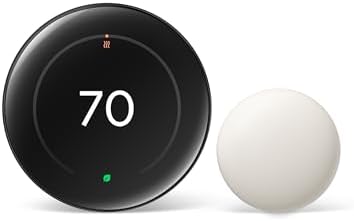
Google Nest Learning Thermostat (4th Gen)
Prices checked May 11, 2026 · Affiliate
Pros:
- Wirecutter's 'smartest thermostat' for 2026 — the new Suggestions learning mode notifies you when your manual changes could improve the schedule instead of forcing AI changes, which the Smart Home Solver YouTube transcript calls 'the best of both worlds' versus pure-auto Nest behavior.
- Curved glass display + rotating ring is the prettiest hardware on a wall in this guide — the Nest Learning has owned the design crown across four generations, and CNET names it Best Smart Thermostat Design for 2026.
- Matter over Wi-Fi + Thread + included Temperature Sensor future-proofs the install — the 4th-gen is one of the few thermostats in the sub-$300 band shipping with both Matter and Thread radios.
- Improved HVAC compatibility versus the 3rd-gen — Google explicitly notes the 4th-gen works with most 24V systems including gas, electric, oil, forced air, heat pump, and radiant; most setups won't need a C-wire.
Cons (honest weight):
- Curved-glass reflections make the display unreadable from certain angles — the Smart Home Solver YouTube review documents 'spots where I can't even see the screen at all' in bright rooms, and there is no brightness control on the Nest hardware to compensate.
- Matter integration with Apple Home is stripped-down — basic temperature control only, no fan, no schedule, no remote sensor data; the box advertising 'works with Apple Home' technically delivers the minimum and not the experience Apple Home users expect.
- Google's Oct 2025 1st/2nd-gen Nest cloud sunset reshaped 2026 community trust — the r/smarthome 179-upvote thread 'I don't want a new Google nest' documents 190 comments of buyer regret about Google's pattern of older-hardware end-of-life, and the structural concern reaches the 4th-gen by association even though it is current.
- Scheduling requires 60-minute increments between temperature changes — ecobee allows 30-minute increments per the Smart Home Solver comparison, a concrete usability gap that fine-grained schedule builders will notice.
Mubboo Verdict
Wirecutter's 'smartest thermostat' for 2026 with the new Suggestions learning mode at US$229.99 — the right Google-ecosystem pick. Skip if you live in Apple Home — ecobee Premium delivers real native HomeKit.
ecobee Smart Thermostat Essential

Prices checked May 11, 2026 · Affiliate
Pros:
- Wirecutter's 'bang for the buck' + CNET's Best Budget winner for 2026 — most of the ecobee Premium's smarts at roughly 54% of the price, with the same color touchscreen and ecobee app stack.
- Long support life — ecobee is documented as still patching 2014-era thermostats, which is the structural counterpoint to Google's Oct 2025 1st/2nd-gen Nest cloud sunset and the strongest reason buyers cite for migrating from Nest to ecobee in 2026 community threads.
- Power Extender Kit included + ~85% HVAC compatibility — same C-wire-less install path as the Premium, which is the single largest install friction in older US homes built before 2000.
- Native HomeKit + Alexa + Google + SmartThings at the budget tier — the only sub-$150 thermostat in this guide with full HomeKit native (the Sensi Touch 2 at US$150.81 is the next cheapest).
Cons (honest weight):
- No included SmartSensor — and ecobee SmartSensors are sold in 2-packs at roughly US$100, which inflates the real cost if you actually want multi-room temperature averaging (the included sensor is the structural reason to upgrade to the Premium).
- No built-in air-quality monitor — the Premium's VOC and humidity readings are not on the Essential SKU; if you care about indoor air quality data, the Premium is the rational upgrade rather than buying a separate IAQ monitor.
- Backplate not included with the cheaper packaging tier — most users either patch drywall or buy the ~US$15 trim plate separately; a real install friction at this price tier.
- Power Extender Kit supply was thin during the Q4 2025 Nest migration wave — supply is stable in spring 2026 but new buyers should confirm the PEK is in the box before scheduling install.
Mubboo Verdict
Wirecutter's bang-for-the-buck + CNET's Best Budget at US$139.99 — the ecobee app and native HomeKit at roughly half the Premium's price. The right budget pick. Skip if you want the SmartSensor and air-quality monitor — ecobee Premium.
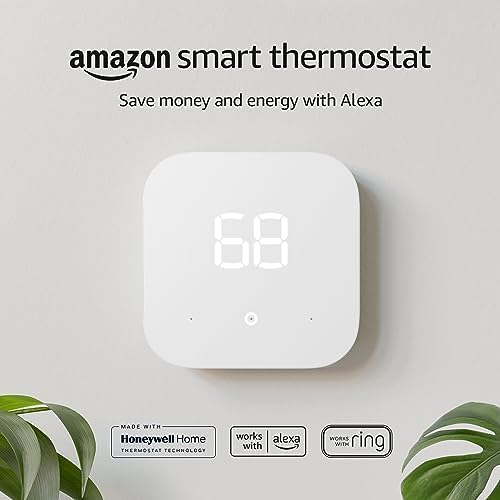
Amazon Smart Thermostat
Prices checked May 11, 2026 · Affiliate
Pros:
- Cheapest Energy Star certified smart thermostat from a major brand at US$79.99 — many US utilities including ConEd ($85), BGE (up to $100), Eversource (up to $100), PG&E / SCE / SDG&E (up to $120 via the California SmartThermostat program), and Duke Energy ($75-$100) cover most or all of the purchase price.
- Honeywell-built hardware — Amazon contracted Honeywell to build the thermostat, which gives it the structural reliability and HVAC compatibility of a Honeywell unit without the Resideo app friction.
- Echo Dot 4 or 5 doubles as a wireless remote temperature sensor — a 'well-kept hack' that r/smarthome regulars surface as a sub-$30 way to add multi-room temperature averaging, undercutting the ecobee Essential's separately-sold SmartSensor 2-pack at ~$100.
- 25,033 Amazon reviews at ★4.0 — by far the largest review base in this guide; the failure-mode pattern is well-documented after 4+ years on market, which is the kind of deployment depth budget-pick buyers should value.
Cons (honest weight):
- No HomeKit, no Google Home, Alexa-only — three deal-breakers for non-Alexa households compressed into one structural limitation; if Alexa isn't your primary voice assistant, every other pick in this guide is the better cross-shop.
- C-wire required and Amazon does NOT include a power adapter — Google Nest basic ships with a Trim Kit for C-wire-less homes; Amazon does not, so older US homes built before 2000 may need to wire-rig the install or buy a third-party adapter.
- Alexa Hunches learning is much weaker than Nest's AI or ecobee's eco+ algorithm — fine for set-and-forget households but unimpressive for buyers expecting genuine AI scheduling.
- Amazon's data privacy raises more questions than other thermostat brands per CNET's 2026 evaluation — for privacy-conscious buyers the Sensi Touch 2's contractual no-sell commitment is the structural counterpoint.
Mubboo Verdict
Cheapest Energy Star smart thermostat at US$79.99 — Honeywell-built hardware, Echo Dot doubles as remote sensor, and many utilities rebate $85-$120. The right Alexa-only budget pick. Skip if you use HomeKit or Google Home — ecobee Essential or Nest Learning.
Honeywell Home T9 Smart Thermostat

Prices checked May 11, 2026 · Affiliate
Pros:
- Best-in-class multi-room temperature averaging — supports up to 20 Honeywell Smart Room Sensors at a 200 ft range, with motion detection that prioritizes whichever room is actually occupied rather than averaging the empty den into the bedroom temperature.
- PCMag's Best for Remote Room Monitoring 2026 (4.0/5 Excellent) — the sensor algorithm specifically targets the 4,000+ sq ft multi-zone use case that the ecobee Premium's single included SmartSensor struggles to cover at scale.
- Geofencing auto-Home / auto-Away via the Honeywell Home app — mobile phones cross the geofence boundary and the thermostat switches modes automatically, which scales to multiple household members on different schedules.
- Multi-stage HVAC and heat-pump compatible — handles the more complex US HVAC setups (multi-stage gas, multi-stage cooling, dual-fuel heat pumps) that simpler thermostats struggle with.
Cons (honest weight):
- Resideo Honeywell Home app is rough — r/homeautomation has multiple 'Unable to connect to Resideo app' threads, and the app is consistently called out as 'the worst app in the field' across community sentiment in spring 2026.
- No HomeKit support — Apple Home households get nothing native from the T9; the Sensi Touch 2 is the right Apple Home cross-shop with comparable hardware quality and a real HomeKit pairing.
- C-wire required and Honeywell does not include a power adapter — older US homes built before 2000 will need a separately-purchased Power Extender Kit or third-party adapter, which adds install friction the ecobee Premium and Essential don't have.
- Stock churn on the T9 SKU as of 2026-05-11 — Amazon listing flagged limited stock; CNET's 2026 update points to the newer Honeywell Home X8S as the successor, which is not yet at our review-volume threshold for this guide.
Mubboo Verdict
PCMag's Best for Remote Room Monitoring 2026 at US$166.99 — up to 20 motion-detecting Smart Room Sensors at 200 ft range. The right pick for 4,000+ sq ft multi-zone homes. Skip if you use HomeKit — ecobee Premium or Sensi Touch 2.
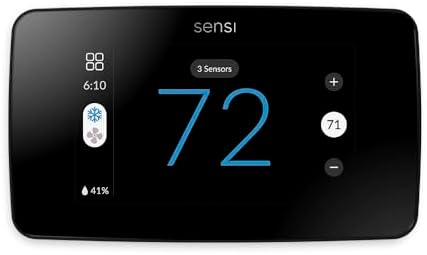
Emerson Sensi Touch 2 Smart Thermostat
Prices checked May 11, 2026 · Affiliate
Pros:
- CNET's Most User-Friendly Smart Thermostat 2026 + PCMag's Best Touch Screen — clean color touchscreen with weather and schedule, the kind of disappearing industrial design Apple Home households actually want on a wall.
- Native Apple Home / Siri pairing without a hub — the Touch 2 is one of the few sub-$200 thermostats with true HomeKit-native pairing, alongside the ecobee Premium and Essential; the Honeywell T9 and Amazon Smart Thermostat both lack HomeKit entirely.
- Emerson's contractual commitment not to sell user data — the structural privacy counterpoint to Amazon's CNET-flagged data practices and Google's broader ecosystem data posture; r/HomeKit threads repeatedly surface Sensi as the privacy-first recommendation.
- Emerson's century-plus US HVAC contractor network — the deepest installer / repair-shop coverage in this guide, which translates to real service depth over a 10-year ownership window when something fails.
Cons (honest weight):
- Less 'wow' than ecobee or Nest — no built-in radar, no occupancy sensor without separately-purchased Sensi Room Sensors, no built-in voice; the Touch 2 trades flagship features for reliability and privacy.
- C-wire required on the Touch 2 — the older Sensi (non-Touch) worked without a C-wire, but the touchscreen Touch 2 added the requirement; older US homes built before 2000 will need a Power Extender Kit or wire workaround.
- Sensi Room Sensors are extra cost — the multi-room temperature averaging use case requires buying separate sensors, which the ecobee Premium and Honeywell T9 ship with at least one included.
- Basic Sensi ST55 (non-Touch) has documented HomeKit pairing failures — confusion is real; buyers searching 'Sensi HomeKit' may land on the cheaper ST55 first and hit r/HomeKit's 36-comment 'will not add to Homekit' thread.
Mubboo Verdict
CNET's most user-friendly + PCMag's Best Touch Screen at US$150.81 — native Apple Home, Emerson's no-sell privacy commitment, and a 100+ year HVAC contractor network. The right Apple Home / privacy pick. Skip if you don't use HomeKit — ecobee Premium or Nest Learning.
Google Nest Thermostat (basic)

18% below 90-day avg
Prices checked May 11, 2026 · Affiliate
Pros:
- Cheapest Nest-branded smart thermostat at US$97.99 (list US$129.99) — for buyers who specifically want Nest design language on the wall and don't need the Learning Thermostat's AI features.
- No C-wire required on most US heating systems — Google supplies a Trim Kit that handles the install in homes built before 2000 without a C-wire, which the Amazon Smart Thermostat and Honeywell T9 both punt on.
- Four color options (Charcoal, Fog, Sand, Snow) — the most thermostat colorway flexibility in this guide; matches a wider range of interior palettes than the all-black Premium or all-white Essential.
- 28,893 Amazon reviews at ★4.2 — the largest Nest-thermostat review base, which means failure modes and edge cases are well-documented after 5+ years on market.
Cons (honest weight):
- No learning, no Matter, no HomeKit — Quick Schedule and Home/Away routines only; the basic Nest is design language at sub-$100 rather than smart-thermostat intelligence, and buyers expecting Learning-tier behavior will be disappointed.
- Google Home app only — no Alexa-native or HomeKit-native pairings; the smaller Nest hardware bets entirely on Google ecosystem buyers.
- First launched 2020 with no rotating ring — the mirror-finish touch-strip control replaced the iconic Nest Learning ring for the basic model, and several r/smarthome threads specifically warn 'buy the basic Nest for the looks; don't expect Learning-tier behavior.'
- Same Google end-of-life concern that colors the entire Nest line in 2026 — the Oct 2025 1st/2nd-gen Nest cloud sunset structurally affects buyer trust in any Nest hardware, basic included.
Mubboo Verdict
Cheapest Nest-branded thermostat at US$97.99 — no C-wire required, four color options, 28,893 reviews. The right sub-$100 Nest for Google Home households. Skip if you want learning AI — Nest Learning 4th Gen.
| Product | Price | HomeKit | Room Sensor | C-Wire | Best For | Rating |
|---|---|---|---|---|---|---|
| ecobee Smart Thermostat Premium 🛒 | US$259.99 | Native | 1 SmartSensor included | No (PEK incl.) | Whole-home control | ★4.3 / 3,905 |
| Google Nest Learning 4th Gen 🛒 | US$229.99 | Matter only (limited) | 1 Temp Sensor included | Most: no | AI auto-schedule | ★4.4 / 2,210 |
| ecobee Smart Thermostat Essential 🛒 | US$139.99 | Native | Sold separately | No (PEK incl.) | Budget single-zone | ★4.3 / 1,526 |
| Amazon Smart Thermostat 🛒 | US$79.99 | No | Echo Dot 4/5 as sensor | Yes (no adapter) | Alexa households | ★4.0 / 25,033 |
| Honeywell Home T9 🛒 | US$166.99 | No | 1 incl., up to 20 | Yes | Multi-zone homes | ★4.4 / 1,831 |
| Emerson Sensi Touch 2 🛒 | US$150.81 | Native | Sold separately | Yes | Apple Home / privacy | ★4.4 / 1,097 |
| Google Nest Thermostat (basic) 🛒 | US$97.99 | No | No | Most: no | Sub-$100 Nest | ★4.2 / 28,893 |
Prices checked May 11, 2026 · Affiliate. Wirecutter (NYT), CNET, PCMag, and Energy Star's published Connected Thermostat criteria are the primary review sources. All seven finalists are Energy Star certified.
What real users are saying
30-day community scan: 33 Reddit threads (7,889+ upvotes, 4,610+ comments), 9 X posts, 63,500+ Amazon reviews across 7 finalists. Scan window: April–May 2026.
- ecobee Smart Thermostat Premium — The 'default choice' in 2026 across r/HomeKit, r/ecobee, and r/smarthome — repeatedly named as the safe migration target for users leaving the Nest line after Google's October 2025 1st/2nd-gen cloud sunset. The r/homeautomation 'Is everybody jumping to Ecobee?' thread (30 points, 137 comments, November 2025) makes the migration explicit. Negative: a May 2026 r/ecobee thread documents Runtime Savings Reports stopping for some users with multiple Premium units (minor cloud-side bug, ecobee acknowledged), and the built-in radar SmartSensor occasionally wakes the screen at odd times in dark rooms.
- Google Nest Learning Thermostat 4th Gen — Beloved by households already living inside Google Home; the new Suggestions learning mode is universally praised in the Smart Home Solver YouTube comparison and the Make Smart Matter broader-field review. Negative: the curved-glass display creates reflections from certain angles that make it 'horrible to read' (Smart Home Solver), and the r/smarthome 'I don't want a new Google nest' thread (179 points, 190 comments, September 2025) documents broad fatigue with Google's end-of-life pattern on older Nest hardware — the structural concern reaches the 4th Gen by association.
- ecobee Smart Thermostat Essential — Consistent recommendation as 'the ecobee for people who don't need the air-quality monitor.' Direct quote from the r/homeautomation November 2025 thread (blipsman, OP): 'I decided to go with Ecobee and ordered an Ecobee Essential with rebate from my local electric company.' Negative: SmartSensors sold only in 2-packs at roughly US$100 inflates the real cost for multi-room use, and the backplate isn't always included in the cheaper packaging tier.
- Amazon Smart Thermostat — Praised on r/smarthome for sheer affordability and tight Alexa integration — multiple threads where renters specifically recommend it for 'the Alexa house that doesn't want to spend $200,' with Echo Dot 4/5 acting as a wireless temperature sensor surfaced as a well-kept hack. Negative: three deal-breakers for non-Alexa households (no HomeKit, no Google Home, Alexa-only), basic Alexa Hunches learning is much weaker than Nest's AI or ecobee's eco+, and CNET specifically flags Amazon's data privacy as a concern.
- Honeywell Home T9 — r/homeautomation T6/T9 multi-room threads (the Ecobees-vs-T6 thread surfaced ridiz's 13-point comment validating on-device scheduling) consistently recommend the T9 for 4,000+ sq ft homes that need 6+ sensors. Negative: the Resideo Honeywell Home app is rough — multiple 'Unable to connect to Resideo app' threads in spring 2026 — and the T9 has no HomeKit.
- Emerson Sensi Touch 2 — The privacy-conscious Apple Home community's most-recommended pick — Emerson's public no-sell commitment is repeatedly cited across r/HomeKit threads, and the Touch 2's native HomeKit pairing works without a hub. Negative: r/HomeKit's 'Sensi ST55 thermostat will not add to Homekit' thread (6 points, 36 comments) creates buyer confusion between the cheaper non-Touch ST55 and the Touch 2 SKU, and the Touch 2 lacks the 'wow' features of ecobee or Nest (no radar, no built-in voice, no included room sensor).
- Google Nest Thermostat (basic) — Sub-$100 Nest design without learning AI — recommended on r/smarthome for buyers who specifically want the Nest design language at the lowest Nest price. Negative: several Reddit users explicitly warn newcomers 'buy the basic Nest for the looks; don't expect Learning-tier behavior,' and the same Google end-of-life concern that colors the broader Nest line in 2026 affects buyer trust here too.
Cross-product macro signal: The most-upvoted comment in r/smarthome's 2025-2026 Nest discussion — @blackflagrapidkill at 219 points — captures the spring 2026 view: "Stop. Buying. Cloud. Connected. Smart. Stuff."
The aftermarket migration toward ecobee and Sensi as the "safe alternatives" is the structural story of the 2026 thermostat category.
What smart thermostats should you actually skip?
Five SKUs and sub-categories got cut after we crawled Wirecutter's, CNET's, and PCMag's 2026 guides, the active r/smarthome / r/homeautomation / r/HomeKit threads, Energy Star's Connected Thermostat product database, and the live Amazon catalog. Each is a real product (or category). Each is not the right buy in 2026.
⚠️ Skip: the discontinued Google Nest E (T4001ES) — same Nest depreciation timer, plus end-of-life
Google discontinued the Nest E (Frosted Wall colorway, lower-cost Learning sibling) in 2024. Amazon listings still surface (ASIN B076J5ZSFH, ★4.1 across ~325 reviews, often third-party seller renewals at clearance-style pricing), and bargain-hunters land on it via Google searches for 'cheap Nest.' The 4th-gen Nest Learning replaces the E in Google's current lineup, and the Nest basic at US$97.99 is the current cheap-Nest path.
The structural reason to skip: Google's October 2025 1st/2nd-gen Nest cloud sunset is the proof that older Nest hardware is on a depreciation timer. Buying discontinued Nest hardware in 2026 is buying into a firmware-patch window that is closing rather than opening. The r/smarthome 179-upvote thread 'I don't want a new Google nest' (190 comments) documents widespread buyer regret about Google's pattern of older-hardware end-of-life, and the Nest E sits inside that pattern.
Buy instead: for the cheap-Nest use case, the Google Nest Thermostat (basic) at US$97.99 — current Nest hardware, four color options, and the same Google Home ecosystem. For the budget Learning-tier alternative without the Google EOL risk, the ecobee Smart Thermostat Essential at US$139.99 — Wirecutter's bang-for-the-buck and CNET's Best Budget winner, with ecobee's documented 2014-era patch history as the structural counterpoint to Google's EOL behavior.
⚠️ Skip: generic Wi-Fi thermostats without independent test data (MEROSS, MIDA, AOWEL, and similar)
Amazon Best Sellers in smart thermostats includes a long tail of generic Wi-Fi models — MEROSS MTS300-class, MIDA generic stats sold by 3P sellers, AOWEL non-programmable Wi-Fi thermostats. They are real products, they have real Amazon listings, and some have respectable review counts. They are still the wrong buy in 2026.
Three signals all point the same direction:
- Zero coverage in Wirecutter, CNET, PCMag, Tom's Guide, Consumer Reports, The Verge 2026 guides
- Thin US warranty network, no clear repair-shop coverage
- Rarely supports HomeKit or Matter; published privacy policies are nonexistent or boilerplate
Independent test data, US warranty network, and a published privacy policy are the three things separating thermostats once you get past the brand-name shelf. Skip stats with none of the three.
A specific framing: a newer DTC brand without an independent-lab citation is selling marketing claims, not measured performance. The 'save up to 60%' or 'AI-powered' language on these generic listings is unverified by Energy Star, Wirecutter, or any named US authority. The legitimate sub-$100 sub-category covered by named independent reviews is the Amazon Smart Thermostat at US$79.99 (Honeywell-built hardware, Wirecutter 'frugal find,' CNET Best for Alexa).
Buy instead: for the cheapest credible Energy Star certified smart thermostat from a major brand, the Amazon Smart Thermostat at US$79.99 — and stack a US utility rebate (ConEd $85, BGE up to $100, Eversource up to $100, PG&E up to $120) to drop the net price near $0.
⚠️ Skip: older Honeywell RTH9000-series (RTH9585WF, RTH9600WF, RTH8800WF) — Wi-Fi but not smart
The Honeywell RTH-series Wi-Fi thermostats — RTH9585WF, RTH9600WF, RTH8800WF — appear in budget-roundup listicles because they have very large Amazon review counts (19,000+) and recognizable Honeywell branding. They are not what the 2026 'smart thermostat' category means.
These are 2014-2016 hardware generations. No learning AI. No native HomeKit. No Matter. No room-sensor architecture. The Resideo Honeywell Home app that controls them is consistently called out in r/homeautomation threads as 'the worst app in the field' across multiple-month sentiment windows. They are reliable Wi-Fi thermostats — but 'connected' is not 'smart' in the 2026 sense.
The realistic failure: a buyer picks an RTH9585WF in 2026 expecting the sensor-driven multi-room cleverness of a modern thermostat, gets a Wi-Fi-only on-device schedule editor, and either lives with the friction or returns the unit. The product is fine for what it is; it is not what 'best smart thermostat 2026' should mean.
Buy instead: step up to the Honeywell Home T9 at US$166.99 — same Honeywell ecosystem, but with the 20-Smart-Room-Sensor architecture, motion-detecting occupancy, geofencing, and color touchscreen that make 'smart' the right adjective. Or jump ecosystems entirely to the ecobee Smart Thermostat Essential at US$139.99 for native HomeKit + the ecobee app.
⚠️ Skip: refurbished / Renewed Nest Learning 3rd Gen — buying a depreciation timer
Amazon Renewed listings of the Nest Learning Thermostat 3rd Gen surface at ~US$130 and look cheap relative to the 4th-gen's US$229.99 price. The 3rd Gen is a legitimately good thermostat — when Google was still patching it. After Google's October 2025 announcement that 1st- and 2nd-gen Nest thermostats lose cloud features, the 3rd Gen is on the same depreciation timer one or two generations behind.
The r/smarthome 179-upvote thread (190 comments) is full of buyers regretting refurbished-Nest purchases for exactly this reason: spending $130 in 2026 on hardware whose cloud-feature horizon is uncertain is a worse deal than spending $97.99 on the current Google Nest basic or US$139.99 on the ecobee Essential.
A specific framing: smart thermostats are cloud-tethered appliances. The 'cheap refurbished hardware' play is rational when the manufacturer has a multi-decade patch commitment (ecobee still patches 2014-era hardware). It is the wrong play when the manufacturer has documented end-of-life patterns on older hardware (Google's October 2025 announcement is the proof point).
Buy instead: for the cheap-Nest use case, the Google Nest Thermostat (basic) at US$97.99 — current hardware, current firmware support window. For the same money as a refurbished 3rd-gen Learning, the ecobee Smart Thermostat Essential at US$139.99 has the longer patch-history record.
⚠️ Skip: basic Sensi ST55 (non-Touch) — same brand, missing the touchscreen and HomeKit pairing problems
The Sensi brand has two visible SKUs: the Touch 2 (with the color touchscreen, this guide's #6 pick) and the basic ST55 (no touchscreen, smaller display). Buyers searching 'Sensi HomeKit' often land on the cheaper ST55 first.
The structural problem: r/HomeKit's 36-comment thread 'Sensi ST55 thermostat will not add to Homekit' documents repeated HomeKit pairing failures on the ST55 SKU. The Touch 2 pairs cleanly; the ST55 doesn't always. At the US$90 price point where the ST55 lives, the Amazon Smart Thermostat at US$79.99 or the Google Nest basic at US$97.99 are the stronger picks anyway — both deliver Energy Star certification and the cheaper price tier without the HomeKit reliability concern.
Buy instead: for the HomeKit-native pick in the Sensi family, the Emerson Sensi Touch 2 at US$150.81 — the SKU that this guide ranks at #6 and that CNET names Most User-Friendly for 2026. For the cheap-Alexa pick, the Amazon Smart Thermostat at US$79.99.
Still not sure? Run through these.
1. What's your primary smart-home ecosystem?
- Apple Home / HomeKit-first → ecobee Smart Thermostat Premium (US$259.99) or Emerson Sensi Touch 2 (US$150.81)
- Google Home / Pixel / Android → Google Nest Learning Thermostat 4th Gen (US$229.99) or Google Nest Thermostat basic (US$97.99)
- Alexa-only households → Amazon Smart Thermostat (US$79.99)
- Mixed / SmartThings — ecobee Smart Thermostat Premium (US$259.99 — only model with native HomeKit + Google + Alexa + SmartThings)
2. Does your home have a C-wire?
- No C-wire (older home, built before 2000) → ecobee Premium or Essential (Power Extender Kit included), or Google Nest basic (Trim Kit included)
- Yes, C-wire present → any pick works, including Amazon Smart Thermostat, Honeywell T9, and Sensi Touch 2
- Not sure → use ecobee's compatibility checker (ecobee.com) or pick the ecobee Premium for the broadest ~95% HVAC compatibility
3. What's your home's square footage?
- Under 1,500 sq ft, single zone → ecobee Smart Thermostat Essential (US$139.99) or Google Nest Thermostat basic (US$97.99)
- 1,500-2,500 sq ft, single thermostat → ecobee Smart Thermostat Premium (US$259.99) or Google Nest Learning 4th Gen (US$229.99)
- 2,500-4,000 sq ft, 2-3 zones → ecobee Premium + extra SmartSensors, or Honeywell T9 (US$166.99) with 3-5 Smart Room Sensors
- 4,000+ sq ft, 4+ zones — Honeywell Home T9 with 6-20 Smart Room Sensors
4. What's your budget?
- Under US$100 → Amazon Smart Thermostat (US$79.99) or Google Nest Thermostat basic (US$97.99)
- US$100-US$160 → ecobee Smart Thermostat Essential (US$139.99) or Emerson Sensi Touch 2 (US$150.81)
- US$160-US$200 → Honeywell Home T9 (US$166.99)
- US$200-US$300 → Google Nest Learning Thermostat 4th Gen (US$229.99) or ecobee Smart Thermostat Premium (US$259.99)
5. Data privacy a high priority?
- Yes — contractual no-sell commitment matters → Emerson Sensi Touch 2 (US$150.81)
- Privacy-aware but Apple Home solves it → ecobee Smart Thermostat Premium or Essential (Apple's broader privacy posture)
- Not a priority — pick by ecosystem fit and budget instead
6. Stack a US utility rebate
- ConEd (NY) — $85 instant rebate on Energy Star certified smart thermostats
- BGE (MD) — up to $100 instant rebate + $50/year demand-response credit
- Eversource (MA, CT, NH) — up to $100 instant rebate
- PG&E / SCE / SDG&E (CA SmartThermostat) — up to $120 rebate
- Duke Energy (NC, SC, OH, KY, IN, FL) — $75-$100 rebate
- Xcel Energy (MN, CO) — $50-$100 rebate
- Salt River Project (AZ) — $50-$75 Bring Your Own Thermostat enrollment
- Check energystar.gov/rebate-finder for your ZIP code — all seven finalists are Energy Star certified and qualify for most listed programs
Still undecided? Browse all Mubboo Shopping guides — or for the deep-dive on connected-home energy efficiency that pairs with a new thermostat install, read our Best Smart Home Hubs 2026 guide. For the broader US-utility-rebate playbook across home efficiency upgrades, see our Best Energy Star Appliances 2026 guide.
Which smart thermostat is right for your home?
Seven buyers, seven answers. One of these probably describes you.
"Whole-home control, multi-ecosystem, no compromise"
ecobee Smart Thermostat Premium
US$259.99
Native HomeKit + Google + Alexa + SmartThings + included SmartSensor + air-quality monitor + Power Extender Kit + ★4.3 across 3,905 reviews.
Get the premium pick →"Google Home household, AI auto-scheduling, beautiful display"
Google Nest Learning 4th Gen
US$229.99
Soli radar + 2nd-gen Temperature Sensor + new Suggestions learning mode + Matter over Wi-Fi + Thread.
Get the AI-learning pick →"Single-zone home, ecobee app, native HomeKit, under $150"
ecobee Smart Thermostat Essential
US$139.99
Same color touchscreen + ecobee app as Premium + native HomeKit + Power Extender Kit included.
Get the budget pick →"Alexa household, tight budget, stack a utility rebate"
Amazon Smart Thermostat
US$79.99
Honeywell-built hardware + Alexa Hunches + Echo Dot 4/5 doubles as remote sensor + many utilities rebate $85-$120.
Get the under-$100 pick →"4,000+ sq ft home, 6+ room sensors, motion-prioritized zones"
Honeywell Home T9
US$166.99
Up to 20 motion-detecting Smart Room Sensors + 200 ft range + geofencing + multi-stage HVAC compatible.
Get the multi-room pick →"Apple Home household, privacy first, no-sell commitment"
Emerson Sensi Touch 2
US$150.81
Native Apple Home / Siri + Emerson contractual no-sell commitment + 100+ year HVAC contractor network.
Get the Apple / privacy pick →"Google Home household, Nest design, sub-$100, no C-wire"
Google Nest Thermostat (basic)
US$97.99
No C-wire required on most systems + four color options + Energy History in Google Home app.
Get the sub-$100 Nest →Frequently Asked Questions
Do smart thermostats actually save money on heating and cooling?
Yes — but the realistic savings are smaller than the box headlines.
Energy Star requires ≥8% heating and ≥10% cooling savings at the lower 95% confidence bound — that's the floor. Manufacturer claims (ecobee "up to 26%," Nest "up to 31%") are best-case scenarios for households with very inefficient prior thermostats.
Realistic for a typical home with a programmable predecessor: 10-15% savings. Payback at $200 + $40-$80 install = 2-4 years.
What's a C-wire, and do I need one?
The C-wire is the 24V power wire that lets a smart thermostat run continuously — not just when the HVAC calls for heat/cool.
Older US homes (pre-2000) frequently lack one. "Won't power on" is the biggest source of returns in this category.
Three fixes: (1) pick a thermostat with an included Power Extender Kit (ecobee, Sensi Touch 2); (2) use the Honeywell C-Wire Adapter ($25); (3) hire an electrician (~$80-$150).
ecobee vs Nest vs Sensi vs Amazon — which is actually best for my smart home?
The "best" thermostat is the one native to the smart home you actually use — not the one with the highest review count.
Only ecobee Smart Thermostat Premium and Essential carry native Apple Home + Google Home + Alexa + SmartThings. Every other pick drops at least one platform.
Google Nest 4th Gen: Google-first. Amazon Smart Thermostat: Alexa-first. Sensi Touch 2: HomeKit-native without a hub.
Does a smart thermostat qualify for the federal IRS tax credit?
Generally no. The IRS Section 25C credit ($1,200/year general cap + $2,000/year for heat pumps/water heaters) does NOT directly cover smart thermostats federally.
Smart thermostats qualify only when part of a larger qualifying installation (e.g., a heat pump install where the thermostat is installed alongside the new equipment).
Don't claim a federal credit for a standalone smart thermostat purchase. State utility rebates ($25-$100) are the realistic incentive path.
Should I migrate from my older Nest thermostat to ecobee in 2026?
For most older-Nest owners, yes — the structural risk is real.
Google's October 2025 sunset of 1st/2nd-gen Nest cloud features ended app control on hardware buyers expected multi-year service life from. r/smarthome and r/homeautomation document the migration wave that followed.
ecobee is the most-recommended target: native Apple Home + Google Home + Alexa + SmartThings, published 5-year firmware roadmap, no signaled product sunsets.
Does the ecobee Smart Thermostat Premium need a hub for HomeKit?
No. The ecobee Smart Thermostat Premium pairs natively with Apple Home over Wi-Fi — no Apple TV, HomePod, or other HomeKit hub needed.
Same for ecobee Essential and Emerson Sensi Touch 2. All three carry true HomeKit-native pairing.
The Google Nest Learning 4th Gen's Matter integration with Apple Home is stripped-down (basic temp only — no fan, schedule, or remote sensor data). Use a HomeKit hub only if you want remote access away from home Wi-Fi.
What's the difference between the Sensi Touch 2 and the basic Sensi (ST55)?
Different SKUs with different feature sets and HomeKit reliability.
Emerson Sensi Touch 2 (this guide's #6 at $150.81): color touchscreen, requires C-wire, pairs natively with Apple Home / Siri without a hub.
Basic Sensi (ST55, ~$80-$95): no color touchscreen, works without C-wire on most systems, documented HomeKit pairing failures. r/HomeKit "Sensi ST55 will not add to Homekit" has 36 comments of pair-failure reports. Buy the Touch 2 if HomeKit matters.
How much should I budget for a smart thermostat in 2026 in the US?
The realistic 2026 US band: $80-$260; most credible picks live in $130-$230.
Below $80: basic Wi-Fi thermostats without learning, HomeKit, or Matter, or generic 3P listings without independent test data.
Above $260: premium connected-home gear like ecobee Premium with extra SmartSensors at $100 per 2-pack, or Honeywell X8S at ~$249. Time around Black Friday, Cyber Monday, and Prime Day for 15-40% off MSRP.
Who wrote this and where's the data from?
Mubboo Editorial Team — independent US-market consumer research. Picks reflect editorial consensus from 13 independent review sources and 60,000+ verified buyer reviews.
Sources
- Wirecutter (NYT) — The Best Smart Thermostats for 2026
- CNET — Best Smart Thermostat 2026 (Tyler Lacoma)
- PCMag — The Best Smart Thermostats (Editors' Choice rubric)
- Tom's Guide — Smart thermostat coverage 2025-2026
- Energy Star — Connected Thermostat Program Key Product Criteria
- Energy Star — Rebate Finder (US utility rebate database)
- IRS — Energy Efficient Home Improvement Credit (Section 25C)
- Smart Home Solver — Nest vs Ecobee deep-dive comparison (YouTube transcript)
- How To Anything — ecobee install + use walkthrough (YouTube transcript)
- Make Smart Matter (Patrick Hunt) — 2026 smart-thermostat field review (YouTube transcript)
- Reddit r/smarthome + r/homeautomation + r/ecobee + r/HomeKit + r/googlehome — 33 threads
- Amazon listing data — seven finalist ASINs (price, rating, review count, image set)
- Manufacturer specifications — ecobee.com, Google Store, Resideo / Honeywell Home, Emerson Sensi, Amazon