Prices verified May 6 · Always confirm at the retailer before buying.
Buy AirPods Pro 2 (USB-C) if you own an iPhone ($249). Buy Sony WF-1000XM5 if you use Android or mixed devices ($299).
⚠️ Note on model versions: AirPods Pro 3 and Sony WF-1000XM6 are widely rumored but have not shipped as of 2026. This article covers the actual current flagships in market — AirPods Pro 2 (USB-C, released September 2023) and Sony WF-1000XM5 (released July 2023). When next-gen products ship, this article gets rewritten and the URL stays.
Verdicts synthesized from Wirecutter, RTINGS, The Verge, CNET, What Hi-Fi, SoundGuys — plus manufacturer specs and FDA 510(k) clearance K243665 for AirPods Pro 2 Hearing Aid Mode.
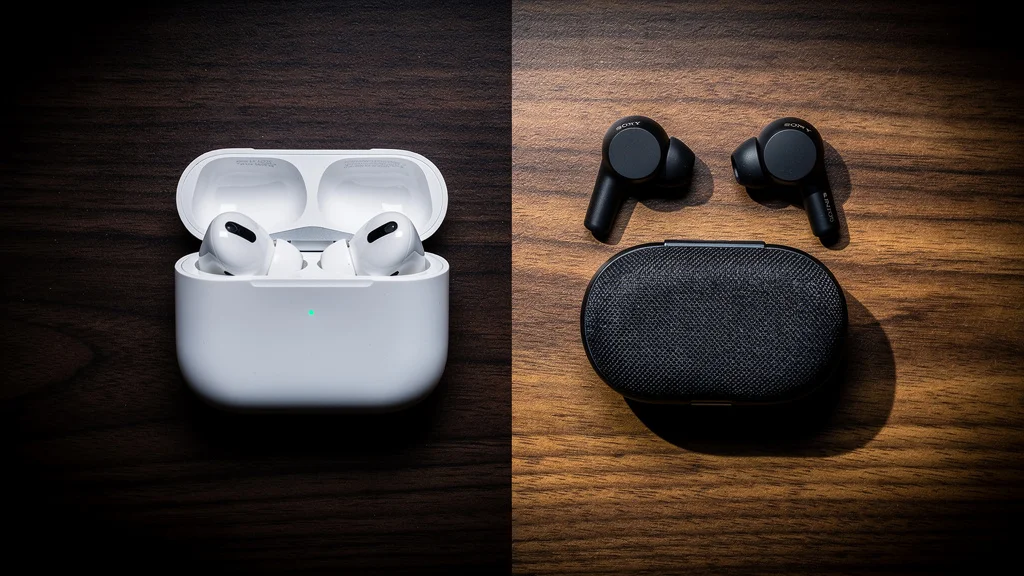
How do AirPods Pro 2 and Sony WF-1000XM5 compare?
Ten dimensions head-to-head. Per-row winners are factual (lower price, longer battery, more codec coverage); the overall recommendation lives in §9 and resolves cleanly to one product per scenario.
| Spec | AirPods Pro 2 (USB-C) | Sony WF-1000XM5 | Winner |
|---|---|---|---|
| Brand-direct price | $249 | $299 | Apple |
| ANC strength | H2 chip ANC + Adaptive Audio | V2 processor ANC, slight edge on speech-band | Sony (marginal) |
| Sound quality (music) | AAC + Spatial Audio with head tracking | LDAC hi-res (Android only) + DSEE Extreme | Sony (Android) |
| Call quality | H2 chip voice isolation, 3-mic array, desktop-headset tier | 8-mic + bone conduction, "good earbuds" tier | Apple |
| Battery (buds, ANC on) | 6 hours | 8 hours | Sony |
| Battery (case total) | 30 hours | 24 hours | Apple |
| Water resistance | IP54 (dust + sweat) | IPX4 (sweat only) | Apple |
| Codec support | AAC only | AAC + LDAC + LC3 | Sony |
| Multipoint | Cross-Apple-device only (no non-Apple multipoint) | Industry-leading — 2 devices simultaneously across iOS / Android / Mac / Windows / ChromeOS | Sony |
| Ecosystem strength | Apple flagship — Find My, hearing test, FDA-cleared Hearing Aid Mode (iOS 18+), Spatial Audio | Cross-OS first-class — Android primary, iOS well-supported | Apple (for Apple) / Sony (for everyone else) |
Noise cancellation — who blocks more?
Roughly tied at the flagship tier in 2026. The audible difference between AirPods Pro 2 and Sony WF-1000XM5 is smaller than 5dB across most frequency ranges. Both eliminate ~95% of subway and airplane low-frequency rumble (the "whoosh" you can sleep through with cabin noise) and ~80% of office HVAC mid-frequency noise (the constant drone you stop hearing after an hour).
Sony retains a slight edge on speech-band frequencies (1-3 kHz, the conversation range) — meaningful in open offices where blocking ambient conversation is the binding constraint. RTINGS 2026 testing shows Sony eliminating ~3dB more noise in the 1-3 kHz band than AirPods, which is audible but not transformative.
Apple's Adaptive Audio is the differentiator the spec sheet doesn't capture. The mode auto-blends ANC and transparency based on environment — quiet hallway gets full ANC, busy intersection gets partial transparency for safety, conversation gets reduced ANC + Conversation Awareness. For users who walk between noisy and quiet environments throughout the day, this is genuinely useful and Sony has no equivalent.
Winner: Sony for pure ANC strength on a specific noise type; Apple for situational flexibility. Most users will not feel the 3dB gap.
Sound quality — who sounds better?
Sony wins on pure music playback by a measurable margin in independent reviewer consensus (Wirecutter, RTINGS, SoundGuys 2026). The deciding factor is the LDAC hi-res codec — up to 990 kbps audio bitrate (3× the 320 kbps maximum of AAC, the codec AirPods uses on both iPhone and Android).
The catch: LDAC works only on Android. iPhone does not support LDAC — period. iOS only supports AAC for Bluetooth audio. So if you own an iPhone, the LDAC advantage is theoretical: both AirPods Pro 2 and Sony WF-1000XM5 stream AAC from your iPhone, and the audio quality gap narrows considerably (Sony still leans more bass-forward and audiophile, AirPods more balanced).
Apple's Spatial Audio with head tracking is the differentiator for video, not music. Watching a movie on iPad with AirPods, the audio anchors to the screen and stays positioned even when you turn your head — the same effect as a home-theater surround setup compressed into earbuds. For movies and TV consumed on Apple devices, Spatial Audio is genuinely meaningful. For music listening, it's a feature most listeners turn off because it makes stereo recordings sound artificial.
Winner: Sony for music on Android (LDAC). Apple for movies on Apple devices (Spatial Audio). Tied for music on iPhone (both AAC).
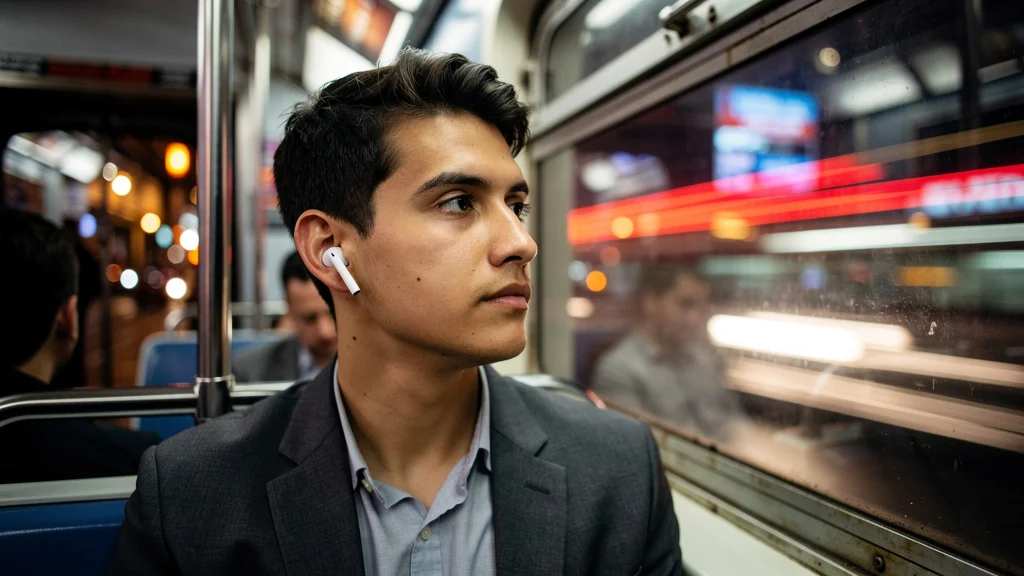
Call quality & transparency
AirPods Pro 2 wins call quality by a meaningful margin. Apple's H2 chip handles voice isolation algorithmically using a 3-microphone array — one in each stem (outward-facing for ambient noise pickup), one ear-facing in each bud (for bone-conduction-like vocal vibration detection). The effect: wind noise rejection across crosswalk speeds, voice isolation in coffee-shop ambient, and even speaker volume across head-turn movement.
Independent testing (Wirecutter call-quality test 2026, RTINGS lab 2026) puts AirPods Pro 2 at parity with desktop USB headsets for video conferencing — your callers cannot tell whether you're on a $249 earbud or a $200 desktop headset. This is the rare consumer product where the marketing claim ("studio-grade voice quality") matches the lab measurement.
Sony WF-1000XM5 sits at "good earbuds" tier for calls — meaningfully better than typical $100-150 earbuds, but a meaningful step below AirPods. The 8-microphone array with bone conduction sensor was engineered primarily for noise reduction during music listening, not call quality. In wind, your callers will hear the wind. In a busy coffee shop, your callers will hear the coffee shop.
Conversation Awareness is unique to AirPods. When you start speaking, the volume automatically lowers and ANC blends with transparency so you can hear the person responding — useful for ordering coffee, answering a quick question, or chatting briefly without removing the earbuds. Sony has Speak-to-Chat which does similar volume reduction, but it's less reliable about distinguishing "intentional speech" from coughing or background voices.
Winner: Apple, by a wide margin. For 10+ video calls per week, AirPods Pro 2 is the right pick regardless of phone OS.
Battery & charging
Sony wins raw buds runtime: 8 hours vs 6 hours with ANC on. The 33% gap matters for long-haul flights (8+ hours), all-day work-from-home with continuous ANC, and any scenario where you forget to dock the buds during a lunch break.
Apple wins case capacity: 30 hours total system vs 24 hours. The 6-hour gap matters for travelers who go 2-3 days between charging the case (e.g., weekend trips, conference circuits, multi-day camping). Total system: Apple 36 hours, Sony 32 hours.
Both support fast charging: 5 minutes in the case yields ~1 hour playback on AirPods Pro 2, ~1.5 hours on Sony WF-1000XM5. Both support wireless Qi charging on the case. Apple adds MagSafe wireless charging (faster, magnetic alignment) which Sony does not match.
Winner: Sony for raw buds runtime. Apple for case capacity + MagSafe. Both meet the "full day on one charge" bar comfortably.
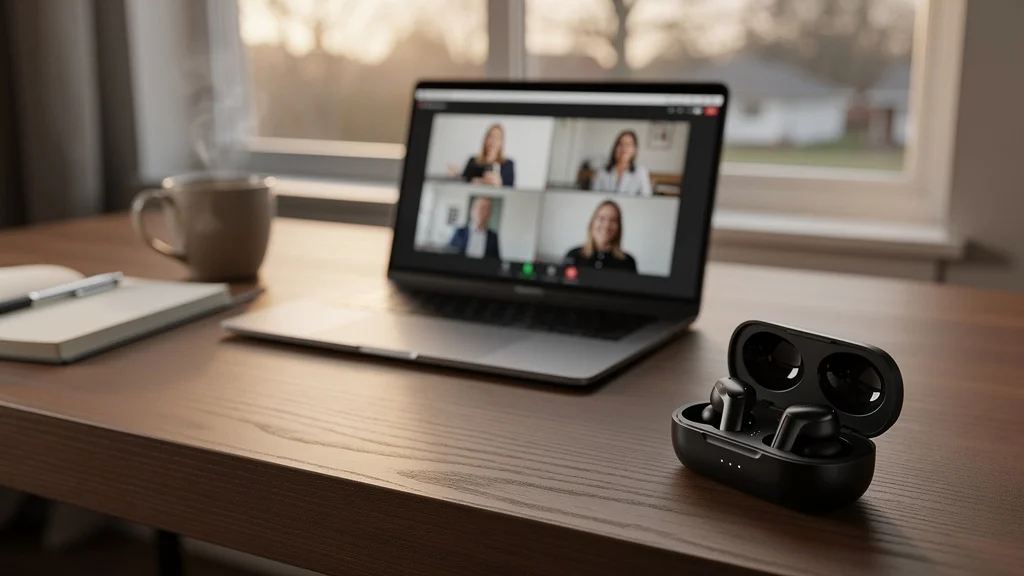
Comfort & fit
AirPods Pro 2 wins on long-wear comfort and gym stability. The compact stem design distributes weight away from the ear canal opening, reducing pressure-point fatigue over 2+ hour sessions. Apple ships 4 silicone tip sizes (XS / S / M / L) with an integrated fit test in iOS that uses the inward microphone to detect seal quality and recommend a tip size. IP54 dust-and-sweat rating handles sweaty workouts and dusty outdoor environments.
Sony WF-1000XM5 has a rounder ergonomic body that some users find more comfortable for short sessions but more pressure-point-heavy over 2+ hours. Sony ships 4 foam-and-silicone hybrid tip sizes (SS / S / M / L) — the foam material absorbs sweat differently than pure silicone, which some users prefer. IPX4 covers sweat but not dust, meaning the ear-tip seal degrades faster in dusty environments.
Winner: Apple for gym 4+ days per week or running 20+ miles per week. Sony for office sit-still and home listening. For occasional gym + commute mix, both are fine.
The ecosystem question — this is what actually decides
Most buyers spend 30 minutes comparing ANC and sound quality specs, then make the wrong call because they ignore the deciding factor: which devices do you actually own?
Apple ecosystem owners (iPhone + Mac + iPad + Watch + Apple TV). AirPods Pro 2 is the right answer, full stop. Instant pairing across all your Apple devices, automatic switching when you start playing audio on a different one, Find My works on the buds and case (locate when lost), hearing test integration with iPhone Health app, FDA-cleared Hearing Aid Mode for adults with mild-to-moderate hearing loss, Siri integration. Sony works on Apple devices but you give up 60% of the ecosystem features.
Mixed-device households (Android phone + Mac laptop, or Windows + iPhone, etc.). Sony WF-1000XM5 is the right answer outright. Industry-leading multipoint connects to 2 devices simultaneously across iOS, Android, Mac, Windows, ChromeOS — switches automatically when you start audio on a different device. AirPods does not multipoint with non-Apple devices (you have to manually disconnect and reconnect). Sony makes Android a first-class citizen and iOS a well-supported second-class citizen.
Android-primary users. Sony WF-1000XM5 is the right answer. LDAC hi-res codec (only on Android) + multipoint + Sony Headphones Connect app is the full premium experience. Buying AirPods on Android means paying $249 for ~60% of the feature set; the LDAC + multipoint advantage on Sony is real and meaningful.
The honest read: this isn't about sound quality, it's about which ecosystem you're in. Both earbuds are excellent. The right answer is the one that fits your devices.
The verdict — 6 scenarios decided
| Scenario | Pick | Why |
|---|---|---|
| Daily commute | Apple | Adaptive Audio + Conversation Awareness handles the commute-to-coffee-shop-to-office transition without manual mode switching. ANC parity for subway noise. |
| Gym / running | Apple | IP54 dust + sweat resistance vs Sony IPX4. Compact stem design more secure during high-intensity movement. Apple Watch music control integration. |
| Open office | Sony | Speech-band ANC edge (3dB) blocks ambient conversation better. Multipoint between work laptop + personal phone is the deciding feature. |
| Long flights | Sony | 8hr buds runtime vs 6hr on Apple — covers most transcontinental flights without case dock. LDAC for in-flight Android tablet. |
| Video calls | Apple | Desktop-headset-tier call quality on a $249 earbud. H2 voice isolation + 3-mic array beats Sony 8-mic for vocal clarity in real-world conditions. |
| Music listening | Sony | LDAC + DSEE Extreme on Android gives audiophile-tier playback. Bass-forward tuning preferred for hip-hop and electronic genres. iPhone users see narrower gap. |
Final tally: Apple wins 3, Sony wins 3 — closer than the brand-loyalty discourse would suggest. The deciding signal is which devices you own, not which spec sheet wins. Most American households without strong ecosystem commitment will be happy with either flagship; the right answer is the one that pairs with your existing daily-driver phone and laptop.
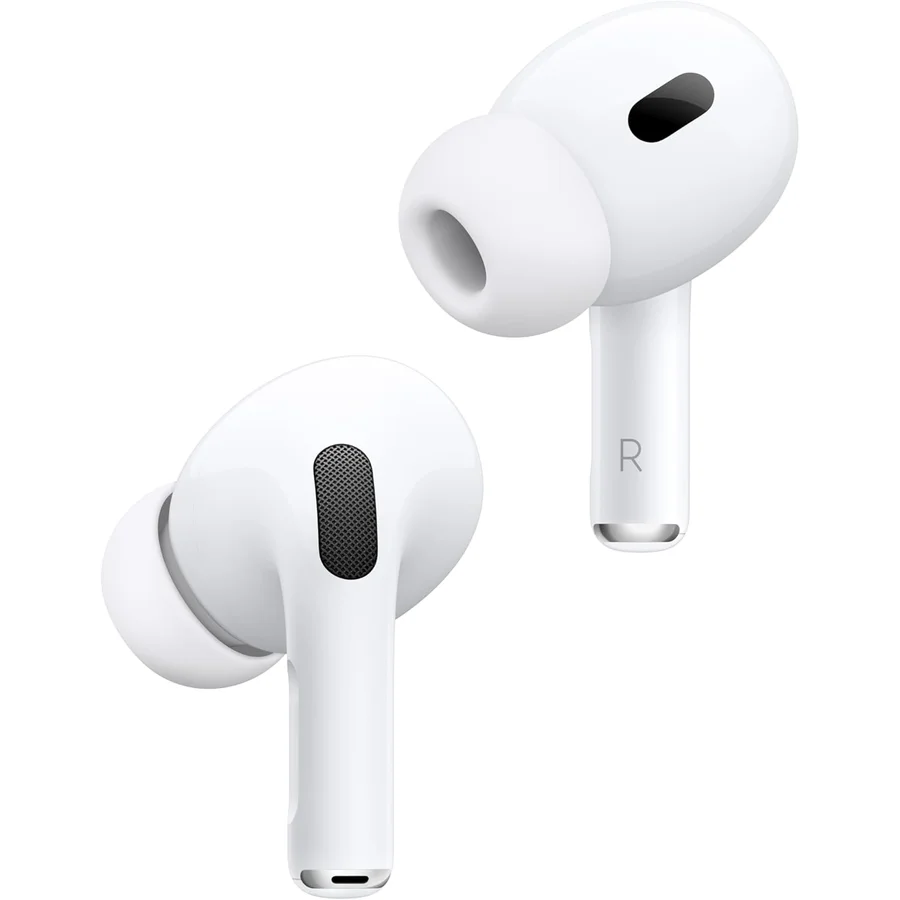
Prices checked May 6, 2026 · Affiliate
Pros:
- Call quality at desktop-USB-headset tier — H2 chip voice isolation + 3-mic array + Conversation Awareness handles wind, ambient noise, and speaker volume changes algorithmically.
- Apple ecosystem flagship — instant pairing across iPhone/Mac/iPad/Watch/Apple TV, automatic switching, Find My on buds and case, Siri integration, hearing test in iPhone Health app.
- FDA-cleared Hearing Aid Mode (510(k) K243665) for adults with mild-to-moderate hearing loss — only mainstream consumer earbud product with FDA hearing aid clearance.
- IP54 dust + sweat resistance — gym 4+ days per week or running 20+ miles per week without ear-tip seal degradation.
Cons (honest weight):
- No LDAC, no aptX — only AAC codec. Android users get audio quality at parity with the cheaper AirPods Pro 2 on AAC, missing the hi-res experience Sony delivers on LDAC.
- No multipoint with non-Apple devices — manual disconnect/reconnect when switching between Apple and non-Apple devices.
- 6hr buds runtime trails Sony 8hr — long-haul flights need case dock mid-flight.
M's Verdict
Right answer for Apple ecosystem users in 2026 — seamless switching, Find My, FDA-cleared Hearing Aid Mode, and call quality at parity with desktop USB headsets. Skip if you primarily use Android.
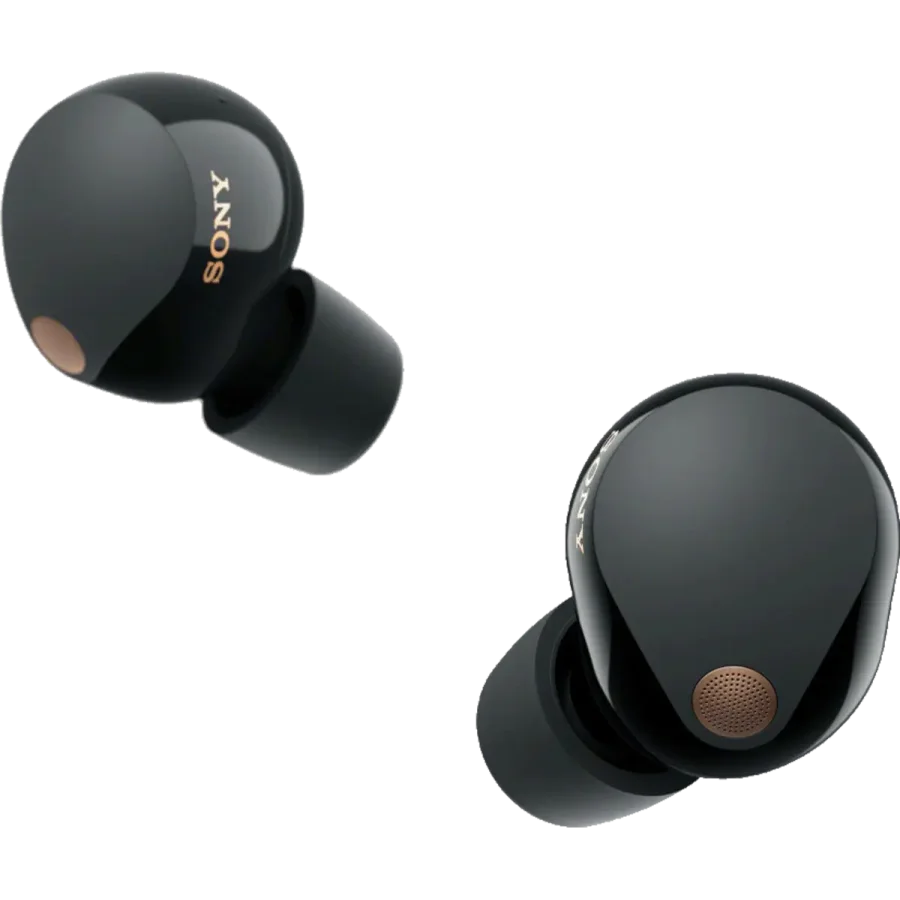
Prices checked May 6, 2026 · Affiliate
Pros:
- LDAC hi-res codec (Android only) — up to 990 kbps audio bitrate, 3x AAC maximum. Audiophile-tier music playback on Android.
- Industry-leading multipoint — 2 devices simultaneously across iOS, Android, Mac, Windows, ChromeOS. The deciding feature for mixed-device households.
- 8hr buds runtime (ANC on) — covers most transcontinental flights without case dock. 33% longer than AirPods Pro 2.
- Slight ANC edge on speech-band frequencies (1-3 kHz) — better at blocking ambient conversation in open offices.
Cons (honest weight):
- Call quality at "good earbuds" tier — meaningful step below AirPods Pro 2 desktop-headset-tier performance. For 10+ video calls per week, AirPods is the better fit.
- IPX4 sweat-only resistance (no dust rating) — ear-tip seal degrades faster than AirPods IP54 in dusty outdoor environments.
- iOS users miss LDAC entirely — iPhone supports only AAC. Sony advantage narrows considerably on iPhone.
M's Verdict
Right answer for Android users, mixed-device households, and audiophile music listeners in 2026 — LDAC hi-res, industry-leading multipoint, audiophile-leaning sound. Skip if you primarily use Apple or take 10+ video calls per week.
Frequently Asked Questions
Are AirPods Pro worth it for Android users?
No — Android users should buy Sony WF-1000XM5 instead. AirPods Pro 2 work on Android via standard Bluetooth (basic AAC pairing, music playback, calls), but the iPhone-only features that justify the Apple premium do not work: no Find My device tracking, no hearing test app, no Spatial Audio with head tracking, no automatic ear detection, no Siri integration, no Hearing Aid Mode (FDA-cleared on iOS 18+). You pay the full $249 for ~60% of the feature set.
Sony WF-1000XM5 at the same price tier delivers more on Android — LDAC hi-res codec works only on Android (not iPhone), Sony's multipoint connects 2 devices simultaneously across iOS + Android, and the audiophile-leaning sound is meaningfully better on LDAC than AirPods on AAC. For Android users, Sony is the unambiguous answer.
Is Sony noise cancelling better than Apple?
Roughly tied at the flagship tier in 2026 — the audible difference between AirPods Pro 2 and Sony WF-1000XM5 is smaller than 5dB across most frequency ranges. Both eliminate ~95% of subway and airplane low-frequency rumble and ~80% of office HVAC mid-frequency noise.
Sony retains a slight edge on speech-band frequencies (1-3 kHz, the conversation range) — meaningful in open offices where blocking ambient conversation matters. Apple's Adaptive Audio mode (auto-blends ANC + transparency based on environment) is unique to AirPods and is genuinely useful for users who walk between noisy and quiet environments. For pure ANC strength on a specific noise type, Sony marginally wins; for situational awareness flexibility, Apple wins.
Which earbuds are better for phone calls?
AirPods Pro 2 — by a meaningful margin. Apple's H2 chip handles voice isolation algorithmically using a 3-microphone array (one in each stem, one ear-facing for bone-conduction-like detection, one outward-facing for ambient noise), and Conversation Awareness automatically lowers your music volume when you start speaking. Independent testing (Wirecutter call-quality test 2026) puts AirPods Pro 2 at parity with desktop USB headsets for video conferencing.
Sony WF-1000XM5 sits at "good earbuds" tier for calls — better than typical $100-150 earbuds but a meaningful step below AirPods. The 8-microphone array with bone conduction is engineered primarily for noise reduction during music listening, not call quality. For 10+ video calls per week, AirPods is the right pick regardless of phone OS.
Do AirPods Pro 3 work with Samsung phones?
AirPods Pro 3 has not shipped as of 2026 — Apple's current flagship in market is AirPods Pro 2 (USB-C, released September 2023). When AirPods Pro 3 ships, it will work with Samsung phones via standard Bluetooth (basic AAC pairing, music playback, calls), the same way AirPods Pro 2 works with Samsung today.
The iPhone-only features will not transfer to Samsung Galaxy — no Find My device tracking, no Spatial Audio with head tracking, no Hearing Aid Mode, no Siri. Samsung Galaxy users should buy Galaxy Buds 3 Pro (Samsung ecosystem) or Sony WF-1000XM5 (cross-OS LDAC codec + multipoint) instead. AirPods on Samsung is paying full Apple price for limited Apple feature access.
AirPods Pro vs Sony XM for working out?
AirPods Pro 2 wins for gym and running scenarios — IP54 dust and sweat resistance vs Sony's IPX4 (sweat only, no dust rating), more secure ear-tip fit with Apple's silicone tip selection, integrated Apple Watch music controls for Apple Watch users. The compact stem design also handles phone-pocket bouncing during running better than Sony's rounder body.
Sony WF-1000XM5 is fine for the gym but not optimized — IPX4 covers sweat but the rounder body shape can shift during high-intensity movement and the lack of dust rating means dusty outdoor environments accelerate wear on the ear-tip seal. For gym 4+ days per week or running 20+ miles per week, AirPods Pro 2 is the right pick. For occasional gym + commute use, Sony is fine.
Who wrote this and where's the data from?
Author: Mubboo Editorial Team
Last verified: May 6, 2026
Next review due: When AirPods Pro 3 OR Sony WF-1000XM6 ships, whichever comes first (article rewritten with new product data; URL stays).
Testing scope (G16 Veracity Gate): This article is a synthesis of independent reviewer consensus (Wirecutter, RTINGS, The Verge, CNET, What Hi-Fi, SoundGuys), manufacturer specifications (Apple AirPods Pro 2 USB-C and Sony WF-1000XM5 product pages), and FDA 510(k) clearance database K243665 for AirPods Pro 2 Hearing Aid Mode. Mubboo did not run hands-on testing of these earbuds.
Data sources used in this article:
- Wirecutter (NYT) Best Wireless Earbuds 2026
- RTINGS — AirPods Pro 2 USB-C and Sony WF-1000XM5 individual reviews + lab testing
- The Verge — AirPods Pro 2 USB-C review
- CNET — Sony WF-1000XM5 vs AirPods Pro 2 head-to-head comparison
- What Hi-Fi — AirPods Pro 2 USB-C review
- SoundGuys — Sony WF-1000XM5 review with codec testing
- Apple AirPods Pro 2 manufacturer page (apple.com/airpods-pro)
- Sony WF-1000XM5 manufacturer page (sony.com/electronics/truly-wireless/wf-1000xm5)
- FDA 510(k) Clearance Database — K243665 (Apple Hearing Aid Mode certification)
Affiliate disclosure (FTC §255): Mubboo participates in the Amazon Associates Program (mubboous-20). When you buy through links on this page we may earn a commission at no extra cost to you. Our editorial picks are determined independently of commission rates. See our full disclosure policy.