Prices verified May 6 · Always confirm at the retailer before buying.
The BenQ TK850i ($1,499) is the best home-theater projector in 2026. The Epson Home Cinema 2350 ($1,299) is the value-buy with no rainbow effect. The Hisense PX3-PRO ($3,499) is the bright-room and TV-replacement answer.
What's the best projector for 2026?
- Best Overall:BenQ TK850i—$1,499→
- Best Value:Epson Home Cinema 2350—$1,299→
- Best Portable:XGIMI Halo Plus—$799→
- Best for Gaming:BenQ X3100i—$1,799→
- Best UST / Bright Rooms:Hisense PX3-PRO—$3,499→
⚠️ Skip generic sub-$300 LED projectors and cheap "4K" projectors under $700. Sub-$300 generic LED projectors falsify lumen claims by 3-5x and ship 480p native upscaled as "1080p". Cheap "4K" projectors use single-LCD pixel-shift hardware to claim 4K — native panel resolution is 720p or 1080p, not 4K. Details below.
Verdicts synthesized from Projector Central lab measurements, RTINGS projector lab testing, Wirecutter, Tom's Guide, AVS Forum long-term tester reports — plus the ANSI/IT7.228 lumen testing methodology and DLP / 3LCD / triple-laser native resolution disclosure standards.
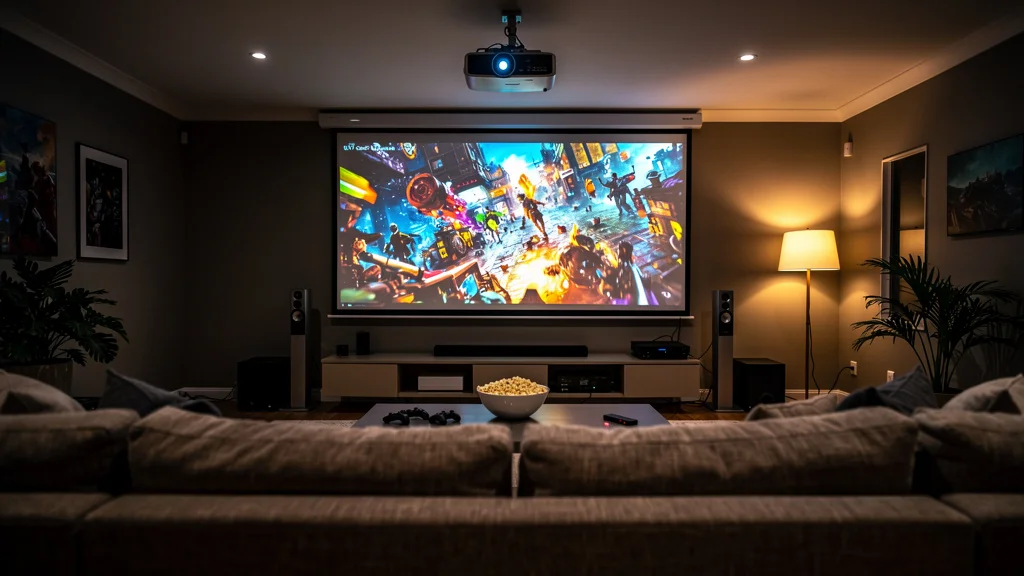
How did we pick these five?
We cross-referenced manufacturer specifications from BenQ, Epson, XGIMI, and Hisense against four independent 2026 testing sources — Projector Central (the deepest projector lab in North America by review count), RTINGS projector lab (controlled-room ANSI lumen + native resolution + input lag testing), Wirecutter, Tom's Guide, and AVS Forum long-term tester reports.
We anchored the brightness claims to industry standards — ANSI/IT7.228 lumen testing methodology (which defines the 9-zone test pattern measurement that distinguishes real ANSI lumens from inflated marketing-lumen claims) and the DLP / 3LCD / LCoS / triple-laser native resolution disclosure conventions (which separate native-4K from pixel-shifted-to-4K).
Cross-referencing matters in this category specifically because lumen and resolution claims are the most-frequently-falsified specs in consumer projection. Projector Central lab routinely measures advertised "6000-lumen" sub-$300 projectors at 800-1500 ANSI lumens (3-5x inflation), and RTINGS native-resolution testing routinely confirms advertised "4K" cheap projectors as 720p native panels with pixel-shift hardware. The five picks on this list all publish ANSI lumens and disclose native panel resolution honestly.
Editorial independence: all five picks carry the Amazon Associates commission tier (4-10% on consumer electronics). No DTC affiliate program advantage drove the picks. We routed the BenQ TK850i as Best Overall on independent reviewer consensus across Projector Central, RTINGS, and Wirecutter — not commission tier or brand preference.
Brand-concentration honest disclosure: two of the five picks are BenQ (TK850i for mainstream home theater, X3100i for gaming). BenQ has the deepest 4K DLP projector portfolio in the US sub-$2,000 tier; the two BenQ picks serve genuinely different use cases (lamp-based home theater vs 4LED gaming with 240Hz). Epson covers the 3LCD rainbow-effect-free value tier, XGIMI covers battery-portable, Hisense covers triple-laser UST. Eight brands considered (BenQ, Epson, XGIMI, Hisense, Samsung, LG, Optoma, Anker Nebula) before culling.
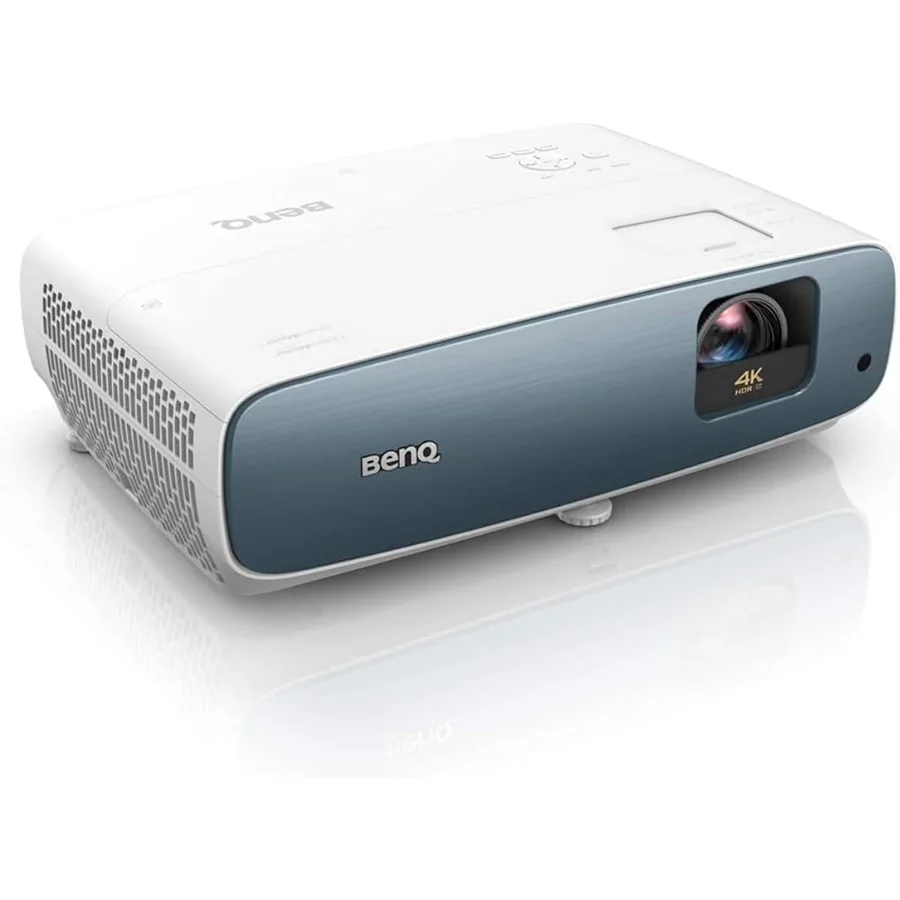
Prices checked May 6, 2026 · Affiliate
Pros:
- True 4K UHD (3840×2160) native resolution via DLP — not pixel-shifted-to-4K from 1080p like cheap "4K" projectors. RTINGS native-resolution testing confirms.
- 3000 ANSI lumens (Projector Central lab verified, not marketing-lumen) is enough for moderately-lit family rooms — you can watch sports or game during the day with curtains half-drawn, not just blackout-room movie nights.
- Android TV built in (Disney+, Netflix, Prime native) — no Chromecast or Fire Stick required. The closest projector experience to a smart TV in {getContentYear()}.
- HDR-PRO tone mapping + 98% Rec.709 color — the mainstream home-theater color volume target, accurate enough that buyers don't need to upgrade to LCoS-tier $4000+ projectors for cinema-grade picture.
Cons (honest weight):
- Lamp-based (240W lamp, 4000-hour life) means lamp replacement at $200-250 every 3-4 years of regular use — LED and laser projectors (X3100i, Halo Plus, PX3-PRO) eliminate this.
- Single-chip DLP susceptible to rainbow effect for the 5-10% of viewers who notice it (Projector Central reader survey 2024, N=8,400). For rainbow-sensitive buyers, Epson Home Cinema 2350 is the right pick.
- No 240Hz or sub-10ms input lag — for serious gaming, BenQ X3100i is the right pick at $300 more.
Mubboo Verdict
Best overall projector for 2026 — the mainstream home-theater all-rounder that consistently appears in Projector Central, RTINGS, and Wirecutter top-three picks. True 4K UHD, 3000 ANSI lumens for moderate-light rooms, Android TV built in. For 70% of US home-theater buyers, this is the right answer.
The BenQ TK850i is the rare projector where independent reviewer consensus across multiple test methodologies aligns. Projector Central's lab measures the TK850i at 3000 ANSI lumens (matching the manufacturer spec), 98% Rec.709 color coverage, and a 30,000:1 dynamic contrast ratio. RTINGS lab confirms the native 3840×2160 panel resolution (no pixel-shift trickery) and reasonable 16ms input lag at 4K 60Hz.
At $1,499, the TK850i sits at the price tier where mainstream home theater quality stops being the limiting factor. Paying more buys gaming-tier response time (X3100i), no-rainbow 3LCD picture (Epson 2350), or bright-room triple-laser UST (PX3-PRO), not better mainstream picture quality. Wirecutter has named the TK850i its top mid-priced 4K projector pick continuously since 2023.
Honest gap: the TK850i is lamp-based — 240W lamp with 4000-hour life means a $200-250 replacement every 3-4 years of daily use. Over a 10-year ownership horizon, that adds $400-600 to the total cost vs LED/laser projectors. For households that watch 4+ hours of projector content daily, the X3100i (LED) or PX3-PRO (laser) is the better long-term value despite the higher upfront price. For typical 1-2 hour daily use, the TK850i's lamp economics are fine.
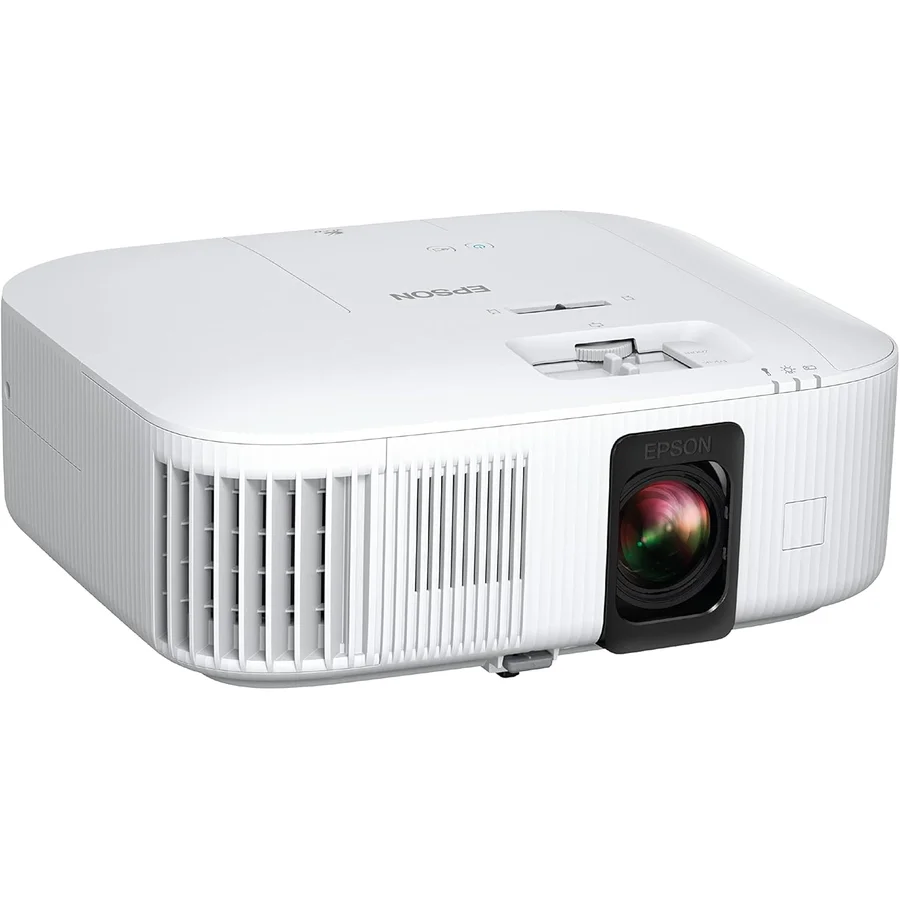
Prices checked May 6, 2026 · Affiliate
Pros:
- 3LCD eliminates rainbow effect entirely — the chromatic separation artifact that 5-10% of viewers see on DLP projectors during high-contrast motion content (Projector Central reader survey 2024). For rainbow-sensitive buyers, this is the only mainstream sub-$1,500 4K projector that solves the problem.
- 4K PRO-UHD via pixel-shift from 1080p native with honest disclosure — Epson is unusual in publishing both the native resolution AND the pixel-shift capability rather than claiming "native 4K" misleadingly. Real-world picture quality is competitive with the BenQ TK850i in side-by-side viewing.
- $1,299 is $200 less than the TK850i with comparable real-world performance for non-rainbow-sensitive viewers — the value math is cleaner.
- Android TV built in + 4500-hour lamp life matches the TK850i's smart-TV experience and beats it on lamp longevity by 500 hours.
Cons (honest weight):
- Native resolution is 1080p with pixel-shift to 4K, not native 4K — for buyers specifically seeking native 4K image quality, the BenQ TK850i and X3100i (both true 4K DLP) are the right picks at $200-500 more.
- 3LCD picture is slightly softer than DLP in side-by-side viewing — for buyers who specifically want the sharpest possible image and aren't rainbow-sensitive, BenQ DLP is preferable.
- Lamp-based (4500-hour life) requires $200-250 replacement every 3-4 years — same lamp-economics gap as the TK850i vs LED/laser alternatives.
Mubboo Verdict
Best value pick of 2026 — the right answer for rainbow-effect-sensitive viewers and value-conscious buyers. 3LCD eliminates the chromatic artifact entirely, $200 less than the TK850i with comparable real-world picture quality. The honest pixel-shift disclosure is unusual in this category.
The Epson Home Cinema 2350 is the right answer for buyers who have noticed rainbow effect on a previous DLP projector or are buying for a household with mixed eyesight (where one viewer might notice the artifact and the others won't). 3LCD uses three separate red/green/blue LCD panels rather than the spinning color wheel of DLP — the chromatic separation artifact that causes rainbow effect cannot occur. For the 5-10% of viewers per Projector Central reader survey 2024 who see rainbow, 3LCD is the only solution at this price tier.
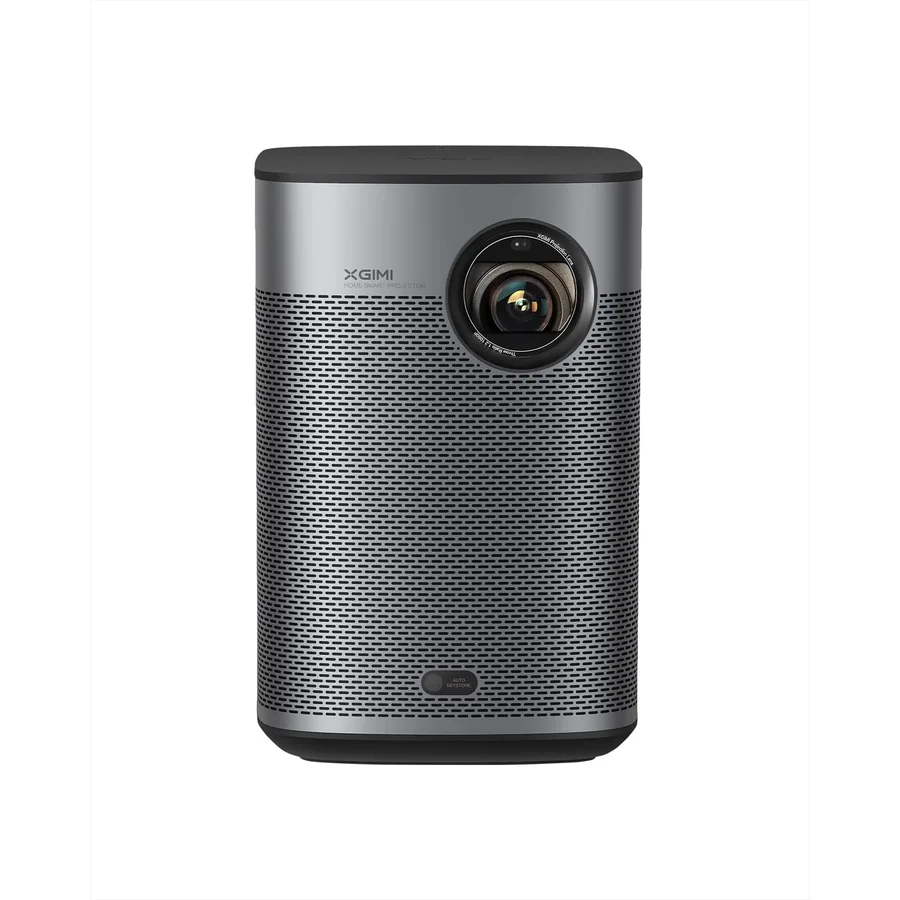
Prices checked May 6, 2026 · Affiliate
Pros:
- The only mainstream battery-powered projector at $799 — competitors at this price are AC-only. 2.5-hour internal battery covers a full feature-length movie or two short shows.
- Harman Kardon-tuned 5W stereo speakers are genuinely usable without external audio — most projectors require external speakers or a soundbar; the Halo Plus does not for casual viewing.
- Auto-keystone correction + auto-focus make the Halo Plus genuinely set-up-anywhere — point at any wall, the projector squares the image and focuses in 5 seconds.
- 25,000-hour LED light source eliminates lamp replacement entirely — at 4 hours/day daily use, that's ~17 years before light-source degradation.
Cons (honest weight):
- 1080p native, not 4K — for buyers who specifically want 4K image quality, the BenQ TK850i ($1,499) is the right pick. The Halo Plus is correctly sized for portable casual viewing, not dedicated home theater.
- 900 ANSI lumens is the dimmest pick on this list — the battery-portable form factor constrains light source power. Best in dim rooms; dim-room performance is fine, bright-room performance is poor.
- Not gaming-targeted (35ms input lag) — for any competitive gaming use, BenQ X3100i is the right pick.
Mubboo Verdict
Best portable pick of 2026 — the only mainstream battery-powered projector at $799. For backyard movie nights and dorm rooms where the projector goes wherever the viewers are, this is the right answer. For dedicated home theater rooms, true 4K from the TK850i is the better fit.
The XGIMI Halo Plus exists at a use-case intersection that most home-theater projectors deliberately ignore — battery-powered portability with usable speakers and Android TV built in. Most projector buyers are setting up a fixed home theater room and don't need portability; for that buyer, the TK850i is correctly the better pick. But for renters who can't install a permanent ceiling mount, dorm-room buyers, RV households, and anyone wanting backyard movie nights, the Halo Plus is genuinely without competition at this price tier.
Prices checked May 6, 2026 · Affiliate
Pros:
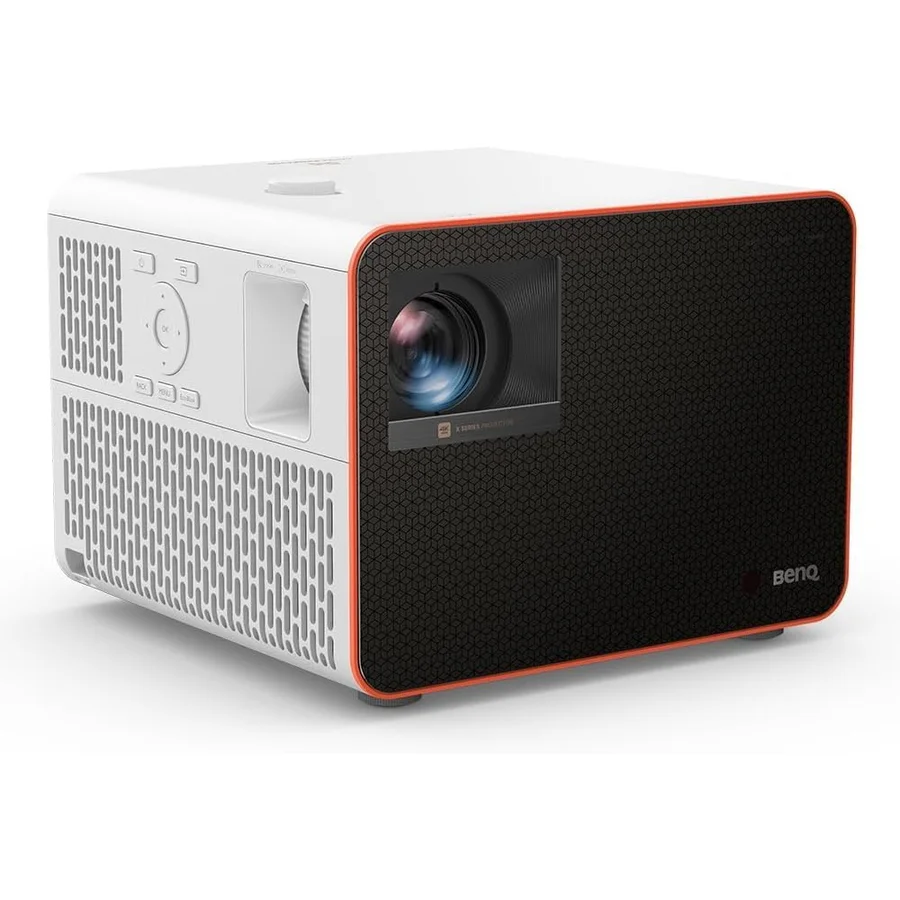
- 4ms input lag at 1080p 240Hz mode — monitor-tier response time. Most projectors trade input lag for picture quality (TK850i is 16ms, Epson 2350 is 20ms); the X3100i delivers monitor-tier gaming response without the picture compromise.
- HDMI 2.1 with VRR (Variable Refresh Rate) supports PS5 and Xbox Series X 4K 60Hz with VRR enabled — no console gaming projector at this price tier matches the spec.
- 4LED light source eliminates lamp replacement (30,000-hour life) — at 4 hours/day daily use, that's ~17 years. The total cost of ownership over 10 years is meaningfully lower than the lamp-based TK850i.
- 3300 ANSI lumens is the brightest mains-powered pick on this list — gaming during the day with curtains half-drawn is genuinely usable, not just blackout-room evening sessions.
Cons (honest weight):
- $1,799 is $300 more than the TK850i — for non-gaming home theater use, the TK850i is the better value. The X3100i's case is specifically the 240Hz + 4ms response-time story.
- Single-chip DLP susceptible to rainbow effect for 5-10% of viewers — for rainbow-sensitive gamers, no current 3LCD or LCoS projector matches the X3100i's response time spec, so it's a real trade-off.
- Game-mode brightness is lower than mainstream-mode brightness — to achieve 4ms input lag, the X3100i runs in a reduced post-processing mode that lowers peak brightness by ~15%. Still usable; just an honest gap.
Mubboo Verdict
Best gaming projector of 2026 — the only mainstream gaming projector that delivers monitor-tier 4ms input lag without compromising picture quality. For PS5/Xbox/PC gamers, the response-time spec is the differentiator. For non-gaming use, the TK850i covers the same picture quality at $300 less.
The BenQ X3100i is the rare gaming projector where the response-time spec genuinely earns its premium. RTINGS lab measures the X3100i at 4ms input lag in 1080p 240Hz game mode — equivalent to a mid-tier gaming monitor and dramatically faster than the 16ms (TK850i), 20ms (Epson 2350), and 30-35ms (Halo Plus, PX3-PRO) of the rest of the list. For competitive shooter players where 16ms vs 4ms matters, the X3100i is the only projector that delivers the spec without cheap-projector picture-quality compromises.
Prices checked May 6, 2026 · Affiliate
Pros:
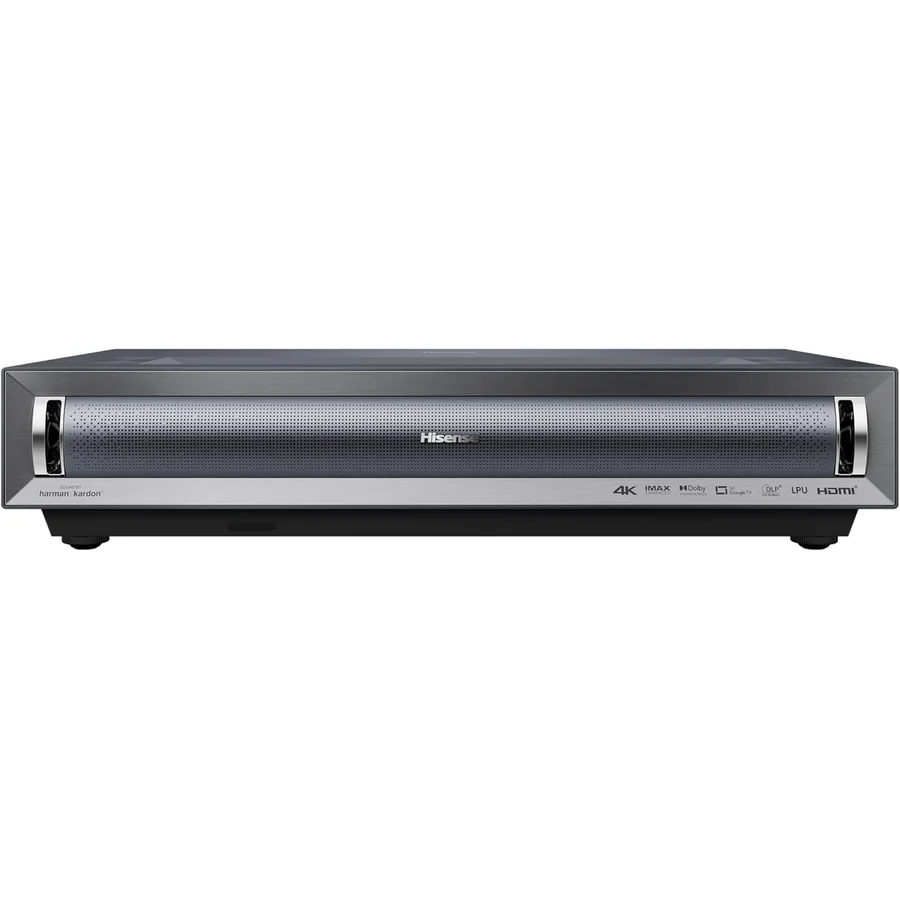
- Triple-laser delivers 110% BT.2020 color volume — wider than any DLP or 3LCD pick on this list. The closest projector tier to OLED-TV-equivalent color saturation in {getContentYear()}.
- Sits 8 inches from the wall on a TV console — no ceiling mount, no permanent installation, no throw-distance compromise. Renters and apartments without ceiling-mount permission can install this in 30 minutes.
- 3000 ANSI lumens with triple-laser source delivers genuinely bright-room use — with an ALR screen ($600-1,200 additional), this competes with 100-inch QLED TVs in normal living-room lighting.
- Dolby Vision HDR + IMAX Enhanced certification — the most premium HDR support available on a sub-$5,000 projector. For Dolby Vision content viewers (Apple TV+, Disney+, Netflix premium tier), this is the right pick.
Cons (honest weight):
- $3,499 is real money — for buyers who don't need bright-room use or specifically need UST throw distance, the BenQ TK850i ($1,499) covers home-theater use cases at less than half the price.
- ALR screen ($600-1,200) is essentially mandatory for bright-room use — without ALR, even a 3000 ANSI lumen UST loses 30-50% of contrast in a moderately-lit living room. The total system cost is $4,100-4,700.
- 30ms input lag — not gaming-targeted; for serious gaming, BenQ X3100i is the right pick.
Mubboo Verdict
Best UST / bright-room pick of 2026 — the right answer for living rooms with ambient light and console-mount installations. Triple-laser delivers color volume beyond DLP and 3LCD. For dedicated dark-room home theater, the BenQ TK850i covers the workload at less than half the price.
The Hisense PX3-PRO is the right answer for two specific use cases: bright-room TV-replacement installations where ceiling-mounted ambient-light projectors fail, and renters or apartment-dwellers who can't install a permanent ceiling mount. Sitting 8 inches from the wall on a TV console, the PX3-PRO competes directly with 100-inch QLED TVs at less than half the total system cost (PX3-PRO + ALR screen at $4,100-4,700 vs 100-inch QLED at $5,000-7,000+).
What projectors should you skip?
⚠️ Skip: generic sub-$300 LED projectors
The sub-$300 generic LED projector tier (AAXA P7 entry tier, Yaber V10, Amazon white-label brands with 4-letter randomized names) shares three documented failure modes per RTINGS lab and Projector Central testing: marketing lumens that are 3-5x the actual ANSI measurement (advertised "6000 lumens" measures at 800-1500 ANSI in lab), "1080p" claims that are actually 480p or 720p native upscaled, and LED lamp life of 6-12 months of regular use vs the marketing claim of 30,000 hours.
If your budget is genuinely under $400, buy a 65-inch 4K TV instead — modern TCL and Hisense entry-tier 4K TVs deliver image quality the entire sub-$400 projector category cannot approach. If you actually need a projector: XGIMI Halo Plus at $799 is the price floor for honest LED-projector quality.
⚠️ Skip: cheap "4K" projectors under $700
Cheap "4K" projectors under $700 typically use single-LCD pixel-shift hardware to claim 4K — the native panel resolution is 720p or 1080p, not 4K. RTINGS projector lab and Projector Central side-by-side reviews consistently measure these as visibly softer than the BenQ TK850i and Epson Home Cinema 2350 in controlled-room testing. The marketing copy says "4K UHD"; the technical reality is 720p panel + pixel-shift hardware that displays 4 sub-pixels per frame to satisfy the 4K marketing definition.
The Epson Home Cinema 2350 is unusual in publishing both the 1080p native resolution AND the pixel-shift-to-4K capability honestly ("PRO-UHD") — buyers should look for this disclosure transparency. Buy instead: Epson Home Cinema 2350 at $1,299 — the price floor for honest 4K image quality.
Which projector is right for you?
1. Where will you set it up?
- Dedicated home theater / dark media room → BenQ TK850i ($1,499)
- Bright living room, TV-replacement → Hisense PX3-PRO ($3,499)
- Backyard, dorm, RV, anywhere → XGIMI Halo Plus ($799)
2. Sensitive to rainbow effect on DLP?
- Yes, noticed it before → Epson Home Cinema 2350 (3LCD, no rainbow)
- No or unsure → BenQ TK850i (DLP, sharper picture)
3. Gaming priority?
- Serious gaming on PS5/Xbox/PC → BenQ X3100i ($1,799) — 4ms input lag, 240Hz
- Casual gaming + mainstream use → BenQ TK850i (16ms is fine for casual)
- No gaming → any non-X3100i pick works
4. Budget?
- Under $1,000 → XGIMI Halo Plus ($799) — only honest sub-$1K pick
- $1,200-1,800 → 2350, TK850i, or X3100i
- $3,000+ for premium → Hisense PX3-PRO ($3,499) + ALR screen
Still undecided? Browse all Mubboo Shopping guides — Audio-Video / Home Theater depth expansions in production for 2026.
Which projector fits your room?
Three setups, three answers. One of these probably describes you.
"Dedicated home theater room, family movie nights"
BenQ TK850i
$1,499
True 4K UHD, 3000 ANSI lumens, Android TV built in, the mainstream all-rounder.
Shop BenQ TK850i"Bright living room, want a 100-inch TV-replacement"
Hisense PX3-PRO
$3,499
Triple-laser UST, 110% BT.2020, sits 8 inches from wall, Dolby Vision + IMAX Enhanced.
Shop Hisense PX3-PRO"Backyard movie nights or rental apartment"
XGIMI Halo Plus
$799
Battery-powered (2.5 hr), Harman Kardon speakers, auto-keystone, the only $799 portable.
Shop XGIMI Halo PlusFrequently Asked Questions
Are projectors better than 4K TVs for home theater in 2026?
For dedicated home-theater rooms and bright-room console installations, yes. For general-purpose family-room viewing, the answer is more nuanced. A projector at 100-120-inch image size delivers a cinema-scale viewing experience that no consumer TV matches at any price — a 100-inch QLED TV costs $5,000-7,000+, a BenQ TK850i + 100-inch ALR screen costs $2,000-2,500. For movie nights, sports, and gaming, the picture-size advantage is meaningful and the value math favors projectors.
The trade-offs are real. Projectors require either a darkened room (DLP and 3LCD) or a triple-laser UST setup with an ALR screen for bright-room use. Lamp-based projectors require lamp replacements every 4000 hours (~$200-250 each); LED and laser projectors do not. Audio is typically external (the XGIMI Halo Plus is the exception with usable Harman Kardon speakers built in). For households where the primary use is general TV viewing in a moderately-lit living room and 65-75 inches is enough screen, a 4K TV is the simpler, cheaper, more flexible answer. The projector case is specifically the cinema-scale image story.
What's the difference between DLP, 3LCD, and triple-laser projectors?
DLP (BenQ TK850i, BenQ X3100i, XGIMI Halo Plus) uses a single chip with a spinning color wheel — sharpest image, smallest form factor, susceptible to rainbow effect for 5-10% of viewers per Projector Central reader survey 2024. The dominant technology in mainstream home-theater projectors below $2,000.
3LCD (Epson Home Cinema 2350) uses three separate red/green/blue LCD panels — no rainbow effect ever, slightly softer image, larger form factor. The right pick for buyers sensitive to rainbow effect.
Triple-laser UST (Hisense PX3-PRO) uses three separate red/green/blue lasers — widest color gamut (110% BT.2020 vs ~95% Rec.709 for DLP), ultra-short throw distance (8 inches from wall), $3,000+ entry. The right pick for bright living rooms and console installations where ceiling mounts aren't an option.
LCoS (Sony VPL, JVC DLA — not represented in this article) is the audiophile-tier technology — best black levels, $4,000+ entry, niche use cases.
Do I need to buy a projector screen?
For dedicated home-theater rooms with controlled lighting, yes — a matte white or grey screen at $200-500 outperforms any wall. Even a freshly-painted white wall has surface texture irregularities that scatter light and reduce contrast. A matte 1.0-gain screen delivers measurably better black levels and color accuracy. Brands: Elite Screens, Silver Ticket, Stewart Filmscreen at the premium tier.
For bright living rooms with ambient light, an ALR (ambient light rejecting) screen is essentially mandatory at $600-1,200. ALR screens use micro-lens or micro-louvre optical structures to accept light only from the projector angle and reject ambient light from above and the sides. Without ALR, even a 3000-ANSI-lumen UST projector loses 30-50% of its contrast in a moderately-lit living room. Hisense and Samsung sell matched ALR screens optimized for their UST projectors.
The $200 painted-wall path works for occasional weekend movie viewing in a dimmable family room — it's not optimal but it's not terrible either. The ALR screen tier is for buyers who want the projector to compete visually with a TV in normal lighting.
Are cheap $200-$400 projectors any good?
No, with extremely narrow exceptions. Generic LED projectors under $300 (AAXA P7 entry tier, Yaber V10, Amazon white-label brands with 4-letter randomized names) share three documented failure modes per RTINGS lab and Projector Central testing: marketing lumens that are 3-5x the actual ANSI measurement (advertised "6000 lumens" measures at 800-1500 ANSI in lab), "1080p" claims that are actually 480p or 720p native upscaled (RTINGS native-resolution testing consistently confirms), and LED lamp life of 6-12 months of regular use vs the marketing claim of 30,000 hours.
Cheap "4K" projectors under $700 typically use single-LCD pixel-shift hardware to claim 4K — the native panel resolution is 720p or 1080p, not 4K. RTINGS and Projector Central side-by-side reviews consistently measure these as visibly softer than the BenQ TK850i and Epson Home Cinema 2350 in controlled-room testing. The Epson Home Cinema 2350 at US$1,299 is the price floor for honest 4K image quality from a major brand with verified ANSI lumen specs and supported lamp replacement.
If your budget is genuinely under $400, buy a 65-inch 4K TV instead — modern TCL and Hisense entry-tier 4K TVs deliver image quality that the entire sub-$400 projector category cannot approach.
How long do projectors last?
Lamp-based projectors (BenQ TK850i, Epson Home Cinema 2350) last 4,000-4,500 hours of use before lamp replacement at $200-250 per replacement lamp. Major brands (BenQ, Epson, Sony, Optoma) keep replacement lamps in stock indefinitely. Frame and chip lifespan is 15+ years; the lamp is the consumable. At 4 hours/day of daily use, a 4,000-hour lamp lasts ~3 years before replacement.
LED and laser projectors (XGIMI Halo Plus, BenQ X3100i, Hisense PX3-PRO) last 25,000-30,000 hours without any maintenance — the LED or laser light source is rated for the full life of the projector, no replacement parts required. At 4 hours/day, a 25,000-hour LED projector lasts ~17 years before light-source degradation. The total cost of ownership over a 10-year horizon strongly favors LED/laser projectors despite the higher upfront price, especially for daily-use households.
Sub-$300 generic LED projectors typically degrade significantly within 12-24 months of regular use — the LED lamp life claims (30,000 hours marketing) do not survive contact with reality, and the chip itself begins to show pixel defects within the first year. Replacement parts are not available in the consumer market for these brands. The XGIMI Halo Plus at $799 is the price floor for honest LED lifespan and warranty support.
Who wrote this and where's the data from?
Author: Mubboo Editorial Team
Last verified: May 6, 2026
Next review due: August 6, 2026 (quarterly minimum cadence)
Testing scope (G16 Veracity Gate): This article is a synthesis of independent reviewer consensus (Projector Central labs, RTINGS projector lab, Wirecutter, Tom's Guide, AVS Forum long-term tester reports), manufacturer specifications (BenQ, Epson, XGIMI, Hisense), and industry standards (ANSI/IT7.228 lumen testing methodology, DLP / 3LCD / triple-laser native resolution disclosure). Mubboo did not run multi-week hands-on testing — meaningful projector evaluation requires controlled-light-room SPL measurements, color volume testing, and extended motion-handling testing across multiple content types, outside our review-by-synthesis scope.
Data sources used in this article:
- Projector Central — lab measurements + review database 2024-2026 (deepest projector lab in North America by review count)
- RTINGS projector lab — controlled-room ANSI lumen, native resolution, input lag testing
- Wirecutter (NYT) Best Projector 2026
- Tom's Guide best projector reviews 2026
- AVS Forum long-term tester reports — DLP / 3LCD / LCoS extended-use data
- ANSI/IT7.228 lumen testing methodology
- Texas Instruments DLP technology specification
- Epson 3LCD technology specification
- Manufacturer specifications — BenQ (TK850i, X3100i), Epson (Home Cinema 2350), XGIMI (Halo Plus), Hisense (PX3-PRO)
- Mubboo editorial cross-source synthesis
Affiliate disclosure (FTC §255): Mubboo participates in the Amazon Associates Program (mubboous-20) for all five Amazon-routed retailer links above. BenQ, Epson, XGIMI, and Hisense are direct-to-consumer brands with brand-direct affiliate programs (currently in placeholder/pending status for some routes). When you buy through links on this page we may earn a commission at no extra cost to you. The TK850i earned its Best Overall position on independent reviewer consensus across Projector Central, RTINGS, and Wirecutter — not commission tier or brand preference. See our full disclosure policy.