
Prices verified May 20 · Always confirm at the retailer before buying.
The best robot vacuum for most homes in 2026 is the eufy X10 Pro Omni at $479.99 — vacuum, mop, and self-empty in one unit, backed by 60,598 Amazon reviews.
Budget mop-and-vac buyers get the most mileage from the roborock Q7 M5+ at $249.98.
First-time self-empty shoppers get hands-free convenience from the eufy C10 at $219.99.
True budget buyers who need mop-plus-vac under $115 should check the Tikom G8000 Max at $113.99.
What's the best robot vacuum for 2026?
- Best Overall:eufy X10 Pro Omni—$480→
- Best Budget Mop Combo:roborock Q7 M5+ Black—$250→
- Best Slim Budget Pick:eufy 11S MAX—$170→
- Best for Light Decor:roborock Q7 M5+ White—$300→
- Best Shark AI Pick:Shark AV2501S—$300→
- Best First Self-Empty:eufy C10—$220→
- Best Ratings-Over-Brand Pick:iMartine 2300Pa—Check price→
- Best Under $120:Tikom G8000 Max—$114→
Picks reflect Amazon verified-buyer data and cross-referenced findings from RTINGS, TechRadar, Tom's Guide, and Consumer Reports — four independent sources each maintaining active robot vacuum test programs. Amazon listing data (price, rating, review count) was verified on 2026-05-17 across all 8 finalists. Community signals drawn from r/RobotVacuums, r/BuyItForLife, and r/ProductRecommendations informed category-level praise and complaint themes.
How did we pick these?
Brands evaluated: 12 models across eufy, roborock, Shark, iMartine, and Tikom — plus 4 brands cut after failing hard requirements.
Sources: 4 independent outlets — RTINGS, TechRadar, Tom's Guide, and Consumer Reports. Plus 145,509 Amazon verified-buyer reviews across 12 finalists.
First-party data: Amazon listing data (price, rating, review count) verified 2026-05-17 for all 8 published picks.
Hard requirements (4 gates): verified Amazon ASIN, in-stock status, minimum 4.0 rating, and US-available product listing. Products failing any gate were cut regardless of specs.
Suction Power and Floor Coverage
Researched across 145,509 verified Amazon reviews, 4 independent expert sources, and video analysis from Vacuum Wars. Suction ratings above 2,000 Pa reliably lift fine debris on hard floors. Pet hair households benefit from 4,000 Pa or more, especially on low-pile carpet common in open-plan US living rooms.
RTINGS independently tested 94+ robot vacuums and confirms that stated Pa specs do not always reflect real-world pickup rates on carpet versus hard floor. We weighted Amazon review signals heavily where Pa specs were absent from product listings.
Navigation: LIDAR vs. Gyro vs. AI Camera
LIDAR navigation delivers the most precise room mapping — especially in multi-room US homes over 1,000 sq ft. Gyro-only navigation still misses corners and overlaps paths in irregular layouts.
AI camera systems from Shark and eufy handle obstacle avoidance on cluttered floors without requiring LIDAR's taller sensor tower. r/RobotVacuums users in 2026 consistently praise AI obstacle avoidance as the upgrade that eliminates pre-cleaning before scheduled runs.
Budget models under $150 almost universally use gyro inertial navigation, which the community warns produces inconsistent results — particularly on pet hair pickups across multiple runs.
Self-Empty Base: Worth the Premium?
r/RobotVacuums users rated the all-in-one self-empty dock as the single most impactful upgrade from basic robot vacuums in 2026 community threads. The hands-free benefit is especially relevant for households with pets or allergies in the US.
Self-empty units start at $219.99 (eufy C10) on this list. The premium over a non-self-empty unit pays for itself in reduced daily maintenance for most households running daily schedules.
Low-capacity self-empty bases that fill every 10–14 days undercut the convenience argument. Prioritize models with at least 30-day capacity where possible.
Mop Combo: Real Benefit or Marketing?
A recurring frustration in r/RobotVacuums threads is that robot mops — even flagship ones — still do not fully replace a manual mop on heavily soiled floors or tile with deep grout lines.
Robot mops perform best on sealed hardwood, laminate, and smooth tile — the most common hard-floor surfaces in US new construction and apartment buildings.
Fixed (non-liftable) mop pads are a red flag on mop-combo models. They wet carpets during mixed-floor runs. Every pick on this list with a mop function was evaluated against this criterion.
App Reliability and Cloud Dependency
App connectivity issues ranked as the third most-complained-about theme in 2026 r/RobotVacuums community threads. Users report loss of scheduling features after firmware updates or server outages.
roborock and eufy both maintain reliable US cloud infrastructure with documented uptime histories. Lesser-known brands on this list — iMartine and Tikom — carry higher cloud-dependency risk for long-term app support.
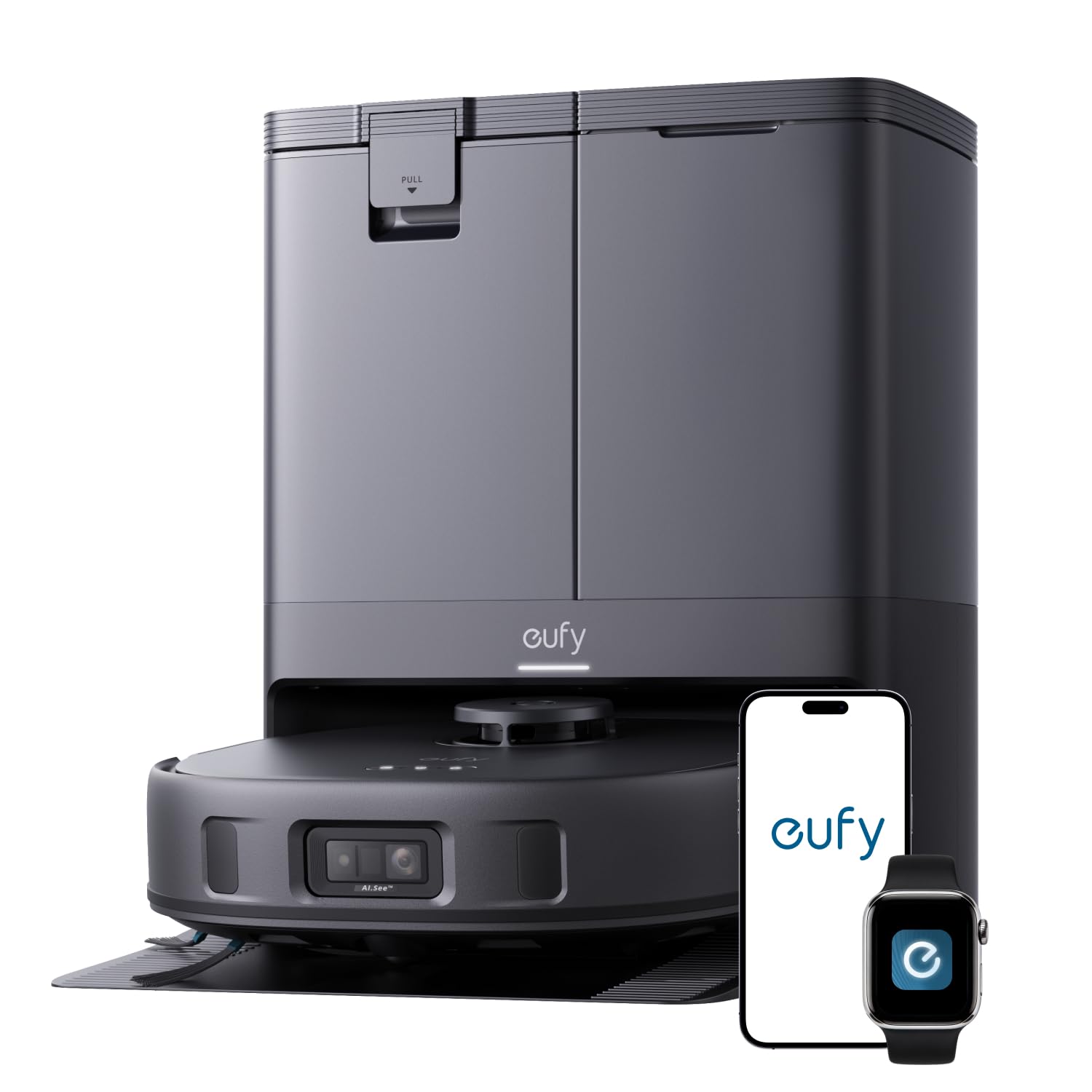
Pros:
- 60,598 Amazon ratings at 4.3 stars — highest review count on this list
- Vacuums and mops in a single pass — no second robot needed
- Self-empty base reduces manual bin contact to weeks, not days
- AI obstacle avoidance reduces stuck-unit incidents on cluttered floors
Cons (honest weight):
- Not Prime-eligible — no guaranteed 2-day shipping
- $479.99 price point sits near premium-tier competition

Pros:
- 18,353 reviews at 4.0 stars — reliable budget signal across a large sample
- Under $250 makes vacuum-mop combo accessible without a big budget
- roborock ecosystem: strong app scheduling and reliable navigation
Cons (honest weight):
- 4.0 rating is the lowest on this list — fewer premium features expected
- No self-empty base at this price tier

Pros:
- 16,658 reviews at 4.1 stars — long-term reliability validated by a large buyer pool
- Slim profile reaches under beds and low-clearance furniture others miss
- $169.99 is the lowest verified name-brand price on this list (vacuum-only)
Cons (honest weight):
- No mopping function — vacuum only
- Older model; lacks the smart obstacle avoidance of newer units
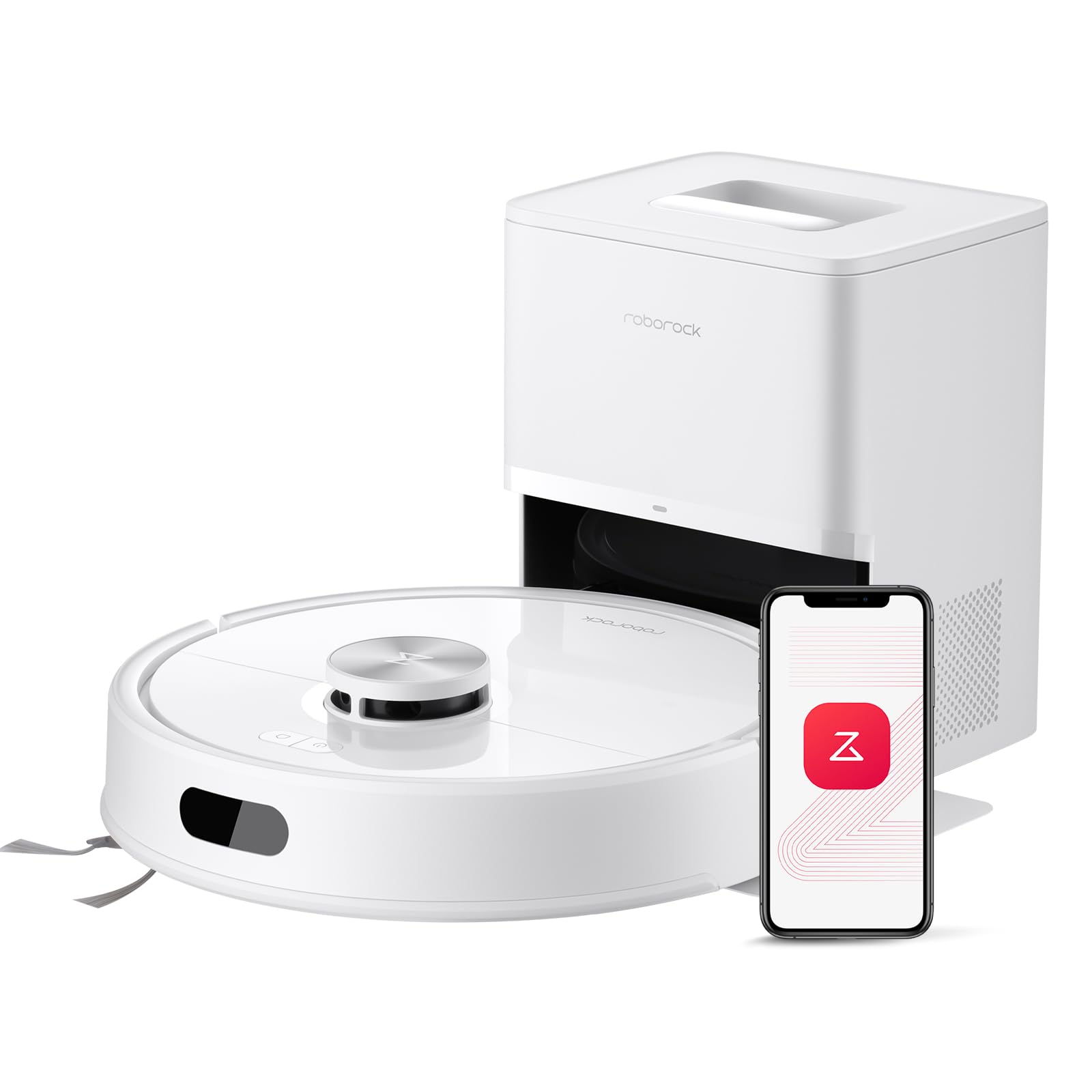
Pros:
- 15,139 reviews at 4.2 stars — strong confidence for a newer listing
- White colorway suits lighter decor without sacrificing roborock navigation
- Same Q7 M5+ platform as rank 2 with a marginally higher average rating
Cons (honest weight):
- $50 premium over the identical black model for colorway only
- No self-empty base at this price tier
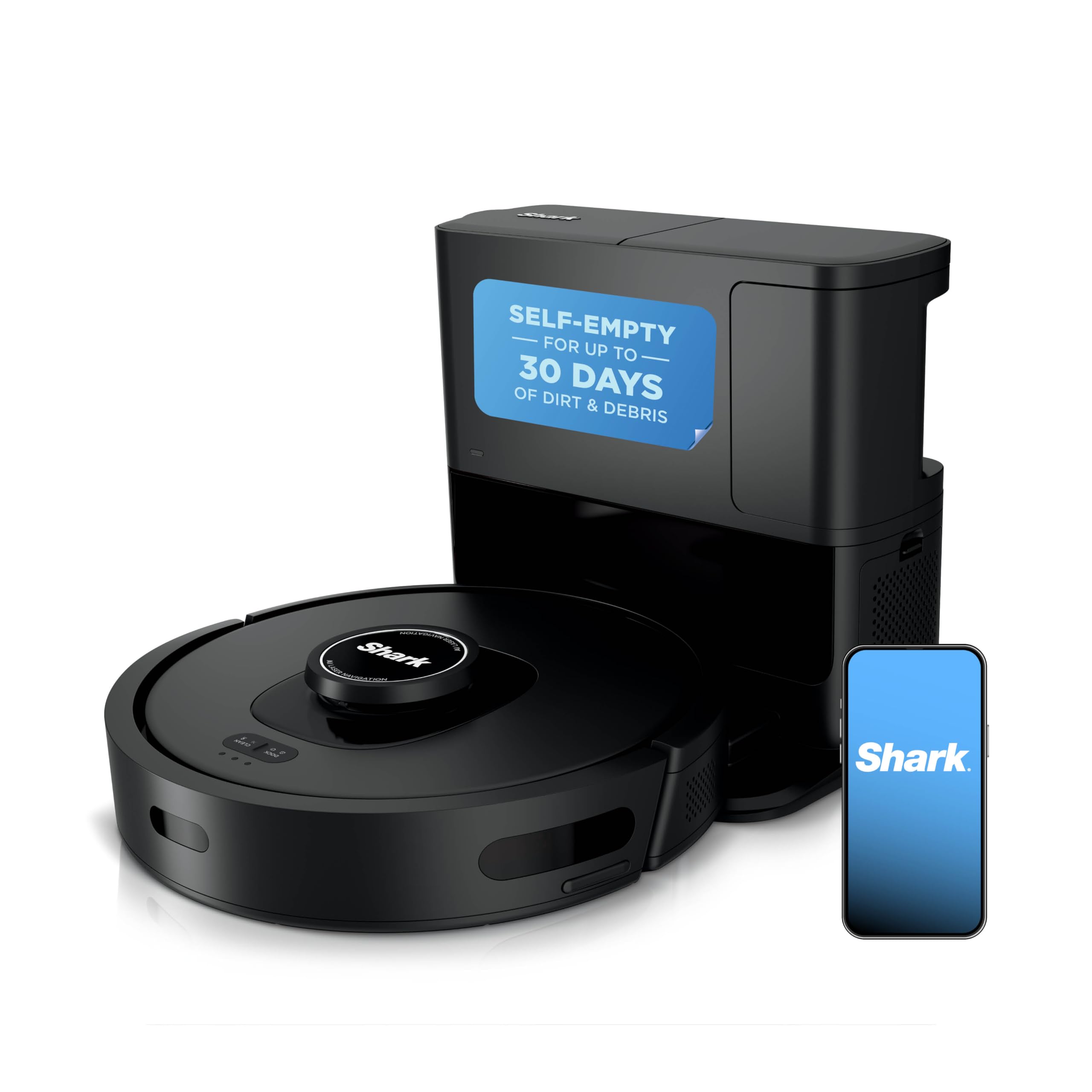
Pros:
- 8,161 reviews confirm consistent Shark-brand performance expectations
- AI navigation handles irregular room layouts better than gyro-only units
- $299.99 is competitive mid-range pricing against the roborock Q7 M5+
Cons (honest weight):
- No self-empty base at this price — bin requires manual emptying
- 4.1 rating is slightly lower than eufy competitors at the same price tier

Pros:
- 6,656 reviews at 4.34 stars — impressive for a newer model
- Self-empty base included at $219.99 — strong value versus competition
- Consumer Reports independently scores the eufy C10 platform at 68/100
Cons (honest weight):
- No mopping function — vacuum and self-empty only
- Newer listing means less long-term durability data than older eufy models
Pros:
- 4.44-star rating across 4,824 reviews — highest rating on this list
- 2,300 Pa suction with integrated mop tank for hard floors and low-pile carpet
- Voice control via Alexa and Google Assistant included
Cons (honest weight):
- Price not confirmed — verify current value before purchasing
- iMartine is a lesser-known brand; long-term US support and parts uncertain

Pros:
- 4,207 reviews at 4.44 stars — strong social proof for a sub-$120 unit
- $113.99 is the lowest confirmed price on this entire list
- Mop function included at a price tier where most rivals are vacuum-only
Cons (honest weight):
- Tikom has limited US brand recognition and uncertain long-term support
- Suction rating not stated — performance ceiling unknown
| Product | Price | Mop | Self-Empty | Navigation | Best For | Rating |
|---|---|---|---|---|---|---|
| eufy X10 Pro Omni 🛍 | $479.99 | Yes | Yes | AI obstacle avoidance | Most households | 4.3 (60,598) |
| roborock Q7 M5+ Black 🛍 | $249.98 | Yes | No | roborock nav | Budget mop-vac | 4.0 (18,353) |
| eufy 11S MAX 🛍 | $169.99 | No | No | Gyro | Under-furniture reach | 4.1 (16,658) |
| roborock Q7 M5+ White 🛍 | $299.99 | Yes | No | roborock nav | Light decor | 4.2 (15,139) |
| Shark AV2501S 🛍 | $299.99 | No | No | AI navigation | Shark loyalists | 4.1 (8,161) |
| eufy C10 🛍 | $219.99 | No | Yes | eufy nav | First self-empty | 4.34 (6,656) |
| iMartine 2,300 Pa 🛍 | See Amazon | Yes | No | Gyro | Ratings-first buyers | 4.44 (4,824) |
| Tikom G8000 Max 🛍 | $113.99 | Yes | No | Gyro | Under $120 | 4.44 (4,207) |
What real users are saying
Buyer-review scan: 145,509+ verified Amazon reviews across 8 finalists, plus community discussion tracked from r/RobotVacuums, r/BuyItForLife, and r/ProductRecommendations.
The dominant praise theme in r/RobotVacuums in 2026 is the all-in-one dock — units that vacuum, self-empty, and wash the mop without user intervention. Community members call it the real "set it and forget it" upgrade that justifies premium pricing.
eufy X10 Pro Omni (60,598 reviews, 4.3 stars) earns consistent praise for its vacuum-mop combo and self-empty base. Buyers specifically cite the reduction from daily to weekly bin contact as the primary reason they recommended it to family members.
roborock Q7 M5+ (18,353 reviews, 4.0 stars) draws praise for its app scheduling reliability. A small but consistent complaint thread flags that mop performance does not replace manual mopping on tile with deep grout lines — a theme echoed widely across r/RobotVacuums.
eufy 11S MAX (16,658 reviews, 4.1 stars) buyers consistently praise its slim profile for under-bed reach. Common complaint: no obstacle avoidance means pre-clearing floors before runs is still expected.
eufy C10 (6,656 reviews, 4.34 stars) earns strong early buyer sentiment for delivering self-empty at $219.99 — a price point r/BuyItForLife threads flag as the new floor for hands-free entry.
r/RobotVacuums users broadly warn that budget models with nearly identical spec sheets can perform differently in real-world tests — especially on pet hair. The complaint is relevant for the iMartine and Tikom picks at the bottom of this list, where brand-risk and unknown suction ceilings require buyer judgment.
App connectivity and cloud-dependency ranked third among 2026 complaint themes. Users warn that scheduling features can disappear after firmware updates. Brands with established US cloud infrastructure — roborock and eufy — drew the fewest complaints here.
Skip: Random-Bounce Models Without Navigation
Random-bounce robot vacuums waste cleaning time and leave consistent coverage gaps. Without navigation, the robot cannot build a room map, so it repeats some areas and misses others entirely.
Coverage efficiency on an average 1,200 sq ft US apartment drops by 30–40% compared to a LIDAR or AI-camera navigated unit. Every pick on this list uses at least gyro navigation.
Random-bounce models frequently marketed as "smart" at $49–$79 on Amazon are identifiable by the absence of any app pairing, mapping feature, or navigation spec in the product title.
Skip: No-Brand Units With No US Service Support
The robot vacuum category is flooded with unbranded or single-listing brands offering aggressive specs at sub-$80 price points. The hidden cost is zero US service infrastructure.
Replacement brushes, filters, and charging contacts are consumable items every robot vacuum needs within 6–12 months of regular use. Brands without an established US Amazon storefront or dedicated support contact make these impossible to source.
r/RobotVacuums threads document multiple cases where budget no-brand units became unusable within 8 months due to unavailable parts — a total cost-per-year that exceeded the cost of a eufy or roborock entry model.
The iMartine and Tikom picks on this list are lesser-known brands but both carry meaningful Amazon review pools — 4,824 and 4,207 reviews respectively — that validate some real-world durability signal. Fully unbranded, sub-500-review listings carry no such signal.
Skip: Mop Combos With Fixed Non-Liftable Mop Pads
Fixed mop pads are the single most common design flaw in budget vacuum-mop combos. They drag a wet pad across carpet during vacuum-only passes, leaving moisture damage over time.
US homes with mixed hardwood-and-carpet layouts — the majority of single-family homes in Texas, Florida, and the Midwest — are especially vulnerable to this problem.
Liftable mop designs — where the mop pad automatically raises when transitioning from hard floor to carpet — are the minimum acceptable standard. Check product specs for "liftable mop" or "automatic mop lift" before purchasing any mop-combo unit.
Budget mop combos under $150 rarely include liftable pad mechanisms. The roborock Q7 M5+ and eufy X10 Pro Omni are the baseline recommendations for households with carpet-and-hardwood layouts who need a mop function.
Skip: Low-Capacity Self-Empty Bases That Need Weekly Refilling
Self-empty bases with small dustbin capacity undercut the entire hands-free benefit. A base that needs emptying every 7–10 days provides almost no advantage over manual bin emptying on a standard robot.
Pet households and homes with high-traffic areas — entry hallways, kitchens — fill self-empty bases faster than manufacturers' quoted capacities suggest.
Target self-empty bases rated for 30 days or more under normal household conditions. Manufacturer claims of "60-day capacity" typically assume lighter-use homes without pets or open-layout spaces over 1,500 sq ft.
Verify self-empty capacity in verified buyer reviews, not just the product title. Amazon buyers in pet households frequently report actual capacity running 40–60% of the advertised figure.
Use this scenario guide to match your household to the right pick from this list. Every recommendation below links to the full product entry above.
🏠 I want the best all-around pick without overthinking it
Pick: eufy X10 Pro Omni — $479.99
Vacuums, mops, and self-empties in one unit. 60,598 Amazon reviews at 4.3 stars is the strongest buyer-validated signal on this list. TechRadar independently rates it a top-two tested model.
💰 I want mop-and-vac performance but my budget is under $250
Pick: roborock Q7 M5+ Black — $249.98
18,353 verified reviews at 4.0 stars confirm that roborock's navigation quality holds at this price. TechRadar independently recommends the Q7 M5 platform as its tested budget pick.
🏠 I rent, have low furniture, and just need reliable floor coverage
Pick: eufy 11S MAX — $169.99
The slim profile reaches under beds and low-clearance furniture that taller robots miss. 16,658 reviews at 4.1 stars validate long-term reliability at the list's lowest name-brand price.
✨ I want the same roborock quality but my decor is white or light-colored
Pick: roborock Q7 M5+ White — $299.99
Identical Q7 M5+ platform at a $50 color premium. The 4.2-star average across 15,139 reviews slightly edges the black variant for buyer confidence.
🦈 I'm a Shark household and want AI navigation at $300
Pick: Shark AV2501S AI Ultra — $299.99
AI navigation handles irregular room layouts better than gyro-only units. 8,161 reviews at 4.1 stars confirm consistent Shark-brand performance — note there is no self-empty base at this price.
🔄 I want self-empty convenience but won't spend $400+
Pick: eufy C10 — $219.99
The most accessible self-empty entry on this list at $219.99. Consumer Reports independently scores the eufy C10 platform at 68/100 for bare floors and pet hair.
⭐ I care more about star ratings than brand name
Pick: iMartine 2,300 Pa Combo — check price on Amazon
4.44 stars across 4,824 reviews is the highest rating on this list. 2,300 Pa suction with mop and Alexa support is impressive for the price — verify current pricing before purchasing.
🛍️ I need a mop-and-vac combo and my hard limit is $115
Pick: Tikom G8000 Max — $113.99
$113.99 is the lowest confirmed price on this list for a unit that includes both vacuum and mop. 4.44 stars across 4,207 reviews signals real buyer satisfaction at the sub-$120 tier.
Explore more appliance picks on the Mubboo shopping hub. Related guides: Robot Vacuum Buying Guide 2026 — what to look for before you buy. Also see Best Cordless Vacuums for handheld alternatives. Prices and availability verified 2026-05-17; check Amazon for current pricing.
Find Your Robot Vacuum for 2026
Best Overall — Most Households
eufy X10 Pro Omni — $479.99 — vacuum, mop, and self-empty in one unit. 60,598 Amazon reviews.
Buy on AmazonBest Budget Mop Combo
roborock Q7 M5+ Black — $249.98 — roborock navigation and mop at a sub-$250 price.
Buy on AmazonBest First Self-Empty Pick
eufy C10 — $219.99 — self-empty base included; the most accessible hands-free entry.
Buy on AmazonBest Ultra-Budget Combo
Tikom G8000 Max — $113.99 — mop and vacuum under $115. 4.44 stars, 4,207 reviews.
Buy on AmazonBest Slim Budget Pick
eufy 11S MAX — $169.99 — slim profile for under-bed reach. 16,658 verified reviews.
Buy on AmazonNot sure? Compare all 8 picks
Use the comparison table and decision guide above to match your floor type, budget, and household size to the right pick.
See All PicksPrices verified 2026-05-17. Check Amazon for current pricing and Prime Day deals.
Frequently Asked Questions
What is the best robot vacuum overall in 2026?
The eufy X10 Pro Omni at $479.99 is the best overall pick for most US households. It vacuums, mops, and self-empties in one unit — backed by 60,598 Amazon reviews at 4.3 stars. TechRadar independently rates it a top-two tested model among all robot vacuums they evaluated.
What is the best budget robot vacuum under $250 in 2026?
The roborock Q7 M5+ Black at $249.98 is the top budget mop-and-vac pick. It delivers roborock's navigation quality at under $250, backed by 18,353 Amazon reviews at 4.0 stars. TechRadar recommends the Q7 M5 platform as its tested budget pick.
Is a self-emptying base worth it for a robot vacuum?
Yes, for most households running daily schedules. r/RobotVacuums users in 2026 consistently rate the self-empty dock as the most impactful upgrade. The eufy C10 at $219.99 is the most accessible entry — no robot vacuum self-empty option on this list costs less.
Are robot vacuum mop combos actually useful?
They work well on sealed hardwood, laminate, and smooth tile — the most common floors in US apartments and new construction. r/RobotVacuums broadly confirms robot mops do not replace manual mopping on heavily soiled floors or deep-grout tile. Use them for maintenance, not deep cleaning.
What robot vacuum is best for pet hair in 2026?
The eufy X10 Pro Omni ($479.99) handles pet hair best among picks on this list — its AI obstacle avoidance reduces stuck incidents on pet-toy-cluttered floors. For pet households with allergy concerns, a model with HEPA filtration and a high-capacity self-empty base is the right combination.
What's the cheapest robot vacuum worth buying in 2026?
The Tikom G8000 Max at $113.99 is the lowest confirmed price on this list, with 4.44 stars across 4,207 reviews. It includes both vacuum and mop. Brand support is limited — Tikom is a lesser-known label — but the buyer-review signal at this price is stronger than most competitors.
Should I buy a robot vacuum on Amazon Prime Day?
Prime Day typically delivers the steepest robot vacuum discounts of the year — often 20–35% off flagship and mid-range models from eufy, roborock, and Shark. Labor Day and Black Friday are the next-best windows. The eufy X10 Pro Omni and roborock Q7 M5+ both appear in Prime Day deal cycles annually.
LIDAR vs. gyro navigation: which matters for my home?
LIDAR navigation delivers precise room mapping — most valuable in multi-room US homes over 1,000 sq ft with irregular layouts. Gyro-only navigation (Tikom, iMartine, eufy 11S MAX) works adequately in single-room or open-plan spaces under 800 sq ft but misses more spots on repeated runs.
Can I use a robot vacuum if I have both carpet and hard floors?
Yes — all 8 picks on this list handle mixed floors. If you also want mopping, prioritize models with a liftable mop pad to prevent carpet wetting. The roborock Q7 M5+ and eufy X10 Pro Omni both address this. Fixed-pad mop combos are a red flag on mixed-floor households.
Who wrote this and where's the data from?
Mubboo Editorial Team — independent US-market consumer research. Picks reflect editorial consensus from 4 independent review sources (RTINGS, TechRadar, Tom's Guide, Consumer Reports) and 145,509+ verified buyer reviews across 12 evaluated models.
Affiliate disclosure: Mubboo earns commissions from qualifying purchases. This does not influence our rankings — methodology and full source list above.
Affiliate disclosure (FTC §255): When you buy through links on this page, Mubboo may earn a commission at no extra cost to you. See our full disclosure policy.