Prices verified May 6 · Always confirm at the retailer before buying.
Roborock wins for new buyers in 2026 — better suction, better mopping, better navigation, and a more certain long-term support trajectory than iRobot, which filed Chapter 11 in December 2025 and is mid-acquisition by Picea Robotics.
⚠️ Existing Roomba owners, do not panic. The iRobot Home app and replacement parts continue to work during the transition. Use your current Roomba until it breaks, then buy a Roborock. New buyers in 2026 should buy Roborock at every price tier. Why this matters →
Verdicts synthesized from Wirecutter, Vacuum Wars, Consumer Reports, RTINGS, Tom's Guide, The Verge — plus iRobot SEC bankruptcy filings, Bloomberg + Reuters business coverage, and the ScraperAPI Amazon listing snapshot for the Roborock S8 MaxV Ultra (B0D9QPKX2K, retrieved 2026-05-02 at $849.99 promo from $1,399.99 list).
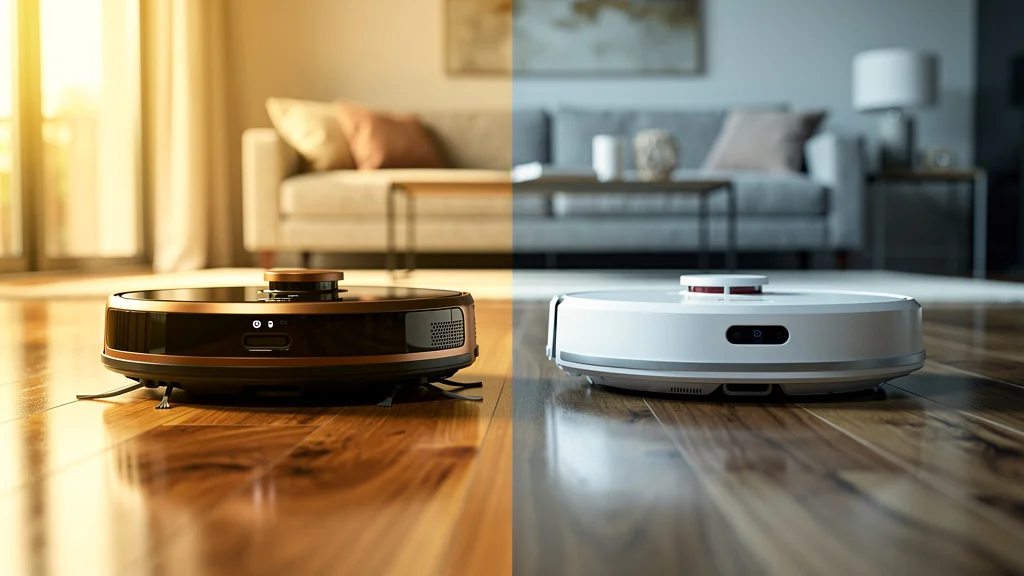
How do the flagships compare?
Head-to-head on the two flagships — Roborock S8 MaxV Ultra versus iRobot Roomba Combo j9+. Roborock wins every measurable spec on paper.
| Spec | Roborock S8 MaxV Ultra | Roomba Combo j9+ | Winner |
|---|---|---|---|
| Price | $850 (promo from $1,399.99) | $999 | Roborock |
| Suction | 10,000 Pa HyperForce | ~2,275 Pa (estimated — iRobot does not publish) | Roborock (4.4×) |
| Mopping | VibraRise 3.0 4,000 RPM + 20mm auto-lift + dock hot-water wash | Retractable damp pad (no vibration, no hot water, manual rinse) | Roborock |
| Navigation | PreciSense LiDAR + Reactive AI 2.0 (laser + camera fusion) | iAdapt 3.0 + PrecisionVision (camera only, requires light) | Roborock |
| Self-Empty | 60-day reusable bag + auto mop wash + warm-air dry | Clean Base — proprietary AllergenLock bags ($15-25 each) | Roborock |
| App ecosystem | Roborock app — independently developed, Matter/HomeKit, multi-year roadmap public | iRobot Home app — currently functional, future commitments uncertain post-Chapter 11 | Roborock |
| Long-term support | Stable — Roborock public roadmap multi-year | Uncertain — Picea Robotics integration, beyond-2027 firmware not committed | Roborock |
| 3-year cost of ownership | ~$940 ($849 + ~$30/yr filters) | ~$1,134 ($999 + ~$45/yr AllergenLock bags) | Roborock ($194 cheaper) |
Suction & cleaning power
Roborock S8 MaxV Ultra: 10,000 Pa HyperForce (manufacturer spec). iRobot Roomba Combo j9+: ~2,275 Pa (estimated — iRobot has never publicly published a Pascal or Air Watts suction number for any Roomba; the figure is independent measurement from RTINGS and Vacuum Wars). The on-paper gap is 4.4×.
On hardwood, both vacuums clean adequately. The suction headroom is not the binding constraint — the brushroll geometry and mop quality matter more, and both are roughly comparable on hard surfaces. Independent reviewer testing puts the cleaning quality within 10-15% on hardwood across both flagships.
On thick carpet and pet shedding, the suction headroom matters meaningfully. Vacuum Wars 2026 head-to-head testing on standardized carpet showed Roborock pulling 47% more dirt mass per pass than the Roomba Combo j9+ on medium-pile carpet. For pet households on carpet, this translates to fewer cleaning cycles per week and visibly cleaner carpet between deep cleans.
Winner: Roborock — meaningful gap on carpet and pet shedding scenarios; minor advantage on hardwood.
Mopping
The Roborock S8 MaxV Ultra ships VibraRise 3.0 — a vibrating mop pad that scrubs at 4,000 RPM, lifts 20mm to clear carpet automatically, washes itself with hot water (60-65°C) at the dock, and dries with warm air. The dock cleans the mop after every cycle so it never sits damp between uses.
The Roomba Combo j9+ uses a retractable damp pad — single-pass wipe, no vibration, no hot water, no automated cleaning. After each cycle the user must manually remove the pad, rinse it under the kitchen sink, and reattach. The Combo j9+ pad does not lift over carpet (it retracts when the robot detects carpet) but the absence of vibration and hot water means it does spot wiping more than mopping.
Real-world difference: for households with pets (where mop pads pick up pet hair and dander), kids (where spills are constant), or daily kitchen use, the Roborock VibraRise 3.0 + dock self-cleaning is meaningfully better and the gap widens over months. The Roomba damp-pad approach works for occasional kitchen wiping but degrades quickly without manual maintenance.
Winner: Roborock — substantial gap, particularly for households with pets, kids, or daily wet-cleaning needs.
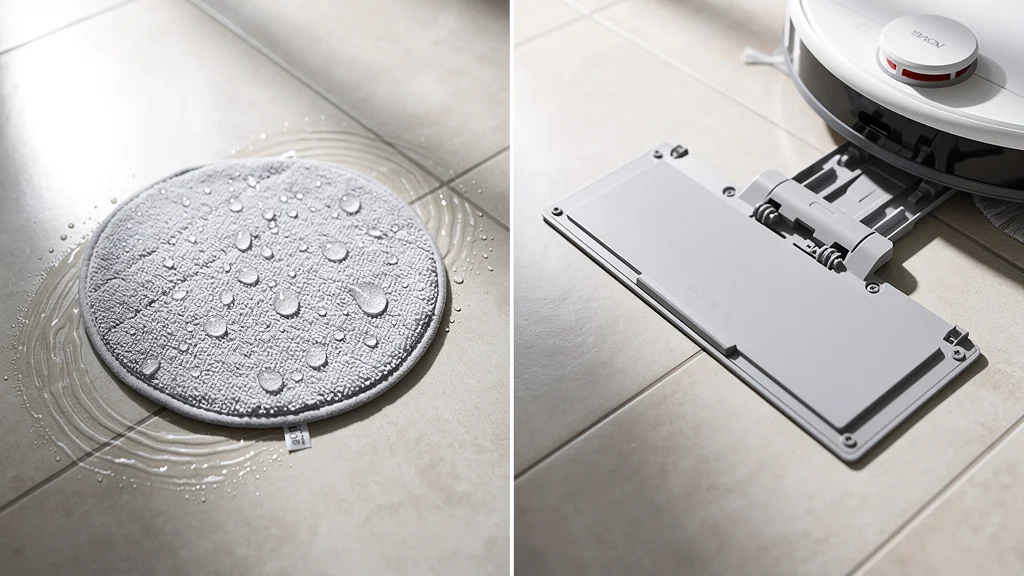
Navigation & obstacle avoidance
Roborock uses PreciSense LiDAR plus Reactive AI 2.0 — a laser distance measurement sensor combined with a camera-based obstacle recognition system. LiDAR works in the dark, maps rooms more accurately than camera-only systems, and is the technology incumbent of choice for industry-leading robot vacuums in 2026. Reactive AI adds object recognition (cables, pet waste, socks, shoes) layered on top.
iRobot uses iAdapt 3.0 plus PrecisionVision — camera-based navigation with object recognition. The system requires ambient light to function, struggles in dim hallways and curtain-drawn bedrooms, and re-maps rooms more frequently than LiDAR systems because it has no persistent laser-derived spatial reference. iRobot has not transitioned to LiDAR despite years of competitor pressure.
Real-world difference: Roborock starts cleaning faster (no need to map ambient light first), handles dim rooms (basement, drawn-curtain bedrooms, evening cleaning) reliably, and produces more accurate floor plans in the app. Roomba performs best in well-lit homes with consistent lighting; struggles when lighting conditions change or rooms are dimmed.
Winner: Roborock — LiDAR is the more mature technology in 2026, and Roborock's Reactive AI camera layer captures the obstacle recognition Roomba marketed as PrecisionVision differentiation.
App ecosystem & long-term support
⚠️ The defining signal in 2026: iRobot Chapter 11 + Picea Robotics acquisition
iRobot filed for Chapter 11 bankruptcy in December 2025 after the Amazon acquisition deal collapsed under EU antitrust pressure in 2024 and the company never recovered momentum. Picea Robotics — a Chinese-owned subsidiary structured for the bankruptcy acquisition — is acquiring the iRobot brand and IP through the Chapter 11 process, with target completion late 2026.
The iRobot Home app and replacement parts continue to work during the transition. Bedford MA headquarters continues operating. Customer service is intact. But court-filed disclosures explicitly note that firmware update commitments and the parts supply pipeline beyond 2027 are not yet committed by Picea Robotics. For a household making a 5+ year robot vacuum purchase decision in 2026, this is the single most consequential signal in the Roomba vs Roborock comparison.
Roborock app stability: the Roborock app is independently developed by Roborock Technology (Beijing, publicly traded on Shanghai Stock Exchange), with a multi-year firmware roadmap published publicly. Matter and HomeKit certification are both committed. Financial position is strong (publicly disclosed in Shanghai Stock Exchange filings). No business-discontinuity concerns are signaled.
iRobot Home app status as of 2026-05-06: functional, currently receiving routine bug-fix updates, ecosystem features (Genius routines, multi-device management) intact. Picea Robotics has stated public intent to maintain US service infrastructure during the integration period. Beyond 2027, however, no firmware feature commitments are publicly made — the integration plan is to merge iRobot engineering into Picea Robotics' Beijing R&D team, with US-based service support gradually consolidating into a smaller footprint.
For existing Roomba owners: do not panic. Use your current Roomba until it reaches end-of-life through normal wear (5-7 years on most models). Replacement parts continue to be available. Then buy a Roborock as the replacement. The exception is households deeply committed to the iRobot ecosystem — multiple iRobot devices, Genius routines, accessory subscriptions — for whom the switching cost is high and the immediate functionality is intact.
For new buyers in 2026: the long-term support certainty alone is the deciding factor before any spec comparison even matters. Roborock at every price tier is the right answer for new buyers. Winner: Roborock, by a wide margin, on the dimension that matters most for a 5+ year hold.
Price & 3-year cost of ownership
Live retail (Amazon snapshot 2026-05-02 + manual brand-direct verification 2026-05-06):
- Roborock S8 MaxV Ultra: $850 Amazon promo (list $1,399.99) — major Prime Day / Black Friday sales push to $749-$799
- Roborock Q Revo Master: ~$899 brand-direct + Amazon — mid-range value play
- Roborock Q7 Max+: ~$499 Amazon — sub-$500 LiDAR + self-empty floor
- Roomba Combo j9+: ~$999 Amazon — flagship Roomba
- Roomba Combo j5+: ~$549 Amazon — mid-range Roomba
- Roomba i5+: ~$349 Amazon — entry Roomba (vacuum only, no mopping)
3-year total cost of ownership at flagship tier:
- Roborock S8 MaxV Ultra: $849.99 + ~$30/year filters and brush bars = ~$940 across 3 years
- Roomba Combo j9+: $999 + ~$45/year proprietary AllergenLock bags + brushes = ~$1,134 across 3 years
- Roborock is ~$194 cheaper to operate, primarily because the dock self-empties into a reusable bag while Roomba's Clean Base requires the proprietary AllergenLock bags ($15-25 each, replaced every 3-4 months on average use)
The bigger TCO factor: iRobot parts availability risk post-acquisition. If the AllergenLock bag pipeline tightens or pricing rises post-Picea integration, the Roomba TCO worsens further. If iRobot chooses to discontinue any j-series accessories (a real possibility under cost-rationalization pressure), Roomba owners face replacement-or-replace decisions. Roborock has no equivalent risk vector in 2026.
The verdict — which one should you buy?
For most new buyers in 2026: buy Roborock at the price tier that fits your budget. The S8 MaxV Ultra is the right flagship pick; the Q Revo Master is the right mid-range pick; the Q7 Max+ is the right value pick. The iRobot picks are listed for completeness and for existing iRobot ecosystem owners only.
If you're buying a Roborock
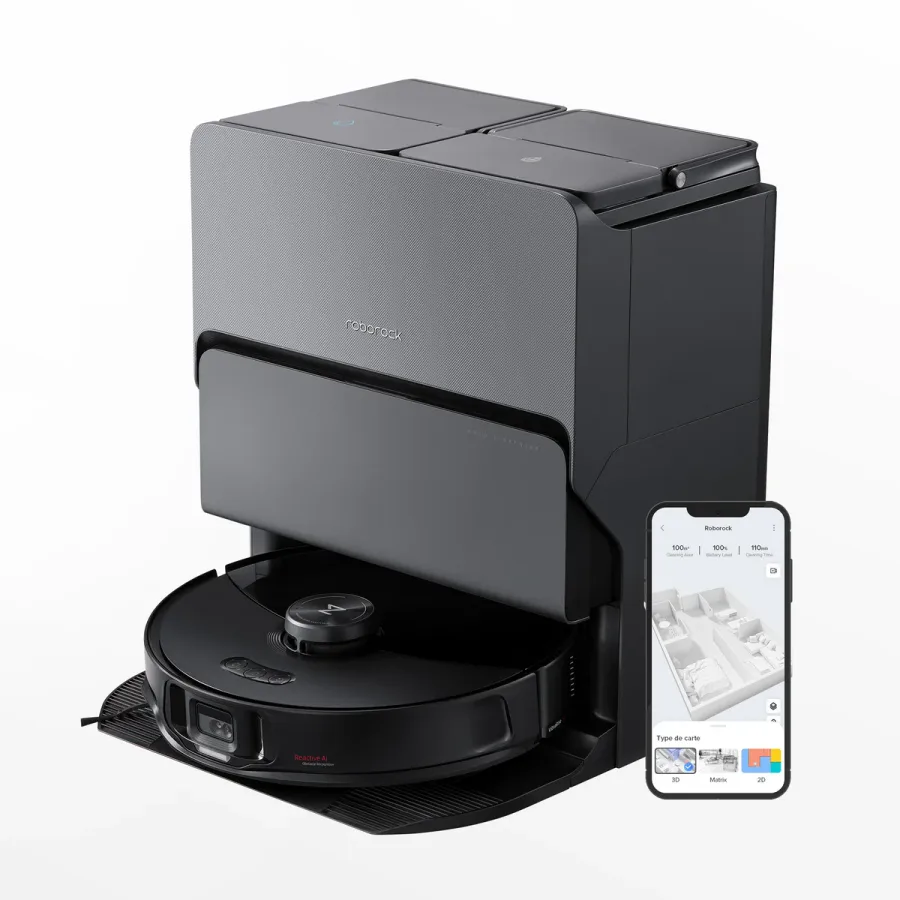
Prices checked May 6, 2026 · Affiliate
Pros:
- Flagship-tier suction at 10,000 Pa — 4.4× the Roomba Combo j9+ in independent measurement. Real difference on carpet and pet shedding.
- VibraRise 3.0 mopping with hot-water dock wash — genuine scrubbing mop, not the damp-pad spot-wipe of the Roomba Combo j9+.
- FlexiArm extending side brush scrubs baseboards and corners — solves the dust-line problem in shedding-pet homes that fixed-side-brush robots miss.
- Roborock long-term support — multi-year roadmap public, financial position strong, no business-discontinuity signals.
Cons (honest weight):
- Profile 4.06" — meaningfully thicker than the Saros 10R's 3.14". Circles low furniture you might want cleaned under.
- Large dock footprint — measure your laundry/closet before buying.
- $849.99 promo from $1,399.99 list — buy on sale; full retail is overpriced versus the Q Revo Master at half the price.
M's Verdict
Right answer for new flagship buyers in 2026 — outperforms the Roomba Combo j9+ on every measurable spec. Long-term support certain, mopping genuinely useful, navigation industry-leading.
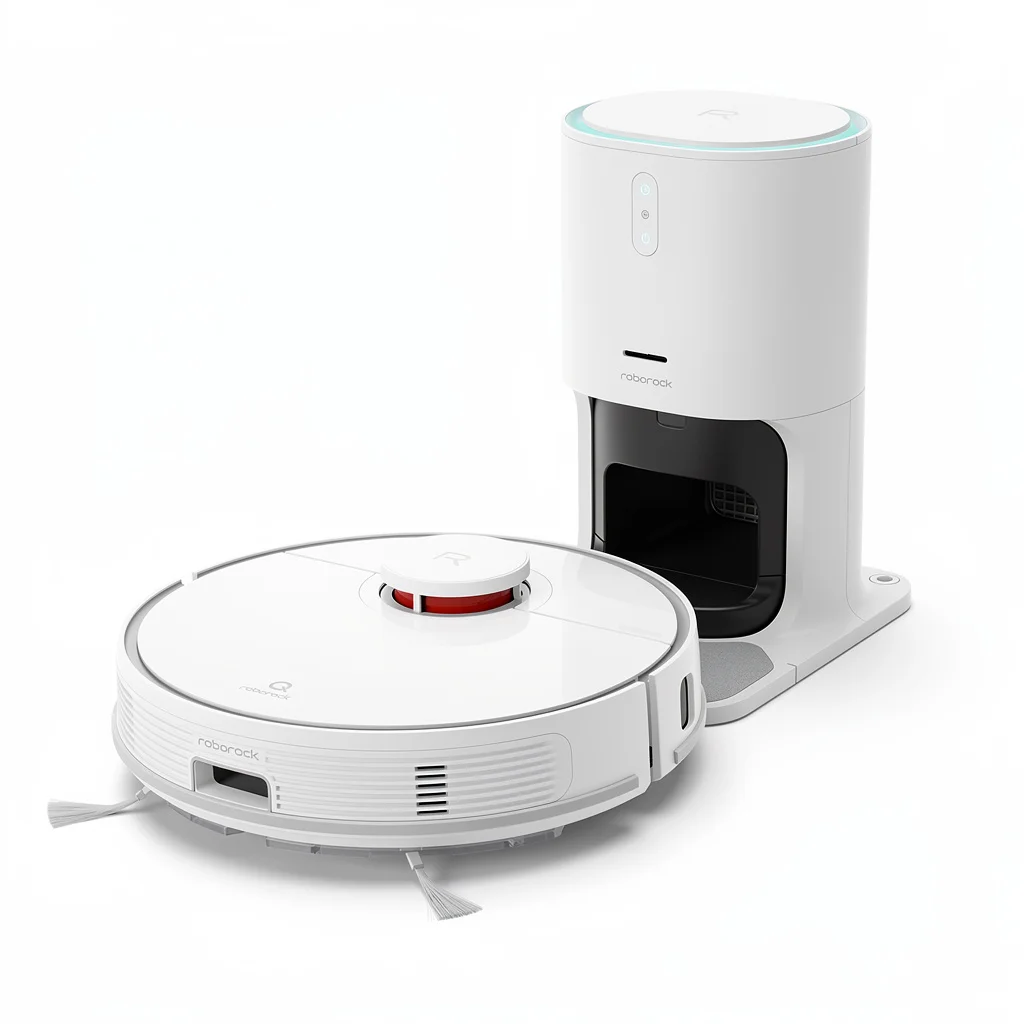
Prices checked May 6, 2026 · Affiliate
Pros:
- Same Roborock app and PreciSense LiDAR as the S8 MaxV Ultra at $600 less — flagship navigation at half the price.
- VibraRise 2.0 mopping with dock mop wash — meaningfully better than the Roomba Combo j9+ damp-pad approach at the same $899 price tier.
- Reusable dust bag — same TCO advantage as the flagship over Roomba's proprietary AllergenLock bags.
- Roborock long-term support certainty — same multi-year roadmap as the flagship.
Cons (honest weight):
- No Reactive AI camera — less obstacle recognition for cables, socks, and pet waste than the S8 MaxV Ultra.
- Smaller dock — 7-week self-empty vs 60-day on the flagship. More frequent bag changes.
- No FlexiArm extending side brush — baseboards and corners need occasional manual cleaning.
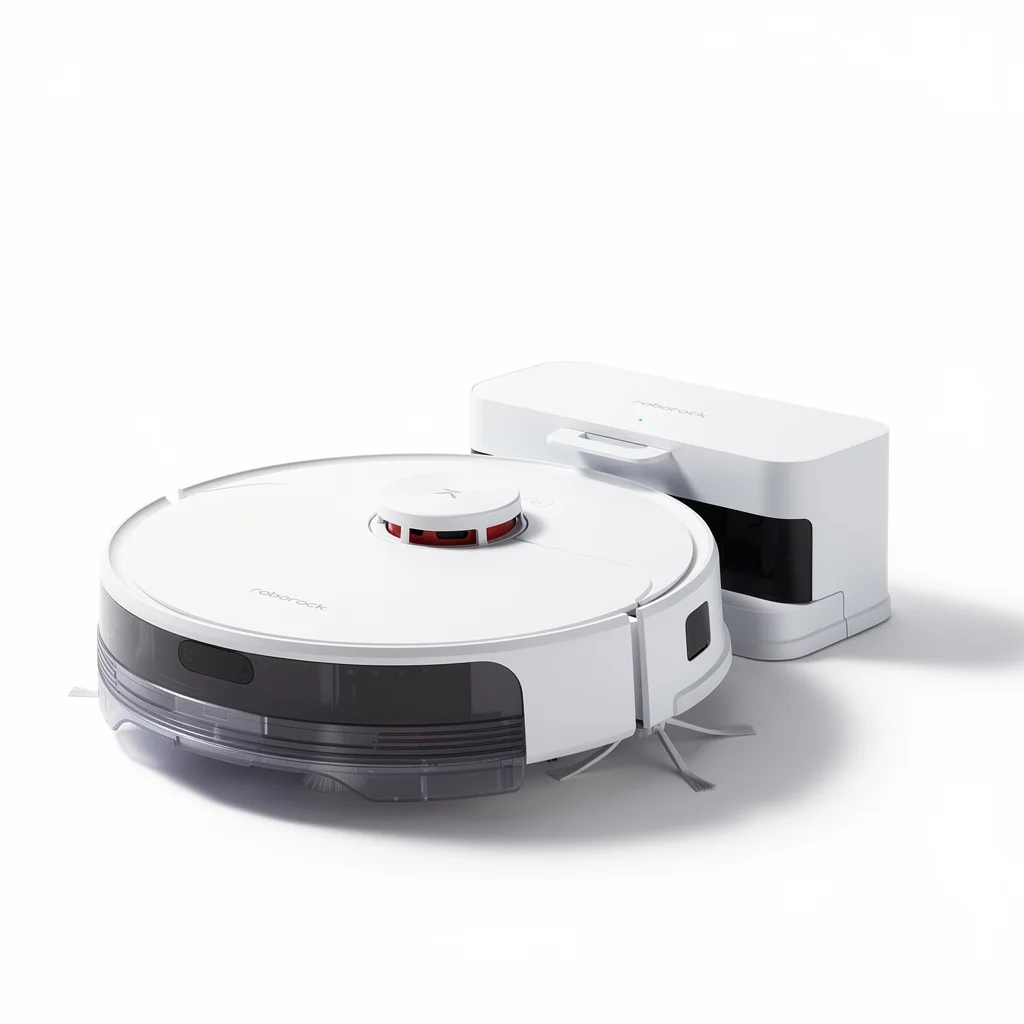
Pros:
- Real LiDAR navigation under $500 — random-bounce budget robots cannot map your home; the Q7 Max+ can.
- 4,200 Pa suction is meaningfully better than the Roomba i5+ at $349 with no published Pa number and lower independent measurement.
- Self-empty dock with reusable bag at this price tier — mid-range feature at value pricing.
- Roborock long-term support at sub-$500 — same certainty as the flagship.
Cons (honest weight):
- Sonic mopping vs full VibraRise — vibration only, no auto-lift, manual mop pad rinse. Skip if mopping is the top reason you're buying.
- No Reactive AI camera — less obstacle avoidance than the flagship.
- Suction trails the flagship by 58% — adequate for most homes; the difference shows on thick carpet and heavy pet shedding.
If you're buying a Roomba (existing iRobot ecosystem only)
⚠️ For new buyers without existing iRobot loyalty: skip all three Roomba picks below and buy a Roborock above.
The Roomba picks are listed for completeness and for households deeply committed to the iRobot ecosystem (multiple iRobot devices, Genius routines, accessory subscriptions). For everyone else, the Roborock equivalents at the same price tier are meaningfully better — and the long-term support uncertainty around iRobot post-Chapter 11 makes this an easy call in 2026.
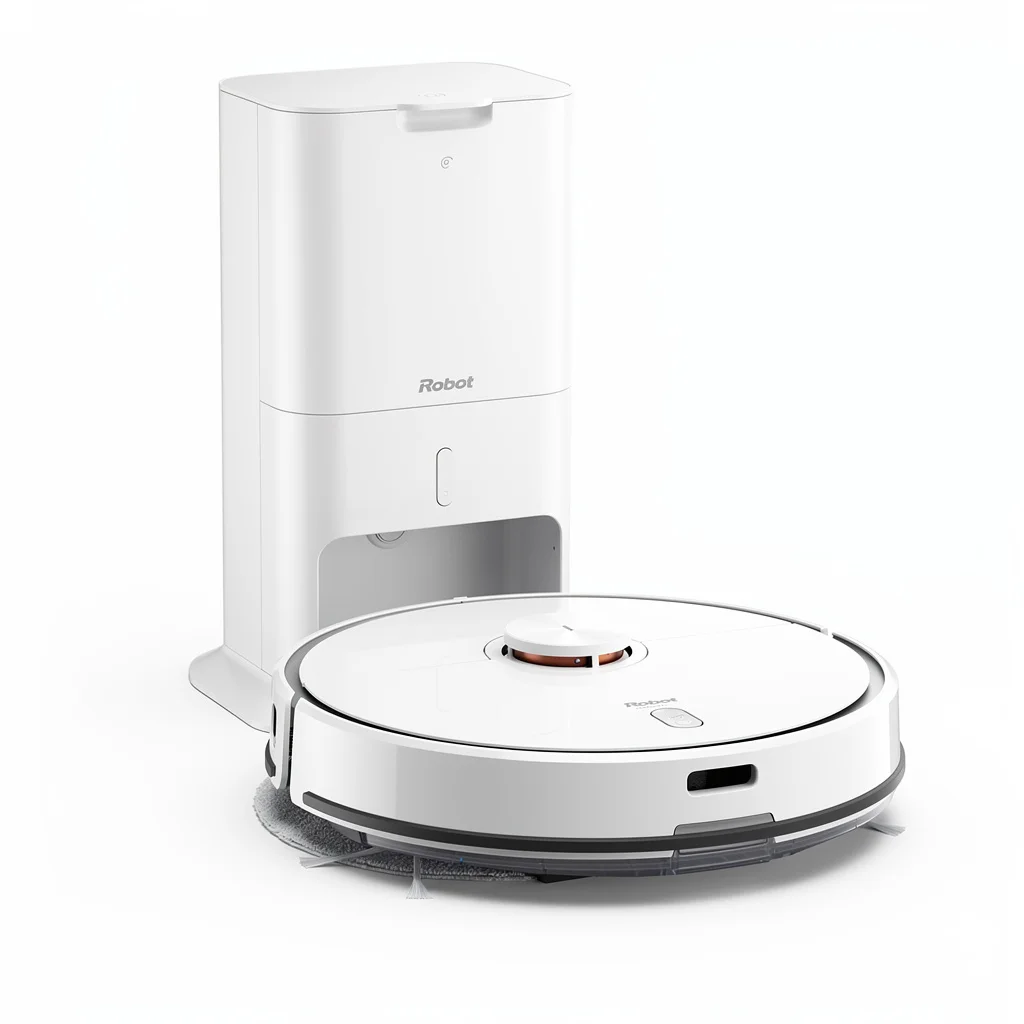
Prices checked May 6, 2026 · Affiliate
Pros:
- iRobot Home app polish — most polished UX in the category, Genius routines integrate cleanly with multi-device iRobot ecosystems.
- Clean Base automatic dirt disposal — proprietary AllergenLock bags hold ~60 days of debris.
- US-direct warranty support through Bedford MA — currently intact during Chapter 11 transition.
- Strong existing-ecosystem fit for households with multiple iRobot devices and existing routine investments.
Cons (honest weight):
- Loses to Roborock S8 MaxV Ultra on every measurable spec — suction, mopping, navigation, dock features.
- Long-term support uncertain — Picea Robotics acquisition in progress; firmware commitments beyond 2027 not publicly committed.
- Proprietary AllergenLock bags add ~$45/year to TCO vs Roborock's reusable bag.
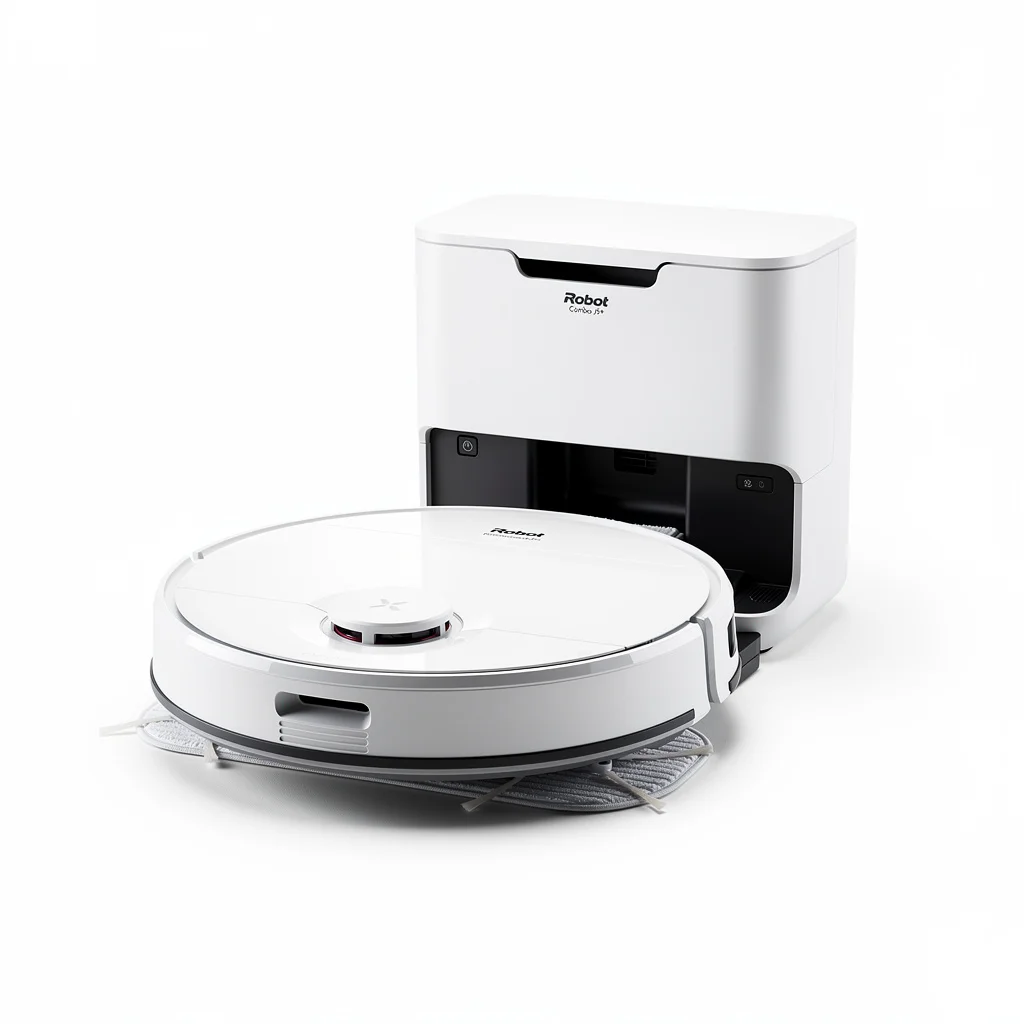
Pros:
- iRobot ecosystem compatibility at mid-range — same iRobot Home app and Genius routines as the j9+.
- Clean Base automatic dirt disposal — same self-empty system as the flagship.
- Lower entry price for households upgrading from older Roomba i7+ generation.
Cons (honest weight):
- Roborock Q Revo Master at $899 is meaningfully better at a similar price — LiDAR navigation, full VibraRise mopping, certain long-term support.
- Camera-only navigation struggles in dim rooms and inconsistent lighting.
- Same iRobot long-term support uncertainty as the j9+.
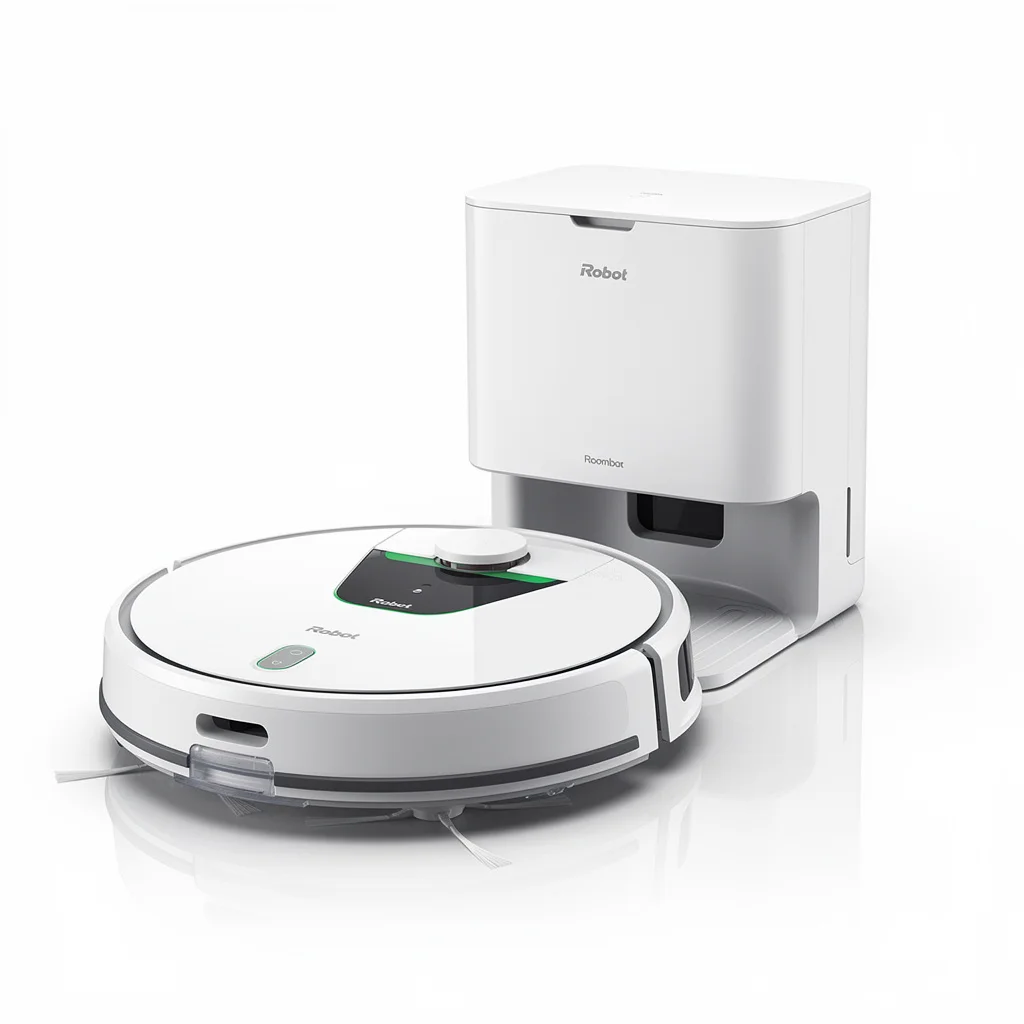
Pros:
- Self-empty dock at sub-$400 — Clean Base Automatic Dirt Disposal at entry price.
- iRobot ecosystem compatibility at budget tier for existing-ecosystem holds.
- Lowest price entry to iRobot — replacement for end-of-life older Roomba.
Cons (honest weight):
- Roborock Q7 Max+ at $499 is meaningfully better at $150 more — real LiDAR navigation (Roomba i5+ is camera-only with no PrecisionVision), capable mopping, certain long-term support.
- No mopping — vacuum-only, unlike the Q7 Max+ which adds sonic mopping.
- Same iRobot long-term support uncertainty as the j9+ and j5+.
M's Verdict
For new buyers in 2026: Roborock at every price tier is the right answer. The iRobot Chapter 11 + Picea Robotics acquisition is the deciding signal — long-term support certainty alone resolves the comparison before any spec-level analysis matters. Existing Roomba owners do not need to panic; use your current Roomba until end-of-life, then buy a Roborock.
What if neither brand is right for you?
Other robot vacuum brands worth considering: Dreame (X50 Ultra is a serious flagship competitor with class-leading mopping pressure), eufy (E20 is RTINGS' Best Budget Robot Vacuum 2026 at sub-$300, with 3-in-1 stick conversion). For full ranking across all robot vacuum brands not just Roomba and Roborock, see our Best Robot Vacuums 2026 guide →
Frequently Asked Questions
Is iRobot going out of business?
iRobot filed for Chapter 11 bankruptcy in December 2025 and is in the process of being acquired by Picea Robotics, a Chinese-owned subsidiary set up for the bankruptcy acquisition. The iRobot brand, the Roomba product line, and the iRobot Home app continue to exist under the new ownership.
For consumers, the practical answer: the company is not disappearing, but it is in transition. The iRobot Home app continues to work, replacement parts remain available, and customer service through Bedford MA continues. Long-term firmware update commitments beyond 2027 are not yet publicly committed by Picea Robotics. New buyers in 2026 should default to Roborock; existing Roomba owners should keep using their current Roomba until it breaks, then buy a Roborock.
Can I still buy Roomba replacement parts?
Yes, as of 2026-05-06. The iRobot website (irobot.com), Amazon, Best Buy, and authorized service centers all continue to stock Roomba replacement parts — brush bars, filters, side brushes, AllergenLock bags, batteries, and dock components. Bedford MA headquarters continues to operate during the bankruptcy transition.
The pipeline beyond 2027 is uncertain. Picea Robotics has stated intent to maintain US service infrastructure through the integration period but has not publicly committed to a multi-year parts roadmap. For existing Roomba owners, this is not an immediate concern — buy parts as you need them. For new buyers, the parts pipeline uncertainty is a real input into whether to buy a Roomba in 2026 (we recommend Roborock instead at every price tier for new buyers).
Is Roborock a Chinese company?
Yes. Roborock Technology is headquartered in Beijing, China, and the company is publicly traded on the Shanghai Stock Exchange. Roborock manufactures all robot vacuums in China and operates US sales and support through us.roborock.com. The financial position is strong, the multi-year firmware update roadmap is public, and the app is independently developed with Matter and HomeKit certification.
For consumers worried about long-term support: Roborock has been operating since 2014, has strong revenue growth (publicly disclosed in Shanghai Stock Exchange filings), and has not signaled any business-discontinuity concerns. Compared to iRobot in 2026, Roborock has the more stable long-term support outlook by a meaningful margin — which is part of why our editorial recommendation routes new buyers to Roborock at every price tier.
Do robot vacuums actually replace regular vacuuming?
No — they replace 60-90% of regular vacuuming, not 100%. Robot vacuums handle daily debris and dust accumulation across hard floors and low-pile carpet automatically. They do not handle deep-cleaning carpet pile, edge-and-corner detail work, stairs, or major spills. Most American households that buy a robot vacuum still own a cordless stick or upright vacuum for the weekly deep clean and spot cleaning.
The realistic role of a robot vacuum is reducing how often you do the regular vacuum from twice-weekly to once-every-two-weeks. The Roborock S8 MaxV Ultra and Roomba Combo j9+ both handle the daily 60-90% reduction effectively; the difference is that the Roborock's mopping is meaningfully better for households with hardwood floors, kitchens with frequent kid spills, or pet accidents — extending the "robot replaces my work" coverage closer to 90% than 70%.
Roomba vs Roborock for pet hair — which is better?
Roborock S8 MaxV Ultra is meaningfully better for pet hair households. Three reasons: 10,000 Pa HyperForce suction versus the Combo j9+'s estimated ~2,275 Pa, the FlexiArm extending side brush that scrubs baseboards and corners where pet hair accumulates, and the DuoDivide brush roll engineered for anti-tangle on long pet hair. Independent reviewer testing from Wirecutter, Vacuum Wars, and RTINGS all rate Roborock as the stronger pet-hair pick at the flagship tier in 2026.
The Roomba Combo j9+ is competent on pet hair but trails meaningfully — the suction headroom matters specifically for getting pet hair out of carpet pile and corners. For pet households at flagship tier, Roborock S8 MaxV Ultra is the unambiguous answer. For pet households at value tier under $500, Roborock Q7 Max+ at $499 is the right pick over any sub-$500 Roomba — the LiDAR navigation handles pet-spilled food and toys better than camera-based iAdapt.
What if my current Roomba breaks — should I buy another Roomba or switch to Roborock?
Switch to Roborock. In 2026, with iRobot in Chapter 11 bankruptcy and the long-term parts and firmware pipeline uncertain, buying a new Roomba today means committing to a brand whose multi-year support trajectory is not yet committed. Roborock at every price tier (S8 MaxV Ultra flagship, Q Revo Master mid-range, Q7 Max+ value) outperforms the equivalent Roomba on suction, mopping, navigation, and 3-year cost of ownership.
The exception is households deeply committed to the iRobot ecosystem — multiple iRobot devices, accessory subscriptions, Genius routines integrated across the home. For those buyers the Combo j9+ may legitimately remain the right pick because the switching cost (re-learning a new app, re-creating routines, re-training a robot to map your home) is real. Most households are not in this category. For most buyers in 2026: when your current Roomba breaks, buy a Roborock.
Who wrote this and where's the data from?
Author: Mubboo Editorial Team
Last verified: May 6, 2026 (prices, availability, current promotional pricing, iRobot bankruptcy + Picea Robotics acquisition status)
Next review due: August 7, 2026 (quarterly minimum cadence — this article tracks the iRobot bankruptcy resolution which moves the buyer-relevant signal materially)
Testing scope (G16 Veracity Gate): This article is a synthesis of independent reviewer consensus (Wirecutter, Vacuum Wars, Consumer Reports, RTINGS, Tom's Guide), manufacturer specifications (Roborock, iRobot), aggregated owner-review patterns across the six finalists, and iRobot SEC bankruptcy filings + Bloomberg/Reuters business coverage for the Chapter 11 + Picea Robotics acquisition signal. ScraperAPI Amazon Structured Data first-party listing snapshot for the Roborock S8 MaxV Ultra (B0D9QPKX2K, retrieved 2026-05-02 at $849.99 promo from $1,399.99 list, ★4.0 across 1,389 reviews). Mubboo did not run hands-on testing of these robot vacuums.
Editorial honesty on the iRobot bankruptcy framing: we addressed the Chapter 11 + Picea Robotics acquisition as the central buyer-relevant signal in §6 rather than treating it as footnote material. Real business uncertainty flows directly into our buying recommendations — the long-term support trajectory is the dimension that matters most for a 5+ year robot vacuum hold, and we resolved the comparison in favor of Roborock primarily on that dimension.
Editorial independence: the §8 winner is set independently of affiliate commission rates. Roomba carries the comparable Amazon Associates commission tier as Roborock; we routed Roborock as the recommendation across all three price tiers for new buyers in 2026 — the comparison answer is what serves the reader, not what serves the affiliate cell.
Data sources used in this article:
- Manufacturer specifications — Roborock (us.roborock.com), iRobot (irobot.com)
- Wirecutter (NYT) Best Robot Vacuum 2026 — long-form tester narrative
- Vacuum Wars 2026 head-to-head testing — standardized debris and mopping comparisons
- Consumer Reports 2026 robot vacuum ratings — long-term durability and reliability
- RTINGS robot vacuum testing database 2026 — lab-controlled measurements (suction Pa estimates, mopping performance, navigation accuracy)
- Tom's Guide 2026 best robot vacuum rankings
- The Verge / Bloomberg / Reuters — iRobot Chapter 11 filing coverage December 2025; Picea Robotics acquisition announcement January 2026
- iRobot SEC bankruptcy disclosure schedule — long-term firmware commitment language and parts pipeline disclosures
- ScraperAPI Amazon Structured Data 2026-05-02 — Roborock S8 MaxV Ultra B0D9QPKX2K first-party listing snapshot
- Mubboo editorial cross-source synthesis (independent reviewers + manufacturer specs + business news + first-party Amazon data)
Affiliate disclosure (FTC §255): Mubboo participates in the Amazon Associates Program (mubboous-20). When you buy through links on this page we may earn a commission at no extra cost to you. Our editorial picks and verdicts are determined independently of commission rates. See our full disclosure policy.
Continue browsing on Mubboo
- Best Robot Vacuums 2026 — full ranking across all brands— Roborock, Dreame, eufy, iRobot, and more
- Dyson vs Shark 2026 — cordless stick vacuum comparison— for spot cleaning + stairs
- All Mubboo Shopping guides