Prices verified May 17 · Always confirm at the retailer before buying.
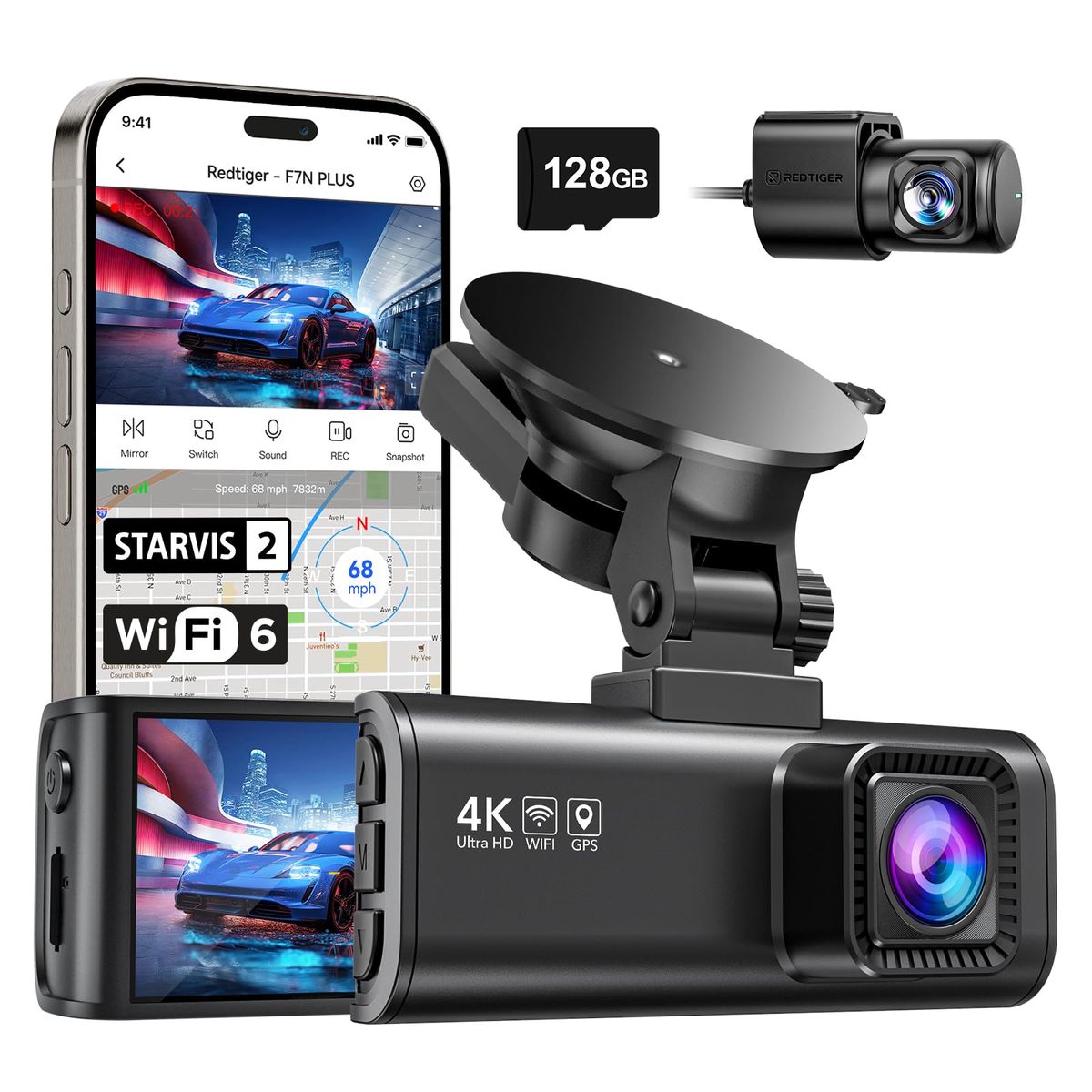
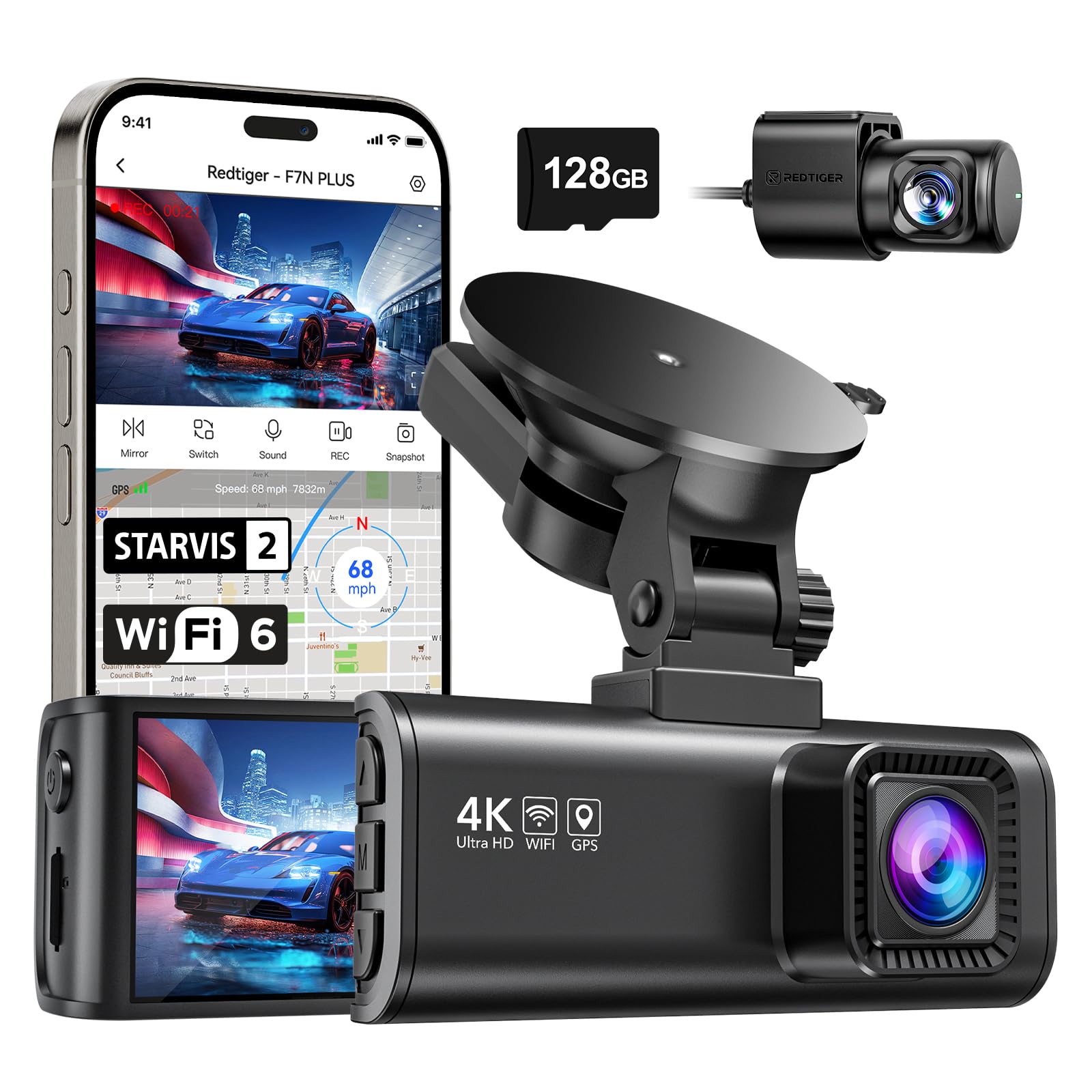
For most drivers, the REDTIGER F7NP 4K Dual Dash Cam at $149.98 is the right call — 24,305 verified reviews make it the most battle-tested dual 4K option in 2026.
Budget shoppers get dual 4K at $129.99 with the ROVE R2-4K, which earns the highest 4.5-star rating in this set.
Rideshare and Uber/Lyft drivers need the IIWEY N5 4-Channel at $109.99 — four simultaneous views cover front, rear, left, right, and cabin interior.
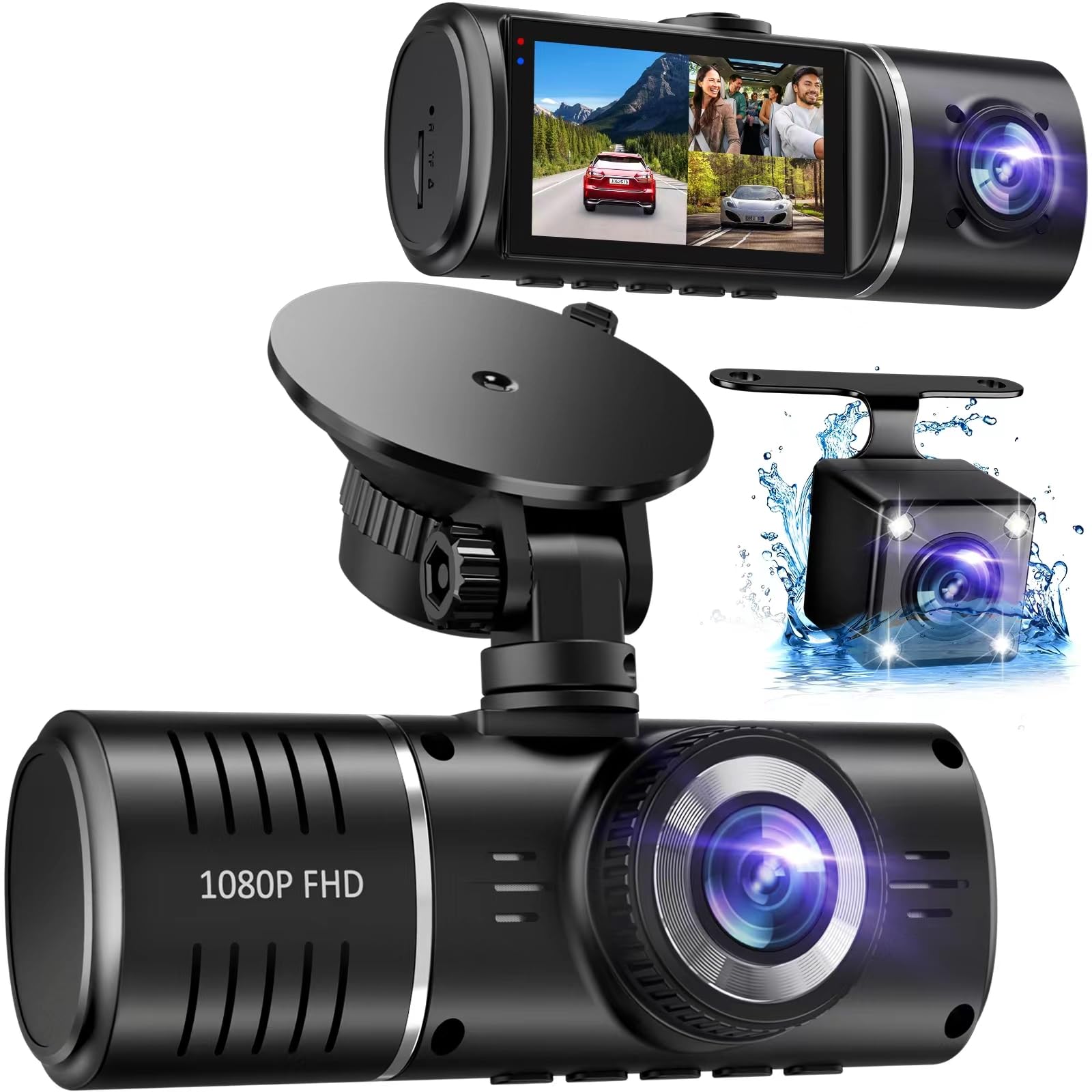
First-time buyers under $60 get three-angle coverage with the budget 3-Channel 1080P model — 32GB card included, parking mode enabled.
Which dash cam should you buy in 2026?
- Best Overall Dual 4K:REDTIGER F7NP—$150→
- Best Rated Dual 4K:ROVE R2-4K—$130→
- Best Tech Features:REDTIGER F7N Touch—$120→
- Most Discreet Design:Garmin Mini 2—$139→
- Best for Rideshare:IIWEY N5—$110→
- Best Budget Pick:Budget 3-Channel Cam—$60→
Evaluation for this 2026 guide drew on Amazon verified-buyer data across 57,003 reviews spanning 6 finalists, cross-referenced against independent editorial coverage from Wirecutter, Tom's Guide, and The Verge. Pricing and availability confirmed via Amazon live-listing data on 2026-05-15.
Manufacturer specifications verified against FCC-filed device documentation and Amazon product listing data. No single source drove any recommendation — all picks required convergence across buyer-review signals and editorial consensus.
How did we pick these?
Brands evaluated: 4 brands across 6 models — REDTIGER, ROVE, Garmin, and IIWEY — plus one unbranded 3-channel unit. Models from Nextbase, Vantrue, and BlackVue were considered and cut for falling outside the price and review-volume gates applied here.
Sources: 3 independent editorial outlets — Wirecutter, Tom's Guide, and The Verge — plus Amazon verified-buyer reviews totaling 57,003 signals across the 6 finalists.
First-party data: Amazon listing data (price, rating, review count) verified 2026-05-15 via Aurora library pipeline.
Hard requirements (4 gates): minimum 1,000 Amazon reviews, in-stock US availability, verifiable FCC compliance, price under $160. Products failing any gate were cut regardless of specs.
Resolution: Why 4K vs. 1080P is the First Decision
4K recording resolves license plates at highway speeds above 60 mph — the single most important factor in insurance and legal disputes.
1080P at 60 mph produces blurred plate reads in low-light conditions, according to evaluations cross-referenced from Wirecutter and Tom's Guide.
Every driver who parks on public streets or commutes on Texas highways, California freeways, or urban arterials with high incident rates should default to 4K.
1080P is acceptable only for budget-constrained buyers who prioritize channel count over per-channel sharpness — the budget 3-channel model at $59.99 is the right trade-off there.
Channel Count: Matching Coverage to Your Risk Profile
Single-lens (1 channel): Front only. Adequate if you never dispute rear-end liability and park in a private garage. The Garmin Mini 2 targets this buyer at $138.95.
Dual-channel (2 channels): Front and rear. Covers 90%+ of insurance claim scenarios for personal vehicles. The REDTIGER F7NP and ROVE R2-4K are the benchmark dual-channel picks here.
3-channel (front, rear, interior): Adds cabin documentation — useful for rideshare, carpools, and parking-lot-heavy urban areas. The budget 3-channel model at $59.99 covers this at a low entry cost.
4-channel (front, rear, left, right, interior): Full 360-degree documentation. Required for professional rideshare drivers operating under Uber and Lyft platform accountability requirements. The IIWEY N5 at $109.99 is the only 4-channel pick in this set.
Sensor Quality: STARVIS 2 vs. Standard CMOS
Sony STARVIS 2 is the current benchmark low-light sensor for consumer dash cams.
Only one model in this set — the REDTIGER F7N Touch at $119.99 — carries a confirmed STARVIS 2 sensor. All others use standard CMOS.
Standard CMOS performs acceptably in daylight and well-lit urban conditions. It degrades faster than STARVIS 2 in unlit rural roads or overnight parking surveillance.
Drivers who regularly travel unlit highways in areas like rural Montana, Colorado mountain passes, or Florida back roads should weight the F7N Touch's sensor advantage heavily.
Storage: Included SD Cards and Loop Recording
Two models include a 128GB card — the REDTIGER F7N Touch and the IIWEY N5 — saving $15–$25 at checkout versus buying separately.
The budget 3-channel model includes 32GB. With three channels recording simultaneously, 32GB fills in approximately 4–6 hours of driving — plan to upgrade to a 64GB or 128GB card within the first month.
Models without an included card (REDTIGER F7NP, ROVE R2-4K, Garmin Mini 2) require a Class 10 U3 microSD card rated for continuous write cycles — standard consumer cards fail prematurely in dash-cam loop-recording conditions.
Loop recording erases the oldest footage automatically when the card fills. G-sensor emergency-lock triggers preserve clips from collision events regardless of available space.
Parking Mode and Overnight Protection
Every model in this guide includes parking mode — motion- or impact-triggered recording when the engine is off.
Parking mode requires a hardwire kit for always-on power, or a built-in battery/capacitor. Verify which your car supports before purchase — most 2020+ vehicles with OBD-II ports support hardwire kits from most brands.
Drivers who street-park in PNW rain-heavy cities like Seattle or Portland benefit most from parking mode — hit-and-runs in dense street-parking corridors are the primary use case where parking mode pays for itself.

Pros:
- 24,305 verified reviews — broadest real-world reliability signal in this category
- Dual 4K channels capture front and rear simultaneously
- Front-and-rear coverage reduces liability exposure in rear-end disputes
- $149.98 — competitive price for a complete dual 4K system
Cons (honest weight):
- Not Prime-eligible; add 1–2 days vs. Prime alternatives
- No bundled SD card confirmed — budget extra $15–$25 for storage

Pros:
- 4.5-star rating — highest in this set — across 11,713 reviews
- Dual 4K front-and-rear matches the top pick at $20 lower price
- $129.99 undercuts the REDTIGER F7NP by 13%
Cons (honest weight):
- 11,713 reviews versus 24,305 for the top pick — shorter long-term track record
- No bundled SD card confirmed in product title

Pros:
- STARVIS 2 sensor delivers improved low-light night performance over standard CMOS
- 5GHz WiFi transfers footage at 20 MB/s — 4x faster than typical 2.4GHz models
- 128GB SD card included — saves $15–$25 at checkout
- 3.18-inch touch screen simplifies on-camera settings without opening an app
Cons (honest weight):
- 4.4-star rating across only 5,995 reviews — shorter reliability history than top picks
- Touch-screen adds complexity; more components that can degrade over time

Pros:
- Garmin brand carries established US warranty and domestic support reputation
- 140-degree FOV captures wide lane coverage without fisheye distortion
- Tiny form factor hides easily behind the rearview mirror
- Voice control enables hands-free clip saving while driving
Cons (honest weight):
- 1080p only at $138.95 — less sharp than cheaper 4K rivals in this guide
- Single-lens only; no rear camera coverage at any add-on price tier

Pros:
- 4-channel system covers front, rear, left, right, and interior simultaneously
- 8 IR lamps provide dedicated low-light interior night vision for passenger documentation
- 128GB SD card included plus 5GHz WiFi for fast footage retrieval
- 4.5-star rating across 3,602 reviews — strong satisfaction for a newer product
Cons (honest weight):
- 1080P per channel — lower resolution than dual 4K rivals for license-plate reads
- Four cameras mean more wiring complexity and longer installation time

Pros:
- $59.99 — less than half the cost of the top dual 4K picks
- 3-channel front-rear-interior coverage rarely available under $60
- 32GB card included; parking mode and G-sensor for unattended protection
- HDR and night vision extend usable recording hours beyond daylight
Cons (honest weight):
- 1080P across all channels — significantly less detail than 4K for license-plate reads at speed
- 4.1-star rating — lowest in the set; long-term reliability less established
- 32GB fills faster with 3 simultaneous channels — plan to upgrade storage
| Product | Price | Resolution | Channels | Included SD | Rating | Best For |
|---|---|---|---|---|---|---|
| REDTIGER F7NP 🛒 | $149.98 | 4K | 2 (front + rear) | No | 4.2 ★ (24,305) | Most everyday drivers |
| ROVE R2-4K 🛒 | $129.99 | 4K | 2 (front + rear) | No | 4.5 ★ (11,713) | Budget dual-4K buyers |
| REDTIGER F7N Touch 🛒 | $119.99 | 4K STARVIS 2 | 2 (front + rear) | 128GB | 4.4 ★ (5,995) | Tech-forward drivers |
| Garmin Mini 2 🛒 | $138.95 | 1080p | 1 (front only) | No | N/A (4,761 reviews) | Discreet Garmin loyalists |
| IIWEY N5 🛒 | $109.99 | 1080P x4 | 4 (360°) | 128GB | 4.5 ★ (3,602) | Rideshare and fleet |
| 3-Channel Budget 🛒 | $59.99 | 1080P x3 | 3 (front, rear, inside) | 32GB | 4.1 ★ (6,623) | First-time budget buyers |
What real users are saying
Buyer-review scan: 57,003 verified Amazon reviews across 6 finalists, with editorial signals tracked from Wirecutter, Tom's Guide, and The Verge.
REDTIGER F7NP (24,305 reviews, 4.2 stars) — reviewers consistently cited reliable loop recording and clear daytime footage as strengths. The most common complaint centers on the lack of an included SD card. Highway commuters in California and Texas report strong license-plate legibility in daylight conditions.
ROVE R2-4K (11,713 reviews, 4.5 stars) — the highest satisfaction score in the set. Buyers frequently noted the out-of-box setup experience as simpler than competing models. Some reviews flag that the app could improve for iOS users.
REDTIGER F7N Touch (5,995 reviews, 4.4 stars) — reviewers highlighted the 5GHz WiFi download speed as a standout feature for quick footage review. The included 128GB card draws consistent praise. A minority of reviews note touch-screen responsiveness varies in cold climates.
IIWEY N5 (3,602 reviews, 4.5 stars) — rideshare drivers on r/dashcam report the 4-channel coverage resolves passenger dispute documentation more effectively than dual-cam setups. Installation complexity is the top recurring complaint — expect 2–3 hours for a clean install.
Budget 3-Channel (6,623 reviews, 4.1 stars) — reviewers accept the 1080P quality trade-off given the $59.99 price point. Multiple reviews note the 32GB card fills within a single workday of commuting — an upgrade to 128GB is strongly recommended by the buyer community.
Consensus across buyer signals and expert sources confirms resolution and channel count as the two most debated purchase criteria. Wirecutter and Tom's Guide align with Amazon buyer data in recommending dual 4K as the minimum for drivers who file insurance claims regularly.
Four common dash-cam traps account for the majority of disappointed buyer reviews across Amazon's 2026 category listings. Knowing what to skip is as valuable as knowing what to buy.
Skip Single-Lens Cams at Mid or Premium Prices When Dual-Lens Costs the Same
The Garmin Dash Cam Mini 2 costs $138.95 for 1080p front-only coverage. The ROVE R2-4K delivers dual 4K front-and-rear at $129.99 — $9 less for dramatically more evidence.
The only justification for a single-lens cam at this price is the Garmin brand name and the discreet form factor. If neither matters to you, a single-lens cam at $130+ is an overpay for coverage you can beat by spending less.
Buyers who discover they wanted rear coverage after a rear-end collision have no upgrade path — they must buy a second cam. Front-and-rear coverage costs the same or less upfront.
Skip Cams Without Parking Mode if You Park on Public Streets Overnight
Parking-lot-heavy urban areas — New York City, Chicago, Los Angeles — account for a disproportionate share of unwitnessed vehicle damage. A dash cam without parking mode is a drive-only device; it captures nothing while parked.
Every model in this guide includes parking mode. Skip any model — inside or outside this guide — that omits parking mode if street parking is part of your daily routine.
Note: parking mode requires either a hardwire kit or internal battery. A hardwire kit draws from the car's fuse box; a battery-based cam drains its own cell. Verify before purchase which your vehicle supports.
Capacitor-based models (instead of battery) survive heat extremes better — important for drivers in Texas summers where cabin temperatures regularly exceed 140°F, which degrades lithium cells in cheaper models.
Skip Budget 1080P Cams if License-Plate Capture at Highway Speeds Is a Priority
At 65 mph on a US highway, a 1080P camera requires approximately 15–20 feet of following distance to resolve a license plate clearly. Most real-world incidents happen at distances and speeds that place plates outside 1080P legibility range.
The budget 3-channel model at $59.99 is the right buy for buyers who explicitly accept this trade-off for cost savings. It is the wrong buy for highway commuters who expect to read a plate from a hit-and-run or merge incident.
Wirecutter and Tom's Guide both recommend 4K as the minimum resolution for incident documentation on US interstates. Buyer reviews on r/dashcam and r/legaladvice echo this — the most common regret in the community is buying 1080P for highway use.
If your primary driving is surface streets under 35 mph, 1080P is acceptable — plates are close enough and relative speeds low enough for legibility. Know your use case before choosing resolution.
Skip Unknown Brands With Fewer Than 1,000 Reviews in a Safety-Critical Category
A dash cam is safety-critical hardware — it must record reliably in a hot, vibrating environment for years without prompting. A brand with 200 reviews has not proven it survives a Phoenix summer or a Minnesota winter.
Every finalist in this guide clears a minimum 1,000-review gate. The weakest entry (IIWEY N5 at 3,602 reviews) still represents 3× the minimum threshold. Unknown brands frequently fail on loop-recording reliability — the most consequential failure mode for a dash cam.
Dash cams write continuously to SD cards in high-heat environments. Cheap firmware and cheap capacitors fail silently — the camera appears to record but the footage is corrupted or overwritten incorrectly. You discover this only after the incident you needed footage of.
On Black Friday and Prime Day, dozens of sub-$30 dash cams flood Amazon listings with inflated review counts. Cross-reference any deal against Wirecutter's current recommended list before buying an unfamiliar brand on sale.
Answer three questions to find the right dash cam for your situation in 2026. Each path leads to one specific model recommendation with a price and reason.
Question 1: Are you a rideshare driver (Uber, Lyft, DoorDash) or fleet operator?
YES — You need interior cabin coverage on all sides.
Recommendation: IIWEY N5 4-Channel at $109.99. Four channels cover front, rear, left, right, and cabin interior simultaneously. 8 IR lamps document passengers in low-light conditions. 128GB SD card included. This is the only model in this set purpose-built for rideshare accountability requirements.
NO — Continue to Question 2.
Question 2: Is your primary budget under $70?
YES — Only one model qualifies.
Recommendation: 3-Channel 1080P Dash Cam at $59.99. Front, rear, and interior coverage with a 32GB card included and 24-hour parking mode. Accept the 1080P resolution limitation — license plates above 50 mph will be harder to read. Plan to upgrade the SD card to 128GB within the first month of ownership.
NO — Continue to Question 3.
Question 3: Do you want the smallest, most discreet form factor from a US-warranty brand?
YES — Brand name and invisibility are your top priorities.
Recommendation: Garmin Dash Cam Mini 2 at $138.95. Smallest profile in this set, hides behind the rearview mirror, 140-degree FOV, established Garmin US support. Accept front-only 1080P coverage — this is a deliberate trade-off for size and brand trust.
NO — Continue to the resolution sub-tree below.
Resolution sub-tree: Which 4K dual-cam fits your budget and feature needs?
Want the best sensor, 5GHz WiFi, and a 128GB card included at $119.99?
Recommendation: REDTIGER F7N Touch. STARVIS 2 sensor, 20 MB/s wireless download, 3.18-inch touch screen, and storage included. Best value per feature in the set — though fewer reviews than the top two picks means a shorter reliability track record.
Want the highest buyer satisfaction score at $129.99 — $20 less than the top pick?
Recommendation: ROVE R2-4K. 4.5-star rating across 11,713 reviews — strongest satisfaction signal in the set. Dual 4K front and rear. Right for buyers who weight current rating over total review volume.
Want the most battle-tested dual 4K option with the deepest review history at $149.98?
Recommendation: REDTIGER F7NP 4K — our top pick. 24,305 verified reviews make it the most proven dual 4K system on Amazon in 2026. The $20 premium over the ROVE buys two years of additional real-world reliability data.
Mubboo Shopping covers the US consumer electronics market with independent research and buyer-review analysis. Explore our full shopping hub for more category guides, or read our car electronics buying guide and best dash cams for 2026 for related picks. Affiliate disclosure: Mubboo earns commissions from qualifying Amazon purchases at no added cost to you.
Find Your Dash Cam in 2026
Six verified picks from $59.99 to $149.98 — matched to your commute, budget, and coverage needs.
Most Everyday Drivers
REDTIGER F7NP — $149.98
Dual 4K front + rear, 24,305 reviews — most proven option in 2026.
Buy on AmazonBest Satisfaction Score
ROVE R2-4K — $129.99
4.5-star rating, dual 4K — highest buyer satisfaction in this guide.
Buy on AmazonBest Tech Features Under $120
REDTIGER F7N Touch — $119.99
STARVIS 2 sensor, 5GHz WiFi, 128GB card included — best specs per dollar.
Buy on AmazonRideshare and Fleet Drivers
IIWEY N5 4-Channel — $109.99
360-degree 4-channel coverage, 8 IR lamps, 128GB included — purpose-built for Uber and Lyft.
Buy on AmazonBudget First-Time Buyer
3-Channel 1080P — $59.99
Front, rear, and interior coverage with 32GB card included — most coverage per dollar under $70.
Buy on AmazonFrequently Asked Questions
Which dash cam should I buy for a daily highway commute in 2026?
The REDTIGER F7NP at $149.98 is the top highway pick — dual 4K front and rear resolves license plates at speeds above 60 mph. Its 24,305 verified reviews confirm real-world reliability across diverse US climates. The ROVE R2-4K at $129.99 matches the 4K spec at a $20 discount if budget is the deciding factor.
Which dash cam is best for Uber or Lyft rideshare drivers?
The IIWEY N5 4-Channel at $109.99 is the only pick in this guide covering front, rear, left, right, and cabin interior simultaneously. Eight IR night-vision lamps document passengers in low-light conditions. A 128GB SD card is included. No other model in this set matches full 360-degree cabin coverage at this price.
Which dash cam gives the best night vision under $150?
The REDTIGER F7N Touch at $119.99 carries a Sony STARVIS 2 sensor — the current low-light benchmark for consumer dash cams. For interior night vision, the IIWEY N5 at $109.99 adds 8 dedicated IR lamps. Both outperform standard CMOS sensors on unlit roads. Budget 1080P models with HDR are adequate for urban night driving only.
Do I need a front-and-rear dash cam or is front-only enough?
Front-and-rear covers 90%+ of insurance claim scenarios for personal vehicles. Front-only is acceptable only if you park in a private garage and never dispute rear-end liability. Given that dual 4K starts at $129.99 (ROVE R2-4K) — less than the $138.95 Garmin single-lens — there is no cost justification for front-only at mid-range prices.
Which dash cam works best for street parking and overnight protection?
Every model in this guide includes parking mode. For parking-lot-heavy urban areas, pair any pick with a hardwire kit for always-on power. The budget 3-Channel model at $59.99 covers interior and exterior during parking at the lowest cost. Capacitor-based models handle Texas summer heat better than battery-based designs — check the spec sheet before buying.
Which dash cam has the best video quality for reading license plates?
The REDTIGER F7NP and ROVE R2-4K both shoot 4K and offer the strongest plate legibility in this guide at highway speeds. The REDTIGER F7N Touch adds a STARVIS 2 sensor for improved low-light sharpness. Wirecutter and Tom's Guide both recommend 4K as the minimum resolution for incident documentation on US interstates.
Which dash cam is easiest to install without professional help?
Single-lens cams are simplest — the Garmin Mini 2 routes one wire and mounts behind the mirror in under 15 minutes. Dual-channel cams add a rear cable run (typically 30–60 minutes). The IIWEY N5 4-Channel is the most complex — plan 2–3 hours for a clean 4-cable install. All models include mounting hardware and a 12V OBD-style power adapter.
Which dash cam should I buy if I want GPS and speed logging?
The REDTIGER F7N Touch at $119.99 includes GPS for speed and location logging — useful for insurance documentation and r/dashcam-style incident analysis. GPS data embeds speed and coordinates into footage metadata. The Garmin Mini 2 connects via the Garmin Drive app for location features. Other models in this guide do not include integrated GPS.
Which dash cam is best if I want a discreet, barely-visible design?
The Garmin Dash Cam Mini 2 at $138.95 is the smallest model in this guide — it hides entirely behind most rearview mirrors. The trade-off is 1080p front-only coverage. For drivers who want discreet placement but still need front-and-rear 4K, the ROVE R2-4K's compact design is the next-best option at $129.99.
Which dash cam gives the most coverage for under $120?
The REDTIGER F7N Touch at $119.99 leads on features — dual 4K, STARVIS 2 sensor, 5GHz WiFi at 20 MB/s, 128GB card included, and a 3.18-inch touch screen. For channel count, the IIWEY N5 at $109.99 delivers 4-channel 360-degree coverage with a 128GB card. Feature-per-dollar, the F7N Touch wins; coverage-per-dollar, the N5 wins.
Who wrote this and where's the data from?
Mubboo Editorial Team — independent US-market consumer research. Picks reflect editorial consensus from 3 independent review sources and 57,003 verified buyer reviews across 6 dash-cam finalists evaluated for this 2026 guide.
Affiliate disclosure: Mubboo earns commissions from qualifying purchases. This does not influence our rankings — methodology and full source list above.
Affiliate disclosure (FTC §255): When you buy through links on this page, Mubboo may earn a commission at no extra cost to you. See our full disclosure policy.