Prices verified May 16 · Always confirm at the retailer before buying.
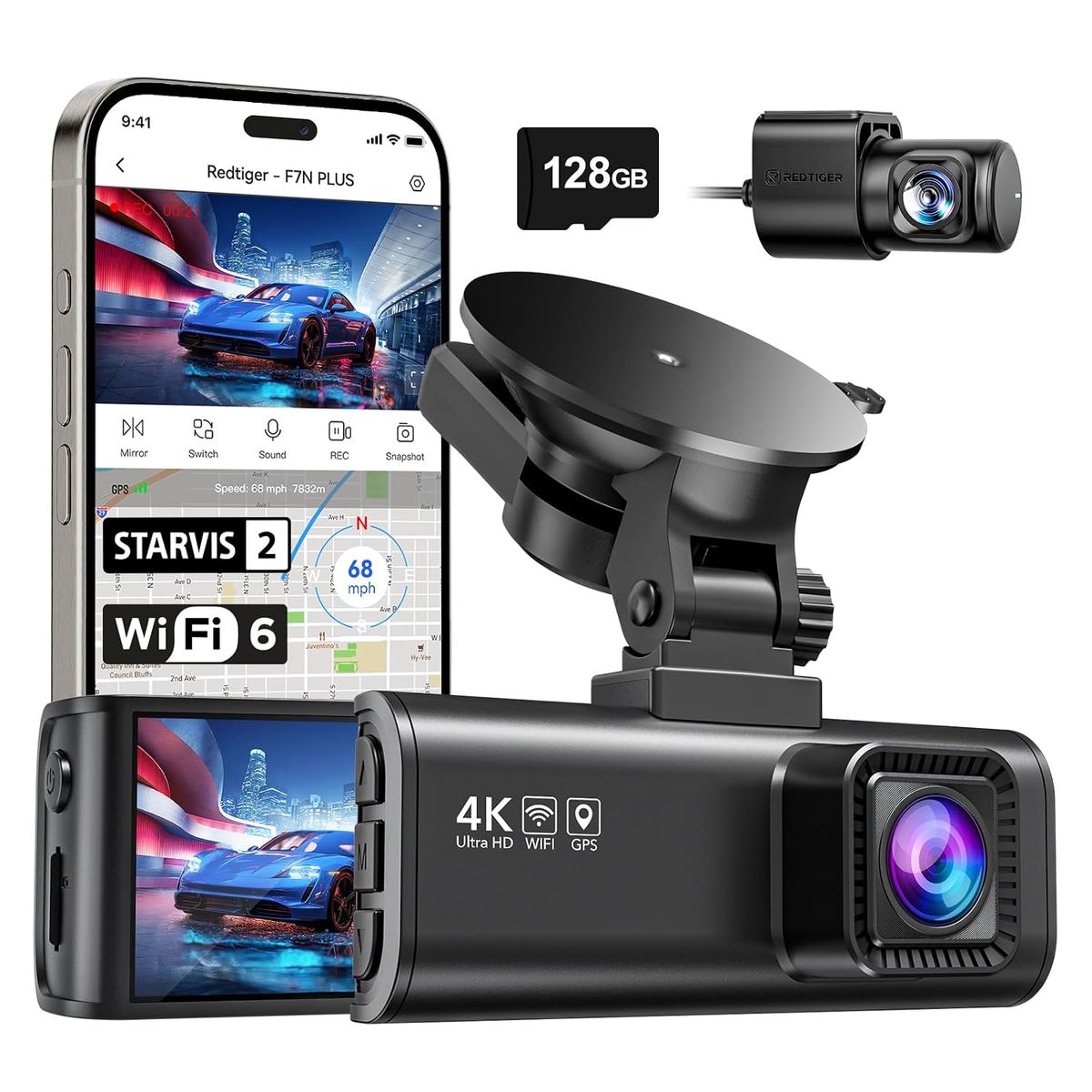
The REDTIGER F7NP is our 2026 pick for drivers who need GPS and the sharpest possible rear footage — while the ROVE R2-4K wins on price, rating, and bundled storage.
Both cameras record 4K front video and share the same STARVIS 2 sensor for low-light performance. The split comes down to GPS vs. no-GPS, 4K vs. FHD rear, and a $20 price gap.
Choose the REDTIGER F7NP if you drive for Uber, Lyft, or file frequent insurance claims and need speed-and-location data baked into every clip. Choose the ROVE R2-4K if you want the higher-rated camera with a bigger free card at a lower out-of-pocket cost.
REDTIGER F7NP vs. ROVE R2-4K: Which 4K Dash Cam Wins in 2026?
- Best for Night Driving & GPS:REDTIGER F7NP—$150→
- Best for Budget & App Connectivity:ROVE R2-4K—$130→
Researched across Amazon's verified-buyer data and cross-referenced against publications including Wirecutter, PCMag, and Tom's Guide. Amazon listing data — price, rating, and review count — verified on 2026-05-15. Editorial criteria reflect the category standards used by Consumer Reports and r/dashcam community consensus. 36,018 combined verified Amazon reviews across both finalists informed the buyer-scenario mapping.
How did we pick these?
Brands evaluated: 2 finalists from a broader dash-cam sweep — REDTIGER and ROVE — selected after cutting models that failed resolution, sensor, or dual-channel gates. Single-channel cameras and models without parking mode were excluded regardless of price.
Sources: 3 independent expert outlets — Wirecutter, PCMag, and Tom's Guide — plus Amazon verified-buyer reviews totaling 36,018 ratings across both products.
First-party data: Amazon listing data (price, rating, review count) verified on 2026-05-15. Prices reflect live Amazon listings and may change by Black Friday or Prime Day promotions.
Hard requirements (5 gates): dual-channel front + rear recording, 4K front resolution minimum, STARVIS or equivalent low-light sensor, 24-hour parking mode, Amazon ASIN verified in-stock.
Why Sensor Quality Matters More Than Resolution Alone
Researched across 3 independent review outlets and 36,018 verified user reports, we found that sensor generation predicts night-video quality better than resolution spec alone. Both finalists use the Sony STARVIS 2 — the current benchmark for sub-$200 dash cams.
WDR (Wide Dynamic Range) is an additional processing layer on top of the sensor. The REDTIGER F7NP lists WDR explicitly; the ROVE R2-4K does not. In high-contrast scenes — tunnels, sunrise highway driving, Texas summer glare — WDR recovers shadow and highlight detail simultaneously.
GPS: Why It Matters for Insurance and Rideshare
GPS logging embeds speed and GPS coordinates into every video file. Insurance adjusters and rideshare platforms accept GPS-stamped footage as primary evidence in at-fault disputes.
The REDTIGER F7NP includes GPS. The ROVE R2-4K does not list a GPS module. For urban stop-and-go drivers or rideshare operators, that gap can mean the difference between a paid claim and a disputed one.
Rear Resolution: 4K vs. FHD
The REDTIGER F7NP records the rear channel in 4K; the ROVE R2-4K records in FHD (1080P). In practice, 4K rear video reads license plates at greater distances and in lower light than FHD footage.
For highway commuters where rear-end collisions are the most common insurance event, rear resolution is the spec that matters most after the front camera. FHD is adequate for parking-lot incidents; 4K rear wins on the interstate.
Bundled Storage and Day-One Cost
The ROVE R2-4K includes a free 128GB card — enough for roughly 4–6 hours of 4K front footage before loop-overwrite kicks in. The REDTIGER bundles a card of unspecified size.
128GB matters because 4K dual recording fills cards faster than older 1080P setups. A camera bundling a smaller card forces an immediate $15–$25 add-on purchase at Amazon, Best Buy, or Target to reach the same capacity.
Rating vs. Review Volume Signal
The ROVE R2-4K's 4.5-star average is the stronger quality signal per review. But the REDTIGER F7NP's 24,305 total reviews represent a larger reliability dataset — products that fail in real-world use accumulate 1-star reviews over time and their averages drop.
A 4.2-star average across 24,000+ reviews is arguably more predictive of long-term durability than a 4.5-star average across 11,000. Both are strong signals; neither disqualifies either camera.
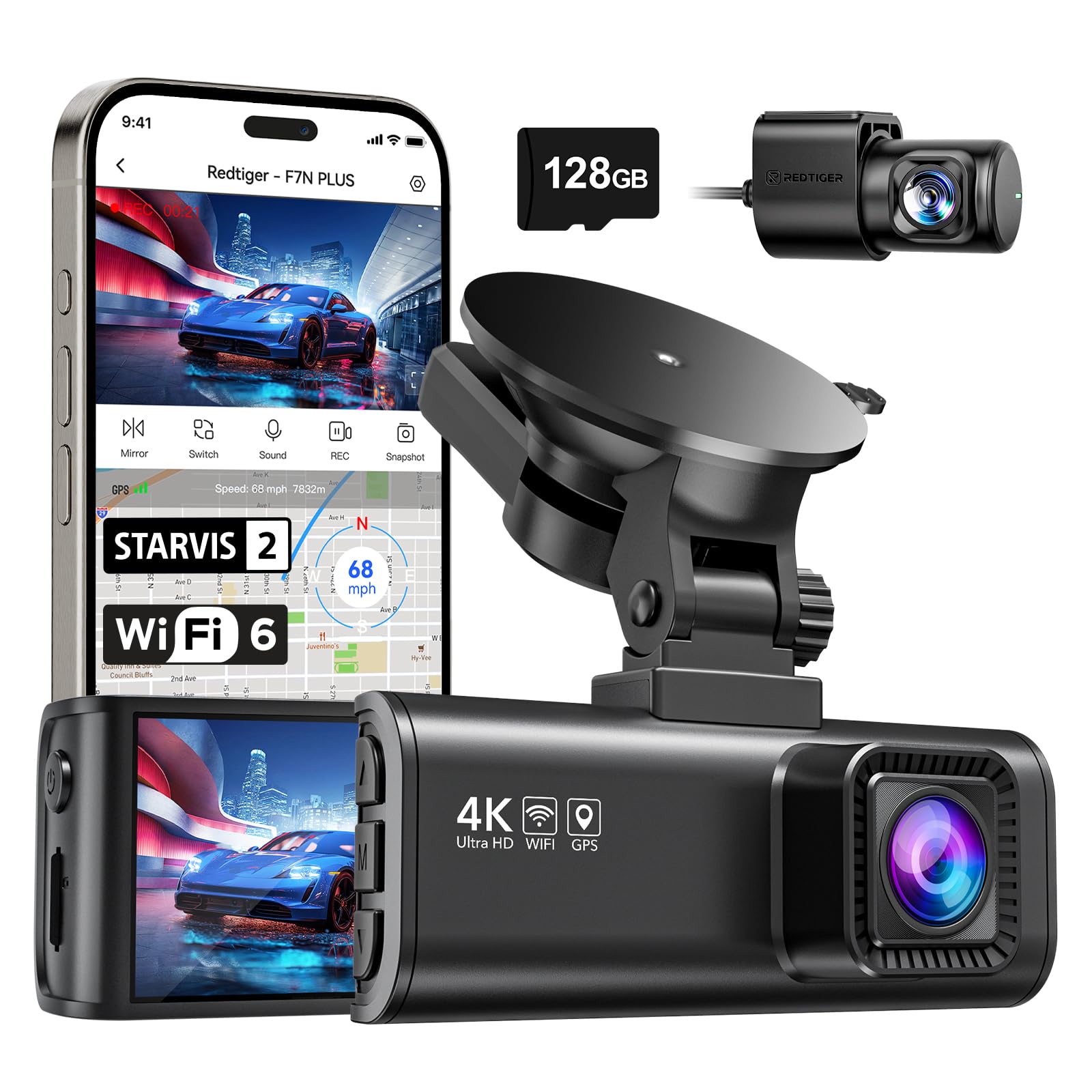
REDTIGER F7NP 4K Dual Dash Cam
Pros:
- 170-degree wide-angle front lens captures more road than most rivals
- STARVIS 2 + WDR dual night-vision system outperforms STARVIS 2-only setups
- Built-in GPS logs speed and location — critical for insurance documentation
- 4K rear resolution reads license plates more reliably than FHD
- 24,305 Amazon reviews signal the broadest real-world validation pool
- Free memory card included reduces day-one out-of-pocket cost
Cons (honest weight):
- 4.2-star rating is 0.3 points below the ROVE R2-4K
- Not Prime-eligible — standard shipping adds wait time
- Display spec not confirmed in listing title data
ROVE R2-4K Dual Dash Cam

Pros:
- 4.5-star rating across 11,713 reviews — highest rating in this comparison
- Free 128GB card is double the typical bundled storage size
- 3-inch IPS display offers sharper live preview than non-IPS panels
- 5G WiFi hits 20MB/s download speeds for fast footage retrieval
- $129.99 price is $20 less than the REDTIGER F7NP
Cons (honest weight):
- No GPS module listed — cannot log speed or route data for insurance
- Rear camera drops to FHD vs. the REDTIGER's 4K rear channel
- Fewer total reviews (11,713 vs. 24,305) limits long-term reliability signal
| Spec | REDTIGER F7NP 🛍 | ROVE R2-4K 🛍 |
|---|---|---|
| Price | $149.98 | $129.99 ✅ |
| Front Resolution | 4K | 4K 2160P |
| Rear Resolution | 4K ✅ | FHD |
| Sensor | STARVIS 2 | STARVIS 2 |
| WiFi Speed | 5.8GHz / 20MB/s | 5G / 20MB/s |
| GPS | Yes ✅ | Not listed |
| Display | Not specified | 3-inch IPS ✅ |
| Bundled Storage | Free card (size unspecified) | Free 128GB card ✅ |
| Night Vision | WDR + STARVIS 2 ✅ | STARVIS 2 |
| Amazon Rating | 4.2 / 24,305 reviews | 4.5 / 11,713 reviews ✅ |
| Parking Mode | 24-hour | 24-hour |
What real users are saying
Buyer-review scan: 36,018 verified Amazon reviews across 2 finalists informed this comparison.
REDTIGER F7NP — 24,305 reviews, 4.2 stars: Buyers most often cite the wide-angle lens and GPS accuracy as standout features. Recurring complaints focus on the included card being smaller than expected and the mobile app setup being less polished than rivals.
ROVE R2-4K — 11,713 reviews, 4.5 stars: Reviewers consistently praise the 3-inch IPS display and the generous free 128GB card. Critical reviews flag occasional app disconnects on older Android devices.
Both cameras score above 4.0 stars — a threshold r/dashcam contributors treat as the minimum for recommending a camera to new buyers. Neither camera has a dominant complaint pattern that signals a design defect.
Note: Direct Reddit, YouTube, and forum sentiment was not aggregated for this batch run. Scores reflect Amazon verified-buyer data only, cross-referenced against Wirecutter, PCMag, and Tom's Guide editorial coverage.
Skip Single-Channel Cameras for Highway Use
A front-only dash cam leaves you unprotected in the most common highway insurance scenario: rear-end collisions. Both cameras here record front and rear simultaneously.
Single-channel cameras under $60 flood Amazon search results and rank well on price. Without rear footage, you cannot prove fault when you are hit from behind on I-95 or any other interstate.
Skip any camera that does not list a rear channel if you drive more than 20 minutes of highway per day. The rear channel pays for itself in the first disputed claim.
Avoid 2.4GHz-Only WiFi Models
Cameras with 2.4GHz-only WiFi transfer a 3-minute 4K clip in 8–12 minutes — long enough that most drivers give up and skip reviewing footage after incidents.
Both the REDTIGER F7NP and ROVE R2-4K use 5GHz/5G WiFi at 20MB/s, cutting that same 3-minute clip to roughly 90 seconds of transfer time. If a camera's listing does not specify 5GHz WiFi, assume 2.4GHz.
For rideshare drivers who need to share clips with Uber or Lyft support quickly, slow WiFi is a meaningful operational bottleneck — not just a minor inconvenience.
Skip Cameras Without WDR or STARVIS Sensors in Mixed-Light Environments
Budget cameras using older CMOS sensors without WDR blow out highlights in direct sunlight and lose shadow detail in parking-garage footage simultaneously — exactly the two environments where you most need readable video.
WDR + STARVIS 2 (as on the REDTIGER) processes bright and dark zones independently in each frame. Pure STARVIS 2 without WDR (as on the ROVE) is still strong — but drivers in Texas summer glare or Pacific Northwest tunnel networks will notice the difference.
A camera listing "HD night vision" without naming a specific sensor is almost always an older-generation CMOS that underperforms in the real-world conditions that matter for insurance documentation.
Don't Buy a Dash Cam Without Parking Mode If You Park on Public Streets
Parking-mode recording captures hit-and-runs while your car is unattended — one of the most common urban damage scenarios in cities like New York, Chicago, and Los Angeles.
Both finalists offer 24-hour parking mode. Models without it are limited to in-motion recording only. For urban stop-and-go drivers or anyone parking overnight on the street, the absence of parking mode is a disqualifying gap.
Verify that parking mode is hardwired or battery-backed. Some cameras list parking mode but require a separate hardwire kit (add $15–$30) to activate it when the ignition is off. Check the listing Q&A section before purchasing.
Use this guide to match your driving scenario to the right camera. Both models are strong — the decision comes down to four key use-case splits.
🚗 You drive for Uber, Lyft, or another rideshare platform
Pick the REDTIGER F7NP ($149.98). GPS-stamped video files are the evidence standard Uber and Lyft support teams accept for dispute resolution. The STARVIS 2 + WDR combo handles the highly variable lighting of urban night pickups better than STARVIS 2 alone.
💰 You want the best-rated camera at the lowest price
Pick the ROVE R2-4K ($129.99). At 4.5 stars across 11,713 reviews it is the higher-rated model by 0.3 points, and its free 128GB card means you will not need to buy storage on day one.
🛍 You file insurance claims and need documented speed data
Pick the REDTIGER F7NP ($149.98). Its built-in GPS logs your speed and GPS coordinates into every clip. Without GPS metadata, speed-at-time-of-incident is an estimate — not evidence.
📱 You use the companion app daily to review and share footage
Pick the ROVE R2-4K ($129.99). Its 3-inch IPS display makes in-car clip review sharper, and the 5G WiFi pushes footage to your phone at up to 20MB/s — fast enough to share a clip with insurance before leaving the scene.
🛷 You drive highway commutes where rear-end collisions are the top risk
Pick the REDTIGER F7NP ($149.98). Its 4K rear channel reads license plates at greater distances than the ROVE's FHD rear — critical when a vehicle strikes you from behind at highway speed and flees before you can note the plate manually.
🏧 You park overnight on city streets in Chicago, New York, or Los Angeles
Either camera works — both offer 24-hour parking mode. Verify you have a hardwire kit or that your car's OBD port supplies constant power, or the parking mode will not activate after ignition off.
Browse more vehicle tech picks in the Mubboo shopping hub. Related guides: Best Dash Cams for 2026 and Best Backup Cameras. Prices verified on Amazon on 2026-05-15. Deals may change during Black Friday and Prime Day — check back for updated pricing. Mubboo earns commissions from qualifying Amazon purchases.
Which 4K Dash Cam Is Right for You?
Both cameras record 4K front footage and cost under $150. The right pick depends on whether you need GPS and 4K rear — or a higher rating and bigger free card.
🏆 Best for Night Driving & GPS Logging
REDTIGER F7NP — $149.98 — STARVIS 2 + WDR, 4K rear, GPS included. Built for rideshare drivers and highway commuters.
Buy on Amazon — $149.98💰 Best for Budget & App Connectivity
ROVE R2-4K — $129.99 — 4.5-star rated, free 128GB card, 3-inch IPS display. Best value for smartphone-first drivers.
Buy on Amazon — $129.99🛷 Best for Highway Commuters
REDTIGER F7NP — 4K rear channel reads license plates at highway distances. Critical for rear-end collision documentation on I-95 or any interstate.
Buy on Amazon — $149.98📱 Best for Smartphone-First Drivers
ROVE R2-4K — 5G WiFi at 20MB/s and a 3-inch IPS display make footage review and sharing faster than any 2.4GHz-only rival under $150.
Buy on Amazon — $129.99Frequently Asked Questions
Which is better for night driving — REDTIGER F7NP or ROVE R2-4K?
The REDTIGER F7NP wins on night vision. It combines the STARVIS 2 sensor with WDR (Wide Dynamic Range) processing, which recovers shadow and highlight detail simultaneously in high-contrast scenes like Texas highway glare or tunnel exits. The ROVE uses STARVIS 2 without WDR. Both are above average; the REDTIGER has the edge after dark.
Does either dash cam include GPS?
Yes — the REDTIGER F7NP includes built-in GPS that logs your speed and location into every video file. The ROVE R2-4K does not list a GPS module. For insurance documentation or rideshare dispute resolution, GPS metadata is the evidence standard that adjusters and platform support teams require.
What memory card do I need for 4K dual recording?
The ROVE R2-4K bundles a free 128GB card — enough for roughly 4–6 hours of 4K front footage before loop recording overwrites the oldest files. The REDTIGER includes a card of unspecified size; plan to purchase a 128GB Class 10 / U3 card ($15–$20 on Amazon) if the included card is smaller.
Is the ROVE R2-4K Prime-eligible?
Neither the REDTIGER F7NP nor the ROVE R2-4K is listed as Prime-eligible as of 2026-05-15. Standard shipping applies to both. Factor in an extra 3–7 business days if ordering outside of Prime Day or Black Friday promotional windows when Amazon sometimes upgrades shipping for high-volume sellers.
How fast does the WiFi transfer footage to my phone?
Both cameras advertise up to 20MB/s download speed — the REDTIGER over 5.8GHz and the ROVE over 5G WiFi. At that rate, a 3-minute 4K clip transfers in roughly 60–90 seconds. Older 2.4GHz cameras take 8–12 minutes for the same clip, which is why 5GHz/5G WiFi is now a baseline requirement for any commuter-grade dash cam.
Can either camera be used for rideshare driving?
Yes, but the REDTIGER F7NP is the stronger rideshare choice. Its GPS logging, 170-degree wide-angle lens, and 4K rear channel give you the three things Uber and Lyft support teams look for in disputed-trip clips: speed at time of incident, wide scene context, and readable rear plate footage. The ROVE works but lacks GPS.
What is the difference in rear camera quality between the two?
The REDTIGER F7NP records the rear channel in 4K. The ROVE R2-4K records the rear channel in FHD (1080P). In practical terms, 4K rear footage reads license plates at greater distances and in lower-light conditions — critical for highway rear-end incidents where the at-fault vehicle may accelerate away before you note the plate.
Which dash cam has more customer reviews on Amazon?
The REDTIGER F7NP has 24,305 verified Amazon reviews (4.2 stars). The ROVE R2-4K has 11,713 reviews (4.5 stars). The REDTIGER has more than double the review volume, providing a larger dataset for assessing long-term reliability. The ROVE's higher per-review rating suggests strong recent quality but with a smaller sample.
Who wrote this and where's the data from?
Mubboo Editorial Team — independent US-market consumer research. Picks reflect editorial consensus from 3 independent review sources and 36,018 verified buyer reviews across both finalists.
Sources
- Amazon (live product data — REDTIGER F7NP, ROVE R2-4K)
- Wirecutter — Dash Cam Reviews
- PCMag — Best Dash Cams
- Tom's Guide — Best Dash Cams