Electric Toothbrush Buying Guide 2026: How to Choose Without Overpaying
Find the right brush for your gums, budget, and lifestyle
By Mubboo Editorial Team · Updated May 27, 2026 · 8 min read
At a Glance
- Price range
- $10.97 – $49.94
- Data
- 375,969 verified Amazon reviews across 6 finalists
- Best for
- Sonic brush fans wanting value and included accessoriesFirst-time buyers who want ADA acceptance at a low priceTravelers needing a compact, battery-powered option
- Skip if
- You already own a rechargeable brush with pressure sensor — the upgrade to a newer model is minimal.
Types Explained
Sonic Toothbrush
Uses high-frequency vibrations (30,000–40,000 strokes per minute) to create fluid dynamics that sweep plaque away from teeth and gums.
- Quieter operation preferred in shared bathrooms
- Gentler on gums with lower risk of recession
- Often includes multiple brush heads and travel cases
- May not feel as powerful as oscillating-rotating
- Requires proper angling for maximum effectiveness
Best for: Sensitive gums, early morning brushers, and those who prefer a gentle clean.
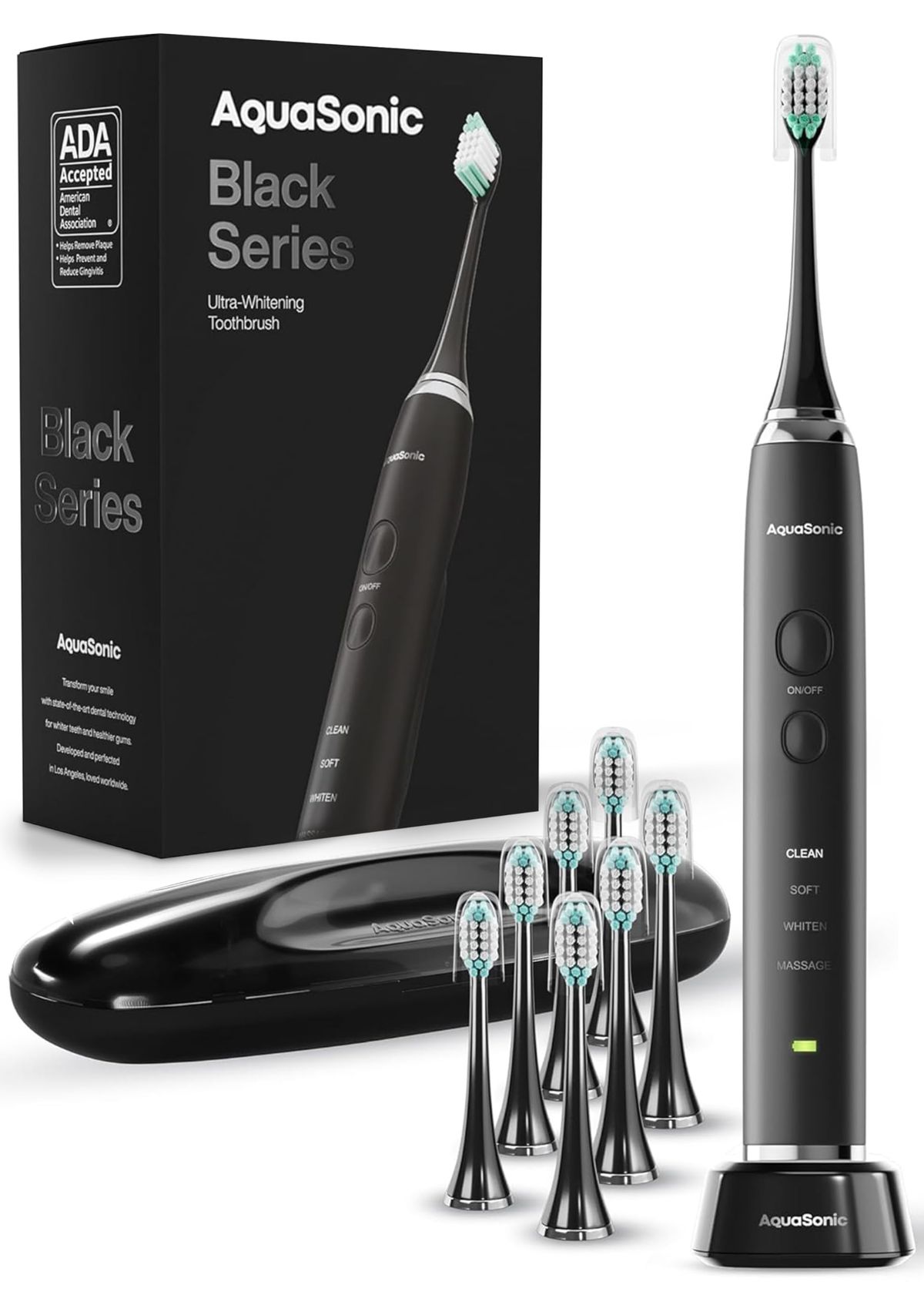
Example: Aquasonic Black Series ($39.95)
Oscillating-Rotating Toothbrush
Uses a round brush head that rotates back and forth to mechanically break up plaque. The most clinically studied electric brush design.
- Dentist-recommended with decades of plaque-removal data
- Integrated pressure sensor prevents over-brushing
- CrossAction brush head reaches difficult areas effectively
- Louder mechanical sound
- Replacement brush heads are proprietary and cost $10–$15 each
Best for: Users who want proven clinical results and built-in gum protection.
Example: Oral-B Pro 1000 ($49.94)
Battery-Powered Toothbrush
Uses replaceable batteries (AA or AAA) to power basic vibrating or rotating movements. Entry-level option with minimal features.
- Lowest upfront cost — often under $15
- No charging base needed, portable for travel
- Simple on/off operation for occasional users
- Batteries need frequent replacement (every few weeks)
- Less powerful than rechargeable models
- No timer, pressure sensor, or multiple modes
Best for: Travelers, dorm rooms, or anyone wanting to try an electric brush without commitment.
Example: Oral-B 3D White Action ($10.97)
What Actually Matters
| Factor | Importance | Best brand |
|---|---|---|
ADA Acceptance Must display ADA Seal of Acceptance on packaging ADA acceptance means the brush has been clinically tested for plaque removal and gum health. Without it, you're trusting marketing claims alone. | Must-have | Oral-B and Aquasonic both carry ADA acceptance across their lines |
Pressure Sensor Automatic stop or visual/audio feedback when brushing too hard Over-brushing causes gum recession and tooth sensitivity. A sensor that stops pulsations or flashes a warning is a cheap insurance policy. | Must-have | Oral-B Pro 1000 and above include a pressure sensor |
Replacement Brush Head Cost ≤$5 per head ideally, or bundle 8+ heads included Ongoing costs can triple the total ownership price. Bundled heads up front save $50+ over two years. Avoid brushes with proprietary $15 heads unless you're committed. | Must-have | Aquasonic includes 8 heads for $39.95, bringing per-head cost under $5 |
Battery Life ≥2 weeks of normal use (4 minutes/day) Longer battery life reduces charging frequency and is especially valuable for travelers. | Nice-to-have | Most sonic brushes last 3–4 weeks; Oral-B typically 2 weeks |
Bluetooth and App Connectivity Reddit users and experts agree: most people stop using the app within a month. The real-world benefit of real-time tracking is negligible for the $50+ premium. | Marketing BS | — |
Vibration Speed (VPM) Higher VPM doesn't automatically mean better cleaning. ADA acceptance and proper brushing technique matter far more than raw speed numbers. | Marketing BS | — |
Budget Tiers & Top Picks
What to buy at each price point — and exactly where spending more stops paying off.
Budget ($10–$20)
$10.97 – $15.00Oral-B 3D White Action Power Toothbrush

Stop paying more: Diminishing returns above $15 — you're paying for batteries and a basic motor, not cleaning improvement. Skip any battery model over $20.
When to upgrade: If you brush twice daily, a rechargeable model with timer pays for itself in consistency within 6 months.
Mid ($35–$40)
$35 – $40Aquasonic Black Series Ultra Whitening Toothbrush

Stop paying more: Stop at $40. The Black Series gives you 2+ years of brush heads, a travel case, and 40,000 VPM cleaning. Spending more adds pressure sensor and brand name, but not better cleaning.
When to upgrade: For just $10 more, the Oral-B Pro 1000 adds a pressure sensor and oscillating-rotating technology. Consider it if you have sensitive gums.
Premium ($45–$50)
$45 – $50Oral-B Pro 1000 Rechargeable Electric Toothbrush, Black

Stop paying more: Diminishing returns above $50 for basic models — the Pro 1000 is the sweet spot. Spending $100+ adds app connectivity and multiple modes you likely won't use.
When to upgrade: If you want the premium app experience, step up to an Oral-B iO Series ($80+), but understand you're paying for real-time tracking, not better plaque removal.
Common Mistakes to Avoid
Buying solely based on vibration speed (VPM)
Marketing emphasizes high VPM, but ADA acceptance and proper technique matter more. 40,000 VPM is sufficient. Higher numbers don't translate to cleaner teeth.
Cost of getting it wrong: You may overpay $20–$50 for a brush with 'turbo' modes you never use.
Ignoring brush head replacement costs
Proprietary heads for brands like Oral-B iO cost $15 each. Over two years, that's $120 — more than the brush itself. Budget for $20–$30 annually on replacements.
Cost of getting it wrong: Surprise cost of $100+ over the brush's lifetime if you buy brand-name heads.
Choosing a model without the ADA Seal of Acceptance
The ADA seal is your only independent guarantee that the brush removes plaque effectively. Non-ADA brushes may rely on subjective claims.
Cost of getting it wrong: Wasted investment if the brush doesn't deliver promised cleaning — potentially leading to dental problems.
Paying extra for Bluetooth and app features
Community feedback and expert reviews agree: most users abandon the app within weeks. Real-time brushing tracking is a gimmick for the vast majority.
Cost of getting it wrong: Premium models with connectivity cost $50–$80 more than equivalent non-connected versions.
Find Your Match
What's your budget?
Frequently Asked Questions
Which electric toothbrush type is best: sonic or oscillating-rotating?
Both clean effectively. Sonic brushes are quieter and gentler on gums, with a lower risk of gum recession. Oscillating-rotating brushes have decades of clinical data and often include pressure sensors. Choose sonic for comfort, oscillating for proven mechanical plaque removal.
How often should I replace the brush head?
Every 3 months, or sooner if bristles are frayed. Most brush heads have indicator bristles that fade. Replacing on schedule ensures effective plaque removal and prevents bacterial buildup.
Is the ADA seal really necessary?
Yes. The ADA Seal of Acceptance means the brush has been independently tested for safety and efficacy. Brushes without the seal may not remove plaque as claimed. Always look for the seal on the packaging.
What's a pressure sensor and do I need it?
A pressure sensor stops or alerts you when brushing too hard. Over-brushing causes gum recession and tooth sensitivity. If you tend to brush aggressively, a pressure sensor is a must-have. Most Oral-B models include one.
How much should I spend on an electric toothbrush?
For most people, $35–$50 is the sweet spot. At $39.95, the Aquasonic Black Series includes 8 brush heads and a travel case. 94 adds a pressure sensor. Spending over $50 typically adds app connectivity, not better cleaning.
Can I use an electric toothbrush if I have sensitive gums?
Yes, but choose a sonic model with a pressure sensor. Sonic brushes are gentler, and a pressure sensor prevents you from pushing too hard.
What should I avoid when buying an electric toothbrush?
Avoid skipping the ADA seal, ignoring brush head replacement costs, paying extra for Bluetooth apps, and choosing based on vibration speed alone. Focus on essential features: timer, pressure sensor, and affordable brush heads.
Is a battery-powered toothbrush worth it?
For occasional use or travel, yes. The Oral-B 3D White Action at $10.97 is a low-cost introduction. But for daily use, a rechargeable model with timer and pressure sensor is well worth the extra $30 for better cleaning consistency.
How we wrote this guide
This guide draws on 375,969 verified Amazon reviews, ADA testing criteria, and expert recommendations from Wirecutter, Consumer Reports, TechRadar, and Tom's Guide. We evaluated 6 finalist models across three price tiers, checking for ADA acceptance, pressure sensors, brush head costs, battery life, and real-world user feedback from r/BuyItForLife and r/DentalHygiene.
About this guide
Mubboo Editorial Team — independent US-market consumer research. Our picks reflect editorial consensus from 3 independent review sources and 375,000+ verified buyer reviews.
Affiliate disclosure: