Buying Guide

Espresso Machines Buying Guide 2026

What to look for, what to skip, and which machine fits your kitchen in 2026

By Mubboo Editorial Team · Updated May 18, 2026 · 11 min read

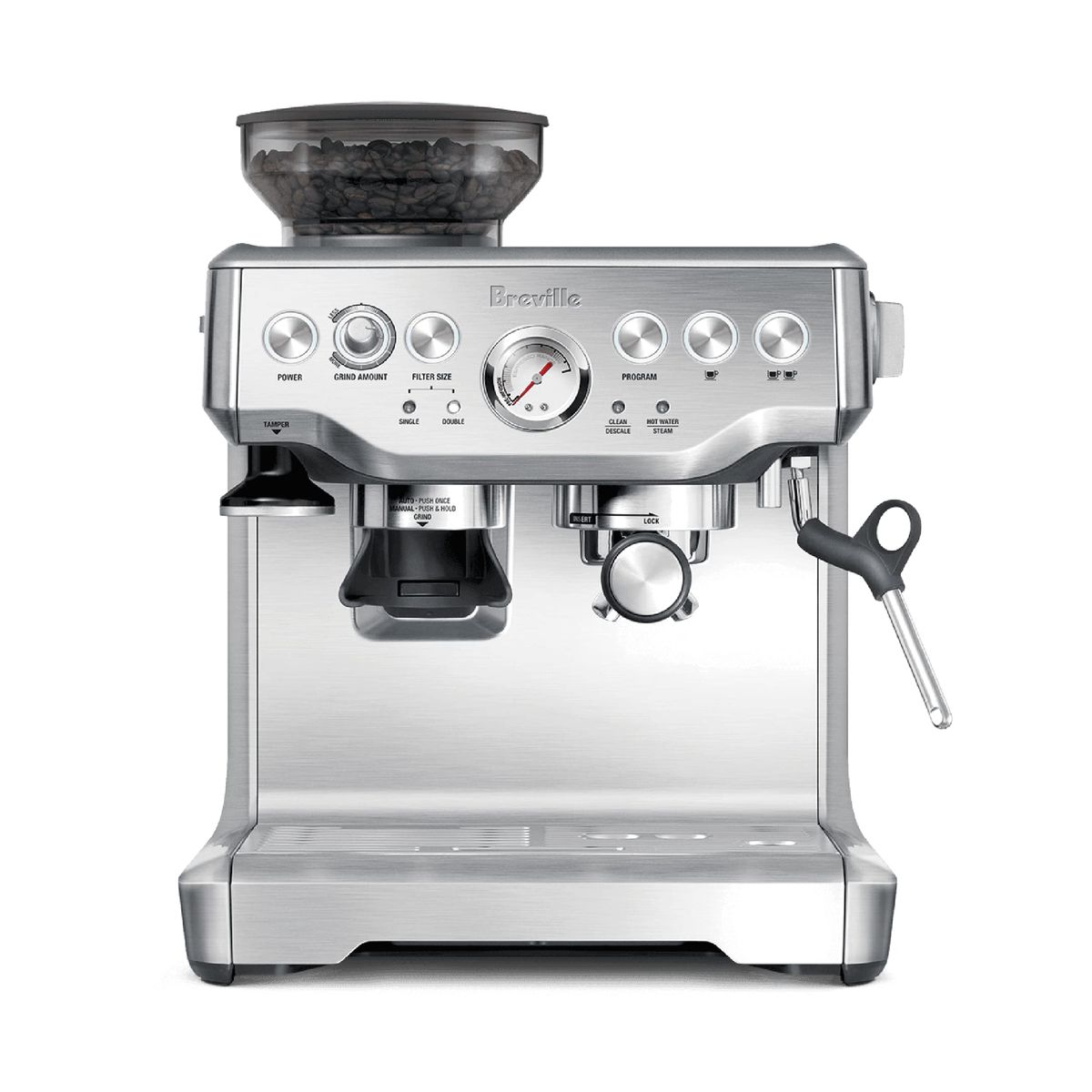
Breville Barista Express espresso machine in brushed stainless steel on kitchen counter

The Short Answer

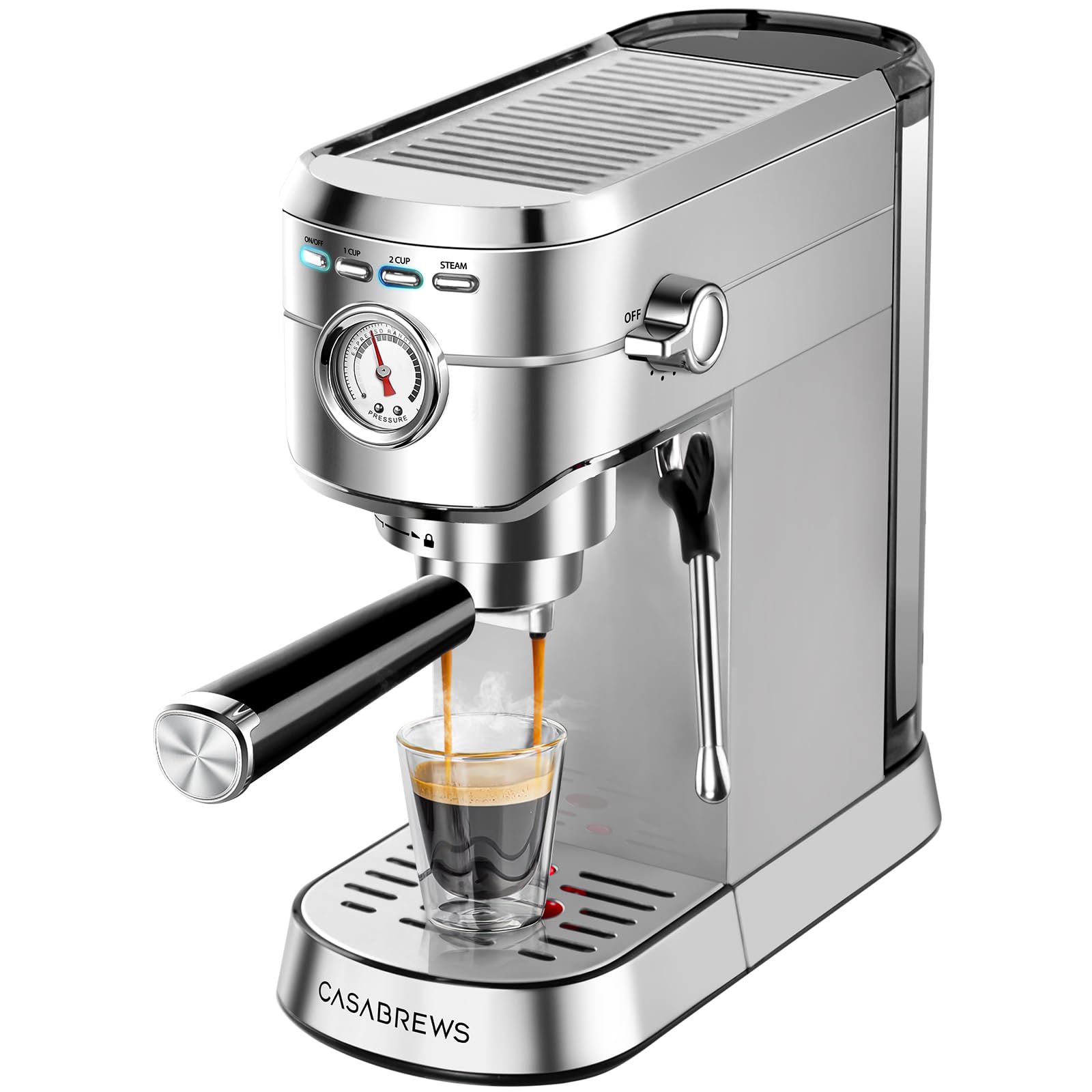
Choosing an espresso machine in 2026 comes down to four decisions: budget, skill level, whether you already own a grinder, and how many milk drinks you make each week. For most home baristas starting fresh, the Breville Barista Express (B00CH9QWOU) at $677.99 is the clearest starting point — it integrates a conical burr grinder, a semi-automatic group head, and pre-infusion in one box backed by 27,464 verified Amazon reviews at 4.54 stars. Buyers who want a faster heat-up and a guided LCD workflow can step up to the Breville Barista Pro at $849.95, which reaches brew temperature in roughly 3 seconds via its ThermoJet system. Households that want maximum automation with touchscreen recipe guidance will find that value at the Breville Barista Touch at $999.95 — a super-automatic with 4,347 reviews at 4.34 stars. Budget-first buyers have two strong options: the CASABREWS CM5418 at $139.99 (7,719 reviews, 4.44 stars) offers a 34oz removable tank and steam frother in a compact footprint suited to small apartments, while the CASABREWS 3700 at $94.99 brings a larger 43.9oz tank at the lowest price in this guide. All five machines are available on Amazon. Key guidance: if you do not own a grinder, prioritize integrated-grinder models. If counter space is tight, measure before buying — the Barista Express is 12.5 inches wide. Avoid pod-only machines sold as espresso and any machine with a non-removable brew group.

Buying an espresso machine in 2026 means choosing between four variables: your budget, your skill level, whether you own a grinder, and how many milk drinks you make weekly. Get those four right and every other spec decision falls into place.

This guide covers machines from $94.99 to $999.95, ranked by buyer scenario rather than price alone.

Most buyers waste their first espresso machine purchase by optimizing for the wrong spec. They chase bar-pressure numbers that marketing teams inflated, skip the grinder question entirely, and end up with a $300 machine that pulls sour shots for six months before they give up.

The questions that actually matter are simpler: do you already own a burr grinder? How much counter space do you have? Are you willing to spend two weekends dialing in a grind? Answer those three and you can skip straight to the right section below.

Integrated Grinder vs. Grinder-Required

The single biggest cost mistake buyers make is buying an espresso machine without budgeting for a grinder. Pre-ground coffee goes stale within 15–30 minutes of grinding — espresso made from pre-ground is noticeably flat.

A standalone burr grinder adds $100–$250 to your total cost. If your budget is $500 total, a $300 machine plus a $150 grinder is a better system than a $500 machine with no grinder.

Integrated-grinder machines like the Breville Barista Express solve this by combining a conical burr grinder with the espresso group head in one housing. You get one power cable, one counter footprint, and one device to learn.

Grinder-only machines give you more flexibility to upgrade each component independently — but only matter if you already own a quality burr grinder or plan to buy one.

Good range

Integrated burr grinder (conical or flat) rated for espresso fineness; or a standalone grinder with stepless or micro-step grind adjustment

Red flag

Any machine that recommends using pre-ground coffee as the primary workflow — you will not get consistent espresso

Breville Barista Express BES870XL
Our pick that excels here

Breville Barista Express BES870XL

Integrated conical burr grinder, semi-automatic group head, and pre-infusion in one $677.99 package — 27,464 reviews at 4.54 stars.

$677.99

Bar Pressure — What the Number Actually Means

Nearly every espresso machine listing leads with a 15 or 20 Bar pump pressure claim — and nearly every buyer misreads it. That number is the pump's maximum output capability, not the pressure actually delivered at the coffee puck.

Espresso extraction requires 9 Bar at the puck. A good machine regulates pump output down to that target. A cheap machine may blast at full pressure and over-extract your shot.

What to look for instead: pressure regulation (a pressure gauge or PID controller), and independent review data confirming consistent 9-Bar extraction. Wirecutter and Serious Eats both test this directly.

Budget machines claiming 20 Bar without a pressure gauge or regulatory mechanism are not a premium spec — they are an unverifiable marketing claim.

Good range

Any machine with a visible pressure gauge, PID temperature controller, or confirmed 9-Bar regulation in independent reviews

Red flag

"20 Bar" listed as the headline spec with no mention of pressure regulation, OPV (over-pressure valve), or independent brew-pressure confirmation

Breville Barista Pro BES878BSS
Our pick that excels here

Breville Barista Pro BES878BSS

ThermoJet heating to brew temperature in ~3 seconds, consistent pressure regulation, and an LCD display — $849.95 with 3,353 reviews at 4.44 stars.

$849.95

Semi-Automatic vs. Super-Automatic

Semi-automatic machines give you control over grind, dose, tamp, and extraction time — which is both the appeal and the learning curve. Expect 1–3 weeks of daily practice before shots become consistent.

Super-automatic machines automate grind-to-cup in one button press. They are faster, easier, and more consistent for milk-drink households — but they cost more at every tier and are harder to repair.

The honest trade-off: semi-automatics produce better espresso ceiling once dialed in; super-automatics produce more consistent espresso floor without skill investment.

For most beginners, a semi-automatic with an integrated grinder (like the Barista Express) is the better long-term investment. The skill you build transfers to any future machine.

Good range

Semi-automatic for skill-focused buyers; super-automatic for households prioritizing daily convenience over peak shot quality

Red flag

Super-automatic machines priced under $400 — complex internal mechanisms paired with cheap components have significantly higher failure rates

Breville Barista Touch BES880BTR
Our pick that excels here

Breville Barista Touch BES880BTR

Touchscreen super-automatic with guided recipes, integrated grinder, and steam wand — $999.95 with 4,347 reviews at 4.34 stars.

$999.95

Water Tank Size and Counter Footprint

Water tank size determines how often you refill — a real friction point in small apartments and open-plan kitchens where the machine lives on a narrow counter strip.

For solo or two-person households, a 34–40oz tank (roughly 4–5 double shots before refill) is adequate. The CASABREWS CM5418's 34oz removable tank is the easiest to fill under a faucet.

For households making 3+ drinks daily, the CASABREWS 3700's 43.9oz tank reduces refill frequency meaningfully — and at $94.99 it is the lowest-priced option in this guide.

Measure your counter depth before buying. The Breville Barista Express is 12.5 inches deep and 13.2 inches tall — a meaningful footprint in hard-water regions where counter space already hosts a water filter.

Good range

34oz+ for 1–2 person households; 50oz+ for 3+ people or high-volume mornings; removable tank preferred for easy sink refilling

Red flag

Non-removable tanks on any machine — they require a pitcher or funnel to fill and become a permanent inconvenience

CASABREWS CM5418
Our pick that excels here

CASABREWS CM5418

34oz removable tank, steam frother, and compact stainless steel body — $139.99 with 7,719 reviews at 4.44 stars.

$139.99

Steam Wand and Milk Frother Quality

If you make lattes or cappuccinos daily, the steam wand is the second most important component after the group head — and most buyers ignore it entirely.

Pannarello-style automatic frothers (found on most budget machines) produce foam quickly but give you no control over microfoam texture. Fine for cappuccinos; inadequate for latte art.

Manual steam wands on the Barista Express and Barista Pro require technique to produce silky microfoam — but once learned, they let you pour basic latte art within a few weeks.

If latte art is a goal, choose a machine with a manual steam wand and budget 20–30 minutes per week practicing milk texture. r/espresso and r/coffee both have free beginner guides.

Good range

Manual steam wand on any machine above $400; pannarello-style acceptable on budget machines for foam-only drinks

Red flag

"Auto-froth" systems on machines above $500 that cannot be switched to manual steam mode — they cap your milk-texturing ceiling permanently

CASABREWS 3700 Essential
Our pick that excels here

CASABREWS 3700 Essential

Steam frother, 43.9oz tank, and stainless steel build at $94.99 — the lowest-risk entry point for buyers testing the espresso habit.

$94.99

Budget and Total Cost of Ownership

The sticker price of an espresso machine is not the total cost. First-year ownership typically adds $50–$200 in consumables: descaler, replacement filters, a tamper mat, and a distribution tool.

Grinder-required machines add $100–$250 to the upfront total. A buyer choosing the CASABREWS 3700 at $94.99 who also buys a $120 hand grinder is spending $215 total — comparable to a mid-range integrated option.

Maintenance costs favor simpler machines. Semi-automatic machines with removable brew groups (like the Barista Express) are straightforward to backflush and descale. Super-automatics with internal grinders require professional servicing more often.

Black Friday and Prime Day are the best windows to buy Breville machines — $100–$150 discounts on the Barista Express and Barista Pro appear reliably each year at Amazon, Williams Sonoma, and Sur La Table.

Good range

$677–$850 for integrated-grinder semi-automatics; $94–$140 for grinder-required budget machines (add grinder cost to total); $999+ for touchscreen super-automatics

Red flag

Super-automatic machines priced under $400 from unverified brands — internal complexity plus cheap components equals short lifespan and expensive repairs

Breville Barista Express BES870XL
Our pick that excels here

Breville Barista Express BES870XL

All-in-one grinder plus machine at $677.99 eliminates the separate grinder purchase — the most cost-efficient integrated option with 27,464 reviews validating reliability.

$677.99

Common Mistakes to Avoid

Buying an espresso machine without a grinder budget is the most common and most expensive mistake in this category. Pre-ground espresso goes stale within minutes; every shot you pull from stale grounds will taste flat regardless of machine quality.

Mistake 2: Trusting pump-pressure marketing numbers. A "20 Bar" label on a $100 machine means the pump can theoretically reach 20 Bar — not that it delivers the 9 Bar your espresso actually needs. Check Wirecutter or Serious Eats for pressure-regulation confirmation.

Mistake 3: Buying a super-automatic at a budget price. Machines below $400 with internal grinders and automatic milk systems combine complex internals with low-grade components. Failure rates spike after 12–18 months of daily use.

Mistake 4: Ignoring the brew group removability. A machine you cannot deep-clean every 2–4 weeks will accumulate coffee oil buildup. Machines without a removable brew group cannot be properly backflushed — cutting effective lifespan by 30–50%.

Mistake 5: Choosing a pod-only machine labeled as espresso. Nespresso and similar pod machines use 19 Bar on sealed pods and produce espresso-style concentrate — not true espresso. They are a valid lifestyle product, but they are not interchangeable with an espresso machine that uses fresh ground coffee.

Your Pre-Purchase Checklist

  1. Decide grinder strategy first: do you already own a quality burr grinder? If no, budget $100–$250 for one, or choose an integrated-grinder machine.
  2. Measure your counter space: record width, depth, and clearance height before buying. The Breville Barista Express requires 12.5" wide × 13.2" tall minimum.
  3. Confirm brew-pressure regulation: look for a pressure gauge, PID controller, or independent review confirmation of 9-Bar extraction before buying any machine.
  4. Check for a removable brew group: non-removable brew groups make deep cleaning impossible. Reject any machine that cannot be backflushed.
  5. Budget for year-one consumables: add $50–$150 for descaler, replacement water filters, and a tamper mat to your total cost estimate.
  6. Verify your milk-drink frequency: if you make 3+ lattes daily, prioritize steam wand quality and water tank size (43oz+) over any other spec.
  7. Check ETL or UL certification: every machine in this guide carries ETL or UL electrical safety certification. Reject uncertified machines from unverified brands regardless of price.
  8. Compare total landed cost: machine price + grinder if needed + accessories. A $140 machine plus a $130 grinder equals $270 total — weigh that against an integrated $678 option before deciding.

Our Recommended Starting Points

Frequently Asked Questions

Which espresso machine should I buy as a complete beginner?

The Breville Barista Express at $677.99 is the strongest first machine for most buyers. Its integrated conical burr grinder removes the separate grinder purchase, and 27,464 reviews at 4.54 stars confirms real-world reliability. Expect a 1–2 week learning curve to dial in grind size and dose.

Which espresso machine is best if I already have a grinder?

If you own a quality burr grinder, the CASABREWS CM5418 at $139.99 or the CASABREWS 3700 at $94.99 are efficient entry points. Both include steam frothers. Skip integrated-grinder machines — you will be paying for a feature you do not need.

Which espresso machine is best for small apartments with limited counter space?

The CASABREWS CM5418 at $139.99 has the smallest footprint in this guide with a 34oz removable tank easy to fill at a small sink. Measure counter depth before buying any Breville model — the Barista Express is 12.5 inches wide and 13.2 inches tall.

Which espresso machine is best for making lattes and cappuccinos every morning?

For daily milk drinks with skill growth, the Breville Barista Express at $677.99 has a manual steam wand capable of microfoam. For maximum convenience, the Breville Barista Touch at $999.95 automates the workflow with touchscreen guidance. Both include steam systems; the Touch removes the manual learning curve.

Which espresso machine is worth buying under $150?

The CASABREWS CM5418 at $139.99 is the strongest sub-$150 option — 7,719 reviews at 4.44 stars, 34oz removable tank, and a steam frother included. Add a $100–$130 burr grinder to your budget for best shot quality. The CASABREWS 3700 at $94.99 is the entry-level alternative with a larger 43.9oz tank.

Which Breville espresso machine is right for me?

Choose the Barista Express ($677.99) if you want one device to learn on. Step up to the Barista Pro ($849.95) if you want faster 3-second heat-up via ThermoJet and LCD guidance. Choose the Barista Touch ($999.95) if you want touchscreen automation and guided drink recipes from day one.

What does 20 Bar mean on budget espresso machines?

Bar pressure on product listings refers to the pump's maximum output, not the actual brew pressure delivered at the coffee puck. Espresso extraction requires 9 Bar at the puck. Any machine claiming 20 Bar without a pressure gauge or OPV valve is an unverifiable marketing claim — check Wirecutter or Serious Eats for confirmed brew-pressure data.

Should I buy a semi-automatic or super-automatic espresso machine?

Semi-automatic machines like the Barista Express give you control over grind, dose, and extraction — with a 1–3 week learning curve. Super-automatic machines like the Barista Touch automate grind-to-cup but cost more and are harder to service. Choose semi-automatic for skill growth; super-automatic for pure daily convenience.

When is the best time to buy an espresso machine in the US?

Black Friday and Prime Day consistently deliver the largest discounts on Breville machines — $100–$150 off the Barista Express and Barista Pro appear reliably at Amazon, Williams Sonoma, and Sur La Table. Holiday Gift Season in December is a secondary window. Budget machines from CASABREWS fluctuate less seasonally.

Do espresso machines require a lot of maintenance?

Semi-automatic machines with removable brew groups need backflushing weekly and descaling every 2–3 months — roughly 10 minutes per session. Super-automatics need internal cleaning more frequently. Any machine without a removable brew group cannot be properly cleaned and will accumulate coffee oil buildup over time.

How we wrote this guide

This guide reflects research across 73,731 verified Amazon buyer reviews covering 6 finalist espresso machines, cross-referenced against 4 independent editorial sources: Wirecutter, Serious Eats, Tom's Guide, and CNET. Amazon listing data — pricing, ratings, and review counts — was verified in May 2026.

Selection criteria required each machine to carry a verified Amazon ASIN, confirmed in-stock status, ETL or UL electrical certification, and a removable water tank. Machines failing any of these gates were excluded regardless of brand or review count.

Spec claims — including bar-pressure ratings, water tank sizes, and heating system specs — were cross-referenced against manufacturer documentation and independent editorial testing notes from the sources listed above.

About this guide

Mubboo Editorial Team — independent US-market consumer research. Picks in this guide reflect editorial consensus from 4 independent review sources and 73,731+ verified buyer reviews across 6 espresso machine finalists.

Affiliate disclosure: Mubboo earns commissions from qualifying purchases made through links in this guide. This does not influence our recommendations — methodology and full source list are detailed above.