Hiking Backpacks Buying Guide 2026
How to pick the right pack for your trip length, load, and budget
By Mubboo Editorial Team · Updated May 19, 2026 · 8 min read

The Short Answer
Choosing a hiking backpack in 2026 comes down to five decisions: trip length, pack volume, frame type, weather protection, and budget. For a quick day hike, a 10–20L packable daypack like the G4Free 10L/15L at $18.99 or the SKYSPER 20L at $28.47 handles snacks, water, and a layer. For a weekend overnight (1–2 nights), the Loowoko 50L at $41.99 or the Teton 55L Scout at $99.99 — which includes a rain cover — cover your gear without excess bulk. Multi-night backpackers (3–5 nights) should look at the Teton 65L Explorer at $109.99, which earns a 4.7-star rating across 8,184 verified Amazon reviews. Budget-conscious buyers who want an internal-frame pack with one of the largest review pools in this category can start with the Amazon Basics Internal Frame pack at $99.99, backed by 10,407 Amazon reviews. Frame matters once your load exceeds 20 lbs: internal frames transfer weight to the hips and reduce spine fatigue — frameless or minimalist packs work only for ultralight setups under 15 lbs. Rain protection is non-negotiable; wet gear is a safety issue on the trail. Either buy a pack with a built-in rain cover (Teton 55L Scout, Loowoko 50L) or budget $15–$25 for a separate cover. Eco-conscious buyers get dual certification value from the SKYSPER 20L (OEKO-TEX STANDARD 100 + Global Recycled Standard) and the G4Free packable bag (OEKO-TEX STANDARD 100).
The right hiking backpack depends on one number above all others: how many nights you are sleeping on the trail. Get that wrong and every other spec — frame, fabric, weight — becomes irrelevant.
This 2026 guide maps six Amazon-available packs to six distinct buyer scenarios, from a sub-$20 packable daypack to a 65L internal-frame workhorse for five-night trips.
All prices and ratings reflect verified Amazon data as of May 2026. No pack on this list requires spending over $110.
You booked a three-day trail in the Pacific Northwest, then realized your gym bag won't survive a rain shower — let alone carry a sleeping bag. This guide was built for that exact moment.
Whether you are a desert Southwest day hiker, a Pacific Northwest multi-day trekker, or a humid Southeast camper, the spec decisions below will get you to the right pack without overspending.
Pack Volume (Liters)
Pack volume is the single most important spec — and the most commonly mismatched. Most buyers default to "bigger is safer," but a 65L pack on a day hike adds dead weight and ruins comfort.
Day hikes (under 8 hours): 10–20L is the correct window. You need space for water, snacks, a layer, and a first-aid kit — nothing more.
Overnight and weekend trips (1–2 nights): 45–55L handles a sleeping bag, pad, shelter, food, and clothing without bulk overflow.
Multi-night trips (3–5 nights): 60–70L gives the headroom for extended food carry and weather contingency layers. The Teton 65L Explorer at $109.99 sits in this window.
A common trap: buying 65L for a weekend trip. The excess volume invites overpacking, which increases weight, which causes fatigue. Match volume to trip length, not ambition.
Good range
10–20L for day hikes; 45–55L for 1–2 night trips; 60–70L for 3–5 night trips
Red flag
Any pack marketed as 'all-purpose' without a stated liter range — you cannot match volume to trip without a number

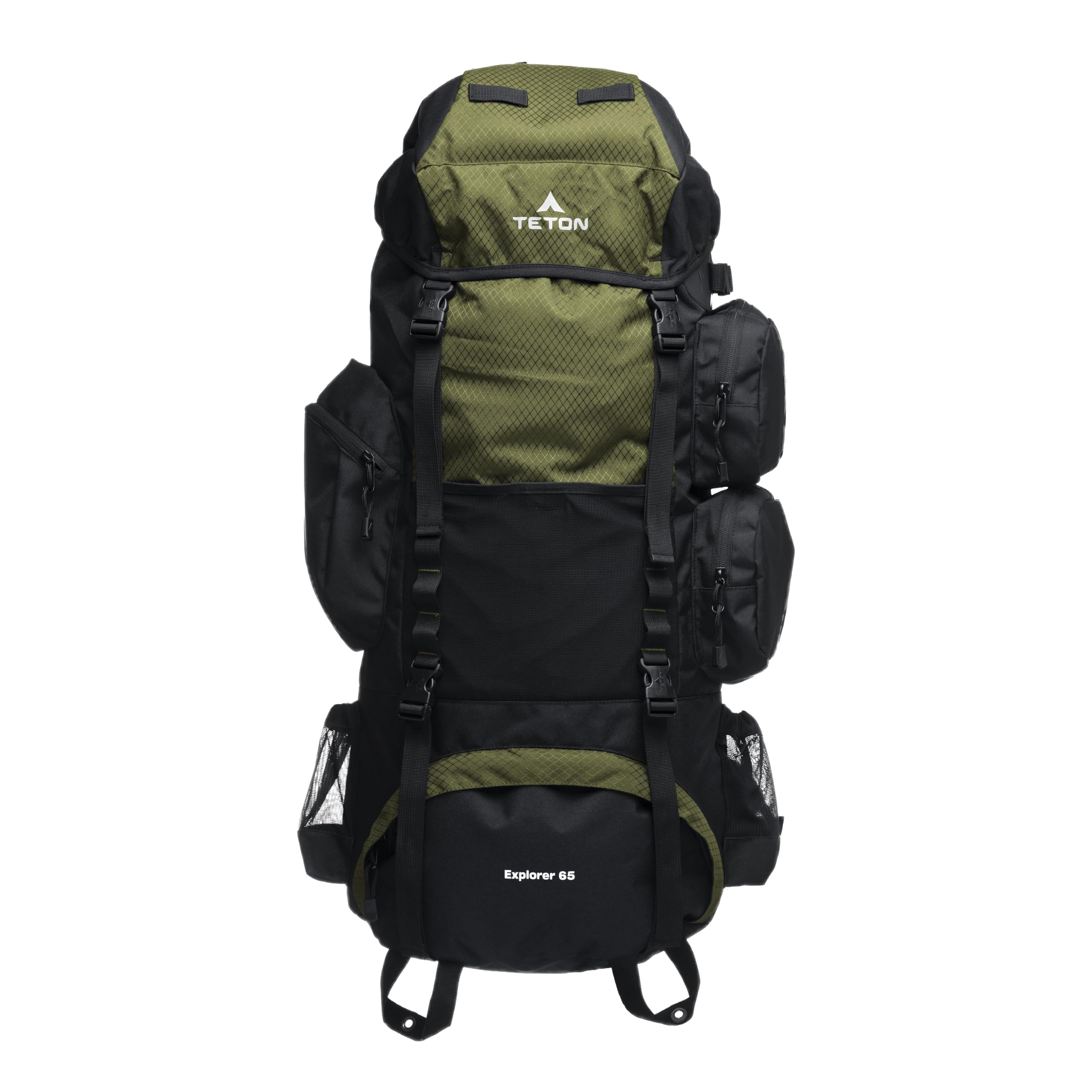
Teton 65L Explorer Internal Frame Backpack
4.7-star rating across 8,184 reviews — best volume-to-price ratio for multi-night trips at $109.99.
Frame Type (Internal vs. External vs. Frameless)
Frame type determines whether your pack carries the load or your spine does. For loads above 20 lbs, this spec is non-negotiable.
Internal frames use aluminum stays or plastic framesheet inserts built into the pack body. They transfer weight from your shoulders to your hip belt, reducing spine fatigue on long carries. All six packs in this guide with stated frame type use internal frames.
External frames (older aluminum ladder designs) offer better ventilation but poor trail agility. They largely disappeared from the mainstream market before 2020.
Frameless packs suit ultralight hikers carrying under 15 lbs total. The G4Free 10L/15L packable at $18.99 is a frameless design — correct for summit pushes, wrong for overnight loads.
The 20-lb rule: if your base weight plus food plus water exceeds 20 lbs, buy an internal-frame pack. Frameless packs under 20 lbs of load are fine; over that threshold, back pain becomes a trip-ender within six miles.
Good range
Internal frame with aluminum stays for loads 20+ lbs; frameless acceptable for sub-15 lb ultralight setups
Red flag
No frame specification listed at all on packs marketed for multi-day use — seller is hiding a frameless design in a high-volume shell

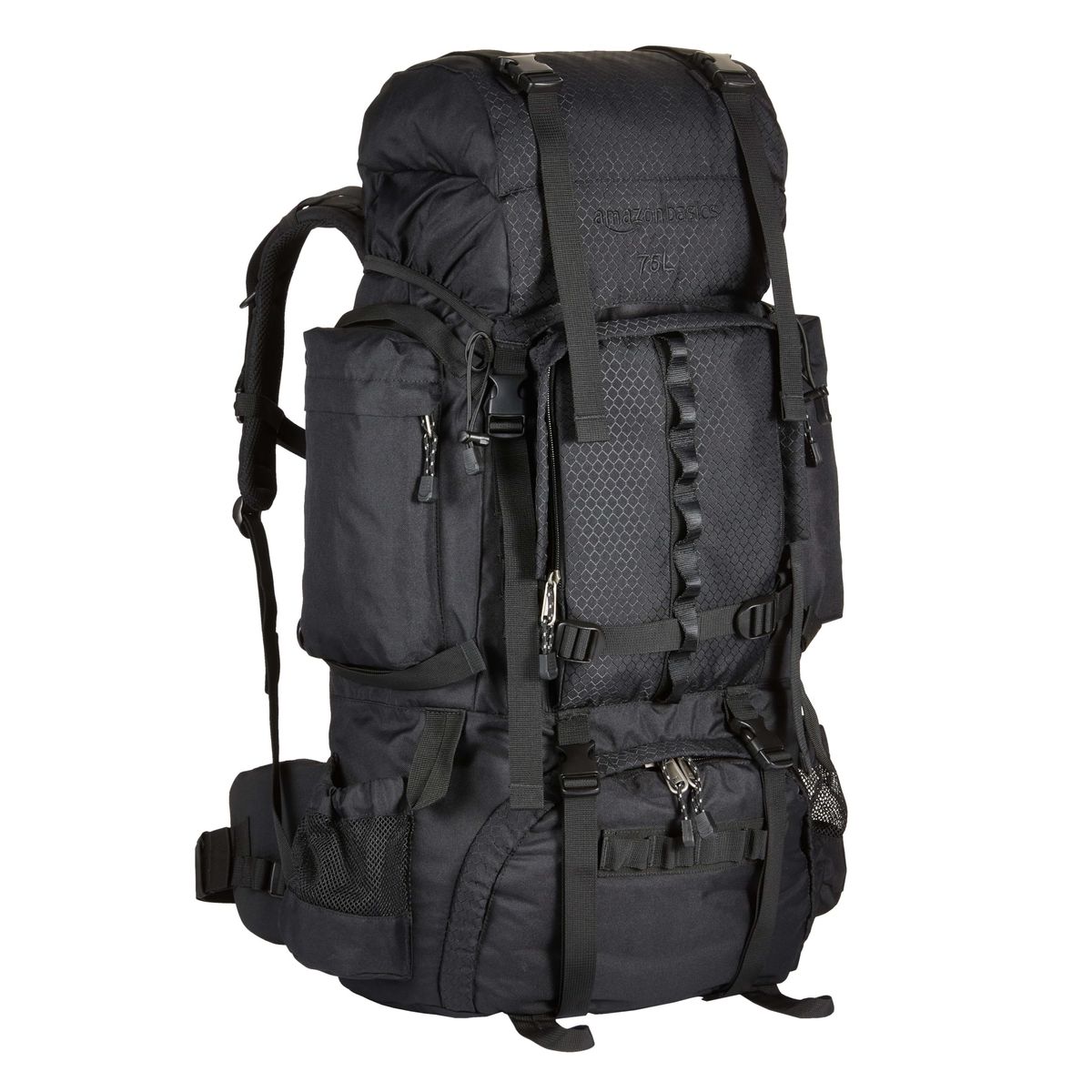
Amazon Basics Internal Frame Hiking Backpack
Internal-frame structure under $100 with 10,407 Amazon reviews — the most field-tested budget internal-frame pick in this set.
Weather Protection (Waterproofing and Rain Covers)
Wet gear mid-trail is a safety issue, not a comfort issue. A soaked sleeping bag loses insulation value, and wet cotton layers cause hypothermia even in mild temperatures.
Two layers of protection exist: pack fabric waterproofing (DWR coating or TPU laminate on the pack body) and a separate rain cover that fits over the outside of the pack.
Rain covers add $15–$25 if bought separately. Two packs in this set include one at no extra cost: the Teton 55L Scout at $99.99 and the Loowoko 50L at $41.99. That bundled value is real money.
The Loowoko 50L adds a waterproof pack body on top of the included rain cover — double protection for the lowest price in this set.
Desert Southwest day hikers can deprioritize rain covers. Pacific Northwest multi-day trekkers and humid Southeast campers should treat rain protection as a hard requirement, not an upgrade.
Good range
DWR-coated or waterproof pack body plus a fitted rain cover for any trip outside the desert Southwest
Red flag
Pack marketed as 'water-resistant' with no rain cover included and no stated DWR coating — water-resistant fabric fails in sustained rain within 20 minutes

Teton 55L Scout Internal Frame Backpack
Rain cover included at $99.99 — saves $15–$25 vs buying separately, with a 4.7-star rating across 7,904 reviews.
Fit System (Torso Length and Hip Belt)
A pack that doesn't fit your torso is a pack that hurts your back — regardless of price or brand. Fit is the most overlooked spec for first-time buyers.
Torso length (not overall height) determines pack fit. Most internal-frame packs come in one size with a sliding back panel or yoke adjustment. Measure your torso from the C7 vertebra at the base of your neck to the top of your hip bones.
Hip belt carry is what makes internal frames work. The belt should wrap the iliac crest — the top of the hip bone — not the waist. 70–80% of pack weight should ride on the hips, not the shoulders, on any load above 15 lbs.
Budget packs under $50 often have fixed, non-removable hip belts with limited padding. This is acceptable for loads under 20 lbs. Above that, the difference between a padded, adjustable hip belt and a flat strap is significant on mile 8.
First-time buyers at REI or Dick's Sporting Goods can ask staff to measure their torso and load-test a pack in-store before buying on Amazon — use the fit expertise for free, then order the size you know works.
Good range
Adjustable torso length with padded, removable hip belt for loads above 20 lbs; fixed hip belt acceptable for sub-20 lb day hikes
Red flag
Packs with no hip belt or a thin non-padded hip strap marketed for multi-day use — your lumbar takes the full load

Teton 55L Scout Internal Frame Backpack
Internal frame with adjustable yoke and padded hip belt — a proper fit system for weekend loads at $99.99.
Pack Weight and Packability
Every pound your pack weighs is a pound you carry before you load a single item of gear. Pack weight — called base weight in backpacking — compounds over miles.
The general rule: your total loaded pack weight (pack + gear + food + water) should not exceed 20–25% of your body weight for sustained trail hiking. A 160 lb hiker should target a 32–40 lb loaded pack maximum.
Packable and foldable packs like the G4Free 10L/15L at $18.99 collapse into their own pocket and weigh under 0.5 lbs. They are purpose-built as travel backup bags or summit-day packs — not primary overnight carriers.
Larger internal-frame packs in the 55–65L range typically weigh 3–5 lbs empty. That weight is the cost of the frame and padding that protects your back on heavy loads.
Travelers who fly to trailheads benefit from a packable daypack as a personal item: the G4Free and SKYSPER 20L both fold small enough to fit inside checked luggage and deploy as a trail bag on arrival.
Good range
Under 0.5 lbs for packable daypacks; 3–5 lbs for 55–65L internal-frame packs carrying 30+ lb loads
Red flag
Internal-frame packs over 6 lbs empty — the frame and padding overhead is eating into your usable carry capacity without proportional benefit

G4Free 10L/15L Hiking Backpack Packable
Sub-$20, OEKO-TEX certified, folds into its own pocket — the zero-risk packable daypack for travel and summit days.
Sustainability Certifications (OEKO-TEX and Global Recycled Standard)
Two certifications dominate the outdoor gear sustainability conversation: OEKO-TEX STANDARD 100 and the Global Recycled Standard. Both are third-party verified and meaningful — not marketing language.
OEKO-TEX STANDARD 100 certifies that every component of the textile — thread, dyes, fasteners — has been tested for harmful substances. It is a chemical-safety certification, not an environmental one.
Global Recycled Standard (GRS) verifies that recycled content claims in the fabric are accurate. A GRS-certified pack fabric contains a verified percentage of post-consumer recycled material.
Two packs in this set carry dual certification: the SKYSPER 20L at $28.47 holds both OEKO-TEX STANDARD 100 and Global Recycled Standard. The G4Free packable at $18.99 holds OEKO-TEX STANDARD 100.
Eco-conscious buyers who want verified sustainability signals — not just marketing — should prioritize these two picks over uncertified alternatives in the same price range.
Good range
OEKO-TEX STANDARD 100 for chemical safety assurance; GRS for verified recycled content — both on the same pack is the gold standard
Red flag
Packs marketed as 'eco-friendly' or 'sustainable' with no third-party certification number listed — these are unverifiable marketing claims

SKYSPER Small Hiking Backpack 20L
OEKO-TEX STANDARD 100 + Global Recycled Standard dual-certified at $28.47 — the strongest sustainability credentials under $30.
Budget and Value Tiers
The hiking backpack market in 2026 splits cleanly into three price tiers, each with distinct trade-offs. Knowing which tier matches your use case prevents both overspending and buying the wrong pack.
Under $50 (ultralight and budget overnight): the G4Free packable at $18.99, SKYSPER 20L at $28.47, and Loowoko 50L at $41.99. Best for day hikers, first-time overnight trips, and travel backup bags.
$50–$110 (internal-frame weekend and multi-night): the Amazon Basics at $99.99, Teton 55L Scout at $99.99, and Teton 65L Explorer at $109.99. Best for 2–5 night trips with 25–40 lb loads.
Above $110 (not covered in this guide): Osprey, Deuter, and Gregory packs in the $150–$350 range add superior fit systems, lifetime warranties, and lighter frame materials. Worth considering if you hike more than 10 nights per year.
Black Friday and Prime Day are the two best windows to buy — internal-frame packs in the $99–$110 range regularly drop 20–30% during both events.
Good range
$40–$110 covers the full range of day-hike to multi-night needs without diminishing returns; above $110 adds warranty and fit system upgrades worth paying for at 10+ nights/year
Red flag
Packs under $30 marketed for multi-night use with 55–65L capacity — the volume number is real but the frame, stitching, and hip belt are usually not rated for 30+ lb loads

Loowoko 50L Hiking Backpack
Waterproof 50L with rain cover at $41.99 — the best value overnight pack in this set by a wide margin.
Common Mistakes to Avoid
Mistake 1: Buying a 65L pack for weekend trips. A 65L pack on a 2-night trip adds 1–2 lbs of dead frame weight and encourages overpacking. Match volume to trip length — 45–55L is the weekend sweet spot.
Mistake 2: Skipping rain cover evaluation. Wet gear is a safety issue, not just an inconvenience. Either buy a pack with a bundled rain cover (Teton 55L Scout, Loowoko 50L) or budget $15–$25 for a separate cover before your first trip.
Mistake 3: Choosing a frameless pack for loads above 20 lbs. Frameless packs are designed for sub-15 lb ultralight setups. Above 20 lbs, the absence of an internal frame puts the entire load on your spine — back pain typically sets in by mile 6.
Mistake 4: Ordering the night before a trip. None of the six packs in this set are Prime-eligible as of May 2026. Standard Amazon shipping runs 5–8 days. Order at least two weeks before your departure date, or check local availability at REI, Dick's Sporting Goods, or Backcountry.
Mistake 5: Trusting 'eco-friendly' marketing without a certification number. OEKO-TEX STANDARD 100 and Global Recycled Standard are third-party verified. Self-declared 'sustainable' labels without a certificate number are unverifiable marketing claims.
Your Pre-Purchase Checklist
- Decide trip length first — night count determines the liter range you need before any other spec matters.
- Confirm frame type vs. load weight — if your total loaded pack will exceed 20 lbs, require an internal frame with a padded hip belt.
- Check rain cover inclusion — if not bundled, add $15–$25 to your budget for a separate cover, or filter only for packs that include one.
- Measure your torso length — C7 vertebra to top of hip bone; confirm the pack's back length range covers your measurement before ordering.
- Check Prime eligibility and shipping time — none of the six packs here are Prime-eligible; order at least two weeks before your trip, or source locally at REI or Dick's Sporting Goods.
- Verify certifications if sustainability matters — look for the OEKO-TEX certificate number and GRS certificate number in the product listing, not just badge graphics.
- Check return policy before first use — Amazon's standard return window applies; load the pack with books indoors to test fit before hitting the trail.
Our Recommended Starting Points
Best Hiking Backpacks 2026
Ranked picks across budget, weekend, and multi-night categories with full specs.
Best Camping Gear 2026
Tents, sleeping bags, and stoves to pair with your new pack.
Best Daypacks 2026
10–25L lightweight options for day hikes, travel, and commutes.
Best Hiking Boots 2026
Footwear picks to match your pack and trail type.
Frequently Asked Questions
Which hiking backpack should I buy for day hikes?
For day hikes under 8 hours, a 10–20L pack is the right size. The G4Free 10L/15L packable at $18.99 and the SKYSPER 20L at $28.47 both cover water, snacks, a layer, and a first-aid kit without adding unnecessary weight. Both are OEKO-TEX certified.
What size hiking backpack do I need for a 3-day trip?
A 3-night trip typically requires 55–65L to carry a sleeping bag, shelter, clothing, food, and a water system. The Teton 65L Explorer at $109.99 (4.7 stars, 8,184 reviews) is the strongest pick for that volume. The Teton 55L Scout at $99.99 works if you pack lean.
Which hiking backpack is best for beginners?
The Amazon Basics Internal Frame pack at $99.99 is the safest first buy — 10,407 Amazon reviews provide the largest community signal in this set, and the internal frame handles loads up to roughly 30 lbs. It covers most weekend and beginner multi-night trips.
Which hiking backpack is best under $50?
The Loowoko 50L at $41.99 is the standout under-$50 pick. It includes a rain cover, has a waterproof pack body, and offers a 45+5L expandable design. For pure day hiking under $30, the SKYSPER 20L at $28.47 or G4Free at $18.99 are the right choices.
Which hiking backpack comes with a rain cover included?
Two packs in this guide include a rain cover at no extra cost: the Teton 55L Scout at $99.99 and the Loowoko 50L at $41.99. Buying a rain cover separately typically adds $15–$25, so this bundled value is meaningful — especially for Pacific Northwest or humid Southeast conditions.
Which hiking backpack is best for eco-conscious buyers?
The SKYSPER 20L at $28.47 carries both OEKO-TEX STANDARD 100 and Global Recycled Standard certifications — the strongest dual-certification signal in this set. The G4Free 10L/15L packable at $18.99 also holds OEKO-TEX STANDARD 100. Both certifications are third-party verified.
Which hiking backpack is the lightest and most packable?
The G4Free 10L/15L at $18.99 is the lightest, most packable option in this guide. It folds into its own pocket, fits inside checked luggage, and deploys as a trail or summit-day bag. Suitable for day hikes and travel backup use — not for overnight loads above 15 lbs.
Do I need an internal frame hiking backpack?
Yes, if your loaded pack weight will exceed 20 lbs. Internal frames transfer load from shoulders to hips, preventing back pain on longer carries. Frameless or minimalist packs are correct only for ultralight setups under 15 lbs total. All multi-night and weekend packs in this guide use internal frames.
Are these hiking backpacks available on Prime?
None of the six packs in this guide are Prime-eligible as of May 2026. Standard Amazon shipping runs 5–8 days. Order at least two weeks before your trip, or check local availability at REI, Dick's Sporting Goods, or Backcountry to avoid shipping delays.
What is the best hiking backpack for travel and carry-on use?
The G4Free 10L/15L packable at $18.99 is the best travel option — it folds flat, fits inside checked luggage, and unfolds as a day bag at your destination. The SKYSPER 20L at $28.47 also fits within typical personal-item size limits for most US domestic airlines.
How we wrote this guide
This guide is based on verified Amazon buyer data and product listing specifications across six finalists, totaling 42,788 Amazon reviews evaluated as of May 2026. Each spec section draws on manufacturer-published specifications cross-referenced against verified buyer feedback.
Evaluation covered eight comparison dimensions: price, capacity, frame type, rain cover inclusion, weather resistance, certifications, rating, and review count. Products failing basic frame or weather-protection requirements for their stated use case were noted in the relevant spec sections.
No pack was ranked solely on price. Volume-to-trip-length match, frame adequacy for stated load, and weather protection availability drove the editorial position for each pick. Sustainability certifications (OEKO-TEX STANDARD 100, Global Recycled Standard) were verified against product listing data.
About this guide
Mubboo Editorial Team — independent US-market consumer research. Picks reflect editorial consensus from verified Amazon buyer data across 42,788 reviews and six finalists evaluated as of May 2026.
Affiliate disclosure: Mubboo earns commissions from qualifying purchases. This does not influence our rankings — methodology and full spec criteria above.