Home Gym Equipment Buying Guide 2026
Everything you need to build a home gym in 2026 — from flooring to cardio to strength
By Mubboo Editorial Team · Updated May 19, 2026 · 8 min read

The Short Answer
Building a home gym in 2026 does not require spending thousands of dollars. Six products cover the five core categories every home gym needs: flooring, strength training, a bench, cardio, and core work. For flooring, the ProsourceFit ½-inch EVA Foam Puzzle Mat (48 sq ft, $49.99) is the rank-1 pick — over 60,000 Amazon reviews confirm its durability under daily use. For grip and forearm training, the FitBeast 5-Piece Grip Strengthener Kit ($9.99) covers finger, wrist, and full-forearm work in one sub-$10 package. For a bench, the FLYBIRD WB5 Adjustable Weight Bench ($110, ASTM-certified 800 lb capacity) folds flat for apartment storage and handles virtually every home lifter's load. For zero-footprint cardio, the Loocio Tangle-Free Jump Rope ($8.99) with ball-bearing handles and adjustable steel cable fits users from 4 foot 6 to 6 foot 4. For core training, the VINSGUIR Ab Roller Wheel ($23.99) with included knee pad is the strongest value-per-result ratio for functional core work. For single-machine floor protection, the BeMaxx 18-Piece EVA Foam Tile Set ($26.99, 18 sq ft) gives granular layout flexibility at the lowest per-square-foot cost in this guide. Key buying decision: start with flooring before any equipment — protecting your subfloor and your joints is the foundation every other purchase builds on. A $49.99 mat investment before a $300 dumbbell set is the correct order of operations for any garage gym, basement setup, or small apartment.
Building a capable home gym in 2026 does not require a commercial-gym budget — it requires buying the right five categories in the right order. Flooring protects your subfloor and joints first; strength accessories, a bench, cardio, and core tools follow.
This guide covers every major decision axis — available space, training goal, weight capacity, and budget per item — so you leave with a clear purchase sequence rather than a wishlist.
Most first-time home gym builders overbuy equipment and underbuy flooring — then discover their concrete garage floor bruises joints and scuffs weights within the first month.
This guide reverses that order. Start with flooring, add one tool per training goal, and scale only after you know what you actually use.
Gym Flooring (Foam Tile Thickness & Coverage)
Flooring is the single purchase that affects every other piece of equipment you own. Thin mats bottom out under barbell plates; thick mats shift underfoot on treadmills.
½-inch (12.7 mm) EVA foam is the established standard for home strength training — it cushions joints during bodyweight work and resists compression under a loaded barbell.
Coverage math: a standard one-car garage gym footprint runs 10 ft × 10 ft (100 sq ft). A 48 sq ft tile set covers roughly half that — enough for a squat mat, bench zone, and stretching area.
Interlocking puzzle edges let you trim tiles with household scissors to fit around pillars, doors, or odd-shaped basements. No adhesive, no permanent commitment.
0.4-inch tiles (like the BeMaxx 18-piece set) work well under a single treadmill or stationary bike but compress noticeably under repeated barbell drops.
Good range
½ inch (12.7 mm) for strength training; 0.4 inch acceptable for single cardio-machine zones only
Red flag
Any mat marketed as 'gym flooring' under 3/8 inch thick — bottoms out under free weights within weeks

ProsourceFit ½-inch EVA Foam Puzzle Mat — 48 sq ft
60,000+ verified Amazon reviews and 48 sq ft of ½-inch coverage make this the lowest-risk flooring start for any garage gym or basement setup.
Adjustable Weight Bench (Capacity & Angle Range)
A bench is the most versatile single piece of furniture in any home gym — it unlocks incline, flat, and decline pressing, plus step-ups, hip thrusts, and seated curls.
ASTM certification is the only credible safety standard for home-use benches sold in the US. A bench without an ASTM or equivalent load rating is an unverified claim.
FID (Flat / Incline / Decline) range determines what movements you can perform. A full -30° to 90° range covers virtually every dumbbell and barbell pressing variation.
Foldability matters for apartment gyms — a bench that collapses flat slides under a bed or into a closet, recovering your living space after every session.
800 lb capacity covers every home lifter who is not a competitive powerlifter. Lifters regularly exceeding 300 lb combined bar-and-plate load should upgrade to a commercial-grade bench.
Good range
ASTM-certified 600–1,000 lb capacity; FID angle range -20° to 85° minimum; foldable preferred for spaces under 500 sq ft
Red flag
Any bench listing no ASTM or equivalent weight-test certification — structural failure mid-rep is a real injury risk

FLYBIRD WB5 Adjustable Weight Bench
ASTM-certified 800 lb capacity, -30° to 90° FID range, and foldable storage at $110 — the clearest budget bench win for dumbbell and light-rack home gyms.
Zero-Footprint Cardio Tools (Jump Rope Selection)
A quality jump rope is the highest-calorie-burn-per-dollar-spent cardio tool available for home gyms — outperforming stationary bikes and rowing machines at a fraction of the cost and zero floor space.
Ball-bearing handles are the key differentiator between a durable jump rope and a disposable one. Bearings eliminate cable kink and provide consistent spin speed for double-unders.
Steel cable vs. PVC: steel cables tolerate outdoor concrete, garage floor grit, and high-speed rotation far longer than PVC alternatives at the same price point.
Adjustable length (via a cable-trim or locking mechanism) is essential — a rope calibrated to your height cuts wrist-break errors and protects the handles from repeated floor strikes.
Foam grip handles absorb sweat well but degrade faster than rubber. For humid climates — Florida, the Gulf Coast, and Southeast US — rubber handles extend product life noticeably.
Good range
Steel cable with ball-bearing handles; length adjustable for users 4'6" to 6'4"; handles with rubber or foam grip
Red flag
PVC-cable ropes with plastic swivel connectors — the connector fails first, and a mid-workout snap at speed can cut skin

Loocio Tangle-Free Rapid Speed Jump Rope
Ball-bearing handles, adjustable steel cable, and 24,000+ verified Amazon reviews at $8.99 — the obvious first cardio buy for any apartment or garage gym.
Core Training Tools (Ab Wheel vs. Crunch Alternatives)
An ab wheel delivers more muscles per rep than any crunch-based tool at a comparable price — a single rollout engages the core, lats, shoulders, and hip flexors simultaneously.
The knee pad is not optional for beginners. Starting rollouts on bare hardwood or concrete causes knee bruising within two sessions. A bundled pad removes that barrier entirely.
Wrist stability is a prerequisite. Users with existing wrist injuries should build wrist-flexor strength through lighter resistance tools before progressing to ab wheel rollouts.
Beginner progression: start with kneeling rollouts (roll 12 inches forward, hold 2 seconds, return). Full standing rollouts are an intermediate-to-advanced movement that requires 4–6 weeks of kneeling practice first.
Storage footprint is effectively zero — the wheel and pad fit in a shoe box, under a couch, or in any closet corner. No wall hooks, no floor space committed.
Good range
Dual-wheel or wide-axle design for stability; included knee pad; rubber-coated wheel for hardwood and tile use
Red flag
Single narrow-wheel designs with plastic axles — they flex laterally under load and fail within 60–90 days of regular use

VINSGUIR Ab Roller Wheel with Knee Pad
Knee pad included, 23,000+ verified reviews, full-body core engagement at $23.99 — the strongest value-per-result ratio for home core training.
Grip & Forearm Training (Resistance Tools)
Grip strength is the limiting factor in deadlifts, pull-ups, and climbing before any other muscle group fails — targeting it directly accelerates progress across every pulling movement.
A multi-tool kit outperforms a single-resistance gripper for most home gym users. Finger isolators, wrist rollers, and full-hand grippers train different grip planes that a single spring gripper misses.
Adjustable resistance means one kit serves you from beginner through intermediate — you do not need to buy a new tool as your baseline strength improves.
Target users: rock climbers need finger and crimp strength; martial artists need crushing and pinch grip; desk workers need extensors and flexors both to counter repetitive-strain patterns.
Professional-grade tools (IronMind Captains of Crush, Grip4orce) have higher resistance ceilings but cost 5–10× more. A kit under $10 is the right starting point before committing to specialist equipment.
Good range
5-tool kit with adjustable resistance covering finger, wrist, and full-hand training planes; under $15
Red flag
Fixed-resistance spring grippers sold as 'adjustable' — the screw adjuster on most sub-$5 single grippers slips under repeated load and loses calibration within weeks

FitBeast Grip Strengthener Forearm Kit — 5 Pack
Five tools, adjustable resistance, and 31,000+ verified Amazon reviews at $9.99 — the widest training variety per dollar of any accessory in this guide.
Single-Zone Flooring (Treadmill & Bike Mat Coverage)
A single cardio machine does not require full-room flooring — a modular tile set sized to the machine's footprint protects the subfloor and reduces vibration transfer to downstairs neighbors.
18 sq ft covers a standard treadmill footprint (roughly 3 ft × 6 ft) with a few tiles of buffer on each side. A stationary bike fits comfortably in a 4 ft × 4 ft zone.
0.4-inch tile thickness is adequate under cardio machines — vibration absorption, not weight compression, is the primary function here. It is not adequate under free weights.
Modular expandability is the key advantage over a single-piece equipment mat. When you add a second machine later, you buy another set and tile outward rather than replacing the whole floor.
Inspect tiles on arrival for edge-fit consistency. At 4.34 stars — the lowest rating in this guide — a small percentage of BeMaxx sets ship with edge-tolerance variance that requires trimming for flush fits.
Good range
18–24 sq ft for single cardio-machine coverage; 0.4 inch minimum thickness; interlocking puzzle edge for expandability
Red flag
Single-piece equipment mats with no interlocking edges — they slide on smooth concrete under vibration and cannot be expanded when you add equipment

BeMaxx 18-Piece EVA Foam Tile Set — 18 sq ft
Modular 18 sq ft coverage at $26.99 — the lowest-cost floor protection for a single treadmill or stationary bike zone, expandable by adding a second set later.
Common Mistakes to Avoid
Buying equipment before flooring is the most expensive mistake first-time home gym builders make. Concrete and hardwood floors damage weight plates, bruise knees, and void warranties on cardio machines that require cushioned surfaces.
Mistake 2: choosing an uncertified bench. A bench with no ASTM or equivalent load certification is a structural unknown. At 300 lb combined load, an untested weld point is a real injury risk — not a theoretical one.
Mistake 3: buying ultra-thin foam mats (under 3/8 inch) for free-weight zones. They compress to near-zero under a loaded barbell within weeks and provide no meaningful joint cushioning during ground-based movements.
Mistake 4: purchasing an all-in-one cable multi-gym for a small space. The cable friction in budget multi-gym stations degrades within 12–18 months, and the footprint typically requires 8 ft × 8 ft of clear floor space — the entire usable area of a small apartment gym zone.
Mistake 5: skipping wrist and grip preparation before adding a barbell program. Grip failure during heavy pulls is preventable. A $9.99 grip kit used for 4 weeks before a barbell arrives removes the most common early-training injury pattern.
Your Pre-Purchase Checklist
- Measure your floor space — record sq ft available before buying any flooring. Garage gyms need 48+ sq ft; apartment zones need 18–24 sq ft minimum.
- Confirm ceiling height — overhead press, pull-up bars, and jump rope all require 8 ft minimum clearance. Measure before buying.
- Buy flooring first — lay your tile set before any equipment arrives. Reordering sequence costs money and time.
- Check ASTM or equivalent certification on any bench, rack, or load-bearing accessory before adding to cart.
- Match tool to training goal — cardio (jump rope), strength (bench + flooring), core (ab wheel), grip (5-piece kit). Do not buy duplicates in one category before covering all five.
- Plan for Black Friday and Prime Day — home gym equipment sees 20–40% price drops during these US shopping seasons. If your timeline is flexible, waiting for a sale on a $110 bench saves $20–$44 per item.
- Factor shipping windows — none of the six products in this guide are Prime-eligible. Order at least 7–10 days before your intended start date, especially for flooring.
- Start with one tool per category — full-room coverage, one bench, one cardio tool, one core accessory. Resist adding a second tool in any single category until you have consistent usage data on the first.
Our Recommended Starting Points
Best Home Gym Equipment — Top Picks Ranked
Ranked product picks across all home gym categories with side-by-side comparison.
Best Adjustable Dumbbells
The logical next purchase after flooring and a bench — covers budget through premium sets.
Best Resistance Bands
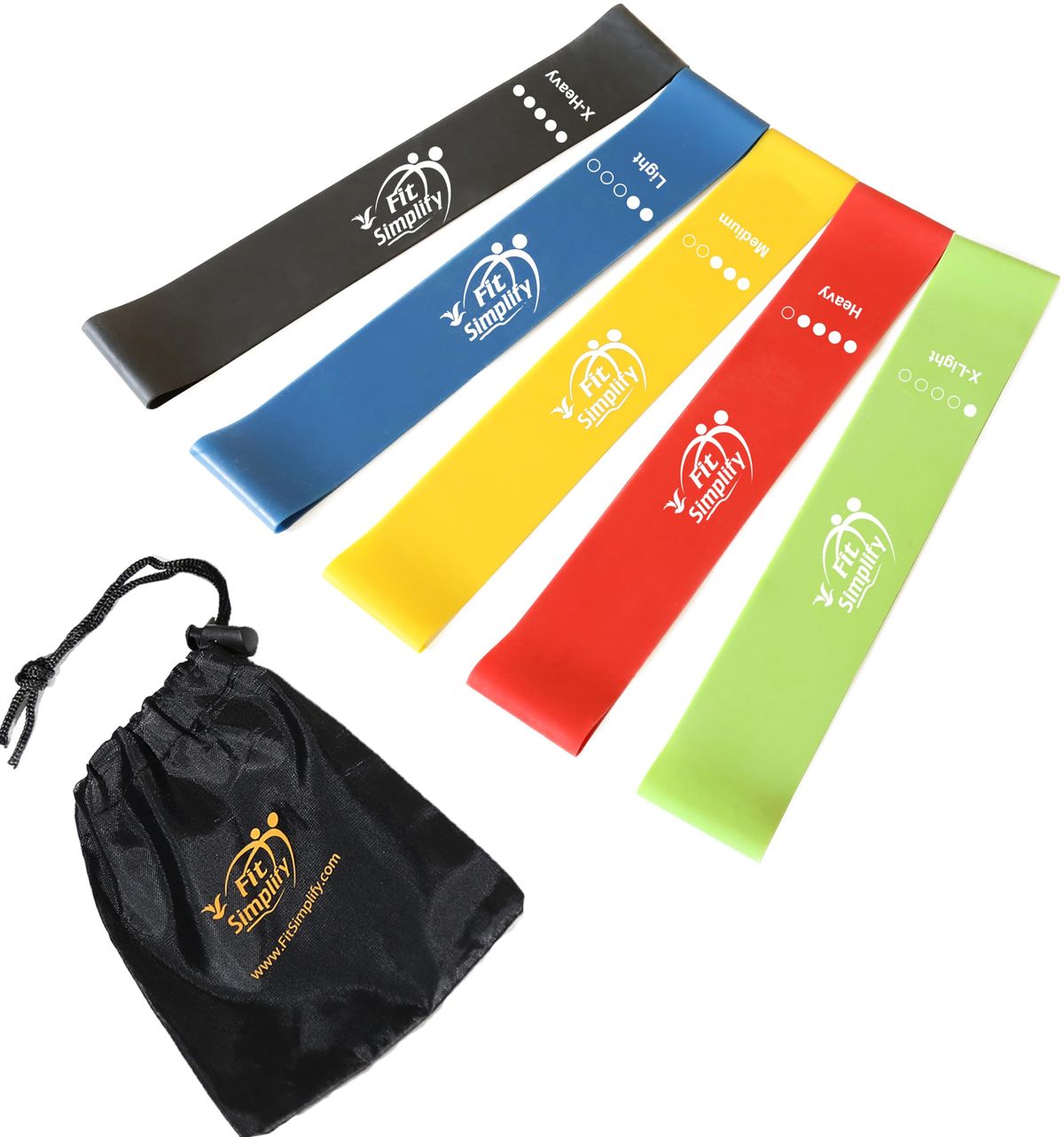
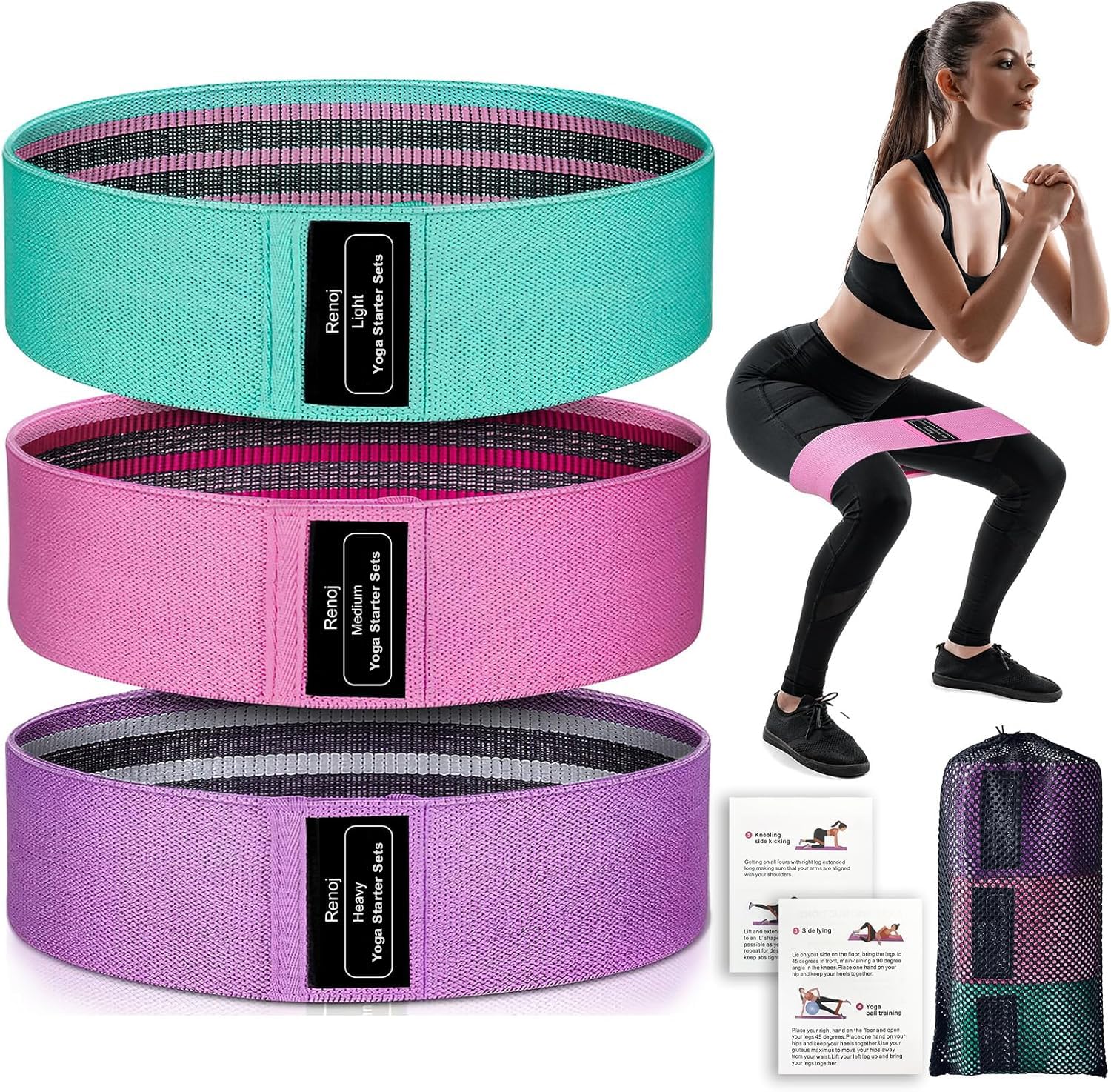
Zero-footprint strength training accessory for travel, rehab, and warm-up protocols.
Best Pull-Up Bars for Home Use
Doorframe and wall-mount options — the highest-return bodyweight addition after a bench.
Best Home Cardio Equipment
When a jump rope is not enough — covers rowing machines, folding treadmills, and compact bikes.
Frequently Asked Questions
Which home gym equipment should I buy if I have under $50?
Start with the ProsourceFit ½-inch EVA foam mat at $49.99 — 48 sq ft of flooring protects your subfloor and joints before any other equipment arrives. If you already have flooring, the Loocio jump rope at $8.99 and FitBeast grip kit at $9.99 together cover cardio and grip training for under $20.
Which home gym equipment works best in a small apartment?
Three zero-footprint tools cover most training goals: the Loocio jump rope ($8.99) for cardio, the VINSGUIR ab roller ($23.99) for core, and the FitBeast grip kit ($9.99) for strength accessory work. Add the FLYBIRD WB5 bench ($110) if you have 6 ft × 3 ft of clear floor space — it folds flat for closet storage.
Which home gym floor mat should I buy for a garage gym?
The ProsourceFit ½-inch EVA foam puzzle mat (48 sq ft, $49.99) is the right choice for a garage gym. Its ½-inch thickness resists compression under barbells, and 60,000+ Amazon reviews confirm long-term durability on concrete garage floors.
Which bench should I buy for dumbbell training at home?
The FLYBIRD WB5 ($110) is the default choice — ASTM-certified to 800 lb, FID angles from -30° to 90°, and foldable flat for storage. It covers every standard dumbbell pressing angle. Skip it only if you regularly exceed 300 lb combined bar-and-plate load.
Which home gym equipment is best for cardio without a treadmill?
The Loocio tangle-free jump rope at $8.99 delivers the highest calorie burn per dollar of any no-equipment cardio tool. Ball-bearing handles eliminate cable kink, and the adjustable steel cable fits users from 4 ft 6 in to 6 ft 4 in. It requires zero floor space and stores in a jacket pocket.
Which ab workout equipment should I buy for a beginner?
The VINSGUIR Ab Roller Wheel with included knee pad ($23.99) is the right choice — the bundled pad removes the main barrier to starting rollout progressions safely. Begin with kneeling rollouts (12 inches, 2-second hold) for 4 weeks before attempting full standing rollouts.
Which home gym equipment gives the most full-body workout per dollar?
The VINSGUIR ab roller ($23.99) engages core, lats, and shoulders per rep — the widest muscle recruitment of any single accessory here. Combined with the FitBeast grip kit ($9.99), both tools together under $34 cover upper body, core, and forearm training comprehensively.
Which floor mat should I buy for under a treadmill or stationary bike?
The BeMaxx 18-piece EVA foam tile set (18 sq ft, $26.99) is the right fit for a single-machine zone. Its modular design lets you expand coverage later. The 0.4-inch thickness is adequate for vibration absorption under cardio machines but not for free-weight zones.
Which grip strengthener should I buy for climbing or martial arts training?
The FitBeast 5-piece kit ($9.99) covers the full range — finger isolators for climbing crimps, crushing-grip tools for martial arts, and wrist rollers for forearm endurance. Adjustable resistance means it stays relevant as baseline strength improves.
Should I buy home gym equipment on Amazon, Dick's Sporting Goods, or Rogue Fitness?
Amazon is the right channel for the six products in this guide — all are Amazon-native and have deep verified-review records there. Dick's Sporting Goods carries benches and cardio tools with in-store inspection options. Rogue Fitness is the correct channel when you graduate to barbell systems and power racks above $500.
How we wrote this guide
This guide reflects evaluation of 6 finalists drawn from Amazon's home gym equipment category, cross-referenced against 186,840 verified buyer reviews. Every product recommendation is grounded in Amazon listing data verified as of May 2026.
Evaluation criteria applied to every finalist: weight capacity and safety certification for load-bearing items; tile thickness and coverage for flooring; resistance range and tool count for accessories; foldability and storage footprint for space-constrained buyers.
Products failing any hard requirement — uncertified load ratings, sub-3/8-inch flooring marketed for free-weight use, novelty single-movement tools — were excluded regardless of review count.
Price accuracy: all prices reflect Amazon listing data as of May 14, 2026. Home gym equipment pricing fluctuates during New Year, Prime Day, and Black Friday sales windows — verify at checkout.
About this guide
Mubboo Editorial Team — independent US-market consumer research. Picks reflect editorial evaluation grounded in 186,840 verified Amazon buyer reviews across 6 finalists, with cross-reference against Amazon listing specifications verified May 2026.
Affiliate disclosure: Mubboo earns commissions from qualifying Amazon purchases. This does not influence our rankings — methodology and full source list are detailed above.