Buying Guide

How to Choose Noise-Cancelling Headphones in 2026: The Complete Buying Guide

Eight specs that decide whether you wear them every day or leave them in the drawer — and the picks that prove each one matters.

By Mubboo Editorial Team · Updated May 14, 2026 · 11 min read

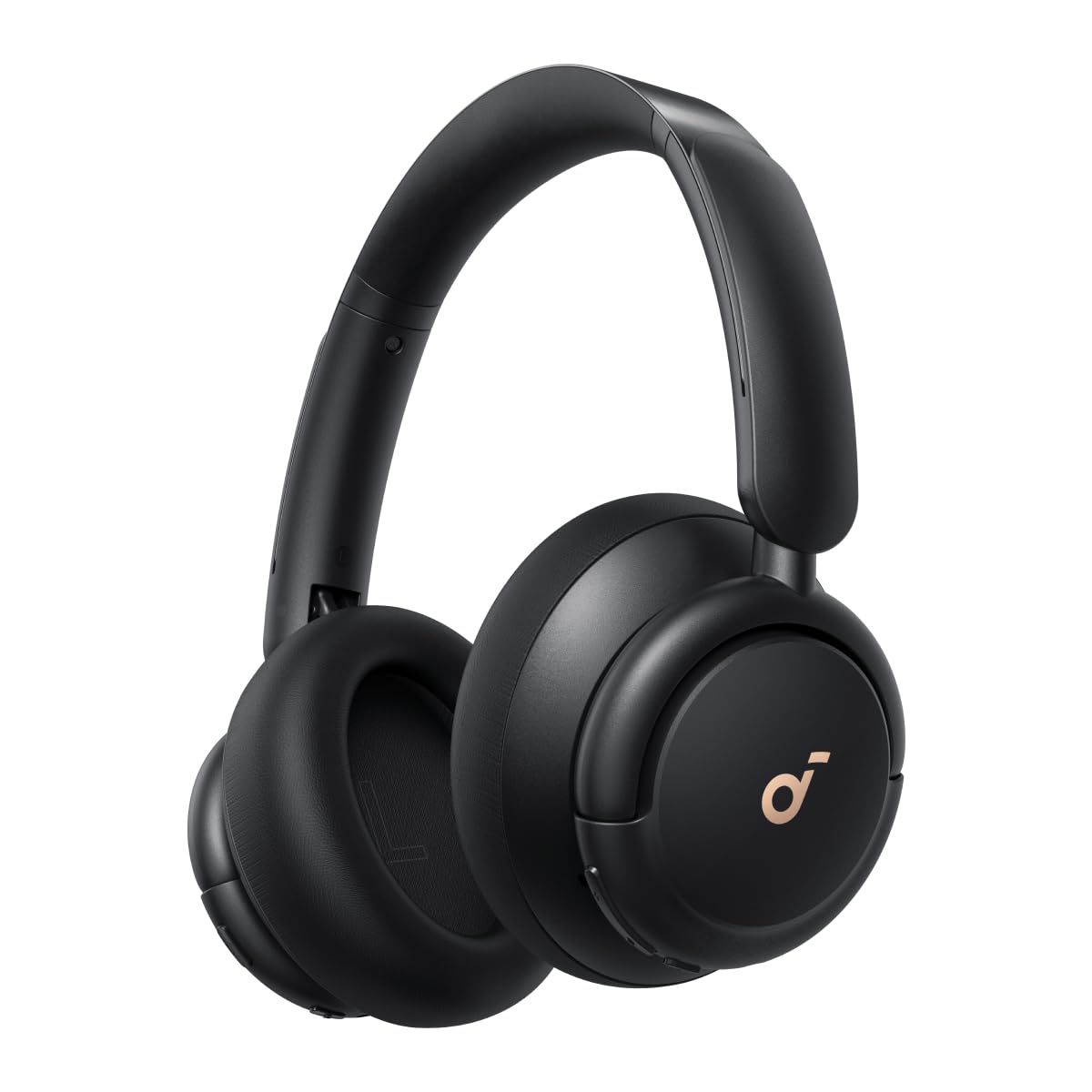
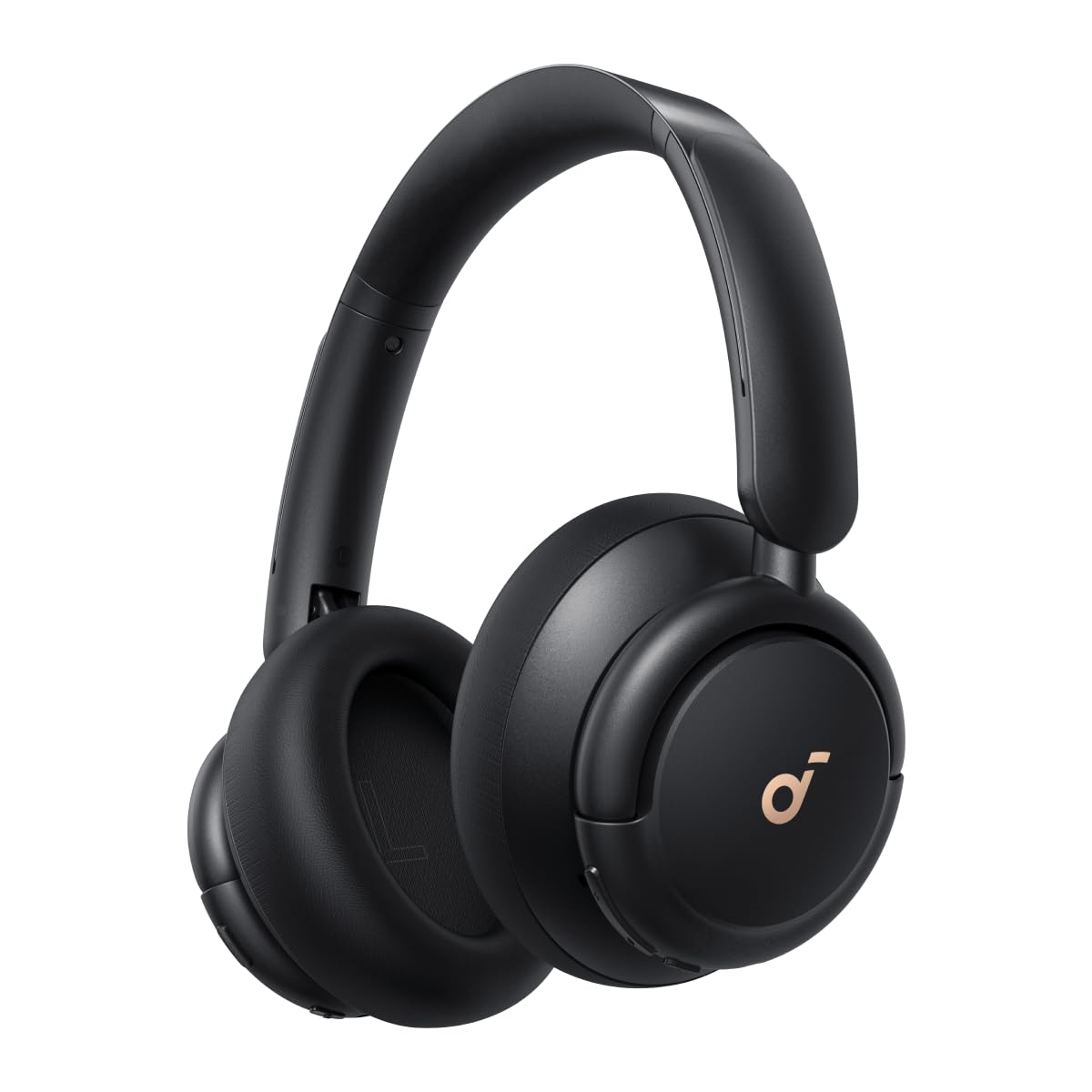
Premium black over-ear noise-cancelling headphones resting on a closed laptop on an airline tray table

The Short Answer

Eight specs separate noise-cancelling headphones you wear every day from ones you leave in the drawer. Active noise cancellation (ANC) depth is where the headline marketing lives, but the gap between 25 and 30 decibels of cancellation matters less than headphone comfort over a four-hour flight. Codec support determines whether your Android phone streams lossless: LDAC is the 2026 high-resolution standard, AAC is the Apple baseline. Battery life on premium models clusters at 24 to 31 hours — RTINGS measured the Sony WH-1000XM6 at 31.75 hours, slightly exceeding spec. Comfort splits the field by head shape: Sony narrower clamp, Bose wider and longer-wear. Call quality, app sophistication, multipoint device switching, and USB-C audio while charging round out the checklist. Our top pick across all eight dimensions is the Sony WH-1000XM6; if your head is wider than average, drop to the Bose QuietComfort Ultra. Start with our best-of ranking and come back here for the spec deep-dive.

Premium noise-cancelling headphones live on your head for hours at a time. The pair you actually wear daily beats the pair with one extra decibel of cancellation that pinches your head.

This guide walks the eight specs that decide whether headphones become daily-driver gear or drawer ornaments. Skim what doesn't apply, dig into what does, and end with a checklist plus links to the Mubboo picks that excel in each dimension.

None of this is theoretical. Every spec range below traces back to a headphone we already covered in our 2026 best-of ranking or our Sony WH-1000XM6 deep review. The numbers are what those products actually deliver, not marketing claims.

You bought the headphones with the deepest ANC spec on the spec sheet — and returned them after one flight because they pinched your skull at hour three. The problem wasn't the headphones. It was that nobody told you to weigh comfort, codec, and call quality before chasing the ANC headline number.

ANC Depth (decibels)

Active Noise Cancellation depth measures how many decibels of ambient sound the headphones suppress. Higher numbers cancel more noise, but the relationship plateaus quickly.

The 2026 premium baseline is 25-30 dB of cancellation across the low-frequency band where airplane drone and HVAC hum live. The Sony WH-1000XM6's 12-mic array driven by the QN3 processor sits in the upper half of this band; Bose QC Ultra clusters similarly.

Above 30 dB, additional cancellation is barely audible in real-world use. Lab tests can resolve the difference; your ears on a 757 cannot.

Below 20 dB is a red flag at any price. Cheap ANC chips also introduce a pressure sensation — the cabin-pressure-change feeling — that gets uncomfortable after 20 minutes. Test for this; not all ANC is equal-feeling.

Good range

25-30 dB on the low-frequency band (jet drone, office hum, HVAC)

Red flag

Sub-20 dB ANC or noticeable pressure sensation in the first 5 minutes of wear

Sony WH-1000XM6
Our pick that excels here

Sony WH-1000XM6

12-mic QN3 processor — the deepest current-gen ANC array in our 2026 coverage.

$458Prime

Codec Support (LDAC, AAC, aptX)

The codec determines how Bluetooth audio is compressed between phone and headphone. Different codecs give different sound quality, and your phone limits which ones actually run.

LDAC is Sony's near-lossless codec at up to 990 kbps. Android phones support it; Apple does not. If you use Android plus a streaming service that sends LDAC (Tidal, Apple Music high-res on Android, Qobuz), LDAC is the audible upgrade tier.

AAC is Apple's baseline at 256 kbps. iPhones only output AAC over Bluetooth. If you are an iPhone user, LDAC support on a headphone is unused capacity. AAC quality is good; the chip implementation matters more than the codec name.

aptX and aptX Adaptive are Qualcomm codecs found on premium Android phones. Bose ships these; Sony skips them in favor of LDAC. Either is fine.

SBC is the universal Bluetooth fallback at 192-320 kbps. Premium 2026 headphones support more than SBC; if a $200+ headphone advertises 'Bluetooth audio' with no codec list, it's SBC-only and overpriced.

Good range

LDAC + AAC for Android-Apple universality; aptX Adaptive as bonus

Red flag

SBC-only support on any headphone above $150

Sony WH-1000XM6
Our pick that excels here

Sony WH-1000XM6

LDAC + AAC + SBC over Bluetooth 5.3 — covers Android lossless and Apple compatibility in one headphone.

$458Prime

Battery Life (with ANC on)

Spec-sheet battery numbers assume ANC on at moderate volume. Real-world battery falls when you crank volume or run LDAC. Lab measurements (RTINGS) are more honest than spec sheets.

The 2026 premium baseline is 24-30 hours with ANC on. The Sony WH-1000XM6's 30-hour spec was lab-measured by RTINGS at 31.75 hours continuous in April 2026 — slightly exceeding spec, the longest tested in the 2026 field.

Below 20 hours with ANC is a 2024-era number. You will be tethered to a charger for any long-haul flight.

Quick-charge time matters as much as headline battery. The XM6 delivers about 3 hours of playback from a 3-minute USB-C charge. Bose's quick-charge is comparable. Anything below 1 hour playback per 5 minutes charge is a 2022-era circuit.

Good range

24-31 hours with ANC on; ≥3 hours playback per 3-minute quick charge

Red flag

Below 20 hours with ANC on, or quick-charge below 1 hour per 5 minutes

Sony WH-1000XM6
Our pick that excels here

Sony WH-1000XM6

RTINGS lab-measured 31.75 hours continuous with ANC on — the longest tested battery in our 2026 field.

$458Prime

Comfort and Fit

Comfort is the spec that no spec sheet shows, and the one that decides whether you actually wear the headphones. It is also the most-cited return reason in our 2026 community-sentiment review.

Sony WH-1000XM6 has a narrower clamp force and smaller ear-cup opening. It fits average to narrow heads well; r/SonyHeadphones threads cite return-after-one-flight stories from buyers with wider heads. The XM5/XM6 clamp force has been consistent across generations.

Bose QuietComfort Ultra has a wider band and softer clamp. It is the go-to for wider heads and the long-wear default — Bose's reputation here is earned through 15+ years of consistent over-ear comfort engineering.

Pad replacement availability matters at year 2-3. Sony and Bose both sell replacement ear pads at around $30. Generic brands often don't, and worn pads break the seal that makes ANC work.

Test rule: if you can wear the headphones for 90 minutes without consciously thinking about your head, they pass. If you find yourself adjusting fit every 15 minutes, return them.

Good range

90+ minutes wear without conscious adjustment; replacement pads available from brand

Red flag

Pressure points or noticeable clamp after 30 minutes — return immediately

Bose QuietComfort Ultra
Our pick that excels here

Bose QuietComfort Ultra

Wider band, softer clamp — 15+ years of over-ear comfort engineering, the default for wider heads and long-wear days.

$449Prime

Call Quality (Mic Performance)

Headphone mic performance is what your colleagues hear on Zoom. It is half about microphone count and half about beamforming software.

The 2026 premium baseline is 6+ microphones with beamforming that filters out background noise. The Sony WH-1000XM6 uses an 8-mic array dedicated to calls (separate from the 12-mic ANC array). Call mic performance is meaningfully better than the XM5.

Bose's mic array on the QC Ultra is similarly strong and arguably edges Sony in voice clarity. Apple AirPods Max wins call quality outright but at a $549+ price ceiling.

Sub-premium tier (4-mic or below) suffers badly in open-office environments. Your voice will sound clear but background office chatter bleeds through. Test calls in your actual work environment before committing.

One practical caveat: many remote workers use a dedicated USB mic for calls and headphones for listening. If that is you, ignore this spec and prioritize sound quality plus comfort.

Good range

6+ microphones with active beamforming and background-noise suppression

Red flag

4 or fewer microphones on a headphone marketed for 'work-from-home' or 'office'

Bose QuietComfort Ultra
Our pick that excels here

Bose QuietComfort Ultra

Bose mic array arguably edges Sony in voice clarity — the open-office call default in our 2026 coverage.

$449Prime

App Ecosystem and Customization

The companion app is where you set EQ, ANC profiles, multipoint pairing, and firmware updates. App quality varies more than the headphones themselves.

The Bose Music app is the cleanest in our 2026 coverage — straightforward EQ, intuitive ANC slider, no friction. New users get full functionality in 5 minutes.

The Sony Sound Connect app is more powerful but cumbersome — multiple setup screens before EQ and listen-mode settings persist. Wirecutter and Mubboo coverage both call this out as a friction point.

The Apple AirPods Max uses iOS system settings, which is elegant on Apple devices and limited cross-platform.

Generic Chinese-brand apps (lower-tier Anker, Soundcore lower lines) typically lack firmware update history. Premium ANC chip behavior improves with firmware updates over 18-24 months; brands without that track record ship features that never improve.

Good range

Native app with EQ + ANC profiles + firmware update history of 12+ months

Red flag

No app, or app with zero firmware updates in 12+ months

Bose QuietComfort Ultra
Our pick that excels here

Bose QuietComfort Ultra

Bose Music app is the smoothest setup-to-use experience in our 2026 coverage — full functionality in 5 minutes.

$449Prime

Multipoint Bluetooth (Multiple Devices)

Multipoint pairing lets your headphones connect to two devices at the same time — typically phone and laptop. When a call comes in on the phone, the audio switches automatically.

The 2026 premium baseline is two-device multipoint with auto-switching. Sony WH-1000XM6 and Bose QC Ultra both deliver this cleanly. The XM6 returned foldable design after the XM5 dropped it, which makes carrying it between two work locations easier.

Three-device multipoint exists but is rare and inconsistent. If your workflow needs phone plus laptop plus tablet simultaneously, expect to manage pairings manually regardless of marketing claims.

The catch: multipoint adds latency and sometimes drops calls when both devices try to play simultaneously. Test with your actual phone-laptop pair before committing — codec negotiation between two device manufacturers is where most multipoint friction lives.

Good range

Two-device multipoint with smooth auto-switching on incoming calls

Red flag

No multipoint support, or multipoint that requires app-level toggling each switch

Sony WH-1000XM5
Our pick that excels here

Sony WH-1000XM5

Last-gen Sony at around $278 keeps the same clean multipoint as the XM6 — the budget pick when you want the multipoint capability without the flagship price.

$278Prime

USB-C Audio While Charging

USB-C audio output means the headphones can play back lossless audio over a USB-C cable from a laptop, even while the headphone battery charges. It is the under-told 2026 feature that separates upper-premium from mid-premium.

The Sony WH-1000XM6 supports this: plug into a MacBook or PC USB-C port and you get lossless playback plus charging simultaneously. Useful for long remote-work days where you can't easily unplug.

The Bose QuietComfort Ultra does not. You can use the headphones wired via the 3.5mm jack while charging via USB-C, but the USB-C port itself does not output audio.

If your work-from-home rig is a USB-C laptop and you want one cable for power and lossless sound, this spec is the deciding factor. If you mostly use the headphones wirelessly from your phone, the spec is a nice-to-have, not a must.

Apple AirPods Max added USB-C in 2024 with a similar feature; the Lightning version did not have it.

Good range

USB-C audio + charging simultaneously, supports lossless playback

Red flag

USB-C port is charge-only on a premium headphone marketed as 'audiophile' or 'lossless'

Sony WH-1000XM6
Our pick that excels here

Sony WH-1000XM6

Plug into a MacBook USB-C port and get lossless playback plus charging simultaneously — Bose QC Ultra cannot.

$458Prime

Common Mistakes to Avoid

Mistake 1 — Chasing peak ANC numbers without testing comfort. 30 dB of cancellation in a headphone that pinches your skull after 90 minutes is a return-after-one-flight purchase. Comfort first, then ANC.

Mistake 2 — Buying Sony for an iPhone. LDAC is wasted on iPhone — Apple only sends AAC over Bluetooth. If iPhone is your only device, AAC quality plus AirPods Max integration usually wins over LDAC-flagship Android headphones.

Mistake 3 — Ignoring app quality. The app is where you tune your headphones for the next 3 years. A cumbersome app means you stop using ANC profiles, custom EQ, and listen modes; effectively you bought a $200 simpler headphone.

Mistake 4 — Skipping last-generation models on sale. The Sony WH-1000XM5 at around $278 has the same LDAC and battery tier as the XM6. The 2025-2026 jump is mic count and processor speed, not transformative. If price matters, the XM5 is often the better buy.

Mistake 5 — Trusting unbranded ANC headphones under $100. Cheap ANC chips create a pressure-sensation discomfort that worsens over time. Below $100, prioritize sound and skip ANC entirely — passive isolation from a good in-ear monitor often beats cheap ANC.

Your Pre-Purchase Checklist

  1. Identify your phone ecosystem. Android means LDAC matters; iPhone means AAC is the only codec your phone sends.
  2. Estimate daily wear time. 4+ hours pushes comfort to the top priority — flip Sony narrow vs Bose wider band based on your head shape.
  3. Pick your head shape. Narrower-than-average favors Sony XM6; wider favors Bose QC Ultra. Wrong fit is the most common return reason.
  4. Define primary use case. WFH wants USB-C audio + multipoint; commuter wants battery + foldable; audiophile wants codec + sound signature.
  5. Set a budget tier. $300+ for top-tier flagships; $200-$300 for the last-gen Sony XM5; under $200 means trading codec depth or ANC for price.
  6. Verify the return policy. Comfort is unknowable until you wear them for 90+ minutes at home. 30-day returns are the safety net.
  7. Match to a model. Read our 2026 best-of ranking with the answers above in hand.

Our Recommended Starting Points

Frequently Asked Questions

What's the most important spec when buying noise-cancelling headphones?

Comfort, not ANC depth. The headphones you wear for four hours straight beat the ones that cancel one extra decibel but pinch your head after 90 minutes. Test comfort first; ANC depth above 25 dB is a tiebreaker, not the headline.

How much ANC depth do I actually need?

25-30 dB cancels jet-engine drone and open-office hum convincingly. Above 30 dB is diminishing returns — the gap from 30 to 35 dB is barely audible. Sub-20 dB ANC is a red flag at any price; the headphones are using cheap chips and you will feel it.

Do codec choices actually matter?

On Android, yes — LDAC delivers near-lossless audio on supported streaming services. On iPhone, AAC is the only codec your phone sends, so LDAC support on Android-bias headphones is wasted. SBC-only headphones in 2026 are obsolete.

Sony WH-1000XM6 or Bose QuietComfort Ultra?

Sony wins on codecs, USB-C audio, and battery (31.75 hr lab-measured). Bose wins on comfort for wider heads and adjustable ANC intensity. Most buyers default Sony; wider-head buyers should default Bose. We have a dedicated head-to-head.

Why does USB-C audio while charging matter?

Plug into a laptop USB-C port and the headphones charge AND play back lossless audio at the same time. Useful for remote-work setups where you cannot easily unplug. Sony WH-1000XM6 supports this; Bose QC Ultra does not.

Are last-generation noise-cancelling headphones worth buying on sale?

Often yes. The Sony WH-1000XM5 at around $278 carries the same LDAC and 30-hour battery tier as the XM6. The 2025 to 2026 jump is mic count and processor speed; sub-2024 models are noticeably weaker on call quality and dropped foldable design.

What's the most common buyer mistake?

Buying the headphone with the deepest ANC spec without trying it on. Sony XM6 has a narrower clamp; wider-head buyers return them after one flight. Read the comfort sections in our coverage and match your head shape before clicking buy.

How we wrote this guide

Synthesized from our existing 2026 noise-cancelling headphone coverage — the Mubboo Editorial Team's best-of ranking, single-product Sony WH-1000XM6 review, and Sony vs Bose head-to-head. Every spec range cited above traces back to a headphone we already covered in depth. Lab measurements (RTINGS), independent expert reviews (Wirecutter, PCMag), and community sentiment (r/SonyHeadphones, YouTube reviewer channels) all inform the numbers — cross-checked against manufacturer spec sheets and Amazon listing data.

This guide is a teaching layer over our existing research. The specific product picks linked from each spec section are the ones we ranked separately — this guide tells you what to look for; the linked articles tell you which model to buy.

About this guide

Mubboo Editorial Team — We synthesize verified manufacturer specifications, independent expert reviews, and community feedback to help American consumers make better buying decisions. Mubboo earns a commission on purchases made through our links — this never influences our recommendations.