Your First Stand Mixer, And Everything Else a Serious Home Baker Needs
From the mixer that defines your countertop to the scale that saves your sourdough, here’s the proven six-piece toolkit.
A complete baking toolkit starts with a reliable stand mixer and a precise kitchen scale — the two tools that correct the most common beginner mistakes. Expect to invest $300–$1,500 across six core categories that cover 90% of home recipes. Buy the mixer first, then add a food processor and measuring cups.
At a glance
Total budget
$300 – $1,500
Categories
6
Timeline
Plan 2–4 weeks ahead
Best for
Aspiring home bakers wanting to invest in quality foundational equipment
Products analyzed
18
Build your personalized list
Answer 3quick questions and we’ll tailor the list and total to you.
What's your total budget?
Who are you shopping for?
What matters most to you?
What to buy first
Day 1
- Stand Mixers
- Food Processors
Week 1
- Measuring Cups
- Kitchen Scales
Can wait
- Cutting Boards
- Cooking Utensils
Our picks by category
Stand Mixers
Baking by hand is a workout that often yields inconsistent doughs and deflated meringues. A stand mixer eliminates the guesswork with steady kneading and whipping, freeing you to focus on flavors and technique. Look for a model with a tilt-head design, planetary mixing action, and enough wattage to handle heavy bread doughs without straining.
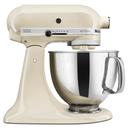
KitchenAid Artisan Series 5 Quart Tilt Head Stand Mixer with Pouring Shield KSM150PS, Almond Cream
A beloved 4.7-star tilt-head mixer that conquers everything from airy meringues to dense sourdough, now in a timeless Almond Cream finish.
Buy on AmazonFood Processors
A food processor is the unsung hero of baking prep, chopping nuts, shredding cold butter, and pureeing fruits in seconds—tasks that would otherwise consume your afternoon. It delivers the uniform piece size that guarantees even baking and consistent texture across every cookie or tart. For a baker, a full-size model with an 8‑cup capacity and a powerful motor is worth its counter space, especially for handling dense pie and bread doughs.
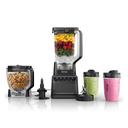
Ninja Kitchen System | All-in-One for Smoothies, Frozen Drinks, Veggie Chopper & More
A 4.7-star multi-tasker that blends smoothies, processes veggies, and kneads dough—a space‑saving powerhouse for small kitchens.
Buy on Amazon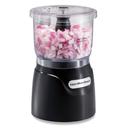
Hamilton Beach Electric Vegetable Chopper & Mini Food Processor, 3-Cup, 350 Watts, for Dicing, Mincing, and Puree, Black (72850)
A compact 4.6-star workhorse for quick chops, purees, and small batches when you don’t need the full Ninja.
Buy on AmazonMeasuring Cups
Baking is a science where an extra tablespoon of flour can turn a tender cake into a brick. Accurate measuring cups and spoons with engraved, easy‑to‑read markings eliminate guesswork and guarantee repeatable results—your cookies will come out exactly as the recipe intended, batch after batch. Stick with stainless steel sets that resist warping and fading; magnetic designs keep pieces together and dual markings cover all international recipes.
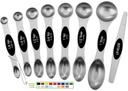
Spring Chef Stainless Steel Magnetic Measuring Spoons Set
Magnetic, double-sided, and rated 4.9 stars—the measuring set that real bakers swear by.
Buy on Amazon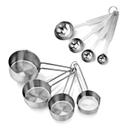
New Star Foodservice 42917 Stainless Steel Measuring Cups and Spoons Set, 8-Piece Metal Measuring Set for Baking, Cooking, Dry and Liquid Ingredients, Restaurant Grade, Silver
A full 8-piece 4.8-star stainless steel set at a wallet-friendly value.
Buy on AmazonKitchen Scales
Professional bakers weigh ingredients because even a slightly packed cup of flour can throw off hydration ratios and ruin a delicate pastry. A digital kitchen scale lets you measure directly into your mixing bowl, reducing dirty dishes and improving accuracy. Look for a scale with a tare function, a large backlit display, and a capacity of at least 11 pounds—enough for any home baking project.
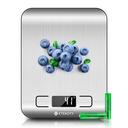
Etekcity Food Kitchen Scale, Digital Grams and Ounces for Weight Loss, Baking, Cooking, Keto and Meal Prep, LCD Display, Medium, 304 Stainless Steel
A slim 4.6-star scale with instant-read tare and a stainless platform that wipes clean in seconds.
Buy on Amazon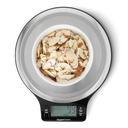
Amazon Basics Digital Kitchen Scale with LCD Display, Tare Function, Multiple Units, Weighs up to 11 Pounds, Batteries Included, Black and Stainless Steel
A trustworthy 4.7-star basic scale that handles up to 11 pounds without fuss.
Buy on AmazonCutting Boards
A large, sturdy cutting board is a baker’s best friend, providing a safe surface for rolling dough, chopping chocolate, and cooling fresh cookies. Wood or bamboo boards are gentle on knife edges and won’t harbor bacteria when properly maintained. Choose a board with deep juice grooves to catch flour and crumbs, and make sure it’s at least 18 x 12 inches—small boards crowd your workspace.
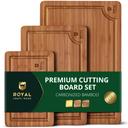
ROYAL CRAFT WOOD Wooden Cutting Boards for Kitchen Meal Prep & Serving - Non Toxic Bamboo Wood Cutting Board Set with Deep Juice Groove Side Handles - Charcuterie & Chopping Butcher Block for Meat
A 4.5-star bamboo giant with deep drip grooves, equally at home as a baking surface or charcuterie board.
Buy on Amazon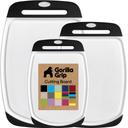
GORILLA GRIP BPA-Free Reversible Kitchen Cutting Board Set of 3, US Designed, Nonporous, Juice Grooves Catch Liquid, Slip Resistant Border, Dishwasher Safe, Durable Large Food Chopping Boards, Black
Three dishwasher-safe, reversible 4.6-star boards that cover everything from dicing to dough rolling.
Buy on AmazonCooking Utensils
While not baking-specific, a pair of reliable tongs is essential for moving hot sheet pans, flipping delicate pastries, and portioning dough without touching it. Silicone‑tipped locking tongs protect your non‑stick bakeware and stay closed in a drawer, always ready. Look for a set with both 9‑inch and 12‑inch sizes—the smaller for precision, the larger for safely grabbing big roasts and pans.
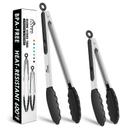
HOTEC Premium Stainless Steel Locking Kitchen Tongs with Silicon Tips, Set of 2-9" and 12"
Locking, silicone-tipped 4.7-star tongs that grip securely without scratching your bakeware.
Buy on Amazon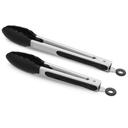
2 Pack Black Kitchen Tongs, Premium Silicone BPA Free Non-Stick Stainless Steel BBQ Cooking Grilling Locking Food Tongs, 9-Inch & 12-Inch
Two durable 4.7-star tongs at an entry-level price; a no-brainer starter set.
Buy on AmazonYour Complete Shopping List at a Glance
Budget breakdown
| Category | Budget | Mid-Range | Comfort |
|---|---|---|---|
| Stand Mixers | $349 | $499 | $798 |
| Food Processors | $22 | $220 | $352 |
| Measuring Cups | $13 | $15 | $24 |
| Kitchen Scales | $13 | $14 | $22 |
| Cutting Boards | $22 | $35 | $56 |
| Cooking Utensils | $10 | $13 | $21 |
| Total | $429 | $796 | $1,273 |
Tips & common mistakes
💡 Buy the scale and mixer first.
These are the foundation of a baker’s setup: a scale ensures recipe accuracy from day one, and a stand mixer eliminates the heavy lifting of kneading and whipping, saving your arms and time.
💡 Invest in stainless steel measuring tools.
Plastic cups can warp in the dishwasher and fade, losing their markings; stainless steel lasts a lifetime and keeps your measurements precise, batch after batch.
💡 Prioritize a large cutting board.
A spacious board gives you room to roll out pie dough, chop nuts, and set hot sheets without cluttering your counter; it becomes your all-in-one prep station.
💡 Start with a food processor, not just a blender.
A food processor’s chopping blade and dough attachment make pie crusts, streusel, and nut flours with ease—tasks a blender can’t handle well.
💡 Get tongs with silicone tips.
Silicone prevents scratching on non-stick bakeware and provides a sure grip on delicate pastries; they’re the tool you didn’t know you needed for baking.
⚠️ Buying the cheapest stand mixer you can find.
A low-wattage mixer will struggle with stiff doughs, overheat, and eventually strip its gears; you’ll end up buying a better one in six months, costing more overall.
⚠️ Using dry measuring cups for liquids.
Liquid and dry measuring cups are differently calibrated; using the wrong one can lead to inaccuracies that throw off your cake’s rise and texture.
⚠️ Skipping the food processor entirely.
Hand-chopping everything isn’t just slow—it produces uneven pieces that bake inconsistently, and makes recipes like pie dough needlessly difficult.
⚠️ Neglecting to clean and oil wooden boards.
Wooden boards that aren’t properly maintained can dry out, crack, and harbor bacteria; a quick mineral oil rub after washing keeps them safe and serviceable for years.
Frequently asked questions
What’s the most important tool for a beginner baker?
A digital kitchen scale. Baking is all about ratios, and even a slightly overpacked cup of flour can ruin a recipe. Weighing ingredients directly into a mixing bowl gives you absolute precision, cuts down on dirty dishes, and lets you follow any recipe from any country without conversion headaches. Start here—it’s the least expensive upgrade with the biggest impact on your baking success.
Do I really need a stand mixer?
If you bake more than once a month, a stand mixer pays for itself in saved time and better results. It creams butter and sugar perfectly, kneads bread dough effortlessly, and whips egg whites to stiff peaks in minutes. For cookies, cakes, and yeast breads, a mixer makes the process nearly hands-off and dramatically more enjoyable.
Should I get a food processor or a blender?
For baking, a food processor is the better choice. Its chopping blade handles nuts, cold butter for pastry, and shredding tasks that blenders can’t. A blender excels at liquids and smoothies. If you can afford both, they each earn their keep, but a processor is the more versatile baking companion.
What’s the difference between measuring cups and a scale?
Measuring cups measure volume, which can vary wildly depending on how you scoop flour. A scale measures weight, which is always exact. Professional bakers swear by scales because 100 grams of flour is always 100 grams, whereas a cup can be off by up to 30% depending on compaction. Use cups for convenience, but a scale for precision.
Can I use a regular cutting board for baking?
Absolutely, but choose a large, flat board. A board that’s too small restricts your rolling pin and leaves flour and crumbs all over the counter. Wood boards are gentle on knives and can double as a rustic serving platter for bread and pastries. Avoid glass boards, which will dull your knives quickly.
How do I maintain my wooden cutting board?
Hand wash with mild soap and warm water; never soak it or put it in a dishwasher. Dry it immediately. Every few weeks, rub a food-grade mineral oil into the surface to prevent cracking and warping. This keeps the wood conditioned and creates a barrier against moisture and bacteria.
What kitchen gadgets are a waste of money for bakers?
Avoid single-purpose gadgets like egg separators, strawberry hullers, and fancy rolling pins with moving parts—they clutter drawers and rarely outperform a good chef’s knife or your hands. Instead, invest in high-quality basics: a bench scraper, a sturdy whisk, and a silicone spatula set will serve you far better.
How much should I budget for a starter kit?
A solid starter kit, including a stand mixer, food processor, scale, measuring tools, cutting board, and utensils, runs about $300 – $800. You can start lower by skipping the stand mixer initially and using a good hand mixer, but the categories we’ve listed cover the essential workflow of a home baker.
Are these tools also good for everyday cooking?
Yes—every tool we recommend doubles for general cooking. A stand mixer shreds chicken and makes mashed potatoes; a food processor whips up pesto and hummus; a scale precisely portions meat and coffee. That versatility makes them even better investments for anyone who spends time in the kitchen.
Where’s the best place to buy baking tools?
Amazon, Target, and Walmart all carry the tools we recommend. Amazon offers the widest selection and fastest shipping, often with Prime delivery. For visual shoppers, Target and Walmart let you see some items in person before buying online. All three retailers are great starting points for building your baking toolkit.