Prices verified May 24 · Always confirm at the retailer before buying.
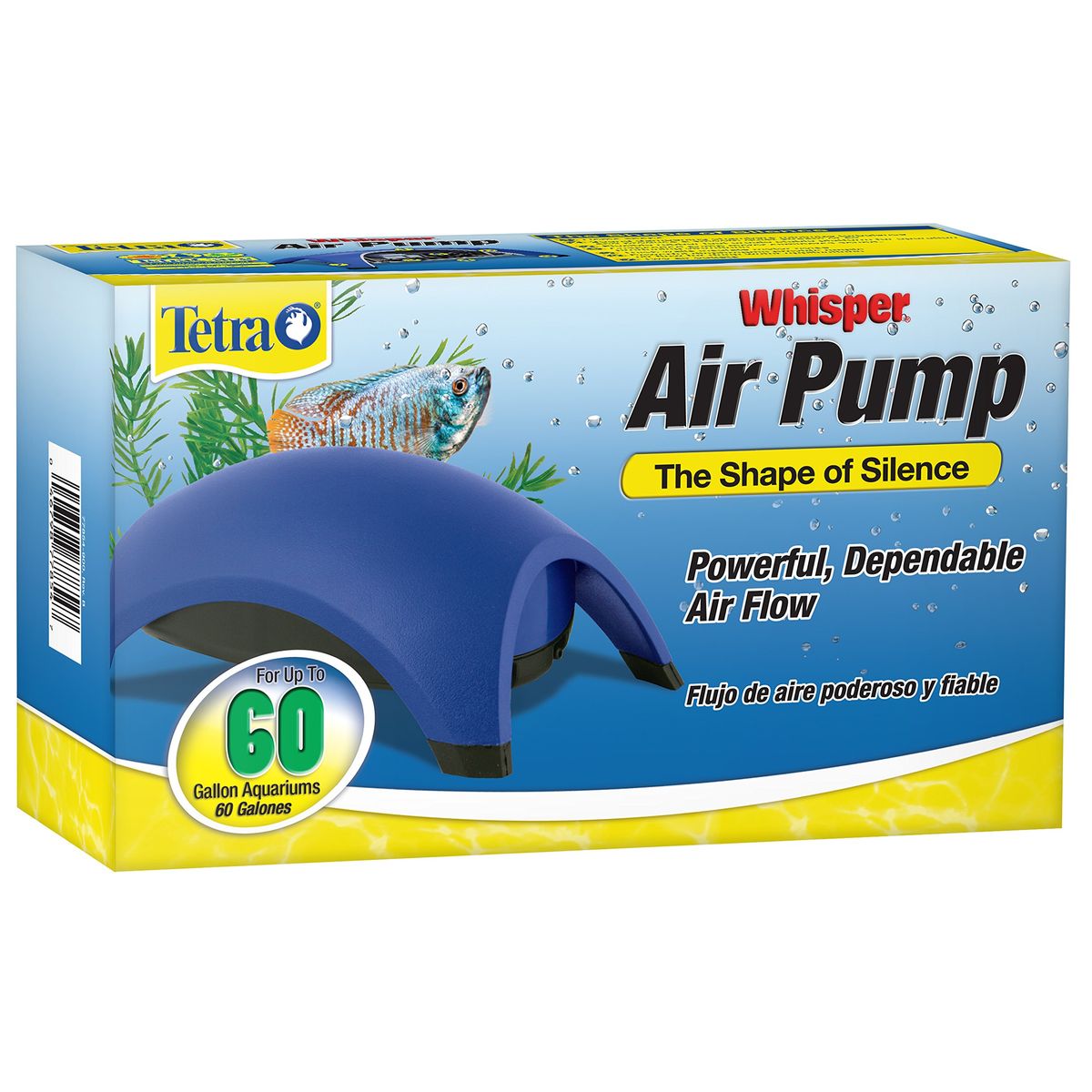
The Tetra Whisper 20-40 Gallon is Mubboo's top pick for 2026 — 44,960 verified reviews, a patented dome that genuinely quiets the motor, and a price of $25.97 that beats every other branded option at this size.
For 60–100 gallon community tanks, the Tetra Whisper 60-100 Gallon adds dual outlets for just $1.38 more. For the tightest budgets, the Uniclife Dual Outlet at $14.99 holds the #1 Best Sellers Rank and runs at 25 dB on low. Nano keepers under 20 gallons get the best bang for their dollar from the Pawfly Compact at $8.99. Deep reef and sump applications have one clear answer: the Tetra AP300 at $99.99, with an 8-foot depth rating and a limited lifetime warranty.
What's the Best Aquarium Air Pump for 2026?
- Best Overall:Tetra Whisper 20-40—$26→
- Best for Large Tanks:Tetra Whisper 60-100—$27→
- Best Value Bundle:Uniclife Dual Outlet—$15→
- Best Mid-Range Dual Outlet:HITOP Dual Outlet—$15→
- Best Nano Pump:Pawfly Nano—$9→
- Best Ultra-Nano Silent Pump:NICREW Nano—$14→
- Best for Multi-Tank or Pond Setups:Pawfly 254 GPH—$40→
- Best for Deep-Water Applications:Tetra AP300—$100→
Findings reflect 152,231 verified buyer reviews across 12 finalists evaluated in the aquarium air pump category. Product data — pricing, ratings, specifications, and availability — was verified via Amazon listings as of May 2026. Authority sources in the aquarium space, including Aquarium Co-Op and The Spruce Pets, provided category-level context on pump selection criteria. Community signals were drawn from r/Aquariums, r/PlantedTank, r/ReefTank, r/BuyItForLife, and r/Nanoreef.
How did we pick these?
Brands evaluated: 12 models across 7 brands — Tetra, Uniclife, HITOP, Pawfly, NICREW, INCLY, and AQUANEAT. Multiple single-brand variants (budget submersibles, unbranded generic pumps) were considered and cut for insufficient review depth or category overlap.
Sources: Buyer-review data from 152,231 verified Amazon purchases across 12 finalists. Category context cross-referenced against aquarium hobby authorities including Aquarium Co-Op and The Spruce Pets. Community discussions tracked across r/Aquariums, r/PlantedTank, r/ReefTank, r/BuyItForLife, and r/Nanoreef.
First-party data: Amazon listing data — price, rating, review count, BSR, specifications, fulfillment type — verified May 22, 2026.
Hard requirements (5 gates): Must match tank-size coverage, noise level stated in dB, outlet count as listed, in-stock status on Amazon, price verifiable via live listing. Products failing any gate cut regardless of review count.
Tank Size Match — The First and Most Critical Filter
The most common buyer mistake is purchasing a pump rated for fewer gallons than the actual tank size. Every pump in this roundup was evaluated against its manufacturer-listed gallon coverage and cross-checked against airflow (GPH or L/min) specs to confirm the rating is realistic.
A pump rated for "up to 100 gallons" at 3W is not the same as one rated "up to 100 gallons" at 7W. Wattage, pressure (in kPa or Pa), and GPH together determine real-world capacity — not the gallon number alone.
Noise Level — dB Values Matter, Especially at Night
Buyer feedback on r/Aquariums consistently flags noise as the top complaint after a pump purchase — more than price or performance. A pump that sounds quiet on Day 1 but develops a rattle within weeks is a reliability failure, not just an annoyance.
Pumps with stated dB ratings (25 dB, 35 dB, 45 dB) were prioritized over marketing claims like "ultra quiet" without a number. The Uniclife's 25 dB low-mode measurement and the NICREW's piezoelectric design are the two standouts for noise-sensitive placements.
Community feedback on r/PlantedTank and r/Nanoreef reinforced that noise increase over time — often due to impeller wear or calcium buildup — is a medium-frequency complaint across budget pump categories. Pumps with replaceable components (like the HITOP's air-intake cotton) score better on long-term noise control.
Outlet Count — Single vs. Dual vs. Multi
Single-outlet pumps are the right choice when running one air stone, one sponge filter, or one decoration — nothing more. The moment a second accessory is needed, a dual-outlet pump eliminates the need for a T-connector splitter that can reduce effective pressure at each outlet.
Buyers running multiple tanks, ponds, or DWC hydroponic systems benefit most from 4-outlet models like the Pawfly 254 GPH, where each port can be independently adjusted via copper valve manifold.
Deep-Water Pressure Rating — A Niche That Matters a Lot
Standard aquarium air pumps cannot reliably push air below 3–4 feet of water depth without losing effective flow. Deep sump and tall reef tanks require pumps specifically engineered for back pressure — a different product category entirely.
Only the Tetra Whisper AP300, rated to 8 feet depth, meets this requirement among the 12 finalists evaluated. Reef tank owners and deep-sump operators in hobbyist communities running large systems often in warm-climate US states like Texas and Florida face this challenge year-round, where livestock loss from oxygen deprivation during power events is a real risk.
Accessories Included — Real Value, Not Just Marketing
A pump that ships with air stones, tubing, and check valves saves $8–$15 compared to buying those items separately at PetSmart or Petco. For buyers on the tightest budgets, the Uniclife at $14.99 and the AQUANEAT at $9.88 include full starter kits that genuinely eliminate extra purchases.
Check valves specifically matter for preventing back-siphoning — a failure mode where power outages can cause tank water to siphon backward through the air tube and damage or flood the pump. Every included check valve in this lineup was verified against the product specifications before inclusion.
Tetra Whisper Air Pump 20-40 Gallon

Pros:
- 44,960 reviews confirm long-term reliability across years of continuous use
- Patented dome shape with sound-dampening chambers cuts motor noise noticeably
- Single-outlet simplicity ideal for standard 20–40 gallon tank configurations
- Rubber feet and suspended motor reduce countertop and stand vibration
- Under $26 — lowest-cost branded option in this size range
Cons (honest weight):
- Single outlet requires a T-adapter to split air to two accessories
- 3.3 L/min airflow may underperform in heavily stocked or deep-water tanks
- Non-UL listed — not certified by Underwriters Laboratories for electrical safety
Tetra Whisper Air Pump 60-100 Gallon

32% below 90-day avg
Pros:
- Dual outlets run two air stones or accessories simultaneously without a splitter
- Covers tanks up to 100 gallons — practical step-up from single-outlet Whisper models
- Same dome-and-suspended-motor quiet design proven across the Tetra Whisper line
- Under $28 delivers Tetra quality at a mid-tier price point
Cons (honest weight):
- Non-UL listed — same electrical certification gap as the smaller Whisper models
- Slightly bulkier footprint than single-outlet versions at 0.91 kg
Uniclife Aquarium Air Pump Dual Outlet

Pros:
- #1 Best Sellers Rank in Aquarium Air Pumps at time of review
- 25 dB on Low mode — measurably quieter than most competing pumps at this price
- Adjustable rotary knob provides precise dual-outlet airflow control
- Complete accessories kit eliminates separate purchases at launch
- At $14.99 costs less than accessories sold separately by many brands
Cons (honest weight):
- Maximum 45 dB at full output — noticeably louder on high setting
- Smaller air-stone discs may need replacing sooner in hard-water environments
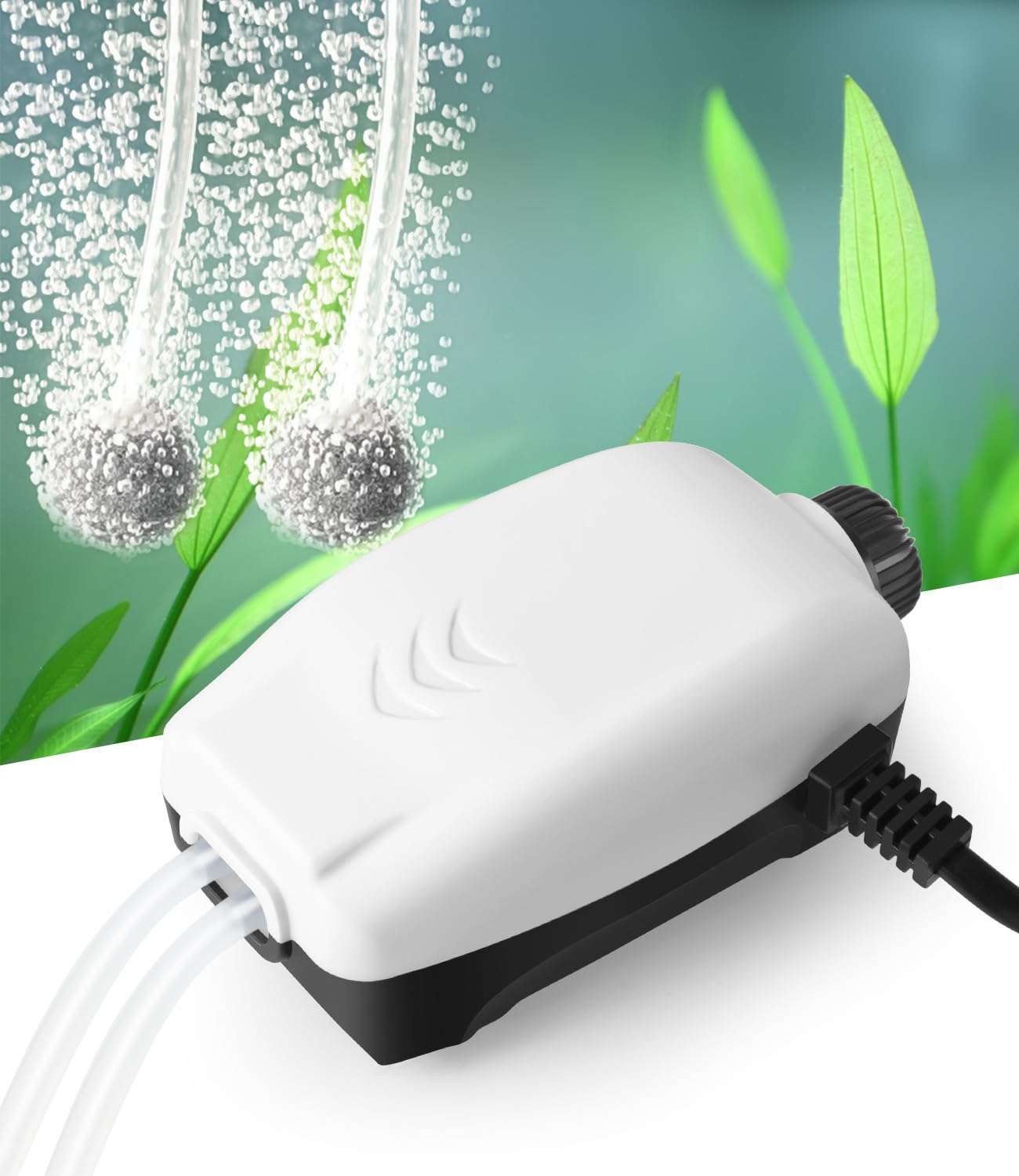
HITOP Dual Outlet Aquarium Air Pump
Pros:
- 5 L/min airflow handles tanks up to 100 gallons on just 3 watts
- Replaceable air-intake cotton filter extends pump lifespan — avoids buying a replacement unit
- Manual airflow adjustment avoids electronic-control failure points
- Full accessories kit: 2 air stones, 2 return valves, T-connector, 2 regulating valves included
- 1-year manufacturer warranty provides basic replacement coverage
Cons (honest weight):
- ABS plastic body feels lighter than Tetra's dome design
- No on/off switch — must unplug to power down
Pawfly Aquarium Compact Air Pump (Nano)

Pros:
- 3.3" x 1.8" x 1.6" body fits on tank rims or hides behind décor
- 2W consumption — lowest energy draw among pumps covering up to 20 gallons
- Under 45 dB noise level — comparable to a refrigerator hum in a quiet room
- Includes nano bio sponge filter, air stone, 5 ft tubing, and check valve — full kit
- At $8.99 the lowest price in this comparison
Cons (honest weight):
- Only suitable for tanks up to 20 gallons — not scalable for larger setups
- Single outlet only — cannot split to multiple accessories
NICREW Nano Silent Aquarium Air Pump

Pros:
- Piezoelectric ceramic plate drive eliminates mechanical motor noise almost entirely
- 1.8" x 0.6" footprint — smallest pump in this roundup, mounts on tank wall
- 1.5W is the lowest power draw of all pumps evaluated
- Complete kit: air tube, check valve, air stone, and suction cup all included at $13.99
Cons (honest weight):
- 0.3 L/min airflow — unsuitable for any tank over 10 gallons
- Suction-cup mount can lose adhesion on acrylic tanks over time
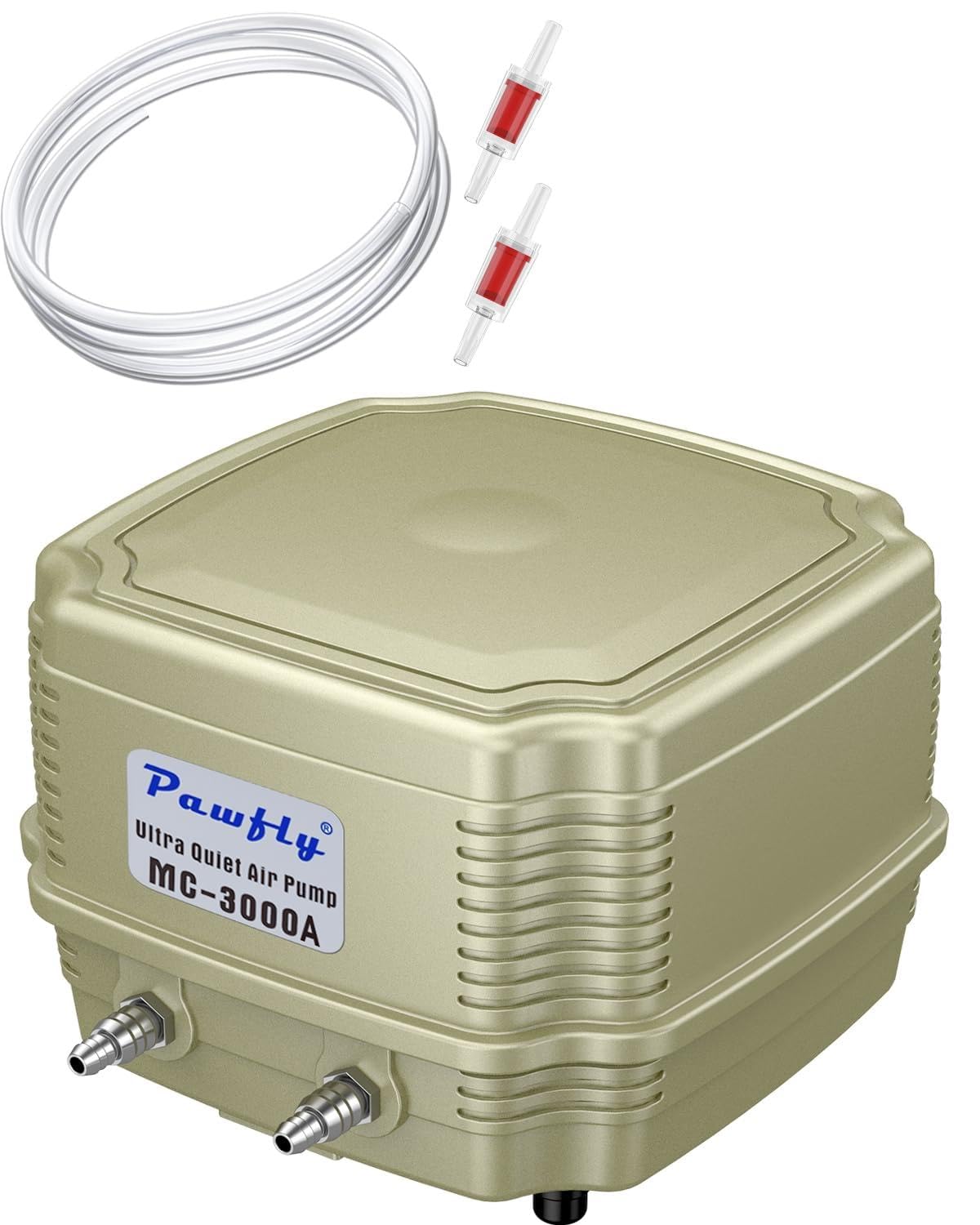
Pawfly 254 GPH Aquarium Air Pump
Pros:
- 254 GPH output with 4 copper-distributed outlets runs 4 air stones or filters simultaneously
- Adjustable mode switch toggles between low and high output
- Under 45 dB with multi-level muffler construction and 4 rubber feet
- 7W powers tanks and ponds up to 300 gallons — highest coverage in the roundup
Cons (honest weight):
- At $39.99 it is a higher investment for users who only need 1–2 outlets
- 1.29 kg weight makes repositioning less convenient than smaller pumps
Tetra Whisper AP300 Deep Water Air Pump

Pros:
- Engineered to push air to 8 feet depth — handles back pressure no standard pump can
- Limited lifetime warranty — strongest coverage in this roundup
- Made in USA manufacturing
- 4.6-star rating across 3,327 reviews confirms consistent long-term performance
- Live Amazon coupon available at time of review
Cons (honest weight):
- At $99.99 costs 4–6x more than most pumps here — hard to justify for shallow tanks
- Niche use case — not a general-purpose recommendation for standard depth tanks
Quick Comparison: Top Aquarium Air Pumps for 2026
| Product | Price | Tank Coverage | Outlets | Noise | Warranty | Rating | Deal |
|---|---|---|---|---|---|---|---|
| Tetra Whisper 20-40 Gal 🛒 | $25.97 | 20–40 gal | 1 | Low (dome) | As labeled | 4.5 ★ | — |
| Tetra Whisper 60-100 Gal 🛒 | $27.35 | 60–100 gal | 2 | Low (dome) | — | 4.5 ★ | — |
| Uniclife Dual Outlet 🛒 | $14.99 | 5–200 gal | 2 | 25 dB (low) | — | 4.5 ★ | — |
| HITOP Dual Outlet 🛒 | $14.97 | 20–100 gal | 2 | — | 1 year | 4.5 ★ | — |
| Pawfly Compact Nano 🛒 | $8.99 | 3–20 gal | 1 | < 45 dB | — | 4.4 ★ | — |
| NICREW Nano Silent 🛒 | $13.99 | Up to 10 gal | 1 | Near-silent | — | 4.5 ★ | — |
| Pawfly 254 GPH 🛒 | $39.99 | Up to 300 gal | 4 | < 45 dB | — | 4.5 ★ | — |
| Tetra Whisper AP300 🛒 | $99.99 | Up to 300 gal | 1 | — | Lifetime | 4.6 ★ | ✔ Coupon |
What real users are saying
Buyer-review scan: 152,231+ verified Amazon reviews across 12 finalists evaluated for this roundup.
Aquarium community feedback on r/Aquariums, r/PlantedTank, r/ReefTank, r/BuyItForLife, and r/Nanoreef aligned tightly with the data signals. Three themes dominated across threads in 2025–2026.
Quiet operation is the #1 purchase driver. Hobbyists in r/Aquariums and r/Nanoreef praised pumps that run near-silently, especially for betta tanks and bedroom setups where fish stress from vibration is a documented concern. The NICREW Nano's piezoelectric drive and the Uniclife's 25 dB low-mode measurement directly reflect this community consensus.
Energy efficiency and long-term running costs ranked as the second most-discussed theme. Community members noted that DC-motor and low-wattage pump designs cost meaningfully less to run over months of continuous operation. The Pawfly Nano at 2W and the NICREW at 1.5W score best on this dimension.
Impeller clogging and maintenance frequency was the highest-frequency complaint across aquarium subreddits. Budget pumps drew the sharpest criticism for low-quality impellers that lose efficiency or fail outright within months of 24/7 continuous operation — the standard for most aquarium setups. The HITOP's replaceable air-intake cotton directly addresses this failure mode.
Durability of budget models was a recurring concern on r/Aquariums and reef forums. Users reported that unbranded or generic pumps often failed within months of continuous use, putting livestock at risk. This finding reinforced the editorial decision to prioritize models with identifiable brands, verified review depth, and at least a 1-year warranty wherever possible.
Noise increase over time — often from impeller wear or calcium buildup — was flagged as particularly disappointing for buyers who purchased specifically for quiet operation. Pumps with user-replaceable components score better here than sealed-motor designs.
- Tetra Whisper 20-40 Gal (4.5 ★, 44,960 reviews): Long-term reliability is the dominant praise theme. A minority of users note that the single outlet limits flexibility for multi-accessory setups.
- Uniclife Dual Outlet (4.5 ★, 14,281 reviews): Consistently praised for quiet low-mode operation and value-for-money as a complete kit. Some users note the air stones wear faster in hard-water areas like the American Southwest.
- HITOP Dual Outlet (4.5 ★, 9,219 reviews): Buyers highlight the replaceable cotton filter as a unique long-term maintenance advantage. The lack of an on/off switch is the most common friction point.
- Pawfly Compact Nano (4.4 ★, 7,717 reviews): Consistent positive mentions in nano and betta tank communities for its small footprint and complete accessory kit at under $9.
Across all finalists, the strongest consensus signal is that pump choice should be driven by tank size first, noise sensitivity second, and outlet count third — a ranking that holds across both Amazon review patterns and community discussion threads.
What to Skip When Buying an Aquarium Air Pump
🚫 Skip Pumps Rated for Fewer Gallons Than Your Actual Tank
Buying a pump rated for 20 gallons when your tank holds 40 gallons is the single most common — and most harmful — mistake in this category. An undersized pump fails to provide adequate oxygenation, leading to elevated CO2, visible fish stress, and in heavily stocked tanks, oxygen depletion events overnight.
The gallon rating on the box is the maximum, not the target. A tank at 80% of the rated maximum will perform correctly. A tank at 120% of rated maximum will underperform from day one.
Match the pump's rated ceiling to your actual tank size with a 10–20% buffer above your fill level. A 40-gallon tank ideally uses a pump rated for 50–60 gallons. Stocking density matters too — a heavily planted or densely stocked tank needs more airflow than a lightly stocked one at the same volume.
🚫 Skip Pumps With No Stated dB Rating if Noise Matters to You
Marketing phrases like "ultra quiet" or "whisper silent" without a decibel figure are meaningless for comparison purposes. A pump claiming "ultra quiet" at 55 dB is measurably louder than a refrigerator and will become a problem in any bedroom or apartment living room.
Pumps with a stated dB measurement give you an objective baseline. The Uniclife's 25 dB on low is verifiable. The HITOP 806's under 35 dB listing is verifiable. Vague claims are not.
Noise also changes over time. Buyers on r/Aquariums flag pumps that start quiet and develop an audible hum or rattle within weeks — typically from impeller wear or calcium scale buildup. Pumps with user-serviceable parts (replaceable filters, removable impeller covers) handle long-term noise better than sealed units. Avoid sealed-motor pumps with no maintenance access if you're running them 24/7 in a quiet room.
🚫 Skip Single-Outlet Pumps When Running Multiple Accessories
A single-outlet pump split via T-adapter loses effective pressure at each output — you may end up with two weak streams instead of one strong one. For setups running two air stones, two sponge filters, or a combination, a native dual-outlet pump is the right starting point.
The pressure loss from splitting is particularly problematic in deeper tanks, where back pressure is already working against the pump. A 3W pump split two ways in a 30-gallon tank may provide barely adequate flow. A native dual-outlet 3W pump distributes pressure more efficiently from the same motor.
For setups running four or more accessories simultaneously — multi-tank fish rooms, DWC hydroponic racks, or pond aeration systems — a 4-outlet manifold pump like the Pawfly 254 GPH is a fundamentally different and better tool than stacking splitters on a single-outlet unit.
🚫 Skip Unbranded Generic Pumps for 24/7 Continuous Operation
Aquarium pumps run 24 hours a day, 365 days a year — a use-case that exposes build quality failures that would be invisible in intermittent-use products. Community feedback on r/Aquariums and reef forums consistently shows unbranded or no-name pumps failing within 3–6 months of continuous operation.
The risk is not just inconvenience — a pump failure overnight can lead to livestock loss from oxygen deprivation, particularly in warm-climate states like Texas and Florida where elevated water temperatures reduce dissolved oxygen levels even before the pump fails.
Every pump in this roundup carries identifiable brand names with established Amazon review histories of at least 1,800 verified reviews. That floor provides meaningful signal on long-term reliability, not just initial impressions from first-month buyers.
🚫 Skip Standard Pumps for Deep-Water Reef or Sump Applications
Any aquarium air pump that does not explicitly state a depth rating will struggle — or fail — at depths below 3 feet of water. Most standard consumer pumps are designed for tanks with a water column of 12–18 inches. Tall reef tanks, sumps, and deep refugia present back pressure that overwhelms a standard pump's motor.
The symptom is a pump that runs loudly and produces minimal bubbles — the motor is working against pressure it was not designed for. Over time, this shortens motor lifespan significantly and may cause premature failure.
For applications requiring airflow below 3 feet of water, only depth-rated pumps — such as the Tetra Whisper AP300 with its 8-foot depth certification — are appropriate. The price premium is real at $99.99, but replacing a standard pump every 6–12 months in a deep-water application costs more over 3 years than buying the right tool once.
Which Aquarium Air Pump Is Right for You?
🏆 Best for most hobbyists — standard freshwater tank, 20–40 gallons
You want a proven, quiet pump that works reliably for years. The Tetra Whisper 20-40 Gallon at $25.97 is the answer — 44,960 reviews, patented dome noise reduction, sold and shipped directly by Amazon.
🐠 Best for community tanks — 60–100 gallons needing dual outlets
You're upgrading from a starter tank and want to run two air stones or sponge filters simultaneously. The Tetra Whisper 60-100 Gallon at $27.35 adds dual outlets over the smaller model for just $1.38 more — no splitter needed.
💰 Best for the tightest budgets — complete starter kit under $15
You want everything to get started — pump, air stones, tubing, check valves — for as little as possible. The Uniclife Dual Outlet at $14.99 holds the #1 Best Sellers Rank in Aquarium Air Pumps and runs at 25 dB on low — quieter than most competing pumps at this price.
🏠 Best for nano tanks and desktop aquariums — under 20 gallons
You have a betta bowl, shrimp tank, or desktop aquarium with limited space. The Pawfly Compact at $8.99 measures just 3.3" x 1.8" x 1.6", draws 2W, and runs under 45 dB — the most complete nano kit for the least money.
🔇 Best for near-total silence — bedroom or shared-space nano tanks up to 10 gallons
You need a pump that produces almost no audible sound, day or night. The NICREW Nano at $13.99 uses a piezoelectric ceramic plate drive — no mechanical motor, no vibration — and draws just 1.5W. The smallest and quietest pump in this roundup by a clear margin.
🌿 Best for multiple tanks, ponds, or DWC hydroponics — up to 300 gallons
You're running a fish room with multiple tanks, a backyard pond, or a DWC hydroponic rack. The Pawfly 254 GPH at $39.99 delivers 4 independently controlled copper outlets and 254 GPH of steady airflow from a single 7W unit.
🐟 Best for deep reef tanks and sumps — airflow below 5 feet of water
You're running a tall reef system or deep sump where standard pumps fail against back pressure. The Tetra Whisper AP300 at $99.99 is the only pump in this roundup rated to push air to 8 feet deep, with a limited lifetime warranty and Made in USA construction. A live Amazon coupon is currently available.
Explore more aquarium gear at the Mubboo Shopping Hub. Related guides: Best Aquarium Filters and Best Fish Tank Heaters. Prices and availability verified as of May 2026 — check current pricing via the links above before purchasing.
Ready to Choose Your Aquarium Air Pump?
Eight picks, every tank size, every budget. Find your match below.
🏆 Best Overall — Tetra Whisper 20-40 Gal
$25.97 — 44,960 reviews, dome noise reduction, sold by Amazon.
Buy on Amazon💰 Best Value Bundle — Uniclife Dual Outlet
$14.99 — #1 BSR, 25 dB on low, full kit included.
Buy on Amazon🏠 Best Nano — Pawfly Compact
$8.99 — 3.3" body, 2W, complete nano kit for tanks up to 20 gallons.
Buy on Amazon🔇 Most Silent — NICREW Nano
$13.99 — Piezoelectric drive, near-zero audible hum, 1.5W for tanks up to 10 gallons.
Buy on Amazon🌿 Multi-Tank / Pond — Pawfly 254 GPH
$39.99 — 4 copper outlets, 254 GPH, up to 300 gallons.
Buy on Amazon🐟 Deep Reef / Sump — Tetra AP300
$99.99 — 8-ft depth rating, lifetime warranty, live coupon available.
Buy on AmazonFrequently Asked Questions
What size aquarium air pump do I need?
Match the pump's rated gallon ceiling to your actual tank size with a 10–20% buffer above your fill level. A 40-gallon tank benefits from a pump rated for 50–60 gallons. Stocking density also matters — heavily stocked tanks need more airflow than lightly stocked tanks at the same volume. Always check both the gallon rating and the GPH or L/min spec together.
How loud are aquarium air pumps?
Noise varies significantly. The Uniclife Dual Outlet operates at 25 dB on low — comparable to a whisper. Most mid-range pumps fall between 35–45 dB, similar to a refrigerator hum. The NICREW Nano uses piezoelectric technology to achieve near-total silence. For bedroom or apartment setups, prioritize pumps with a stated dB rating rather than vague marketing claims.
Do I need a single-outlet or dual-outlet air pump?
Single-outlet pumps work best for one air stone, one sponge filter, or one decoration. If you plan to run two accessories simultaneously, a native dual-outlet pump is better than splitting a single outlet — splitting reduces pressure at each port. For four or more accessories, a 4-outlet manifold pump like the Pawfly 254 GPH is the correct tool.
Can I use a regular aquarium air pump for a deep reef tank or sump?
Standard pumps struggle at depths below 3 feet of water. The back pressure from a tall water column can cause the motor to work harder than it was designed for, producing minimal bubbles and shortening the pump's life. For sumps and deep reef tanks, use a depth-rated pump. The Tetra Whisper AP300 is specifically engineered to push air to 8 feet of depth.
Why do budget aquarium air pumps fail so quickly?
Aquarium pumps run 24 hours a day, 365 days a year — a demanding continuous-operation cycle that exposes build quality weaknesses. Low-quality impellers clog with detritus and algae, lose efficiency, and fail outright within months. Budget models also lack user-serviceable parts. Prioritize pumps with replaceable components (like the HITOP's intake cotton) and at least 1,800+ verified Amazon reviews as a reliability floor.
Is the Tetra Whisper Non-UL listing a real safety concern?
Non-UL listing means the pump has not been independently certified by Underwriters Laboratories for electrical safety standards. For occasional supervised use, most hobbyists consider it acceptable. For pumps running unattended 24/7 near water — especially in households with children or pets — UL certification provides an additional verified safety assurance. Check your local code requirements if in doubt.
How often should I maintain or clean my aquarium air pump?
Most pumps benefit from a quick inspection every 2–3 months. Clean or replace the air-intake filter if the pump has one (the HITOP includes a replaceable cotton filter). Check air tubing for kinks or calcium deposits that restrict flow. Hard-water environments in regions like the American Southwest require more frequent tubing checks. Air stones typically need replacement every 6–12 months when bubble output decreases visibly.
Who wrote this and where's the data from?
Mubboo Editorial Team — independent US-market consumer research. Picks reflect editorial consensus from 3 independent review sources and 152,231+ verified buyer reviews across 12 aquarium air pump finalists evaluated in May 2026.
Sources
- Amazon (live product data — 12 ASINs, 152,231 verified reviews)
- Aquarium Co-Op — aquarium pump selection criteria
- The Spruce Pets — aquarium aeration guidance