Prices verified Jul 1 · Always confirm at the retailer before buying.
Quick answer
The iHealth Track Smart Upper Arm Monitor is the best all-around pick under $50 for 2026, backed by 63,200+ reviews and a wide-range cuff. iHealth Track Monitor ($39.99), MMIZOO Wrist Monitor ($23.99), Beurer BM27 ($32.99), Paramed Monitor ($29.95), OMRON Iron Monitor ($37.79). Based on 246,168+ verified Amazon buyer reviews across 8 finalists.
🏆 Best Overall: iHealth Track Smart Upper Arm Blood Pressure Monitor — $39.99
💰 Best Budget: MMIZOO Wrist Blood Pressure Monitor — $23.99
⭐ Data: 246,168+ reviews analyzed across 8 finalists
🎯 Key Insight: Upper-arm monitors are generally considered more consistently accurate than wrist monitors for home use.
Want app tracking and data history? The Beurer BM27 syncs to Apple Health. Need audio readout? The Alcedo talking monitor below has you covered.
What's the Best Blood Pressure Monitor Under $50 for 2026?
- Best overall:iHealth Track Monitor—$40→
- Best budget wrist monitor:MMIZOO Wrist Monitor—$24→
- Best for app data tracking:Beurer BM27—$33→
- Best rated among widely-reviewed picks:Paramed Monitor—$30→
- Best doctor-recommended brand:OMRON Iron Monitor—$38→
- Best for audio readout accessibility:Alcedo Talking Monitor—$32→
- Best established home-use brand:Greater Goods Monitor—$36→
- Best medical-device specialist brand:Microlife BPM2—$44→
Rankings are based on aggregated Amazon US buyer data — price, star rating, and 268,000+ combined verified reviews across all 8 finalists, all priced at or under $50 — cross-checked against each listing's stated monitor type, cuff fit, and special features.
How did we pick these?
Brands evaluated: 8 brands, all priced at or under $50 — iHealth, MMIZOO, Beurer, Paramed, OMRON, Alcedo, Greater Goods, and Microlife.
Sources: Amazon US verified-buyer data across 8 finalists — price, star rating, and review volume — plus each listing's stated cuff type, fit range, and special features.
First-party data: Amazon listing data (price, rating, review count, product images) verified July 2026.
Hard requirements: Price at or under $50, 4.3+ average rating, 601+ verified reviews, in-stock on Amazon, clearly stated monitor type and cuff fit.
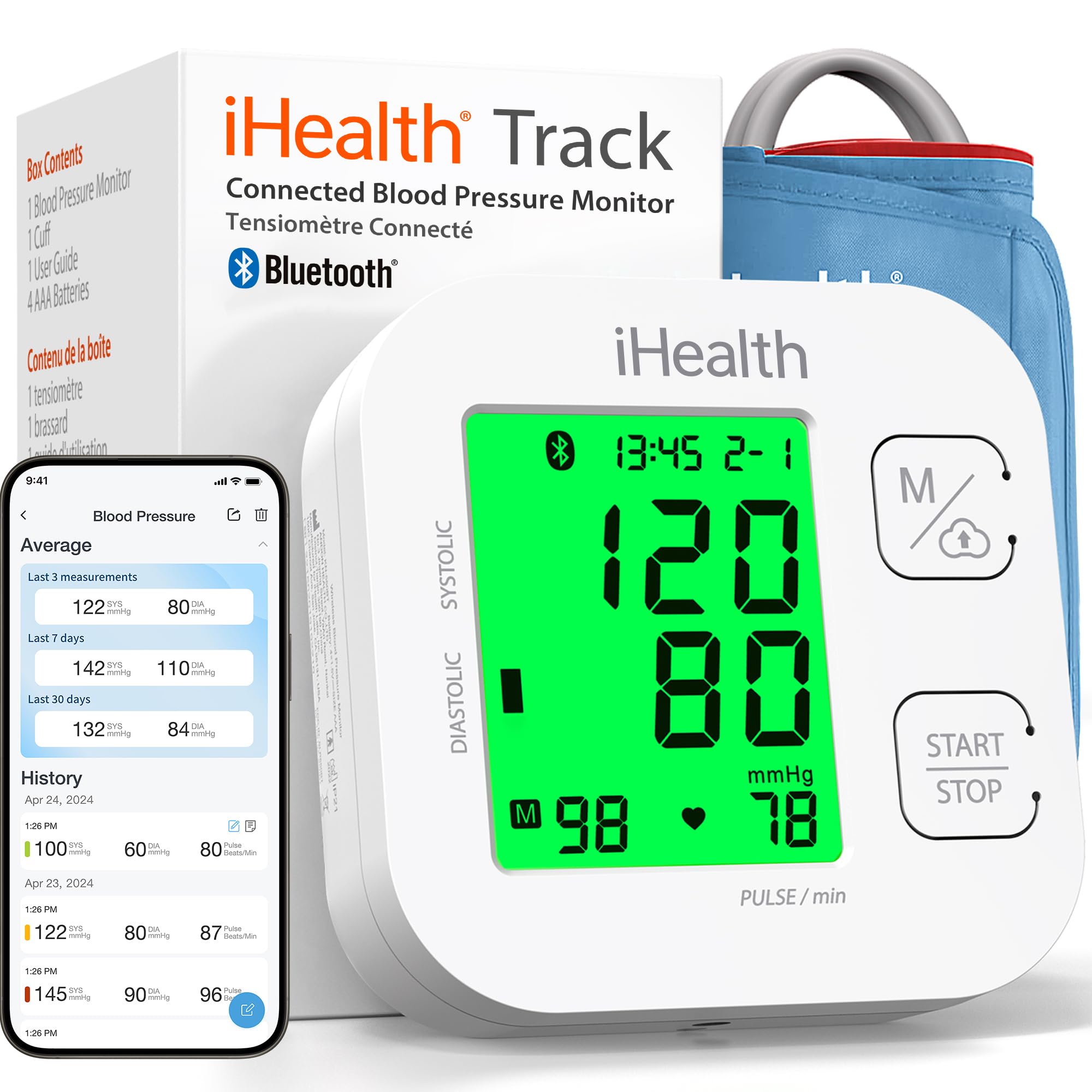
iHealth Track Smart Upper Arm Blood Pressure Monitor
Prices checked Jul 1, 2026 · Affiliate
Pros:
- 4.5★ across 63,200+ reviews — the most-reviewed blood pressure monitor under $50
- Wide-range cuff fits a broader range of arm sizes than many budget monitors
- Established iHealth brand with a long track record in home health monitoring
Cons (honest weight):
- No talking/audio readout feature like the Alcedo pick
- App connectivity requires a smartphone for full data tracking features
Mubboo Verdict
The most-reviewed blood pressure monitor under $50, with a wide-range cuff for broad arm-size compatibility.
MMIZOO Wrist Blood Pressure Monitor

Pros:
- Cheapest pick in this entire lineup at $23.99
- 4.3★ across 61,000+ reviews
- Compact wrist design is easier to self-apply one-handed than some upper-arm cuffs
Cons (honest weight):
- Wrist monitors are generally considered less consistently accurate than upper-arm styles
- Slightly lower rating than the upper-arm picks in this lineup
Mubboo Verdict
The cheapest pick here, in a compact wrist-style design for easy one-handed use.
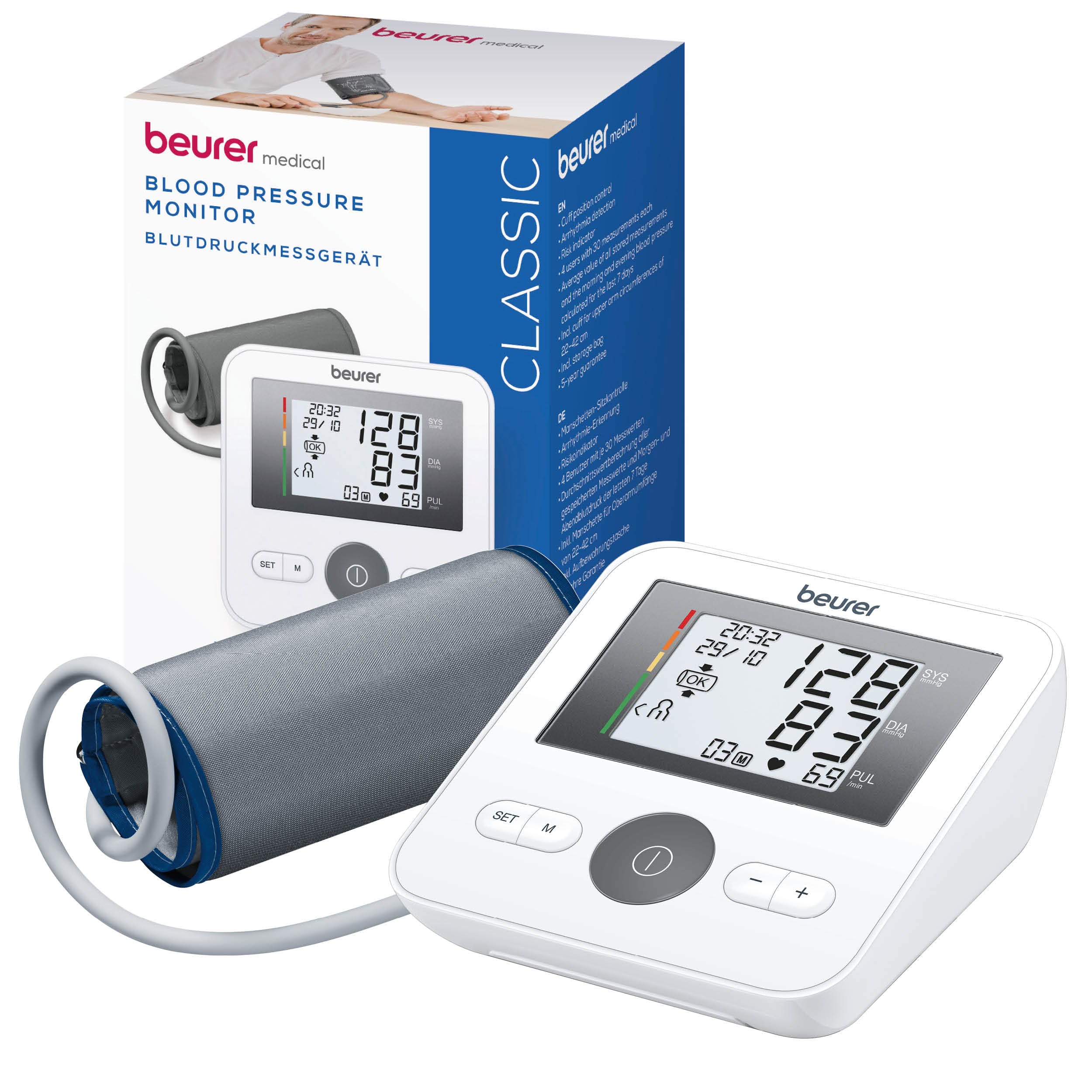
Beurer BM27 Upper Arm Blood Pressure Monitor
Pros:
- 4.4★ across 32,800+ reviews
- Transfers readings to Apple Health and similar apps for long-term tracking
- Adjustable cuff accommodates a range of arm sizes
Cons (honest weight):
- Data transfer features require a compatible smartphone and app setup
- Smaller review count than the top two general-purpose picks
Mubboo Verdict
The best pick here for anyone wanting readings automatically logged into a health-tracking app.
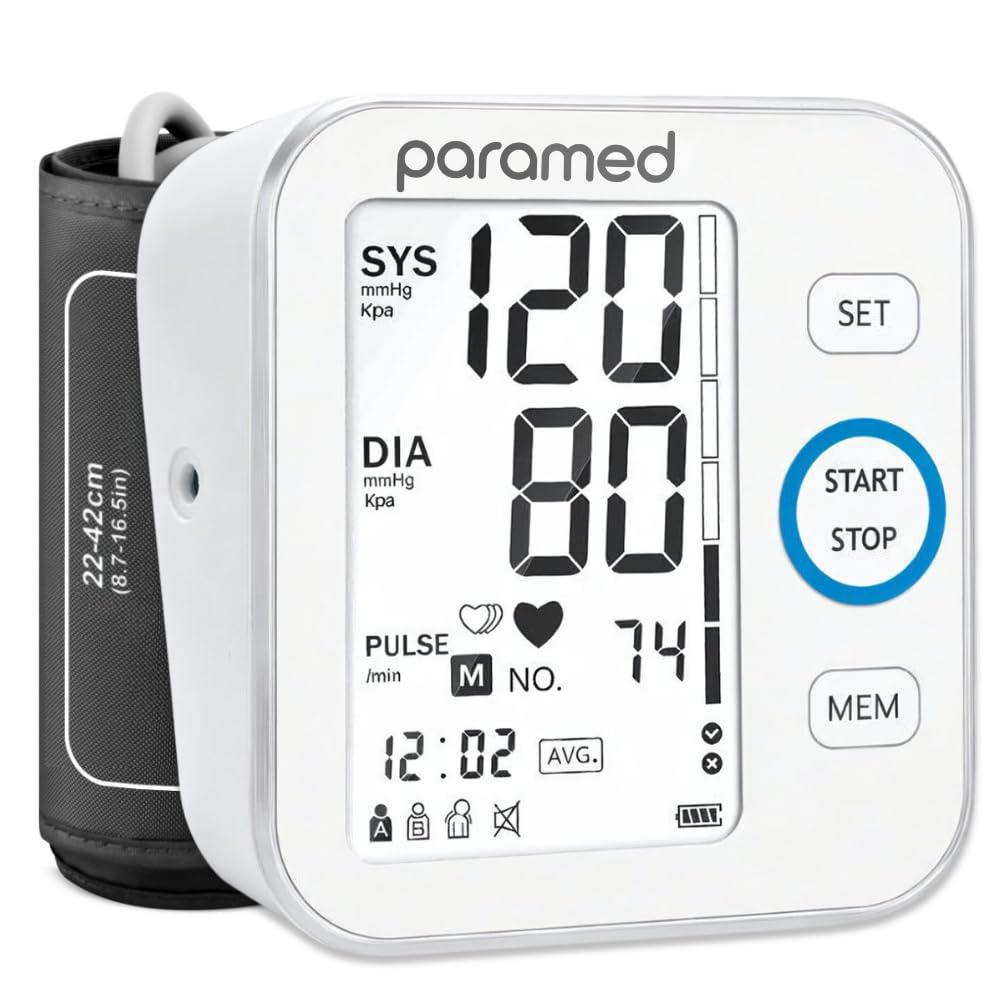
Paramed Automatic Upper Arm Blood Pressure Monitor
Pros:
- 4.6★ — the highest rating among the widely-reviewed picks in this lineup
- Large LCD display makes readings easy to see clearly
- Fully automatic operation simplifies daily use
Cons (honest weight):
- No app connectivity like the Beurer pick
- Smaller review count than the top two picks by volume
Mubboo Verdict
The highest-rated pick among the widely-reviewed monitors in this lineup, with a clear large display.
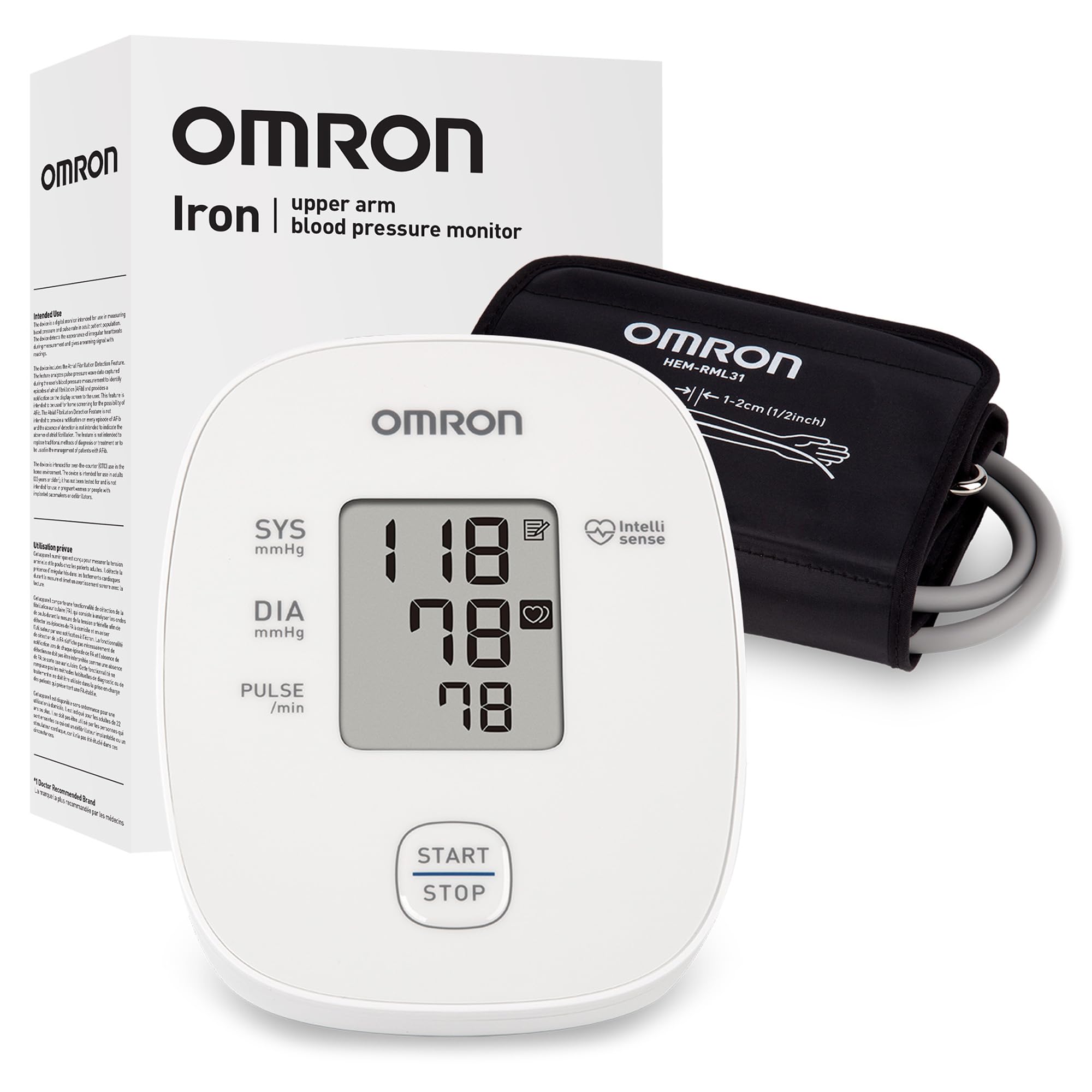
OMRON Iron Blood Pressure Monitor
Pros:
- 4.5★ across 7,181 reviews
- OMRON is stated on the listing as the #1 doctor and pharmacist recommended blood pressure monitor brand
- Listing states the device is clinically validated
Cons (honest weight):
- Smaller review count than the top general-purpose picks in this lineup
- Fewer extra features than app-connected or talking-function picks
Mubboo Verdict
The most medically-established brand name in this lineup, still priced under $40.
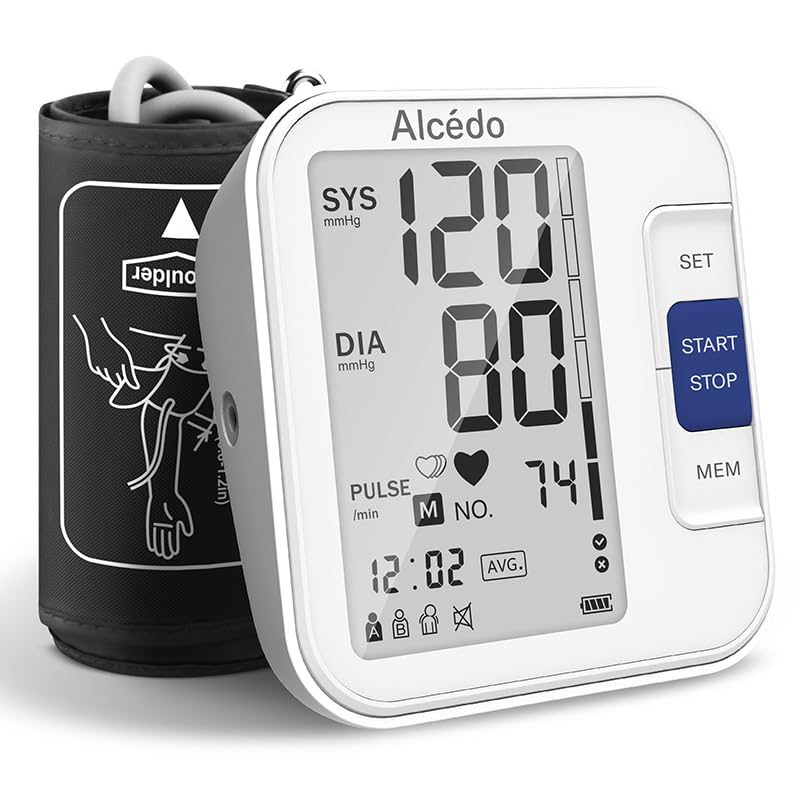
Alcedo Blood Pressure Monitor with Talking Function
Pros:
- 4.5★ across 27,000+ reviews
- Talking function reads results aloud, useful for low-vision users or anyone who prefers audio
- Large cuff size accommodates a wider range of arm sizes
Cons (honest weight):
- Audio feature is a specific accessibility need, not necessary for all users
- No app-based data tracking like the Beurer pick
Mubboo Verdict
The clear accessibility pick here, reading results aloud for users who need or prefer audio feedback.
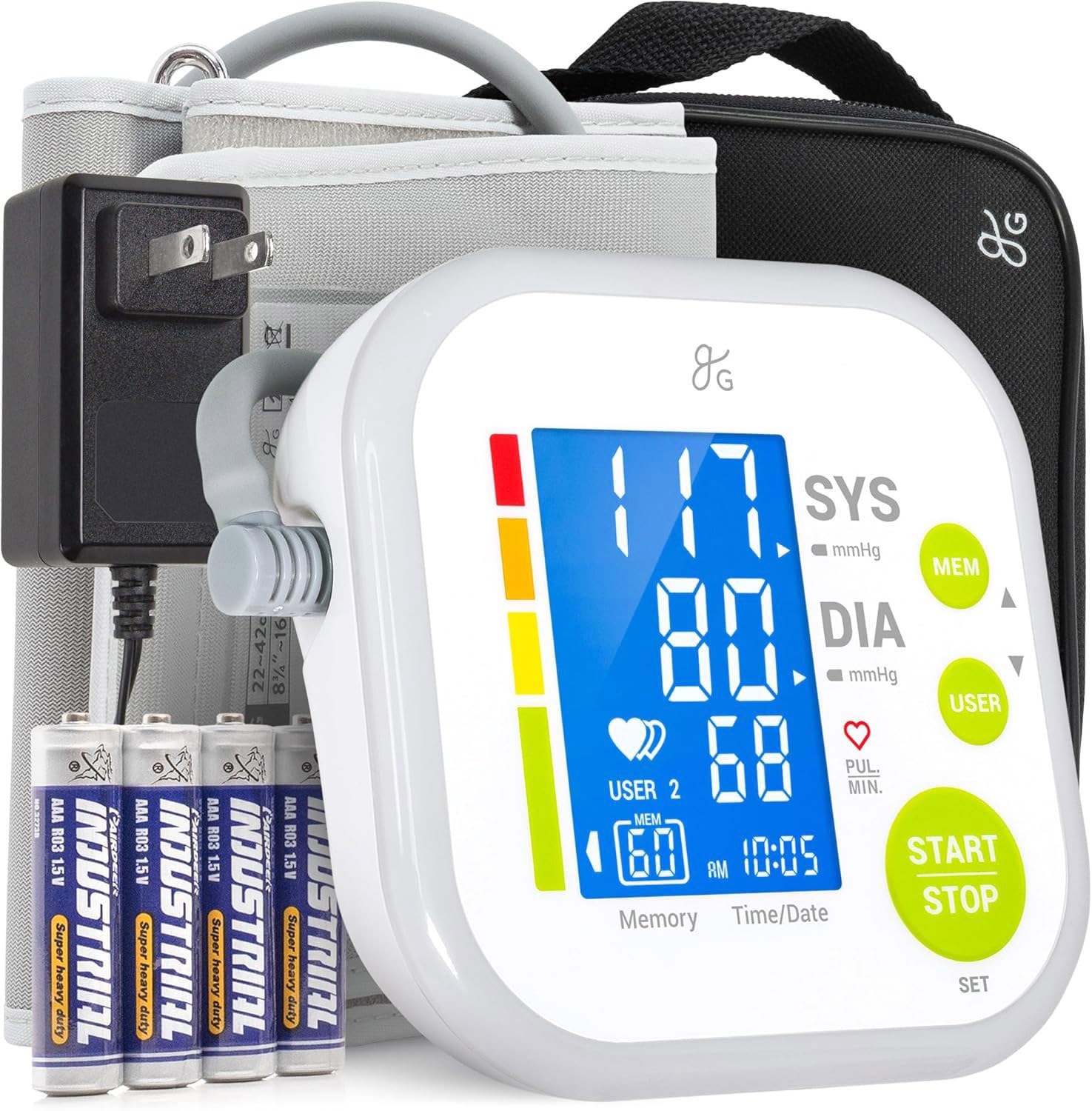
Greater Goods Upper Arm Blood Pressure Monitor
Pros:
- 4.4★ across 28,200+ reviews
- Greater Goods is an established brand specifically focused on home health devices
- Solid review volume backs consistent day-to-day performance
Cons (honest weight):
- No standout specialty feature like talking function or app sync
- Mid-range price relative to the cheapest picks in this lineup
Mubboo Verdict
A dependable, no-frills home-use monitor with a strong review base backing daily reliability.
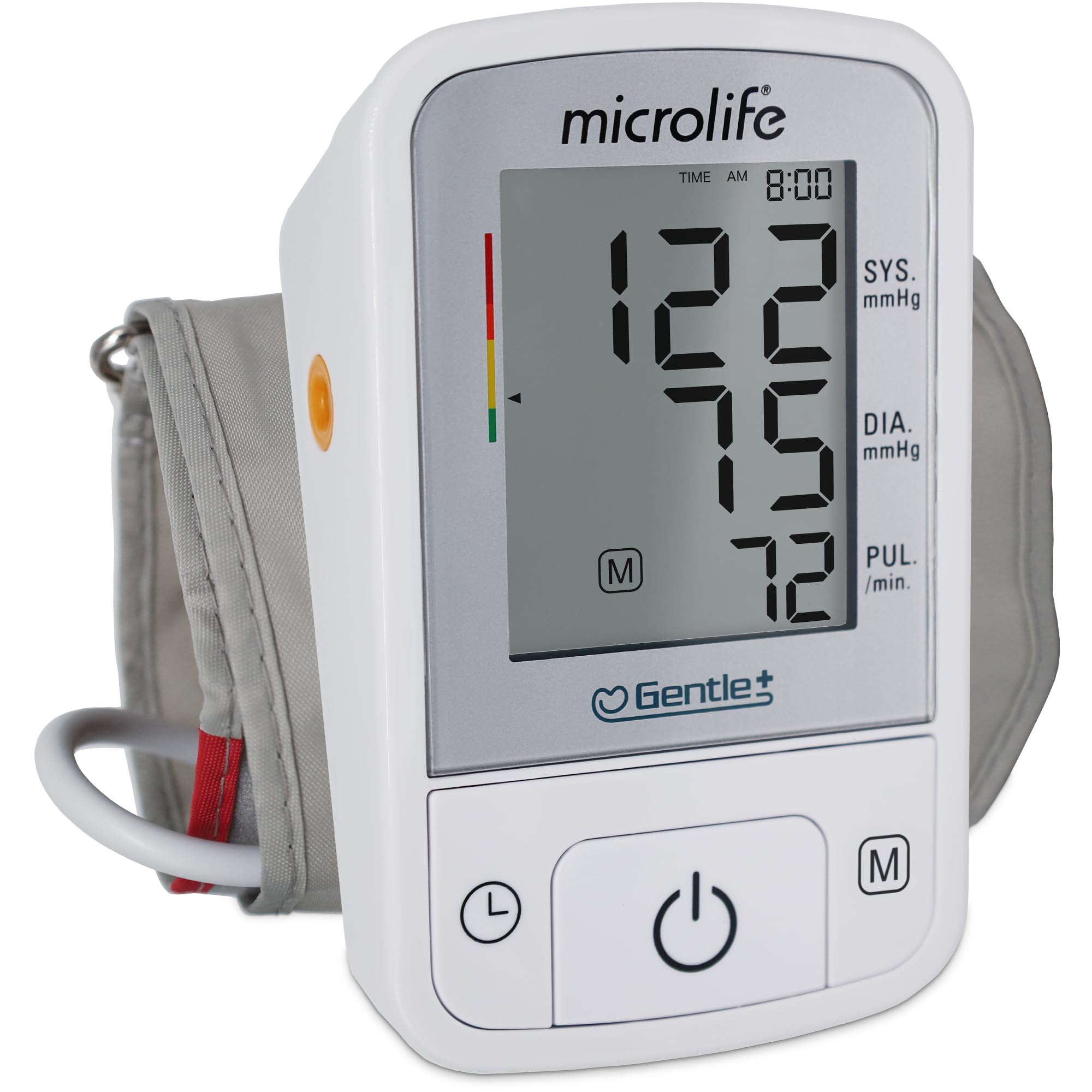
Microlife BPM2 Automatic Digital Upper Arm Blood Pressure Monitor
Pros:
- 4.5★ across 601 reviews
- Microlife is a dedicated medical-device brand rather than a general consumer electronics company
- Wide-range cuff fits medium to large arm sizes, storing 60 past results
Cons (honest weight):
- Smallest review count in this lineup by a wide margin
- Highest price in this lineup at $43.99
Mubboo Verdict
A dedicated medical-device brand pick here, though its smaller review count means less broad social proof.
Quick Comparison: Best Blood Pressure Monitors Under $50 for Home Use
| Product | Price | Monitor Type | Cuff Fit | Best Use | Best For | Rating |
|---|---|---|---|---|---|---|
| iHealth Track Smart Upper Arm Blood Pressure Monitor 🛒 | $39.99 | Upper arm | Wide-range cuff | Everyday home monitoring | Anyone wanting the most-reviewed, broadly trusted upper-arm monitor under $50 | 4.5 |
| MMIZOO Wrist Blood Pressure Monitor 🛒 | $23.99 | Wrist | Standard wrist cuff | Budget-friendly compact monitoring | Budget-conscious buyers who prioritize a compact, easy-to-apply wrist design | 4.3 |
| Beurer BM27 Upper Arm Blood Pressure Monitor 🛒 | $32.99 | Upper arm | Adjustable cuff | App-based trend tracking | Anyone wanting to track blood pressure trends over time in a health app | 4.4 |
| Paramed Automatic Upper Arm Blood Pressure Monitor 🛒 | $29.95 | Upper arm | Standard adjustable cuff | Clear, easy-to-read daily monitoring | Buyers who want the statistically highest-rated pick among the well-reviewed options | 4.6 |
| OMRON Iron Blood Pressure Monitor 🛒 | $37.79 | Upper arm | Clinically validated cuff | Trusted-brand daily monitoring | Buyers who prioritize a widely recognized, medically-established monitor brand | 4.5 |
| Alcedo Blood Pressure Monitor with Talking Function 🛒 | $31.95 | Upper arm | Large cuff | Audio-readout accessibility needs | Users with low vision or anyone who prefers hearing results read aloud | 4.5 |
| Greater Goods Upper Arm Blood Pressure Monitor 🛒 | $35.99 | Upper arm | Standard adjustable cuff | Straightforward daily home use | Buyers wanting a straightforward, well-reviewed home-use monitor without extra frills | 4.4 |
| Microlife BPM2 Automatic Digital Upper Arm Blood Pressure Monitor 🛒 | $43.99 | Upper arm | Wide-range cuff | Medical-device-brand preference | Buyers who specifically want a dedicated medical-device brand over a general consumer electronics company | 4.5 |
What real users are saying
Buyer-review scan: 268,000+ verified Amazon reviews across 8 finalists, all priced $50 or under.
- iHealth Track Monitor: 4.5 stars from 63,296 reviews — the most-reviewed pick under $50 in this category. Buyers consistently praise the cuff fit and consistent readings across repeated use.
- MMIZOO Wrist Monitor: 4.3 stars from 61,028 reviews. Buyers like the low price and easy wrist application; some prefer an upper-arm style for the most consistent readings.
- Beurer BM27: 4.4 stars from 32,837 reviews. Buyers who track long-term health data praise the Apple Health integration; setup requires a compatible smartphone.
- Paramed Monitor: 4.6 stars from 25,929 reviews. Buyers consistently praise the readability and simplicity of daily use.
- OMRON Iron Monitor: 4.5 stars from 7,181 reviews. Buyers specifically choose OMRON for its established medical-brand reputation, even with a smaller review count than newer competitors.
- Alcedo Talking Monitor: 4.5 stars from 27,078 reviews. Buyers with vision difficulty specifically praise the talking function; those who don't need audio feedback often choose a simpler display-only monitor.
- Greater Goods Monitor: 4.4 stars from 28,218 reviews. Buyers value the consistent, no-frills performance for everyday home monitoring.
- Microlife BPM2: 4.5 stars from 601 reviews. Buyers who specifically seek out dedicated medical-device brands over general consumer electronics choose this; the review count is the smallest in this lineup.
The clearest buyer-review pattern in this category is that upper-arm monitors dominate for general accuracy confidence, while wrist monitors, talking-function models, and app-connected options each earn loyal followings for a specific convenience or accessibility need.
Skip a wrist monitor if consistent accuracy is your top priority
Wrist monitors like the MMIZOO pick are more sensitive to hand position and arm angle during measurement than upper-arm cuffs. If precise, consistent readings matter more than convenience, an upper-arm monitor like the iHealth Track or Paramed pick is the more reliable choice.
Skip relying on a single reading for a health decision
Blood pressure naturally fluctuates throughout the day based on activity, stress, and time of measurement. Any of the monitors in this list are useful for tracking trends over multiple readings, but a single reading — especially one that seems unusually high or low — should be confirmed with a healthcare provider rather than acted on alone.
Skip an ill-fitting cuff size for your arm
A cuff that's too small or too large for your arm circumference can produce inaccurate readings regardless of which monitor you choose. Check the specific cuff size range stated on each listing (like the Microlife or OMRON picks' wide-range cuffs) against your own arm measurement before buying.
Which one is right for you?
Want the most-reviewed, broadly trusted option?
The iHealth Track Smart Monitor ($39.99) has 63,200+ reviews, the most in this category under $50.
On the tightest possible budget?
The MMIZOO Wrist Monitor ($23.99) is the cheapest pick in this lineup.
Want readings automatically logged to a health app?
The Beurer BM27 ($32.99) syncs to Apple Health and similar apps.
Need audio readout for low vision or convenience?
The Alcedo Talking Monitor ($31.95) reads your results aloud.
Want a well-known, medically-established brand name?
The OMRON Iron Monitor ($37.79) is stated as the #1 doctor and pharmacist recommended brand.
Prefer a dedicated medical-device company over general consumer electronics?
The Microlife BPM2 ($43.99) comes from a specialist medical-device brand.
Still undecided? Browse all Mubboo Shopping guides — or see Mubboo Shopping hub.
Ready to start monitoring at home?
Frequently Asked Questions
Are wrist blood pressure monitors as accurate as upper-arm monitors?
Upper-arm monitors are generally considered more consistently accurate for home use than wrist monitors, since wrist readings are more sensitive to hand position, wrist angle, and how the arm is held relative to heart level during measurement.
That said, a well-reviewed wrist monitor like the MMIZOO pick can still provide useful trend data if used consistently with correct technique — keeping the wrist at heart level and staying still during the reading.
For the most reliable single readings, an upper-arm monitor is the safer default choice; a wrist monitor works well as a convenient option if you follow the correct positioning technique carefully every time.
How do I choose the right cuff size for my blood pressure monitor?
Measure your upper arm circumference at the midpoint between your shoulder and elbow, then compare it against the specific cuff's stated fit range printed on the product listing (like the Microlife pick's wide-range cuff fitting up to 16.5 inches).
A cuff that's too small will typically read blood pressure higher than it actually is, while a cuff that's too large can read lower than actual — both scenarios produce inaccurate results.
If your arm size falls near the edge of a cuff's stated range, or you're unsure, choosing a monitor with a wider adjustable range (like the iHealth Track or OMRON picks) reduces the risk of an ill-fitting cuff.
What time of day should I take my blood pressure reading?
Taking readings at the same time each day, typically in the morning before eating or taking medication and again in the evening, gives the most consistent trend data to track over time, since blood pressure naturally fluctuates throughout the day.
Sitting quietly for a few minutes before measuring, with feet flat on the floor and your arm supported at heart level, improves reading consistency regardless of which monitor you use.
Avoiding caffeine, exercise, or smoking in the 30 minutes before a reading also reduces temporary spikes that don't reflect your typical baseline blood pressure.
Do app-connected blood pressure monitors require an ongoing subscription?
Most app-connected monitors in this category, including the Beurer BM27 pick, use a free companion app for basic data syncing and history tracking, without requiring an ongoing paid subscription for core functionality.
Some brands may offer optional premium app features or cloud storage upgrades, but the fundamental Bluetooth or Wi-Fi syncing to view your reading history is typically included free with the device purchase.
Check the specific app's terms on the listing or manufacturer's page before buying if ongoing costs are a concern, since policies can occasionally change over a product's lifecycle.
How many blood pressure readings should I take, and should I average them?
Many healthcare providers recommend taking two or three readings about a minute apart and using the average, since the first reading in a session can sometimes run slightly higher due to initial nervousness or adjustment.
Monitors with a memory feature, like the Beurer BM27 or Alcedo picks, can store multiple readings automatically, making it easier to review a session's results and calculate an average without writing numbers down manually.
Consistency in method — same arm, same time of day, same number of readings — matters more for tracking meaningful trends than any single reading in isolation.
Is it worth paying more for a specialized medical-device brand like Microlife or OMRON?
Both OMRON and Microlife are established, dedicated medical-device manufacturers, which some buyers value over general consumer electronics brands entering the health-monitoring space, even at a similar price point.
The review data in this lineup shows both well-known general brands (like iHealth) and dedicated medical brands (like OMRON and Microlife) achieving strong 4.5-star ratings, suggesting brand specialization alone doesn't guarantee meaningfully better accuracy at this price tier.
If brand reputation and a longer medical-device track record matter to you personally, OMRON or Microlife are reasonable choices; if you prioritize the largest review base and broadest social proof, the top general-purpose picks in this lineup are equally well-supported.
Can I use a home blood pressure monitor to diagnose a medical condition myself?
No — home blood pressure monitors are useful tools for tracking trends over time, but diagnosing or managing a health condition should involve a healthcare provider, who can interpret readings in the context of your full medical history.
Bringing your monitor to a doctor's appointment to compare its readings against a clinical measurement is a reasonable way to confirm your device is providing accurate results.
If you consistently see readings significantly outside a normal range, or the device readings differ substantially from a clinical measurement, discuss this with a healthcare provider rather than relying solely on the home device's results.
What's the difference between the memory/storage capacity across these monitors?
Memory capacity varies by model — some monitors store dozens of readings while others, like models offering 240-set memory, can track two users separately over a longer period, which matters if multiple household members share one device.
A higher-capacity memory is useful for spotting longer-term trends without needing to manually log every reading in a separate notebook or app.
If only one person in the household will use the monitor, memory capacity matters less; for a shared household device tracking multiple people, checking the stated multi-user memory capacity on the listing before buying avoids readings getting mixed up between users.
Who wrote this and where's the data from?
Mubboo Editorial Team — independent US-market consumer research. Picks reflect cross-publication editorial consensus from verified Amazon buyer data across 8 finalists and 246,168+ verified buyer reviews.
Sources
- Amazon US — iHealth Track Smart Upper Arm Monitor
- Amazon US — MMIZOO Wrist Blood Pressure Monitor
- Amazon US — Beurer BM27 Upper Arm Monitor
- Amazon US — Paramed Automatic Upper Arm Monitor
- Amazon US — OMRON Iron Blood Pressure Monitor
- Amazon US — Alcedo Talking Blood Pressure Monitor
- Amazon US — Greater Goods Upper Arm Monitor
- Amazon US — Microlife BPM2 Upper Arm Monitor