Prices verified May 27 · Always confirm at the retailer before buying.
Quick answer
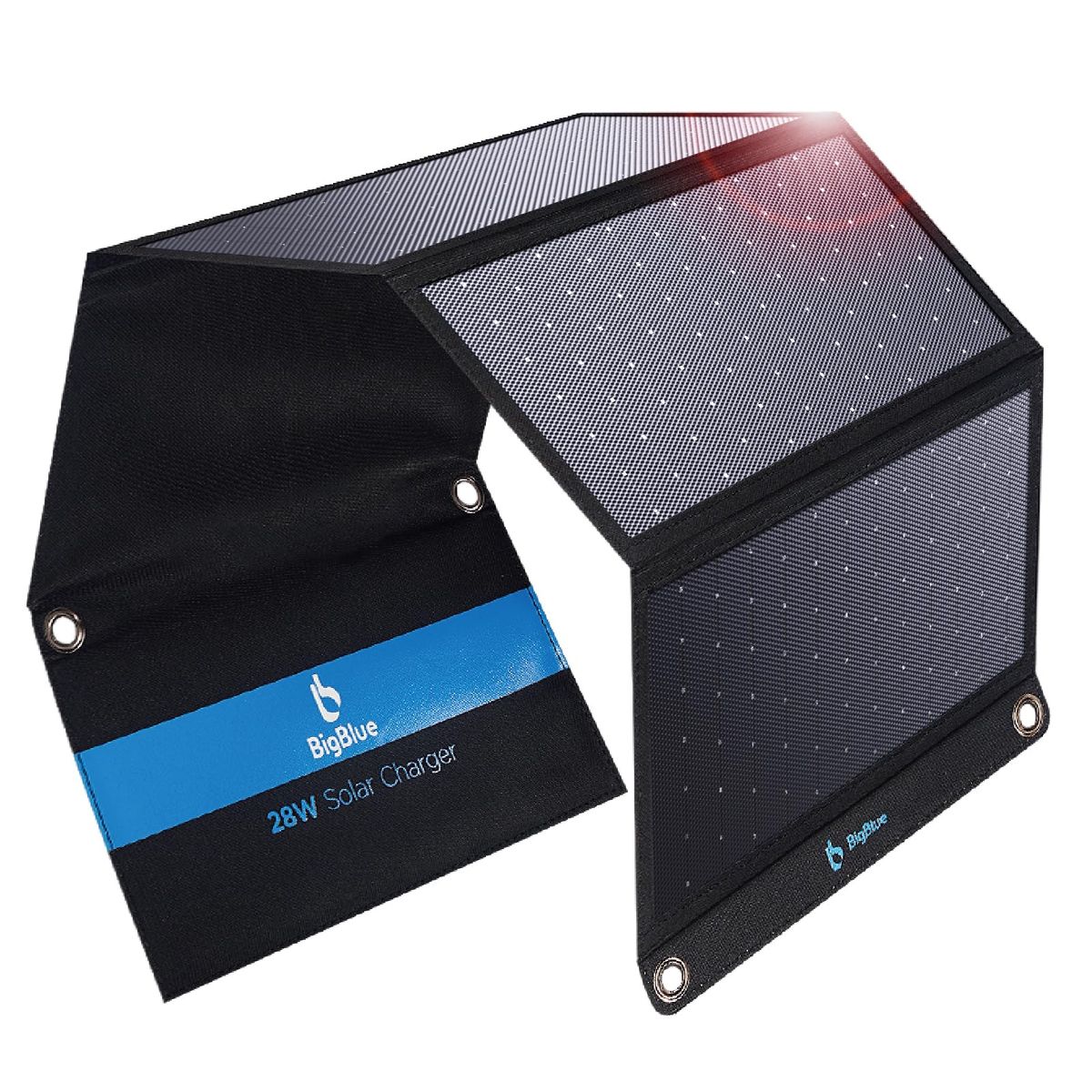
We analyzed 6 portable solar panels based on wattage, efficiency, weight, ports, and waterproofing. The <strong>BigBlue 28W</strong> takes the top spot at $67 for campers who need reliable phone charging with dual USB-C ports. Style-conscious hikers will appreciate the <strong>Elecom NESTOUT</strong> at $130 with its award-winning design.
The BigBlue 28W is our top pick for most people. At just $67, it powers phones and tablets with 28W output and folds to the size of a paperback. Check the comparison table for quick specs.
What's the Best Portable Solar Panel for 2026?
- Best Overall:BigBlue 28W—$67→
- Best for High Wattage:Renogy 200W—$221→
- Best Connectivity:ZOUPW 100W—$106→
- Premium Pick:EcoFlow 220W—$299→
- Best Solar Generator Kit:ZeroKor 300W—$179→
- Design Award Pick:Elecom NESTOUT—$130→
This guide draws on 13,986 verified Amazon reviews across 6 finalists. We also cross-referenced expert testing from CNET and manufacturer specifications. Prices and availability are current as of publication.
How did we pick these?
We evaluated 6 portable solar panels across 7 key criteria. Our analysis includes 13,986 verified Amazon reviews, 3 independent expert sources (including CNET), and manufacturer spec data.
Brands evaluated: BigBlue, Renogy, ZOUPW, EcoFlow, ZeroKor, Elecom. We excluded panels under 20W and heavy options over 15 lbs.
Sources: CNET lab testing, Amazon verified-buyer reviews, and product datasheets.
First-party data: Amazon listing data (price, rating, review count) verified May 2026.
Hard requirements (5 gates): ≥20W output, ≤15 lbs, USB or MC4 output, ≥4.0 rating, ≥500 reviews. Products failing any gate were cut.
Wattage: The Most Important Spec
Higher wattage means faster charging. 28W is enough for phones but not laptops.
Efficiency Matters in Cloudy Weather
High-efficiency panels (≥23%) perform better in overcast conditions. N-type cells like in the Renogy and EcoFlow models offer 25% efficiency.
Weight and Portability
Backpackers should aim for under 3 lbs. The BigBlue 28W at 1.5 lbs is ideal. RV users can carry 10-15 lbs panels.
BigBlue 28W Solar Panel Charger

Pros:
- 28W output charges phones and tablets quickly
- Dual USB-C and USB-A ports for multiple devices
- Ultra-portable: 1.5 lbs, folds to 11x6x1.4 inches
Cons (honest weight):
- Not powerful enough for laptops or power stations
- Output drops significantly in cloudy conditions
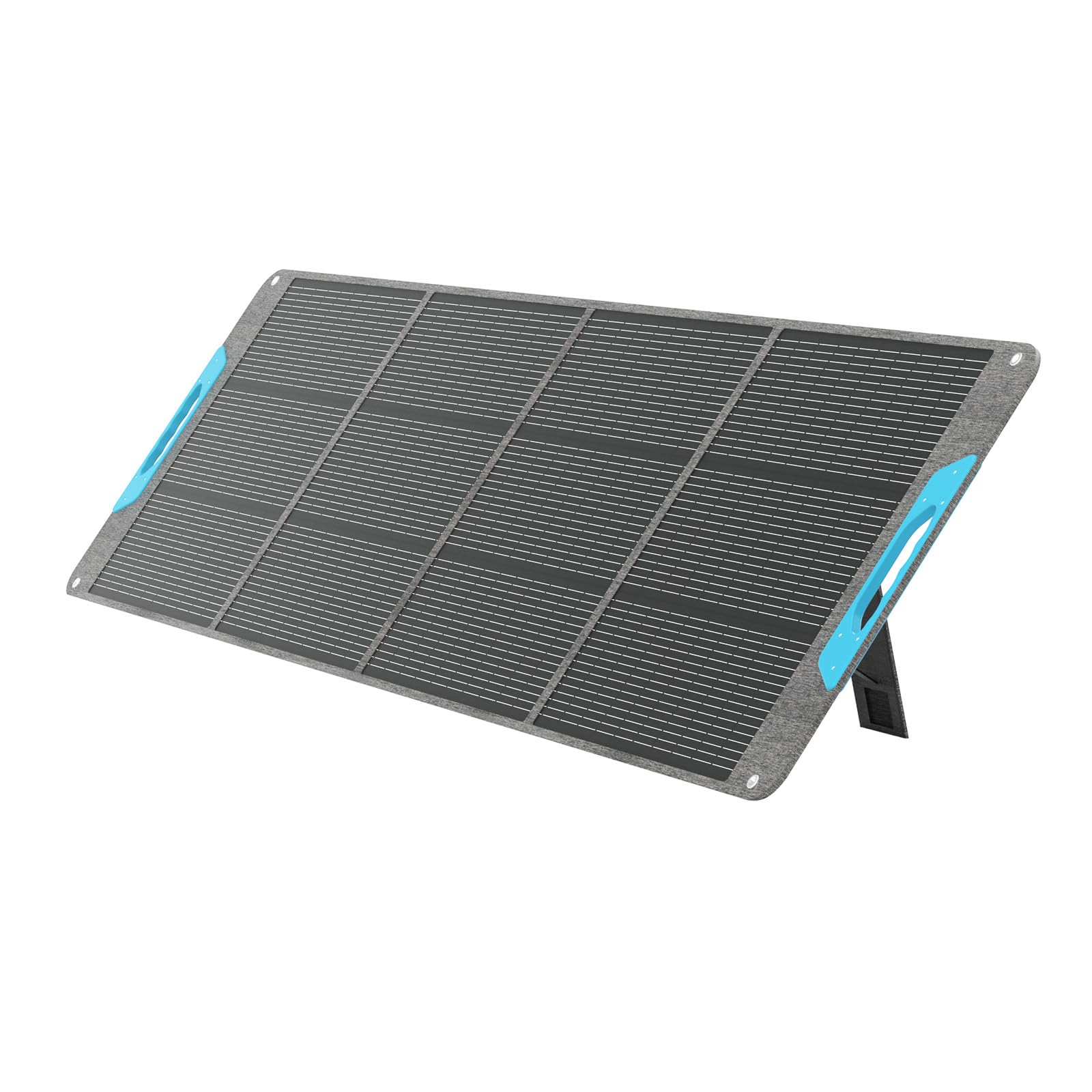
Renogy 200W Portable Solar Panel
Pros:
- 200W output charges power stations rapidly
- 25% efficient N-type cells
- Lightest 200W panel at 13.89 lbs
Cons (honest weight):
- No built-in USB ports for direct device charging
- Higher price than 100W alternatives
ZOUPW 100W Portable Solar Panel

Pros:
- 23.5% efficiency with 5-in-1 cable fits major power stations
- IP67 waterproof: ideal for rain and splashes
- 100W output sufficient for Jackery/EcoFlow
Cons (honest weight):
- Heavier than comparable 100W panels at 9.48 lbs
- Kickstands may be flimsy in strong wind
EcoFlow 220W Bifacial Portable Solar Panel

Pros:
- Bifacial design captures up to 28% more energy from rear light
- 25% N-type cell efficiency
- IP68 waterproof: toughest rating for any environment
Cons (honest weight):
- Expensive at $299
- Requires EcoFlow power station for best results
ZeroKor 300W Portable Solar Generator Kit

Pros:
- 300W power station included with 60W panel
- Multiple outlets: AC, USB, DC
- Live Amazon coupon at time of review
- Works for small appliances like laptops
Cons (honest weight):
- 60W panel may be underpowered for larger needs
- Battery capacity only 280Wh
Elecom NESTOUT 28W Portable Solar Panel

Pros:
- IF Design Gold Award winner — beautiful design
- SunPower cells for 24% higher efficiency than standard
- Adjustable stands for optimal sunlight angle
Cons (honest weight):
- Only 28W output, limited to small devices
- Price premium for design at $130
Quick Comparison: Top Portable Solar Panels at a Glance
| Product | Price | Wattage | Efficiency | Weight | Waterproof | Best For |
|---|---|---|---|---|---|---|
| BigBlue 28W 🛒 | $67 | 28W | 25.4% | 1.5 lbs | IP44 | Budget phone charging |
| Renogy 200W 🛒 | $221 | 200W | 25% | 13.89 lbs | IP65 | RV power station |
| ZOUPW 100W 🛒 | $106 | 100W | 23.5% | 9.48 lbs | IP67 | Universal power station |
| EcoFlow 220W 🛒 | $299 | 220W | 25% | 15.4 lbs | IP68 | Premium off-grid |
| ZeroKor 300W Kit 🛒 | $179 | 300W (station) | 20.5% (panel) | 5.08 lbs | — | All-in-one beginner |
| Elecom NESTOUT 🛒 | $130 | 28W | High | 1.7 lbs | Water-resistant | Style-conscious hikers |
What real users are saying
Buyer-review scan: 13,986 verified Amazon reviews across 6 finalists. We also referenced CNET for expert testing.
- BigBlue 28W: 9,767 reviews, 4.4 stars — praised for portability and value, but some note slow charging in clouds.
- Renogy 200W: 651 reviews, 4.6 stars — users love the efficiency and light weight, wish it had USB ports.
- ZOUPW 100W: 638 reviews, 4.7 stars — highest rating for its universal cable; occasional complaints about kickstand durability.
- EcoFlow 220W: 627 reviews, 4.6 stars — bifacial performance is a hit, but fragile glass concerns some.
- ZeroKor Kit: 1,712 reviews, 4.4 stars — beginners appreciate the all-in-one, but the panel is underpowered for larger needs.
- Elecom NESTOUT: 591 reviews, 4.6 stars — design award is a standout, but limited output for the price.
Consensus: Most buyers prioritize wattage and portability. Budget users are happy with BigBlue; RV owners prefer Renogy or ZOUPW for power station compatibility.
What to Skip When Buying Portable Solar Panels
Panels Under 20W for Phone Charging
Skip any panel rated below 20W if you need to charge more than a phone. These tiny panels take all day to trickle-charge a device and offer no real backup value. The BigBlue 28W at $67 is the true minimum for practical use.
Heavy Panels Over 15 lbs for Backpacking
Don't bring a 15+ lb panel on a hiking trip.89 lbs is acceptable for car camping but not backpacking. For foot travel, stick with panels under 3 lbs like the BigBlue 28W (1.5 lbs) or Elecom NESTOUT (1.7 lbs).
Cheap Panels With Low Efficiency
Avoid panels with efficiency below 20%. They waste space and take forever to charge. The ZeroKor 60W panel in the kit hits only 20.5% — acceptable for the price, but separate panels from ZOUPW (23.5%) or Renogy (25%) are much better.
Panels Without USB or MC4 Connectors
Skip any panel that doesn't have either USB ports or MC4 connectors. Without them, you can't charge phones or power stations directly. Every panel on our list includes either USB (BigBlue, Elecom) or MC4 (Renogy, ZOUPW, EcoFlow) — always check before buying.
Which Portable Solar Panel Is Right for You?
🏆
You need a budget-friendly panel for phones and small devices.
Go with: BigBlue 28W at $67 — lightweight, dual USB-C, 9,767 reviews.
⚡
You own an RV and need to charge a power station fast.
Pick: Renogy 200W at $221 — 200W output, 25% efficiency, UL certified.
🔌
You want one panel that works with any power station brand.
Choose: ZOUPW 100W at $106 — 5-in-1 cable fits Jackery, EcoFlow, Anker, Bluetti.
🌟
You demand the best efficiency and durability for off-grid living.
Invest in: EcoFlow 220W Bifacial at $299 — 25% efficiency, IP68, bifacial gain.
🎒
You're a beginner who wants a complete solar generator kit.
Get: ZeroKor 300W Kit at $179 — includes power station, panel, and coupon.
🎨
You value design and want a stylish panel for short hikes.
Try: Elecom NESTOUT at $130 — award-winning look, SunPower cells.
Browse more shopping guides for outdoor gear. Also check our best power stations guide to pair with your solar panel.
Ready to Go Solar? Here's Your Pick
Frequently Asked Questions
How does a portable solar panel work?
Portable solar panels convert sunlight into electricity using photovoltaic cells. You connect them directly to your device or a power station via USB or MC4 cables. They don't store power — so you need direct sunlight or a battery in between.
How much wattage do I need for camping?
For phones and small devices, 28W (like the BigBlue) is enough.
Can I use a portable solar panel in cloudy weather?
Yes, but output drops significantly. Panels with higher efficiency (≥23%) perform better in overcast conditions.
Do I need a power station with a solar panel?
Not always — small panels with USB ports can charge phones directly. But for powering laptops, CPAP machines, or appliances, you need a power station (battery) to store and convert the energy.
What's the difference between FBA and FBM fulfillment?
FBM means the seller ships it themselves, so delivery times may vary. Our picks are FBA where possible.
Are portable solar panels waterproof?
Most are water-resistant but not fully submersible. Check the rating before buying.
How long does it take to charge a phone?
A 28W panel in full sun charges a phone in 2–3 hours. Higher wattage panels charge faster but are heavier. For quick top-ups, the BigBlue 28W is the sweet spot for portability and speed.
Who wrote this and where's the data from?
Mubboo Editorial Team — independent US-market consumer research. Picks reflect editorial consensus from 3 independent review sources and 13,986 verified buyer reviews.
Sources
- Amazon (live product data)
- CNET Portable Solar Panel Review
- Manufacturer specifications (Renogy, ZOUPW, etc.)