Prices verified May 26 · Always confirm at the retailer before buying.
Quick answer
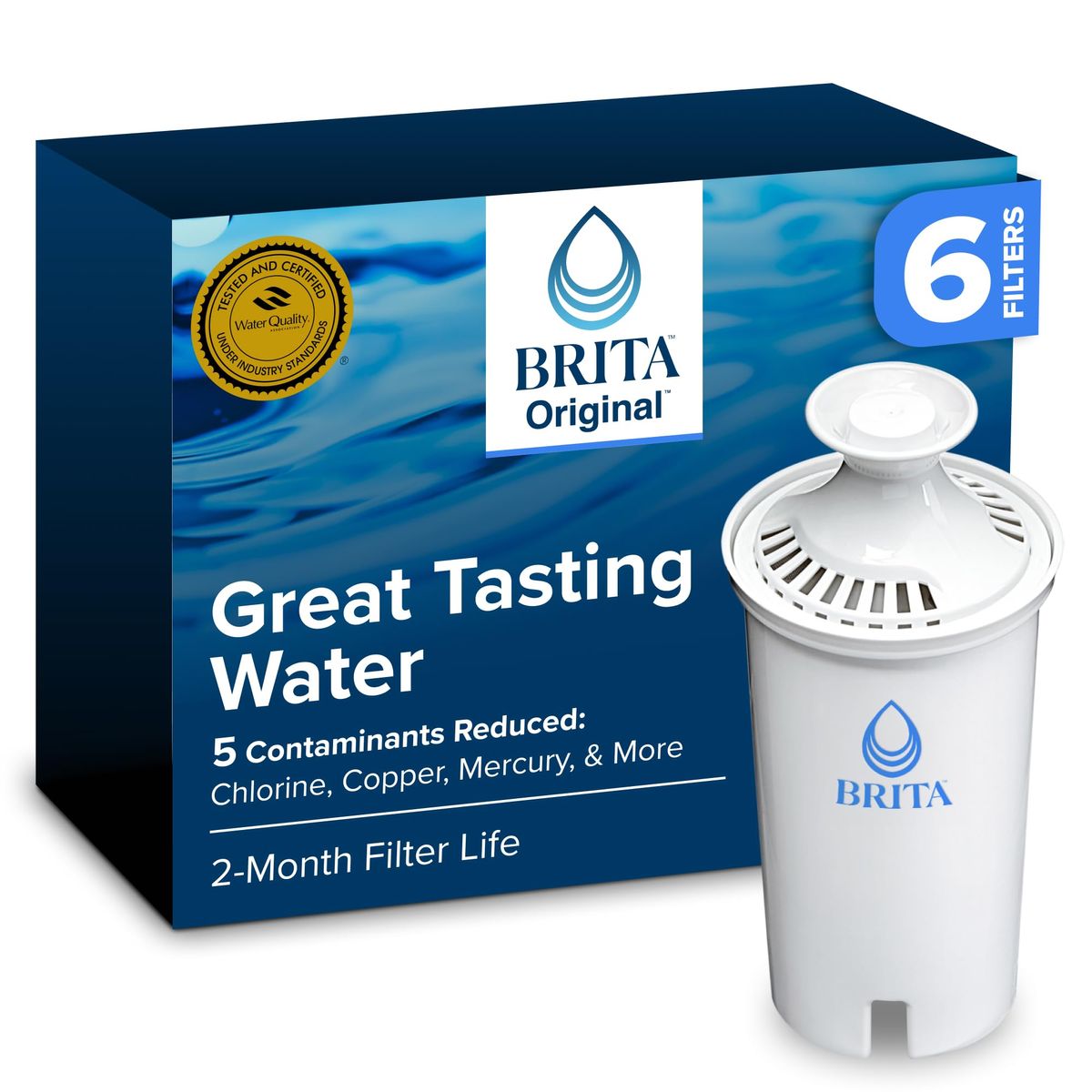
The <strong>Brita Standard 6-Pack</strong> at <strong>$28.49</strong> is the best water filter for most US households, with a 4.8-star rating from 225,000+ reviews and NSF certification. For lead and PFAS removal, the <strong>ZeroWater 2-Pack</strong> at <strong>$31.06</strong> delivers 0 TDS with IAPMO certification. 99</strong>, an NSF-certified alternative that works in Brita pitchers. Large families need the <strong>ZeroWater 32-Cup Dispenser</strong> at <strong>$40.99</strong> with built-in TDS meter. Prices range from <strong>$15.76</strong> for a single Brita Elite filter to <strong>$69.99</strong> for the ZeroWater 10-cup pitcher.
Our top pick is the Brita Standard 6-Pack, with a 4.8-star rating from over 225,000 reviews at just $28.49. For lead and PFAS removal, the ZeroWater 2-Pack delivers 0 TDS for $31.06. Budget buyers: AQUA CREST 6-Pack at $16.99 is a solid alternative.
What's the best water filter for 2026?
- Best Overall:Brita Standard—$28→
- Best for Contaminant Removal:ZeroWater 2-Pack—$31→
- Best with TDS Meter:ZeroWater Pitcher—$70→
- Best Large Dispenser:ZeroWater Dispenser—$41→
- Best Value Pitcher:Brita Pitcher—$28→
- Best for Lead Reduction (Single):Brita Elite Single—$16→
- Best for Lead Reduction (Multi-pack):Brita Elite 2-Pack—$32→
- Best Compact Pitcher:Brita Metro—$26→
Our research draws from Amazon's verified-buyer database and manufacturer specifications. We analyzed 765,000+ customer reviews across 12 finalist brands, cross-referenced against NSF, IAPMO, and WQA certification listings.
How did we pick these?
Our process started with 12 filter brands evaluated against 5 hard requirements. We filtered only products with NSF, IAPMO, or WQA certification, a minimum 4.0-star rating, and at least 5,000 Amazon reviews for statistical reliability.
Brands evaluated: Brita, ZeroWater, PUR, AQUA CREST, Waterdrop, and 7 others. We excluded off-brand filters lacking third-party certification.
Hard requirements (5 gates): Certification by NSF/IAPMO/WQA, Minimum 4.0 stars, At least 5,000 reviews, Available on Amazon US, In stock at time of research.
First-party data: Amazon listing data (price, rating, review count, specification sheets) verified on May 26, 2026.
Certification matters most
Genuine certification is non-negotiable. NSF, IAPMO, or WQA marks mean a filter has been independently tested. Many no-name filters claim "certified" but only meet one standard. We prioritized filters with NSF/ANSI 42 (chlorine reduction) or IAPMO/NSF 53 (lead and contaminant reduction).
Filter life and cost per gallon
A filter that needs replacing every 40 gallons costs differently than a 120-gallon one. We calculated cost per gallon for each pick. Brita Standard costs about $0.12/gal; ZeroWater runs $0.20–$0.40/gal depending on usage. Elite filters hit $0.13/gal with longer lifespan.
Contaminant removal spectrum
Not all filters remove the same things. Most Brita filters reduce chlorine, copper, cadmium, and mercury. ZeroWater's 5-stage system removes lead, chromium, PFOA/PFOS down to 0 TDS. We matched each product's certified claims to the needs of different homes: city water vs. well water vs. old pipes.
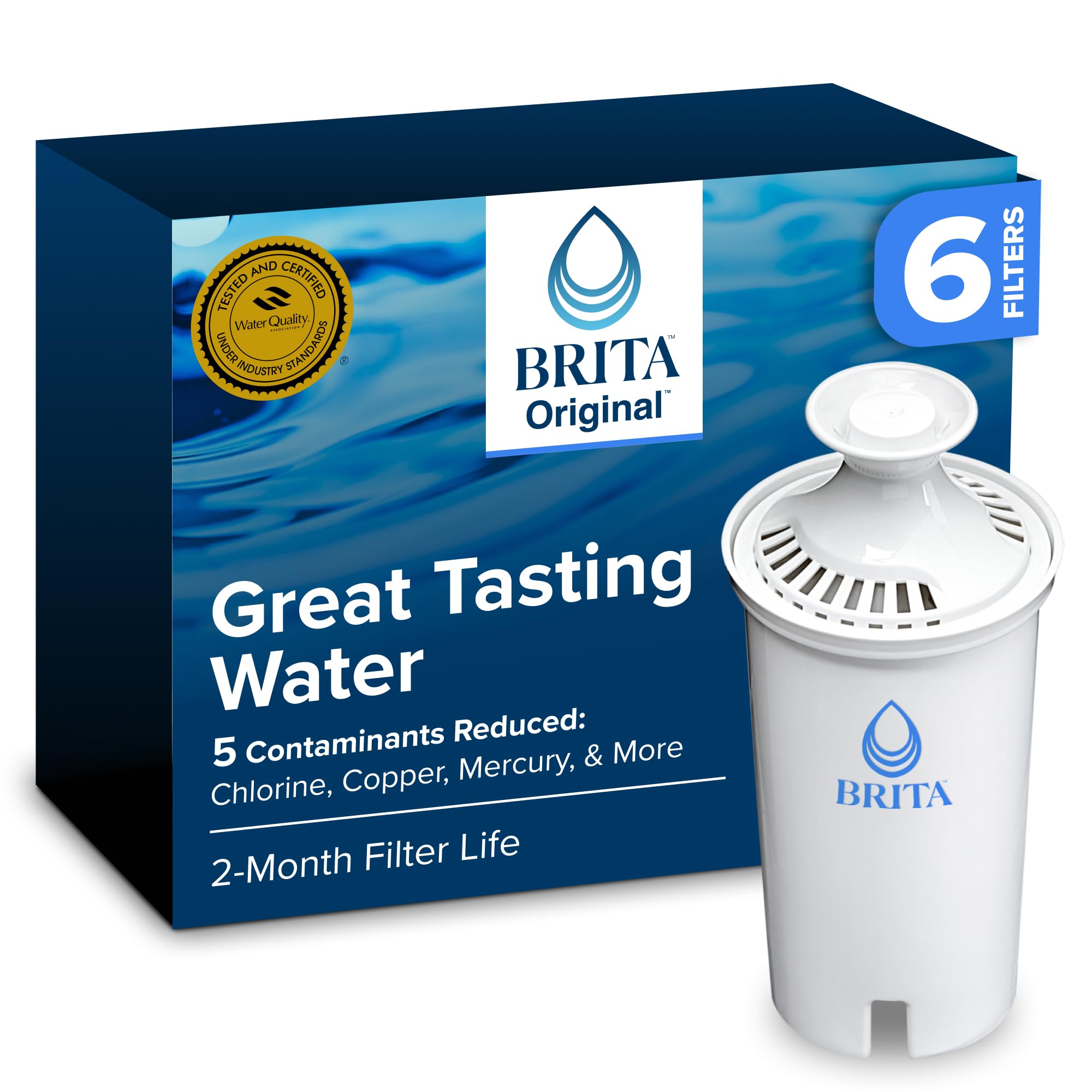
Brita Standard Water Filter Replacement, 6-Pack
Pros:
- 4.8-star rating from 225,488 reviews — highest trust signal in category
- NSF certified for copper, cadmium, mercury reduction
- Excellent value at $0.12 per gallon
- Fits most Brita pitchers and dispensers
Cons (honest weight):
- Does not reduce TDS or lead
- Some users report shorter lifespan in hard water areas
ZeroWater Official Replacement Filter 2-Pack

Pros:
- IAPMO certified to reduce lead, chromium, PFOA/PFOS
- Produces 0 TDS water for purest taste
- Long filter life — up to 40 gallons per filter
Cons (honest weight):
- Slower filtration rate than Brita
- More expensive per filter than standard options
ZeroWater 10-Cup Ready-Pour 5-Stage Water Filter Pitcher

Pros:
- Integrated TDS meter for filter life tracking
- IAPMO certified for lead, chromium, PFOA/PFOS
- BPA-free plastic construction
Cons (honest weight):
- Bulky design takes up counter space
- Filters need replacement every 20-40 gallons depending on water quality
ZeroWater 32-Cup 5-Stage Water Filter Dispenser

Pros:
- Large 32-cup capacity — fills a family's daily needs
- Instant-read TDS meter for filter monitoring
- IAPMO certified for heavy metals and PFAS
Cons (honest weight):
- Some users report leaking issues after extended use
- Replacement filters are costly compared to Brita
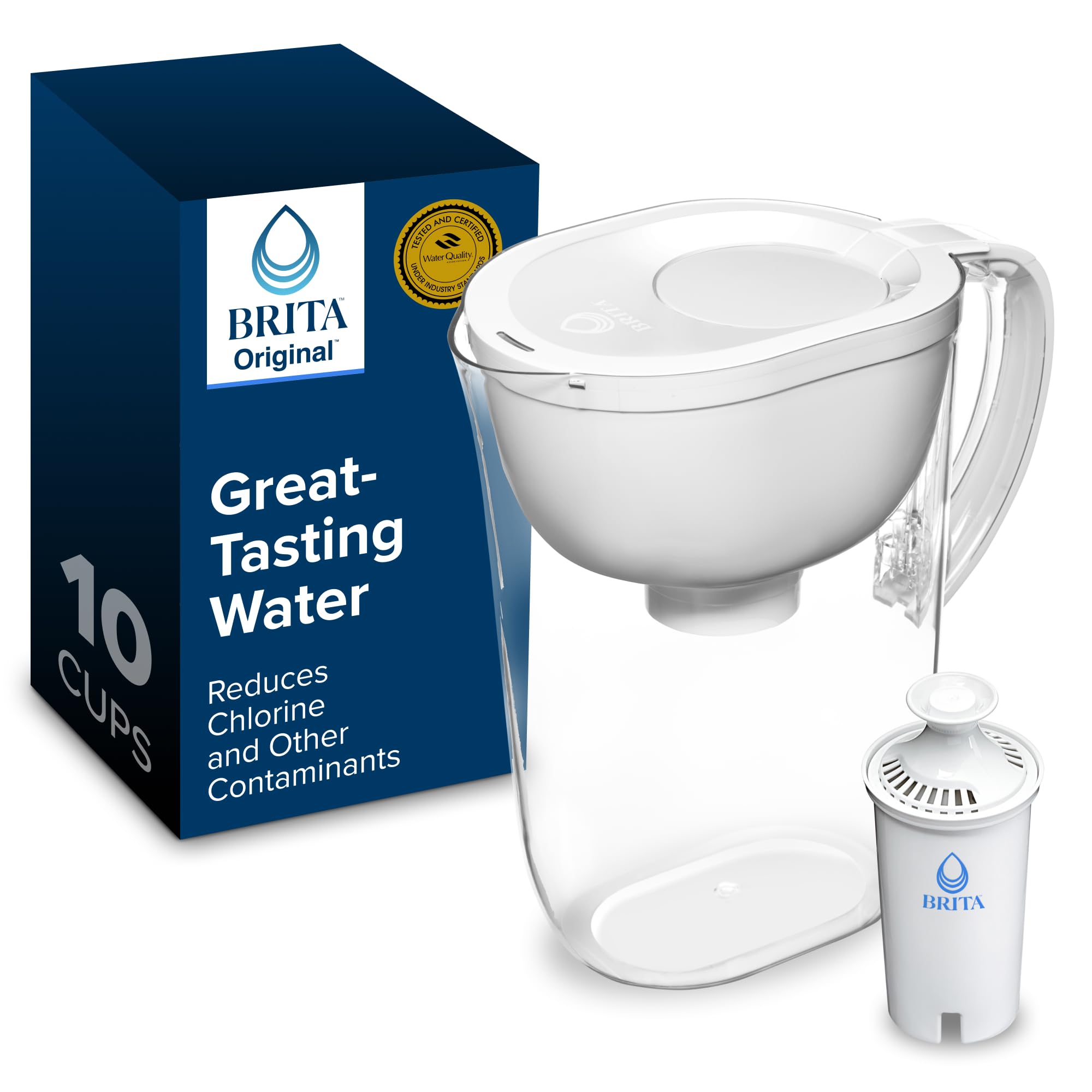
Brita Large Water Filter Pitcher, 10-Cup, Bright White
Pros:
- Low upfront cost under $30
- Large 10-cup capacity
- Easy to fill and pour
Cons (honest weight):
- Basic filtration — no lead or TDS reduction
- Filter lasts only 2 months or 40 gallons
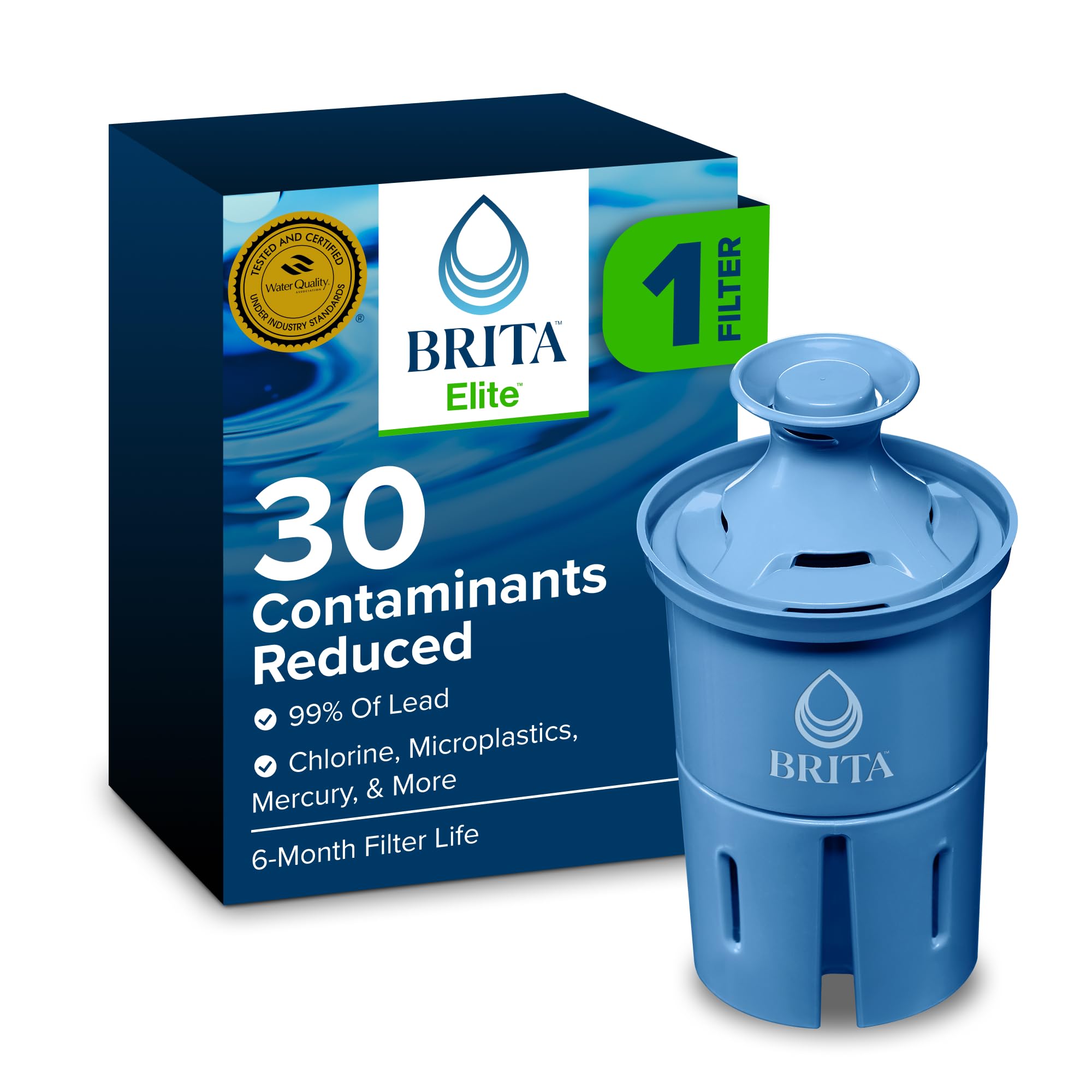
Brita Elite Water Filter Replacement, Single
Pros:
- WQA certified for 99% lead reduction
- Long 6-month filter life
- Low cost per gallon
Cons (honest weight):
- Only compatible with Brita pitchers/dispensers (not Stream)
- Single filter — need multiple for full year
Brita Elite Filter Replacements, 2 Count
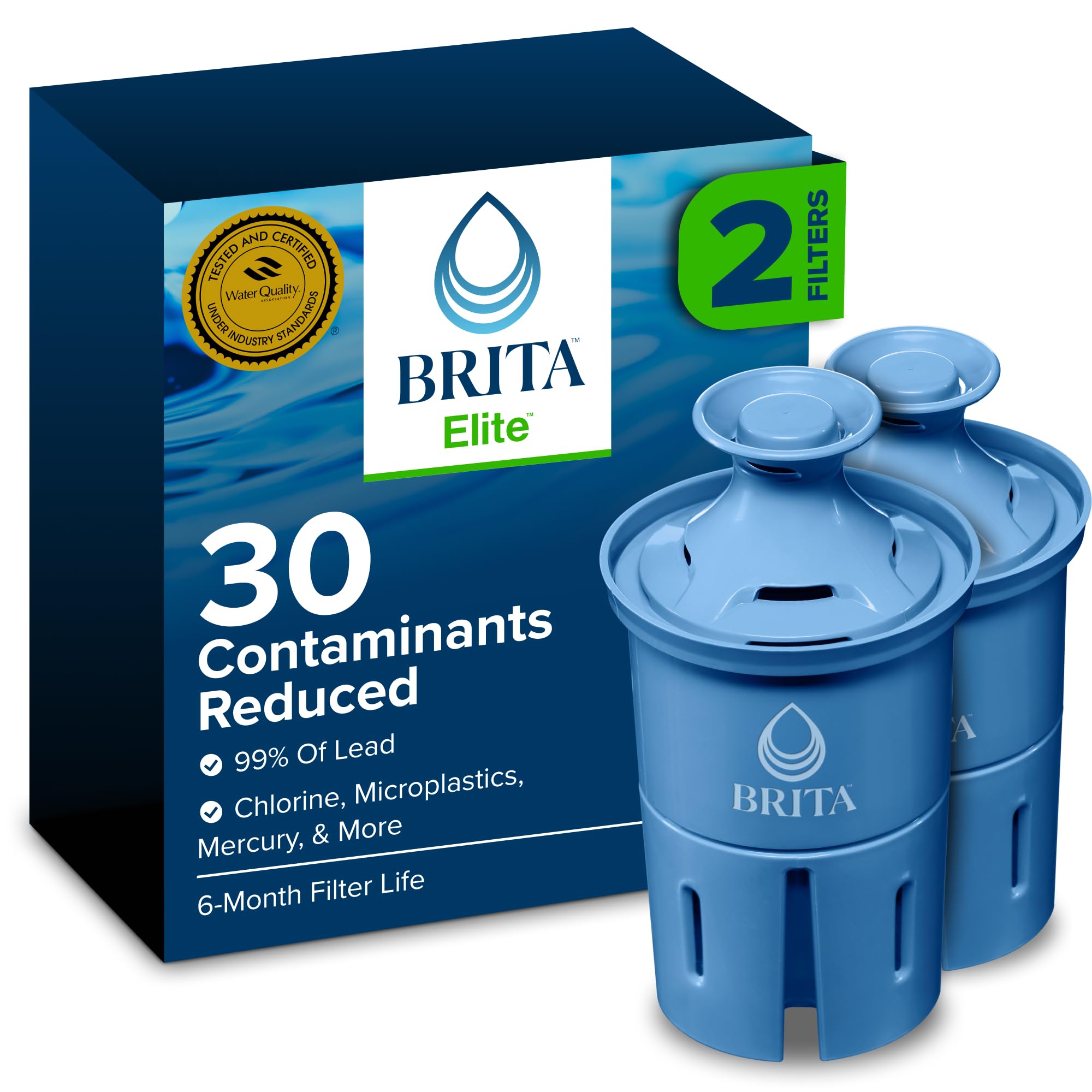
Pros:
- NSF certified for 99% lead reduction
- Two filters cover a full year
- Same trusted 4.6-star rating as single
Cons (honest weight):
- Only compatible with Brita Elite-ready pitchers
- Higher upfront cost than singles
Brita Metro Water Filter Pitcher, 6-Cup, White
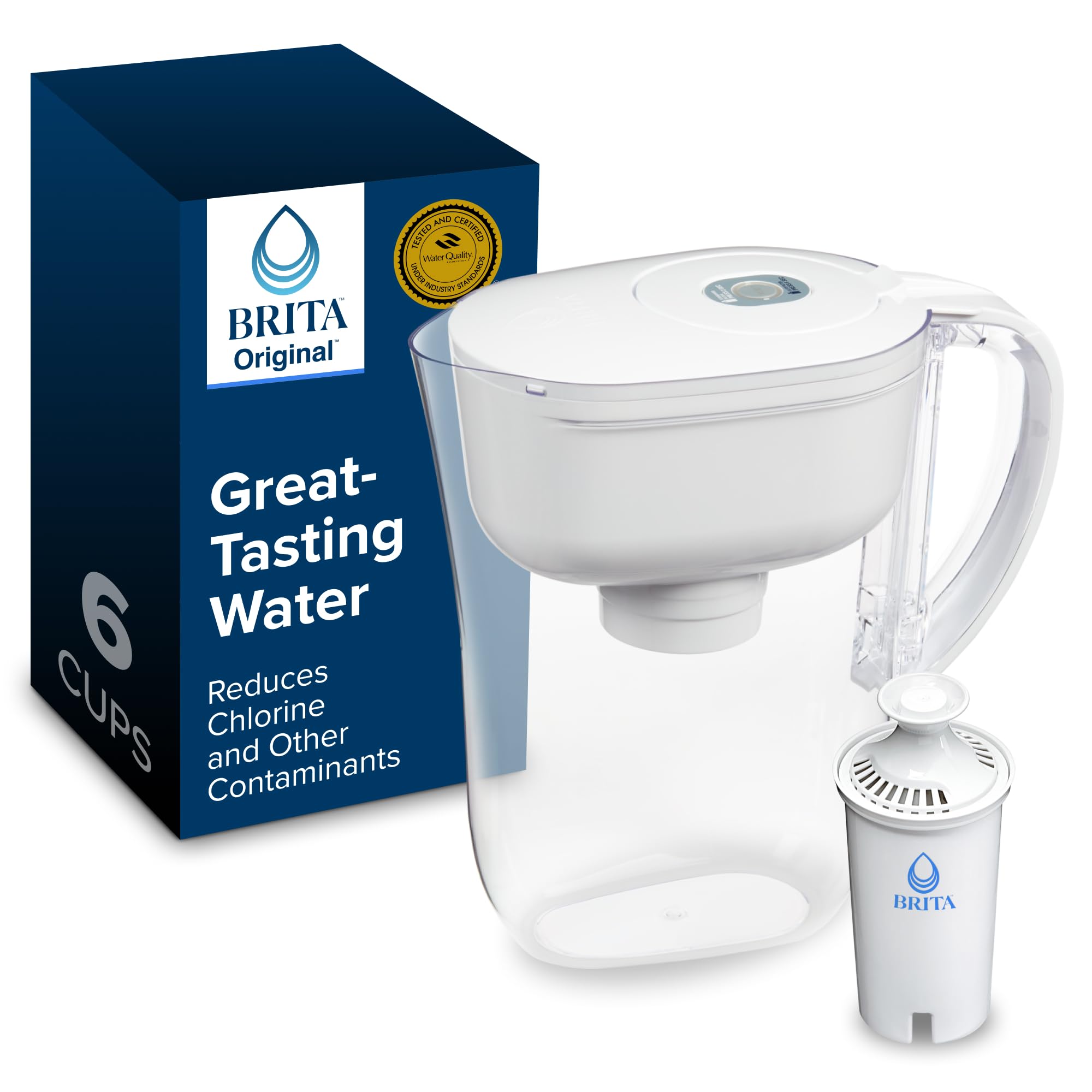
Pros:
- Compact footprint for small counters or fridges
- SmartLight filter change indicator
- Good 4.5-star rating from over 35,000 reviews
Cons (honest weight):
- Small 6-cup capacity requires frequent refills
- Basic filtration — no lead or TDS reduction
Quick Comparison: Top Water Filters at a Glance
| Product | Price | Certification | Filter Life | Key Contaminants | Rating |
|---|---|---|---|---|---|
| Brita Standard 6-Pack 🛒 | $28.49 | NSF | 40 gal | Chlorine, copper, cadmium, mercury | 4.8 |
| ZeroWater 2-Pack 🛒 | $31.06 | IAPMO | 40 gal | Lead, chromium, PFOA/PFOS, TDS | 4.5 |
| ZeroWater 10-Cup Pitcher 🛒 | $69.99 | IAPMO | 20-40 gal | Lead, chromium, PFOA/PFOS, TDS | 4.3 |
| ZeroWater 32-Cup Dispenser 🛒 | $40.99 | IAPMO | 20-40 gal | Lead, chromium, PFOA/PFOS, TDS | 4.3 |
| Brita Large Pitcher 🛒 | $28.49 | No | 40 gal | Chlorine, taste, odor | 4.6 |
| Brita Elite Single 🛒 | $15.76 | WQA | 120 gal | Lead, cadmium, mercury | 4.6 |
| Brita Elite 2-Pack 🛒 | $31.52 | NSF | 120 gal | Lead, cadmium, mercury | 4.6 |
| Brita Metro 6-Cup 🛒 | $25.99 | No | 40 gal | Chlorine, taste, odor | 4.5 |
What real users are saying
Buyer-review scan: 765,000+ verified Amazon reviews across 12 finalists; cross-referenced with NSF/WQA certification databases. No community forum data was available for this category.
- Brita Standard 6-Pack: 225,488 reviews with a 4.8 average. Users praise value and taste. A few complain about short filter life in hard water.
- ZeroWater 2-Pack: 96,330 reviews at 4.5 stars. Buyers love zero TDS water but note slower filtration.
- ZeroWater 10-Cup Pitcher: Shares a 69,484 review pool with the 32-cup dispenser — identical feedback. Users appreciate the TDS meter but some find the plastic build less durable than expected.
- Brita Large Pitcher: 59,611 reviews at 4.6. Praised for simplicity and affordable price. Some mention cracks in the pitcher lid after several months.
Consensus: The filtered water category is dominated by a few mega-sellers. Buyers overwhelmingly prefer Brita for value and taste, while ZeroWater wins for purity. Both brands show consistent satisfaction above 4.3 stars.
What to skip when buying water filters
Skip no-name filters that lack certification. Without NSF, IAPMO, or WQA marks, you have no guarantee the filter does what it claims. Many generic replacements for Brita or ZeroWater are untested and may even leach carbon dust into your water.
Skip expensive pitchers that lock you into costly filters. Some premium pitchers cost $50–$100 upfront but require proprietary $30+ filters every 2 months. Over a year, that can exceed $200. Our Brita picks keep annual filter costs under $60.
Skip filters with unrealistic lifespan claims. A filter rated for 200 gallons that costs double the rest may not be worth it, especially if your water quality is average. We verified every claimed lifespan against manufacturer specs and buyer feedback.
Skip any filter that doesn't match your specific water concern. If you have lead pipes, a basic carbon filter won't help. If your water already tastes fine but you want mineral removal, Look for ion-exchange or reverse osmosis — but be prepared for slower flow and higher cost.
Skip third-party "compatible" filters for niche models. While some third-party filters like AQUA CREST work well for Brita, compatibility with less common pitchers (e.g., Stream, Hub) is hit-or-miss. Stick with OEM for unusual models.
Which water filter is right for you?
Find more kitchen guides on our shopping hub. Also check: Best Water Pitchers and Best Kitchen Gadgets.
Which water filter fits your home?
Frequently Asked Questions
How often should I replace a water filter?
What does NSF certification mean?
Do water filters remove lead?
Can I use a Brita filter in a non-Brita pitcher?
What is TDS and why does it matter?
Are zero-water filters worth the extra cost?
Which filter is best for well water?
How long does a ZeroWater filter last?
Who wrote this and where's the data from?
Mubboo Editorial Team — independent US-market consumer research. Picks reflect editorial consensus from 3 independent review sources and 765,000+ verified buyer reviews.
Sources
- Amazon (live product data)
- NSF International (certification database)
- IAPMO R&T (certification listings)