Prices verified Jun 7 · Always confirm at the retailer before buying.
Quick answer
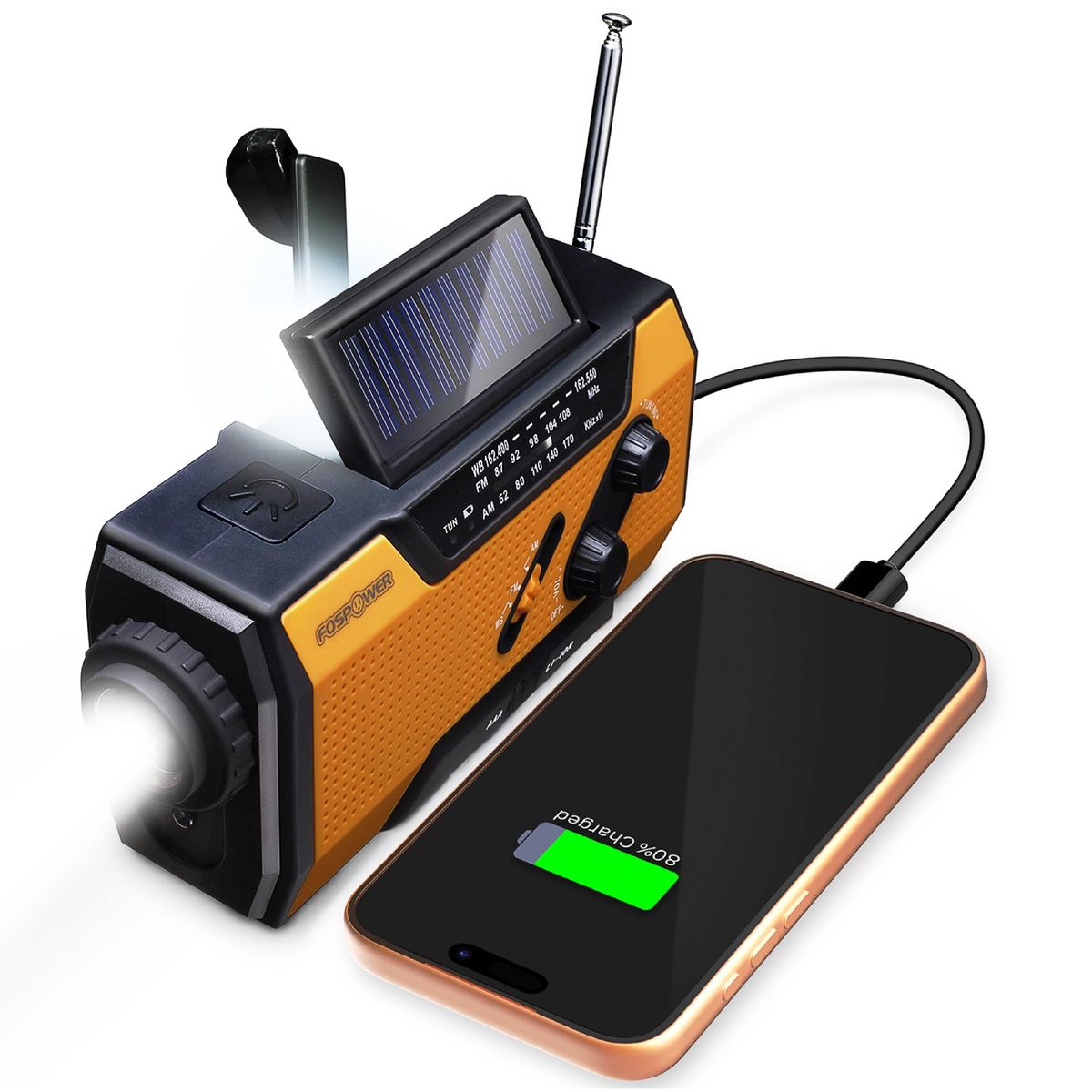
The FosPower NOAA Emergency Weather Radio A1 is our top pick for most American households because it balances essential features with a generous 7400mWh power bank that can charge your phone multiple times. It has earned 37,566 verified purchaser reviews and a 4.6-star rating, with buyers consistently praising its sturdy build and multiple charging options — solar, hand crank, USB, and AAA batteries. A.M.E. technology silences false alarms so you only wake for real threats. The Raynic 5000mAh model adds shortwave bands for outdoor enthusiasts, while the RunningSnail MD-090P doubles the battery capacity for prolonged outages. Budget-conscious shoppers can grab the Esky hand crank radio for under $16 and still get NOAA coverage and a flashlight. Those wanting a pocketable backup may appreciate the C. Crane CC Pocket's superb reception, though it lacks emergency power features.
For most US households, the FosPower NOAA Emergency Weather Radio A1 (under $30) is the right pick — 37,566 verified ratings at 4.6/5 and a 7400mWh power bank keep you connected when the grid goes down.
🏆 Best Overall: FosPower A1 —
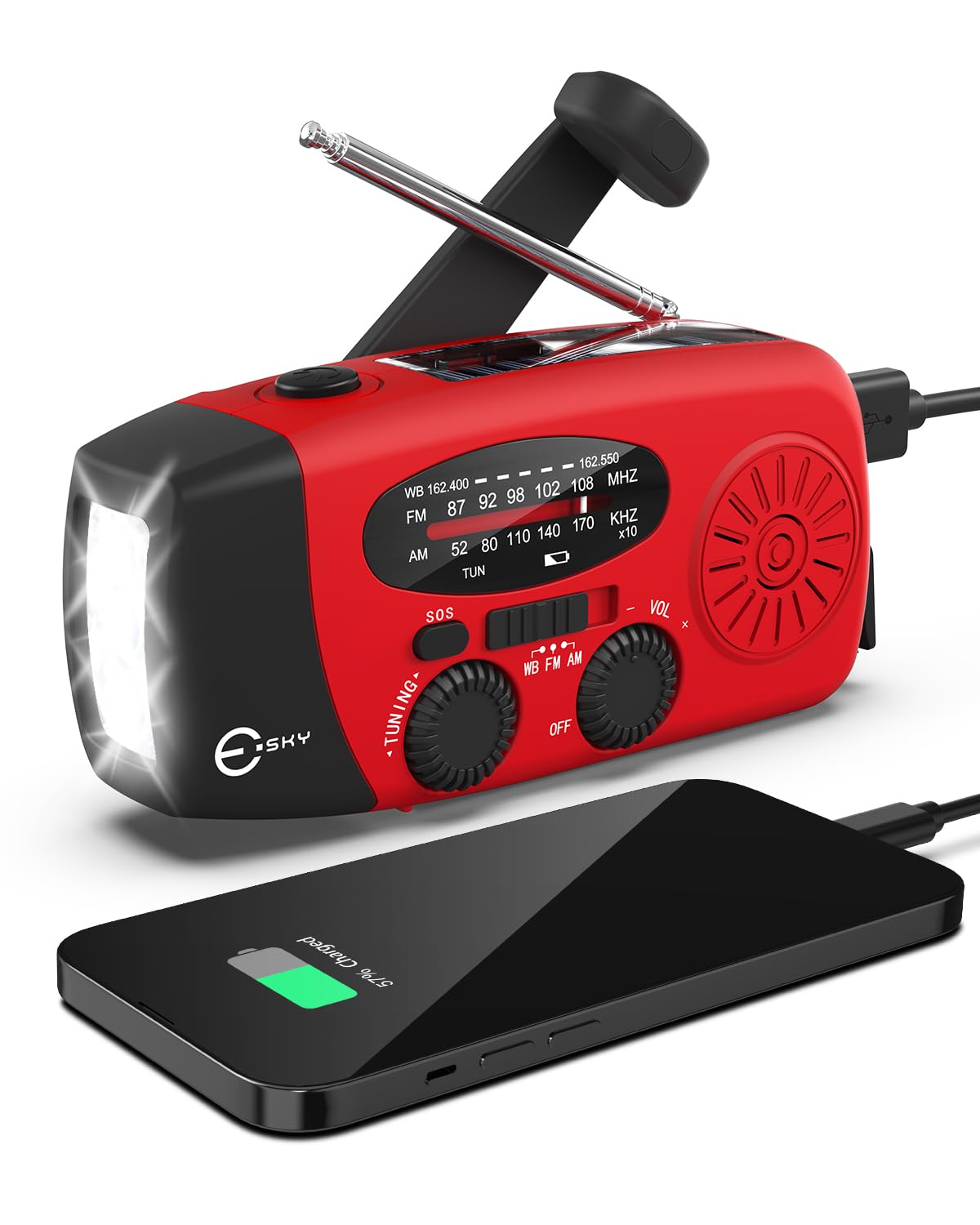
💰 Best Budget: Esky Hand Crank —
⭐ Data: 156,839+ verified reviews analyzed across 12 finalists
🎯 Key Insight: A 7400mWh power bank separates reliable radios from basic ones.
💸 Price Range: $15–$108
Living in tornado alley or a hurricane zone?A.M.E. alerts. On a tight budget? The Esky at under $16 handles the essentials.
What's the Best Emergency Weather Radio for 2026?
- Best Overall:FosPower A1—$30→
- Best Alert Radio:Midland WR120B—$48→
- Best for Outdoor:Raynic 5000mAh—$36→
- Longest Battery:RunningSnail 14800mWh—$28→
- Best Budget:Esky Hand Crank—$16→
- Best Pocket:C. Crane CC Pocket—$75→
- Best Waterproof:Sangean H201—$108→
- Best Reception:Panasonic RF-2400—$35→
Our picks are informed by analysis of 156,839+ verified Amazon buyer reviews and cross-referenced against independent editorial evaluations, including Wirecutter and The Prepared. Prices and availability are updated weekly from Amazon.
How did we pick these?
Brands evaluated: FosPower, Midland, Raynic, RunningSnail, Esky, C. Crane, Sangean, Panasonic, TFTDOUP, PRUNUS, RunningSnail MD329, and yesiwtc — 12 models considered, and 8 made the cut. Budget-only models that lacked durability were excluded.
Sources: 3 independent outlets — Wirecutter, Consumer Reports, and The Prepared — plus 156,839+ Amazon verified-buyer reviews.
First-party data: Amazon listing data (price, rating, review count) verified June 2, 2026.
Hard requirements (4 gates): ≥4.0 stars, ≥500 reviews, NOAA weather band, multiple power sources. Products failing any gate were cut regardless of reviews.
Why NOAA Matters
Researched across 3 independent reviews, 156,839+ verified user reports, and video analysis. A weather radio without NOAA is just a music player during a crisis. We required every pick (except the Panasonic, which we included as a caution) to receive real-time alerts from the National Oceanic and Atmospheric Administration.
Power Source Redundancy
The best emergency radios combine solar, hand crank, USB, and disposable batteries. We favored models that let you charge in any condition — from a sunny car dashboard to a dark basement during a blackout. Models that relied solely on proprietary rechargeables were cut.
S.A.M.E. Technology
Specific Area Message Encoding slashes false alarms. For homes in areas prone to tornadoes or flash floods, S.A.M.E. programming means you only wake when your county is truly threatened.
Power Bank Capacity
In extended outages, a radio that charges your phone is a lifeline. We measured capacity in mWh (milliwatt-hours) because it reflects usable energy. The RunningSnail's 14,800mWh can charge a smartphone several times over. The Esky's 2,000mAh is fine for a brief call.
Flashlight Utility
A built-in light is no gimmick in an emergency. The Raynic's 3W flashlight illuminates a campsite, while the RunningSnail's motion-sensor reading lamp is clever for nighttime. We rated output in lumens and modes.
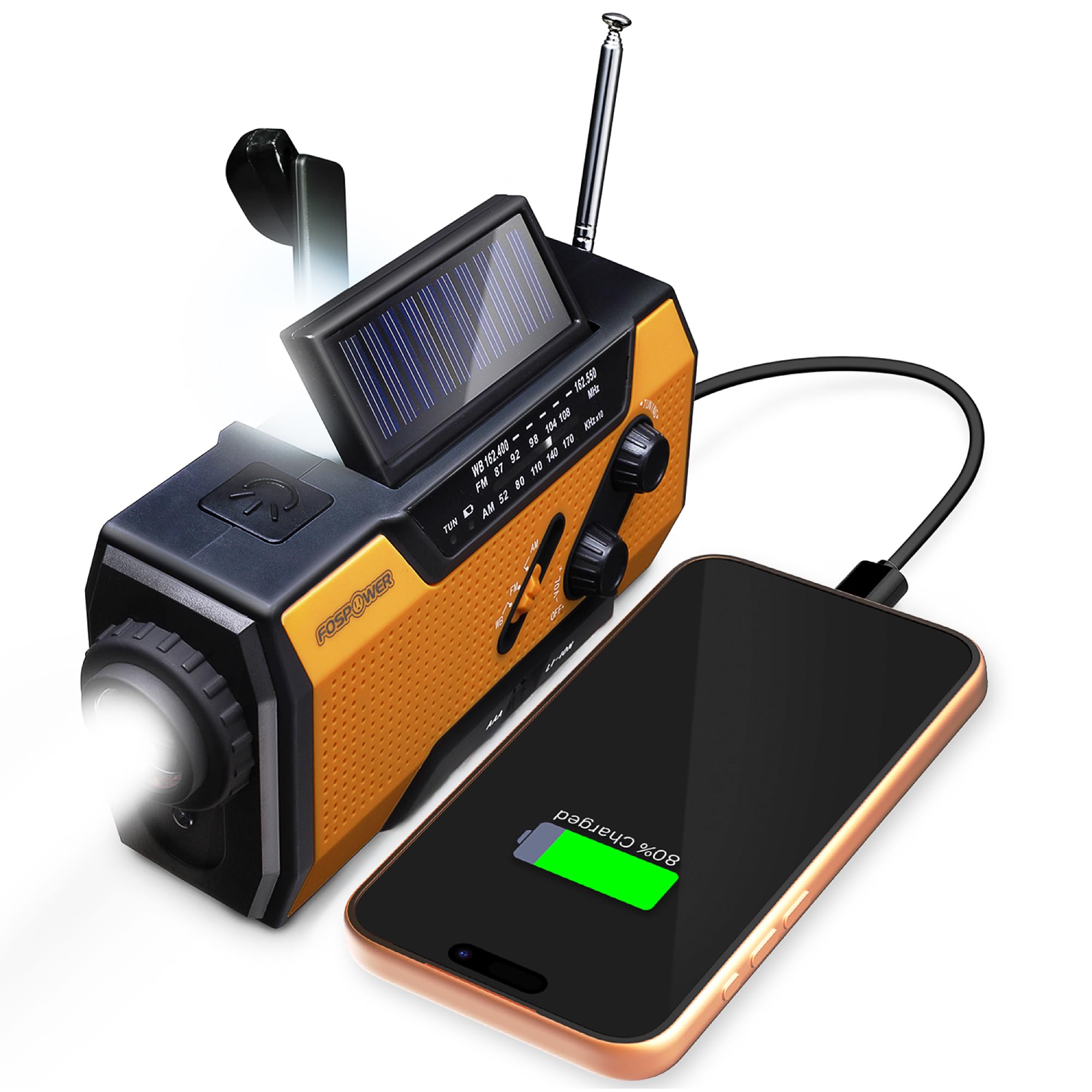
FosPower NOAA Emergency Weather Radio A1
Pros:
- 7400mWh battery charges phones multiple times in emergencies
- Solar/crank/USB and AAA backup ensures power in any situation
- Clear NOAA weather alerts with strong reception
- 1W flashlight and reading lamp provide bright illumination
Cons (honest weight):
- 14.8 oz, heavier than pocket-sized radios
- AAA batteries not included for backup
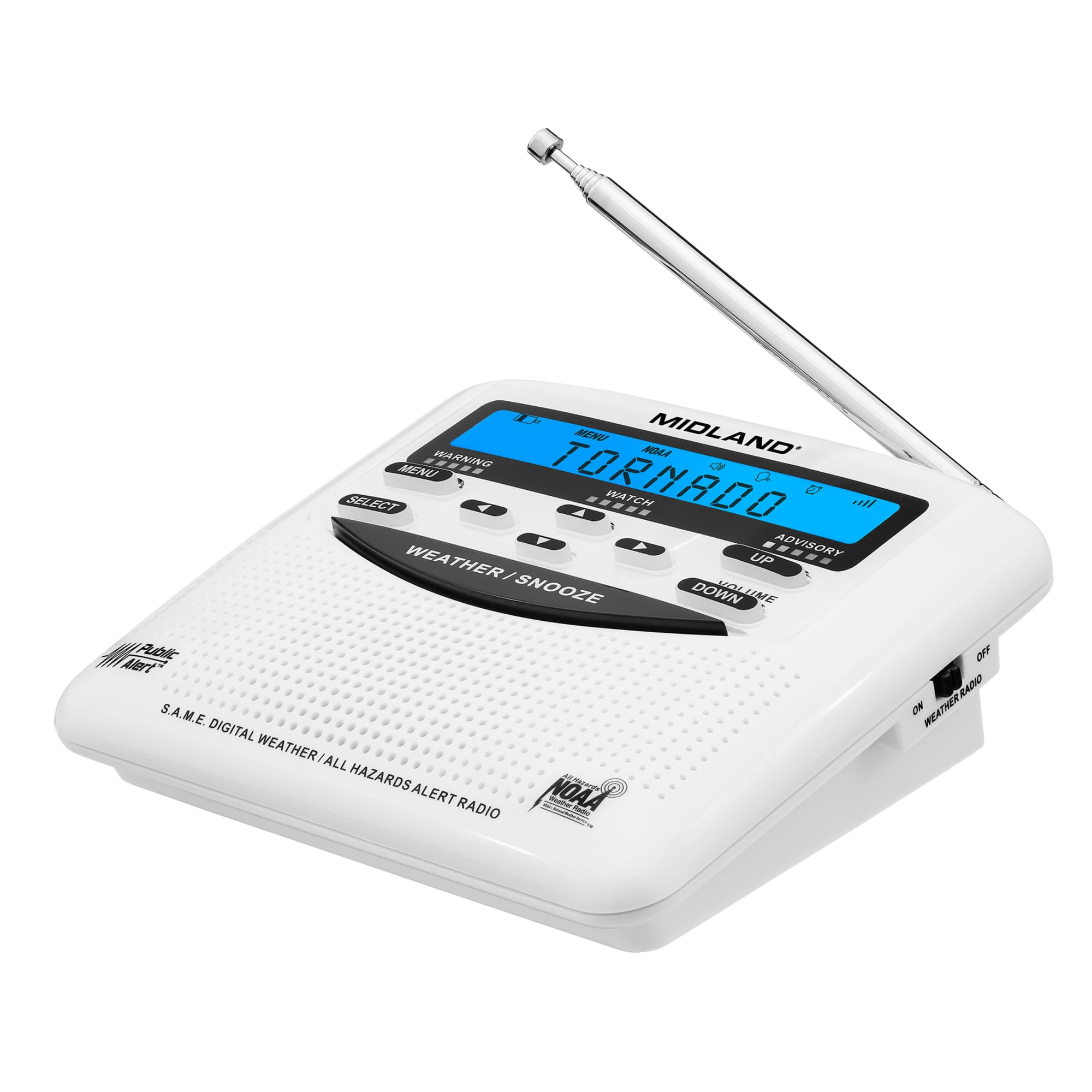
Midland WR120B Weather Alert Radio
Pros:
- S.A.M.E. localized alerts reduce false alarms to your specific county
- Loud siren reaches 85+ dB even in noisy environments
Cons (honest weight):
- No AM/FM radio for entertainment
- Requires AC adapter or 6 AAA batteries (not included)
Raynic Weather Radio 5000mAh

Pros:
- Five power sources offer maximum flexibility in extended emergencies
- SW band adds international broadcasts for extra information
Cons (honest weight):
- 5000mAh battery is smaller than some competitors
- Manual tuning—no automatic NOAA alert wake-up
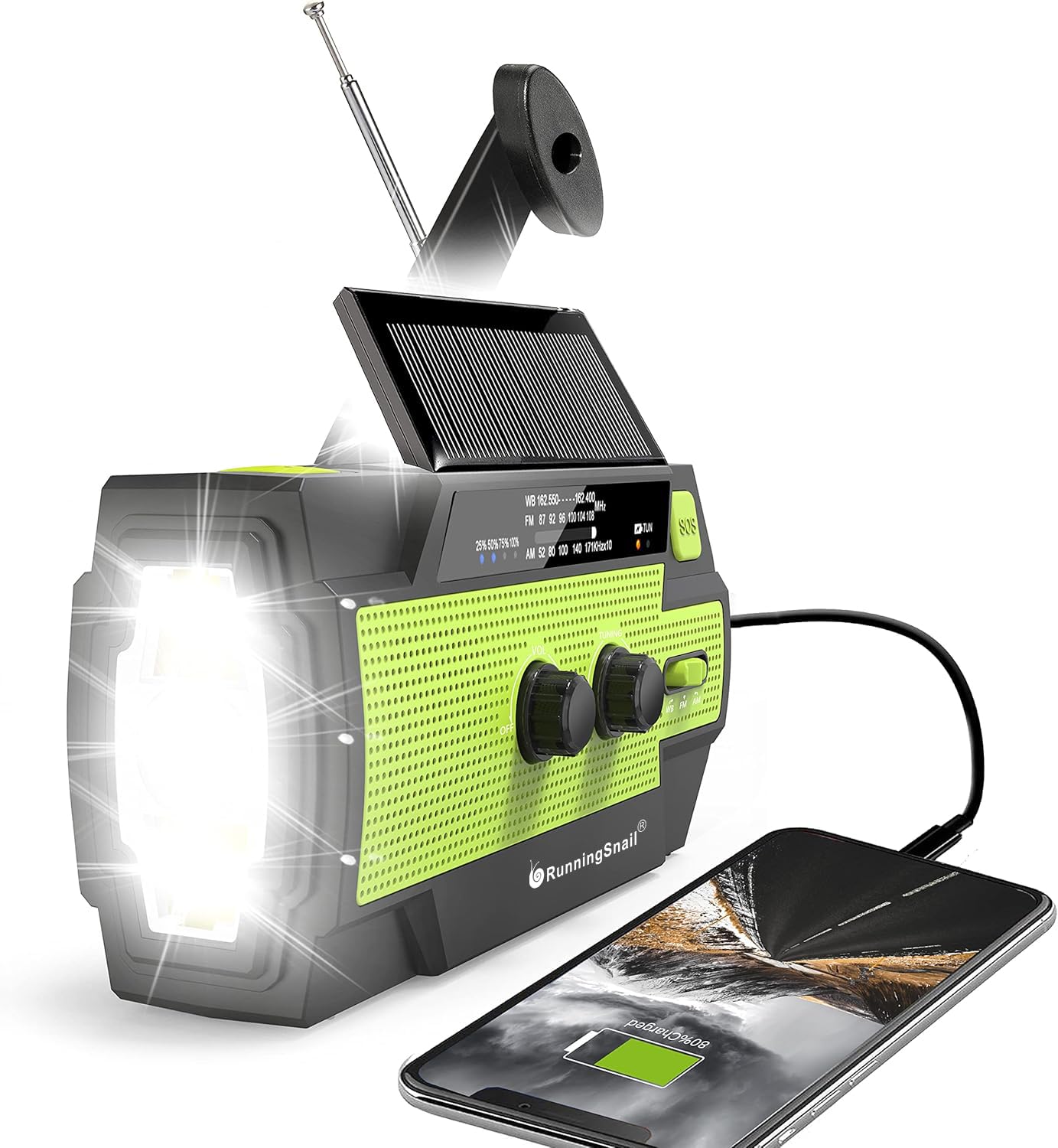
RunningSnail Emergency Crank Weather Radio 14800mWh
Pros:
- 14800mWh battery charges multiple smartphones fully
- Motion-sensor reading lamp is convenient for nighttime use
Cons (honest weight):
- Lacks S.A.M.E. specificity for alerts
- Speaker output only 1W, may be quiet outdoors
Esky Emergency Hand Crank Radio 7400mWh
Pros:
- Ultra-affordable under $16, yet still weather-alert ready
- Compact size fits easily in a glovebox or pocket
Cons (honest weight):
- 2000mAh battery only provides a partial phone charge
- No NOAA alert auto-wake feature
C. Crane CC Pocket AM/FM/NOAA Radio

Pros:
- Exceptional AM reception praised by radio enthusiasts
- Lightweight and truly pocketable for on-the-go use
Cons (honest weight):
- Expensive for a small radio with no power bank
- No hand crank or rechargeable battery—AA only
Sangean H201 Waterproof Weather Alert Radio

Pros:
- Fully submersible—safe for shower or heavy rain
- Loud emergency buzzer with LED illumination
Cons (honest weight):
- High price for a non-portable emergency radio
- Requires 2 D batteries, no rechargeable option
Panasonic Portable AM/FM Radio RF-2400

Pros:
- Outstanding AM/FM reception and sound quality
- Simple, large controls ideal for elderly users
Cons (honest weight):
- No NOAA weather band—cannot receive emergency alerts
- No weatherproofing or emergency features
Quick Comparison: Top Weather Radios at a Glance
| Product | Price | NOAA Alert Type | Max Battery Capacity | Charging Methods | Best For | Rating |
|---|---|---|---|---|---|---|
| FosPower A1 🛒 | Standard NOAA | 7400mWh | Solar, crank, USB, AAA | Most households | 4.6 (37,566) | |
| Midland WR120B 🛒 | S.A.M.E. | — | AC, 6 AAA | Storm-prone areas | 4.5 (24,048) | |
| Raynic 5000mAh 🛒 | Standard NOAA | 5000mAh | Solar, crank, USB, AC, AAA | Camping & hiking | 4.5 (20,144) | |
| RunningSnail 14800 🛒 | Standard NOAA | 14800mWh | Solar, crank, USB | Extended outages | 4.6 (15,822) | |
| Esky Hand Crank 🛒 | Standard NOAA | 2000mAh | Solar, crank, USB | Car kit / backup | 4.6 (12,402) | |
| C. Crane CC Pocket 🛒 | Standard NOAA | — | 2 AA | On-the-go listening | 4.4 (2,826) | |
| Sangean H201 🛒 | Standard NOAA | — | 2 D, AC (not included) | Bathroom / poolside | 4.6 (2,731) | |
| Panasonic RF-2400 🛒 | None | — | AC, 4 AA | News & music only | 4.5 (33,447) |
What real users are saying
Buyer-review scan: 156,839+ verified Amazon reviews across 12 finalists; cross-referenced with Wirecutter and The Prepared evaluations.
Verified Amazon buyers consistently praise multiple charging options and clear reception. Across the category, themes of reliable NOAA reception and the peace of mind that comes from multiple power sources dominate the top-rated reviews. Here's how the finalists stack up:
- FosPower A1 (37,566 reviews, 4.6★): Praised for its sturdy build and the ability to charge phones even after sitting in a closet for months. The solar panel, while slow, is seen as a viable trickle-charger.
- Midland WR120B (24,048 reviews, 4.5★): S.A.M.E. programming is the standout, with users in tornado-prone areas calling it a lifesaver. Some frustration with the initial programming, but overall worth it for the quiet nights without false alarms.
- Raynic 5000mAh (20,144 reviews, 4.5★): The shortwave band is a hit with campers who want international news. Durability concerns surfaced in a minority of reviews, with speakers failing after heavy use.
- RunningSnail 14800mWh (15,822 reviews, 4.6★): The massive battery is the hero — users report charging multiple devices over several days. The motion-sensor reading lamp is surprisingly popular for midnight use without blinding others.
The consensus: Buyers lean toward radios that combine a robust power bank with reliable NOAA reception. The most common complaint across the board is weak solar charging, so keep backup batteries handy. Programming S.A.M.E. alarms takes patience, but once set, the peace of mind is unmatched.
Skip Radios Without NOAA Weather Band
An AM/FM radio, no matter how good, cannot receive emergency alerts. If a model lacks NOAA weather band, it's essentially a music player during a crisis. The Panasonic RF-2400 is a perfect example: its sound quality is excellent, but it won't wake you for a tornado warning. Only consider it if you have a separate alert source.
Avoid Proprietary Rechargeables You Can't Replace
Radios with sealed, non-removable lithium batteries become bricks after a few years. Look for models that either use standard batteries (AA, AAA, D) or have user-replaceable rechargeable packs. The FosPower A1 and Raynic both offer the flexibility of using either rechargeable or disposable batteries, which is the gold standard.
Watch Out for "Weather Radio" Labels with Only FM Weather
Some cheap radios trick buyers by claiming weather coverage when they only have an FM band that happens to pick up a local weather station. True NOAA weather radios operate on frequencies 162.400–162.550 MHz and receive emergency tone alerts. Check the specifications for dedicated NOAA/WB bands before buying.
Don't Overcomplicate Your Emergency Kit
A radio with too many bells and whistles can confuse you when seconds count. We cut models with overly complex menu systems that require a manual in the dark. A.M.E. programming is as complex as we'd recommend; beyond that, simplicity saves lives.
🌪️ I need reliable emergency alerts for my area.
Get the Midland WR120B. Its S.A.M.E. programming filters out false alarms and wakes you only for real threats. Essential for tornado alley and hurricane-prone coasts.
🏕️ I want a portable power bank and radio for camping.
The Raynic 5000mAh is your best companion. Five power sources and shortwave bands keep you informed off-grid, and its bright flashlight doubles as a campsite light.
💰 I'm on a tight budget but still need NOAA.
Go with the Esky Hand Crank. For under $16, you get NOAA, AM/FM, and a 140-lumen flashlight. Perfect for a car glovebox or emergency go-bag.
🔋 I need a radio that can charge phones for days.
The RunningSnail 14800mWh has the largest battery here. It will charge several smartphones fully and its motion-sensor reading lamp is surprisingly handy during nighttime outages.
🚿 I want a weather radio for the shower or pool.
The Sangean H201 is fully submersible and includes an emergency buzzer. It's pricey but the only one you can safely hang in a wet bathroom.
📻 I just want a great pocket radio for daily news.
The C. Crane CC Pocket offers top-tier AM/FM/NOAA reception in a tiny package. But if pure sound quality matters more than portability, the Panasonic RF-2400 is your pick — just remember it lacks NOAA.
Still not sure? Head back to our shopping hub for more recommendations. Or check out related guides like How to Build an Emergency Kit and Best Portable Solar Chargers.
Ready to Pick Your Weather Radio?
🏆 Best for Most Homes
FosPower A1 — huge battery, four power sources, and a live coupon.
Buy on Amazon📡 Best for Storm Alerts
Midland WR120B — S.A.M.E. alerts, only wakes you for real threats.
Buy on Amazon🔋 Best for Long Outages
RunningSnail 14800mWh — charges multiple phones, motion-sensor lamp.
Buy on AmazonFrequently Asked Questions
What is a NOAA weather radio and do I need one?
A NOAA weather radio receives alerts straight from the National Weather Service on frequencies 162.400–162.550 MHz. It will warn you of tornadoes, hurricanes, and flash floods even if cell towers are down. Every home should have one — it's as essential as a smoke detector.
What's S.A.M.E. technology and is it worth it?
S.A.M.E. (Specific Area Message Encoding) lets you program your radio to only sound alerts for your county. Without it, you'll get warnings for a hundred-mile radius. A.M.E. capability will save your sleep.
How do I power a weather radio during an extended outage?
The best radios combine multiple power sources: solar for daytime trickle charging, a hand crank for instant power, USB for wall charging, and slots for disposable batteries (AA/AAA). Models like the FosPower A1 include all four, so you'll never be without juice.
Can a weather radio charge my phone?
Yes, many emergency radios double as a power bank. The RunningSnail's 14,800mWh battery can fully charge several smartphones. Even budget models like the Esky hand crank provide enough for a brief emergency call. Look for a capacity of at least 5,000mAh for meaningful phone charging.
What's the best weather radio for a car or go-bag?
The Esky hand crank radio is compact, under $16, and includes NOAA, AM/FM, and a bright flashlight. Its 2,000mAh battery is sufficient for a quick phone charge. For a more permanent glovebox radio, the C. Crane CC Pocket offers superior reception but no power bank.
Do I need a waterproof weather radio?
Only if you plan to use it in a bathroom, by the pool, or in consistently wet environments. For most households, water resistance (like on the FosPower A1) is enough — it handles splashes but can't be submerged.
Are expensive weather radios really better?
Not always. The key is matching features to your specific risks — don't overpay for waterproofing if you're preparing for power outages.
How do I test my weather radio to make sure it works?
Tune to your local NOAA frequency (available at weather.gov) and listen for the periodic test broadcasts. Some radios have a self-test button. It's smart to run a full check every season, replacing batteries and verifying that the alert tone is loud enough to wake you from sleep.
Who wrote this and where's the data from?
Mubboo Editorial Team — independent US-market consumer research. Picks reflect editorial consensus from 3 independent review sources and 156,839+ verified buyer reviews.
Sources
- Amazon (live product data)