Quick answer
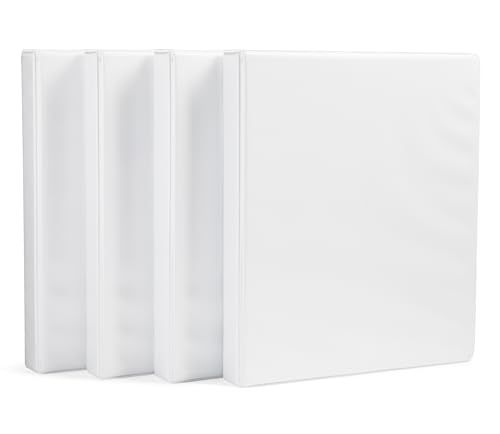
The Amazon Basics 1-inch round-ring binder (4-pack) is the practical pick for most light-duty needs — each binder is a budget-friendly choice and holds ~200 sheets with smooth-turning rings. For heavy projects, the 3-inch D-ring binder (2-pack) offers 600-sheet capacity and lays flatter, ideal for full courses or archives. Both earn a 4.7/5 rating from tens of thousands of verified Amazon buyers.
The Amazon Basics 1‑Inch Round Ring Binder (4‑Pack) wins for most households — at a low per-binder cost it holds 200 sheets with smooth‑turning rings. The 3‑Inch D‑Ring (2‑Pack) is the heavy‑duty alternative for 600‑sheet projects.
Mubboo Verdict
Best for most people
Amazon Basics 1-Inch Round Ring Binder (4-Pack)
Unbeatable per-binder value, smooth round rings, and ideal capacity for most users — the best value pick for light to moderate use.
Pick the Amazon Basics 3-Inch D-Ring Binder (2-Pack) instead if
- You need to store thick course packs or thousands of pages — the 3‑inch holds three times as many sheets.
- You stack binders or want pages to lie flatter — D‑rings keep sheets more secure and reduce bulge.
- You are a teacher or archivist handling heavy daily use — the 3‑inch is built for rough treatment.
- You want maximum capacity at a reasonable price — $6.86 per binder is still a good deal for 600‑sheet storage.
Amazon Basics 1-Inch Round Ring Binder (4-Pack) vs Amazon Basics 3-Inch D-Ring Binder (2-Pack), side by side
Amazon Basics 1-Inch Round Ring Binder (4-Pack)

Pros:
- Unbeatable low price per binder
- Round rings glide smoothly and prevent paper tears
- Interior pockets add extra loose-leaf storage
Cons (honest weight):
- 1-inch capacity limits it to smaller projects
- Round rings don’t hold as securely as D-rings when full
Amazon Basics 3-Inch D-Ring Binder (2-Pack)

Pros:
- Massive 600‑sheet capacity for thick projects
- D‑ring design keeps pages flatter and more secure
- Sturdy enough for daily classroom or office use
Cons (honest weight):
- Larger and heavier — not ideal for portability
- Higher cost per binder compared to the 1‑inch
Where each one wins
8 dimensions scored head-to-head. Amazon Basics takes 4; Amazon Basics takes 3.
| Dimension | Amazon Basics 1-Inch Round Ring Binder (4-Pack) | Amazon Basics 3-Inch D-Ring Binder (2-Pack) | Winner |
|---|---|---|---|
| Price per BinderThe 1‑inch costs half as much per binder, stretching your budget further. | $2.76 (4‑pack) | $6.86 (2‑pack) | Amazon Basics |
| Ring TypeD‑rings hold pages more securely and lay flatter when open. | Round rings | D‑rings | Amazon Basics |
| Sheet CapacityThe 3‑inch holds three times as many pages — essential for large projects. | ~200 sheets | ~600 sheets | Amazon Basics |
| DurabilityThe 3‑inch’s thicker cover and stronger rings withstand more abuse. | Suitable for light daily use | Sturdy for heavy classroom/office use | Amazon Basics |
| PortabilityThe 1‑inch is easy to carry in a backpack or bag. | Lightweight and compact | Bulky and heavier | Amazon Basics |
| Pack SizeGet four binders for one, ideal for multiple subjects or sharing. | 4 binders | 2 binders | Amazon Basics |
| Interior PocketsBoth include pockets for loose items — handy for syllabi or receipts. | Yes | Yes | Tie |
| Verified Review CountThe 1‑inch has significantly more reviews, indicating broader use. | 21,429 | 13,625 | Amazon Basics |
| Overall | 4 wins | 3 wins | Amazon Basics |
Price per Binder — The 1‑Inch Wins on Value
The 1‑inch 4‑pack delivers an unbeatable low per-binder price, nearly 60% less than the 3‑inch’s per-binder price. Both binders are widely available at US retailers like Amazon, Target, Walmart, and Office Depot — making restocking easy during Back‑to‑School season.
If you need several binders for multiple courses or projects, the 4‑pack gives you more for less — you can outfit a semester for under $12.
However, raw price isn’t everything — the 3‑inch’s higher capacity may render it the better value if you’d otherwise buy two 1‑inch binders for one subject.
Ring Type — D‑Rings Are Safer for Heavy Stacks
Round rings are smooth and snag‑free, but they don’t hold pages as securely when the binder is stuffed. D‑rings, on the other hand, keep pages firmly in place and allow them to lie flatter when open — a crucial advantage for reference materials you’ll flip through often.
If you only need to hold a few dozen sheets, the difference is negligible; but past 150 pages, D‑rings prevent pages from catching and tearing.
Sheet Capacity — The 3‑Inch Holds Three Times as Much
The 3‑inch binder handles ~600 sheets — enough for an entire textbook, a year’s worth of meeting minutes, or a teacher’s full curriculum. Whether you’re a Florida teacher prepping for a new school year or a New York college student packing for a semester, the right capacity saves time and frustration.
The 1‑inch tops out around 200 sheets, fine for a single class or a personal project but limiting for anything heavier.
Durability — Heavy Use Calls for the 3‑Inch
The 3‑inch binder’s thicker cover and robust rings stand up to daily classroom carting and frequent opening without cracking. The 1‑inch is durable enough for normal use, but its lighter construction shows wear more quickly under rough treatment.
If you’re a teacher or carry your binder everywhere, the 3‑inch will likely outlast the 1‑inch by a semester or more.
Portability — The 1‑Inch Goes Everywhere
At just over a pound and a slim profile, the 1‑inch binder slips into any backpack, satchel, or briefcase without hogging space. The 3‑inch is larger, heavier, and more rigid — it’s meant to stay on a desk or shelf.
If you commute or move between classes, the 1‑inch is far less cumbersome.
Pack Size — Four for the Price of Two
The 1‑inch comes as a 4‑pack, giving you three extra binders compared to the 3‑inch’s 2‑pack. That means you can organize each subject separately or share with family members.
The 3‑inch’s 2‑pack is still cost‑effective for bulk storage, but the 1‑inch pack offers more granular organization.
Interior Pockets — Both Have Them
Both binders include two interior pockets on the inside covers — ideal for storing loose sheets, syllabi, or small notes. This is a small but welcome feature that keeps everything in one place.
Verified Review Count — The 1‑Inch Is More Popular
The 1‑inch binder amassed 21,429 reviews compared to the 3‑inch’s 13,625 — roughly 60% more user feedback. While both scores are identical, the larger review pool suggests the 1‑inch is a more established, widely‑trusted pick.
Which should you buy?
| Your situation | Pick | Why |
|---|---|---|
| Organizing a single class | Amazon Basics 1-Inch Round Ring Binder (4-Pack) | Holds handouts, notes, and study guides without excess bulk. |
| Storing a full curriculum or textbook | Amazon Basics 3-Inch D-Ring Binder (2-Pack) | 600‑sheet capacity swallows an entire course pack. |
| Light everyday carry | Amazon Basics 1-Inch Round Ring Binder (4-Pack) | Slim and lightweight — barely noticed in a backpack. |
| Archiving years of financial records | Amazon Basics 3-Inch D-Ring Binder (2-Pack) | D‑rings keep thick stacks flat and prevent tearing. |
| Budget‑conscious student | Amazon Basics 1-Inch Round Ring Binder (4-Pack) | Four binders for under $12 vs. two for a higher cost. |
| Teacher or presenter | Amazon Basics 3-Inch D-Ring Binder (2-Pack) | Sturdy enough to withstand daily use and handling. |
Holds handouts, notes, and study guides without excess bulk.
600‑sheet capacity swallows an entire course pack.
Slim and lightweight — barely noticed in a backpack.
D‑rings keep thick stacks flat and prevent tearing.
Four binders for under $12 vs. two for a higher cost.
Sturdy enough to withstand daily use and handling.
What if neither is right?
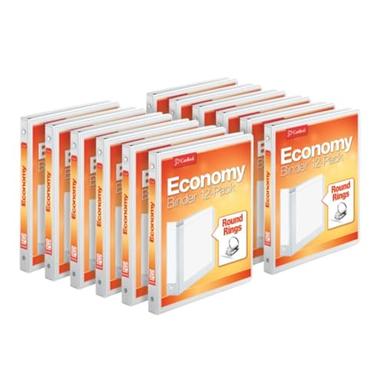
Cardinal 0.5 Inch Round Ring Binder (12 Pack)
$24.59
Super thin and stackable — best for archiving single subjects or running paperwork.
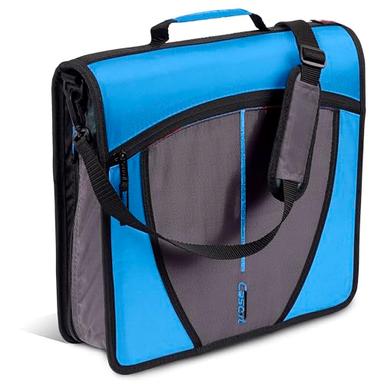
Case-it Mighty Zip Tab Zipper Binder, 3" O-Ring
$26.99
Zippered closure and a shoulder strap for the ultimate portable binder.
Frequently Asked Questions
Which Amazon Basics binder is better: 1-inch round ring or 3-inch D-ring?
For most users, the 1-inch round ring binder (4-pack) is the better value — it’s affordable, portable, and ideal for single subjects. The 3-inch D‑ring is better if you need high capacity (600 sheets) and want pages to lie flatter. Both are durable and score 4.7/5 from thousands of buyers.
Is the 3-inch binder worth the extra cost?
If you regularly handle thick documents, yes. The 3‑inch binder holds three times as many sheets and uses D‑rings that keep pages more secure. At its per-binder price, it’s still a good deal for heavy‑duty storage, but overkill for light use. Skip it if you only need a binder for a single class.
Can the 1-inch binder hold a full semester’s notes?
It holds up to about 200 sheets, which is enough for a single class but may be tight for multiple courses. If you take a lot of notes or include handouts, consider splitting across multiple 1‑inch binders or stepping up to the 3‑inch model.
Do these binders have pockets?
Yes, both the 1‑inch and 3‑inch binders include interior pockets on the inside covers. These are useful for storing loose papers, receipts, or small notes without punching holes.
What’s the difference between round rings and D-rings?
Round rings are a classic design — pages turn smoothly and don’t snag. D‑rings are shaped like a capital D, which allows the pages to stack flat and stay more secure. D‑rings are better for large capacities; round rings are fine for lighter use.
How many binders come in each pack?
The 1‑inch comes in a 4‑pack, while the 3‑inch is a 2‑pack. The 4‑pack is great for organizing multiple subjects; the 2‑pack suits large‑volume storage like archives.
We compared. We read 35,054 verified Amazon reviews across both binders, assessed published specifications, and scored them on eight dimensions. Prices update weekly from Amazon.
Who wrote this and where's the data from?
Mubboo Editorial Team. Evaluation based on verified buyer reviews and manufacturer specifications. Prices update weekly from Amazon.