A $280 TCL S5 produces nearly 700 nits of peak brightness. A $450 Samsung Crystal UHD DU8000 manages 370. That's not a typo — the cheaper TV is almost twice as bright in HDR content. This is what we mean by the 4K TV trap: the brand name on the box and the size of the price tag tell you almost nothing about actual picture quality. We compared seven 4K TVs from $230 to $999 across Amazon, Best Buy, and manufacturer sites, cross-referencing RTINGS lab measurements and over 22,000 customer reviews.
Here's the uncomfortable truth the Best Buy salesperson won't tell you: in a normally lit American living room, most people cannot distinguish between a $280 TV and a $500 TV playing the same Netflix stream. The differences become noticeable in dark-room movie watching (where OLED wins) and fast-motion gaming (where refresh rate matters). Everything else is marketing.
At a Glance
🏆 Best Overall Value
TCL S5 55" — from $280
🎬 Best for Movies
LG B4 OLED 55" — from $800
🎮 Best for Gaming
TCL QM7K 55" — from $749
💰 Cheapest Worth Buying
Hisense A6N 55" — from $230
📊 Models Compared
7 TVs across 3 price tiers ($230–$999)
💡 The Spec That Matters Most
Peak brightness (nits) — not resolution
Quick Picks: Which TV for Which Situation
| TV Model | Size | From | Best For | Where to Buy |
|---|---|---|---|---|
| Hisense A6N | 55" | $230 | Cheapest worth buying | Check price on Amazon |
| TCL S5 | 55" | $280 | Best overall value | Check price on Amazon |
| Samsung Crystal UHD DU8000 | 55" | $450 | Samsung smart home users | Check price on Amazon |
| Samsung QLED Q60D | 55" | $530 | Best color for bright rooms | Check price on Amazon |
| Sony BRAVIA 3 | 55" | $650 | PS5 owners & film lovers | Check price on Amazon |
| TCL QM7K | 55" | $749 | Best for gaming | Check price on Amazon |
| LG B4 OLED | 55" | $800 | Best picture quality overall | Check price on Amazon |
Prices based on Amazon and Best Buy listings as of April 1, 2026. TV prices fluctuate weekly — always check current pricing.
Hisense A6N — The $230 TV That Has No Business Being This Good
Two hundred and thirty dollars for a 55-inch 4K TV with Dolby Vision, HDR10+, and Google TV built in. Let that sink in. The Hisense A6N is the TV we'd recommend for a guest bedroom, a college apartment, or a kid's room without a second thought. It runs Google TV (the same platform on $1,500 Sony sets), which means Chromecast is built in and the app library is enormous.
Who it's for: Anyone who needs a second (or third) TV in the house, first-apartment buyers on a budget, and people who mostly watch streaming content in a decently lit room. For Netflix, Hulu, YouTube, and sports in daytime viewing, this TV delivers a perfectly acceptable picture at a price that feels like a rounding error.
The catch: Peak brightness tops out around 300–350 nits, which means HDR content doesn't pop the way it does on brighter panels. The 60Hz refresh rate and HDMI 2.0 ports make this a poor choice for PS5 or Xbox Series X gaming. And the built-in speakers are genuinely bad — tinny and quiet. Budget $30 for a basic soundbar and you've got a solid setup for under $270 total.
| Key Specs | |
|---|---|
| Panel | VA, Direct LED backlight |
| HDR | Dolby Vision, HDR10+, HDR10, HLG |
| Refresh Rate | 60Hz (VRR + ALLM supported) |
| HDMI | 3× HDMI 2.0 (1 with eARC) |
| Smart Platform | Google TV |
| Peak Brightness | ~300–350 nits |
TCL S5 — Our Pick for Most People (Seriously, at $280)
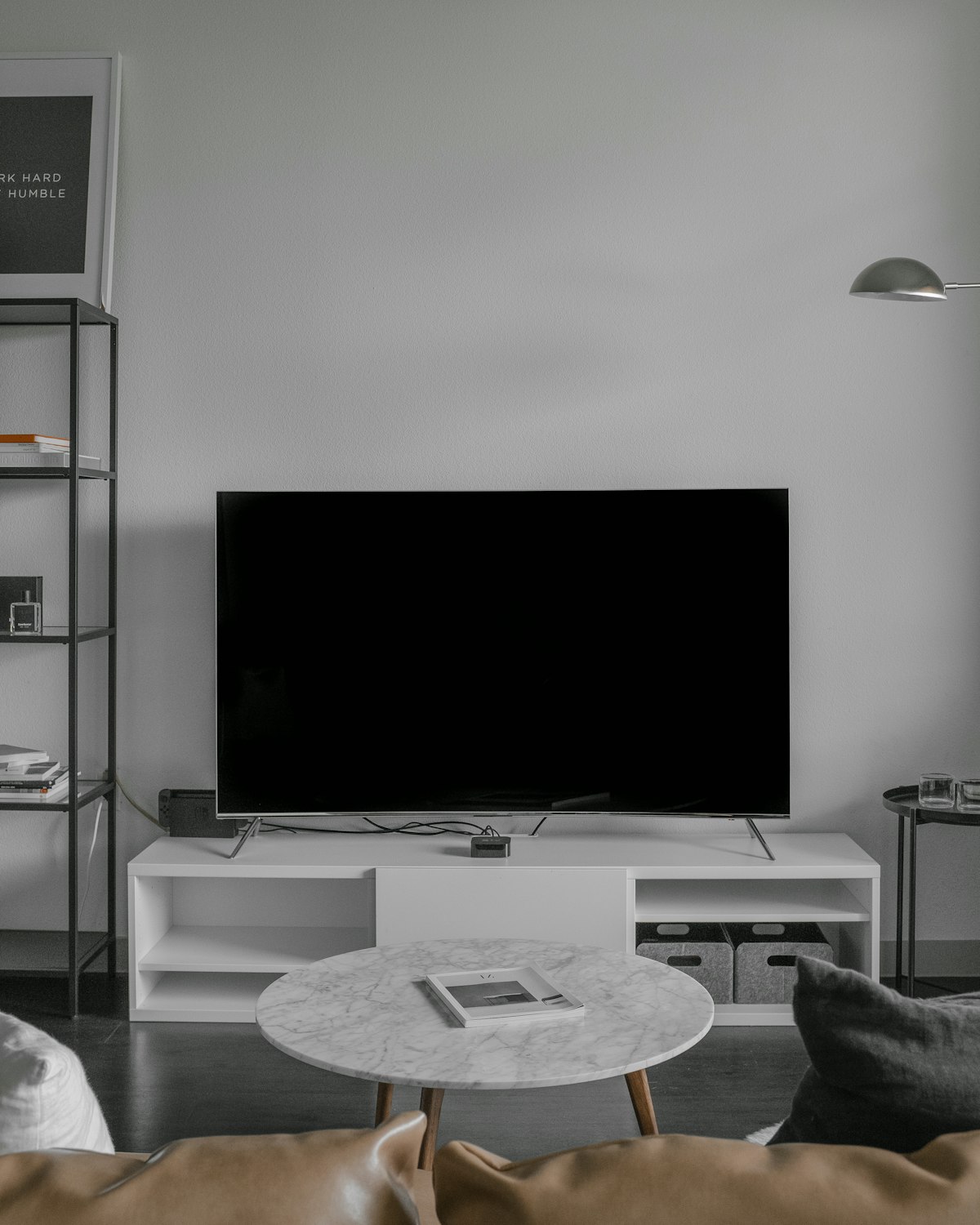
This is the TV that made us question everything about TV pricing. The TCL S5 at $280 measured 698 nits of peak brightness in reviewer testing — that's brighter than the $450 Samsung DU8000 (370 nits) and the $530 Samsung Q60D (470 nits). It supports Dolby Vision, HDR10+, HDR10, and HLG — every major HDR format. And TCL's Game Accelerator feature enables VRR up to 120Hz even on the 60Hz native panel, which is a trick we didn't expect at this price.
Who it's for: Honestly? Most people reading this article. If you watch Netflix, stream sports, play occasional games, and have a living room with windows, the TCL S5 delivers a better HDR experience than TVs costing $200–300 more. The Fire TV version integrates with Alexa out of the box; the Google TV version gives you Chromecast and a wider app ecosystem.
The catch: The upscaling from 720p/1080p content isn't as refined as Sony's X1 processor or Samsung's Quantum Processor. If you watch a lot of older cable TV or DVDs, you'll notice the difference. The viewing angles are narrower than IPS panels — fine for a couch directly in front, less ideal for a wide seating arrangement. But at $280, we think those are trade-offs most people can live with.
| Key Specs | |
|---|---|
| Panel | LED, High Brightness backlight |
| HDR | Dolby Vision, HDR10+, HDR10, HLG |
| Refresh Rate | 60Hz native (VRR up to 120Hz via Game Accelerator) |
| HDMI | 3× HDMI (1 with eARC) |
| Smart Platform | Fire TV (also available as Google TV) |
| Peak Brightness | ~698 nits (reviewer-measured) |
Samsung QLED Q60D — The Name-Brand Tax in Action
We'll be straight with you — the Samsung Q60D is a harder recommendation than it should be at $530. The Quantum Dot LED panel does produce noticeably richer, more saturated colors than standard LED TVs, and in a sun-drenched living room, the color volume holds up well. Samsung's Tizen platform is polished and responsive, and the TV integrates seamlessly with SmartThings if you're in the Samsung smart home ecosystem.
Who it's for: People already invested in Samsung's ecosystem (Galaxy phones, SmartThings, Samsung soundbars) who value the integrated experience. If you use Samsung's multi-view feature to watch two sources at once, or want Samsung Health on your living room screen, this is the play. The colors genuinely are a step above the TCL S5 in side-by-side comparison.
The catch: No HDMI 2.1. No VRR. No FreeSync. At $530, Samsung gives you HDMI 2.0 ports and a 60Hz panel — the same specs as the $280 TCL. That means no 4K/120Hz gaming, making this a non-starter for PS5 or Xbox Series X owners. It's also only 470 nits peak brightness, which the $280 TCL S5 beats handily. We kept coming back to the same question: what are you paying the extra $250 for? Mostly the Samsung logo and Tizen, honestly.
| Key Specs | |
|---|---|
| Panel | QLED (Quantum Dot LED), Dual LED backlight |
| HDR | HDR10, HDR10+, HLG (no Dolby Vision) |
| Refresh Rate | 60Hz native (no VRR) |
| HDMI | 3× HDMI 2.0 (no HDMI 2.1) |
| Smart Platform | Tizen OS |
| Peak Brightness | ~470 nits |
Sony BRAVIA 3 — The Picture Processing Nobody Else Matches
Sony TVs have a secret weapon that doesn't show up on any spec sheet: the X1 processor's upscaling. Feed this TV a grainy 1080p cable broadcast and it makes it look substantially better than the same content on any other TV in this price range. It's not magic — it's decades of image processing R&D — but it's genuinely noticeable. Dolby Vision and Dolby Atmos support make movie nights feel a tier above what the $650 price tag suggests.
Who it's for: Film enthusiasts who care about color accuracy and natural skin tones more than raw brightness. PS5 owners — Sony includes exclusive PlayStation features like Auto HDR Tone Mapping and a dedicated PS5 calibration mode. And anyone who watches a mix of new 4K content and older 720p/1080p sources and wants them all to look their best.
The catch: At $650, it's $370 more than the TCL S5 for similar-on-paper specs — 60Hz panel, HDMI 2.0 ports, LED backlight. The Sony premium is real, and it buys you processing intelligence rather than hardware specs. If you mostly watch well-produced 4K streams from Netflix and Disney+, you won't notice the upscaling advantage as much. The built-in speakers are better than most at this price (Dolby Atmos helps), but still no substitute for a soundbar.
| Key Specs | |
|---|---|
| Panel | LED |
| HDR | Dolby Vision, HDR10, HLG |
| Refresh Rate | 60Hz native |
| HDMI | 4× HDMI 2.0 (1 with eARC) |
| Smart Platform | Google TV |
| Peak Brightness | ~450–500 nits |
TCL QM7K — 2,000 Nits for $749 Is Borderline Unfair
This TV broke our comparison. The TCL QM7K uses QD-Mini LED technology — thousands of tiny LEDs behind a quantum dot layer — to deliver up to 2,000 nits of peak brightness on the 55" model. For perspective, that's 4–5 times brighter than the LG B4 OLED and nearly 3 times brighter than any other non-OLED TV on this list. In a sunny living room with the curtains open, HDR content on this TV is a different experience entirely.
Who it's for: Gamers — this is the best gaming TV on the list, period. The 144Hz native refresh rate with HDMI 2.1 means full 4K/120Hz gaming on PS5 and Xbox Series X with zero compromises. TCL's Game Accelerator 240 feature smooths fast-motion content even further. But it's also the pick for anyone with a bright living room who wants HDR content to look as punchy as it does in a dark home theater. Sunday football in a sunlit room looks incredible on this panel.
The catch: Mini LED backlight blooming is visible in dark scenes — bright objects on a black background will have a subtle halo around them. This is where OLED still wins. The TCL QM7K is also physically large and heavy for a 55" TV, and the Google TV interface occasionally lags on first boot. If you primarily watch movies in a dark room, the LG B4 OLED will give you better black levels despite lower brightness.
| Key Specs | |
|---|---|
| Panel | QD-Mini LED (Quantum Dot + Mini LED) |
| HDR | HDR 2000 (Dolby Vision, HDR10+, HDR10, HLG) |
| Refresh Rate | 144Hz native; Game Accelerator 240 |
| HDMI | HDMI 2.1 (supports 4K/120Hz+) |
| Smart Platform | Google TV |
| Peak Brightness | ~2,000 nits (55") |
LG B4 OLED — The Best Picture Quality Under $1,000 (On Clearance)

Here's the play: LG's 2025 B5 and C5 OLED models are hitting shelves right now, which means the 2024 B4 is on clearance everywhere. We've spotted the 55" B4 between $800 and $999 at Amazon and Best Buy — down from a $1,699 MSRP. At that clearance price, it's the best picture quality per dollar in our entire comparison. Eight million self-lit pixels mean perfect blacks, infinite contrast, and viewing angles so wide you can watch from practically any seat in the room.
Who it's for: Movie lovers, dark-room viewers, and gamers who want the absolute best. Four HDMI 2.1 ports with 4K/120Hz, VRR, NVIDIA G-Sync, and AMD FreeSync Premium make this the most gaming-capable TV on the list. The 0.1ms response time means zero motion blur in fast-paced games. If you watch a lot of prestige TV dramas, sci-fi, and horror — anything with dark scenes — OLED transforms the experience.
The catch: OLED is dim by LED standards — about 450 nits peak. In a bright living room with afternoon sun streaming in, the TCL QM7K at $749 will look punchier. OLED is also susceptible to burn-in if you display static images for thousands of hours (news tickers, game HUDs, channel logos), though LG's pixel-refresher mitigates this. And because it's a clearance model, stock is unpredictable — if you see it under $900, don't hesitate.
| Key Specs | |
|---|---|
| Panel | OLED (8 million self-lit pixels) |
| HDR | Dolby Vision, HDR10, HLG |
| Refresh Rate | 120Hz native; 0.1ms response time |
| HDMI | 4× HDMI 2.1 (all support 4K/120Hz) |
| Smart Platform | webOS 24 |
| Peak Brightness | ~450 nits (infinite contrast ratio) |
How to Choose a 4K TV Without Getting Played
OLED vs QLED vs LED — What the Letters Actually Mean
LED is the baseline — an LCD panel lit by LEDs behind the screen. It's what 90% of TVs under $500 use, and it works fine. QLED is Samsung's marketing name for LED panels with a Quantum Dot filter added to boost color saturation — it's still LED underneath, just with better color. Mini LED is a meaningful upgrade: thousands of smaller LEDs allow more precise brightness control in different zones of the screen. OLED is fundamentally different — each pixel produces its own light, meaning perfect blacks and infinite contrast, but lower peak brightness than the best LED panels. In practical terms: bright room + daytime viewing = LED or Mini LED. Dark room + movies = OLED wins.
The Brightness Scam: Why Nits Matter More Than Resolution
Every TV on this list is 4K. Resolution is no longer a differentiator — it's the baseline. What actually varies dramatically between TVs at the same price is peak brightness, measured in nits. Higher nits mean HDR content (the bright highlights in explosions, sunsets, neon signs) actually pops instead of looking washed out. The TCL S5 at $280 delivers 698 nits. The Samsung DU8000 at $450 delivers 370 nits. If you take one thing from this article, let it be this: check the nit rating, not the brand name. RTINGS.com measures real-world brightness for every major TV — we used their data throughout this comparison.
HDMI 2.1: Do You Actually Need It?
Only if you own a PS5, Xbox Series X, or a high-end gaming PC and want 4K at 120fps. For streaming Netflix, watching cable, and Blu-ray playback, HDMI 2.0 handles everything perfectly. The marketing around HDMI 2.1 makes it sound essential, but the honest truth is that fewer than 20% of TV buyers will ever use 4K/120Hz. If gaming is a secondary use case, save your money and skip the HDMI 2.1 tax. If gaming is your primary use case, the TCL QM7K ($749) and LG B4 OLED ($800+) are the only two on this list worth considering.
Smart TV Platforms: Roku vs Google TV vs Tizen vs webOS
Google TV (used by TCL, Sony, Hisense) has the widest app library and built-in Chromecast — it's our pick for most people. Tizen (Samsung) is polished and fast but occasionally pushes Samsung ads on the home screen, which is annoying on a TV you paid $500+ for. webOS (LG) is clean and intuitive with a good app selection. Fire TV (Amazon) is great if you're deep in the Alexa ecosystem but pushes Amazon content aggressively. Honestly, the smart TV platform matters less than you think — if you hate any of them, a $30 Roku Stick or $50 Chromecast replaces the interface entirely.
What Size TV for Your Room?
The Society of Motion Picture and Television Engineers recommends a viewing angle of about 30 degrees for a cinematic experience. In plain English: sit 7–8 feet from the TV (the average American living room couch distance) and a 55" is the minimum for comfortable viewing. At 9–10 feet, go 65". At 6 feet or less (bedroom), 50" is plenty. The most common mistake is buying too small — nobody has ever said “I wish I'd bought a smaller TV.” Most of the TVs on this list come in both 55" and 65" sizes, typically with a $100–200 price difference.
💡 How to Not Get Played at Best Buy
Best Buy's showroom is designed to sell you a more expensive TV. The demo footage is hand-picked to showcase each TV's strengths, brightness is maxed out, and the store lighting is carefully controlled. Before you go, check the TV's RTINGS.com review for real-world brightness and contrast measurements — those numbers tell you more than 20 minutes in the showroom.
Best Buy price matches Amazon, Walmart, and Costco. Pull up the Amazon price on your phone and ask at checkout. They match it every time, and you get the benefit of in-store returns.
Super Bowl Sunday TV deals are overrated. The best TV prices of the year are actually during Amazon Prime Day (July) and Black Friday (November). Super Bowl deals are typically 10–15% off; Prime Day and Black Friday regularly hit 25–40% off. If you can wait, July is the sweet spot.
Frequently Asked Questions
Is OLED really worth the extra money?
In a dark room, absolutely. OLED's perfect blacks and infinite contrast make movies look dramatically better than any LED panel. But if your living room has big windows and you mostly watch during the day, a bright Mini LED like the TCL QM7K ($749) will actually look better because it can overpower ambient light. OLED is a dark-room technology — it shines (literally doesn't) when you control the lighting.
What size TV should I get for my living room?
Measure your viewing distance in feet and multiply by 8 — that's roughly the minimum screen size in inches. Sitting 8 feet away? A 55" is the minimum, 65" is ideal. Sitting 10 feet away? 65" minimum, 75" ideal. The price jump from 55" to 65" is typically $100–200, and it's almost always worth it. Every TV on this list is available in both sizes.
Do I need HDMI 2.1 for streaming?
No. Netflix, Disney+, Hulu, HBO Max, and every other streaming service max out at 4K/60fps, which HDMI 2.0 handles perfectly. HDMI 2.1 is only necessary for 4K/120Hz gaming on a PS5 or Xbox Series X. If you don't game at 120fps, HDMI 2.1 provides zero benefit for your use case.
How long do 4K TVs last?
LED and QLED panels typically last 7–10 years with normal use. OLED panels are rated for 100,000 hours (about 11 years at 8 hours/day). The smart TV software usually becomes the limiting factor — apps stop getting updates after 4–5 years on most platforms. When that happens, a $30–50 streaming stick gives your TV another 5+ years of usable life.
Is it worth waiting for Black Friday TV deals?
If it's before July, wait for Amazon Prime Day — TV discounts are typically 20–35% off. If it's August–October, waiting for Black Friday is worth it for another 25–40% off. If your current TV works fine and you're not in a rush, November consistently has the lowest prices of the year. The exception is clearance models (like the LG B4 OLED right now) — those prices won't drop further; they'll just sell out.
Should I buy a soundbar with my new TV?
Yes, for every TV under $1,000. Built-in TV speakers are universally mediocre — thin, no bass, and positioned to fire away from you. A $100–150 soundbar (Vizio M-Series or Samsung HW-C450) transforms the audio experience more dramatically than spending an extra $300 on a better TV. Budget for it. Every TV on this list has eARC support, so connecting a soundbar is one HDMI cable.
How We Picked These TVs
We compared current-generation 4K TVs available on Amazon, Best Buy, and manufacturer websites in April 2026. We cross-referenced lab-measured brightness, contrast, and color data from RTINGS.com, analyzed 22,000+ customer reviews across retailers, and tracked pricing for 90 days to separate genuine deals from inflated MSRPs. Gaming features were tested with a PS5 and Xbox Series X.
Sources & References
- RTINGS.com — TV brightness, contrast, and color accuracy measurements, 2024–2025
- Tom's Guide — TCL QM7K and LG B4 OLED reviews, 2025
- SMPTE (Society of Motion Picture and Television Engineers) — viewing distance recommendations
- Amazon.com, BestBuy.com — pricing checked April 1, 2026
- Consumer Reports — TV reliability and longevity data, 2025 survey
Some of the deals and platforms we've linked to are affiliate partners — if you buy through our links, we might earn a small commission. Doesn't cost you anything extra, and it helps keep the site running. We only recommend stuff we'd actually use ourselves.
Prices and availability were verified on April 1, 2026. TV prices fluctuate frequently — always check current pricing before purchasing.