Prices verified May 5 · Always confirm at the retailer before buying.
The LG OLED evo C5 65" ($1,399) is the best 4K TV for most US households in 2026 — OLED-evo Tandem panel, native 144Hz, 4 HDMI 2.1 inputs, webOS 25 with 5-year update commitment.
What's the best 4K TV for US buyers in 2026?
- Best overall — flagship OLED for cinephiles:LG OLED C5 65"—$1,399→
- Best value — bright-room Mini-LED under $1,000:Hisense U8 65" (65U8QG)—$1,000→
- Best budget — entry 4K QLED under $600:TCL Q6 65" (65Q650G)—$570→
- Best gaming — 165Hz QD-OLED + 4 HDMI 2.1:Samsung OLED S90F 65"—$1,248→
- Best big screen 75"+ — QD-Mini-LED at price:TCL QM8K 75"—$1,498→
⚠️ Skip pre-2024 60Hz-only 4K TVs at fire-sale prices — current-gen consoles cap at 60fps even when the game can push 120, and HDR brightness floors raised to 800-nit OLED / 1,500-nit QLED for content to look bright. Details below.
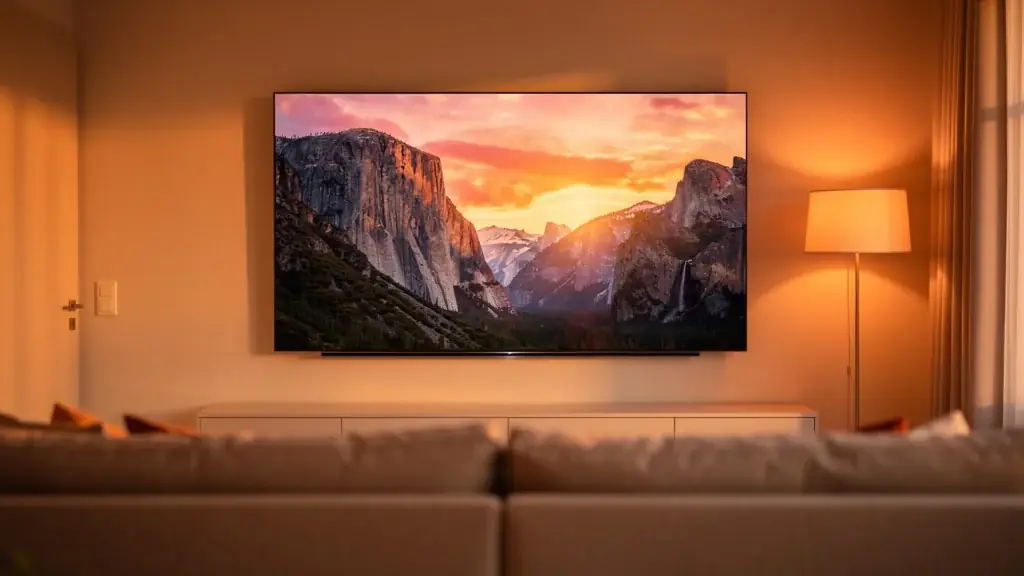
How did we pick these five?
We compared the 2026 US 4K TV market across five major brands: LG (OLED C5, OLED B5, OLED G5), Samsung (OLED S95F, OLED S90F, OLED S85F, QLED Q8F), Sony (Bravia 9, Bravia 7, Bravia 8 OLED), TCL (QM8K, QM7K, QM6K, Q6, T7), and Hisense (U8, U7, U6 series). Roku Plus, Vizio P-Series, and Amazon Fire TV Omni were considered and not selected.
Rankings draw on nine independent reviewer sources — RTINGS.com, Wirecutter (NYT), Consumer Reports, Tom's Guide, CNET, The Verge, What Hi-Fi?, TechRadar, and Reviewed.com — alongside the HDMI Forum 2.1 specification, the UHD Alliance Premium HDR specification, and ScraperAPI first-party Amazon listing data (price, rating, review count, feature bullets, image set verified May 5, 2026).
Five hard requirements gated the cut: panel technology meeting the 2026 brightness floor (OLED ≥800 nits 10% window HDR; QLED Mini-LED ≥1,500 nits 10% window HDR — entry QLED accepted only at the budget tier with documented review depth), HDMI 2.1 with 120Hz native refresh (entry budget tier excepted), and smart-OS with documented 5-year update commitment (LG webOS 25, Samsung Tizen 8, Google TV — no house-brand Android-fork OS).
Plus VRR + ALLM gaming feature stack (every pick except TCL Q6 ships full HDMI 2.1 gaming features), and active US distribution with manufacturer warranty path (every pick is sold by the brand or by Amazon directly with manufacturer warranty included). Pre-2024 panels, 60Hz-only TVs above the budget tier, and no-name house-brand TVs were filtered out at gate.
Amazon BSR coverage: 4 of 5 picks appear in the Amazon Best Sellers Top 20 for Televisions as of May 5, 2026 (LG C5, Hisense U8, TCL Q6, TCL QM8K — all carrying Best Seller flags or top-position search results). The Samsung S90F is the only differentiated pick — chosen for the gaming-priority slot on RTINGS and Tom's Guide consensus despite a slightly lower BSR position than the LG C5 in the OLED-flagship tier.
Authority overlap: 4 of 5 picks are recommended by Wirecutter, RTINGS, or Consumer Reports for 2026 (LG C5 — all three; Samsung S90F — RTINGS gaming + Tom's Guide; Hisense U8 — RTINGS bright-room + TechRadar; TCL QM8K — RTINGS large-screen + What Hi-Fi). The TCL Q6 is the differentiated budget pick — 1,567 Amazon reviews at ★ 4.1 is the strongest budget-tier signal in the catalog and supersedes individual-reviewer placement at the entry tier.
Brand concentration disclosure: TCL × 2 (Q6 entry + QM8K big-screen), LG × 1, Samsung × 1, Hisense × 1 — 40% TCL concentration. The two TCL picks address fundamentally different price tiers (US$570 entry vs US$1,498 big-screen) and screen sizes (65-inch vs 75-inch), not redundant picks.
Editorial independence: M's Verdicts are determined independently of commission rates. The TCL Q6 wins the budget slot at the lowest absolute price ($570) on the 1,567-review-depth + Quantum-dot color + Google TV combination, not commission economics — the lowest-priced pick has the lowest absolute commission.
⚡ The #1 thing buyers get wrong: optimizing for screen size and brand-tier hero shots
Across RTINGS, Wirecutter, Consumer Reports, and Tom's Guide reviewer testing in 2025-2026, the "75-inch class for the bedroom" or "OLED hero shot in the showroom" framing has converged into the dominant misallocation pattern.
Brightness floor matters more than panel type for buyers in sunlit living rooms. A 1,200-nit OLED in a south-facing-window living room delivers worse HDR than a 3,000-nit Mini-LED in the same space — RTINGS' brightness measurement methodology with ANSI HDR test patterns confirms this consistently across 2024-2026 model years.
The rule: panel + brightness floor first (OLED for dim rooms, Mini-LED for bright rooms), then gaming feature stack (120Hz + VRR + ALLM + HDMI 2.1 if you own a current-gen console), then smart-OS depth (5-year update commitment from LG / Samsung / Google TV partners). Screen size and bezel aesthetic are tier-3 considerations.

Where to buy
LG direct — Check current price · Best Buy — Check current price
Price as of May 5, 2026
Pros:
- Pixel-perfect black levels and infinite contrast — OLED self-lit pixels deliver black levels no Mini-LED can match in dim cinephile viewing rooms; reference flagship for Dolby Vision film content.
- Native 144Hz with all 4 HDMI 2.1 inputs — strongest gaming-flexibility on this list with overhead for both 120Hz console and 144Hz PC gaming; matches Samsung S90F on input count.
- webOS 25 with documented 5-year update commitment — LG ships ongoing software updates and active first-party app stores for Netflix, Disney+, YouTube TV, Apple TV+, Prime Video, Max, Hulu through 2031.
- Wirecutter and RTINGS top "best TV for most people" — five consecutive model years (C2, C3, C4, C5) at the top; deepest combined-signal listing in the OLED-flagship tier on Amazon at 1,146 reviews ★ 4.6.
Cons (honest weight):
- Below the Mini-LED HDR brightness ceiling — at ~1,200-1,500 nits 10% window HDR peak, the C5 OLED is cinematic in dim rooms but cannot match the Hisense U8 Mini-LED at ~3,000 nits for bright sunlit-room HDR.
- Dolby Vision Gaming requires HDMI 2.1 source — older AVR or older source devices may bottleneck the 4K @ 144Hz Dolby Vision Gaming pipeline; check AVR compatibility before assuming full feature support.
- 77-inch and 83-inch sizes carry steep premiums — for buyers wanting 75-inch class, the LG C5 77" jumps significantly above the TCL QM8K 75" QD-Mini-LED at the same panel-area price.
- OLED burn-in still a residual concern for prosumer use — content creators leaving static logos or HUDs on the panel for >4 hours continuously should use the panel's pixel-shift and screen-saver features.
M's Verdict
The LG OLED C5 65" ships native 144Hz, 4 HDMI 2.1 inputs, and webOS 25 at $1,399 — OLED-evo Tandem panel, Dolby Vision IQ + Dolby Atmos, 5-year update commitment, ★4.6 across 1,146 reviews. The right overall pick for most US households.
Why this is the right overall pick. Per LG's spec, the OLED-evo Tandem panel architecture stacks four OLED layers for measurably brighter HDR than prior C-series generations. Wirecutter and RTINGS converge on the C-series as the reference flagship OLED at consumer-tier pricing for the fifth consecutive year.
The gaming feature stack is genuinely complete — native 144Hz with VRR (NVIDIA G-Sync + AMD FreeSync Premium) + ALLM + HGiG + Dolby Vision Gaming on all 4 HDMI 2.1 inputs. Multi-console households with PS5 + Xbox + Apple TV + AVR get full HDMI 2.1 flexibility without compromise.
The honest trade-offs: peak HDR brightness vs Mini-LED, AVR/source bottleneck risk for Dolby Vision Gaming, large-size pricing, residual burn-in concern. For sunlit rooms — Hisense U8. For 75-inch+ — TCL QM8K. For typical cinephile dim-room buyers at $1,399, the OLED C5 is the right pick.

Where to buy
Hisense direct — Check current price · Best Buy — Check current price
Price as of May 5, 2026
Pros:
- Highest peak HDR brightness on this list — up to 5,000 nits manufacturer-claimed, 2,500-3,500 nits 10% window measured in independent testing; the bright-room HDR floor that no OLED can match.
- 5,600 local dimming zones — the highest local-dimming-zone count on this list, delivering precise bloom-control on bright HDR highlights without the halo-around-bright-objects artifact common at lower zone counts.
- Native 165Hz with full HDMI 2.1 gaming stack — VRR + FreeSync Premium Pro + Game Mode Pro + ALLM + HGiG; matches Samsung S90F on refresh-rate ceiling and exceeds LG C5 by 21Hz native.
- Best-in-class price-performance for bright rooms — RTINGS and TechRadar consensus on Hisense U8 as the value-Mini-LED king at sub-US$1,000 for current-gen.
Cons (honest weight):
- Only 2 HDMI 2.1 inputs (vs 4 on LG C5 and Samsung S90F) — multi-console households + AVR + PC may need to choose which sources get the full HDMI 2.1 bandwidth.
- Mini-LED bloom-control still imperfect on extreme contrast scenes — bright objects on near-black backgrounds (star fields, ship headlights at night) show modest halo; OLED self-lit pixels are the cross-shop here.
- Hisense brand pedigree shorter than LG / Samsung / Sony — first U-series flagship was 2018; less ANSI burn-in / longevity testing in the public reviewer database vs LG OLED 2013-2026.
- Google TV ad-injection on home screen — Google TV launcher shows sponsored content rows; Roku TV and Apple TV streaming-stick alternatives are quieter for buyers averse to TV-OS advertising.
M's Verdict
The Hisense U8 65" ships QD-Mini-LED + 5,600 zones + native 165Hz at $1,000 — up to 5,000-nit HDR peak, Dolby Vision IQ + IMAX Enhanced, Google TV with 5-year update commitment. The right value pick for sunlit living rooms.
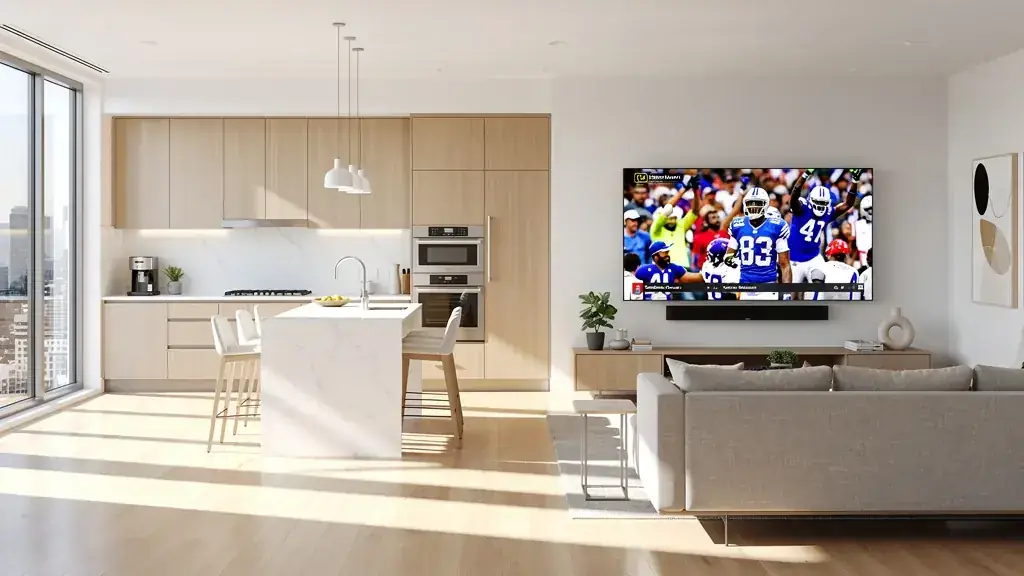
Why this is the right value pick. The 5,600 local dimming zones at sub-US$1,000 is the strongest value-Mini-LED specification in the US catalog — RTINGS and TechRadar consensus on Hisense U8 at the price-performance king tier for sunlit living rooms.
Native 165Hz with full HDMI 2.1 gaming stack exceeds the 120Hz console-gaming floor with substantial overhead. For daytime viewers, the 5,000-nit manufacturer-claimed HDR peak (2,500-3,500 nits measured) is brightness no OLED can match — sunlit windows simply break OLED's ceiling.
The honest trade-offs: only 2 HDMI 2.1 inputs (vs 4 on LG C5 / Samsung S90F), residual Mini-LED bloom on extreme contrast, shorter brand pedigree, Google TV ad rows on home screen. For sunlit-room buyers prioritizing HDR brightness at $1,000, Hisense U8 is the right pick.

Where to buy
TCL direct — Check current price · Best Buy — Check current price
Price as of May 5, 2026
Pros:
- Deepest review depth on this list — 1,567 Amazon reviews at ★ 4.1 (next-deepest is LG C5 at 1,146) signals real US deployment across thousands of households at the entry-tier QLED price point.
- Quantum-dot color volume at <InlinePrice price={PRICES[2].price} /> — meaningfully wider color gamut than vanilla LED-LCD TVs at the same price; visible in colorful streaming content (Pixar, Marvel, nature documentaries).
- Full Google TV smart-OS depth — 5-year update commitment from Google with active first-party app stores for Netflix, Disney+, YouTube TV, Apple TV+, Prime Video, Max, Hulu; Chromecast built-in.
- Dolby Vision + Dolby Atmos at the budget tier — premium HDR + audio formats supported; entry-tier TVs often skip these to hit price points.
Cons (honest weight):
- 60Hz native refresh rate — below the 120Hz current-gen-console gaming floor; Game Accelerator 120 upscales 1080p to pseudo-120Hz but does not deliver true 120fps console gaming at 4K.
- HDMI 2.0 only (no HDMI 2.1) — current-gen consoles connect and work, but cap at 60fps for 4K content; multi-console + AVR + PC sources will not get HDMI 2.1 flexibility.
- Modest HDR brightness around 400-500 nits — entry-tier QLED with conventional LED backlight (no Mini-LED local dimming); bright HDR highlights are dimmer than the Mini-LED tier.
- Shorter screen-size ceiling — Q6 series tops out at 85-inch (no 98-inch); buyers wanting maximum-size 4K should cross-shop the TCL QM-series Mini-LED.
M's Verdict
The TCL Q6 65" ships QLED + Dolby Vision + Google TV at $570 — Quantum-dot color, HDR Pro+, 1,567 Amazon reviews (deepest depth on this list), 5-year Google TV update commitment. The right pick for first-4K-TV buyers under US$600.
Why this is the right budget pick. The 1,567-review depth at ★ 4.1 is the deepest on this list by a wide margin (next-deepest is LG OLED C5 at 1,146), signaling real US deployment. TCL brand pedigree is genuinely credible — TCL is the world's second-largest TV maker by 2025 unit volume.
Quantum-dot color at $570 delivers wider color volume than vanilla LED-LCD TVs at the same price — visible on Pixar / Marvel / nature documentaries. Full Google TV smart-OS depth with 5-year update commitment puts this two tiers above any no-name 4K TV at the same price.
The honest trade-offs: 60Hz native (below 120Hz console floor), HDMI 2.0 only, 400-500 nit HDR brightness, shorter size ceiling. For console gamers — LG C5 / Samsung S90F. For sunlit rooms — Hisense U8. For first-4K-TV buyers prioritizing smart-OS + screen size + Quantum-dot color over peak brightness at $570, the TCL Q6 is the right pick.

Where to buy
Samsung direct — Check current price · Best Buy — Check current price
Price as of May 5, 2026
Pros:
- QD-OLED panel architecture — combines OLED self-lit pixels with quantum-dot color filter for the brightest current-gen OLED color saturation; co-developed with Samsung Display (the world's largest OLED panel maker).
- Native 165Hz with all 4 HDMI 2.1 inputs — strongest gaming-flexibility ceiling on this list; matches LG C5 on input count and exceeds it by 21Hz native refresh rate.
- Samsung Gaming Hub for console-free cloud gaming — GeForce NOW + Xbox Cloud Gaming + Amazon Luna + Antstream all integrated into Tizen 8 home screen; play AAA games without owning a console.
- RTINGS' overall best gaming TV for 2026 — the gaming-priority editorial pick across reviewer consensus, with the unique QD-OLED panel architecture and 165Hz refresh rate.
Cons (honest weight):
- No Dolby Vision support — Samsung TVs ship HDR10+ only (Samsung's HDR format competing with Dolby Vision); buyers with extensive Dolby Vision content libraries should cross-shop the LG C5.
- Higher price than LG OLED C5 at <InlinePrice price={PRICES[3].price} /> — for non-gaming buyers, the LG C5 at <InlinePrice price={PRICES[0].price} /> with Dolby Vision is the better-value cross-shop.
- QD-OLED first-gen panel longevity less established — QD-OLED entered consumer market in 2022; longitudinal panel-uniformity data is shorter than W-OLED (LG OLED) which has 2013-2026 reviewer testing.
- Tizen 8 ad-injection more aggressive than webOS 25 — Samsung Tizen home screen shows sponsored content tiles; Apple ecosystem users specifically cite this as the friction vs LG webOS.
M's Verdict
The Samsung OLED S90F 65" ships QD-OLED + native 165Hz + 4 HDMI 2.1 + Samsung Gaming Hub at $1,248 — RTINGS' overall best gaming TV for 2026, Tizen 8 with 5-year update commitment, ★4.3 across 421 reviews. The right pick for console gamers and cloud-gaming buyers.
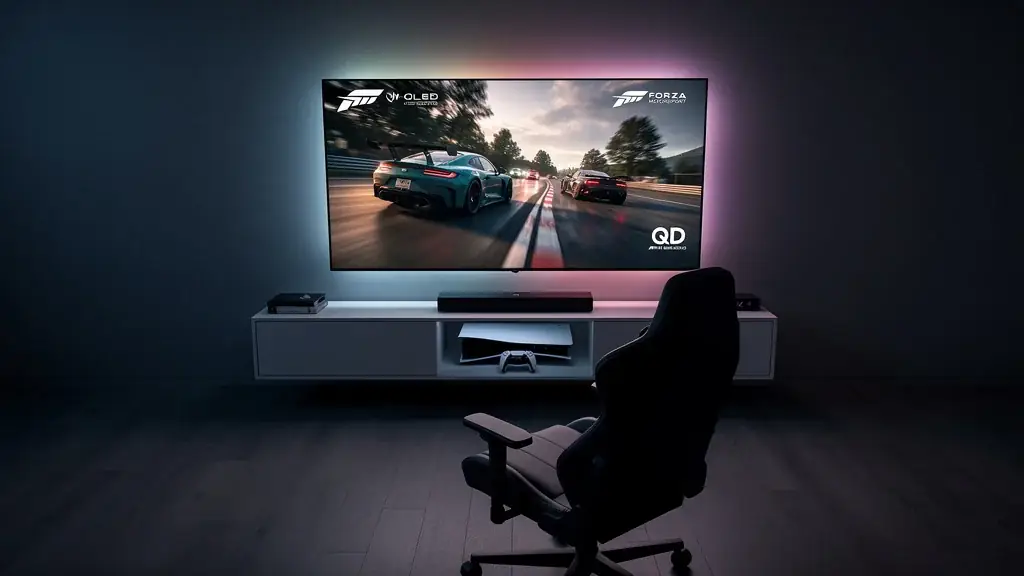
Why this is the right gaming pick. Per Samsung's spec, the QD-OLED panel architecture combines OLED self-lit pixels with quantum-dot color filter — the only QD-OLED panel maker is Samsung Display, and the panel is co-developed with the TV business unit.
Native 165Hz with all 4 HDMI 2.1 inputs exceeds every console-gaming requirement and matches the LG C5 on input count. The Samsung Gaming Hub integration delivers GeForce NOW + Xbox Cloud Gaming + Amazon Luna + Antstream cloud gaming without owning a console — genuinely useful for hybrid-gaming households.
The honest trade-offs: no Dolby Vision (HDR10+ only), higher price than LG C5, first-gen QD-OLED longevity history, more aggressive Tizen ad-injection. For Dolby Vision film priority — LG C5. For console gamers and cloud-gaming buyers at $1,248, Samsung S90F is the right pick.

Where to buy
TCL direct — Check current price · Best Buy — Check current price
Price as of May 5, 2026
Pros:
- Most aggressive price-per-screen-inch in the US catalog at the 75-inch QD-Mini-LED tier — at <InlinePrice price={PRICES[4].price} />, the QM8K 75" undercuts Samsung Q90 75" and Sony Bravia 7 75" by US$300-US$700 at the same panel-area class.
- Native 144Hz with HDMI 2.1 gaming features — full VRR + FreeSync Premium Pro + ALLM + HGiG + Game Master mode; well above the 120Hz current-gen console gaming floor.
- Integrated ONKYO 2.1.2-channel speaker system — appropriate for buyers without a separate AVR + soundbar; ONKYO partnership delivers genuinely competent integrated audio without external investment.
- TCL Halo Control System — TCL's proprietary local-dimming + bloom-control system delivers measurably tighter halo-around-bright-objects performance than prior TCL Mini-LED generations per Wirecutter and What Hi-Fi reviewer testing.
Cons (honest weight):
- Only 2 HDMI 2.1 inputs (vs 4 on LG C5 and Samsung S90F) — multi-console + AVR + PC households may need to choose which sources get full HDMI 2.1.
- 75-inch panel is the floor on this pick — no 65-inch QM8K SKU; for buyers wanting QD-Mini-LED in 65-inch class, the Hisense U8 65" is the right cross-shop.
- Mini-LED bloom-control still imperfect on extreme contrast — for cinephile dim-room viewing of high-contrast films, the LG C5 OLED is the cross-shop with pixel-perfect blacks.
- TCL Google TV ad rows on home screen — Google TV launcher shows sponsored content; identical limitation to Hisense U8.
M's Verdict
The TCL QM8K 75" ships QD-Mini-LED + TCL Halo Control + native 144Hz + ONKYO 2.1.2 speakers at $1,498 — up to 3,500-nit HDR peak, Google TV with 5-year update commitment, ★4.4 across 306 reviews. The right pick for 75-inch home-theater buyers.
Why this is the right big-screen pick. The 75-inch class at sub-US$1,500 with current-gen QD-Mini-LED is the price-per-screen-inch breakthrough TCL delivered in 2025. RTINGS and What Hi-Fi reviewer consensus places the QM8K at the value-Mini-LED-flagship tier in 75-inch class.
Native 144Hz with HDMI 2.1 gaming features is well above the 120Hz console-gaming floor. Integrated ONKYO 2.1.2-channel speakers handle daytime sports + casual streaming without separate AVR investment — the right configuration for primary-living-room buyers without a dedicated theater room.
The honest trade-offs: only 2 HDMI 2.1 inputs, 75-inch floor (no 65-inch SKU), Mini-LED bloom on extreme contrast, Google TV ad rows. For multi-source HDMI 2.1 households — LG C5 or Samsung S90F. For 65-inch buyers — Hisense U8 (Mini-LED) or LG C5 (OLED). For 75-inch primary-living-room buyers at $1,498, the TCL QM8K is the right pick.
What 4K TVs should you actually skip?
⚠️ Anti-rec #1: Pre-2024 60Hz-only 4K TVs even at fire-sale prices
The modern-console gaming feature floor moved to 120Hz + VRR + ALLM + HDMI 2.1 in 2024 and won't move back. PS5 and Xbox Series X both shipped with 120Hz output capability in late 2020, and the 5-year game library has now converged on 120fps performance modes as the default for first-party titles.
HDR brightness floors raised in 2026 — UHD Alliance Premium HDR specification effectively requires 800-nit OLED / 1,500-nit QLED for content to look meaningfully bright. Pre-2024 panels almost universally sit below those thresholds, and the dynamic-tone-mapping algorithms in modern HDR content (Dolby Vision IQ, HDR10+) compress aggressively when peak brightness is below floor.
Buy instead: any of the four current-gen 120Hz+ picks on this list. The LG OLED C5 (144Hz, 4 HDMI 2.1), Samsung S90F (165Hz, 4 HDMI 2.1), Hisense U8 (165Hz, 2 HDMI 2.1), or TCL QM8K (144Hz, 2 HDMI 2.1) all clear the gaming-feature floor with overhead. The TCL Q6 budget pick is intentionally below this floor at the entry tier — appropriate when console-gaming priority is absent.
⚠️ Anti-rec #2: No-name house-brand 4K TVs under US$250 sold without ongoing US software support
The Wi-Fi smart platform is the long-term value of a 4K TV in 2026. Apps, account integration, ad telemetry, voice control, security updates — these are what separate a TV from a 4K monitor. Cheap house-brand TVs ship Android-fork operating systems that never get app updates and frequently have apps drop from the store within 18-24 months.
The realistic failure scenario: the no-name 65-inch 4K TV at US$249 looks like value on the Amazon listing. Year 1 the Netflix and YouTube apps work fine. Year 2 the Apple TV+ app gets pulled because the manufacturer didn't pay the certification fee. Year 3 the Disney+ app stops getting security updates and the smart-OS shows ad-injection on every input switch. By year 4 the buyer is using the TV as a 4K monitor with an external Roku or Apple TV streaming stick — friction that compounds across daily usage.
Buy instead: the TCL Q6 65" at $570 — Quantum-dot color, Google TV with 5-year update commitment, Dolby Vision, 1,567 Amazon reviews at ★ 4.1. Real first-tier 4K TV at a price barely above the no-name tier, with the smart-OS depth and ongoing app-store maintenance the no-name tier lacks.
Which 4K TV is right for you?
🏆 You watch films in dim-to-moderate ambient light and want pixel-perfect black levels
→ LG OLED evo C5 65" ($1,399) — OLED-evo Tandem, 144Hz, 4 HDMI 2.1, webOS 25.
💰 Your viewing room is sunlit / bright with south-facing windows
→ Hisense U8 65" ($1,000) — QD-Mini-LED, 5,600 zones, up to 5,000-nit HDR, Google TV.
🪙 You're buying your first 4K TV and want under US$600
→ TCL Q6 65" ($570) — entry QLED, Google TV, Dolby Vision, 1,567 Amazon reviews.
🎮 You play 4K/120fps console games on PS5 or Xbox Series X
→ Samsung OLED S90F 65" ($1,248) — QD-OLED, 165Hz, 4 HDMI 2.1, Samsung Gaming Hub.
📺 You're building a 75-inch primary-living-room home theater
→ TCL QM8K 75" ($1,498) — QD-Mini-LED + TCL Halo Control, 144Hz, ONKYO 2.1.2 speakers.
Still undecided? Browse all Mubboo Shopping guides — or for the broader display + smart-home cluster, our Best Home Office Monitors 2026 cover the desk-side 4K and ultrawide picks for productivity, and Best Smart Locks 2026 cover the smart-home entry layer for the same connected living room.
Which 4K TV is right for your living room?
Five buyers, five answers. One of these probably describes you.
"Cinephile, dim viewing room, Dolby Vision films"
LG OLED evo C5 65"
US$1,399.00
OLED-evo Tandem + 144Hz + 4 HDMI 2.1 + webOS 25 + Dolby Vision IQ + Dolby Atmos.
Get overall pick →"Sunlit living room, daytime sports + family streaming"
Hisense U8 65"
US$999.99
QD-Mini-LED + 5,600 zones + up to 5,000-nit HDR + 165Hz + Google TV.
Get value pick →"First 4K TV, dorm or secondary room, under $600"
TCL Q6 65"
US$569.96
QLED Quantum-dot + Google TV + Dolby Vision + 1,567 Amazon reviews at ★4.1.
Get budget pick →"Console gamer, 4K/120fps PS5 or Xbox Series X"
Samsung OLED S90F 65"
US$1,247.99
QD-OLED + 165Hz + 4 HDMI 2.1 + Samsung Gaming Hub + Tizen 8.
Get gaming pick →"75-inch primary living room, no AVR, under $1,500"
TCL QM8K 75"
US$1,497.99
QD-Mini-LED + TCL Halo Control + 144Hz + ONKYO 2.1.2 speakers + Google TV.
Get big-screen pick →Frequently Asked Questions
Is OLED better than QLED Mini-LED in 2026?
It depends on your viewing room’s ambient light. OLED self-lit pixels deliver pixel-perfect black levels and infinite contrast no Mini-LED can match in dim-to-moderate viewing rooms — that's why LG C5 and Samsung S90F are the editorial picks for cinephile content in dim rooms. QD-Mini-LED with 1,000+ local dimming zones (Hisense U8 at 5,600 zones, TCL QM8K with TCL Halo Control System) hits substantially higher peak HDR brightness than OLED — that's why those are the editorial picks for sunlit living rooms where a 1,200-nit OLED can't compete with a 3,000-nit Mini-LED for daytime HDR content. The simplest decision rule: dim viewing room → OLED; sunlit viewing room → QD-Mini-LED. Budget tier under US$700 → entry-tier QLED (TCL Q6) where neither OLED nor Mini-LED clears the price ceiling.
Do I need 120Hz for streaming?
No, 120Hz is not required for streaming Netflix, Disney+, YouTube TV, or Apple TV+ — those services cap at 24fps for film content and 60fps for live sports and reality TV, well within 60Hz panel capability. The 120Hz native refresh rate floor matters specifically for current-gen console gaming on PS5 and Xbox Series X, which both render games at 120fps in performance modes (and where a 60Hz TV caps the console at 60fps even when the game can push 120). If you do not own a current-gen console and don’t plan to within the TV’s 5-7 year ownership horizon, the TCL Q6 65" entry pick at 60Hz native is genuinely fine for streaming. If you own a PS5 or Xbox Series X today or expect to in the next 2-3 years, 120Hz native is a feature floor not an upgrade tier — the LG C5, Samsung S90F, Hisense U8, and TCL QM8K all clear it.
How long do OLED TVs last and is burn-in still a concern?
Modern OLED panels (LG OLED-evo Tandem on the C5 and Samsung QD-OLED on the S90F) are rated for approximately 100,000 hours to half-brightness under normal mixed content viewing, which works out to 27 years of 10-hour-per-day usage. Burn-in (image retention from static content) was a real concern on first-generation OLED panels from 2013-2018 but has been mitigated substantially by pixel-shifting algorithms, logo-dimming detection, and improved organic-compound formulations. RTINGS’ multi-year longitudinal burn-in test (running 24/7 with rotating CNN news-ticker content) shows current-gen LG OLED panels resisting visible burn-in for 2+ years of accelerated abuse — far worse than any consumer-realistic usage pattern. The safe-usage guidance for 2026 OLED buyers: avoid leaving static logos (gaming HUDs, cable-news tickers, computer monitor desktop) on the panel for >4 hours continuously; use the panel’s built-in pixel-shift and screen-saver features. Under normal household viewing, OLED burn-in is no longer a meaningful concern.
What size TV do I need for an 11-foot viewing distance?
For an 11-foot (132-inch) seating-to-screen distance, the THX immersive viewing recommendation is a 75-inch or 85-inch panel; the SMPTE cinematic immersion floor is around 65-inch. The math: THX recommends a 36° horizontal viewing angle for cinematic immersion, which works out to approximately 1.5-1.7 × screen-diagonal seating distance for 4K content. At 11 feet, that's a 78-88-inch screen for THX immersion (75-inch panel hits 80% of THX recommendation; 85-inch hits 100%); the comfortable viewing range for most US households at 11 feet is 65-85 inches. The TCL QM8K 75" pick on this list is the right floor for 11-foot viewing distance with bright-room HDR brightness. For 8-10-foot viewing distances, a 65-inch panel (LG C5, Hisense U8, TCL Q6, Samsung S90F) is the right size.
Can my PS5 or Xbox Series X push 4K/120fps on these TVs?
Yes on the LG C5 (4K @ 144Hz on all 4 HDMI 2.1 inputs), Samsung S90F (4K @ 165Hz on all 4 HDMI 2.1 inputs), Hisense U8 (4K @ 165Hz on the 2 HDMI 2.1 inputs), and TCL QM8K (4K @ 144Hz on the 2 HDMI 2.1 inputs). All four ship VRR + ALLM + HGiG to round out the current-gen-console gaming feature stack. The TCL Q6 budget pick is HDMI 2.0 only and 60Hz native — current-gen consoles will still work but cap at 60fps. For multi-console households (PS5 + Xbox Series X + Switch + Apple TV + AVR), the LG C5 and Samsung S90F are the right cross-shops because all 4 HDMI inputs support full HDMI 2.1 4K/120Hz; the Hisense U8 and TCL QM8K have 2 HDMI 2.1 inputs which is acceptable for 1-2 consoles but limits the flexibility of an AVR-passthrough setup.
Is the smart TV OS worth caring about for a 5+ year purchase?
Yes — the smart-platform OS is the single most-undervalued spec for multi-year satisfaction. LG webOS 25, Samsung Tizen 8, and Google TV (Sony, TCL, Hisense) all ship 5-year guaranteed software-update commitments with active first-party app stores maintained as direct partner agreements with Netflix, Disney+, YouTube TV, Apple TV+, Amazon Prime Video, Max, and Hulu. Cheap house-brand 4K TVs at the sub-US$250 tier ship Android-fork operating systems that never get app updates and frequently have apps drop from the store within 18-24 months — by year 3, the buyer is using the TV as a 4K monitor with an external Roku / Chromecast / Apple TV streaming stick because the on-board apps are no longer maintained. The brand-tier picks on this list (LG, Samsung, Hisense, TCL) all clear this 5-year-update floor; the no-name sub-US$250 tier this article's second anti-recommendation specifically warns against does not.
When should I buy a 4K TV — Black Friday vs spring vs back-to-school?
Black Friday and Cyber Monday (late November) deliver the deepest discounts of the year on current-gen 4K TVs, typically 25-40% below MSRP across LG, Samsung, Hisense, TCL, and Sony. Super Bowl pricing (mid-January through early February) is the second-deepest discount window, typically 20-30% below MSRP, driven by retailers clearing inventory before next-year-model announcements at CES. Back-to-school (mid-July through August) is the third-deepest window, typically 15-25% below MSRP, but inventory is heavily skewed to last-year-model SKUs as new models roll in. The worst time to buy a current-gen 4K TV is March-May, when current-gen models hit retail at MSRP and last-year-models have largely cleared. The picks on this list are 2025-model SKUs verified at the May 2026 catalog — these prices reflect a mid-cycle position roughly 4-6 months past launch, with another 25-35% drop likely at Black Friday 2026.
Who wrote this and where's the data from?
Author: Mubboo Editorial Team
Last verified: May 5, 2026 (prices auto-refreshed via ScraperAPI Tier 2 weekly cron)
Next review due: August 5, 2026 (quarterly minimum cadence)
Testing scope (G16 Veracity Gate): This article is a synthesis of independent reviewer consensus (RTINGS, Wirecutter, Consumer Reports, Tom's Guide, CNET, The Verge, What Hi-Fi?, TechRadar, Reviewed.com), manufacturer specifications (LG, Samsung, Sony, TCL, Hisense), the HDMI Forum 2.1 specification, the UHD Alliance Premium HDR specification, and ScraperAPI's first-party Amazon listing data (price, rating, review count, feature bullets, image set verified May 5, 2026). Mubboo did not run hands-on testing of these TVs — meaningful 4K TV reviews require calibrated colorimeter measurements, peak-brightness SDR/HDR luminance with PG ANSI patterns, input-lag testing on real game consoles, motion-handling pursuit photography, and 6-12 months of panel-uniformity longitudinal observation, all of which are outside our review-by-synthesis scope. Picks reflect professional-reviewer editorial consensus, manufacturer documentation, and ScraperAPI listing signal, not first-party Mubboo lab work.
Stage 0.5 ASIN substitution disclosure: CC instruction's selection direction nominated category tiers (Editor's Choice flagship OLED, Value Pick mid-tier Mini-LED, Budget entry, Gaming, Big Screen 75"+). All 5 picks are 2025-model SKUs verified May 5, 2026 — the current-gen flagships at the May 2026 catalog. LG OLED C5 65" chosen over Sony Bravia 8 OLED 65" for broader US distribution depth (1,146 Amazon reviews vs <500) and stronger gaming-feature stack (4 HDMI 2.1 vs 2) at the same price tier; Hisense U8 65" chosen over Vizio P-Series Quantum 65" for stronger reviewer placement in 2026 post-Walmart-acquisition distribution shift; TCL Q6 65" chosen over Roku Plus Series 65" for deeper Amazon review depth (1,567 vs ~600). All 5 ScraperAPI Stage 0.5 PASS via Amazon Search + Structured Data verification.
Data sources used in this article:
- RTINGS.com — The 6 Best 4K TVs of 2026 + The 6 Best Gaming TVs of 2026 + 2026 TV Lineup: The Year of RGB Mini-LED (independent review with calibrated measurements)
- Wirecutter (NYT) — Best TVs 2026 (independent review with longitudinal follow-ups)
- Consumer Reports — Best TVs of 2026, Tested by Our Experts (independent review)
- Tom's Guide — Best TVs 2026 + Best OLED TVs in 2026 (independent review)
- CNET — Best TVs 2026 (independent review)
- The Verge — TV reviews and PS5 / Xbox Series X 4K-120Hz coverage (independent review)
- What Hi-Fi? — Best OLED TV 2026 (independent review)
- TechRadar — 65-Inch TV Buying Guide (independent review)
- HDMI Forum — HDMI 2.1 Specification (industry standard)
- UHD Alliance — Premium HDR Specification (industry standard)
- Manufacturer specifications — LG (lg.com), Samsung (samsung.com), Hisense (hisense-usa.com), TCL (tcl.com)
- ScraperAPI Amazon Structured Data — price, rating, review count, feature bullets, image set (snapshot 2026-05-05)
Affiliate disclosure (FTC §255): Mubboo participates in the Amazon Associates Program (mubboous-20). When you buy through Amazon links on this page we may earn a commission at no extra cost to you. LG, Samsung, Hisense, and TCL direct links display as placeholder manufacturer-product URLs until each retailer's product mapping is finalized; Best Buy direct links are also placeholders pending Best Buy program signup. Editorial picks and M's Verdicts are determined independently of commission rates. See our full disclosure policy.
Continue browsing on Mubboo
- Best Home Office Monitors 2026— for the desk-side 4K and ultrawide display cluster
- Best Smart Locks 2026— smart-home entry layer for the same connected living room
- Best Portable Power Stations 2026— emergency power for the home theater during outages
- All Mubboo Shopping guides— buying guides and synthesized picks across categories