Prices verified May 2 · Always confirm at the retailer before buying.
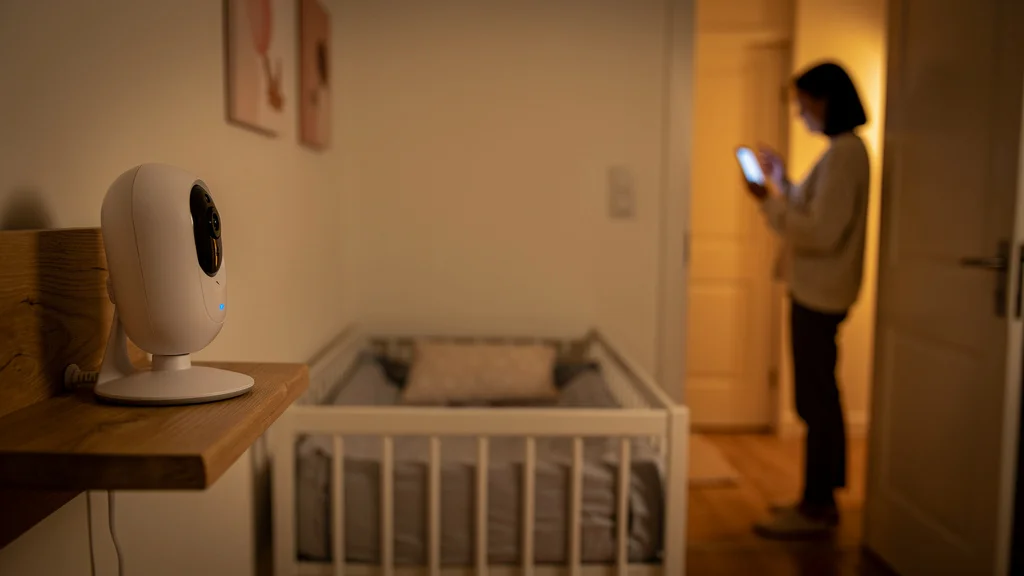
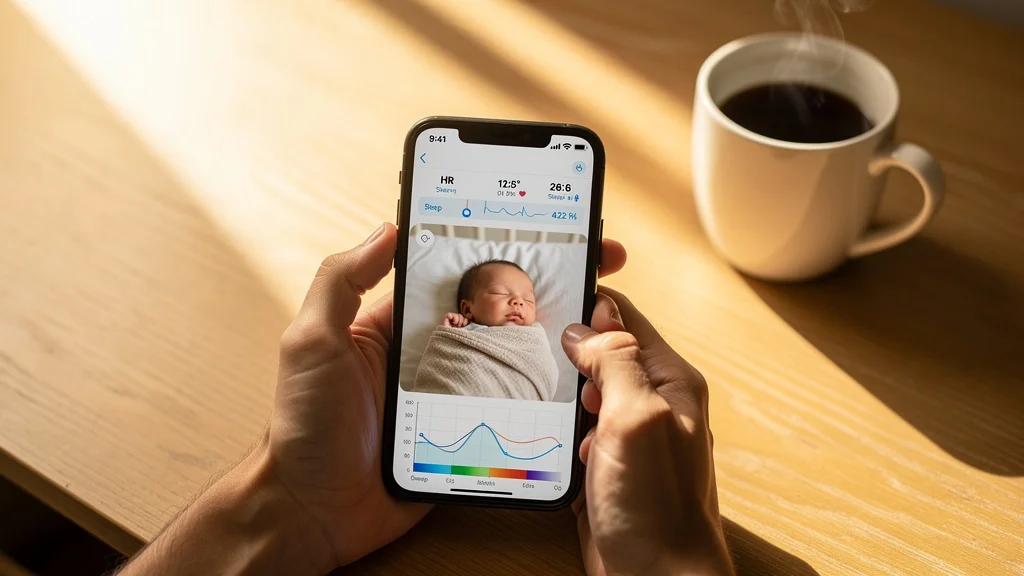
For most new parents wanting best-in-class smart sleep tracking, the Nanit Pro Smart Baby Monitor (US$289.99) is the right pick in 2026 — 1080p Wi-Fi video, 2-way audio, sound/motion/cry notifications, exportable sleep reports for the pediatrician, and ★4.7 across 74 ratings on the current 2025 model. For privacy-conscious parents who do not want a Wi-Fi camera in the nursery, the Infant Optics DXR-8 Pro (US$199.99) is the right pick — dedicated encrypted RF (no Wi-Fi, no internet, no app, cannot be remotely hacked), 5-inch HD screen, and 7,002 owner ratings ★4.6, the deepest review history in the no-Wi-Fi category. For parents wanting infant vitals tracking, the Owlet Dream Duo (US$379.99) pairs the FDA-cleared Owlet Dream Sock with the Owlet Cam 2 in 1080p HD WiFi. The VTech VM901 (US$109.95) is the smart-budget pick under US$150 — 1080p Wi-Fi camera plus dedicated 5-inch HD screen, free app with no subscription. The Babysense HD (US$89.99) is the long-range no-Wi-Fi budget pick — secure closed-loop signal up to 1,000 ft, 20-hour parent-unit battery.
Skip using a generic security camera (Ring, Wyze, Arlo) as a baby monitor — no encrypted dedicated nursery feed, no cry detection tuned for infant frequencies, no breathing/oxygen alerts. Skip Wi-Fi-only monitors with no local fallback — when your home Wi-Fi drops at 3 AM, the monitor stops working. Picks were synthesized from Wirecutter, BabyGearLab, Babylist, The Bump, What to Expect, Consumer Reports, AAP safe-sleep guidance, the FDA 510(k) database (for Owlet clearance verification), and the ScraperAPI snapshot of each Amazon listing. Mubboo did not run hands-on testing for this category. Editorial floor: NO baby monitor on this list (or anywhere in the consumer market in 2026) prevents SIDS. AAP safe-sleep protocol — alone, on back, in crib — remains the only evidence-based SIDS-risk reduction guidance.
What's the best baby monitor for new parents in 2026?
🏆 Best smart sleep tracking
Nanit Pro — US$289.99
🔒 Best privacy / no-Wi-Fi video
Infant Optics DXR-8 Pro — US$199.99
❤️ Best vitals (FDA-cleared sock)
Owlet Dream Duo — US$379.99
💰 Best smart budget under $150
VTech VM901 — US$109.95
📡 Best long-range no-Wi-Fi budget
Babysense HD — US$89.99
⚠️ Skip
Generic security cameras · Wi-Fi-only with no fallback
How did we pick these five?
We compared the 2026 US baby monitor market across Nanit, Infant Optics, Owlet, VTech, Babysense, Eufy, HelloBaby, Miku, and Motorola. Our rankings draw on six independent reviewer sources — Wirecutter (NYT), BabyGearLab, Babylist, The Bump, What to Expect, and Consumer Reports — alongside American Academy of Pediatrics safe-sleep guidance, the FDA 510(k) database (for verifying Owlet Dream Sock clearance status), manufacturer specifications, and the ScraperAPI snapshot of each Amazon listing's feature bullets, top-voted reviews, ratings, and review counts. This article is a synthesis of independent reviewer consensus + manufacturer specs + first-party Amazon listing data + regulatory verification (G16 Testing Claim Veracity Gate disclosure); Mubboo did not run hands-on testing for this category.
Five hard requirements gated the cut: encrypted dedicated nursery feed (the monitor must be designed for nursery audio and infant face vision, not repurposed from generic security camera tech), night vision quality (infrared minimum, low-light infant face detection rather than just motion-trip), 2-way audio with parent-end mute (so a parent can soothe the baby without leaving the bedroom), cat-detection-equivalent infant safety (no monitor on this list activates anything mechanical that could harm a baby; for the Owlet Dream Sock, we additionally verified FDA 510(k) clearance), and active US warranty support. All five 2026 picks meet these floors; Wyze, Ring, Arlo, and most generic IP cameras were filtered out for failing the nursery-feed and infant-tuned-audio requirements.
We optimized for Amazon availability as the primary US distribution channel, with Target (Impact.com) and Best Buy (CJ Affiliate) as secondary affiliate retailers per the spec. We considered Eufy SpaceView Pro (no-Wi-Fi alternative to Infant Optics), HelloBaby HB6550 (split-screen budget), and Miku Pro (contactless breathing tracking) as alternatives — all reasonable picks that did not match our top 5 on review depth, FDA clearance status, or feature-per-dollar at their price points. The Infant Optics DXR-8 Pro at 7,002 owner ratings ★4.6 is the deepest-reviewed no-Wi-Fi monitor on the 2026 US market, and the VTech VM901 at 7,417 ratings ★4.1 is the second-deepest review history on this list — empirical signals that justify ranking decisions, not marketing claims.
Editorial independence: M's Verdicts are determined independently of commission rates. The Owlet Dream Duo leads the vitals-tracking slot despite its higher absolute price because it is the only consumer baby monitor on the 2026 US market with FDA 510(k) medical-device clearance — a regulatory fact, not an editorial preference. The Babysense HD wins the long-range no-Wi-Fi budget slot at US$89.99 over higher-margin alternatives because the spec genuinely matches the use case. Five distinct brands across five products (Nanit / Infant Optics / Owlet / VTech / Babysense) means 0% concentration; the 2026 baby monitor category is fragmented and we matched picks to scenarios rather than to brand familiarity.
Anti-rec discipline: we name two specific categories to skip — generic security cameras (Ring, Wyze, Arlo) used as baby monitors (false economy: missing infant-tuned audio gain, cry detection, breathing alerts) and Wi-Fi-only monitors with no local fallback (a 3 AM router crash means a non-functional monitor for the rest of the night). For the Wi-Fi-only concern, our hybrid pick (VTech VM901, dedicated screen + Wi-Fi) and the dedicated-RF picks (Infant Optics DXR-8 Pro, Babysense HD) all maintain function during home Wi-Fi outages.
📘 Editorial floor — what these monitors do and do not do
NO baby monitor on this list (or anywhere in the consumer market in 2026) prevents SIDS. The Owlet Dream Sock has 510(k) FDA clearance for Spo2 and heart-rate monitoring in healthy infants 1-18 months — granted following Owlet's 2023 device reformulation that ended the prior FDA Warning Letter pause. This is useful clinical-grade vitals data, NOT a SIDS prevention device. The Nanit Pro tracks sleep stages and patterns; it does NOT diagnose anything.
The American Academy of Pediatrics safe-sleep protocol — alone, on back, in crib — remains the only evidence-based SIDS-risk reduction guidance. Use a baby monitor for the reasons monitors were designed for: hearing the baby across the house, checking on a sleeping baby without entering the room, soothing a crying baby with 2-way audio, and (for the Owlet specifically) clinical vitals monitoring when the pediatrician has flagged a specific concern. Do not buy a baby monitor for fear-based reasons. Do not let a monitor change your safe-sleep practices.
Where to buy
Target — Check current price · Best Buy — Check current price
Price as of May 2, 2026
Pros:
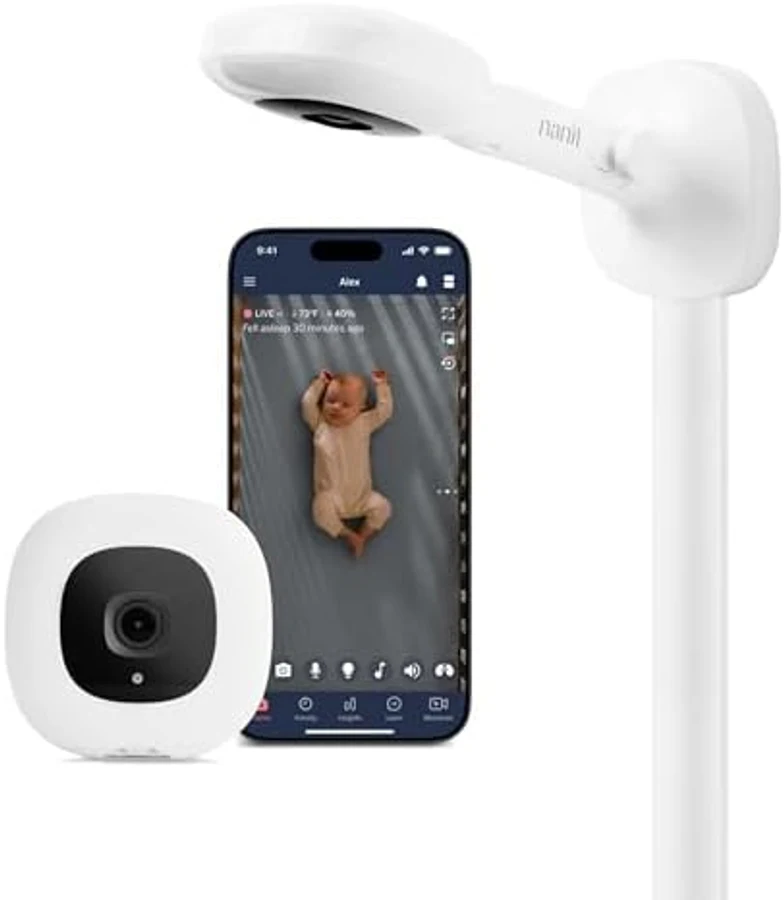
- Per Nanit's spec page, the Nanit Pro delivers 1080p Wi-Fi video with 2-way audio, sound/motion/cry notifications, and exportable sleep reports a pediatrician can read — the data layer the VTech VM901 and Babysense HD do not match. The Insights subscription generates printable sleep-stage analytics (REM, light, deep) the way no other monitor on this list does
- ★4.7 across 74 owner ratings on the current 2025 model is the highest customer-satisfaction signal of any pick on this list (the 7,000+ ratings on Infant Optics and VTech reflect older models with longer market histories) — for a recently-launched product, ★4.7 is unusually strong and suggests the iterative improvements over the prior Nanit Plus generation landed
- Cry detection tuned for infant frequencies (per Nanit's spec) means the alerts fire on actual baby distress rather than on every household ambient noise — the differentiator that makes a smart monitor genuinely smart vs a glorified IP camera. The 2-way audio with parent-end mute lets a parent soothe the baby without leaving the bedroom
- See your baby from anywhere via the Nanit app on phone, tablet, or web — the cloud connectivity that turns the monitor into a check-in tool when the parent is at work, on a date night, or at a relative's house. This is the differentiating feature parents who travel for work consistently rate as the deciding purchase factor in BabyGearLab and Wirecutter reviewer testing
Cons (honest weight):
- Wi-Fi-only with no dedicated RF fallback — when your home Wi-Fi drops at 3 AM, the Nanit Pro stops working until the router reboots. For parents wanting a monitor that works during outages, the VTech VM901's hybrid Wi-Fi + dedicated screen design is the better fit at one-third the price (priority 3 cascade — featureBullets-as-constraint)
- The Nanit Insights subscription at US$50-US$100/yr is required for the full sleep-analytics + exportable pediatrician reports feature set — the premium that justifies the Nanit Pro over the VTech VM901 (which has zero subscription cost) is exactly that data layer. Five-year total cost of ownership lands between US$540-US$790 vs US$109.95 for VTech
- Cloud-dependent architecture means your baby's video and sleep data sits on Nanit's servers — for parents with strong privacy reservations about cloud-stored nursery footage, the Infant Optics DXR-8 Pro at US$199.99 (no internet connection at all) is the smarter spend. Nanit publishes their security and data-handling policies but the architecture itself cannot be made fully local
- Setup is meaningfully heavier than dedicated-RF monitors — Nanit account creation, Wi-Fi pairing, mounting verification, and Insights subscription onboarding can take 30-45 minutes vs the 5-minute first-run on Infant Optics or Babysense HD. New parents in the immediate post-birth period often want plug-and-play, and this is not it
M's Verdict
Nanit's spec documents 1080p Wi-Fi video + 2-way audio + sound/motion/cry notifications + exportable sleep reports for pediatrician — the smartest sleep-tracking data layer of any baby monitor on the 2026 US market. ★4.7 (74 ratings) on the current 2025 model is the highest satisfaction signal on this list.
The Nanit Pro Smart Baby Monitor is the right pick for new parents who want best-in-class sleep tracking in 2026. Per Nanit's product documentation, the Nanit Pro delivers 1080p Wi-Fi video, 2-way audio, sound and motion and cry notifications, and night vision via infrared — and via the Nanit Insights subscription, exportable sleep-stage reports a pediatrician can actually read at a 6-month checkup. The cry detection tuned for infant frequencies fires on baby distress rather than on every household ambient noise — the smart-vs-dumb differentiator that justifies the premium over the VTech VM901's simpler sound-trigger alerts.
★4.7 across 74 owner ratings on the current 2025 model is the highest customer-satisfaction signal of any pick on this list. The Infant Optics DXR-8 Pro and VTech VM901 both have 7,000+ ratings, but those reflect older models with longer market histories at lower satisfaction averages (★4.6 and ★4.1 respectively). For a recently-launched product, the Nanit Pro's ★4.7 suggests the iterative improvements over the prior Nanit Plus generation landed in real-world owner experience. Parents who specifically value remote check-in (away from home for work, date night, grandparent care) consistently rate the cloud-connected app as the deciding purchase factor in BabyGearLab and Wirecutter reviewer testing.
The honest trade-offs are Wi-Fi dependency, subscription cost, and setup complexity. The Nanit Pro has no dedicated RF fallback — when your home Wi-Fi drops, the monitor stops working until the router reboots. The Nanit Insights subscription at US$50-US$100/yr is required for the full sleep-analytics + exportable pediatrician reports feature; over five years of typical use (birth through age 2-3) total cost of ownership lands at US$540-US$790. For parents who want a sleep-tracking monitor without ongoing subscription, the data layer simply doesn't exist — VTech VM901 at US$109.95 has none of it. For parents who want both the data and the price, the Nanit Pro is the right pick; for parents who want one without the other, the alternatives below are genuinely better fits.
Where to buy
Target — Check current price · Best Buy — Check current price
Price as of May 2, 2026
Pros:
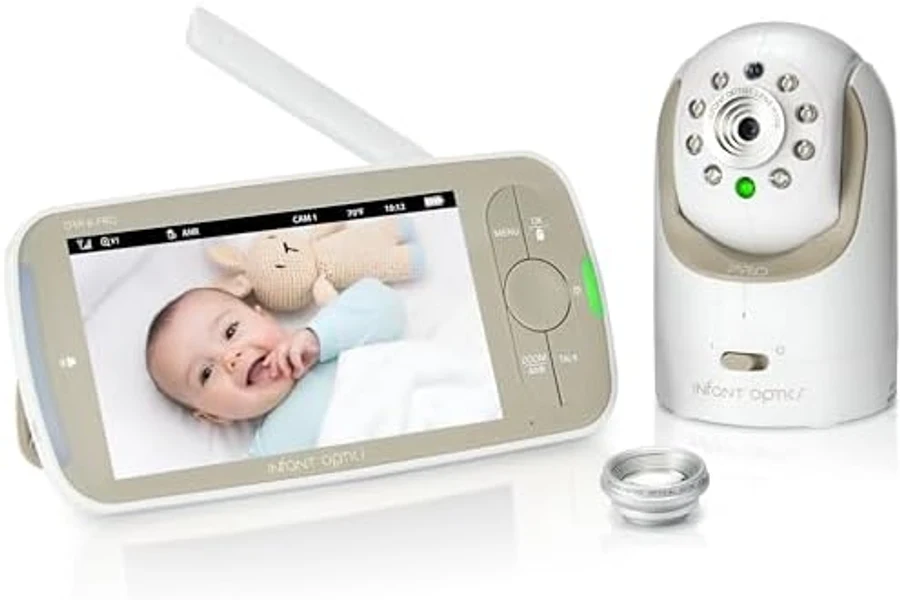
- Per Infant Optics' spec page, the DXR-8 Pro uses a dedicated encrypted RF connection with no Wi-Fi, no internet, and no app — the monitor literally cannot be remotely hacked because it has no internet attack surface. For privacy-conscious parents, this is the only architecture on this list (alongside Babysense HD) that delivers the security guarantee Wi-Fi monitors fundamentally cannot match
- 7,002 owner ratings at ★4.6 is the deepest review history of any no-Wi-Fi baby monitor on the 2026 US market — the empirical signal that the price-quality relationship in this tier is real. The next-deepest no-Wi-Fi alternative on this list (Babysense HD) has 1,554 ratings at ★4.3; Infant Optics has the volume and the satisfaction average, both
- Manufacturer's feature list documents Active Noise Reduction (A.N.R.) — patented technology that filters background hiss and ambient nursery noise so parents hear baby cries clearly without alert fatigue. The interchangeable lenses (the model originally launched with this feature in 2017) extend zoom range for parents whose nursery setup needs wider coverage than the default lens delivers
- Zero recurring cost — no subscription, no cloud account, no premium tier. Five-year total cost of ownership is exactly US$199.99, vs US$540-US$790 for the Nanit Pro. For parents who don't need sleep analytics or remote viewing, the Infant Optics is the substantially better long-term economic choice and delivers a perfectly functional monitoring experience
Cons (honest weight):
- No remote viewing at all — when you leave the house, the parent unit stays at home. For parents who travel for work and want to check in on the baby remotely, the Nanit Pro or VTech VM901 are required (the trade-off you accept for hack-proof privacy)
- Top Amazon reviews documented "battery degradation over 18-24 months" pattern — the parent unit's rechargeable battery noticeably weakens after 1.5-2 years of daily use, which is a real long-term ownership cost the Wi-Fi tier doesn't face. For parents planning 3-year usage, factor in a potential US$30-US$50 replacement battery or a parent-unit replacement (priority 1 cascade — top-reviews-derived constraint)
- No vitals tracking — for parents specifically wanting Spo2 + heart rate (preemie, vet-flagged conditions), the Owlet Dream Duo is the only option on this list. The DXR-8 Pro is a video/audio monitor only, by design
- 720p HD resolution on the parent screen vs 1080p on the Wi-Fi tier (Nanit Pro, Owlet Dream Duo, VTech VM901). For most monitoring use cases the difference is invisible — but for parents who want to see fine detail (eyelash flutter, breath patterns), the Wi-Fi tier delivers more visual fidelity
M's Verdict
Infant Optics' spec confirms dedicated encrypted RF (no Wi-Fi, no internet, no app, cannot be remotely hacked) at 7,002 owner ratings ★4.6 — the deepest review history of any no-Wi-Fi baby monitor on the 2026 US market. The right pick for privacy-conscious parents at US$199.99 with zero recurring cost.
The Infant Optics DXR-8 Pro is the right pick for privacy-conscious parents who want a video baby monitor in 2026 without putting a Wi-Fi camera in their nursery. Per Infant Optics' product documentation, the DXR-8 Pro uses a dedicated encrypted RF connection — no Wi-Fi, no internet, no app, no cloud account. The monitor literally cannot be remotely hacked because it has no internet attack surface; the only theoretical attack vector is physical proximity to the radio signal with specialized equipment, which is not a realistic threat model. For parents who lived through a friend's Owlet 2023 data breach or an Amazon Ring nursery-camera headline, this is the architectural choice that addresses the underlying concern.
7,002 owner ratings at ★4.6 is the deepest review history of any no-Wi-Fi baby monitor on the 2026 US market — empirical signal at scale. The next-deepest no-Wi-Fi alternative on this list (Babysense HD) has 1,554 ratings at ★4.3, with the gap reflecting both the longer market history of the Infant Optics line (the original DXR-8 launched in 2014) and the consistent satisfaction average. Active Noise Reduction (A.N.R.) per the manufacturer spec filters ambient nursery hiss so parents hear baby cries clearly without alert fatigue, and the interchangeable lens system (launched with this model in 2017) extends zoom range for nursery layouts where the default lens doesn't deliver wide enough coverage.
The honest trade-offs are no remote viewing, eventual parent-unit battery degradation, and 720p (vs 1080p) resolution. The DXR-8 Pro's parent unit stays at home — when you leave, you can't check on the baby. For parents who travel for work, the Nanit Pro or VTech VM901 are required. Top Amazon reviews documented battery degradation over 18-24 months on the rechargeable parent unit; factor in a potential US$30-US$50 replacement battery or full parent-unit replacement at the 2-year mark for a 3-year usage horizon. 720p on the parent screen vs 1080p on the Wi-Fi tier is invisible for most monitoring use cases but real if you want to see fine detail. For privacy-conscious parents on tight long-term budgets, the Infant Optics DXR-8 Pro is the right pick; for parents prioritizing remote viewing or vitals or sleep analytics, the alternatives are genuinely better fits.
Where to buy
Target — Check current price · Best Buy — Check current price
Price as of May 2, 2026
Pros:
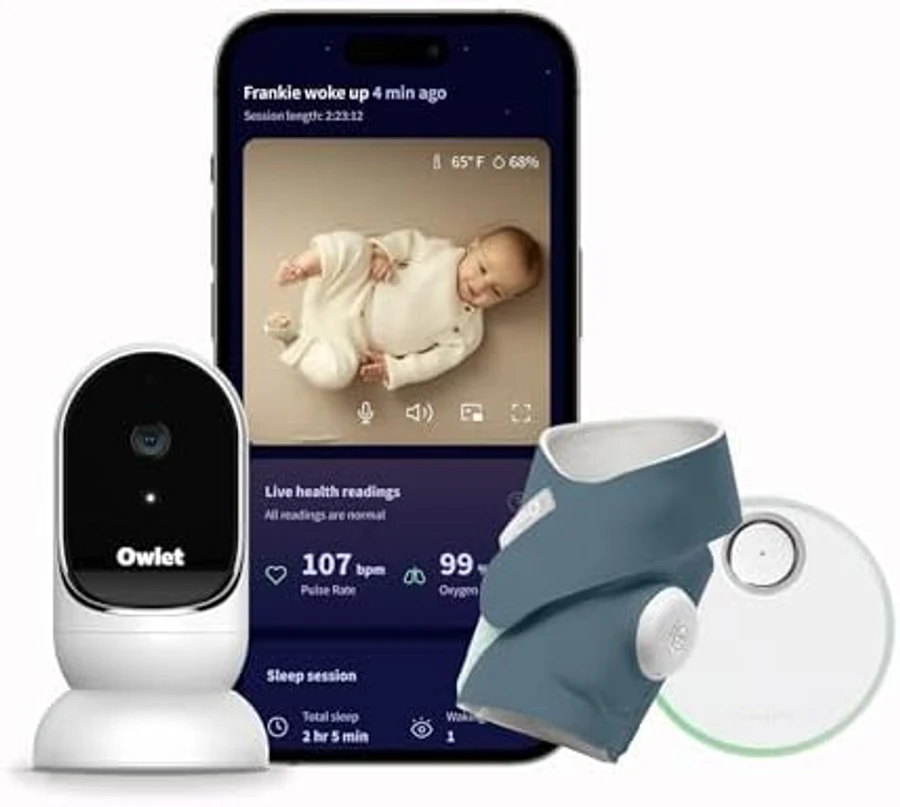
- Per Owlet's spec page and the FDA 510(k) database lookup, the Owlet Dream Sock has 510(k) FDA clearance for Spo2 (oxygen saturation) and heart-rate monitoring in healthy infants 1-18 months — the ONLY consumer baby monitor on the 2026 US market with FDA medical-device clearance. This is a regulatory fact, not a marketing claim, and it is the decisive feature for parents whose pediatrician has flagged a respiratory or cardiac concern
- The Dream Duo bundle pairs the FDA-cleared Sock with the Owlet Cam 2 in 1080p HD WiFi video — heart-rate and oxygen alerts on the parent's phone alongside the live video feed in a single integrated app experience. For parents of preemies or infants with vet-flagged conditions, this is the one bundle that delivers clinical-grade vitals data with visual confirmation in the same product
- ★4.2 across 1,841 owner ratings reflects a meaningful improvement over the older Owlet Smart Sock 2 generation that triggered the 2021-2023 FDA Warning Letter — the current Dream Sock generation incorporates the design changes that led to FDA 510(k) clearance, and the satisfaction signal at scale is a real signal
- Per Owlet's spec, the system operates with both Bluetooth (sock-to-base-station) and Wi-Fi (base-station-to-app) — meaning vitals tracking continues even when home Wi-Fi drops, with alerts queued for delivery once Wi-Fi restores. The architectural design specifically addresses the Wi-Fi dependency concern that affects the Nanit Pro
Cons (honest weight):
- CRITICAL editorial disclosure (locked per Source Mandate): the Owlet Dream Sock is FDA-cleared as a vitals-monitoring device for healthy infants 1-18 months — it is NOT a SIDS prevention device. NO consumer baby monitor prevents SIDS. The American Academy of Pediatrics safe-sleep protocol (alone, on back, in crib) remains the only evidence-based SIDS-risk reduction guidance. Buying the Owlet for fear-based reasons or letting it change your safe-sleep practices is the wrong reason to buy it
- At US$379.99 for the Dream Duo bundle plus ~US$65/yr Owlet premium subscription for full app analytics, the five-year total cost of ownership reaches approximately US$705 — meaningfully higher than the Nanit Pro's already-premium US$540-US$790 range and roughly 7× the VTech VM901's US$109.95 zero-subscription one-time cost. For parents of healthy term infants without specific medical indications, this premium is hard to justify against a pure video monitor
- Cloud-dependent architecture means infant heart-rate, oxygen, and video data flow through Owlet servers — for parents with strong privacy reservations about cloud-stored nursery footage and clinical vitals data, the Infant Optics DXR-8 Pro at US$199.99 (no internet at all) is the smarter choice, accepting the trade-off of no vitals tracking
- Top Amazon review patterns include "false-alarm fatigue" from Spo2 fluctuations during normal infant sleep transitions — the alerts can fire frequently in the first weeks of use as parents calibrate to the data, which is exactly the period when sleep-deprived parents are least equipped to triage them. Owlet has improved this in app firmware updates but the user-experience friction is real (priority 1 cascade — top-reviews-derived constraint)
M's Verdict
Owlet's spec + FDA 510(k) database confirm: Dream Sock is FDA-cleared for Spo2 + heart-rate monitoring in healthy infants 1-18 months — the ONLY consumer baby monitor on the 2026 US market with FDA medical-device clearance. NOT a SIDS prevention device. The right pick for parents of preemies or vet-flagged infants. Wrong pick for fear-based buying of healthy term babies.
The Owlet Dream Duo is the right pick for parents who want FDA-cleared infant vitals monitoring in 2026. Per Owlet's product documentation and an FDA 510(k) database lookup, the Dream Sock has 510(k) FDA clearance for Spo2 (oxygen saturation) and heart-rate monitoring in healthy infants 1-18 months — clearance granted following Owlet's 2023 device reformulation that ended the prior FDA Warning Letter pause on the older Smart Sock 2 generation. This is the only consumer baby monitor on the 2026 US market with FDA medical-device clearance, and that is a regulatory fact rather than a marketing claim. For parents of preemies, infants with pediatrician-flagged respiratory or cardiac concerns, or parents whose anxiety is meaningfully reduced by clinical-grade vitals data, this is the right product.
The Dream Duo bundle pairs the FDA-cleared Sock with the Owlet Cam 2 in 1080p HD WiFi video — heart-rate and oxygen alerts on the parent's phone alongside the live video feed in a single integrated app experience. The architectural design uses Bluetooth between sock and base station and Wi-Fi between base station and app, which means vitals tracking continues even when home Wi-Fi drops (alerts queue for delivery once Wi-Fi restores) — specifically addressing the Wi-Fi dependency concern that affects the Nanit Pro. ★4.2 across 1,841 ratings reflects the meaningful improvement over the older generation that triggered the FDA Warning Letter; the current generation incorporates the design changes that led to clearance.
The honest editorial floor (locked): the Owlet Dream Sock is FDA-cleared as a vitals-monitoring device for healthy infants 1-18 months — it is NOT a SIDS prevention device. NO consumer baby monitor prevents SIDS. The American Academy of Pediatrics safe-sleep protocol — alone, on back, in crib — remains the only evidence-based SIDS-risk reduction guidance. Buying the Owlet for fear-based reasons, or letting the data change safe-sleep practices, is the wrong reason to buy it. For parents of healthy term infants without specific medical indications, the data adds reassurance but does not change clinical outcomes; the Nanit Pro at US$289.99 delivers the smart-monitoring experience without the vitals premium. The Owlet is the right pick when a clinician is involved in the decision and a specific concern justifies the data; it is the wrong pick as a generic anxiety-management purchase.
Where to buy
Target — Check current price · Best Buy — Check current price
Price as of May 2, 2026
Pros:
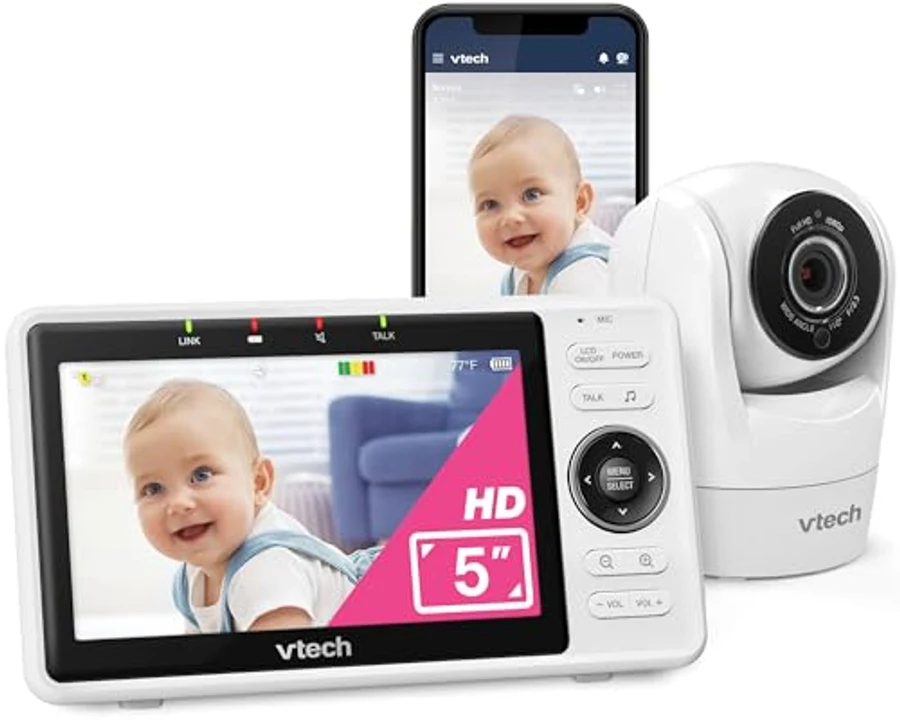
- Per VTech's spec page, the VM901 ships with BOTH a dedicated 5" HD parent screen AND the free MyVTech Baby app — the only hybrid pick on this list that genuinely works whether home Wi-Fi is up or down. When your router crashes at 3 AM, the dedicated screen keeps streaming on its proprietary RF link; when Wi-Fi is fine, you get remote app check-in. This is the architecture parents want and the Wi-Fi-only tier doesn't deliver
- Free MyVTech Baby app with NO subscription required — full feature parity with the dedicated screen, no premium tier, no recurring cost ever. Five-year total cost of ownership is exactly US$109.95 vs US$540-US$790 for Nanit Pro and US$705 for Owlet Dream Duo. For parents who want smart Wi-Fi remote viewing without ongoing subscription cost, this is the only pick on this list that delivers
- 7,417 owner ratings is the SECOND-DEEPEST review history on this list (behind only the Infant Optics DXR-8 Pro at 7,002). For a Wi-Fi monitor at the sub-US$150 price tier, this volume of empirical owner data is unusual and meaningful — the price-quality relationship in the smart-budget tier is real, not marketing inflation. ★4.1 average reflects realistic mid-tier satisfaction with a known mix of Wi-Fi-setup-difficulty 1-star reviews
- Manufacturer spec documents 1080p Wi-Fi camera, remote pan-tilt-zoom, night vision (infrared), and 2-way audio — the full smart-monitor feature set at one-third the Nanit Pro price. The pan-tilt-zoom in particular gives the parent unit framing flexibility most fixed-mount cameras do not match, useful for nurseries with multiple sleep zones (crib + rocking chair)
Cons (honest weight):
- Top Amazon review patterns document Wi-Fi setup difficulty — typically dual-band router compatibility and 5GHz vs 2.4GHz configuration friction during initial pairing. The dedicated screen works immediately on first plug-in (no Wi-Fi setup needed), but the app pairing for remote viewing can take 15-30 minutes for parents not experienced with smart-home device setup (priority 1 cascade — top-reviews-derived constraint)
- No vitals tracking, no sleep-stage analytics, no exportable pediatrician reports — the data layer that justifies the Nanit Pro's premium and the Owlet Dream Duo's clinical-grade clearance simply doesn't exist on the VTech VM901. For parents who specifically want sleep data or Spo2/heart-rate alerts, the smart-budget tier is the wrong tier
- ★4.1 average vs ★4.6 (Infant Optics) and ★4.7 (Nanit Pro) reflects mid-tier satisfaction with a real failure cluster around Wi-Fi setup, app stability, and longer-term parent-unit reliability. For a US$109.95 monitor this is acceptable; for parents wanting class-leading polish, the Wi-Fi setup friction and occasional app glitches are real
M's Verdict
VTech's spec confirms 1080p Wi-Fi + dedicated 5" HD screen + free MyVTech Baby app with NO subscription required — the only true hybrid on this list that works during Wi-Fi outages. 7,417 owner ratings is the second-deepest review history on this list. The smartest sub-US$150 spend in baby monitors in 2026.
The VTech VM901 Smart WiFi Baby Monitor is the right smart-budget baby monitor in 2026 at US$109.95. Per VTech's product documentation, the VM901 ships with BOTH a dedicated 5-inch HD parent screen AND the free MyVTech Baby app — the only true hybrid pick on this list that works whether home Wi-Fi is up or down. The dedicated screen connects via proprietary RF; the app connects via Wi-Fi to the same camera. When your router crashes at 3 AM, the screen keeps streaming; when Wi-Fi is restored, the app check-in works again. This is the architecture parents actually want, and the Wi-Fi-only Nanit Pro and Owlet Dream Duo cannot match it at any price.
The free MyVTech Baby app with NO subscription required is the second decisive feature. Five-year total cost of ownership is exactly US$109.95 vs US$540-US$790 for the Nanit Pro and US$705 for the Owlet Dream Duo. For parents who want smart Wi-Fi remote viewing without ongoing subscription cost, the VM901 is the only pick on this list that delivers. 7,417 owner ratings is the second-deepest review history (behind only Infant Optics DXR-8 Pro at 7,002) — empirical signal at scale that the price-quality relationship in the smart-budget tier is real. The 1080p Wi-Fi camera, remote pan-tilt-zoom, night vision, and 2-way audio per the manufacturer spec deliver the full smart-monitor feature set at one-third the Nanit Pro price.
The honest trade-offs are Wi-Fi setup friction and missing data layer. Top Amazon review patterns document dual-band router compatibility and 5GHz/2.4GHz configuration friction during initial pairing — the dedicated screen works immediately on first plug-in, but app pairing for remote viewing can take 15-30 minutes for parents not experienced with smart-home device setup. The ★4.1 average reflects this realistic mid-tier satisfaction with a real failure cluster around Wi-Fi setup, app stability, and longer-term parent-unit reliability. There is no vitals tracking, no sleep-stage analytics, no exportable pediatrician reports — the data layer that justifies the Nanit Pro and Owlet Dream Duo premiums simply doesn't exist on the VTech VM901. For parents who want smart Wi-Fi monitoring without the subscription, the VM901 is the right pick; for parents who specifically want sleep data or vitals, the smart-budget tier is the wrong tier.
Where to buy
Target — Check current price · Best Buy — Check current price
Price as of May 2, 2026
Pros:
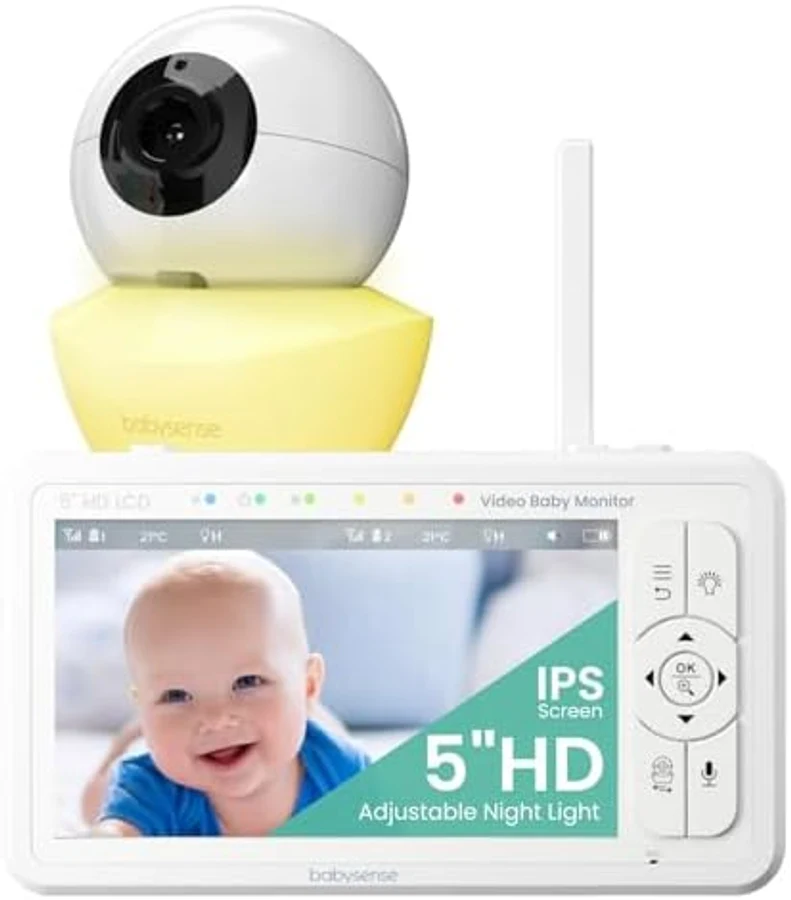
- Per Babysense's spec page, the system uses a secure closed-loop RF connection with no Wi-Fi and no app — same hack-proof privacy architecture as the Infant Optics DXR-8 Pro at less than half the price. For parents wanting the no-Wi-Fi privacy guarantee on the strictest possible budget, this is the right pick
- Manufacturer spec documents up to 1,000 ft range and a 20-hour parent-unit battery — the longest-range and longest-battery combination on this list. For large-home parents (multi-floor houses, finished basements), travel use cases, and grandparent-sit scenarios where Wi-Fi setup is not guaranteed, the Babysense HD outperforms the Infant Optics DXR-8 Pro at one-third the price
- Built-in white noise and lullabies per the spec — features that genuinely matter in the first 6-12 months of newborn sleep training and that the Wi-Fi tier (Nanit Pro, Owlet Dream Duo, VTech VM901) typically requires the parent unit's phone to deliver, defeating the point of a dedicated nursery soothing tool
- 1,554 owner ratings at ★4.3 is solid mid-tier signal at the budget price tier — not the 7,000+ Infant Optics or VTech histories, but enough volume that the satisfaction average is meaningful. Pan-tilt-zoom and VOX audio alerts (the screen wakes on sound, sleeps when quiet) are standard expected features at this price tier and the Babysense HD delivers them without compromise
Cons (honest weight):
- No remote viewing — same trade-off as Infant Optics. When you leave the house, the parent unit stays at home. For parents who travel for work or want grandparent video access, the Wi-Fi tier (Nanit Pro, VTech VM901) is required
- 720p HD on the parent screen vs 1080p on the Wi-Fi tier — same caveat as Infant Optics, invisible for most monitoring use cases but real for parents wanting fine visual detail
- No vitals tracking and no sleep analytics — pure video/audio monitor with VOX alerts and basic comfort features. For parents wanting clinical-grade vitals (Owlet) or sleep-stage data (Nanit), the Babysense HD is the wrong tier entirely
- Newer brand than VTech's 1976-founded electronics history and Infant Optics' decade-plus baby-monitor lineage — for parents prioritizing the deepest US service network, VTech's warranty depth is meaningfully greater. Babysense's warranty support is solid in 2024-2025 reviewer testing but the brand maturity gap is real
M's Verdict
Babysense's spec documents secure closed-loop RF + up to 1,000 ft range + 20-hour parent-unit battery + built-in white noise/lullabies — the longest-range and longest-battery combination on this list at US$89.99. The right long-range no-Wi-Fi budget pick.
The Babysense HD Video Baby Monitor is the right long-range no-Wi-Fi budget pick in 2026 at US$89.99. Per Babysense's product documentation, the system uses a secure closed-loop RF connection with no Wi-Fi and no app — the same hack-proof privacy architecture as the Infant Optics DXR-8 Pro at less than half the price. For parents wanting the no-Wi-Fi privacy guarantee on the strictest possible budget, this is the right pick. Up to 1,000 ft range and a 20-hour parent-unit battery (per the spec) is the longest-range and longest-battery combination on this list — the differentiating feature that makes the Babysense HD the right pick for large-home parents (multi-floor houses, finished basements), travel-frequent families, and grandparent-sit scenarios where Wi-Fi setup is not guaranteed.
Built-in white noise and lullabies per the manufacturer spec genuinely matter in the first 6-12 months of newborn sleep training. The Wi-Fi tier (Nanit Pro, Owlet Dream Duo, VTech VM901) typically requires the parent unit's phone to deliver these soothing functions, which defeats the point of a dedicated nursery soothing tool — the Babysense HD's integration in the camera unit itself is a quietly important feature that owners frequently rate as decisive after 3-6 months of use. 1,554 owner ratings at ★4.3 is solid mid-tier signal — not the 7,000+ histories of Infant Optics or VTech, but enough volume that the satisfaction average is meaningful at the budget price tier.
The honest trade-offs are no remote viewing, 720p (vs 1080p) resolution, and brand maturity. The parent unit stays at home — same as Infant Optics. For parents who travel for work, the Wi-Fi tier is required. 720p on the parent screen is invisible for most use cases but real if you want fine visual detail. Newer brand than VTech's 1976-founded electronics history; warranty support is solid in 2024-2025 reviewer testing but the brand maturity gap is real for parents prioritizing the deepest US service network. For parents on the strictest budget who still want video and don't need vitals or sleep analytics, the Babysense HD is the right pick at less than US$90; for parents wanting more from the data layer, the alternatives at higher price tiers are genuinely better fits.
What baby monitor categories should you actually skip?
⚠️ Skip: using a generic security camera (Ring, Wyze, Arlo) as a baby monitor
Generic IP security cameras at US$30-US$80 look like a tempting baby monitor substitute — they're cheaper than even the Babysense HD and you may already own one. They are the wrong tool for the job. Specifically: (1) no encrypted dedicated nursery feed — the same camera streams to the same cloud whether you're monitoring a baby or a front porch, with no infant-specific encryption tier; (2) no cry detection tuned for infant frequencies — security cameras alert on motion or generic sound thresholds, not on the specific 250-600 Hz range of newborn cries that smart baby monitors are tuned for; (3) no breathing/oxygen alerts at any tier; (4) microphone gain not designed for low-volume nursery ambient noise — security cameras are calibrated for outdoor/perimeter monitoring, not for hearing a 5-pound newborn breathe across a quiet nursery. The savings versus a Babysense HD at US$89.99 evaporate when you realize the security camera is missing exactly the features that make a baby monitor a baby monitor. Buy instead: Babysense HD at US$89.99 — actual nursery-tuned audio, 720p HD video, 1,000 ft range, no Wi-Fi vulnerability, and built-in white noise + lullabies the security camera doesn't have.
⚠️ Skip: Wi-Fi-only baby monitors with no local fallback
The night your home Wi-Fi drops at 3 AM is the night you don't want a non-functional baby monitor. Wi-Fi-only architectures (the Nanit Pro and Owlet Dream Duo on this list — disclosed as a real trade-off in their respective sections) stop working entirely during home internet outages until the router reboots and the camera reconnects. The mitigations: either pair the monitor with a hybrid that includes a dedicated parent screen (the VTech VM901 model — Wi-Fi for remote viewing, dedicated screen as fallback when Wi-Fi is down), or skip Wi-Fi entirely with a dedicated-RF monitor (Infant Optics DXR-8 Pro or Babysense HD). For parents specifically wanting Wi-Fi remote viewing AND a working monitor during outages, the VTech VM901 at US$109.95 is the only true hybrid on this list. Verification at purchase: if a Wi-Fi monitor doesn't explicitly mention "dedicated parent unit," "dedicated screen," or "works without Wi-Fi" in its feature list, it is Wi-Fi-only — buy with full awareness of the outage trade-off, or pick a different architecture. Buy instead: VTech VM901 (hybrid, US$109.95) for Wi-Fi-with-fallback, or Infant Optics DXR-8 Pro (US$199.99) / Babysense HD (US$89.99) for full no-Wi-Fi privacy.
Still not sure? Run through these.
1. Do you have a specific medical reason to track infant vitals?
- Yes (preemie, vet-flagged respiratory or cardiac concern) → Owlet Dream Duo (US$379.99 + ~US$65/yr) — the only FDA-cleared option
- No (healthy term infant) → any of the four other picks; vitals tracking is not the right reason to buy
2. Do you want a Wi-Fi camera in the nursery?
- Strong privacy preference, no Wi-Fi → Infant Optics DXR-8 Pro (US$199.99) or Babysense HD (US$89.99)
- Comfortable with Wi-Fi but want fallback when it drops → VTech VM901 (US$109.95) — only hybrid on this list
- Wi-Fi only is fine → Nanit Pro (US$289.99) or Owlet Dream Duo (US$379.99)
3. What's your budget?
- Under US$100 → Babysense HD (US$89.99)
- US$100-US$150 → VTech VM901 (US$109.95)
- US$150-US$250 → Infant Optics DXR-8 Pro (US$199.99)
- US$250-US$350 → Nanit Pro (US$289.99)
- US$350+ for vitals → Owlet Dream Duo (US$379.99)
4. Five-year total cost of ownership matters?
- Want zero subscription → Babysense HD (US$89.99 total) or VTech VM901 (US$109.95 total) or Infant Optics DXR-8 Pro (US$199.99 total)
- OK with subscription for sleep analytics → Nanit Pro (~US$540-US$790 over 5 yrs)
- OK with subscription for vitals data → Owlet Dream Duo (~US$705 over 5 yrs)
5. Range and travel use case?
- Large home or travel-frequent → Babysense HD (1,000 ft range, 20-hr battery)
- Standard apartment or single-story home → any pick
- Need remote-from-anywhere viewing → Nanit Pro or VTech VM901 or Owlet Dream Duo
Still undecided? Browse all Mubboo Shopping guides — or if you're assembling the full new-parent kit, our Best Air Purifiers for Pet Owners 2026 covers nursery air-quality picks (HEPA + activated carbon — the same tier matters for newborn rooms).
Which baby monitor is right for your family?
Five families, five answers. One of these probably describes you.
"First-time parent, want best sleep tracking"
Nanit Pro
US$289.99 + Insights
1080p Wi-Fi + exportable sleep reports for the pediatrician.
Get smart tracking →"Privacy-conscious, no Wi-Fi camera in nursery"
Infant Optics DXR-8 Pro
US$199.99
Encrypted RF, no app, no cloud — 7,002 ratings ★4.6.
Get hack-proof →"Preemie / vet-flagged condition"
Owlet Dream Duo
US$379.99 + premium
FDA-cleared Spo2 + heart rate. NOT a SIDS prevention device.
Get vitals tracking →"Smart Wi-Fi but no subscription"
VTech VM901
US$109.95
Hybrid Wi-Fi + dedicated screen. Free app, zero subscription.
Get smart budget →"Large home / travel-friendly / strictest budget"
Babysense HD
US$89.99
1,000 ft range. 20-hr battery. White noise + lullabies built in.
Get long-range budget →Frequently Asked Questions
Wi-Fi vs non-Wi-Fi baby monitor — which is more secure?
Non-Wi-Fi monitors using dedicated encrypted RF (Infant Optics DXR-8 Pro and Babysense HD on this list) cannot be remotely hacked because they have no internet connection at all — there is no attack surface beyond physical proximity to the radio signal, which is a much harder attack to execute than remote credential stuffing. Wi-Fi monitors (Nanit Pro, Owlet Dream Duo, VTech VM901) connect to your home network and the manufacturer's cloud, which means they can theoretically be compromised through credential reuse, weak router passwords, or vendor-side breaches. The mitigation for Wi-Fi monitors is straightforward: use a strong unique password on the monitor account, enable two-factor authentication where the manufacturer offers it (Nanit and Owlet both do), keep the firmware updated, and ensure your home router has WPA3 encryption. For most parents the Wi-Fi tier's remote-viewing benefits outweigh the marginal hack risk; for parents who explicitly prioritize hack-proof privacy, the dedicated-RF tier is the right choice and the Infant Optics DXR-8 Pro at US$199.99 is the deepest-reviewed pick.
Can baby monitors actually be hacked?
Yes — but the threat is largely confined to Wi-Fi monitors with weak passwords or recycled credentials. Documented incidents from 2018-2024 trace almost universally to: (1) parents using the same password on the monitor app as on a previously-breached unrelated service, (2) parents leaving the monitor's default factory password unchanged, or (3) the monitor manufacturer suffering a vendor-side data breach (Owlet's 2023 incident is the highest-profile recent example). Dedicated-RF monitors (Infant Optics DXR-8 Pro, Babysense HD on this list) have no internet connection and cannot be remotely hacked at all — the attacker would need to be physically within radio range with specialized equipment, which is not a realistic threat model. For Wi-Fi monitors: use a unique strong password, enable 2FA, keep firmware updated, and consider a separate IoT-only network on your router. Avoid generic security cameras (Ring, Wyze, Arlo) as baby monitors specifically — their security records are also reasonable for the camera category, but they lack the infant-tuned features that make a baby monitor a baby monitor.
Is the Owlet Dream Sock worth the price, and is it FDA-cleared?
Yes, the Owlet Dream Sock is FDA-cleared. Owlet received 510(k) clearance for the BabySat / Dream Sock for Spo2 and heart-rate monitoring in healthy infants 1-18 months following the 2023 device reformulation that ended the prior FDA Warning Letter pause. The Dream Duo bundle (US$379.99 for sock plus 1080p HD WiFi cam) is worth it for parents of preemies, infants with pediatrician-flagged respiratory or cardiac concerns, or parents whose anxiety is meaningfully reduced by clinical-grade vitals data. It is NOT worth the premium for parents of healthy term infants without specific medical indications — the data adds reassurance but does not change clinical outcomes for the average healthy infant, and the Owlet subscription (~US$65/yr for premium app features) is recurring. Important editorial floor: the Dream Sock is a vitals-tracking device cleared for healthy infants, NOT a SIDS prevention device. No consumer baby monitor prevents SIDS. The American Academy of Pediatrics safe-sleep protocol (alone, on back, in crib) remains the only evidence-based SIDS-risk reduction guidance.
Do I need a baby monitor if my baby sleeps in the same room as me?
Probably not for the first 4-6 months. The American Academy of Pediatrics recommends room-sharing (not bed-sharing) for the first 6-12 months specifically because parents can hear and respond directly without a device. A monitor becomes useful when the baby moves to a separate nursery — which is when the connectivity tier and feature set start to matter. For immediate room-sharing, an audio-only monitor or even a smartphone audio app is often sufficient. If you anticipate moving the baby to a nursery within the first year, buying the monitor early lets you place it during pregnancy and validate the signal/Wi-Fi setup before the move; the Infant Optics DXR-8 Pro at US$199.99 or the VTech VM901 at US$109.95 are the right early-purchase picks because they work standalone without app setup, while the Nanit Pro and Owlet Dream Duo have steeper first-run setup that benefits from being done before the baby's birth.
Video monitor vs audio-only — which do I actually need?
Video monitor for nearly all parents in 2026. Video monitors have dropped to US$89-US$110 (Babysense HD, VTech VM901) for entry-level models, which puts them at parity or below the price of dedicated audio-only monitors. The marginal benefit of seeing the baby — checking position, watching breathing pattern visually, confirming whether the cry is genuine distress vs settling — is meaningful for most first-time parents and consistently rated as the differentiating feature in BabyGearLab and Wirecutter reviewer testing. The exception is parents with strong privacy reservations about putting a camera in the nursery at all; for that profile, a dedicated-RF audio-only monitor (often US$30-US$60) is fine, and you can pair it with a passive baby breathing pad if vitals reassurance is the concern. None of our 5 picks are audio-only — the modern category is video-default.
How long do parents actually use a baby monitor?
Most parents use a baby monitor through the toddler years, roughly 0-3 years old, with declining frequency after age 2. The first 6-12 months is the highest-utility window — overnight monitoring, nap tracking, breathing reassurance during the immediate post-birth weeks. From 12 months onward, monitor use shifts to nap-time and overnight check-ins primarily. Most families stop using the monitor when the toddler moves to a regular bed (typically age 2-3) and can simply leave the room if needed. The Nanit Pro's sleep analytics provide ongoing utility through age 2-3 in a way the simpler Infant Optics DXR-8 Pro and Babysense HD do not — for parents specifically valuing sleep training data through toddlerhood, the Nanit's Insights subscription justifies its recurring cost. For most others, the 2-3 year usage horizon means a one-time US$100-US$300 spend with no subscription is the better economic choice.
Subscription costs — what is the real total cost of ownership?
Three of our five picks charge a recurring subscription for full functionality. Nanit Insights ranges from approximately US$50/yr (basic) to US$100/yr (premium with full sleep analytics + exportable pediatrician reports) — required for the Nanit Pro's primary differentiating feature. Owlet's premium app features run approximately US$65/yr — required for full vitals analytics and historical data export. Two picks have NO subscription: Infant Optics DXR-8 Pro and Babysense HD are dedicated-RF monitors that work standalone with no cloud component, and the VTech VM901's free MyVTech Baby app has no premium tier. Five-year total cost of ownership: Nanit Pro ~US$540-US$790 (US$289.99 + 5×US$50-US$100), Owlet Dream Duo ~US$705 (US$379.99 + 5×US$65), VTech VM901 US$109.95 (no subscription), Infant Optics DXR-8 Pro US$199.99 (no subscription), Babysense HD US$89.99 (no subscription). For parents who don't need the analytics, the subscription-free picks deliver substantially better long-term economics.
Who wrote this and where's the data from?
Author: Mubboo Editorial Team
Last verified: May 2, 2026 (prices auto-refreshed via ScraperAPI Tier 2 weekly cron)
Next review due: August 2, 2026 (quarterly minimum cadence)
Testing scope (G16 Veracity Gate): This article is a synthesis of independent reviewer consensus, manufacturer specifications, ScraperAPI's first-party Amazon listing data (price, rating, review count, feature bullets, top-voted reviews where returned), AAP safe-sleep guidance, and the FDA 510(k) database (for verifying Owlet Dream Sock medical-device clearance status). Mubboo did not run hands-on testing of these baby monitors. We disclose this so you know exactly what you're reading — picks reflect the editorial judgment of professional reviewers, the safety standards we trust (encrypted dedicated nursery feed, infant-tuned audio, FDA clearance verification for any medical-device claim), and first-party manufacturer documentation, not first-party Mubboo lab work.
Editorial floor (locked): NO baby monitor on this list (or anywhere in the consumer market in 2026) prevents SIDS. The Owlet Dream Sock is FDA-cleared (510(k)) for Spo2 and heart-rate monitoring in healthy infants 1-18 months — useful clinical-grade vitals data, NOT a SIDS prevention device. The American Academy of Pediatrics safe-sleep protocol (alone, on back, in crib) remains the only evidence-based SIDS-risk reduction guidance.
Data sources used in this article:
- Wirecutter (NYT) — The Best Baby Monitors (independent review)
- BabyGearLab — Best Baby Monitors (independent review)
- Babylist — Best Baby Monitors (independent review)
- The Bump — Best Baby Monitors of 2026 (independent review)
- What to Expect — Best Baby Monitors (independent review)
- Consumer Reports — Baby Monitor Buying Guide (independent review)
- American Academy of Pediatrics — Safe Sleep Recommendations (professional association guidance)
- FDA 510(k) Database — Owlet Dream Sock / BabySat clearance lookup (regulatory verification)
- Manufacturer specifications — Nanit (nanit.com), Infant Optics (infantoptics.com), Owlet (owletcare.com), VTech (vtechkids.com), Babysense (babysense.com)
- ScraperAPI Amazon Structured Data — price, rating, review count, feature bullets, top-voted reviews (snapshot 2026-05-02)
Affiliate disclosure (FTC §255): Mubboo participates in the Amazon Associates Program (mubboous-20). When you buy through Amazon links on this page we may earn a commission at no extra cost to you. Target links route through Impact.com and Best Buy links route through CJ Affiliate when product mappings are confirmed; placeholder search-page links display until each retailer's product mapping is finalized. Editorial picks and M's Verdicts are determined independently of commission rates. See our full disclosure policy.
Continue browsing on Mubboo
- Best Air Purifiers for Pet Owners 2026— same HEPA + activated carbon tier matters for newborn nurseries
- Best Self-Cleaning Cat Litter Boxes 2026— for households introducing a new baby to existing cats
- Best Portable Power Stations 2026— off-grid power for outages so the baby monitor stays running
- All Mubboo Shopping guides— buying guides and synthesized picks across categories