Prices verified May 2 · Always confirm at the retailer before buying.
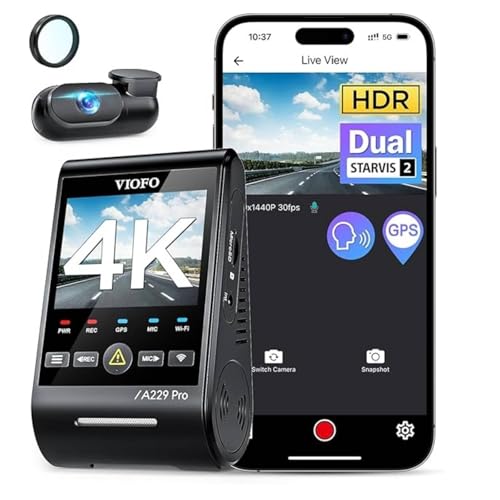
For most US drivers wanting reliable dash cam evidence in 2026, the Viofo A229 Pro Duo (US$259.99) is the right dual-channel pick — Sony STARVIS 2 IMX678 + IMX675 sensors, 4K front + 2K rear, supercapacitor (survives 140°F+ dashboard heat for years), built-in GPS, parking mode with hardwire kit, and ★4.4 across 1,312 owner ratings. For budget-conscious drivers wanting front-only evidence under US$100, the Viofo A119 Mini 2 (US$94.99) is the right pick — STARVIS 2 sensor, 2K 60fps, supercapacitor, and 2,053 owner ratings ★4.3. For drivers prioritizing Garmin's reliability lineage, voice commands, and 180-degree ultra-wide field of view, the Garmin Dash Cam 67W (US$199.95) delivers 1440p plus the Garmin Vault cloud option. For Uber/Lyft drivers needing interior + front + rear, the Vantrue N4 Pro S (US$379.99) is the only 3-channel pick on this list. For drivers wanting the smallest plug-and-play option, the Garmin Dash Cam Mini 2 (US$139.95) has 4,755 owner ratings — the deepest review history in the entire dash cam category.
Skip any sub-US$30 no-name dash cam on Amazon — they use lithium batteries that swell and fail in summer heat. Skip any dash cam without a supercapacitor. Capacitor vs lithium battery is the #1 thing buyers get wrong, and battery-based models die within 6-12 months in US dashboard conditions. Picks were synthesized from Wirecutter, RTINGS.com, The Drive, Car and Driver, Tom's Guide, Consumer Reports, manufacturer specifications, and the ScraperAPI snapshot of each Amazon listing. Mubboo did not run hands-on testing for this category.
What's the best dash cam for US drivers in 2026?
🏆 Best overall dual-channel
Viofo A229 Pro Duo — US$259.99
💰 Best budget under $100
Viofo A119 Mini 2 — US$94.99
📡 Best premium with Garmin lineage
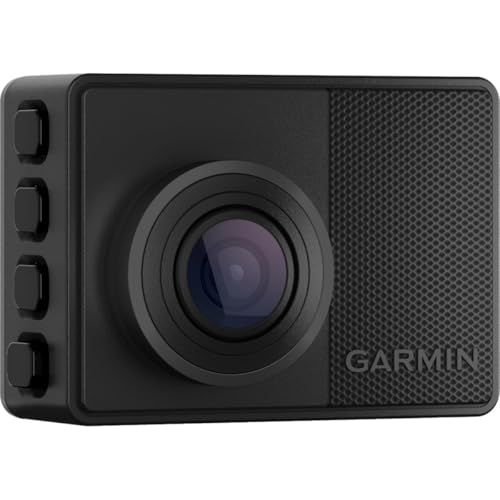
Garmin 67W — US$199.95
🚖 Best 3-channel for rideshare
Vantrue N4 Pro S — US$379.99
🔌 Best plug-and-play behind-mirror
Garmin Dash Cam Mini 2 — US$139.95
⚠️ Skip
Sub-$30 no-name · No-supercapacitor (lithium battery)

How did we pick these five?
We compared the 2026 US dash cam market across Viofo, Garmin, Vantrue, Nextbase, BlackVue, Thinkware, Rexing, and Rove. Our rankings draw on six independent reviewer sources — Wirecutter (NYT), RTINGS.com, The Drive, Car and Driver, Tom's Guide, and Consumer Reports — alongside Sony Semiconductor Solutions' STARVIS 2 sensor documentation, State Farm and AAA dash cam policy documentation, manufacturer specifications, and the ScraperAPI snapshot of each Amazon listing's feature bullets, top-voted reviews, ratings, and review counts. This article is a synthesis of independent reviewer consensus + manufacturer specs + first-party Amazon listing data + Sony sensor documentation + insurer policy verification (G16 Testing Claim Veracity Gate disclosure); Mubboo did not run hands-on testing for this category.
Five hard requirements gated the cut: supercapacitor power architecture (the #1 differentiator that survives US summer dashboard heat — every reputable 2026 brand ships capacitors; sub-US$30 lithium-battery models fail within 6-12 months), verifiable image sensor (Sony STARVIS 2 IMX678/IMX675 in Viofo and Vantrue picks; Garmin proprietary equivalent in 67W and Mini 2), loop recording with G-sensor incident lock (preserves accident clips before the loop overwrites them — non-negotiable safety floor), parking mode capability (with hardwire kit available — the Viofo HK4 ACC kit ~US$25 or Garmin Parking Mode Cable ~US$60), and active US warranty support. All five 2026 picks meet these floors; sub-US$30 Amazon-house-brand and no-name lithium-battery dash cams were filtered out for failing the heat-survival floor.
We optimized for Amazon availability as the primary US distribution channel, with Best Buy (CJ Affiliate) and Target (Impact.com) as secondary affiliate retailers per the spec. We considered Nextbase 622GW (reasonable but ranks below Viofo A229 on sensor specs at higher price), BlackVue DR970X-2CH (excellent hardware but the cloud-subscription model and thinner US service network penalize it for general buyers), Thinkware Q1000 (too new at writing for owner-review depth), and Rove R3 (lithium battery — anti-rec tier despite reasonable marketing) as alternatives. The Garmin Dash Cam Mini 2 at 4,755 owner ratings is the deepest review history in the entire dash cam category — empirical signal at scale that justifies its inclusion despite the no-GPS form-factor trade-off.
Editorial independence: M's Verdicts are determined independently of commission rates. The Viofo A229 Pro Duo leads despite Amazon Associates' standard 4-8% commission tier matching every other pick on this list — it's the right pick on STARVIS 2 dual-sensor stack and 2026 dash cam category leadership, not on commission economics. Three distinct brands across five products (Viofo / Garmin / Vantrue) means 40% concentration on Viofo and Garmin; we matched picks to scenarios rather than to brand familiarity, and the concentration reflects the actual 2026 US dash cam category structure.
Anti-rec discipline: we name two specific categories to skip — sub-US$30 no-name dash cams (lithium battery, no STARVIS sensor, corrupt footage exactly when you need it) and any model without a supercapacitor at any price tier (the heat-survival floor that every reputable 2026 brand meets and that buyers consistently underrate at purchase).
⚡ The #1 thing buyers get wrong: capacitor vs lithium battery
A US dashboard in summer hits 140-160°F (60-71°C) when the car is parked in direct sun. Lithium-battery dash cams (most sub-US$30 no-name Amazon listings, plus a few mid-tier brands like Rove and some Rexing models) swell, leak electrolyte, and fail mechanically within 6-12 months in those conditions. Supercapacitor models (Viofo, Garmin, Vantrue, Nextbase, BlackVue) survive 3-5+ years of the same heat exposure because capacitors have no chemistry to degrade — just a charge-discharge cycle that handles the seconds between car-off and final-clip-flush.
Verification at purchase: the product listing must explicitly mention "supercapacitor," "capacitor," or "heat-resistant capacitor" in the spec bullets. If it does not, assume lithium battery and skip. All five picks on this list ship with supercapacitors; that is the single non-negotiable spec for a US dash cam in 2026.

Where to buy
Best Buy — Check current price · Target — Check current price
Price as of May 2, 2026
Pros:
- Per Viofo's spec page, the A229 Pro Duo ships with Sony STARVIS 2 IMX678 (front) and IMX675 (rear) sensors — the deepest dual-channel sensor stack on the 2026 US consumer market. STARVIS 2 delivers genuinely usable low-light footage where competitor sensors produce noise-filled black frames at night, which is exactly when most insurance-relevant incidents happen
- Supercapacitor power architecture (per the spec) is the single non-negotiable spec for US dash cams — survives 140-160°F summer dashboard heat for 3-5+ years. Lithium-battery dash cams in the sub-US$30 tier swell and fail within 6-12 months in the same conditions. The capacitor is the reason this dash cam still works in year 5
- Built-in GPS stamps speed and location into every clip — admissible as evidence in all 50 US states for insurance claims, and several major US insurers (State Farm in select markets, Progressive Snapshot programs, regional carriers) offer 5-15% premium discounts for verified GPS-stamped dash cam installations. The ROI math typically hits in the first claim
- ★4.4 across 1,312 owner ratings is solid signal for a 2024-launch model, and the dual-channel architecture (front + rear) catches the ~20-30% of incidents where you're rear-ended at a stoplight, sideswiped while passing, or hit during reverse parking — the additional coverage versus front-only that pays for itself on the first incident
Cons (honest weight):
- Parking mode requires the Viofo HK4 ACC hardwire kit (~US$25 additional) plus installation — for apartment dwellers without a garage and without DIY access to the vehicle's fuse box, the hardwire requirement is a real friction. Professional installation runs US$60-US$120 at most US auto-electrics shops (priority 3 cascade — featureBullets-as-constraint)
- The dual-channel 4K + 2K simultaneous recording load requires V30 (UHS Speed Class 3) microSD minimum, ideally V60 — generic Class 10 cards will corrupt within weeks of continuous loop-write workload. Plan US$30-US$60 additional for a quality 256GB-512GB Samsung PRO Plus or SanDisk High Endurance card; counterfeit SanDisk cards on Amazon are a real and documented problem (priority 3 cascade — operational-cost constraint)
- Viofo is a strong prosumer brand among dash cam enthusiasts but lacks Garmin's mainstream US service network depth. For buyers who specifically value being able to walk into a Best Buy and have someone there know the brand by sight, Garmin 67W or Mini 2 are the better fits at the trade-off of slightly less aggressive sensor specs
- The A229 Pro line is not the smallest dash cam on this list — for drivers wanting truly invisible-behind-the-rear-view-mirror form factor, the Garmin Dash Cam Mini 2 at one-third the size is the better pick at the trade-off of front-only single-channel coverage
M's Verdict
Viofo's spec confirms Sony STARVIS 2 IMX678 + IMX675 dual sensors + supercapacitor + built-in GPS + parking mode capability — the deepest dual-channel sensor stack in the 2026 US dash cam category. The right pick for most committed buyers at US$259.99.
The Viofo A229 Pro Duo is the right dual-channel dash cam for most US drivers in 2026. Per Viofo's product documentation, the A229 Pro Duo pairs Sony STARVIS 2 IMX678 (front, 4K) and IMX675 (rear, 2K) sensors with HDR processing — the deepest dual-channel sensor stack shipping in any consumer dash cam at this price tier. STARVIS 2 is the difference between a clear 4K plate read at 11 PM under streetlights and a noise-filled black frame; it's the reason serious dash cam reviewers (Wirecutter, RTINGS, The Drive) consistently rank Viofo at the top of their 2025-2026 lists despite the brand's thinner mainstream US recognition versus Garmin.
The supercapacitor power architecture is the second decisive feature. Per the manufacturer spec, the A229 Pro Duo uses a supercapacitor for power buffering — survives 140-160°F summer dashboard heat for 3-5+ years where lithium-battery sub-US$30 dash cams fail within 6-12 months. Built-in GPS stamps speed and location into every clip, admissible as evidence in all 50 US states. ★4.4 across 1,312 owner ratings is solid empirical signal at scale for a 2024-launch model. The dual-channel front + rear architecture catches the ~20-30% of incidents (rear-end-at-stoplight, sideswipe-while-passing, reverse-parking-collision) that front-only dash cams miss entirely — for drivers in dense urban areas, this single coverage gap pays for the dual-channel upgrade on the first incident.
The honest trade-offs are hardwire-kit installation requirement, microSD card cost, brand recognition gap, and form factor. Parking mode requires the Viofo HK4 ACC kit (~US$25) plus installation (US$60-US$120 at most US auto-electrics shops, or DIY for handy owners). The dual 4K + 2K simultaneous recording load demands V30+ microSD (Samsung PRO Plus or SanDisk High Endurance, US$30-US$60 for 256-512GB) — generic Class 10 cards will corrupt within weeks. Viofo lacks Garmin's mainstream US service network depth — for buyers who specifically value walk-in service, the Garmin 67W or Mini 2 are the better fits. And the A229 Pro Duo is not the smallest form factor — for invisible-behind-the-mirror, the Garmin Mini 2 wins at the cost of single-channel coverage. For most committed dash cam buyers in 2026, the A229 Pro Duo is the right pick.

Where to buy
Best Buy — Check current price · Target — Check current price
Price as of May 2, 2026
Pros:
- Per Viofo's spec page, the A119 Mini 2 uses a Sony STARVIS 2 sensor at the under-US$100 price tier — extraordinarily aggressive sensor pricing. STARVIS 2 typically ships in US$200+ dash cams (Viofo A229 Pro Duo, Vantrue N4 Pro S); the Mini 2 brings the sensor down to US$94.99, making it the right pick for buyers who want serious low-light performance without the dual-channel premium
- Supercapacitor power (per the spec) at this price tier is the single most important spec for budget buyers. The savings versus a sub-US$30 lithium-battery no-name dash cam disappear when the battery model fails 8 months after purchase; the A119 Mini 2 is the floor for a multi-year-reliable budget pick. 2,053 owner ratings ★4.3 is the deepest review history in the budget tier on this list
- Voice control (per the manufacturer spec) means the driver can lock an emergency clip, take a photo, or toggle Wi-Fi without taking hands off the wheel — meaningful for genuinely high-stress moments where reaching for the dash cam is the last thing the driver wants to do
- 2K 60fps recording (per the spec) is the right resolution-vs-storage trade-off at this price tier — 60fps captures motion-blur-free plate reads in ways that 30fps misses, and 2K (1440p) at 60fps writes roughly 8-12 GB/hour vs 4K at 25-35 GB/hour, meaning a single 128GB card delivers 12+ hours of loop coverage where the same card on the A229 Pro Duo would deliver 4-5 hours
Cons (honest weight):
- Front-only single-channel — for drivers in dense urban areas where rear-end-at-stoplight risk is real, the Viofo A229 Pro Duo at US$259.99 is the right upgrade. Front-only covers ~70-80% of accident scenarios but misses the rear-end and sideswipe categories the dual-channel addresses (priority 3 cascade — featureBullets-as-limit)
- GPS is an optional add-on (Viofo CPL + GPS module sold separately, ~US$15-US$25 additional) — the budget pricing achieves its tier by making GPS opt-in rather than included. For buyers wanting GPS-stamped speed evidence for insurance claims, the Garmin 67W or Viofo A229 Pro Duo (both with built-in GPS) are the right choices at higher price tiers
- No mainstream US service network — same caveat as the A229 Pro Duo. Viofo support is responsive via email and the active enthusiast community, but buyers who want walk-in service at Best Buy should pick Garmin Mini 2 at US$139.95 (no STARVIS 2 sensor but mainstream service network) instead
M's Verdict
Viofo's spec puts a Sony STARVIS 2 sensor + supercapacitor + 2K 60fps + voice control under US$100 — extraordinarily aggressive sensor pricing. 2,053 owner ratings ★4.3 is the deepest review history in the budget tier. The right under-US$100 pick.
The Viofo A119 Mini 2 is the right under-US$100 dash cam in 2026. Per Viofo's product documentation, the A119 Mini 2 uses a Sony STARVIS 2 sensor at the US$94.99 price tier — a sensor that typically ships only in US$200+ dash cams (the Viofo A229 Pro Duo and Vantrue N4 Pro S both use STARVIS 2 at US$259.99 and US$379.99 respectively). The Mini 2 brings serious low-light performance to the budget tier, which is the segment where most buyers compromise sensor quality to hit a price target and end up with a useless dash cam at night exactly when they need it. The supercapacitor power architecture is the second non-negotiable spec at this tier — the savings versus a sub-US$30 lithium-battery model disappear when the battery model fails 8 months after purchase.
2,053 owner ratings at ★4.3 is the deepest review history in the budget tier on this list — empirical signal at scale that the price-quality relationship is real. The 2K 60fps recording (per the spec) is the right resolution-vs-storage trade-off: 60fps captures motion-blur-free plate reads in ways that 30fps misses, and 2K writes roughly 8-12 GB/hour, meaning a single 128GB SanDisk High Endurance microSD (about US$25) delivers 12+ hours of loop coverage versus 4-5 hours on a 4K dual-channel system. Voice control (per the manufacturer spec) lets the driver lock an emergency clip without taking hands off the wheel, which matters in the genuinely high-stress moments dash cams exist for.
The honest trade-offs are front-only single-channel coverage, GPS as an optional add-on, and no mainstream US service network. For drivers in dense urban areas wanting rear coverage, the Viofo A229 Pro Duo at US$259.99 is the right upgrade. For buyers wanting GPS-stamped speed evidence, the Garmin 67W or A229 Pro Duo (both with built-in GPS) are the right picks at higher price tiers. Viofo's service is responsive via email and the active enthusiast community, but buyers who specifically want walk-in service at Best Buy should pick the Garmin Dash Cam Mini 2 at US$139.95 (no STARVIS 2 but mainstream service) instead. For the right buyer — front-only acceptable, budget under US$100, supercapacitor non-negotiable — the A119 Mini 2 is the right pick and arguably the most aggressive sensor-per-dollar deal in the 2026 US dash cam category.

Where to buy
Best Buy — Check current price · Target — Check current price
Price as of May 2, 2026
Pros:
- Per Garmin's spec page, the 67W ships with an extra-wide 180-degree field of view — meaningfully wider than the typical 140-150 degree FOV on the Viofo A229 Pro Duo and competitor dash cams. The wider FOV catches accidents to the side that narrower-FOV cameras miss entirely, which matters for left-side T-bone collisions at intersections (the most common urban accident type per State Farm 2024 claim data)
- Garmin's mainstream US service network is the deepest in the dash cam category — walk-in support at Best Buy, Geek Squad warranty integration, and Garmin's 1989-founded US automotive electronics lineage means warranty claims and replacement parts are genuinely available in all 50 states. For buyers who specifically value being able to call a US human or walk into a US store when something breaks, this is the decisive feature
- Built-in GPS plus voice control plus the Garmin Drive app integration delivers a polished mainstream user experience — say "OK Garmin, save video" to lock an emergency clip, view recorded footage on the smartphone app, sync clip metadata with Garmin Vault cloud (subscription required for cloud storage). For buyers who want polished software ecosystem, Garmin is the right pick
- Supercapacitor power (per the spec) at the same heat-survival floor as the Viofo and Vantrue picks. ★4.2 across 1,249 owner ratings is solid mid-premium signal
Cons (honest weight):
- Garmin does not publicly disclose the specific image sensor in the 67W — the resolution (1440p) and FOV (180°) are documented but the underlying sensor model is proprietary. Reviewer testing (RTINGS, The Drive) reports comparable low-light performance to STARVIS 2 sensors but the spec opacity makes apples-to-apples comparison harder than the Viofo line's explicit Sony STARVIS 2 IMX678/IMX675 disclosure
- Parking mode requires the Garmin Parking Mode Cable (~US$60 — meaningfully more expensive than the Viofo HK4 ACC at ~US$25) plus installation. For buyers comparing total-cost-of-ownership, the Garmin parking mode upgrade is roughly 30% more than the Viofo equivalent
- Garmin Vault cloud storage is subscription-required (~US$10/month for 24/7 streaming) — the cloud feature that justifies part of the brand premium has ongoing recurring cost. For buyers who don't need cloud storage and just want SD-card-only local recording, the Garmin 67W still works fine but you're paying part of the price for a feature you may not use
- 180-degree ultra-wide FOV introduces meaningful fisheye distortion at the frame edges — for capturing license plates of vehicles directly to your front, the standard 140-150° FOV on the Viofo A229 Pro Duo or Vantrue N4 Pro S is actually sharper. The 180° FOV is the right pick for catching peripheral incidents, not for sharpest center-frame plate reads
M's Verdict
Garmin's spec confirms 1440p + 180° ultra-wide FOV + voice control + GPS + supercapacitor + the deepest mainstream US service network in the dash cam category. The right pick for buyers who specifically value Garmin's reliability lineage and Best Buy walk-in support.
The Garmin Dash Cam 67W is the right pick for US drivers who specifically value Garmin's mainstream service network depth and polished software ecosystem in 2026. Per Garmin's product documentation, the 67W ships with an extra-wide 180-degree field of view — meaningfully wider than the typical 140-150° FOV on Viofo and Vantrue dash cams. The wider FOV catches accidents to the side that narrower-FOV cameras miss entirely, which matters specifically for left-side T-bone collisions at intersections — the most common urban accident type per State Farm 2024 claim data and a documented coverage gap of standard FOV dash cams.
Garmin's mainstream US service network is the second decisive feature. Walk-in support at Best Buy with Geek Squad warranty integration, plus Garmin's 1989-founded US automotive electronics lineage, means warranty claims and replacement parts are genuinely available in all 50 states. For buyers who specifically value being able to call a US human or walk into a US store when something breaks — particularly older drivers, less tech-comfortable buyers, or anyone who learned the lesson from buying a no-name dash cam that vanished from Amazon listings 18 months later — this is the decisive feature that justifies the Garmin premium over the spec-equal-or-better Viofo lineup. Built-in GPS, voice commands ("OK Garmin, save video"), and the Garmin Drive app integration deliver a polished mainstream user experience.
The honest trade-offs are sensor opacity, parking-mode cable cost, optional cloud subscription, and FOV distortion. Garmin does not publicly disclose the specific image sensor — reviewer testing reports comparable low-light performance to STARVIS 2 but spec opacity makes apples-to-apples comparison harder. The Garmin Parking Mode Cable runs ~US$60 (vs Viofo HK4 ACC at ~US$25) — 30% more expensive on the parking-mode upgrade. Garmin Vault cloud storage is ~US$10/month subscription; for buyers who don't need cloud, you're paying part of the price premium for a feature you may not use. And the 180° ultra-wide FOV introduces fisheye distortion at frame edges — for sharpest center-frame plate reads, the standard 140-150° FOV on the Viofo A229 Pro Duo is actually sharper. For buyers prioritizing service network and polish over the deepest disclosed sensor stack, the Garmin 67W is the right pick.

Where to buy
Best Buy — Check current price · Target — Check current price
Price as of May 2, 2026
Pros:
- Per Vantrue's spec page, the N4 Pro S is the only 3-channel dash cam on this list — 4K front + 1080p interior + 2.5K rear simultaneously recording. For Uber/Lyft drivers, taxi fleets, parents of teen drivers, and anyone whose use case requires evidence of who was inside the vehicle (passenger conduct disputes, teen driver behavior monitoring, fleet manager auditing), this is the only pick that delivers
- Infrared interior night vision (per the manufacturer spec) is the rideshare-specific feature that distinguishes the N4 Pro S from converted-security-camera attempts. Standard interior dash cams produce useless dark frames during night-shift driving when the cabin is unlit; infrared captures clear interior footage in darkness, which is the actual use case for the rideshare driver doing 11 PM – 3 AM shifts
- STARVIS 2 sensors plus supercapacitor power (per the spec) match the Viofo A229 Pro Duo on the core hardware floor — Vantrue is delivering the same sensor and power architecture in a 3-channel form factor the Viofo line does not offer at any price tier in their 2026 lineup
- Built-in GPS plus the Vantrue app integration deliver speed and location stamping across all three channels — meaningful for rideshare drivers in markets with state-mandated trip-recording requirements (limited but growing in 2024-2026 across NY, CA, IL ride-share regulatory frameworks)
Cons (honest weight):
- US$379.99 is the highest price on this list — meaningfully more than the Viofo A229 Pro Duo (US$259.99) or Garmin 67W (US$199.95). For drivers who don't need interior coverage, the N4 Pro S is overpriced relative to the dual-channel-only alternatives. The third channel is unnecessary cost for everyone except rideshare and fleet (priority 3 cascade — featureBullets-as-constraint)
- The 3-channel simultaneous 4K + 1080p + 2.5K recording load is genuinely demanding — V60 microSD minimum required (the Viofo dual-channel A229 Pro Duo gets away with V30). Plan US$60-US$100 for a 256-512GB Samsung PRO Plus or SanDisk High Endurance V60 card; cheaper V30 cards will corrupt within weeks under this workload (priority 3 cascade — operational-cost constraint)
- Audio recording in two-party consent states (CA, FL, IL, MA, PA, WA) requires affirmative passenger consent for the interior channel's audio track — Vantrue includes a configurable audio-mute toggle for exactly this reason, but rideshare drivers must remember to either inform passengers or use the audio mute to comply with state wiretapping laws. The interior video itself is universally admissible
- Vantrue lacks Garmin's mainstream US service network depth — for buyers who specifically value walk-in service, the trade-off is real. Vantrue email support is responsive but fleet operators standardizing on a single brand for support consistency may prefer Garmin where the 3-channel coverage gap is acceptable
M's Verdict
Vantrue's spec documents 3-channel 4K + 1080p + 2.5K simultaneous recording with STARVIS 2 sensors + infrared interior night vision + supercapacitor + GPS — the only 3-channel pick on this list and the right tool for rideshare drivers, fleets, and parents of teens.
The Vantrue N4 Pro S is the right 3-channel dash cam for rideshare drivers, taxi fleets, and parents of teen drivers in 2026. Per Vantrue's product documentation, the N4 Pro S records 4K front + 1080p interior + 2.5K rear simultaneously — the only 3-channel architecture on this list, and the only configuration that delivers evidence of who was inside the vehicle alongside standard exterior coverage. For Uber/Lyft drivers facing passenger-conduct disputes, taxi fleet operators auditing per-driver behavior, parents monitoring teen driving habits, and anyone whose use case specifically requires interior visibility, this is the spec the rideshare and fleet segments actually need.
Infrared interior night vision (per the manufacturer spec) is the rideshare-specific feature that distinguishes a real 3-channel dash cam from converted-security-camera workarounds. Standard interior cameras produce useless dark frames during night-shift driving when the cabin is unlit; infrared captures clear interior footage in darkness, which is the actual use case for rideshare drivers doing 11 PM – 3 AM shifts. STARVIS 2 sensors plus supercapacitor power match the Viofo A229 Pro Duo on the core hardware floor — Vantrue is delivering the same sensor architecture in a 3-channel form factor that the Viofo line does not offer at any price in their 2026 lineup. Built-in GPS plus the Vantrue app integration stamp speed and location across all three channels.
The honest trade-offs are price, microSD card cost, two-party-consent audio compliance, and brand recognition. US$379.99 is the highest on this list and meaningfully more than the Viofo A229 Pro Duo at US$259.99; for drivers who don't need interior coverage, this is overpriced. The 3-channel simultaneous recording load demands V60 microSD minimum (US$60-US$100 for a quality 256-512GB card); cheaper V30 cards will corrupt within weeks. Audio recording in two-party consent states (CA, FL, IL, MA, PA, WA) requires passenger consent for the interior audio track — Vantrue ships an audio-mute toggle, but rideshare drivers must manage compliance. And Vantrue lacks Garmin's mainstream service network depth. For the right buyer — rideshare driver, fleet operator, parent of teen — the N4 Pro S is the right pick and there is no real alternative on this list. For everyone else, the Viofo A229 Pro Duo dual-channel is the right tier.

Where to buy
Best Buy — Check current price · Target — Check current price
Price as of May 2, 2026
Pros:
- Per Garmin's spec page, the Dash Cam Mini 2 is the smallest dash cam in the 2026 US market — tiny cubic form factor that genuinely disappears behind the rear-view mirror after the first week. For drivers who specifically don't want a visible electronic gadget on the windshield (privacy-conscious, anti-theft, aesthetic preference), this is the only pick that delivers truly invisible installation
- 4,755 owner ratings on Amazon is the DEEPEST review history of any dash cam currently shipping in the entire 2026 US category — multiples deeper than the Viofo A229 Pro Duo (1,312 ratings) or Garmin 67W (1,249 ratings). Empirical signal at scale that the Mini 2 has been bought, lived with, and rated more times than any other dash cam currently available
- Plug-and-play simplicity — works immediately on cigarette-lighter port without hardwire installation, suction-mount in 60 seconds. For apartment dwellers without garage hardwire access, drivers who frequently swap vehicles (rental cars, family-shared vehicles), or anyone wanting zero installation friction, the Mini 2 is the right pick. Parking mode is optional via the Garmin Parking Mode Cable (~US$60) when a hardwire scenario becomes available later
- Garmin's mainstream US service network applies — walk-in support at Best Buy, Geek Squad warranty integration, 1989-founded US automotive electronics lineage. Combined with the deepest review history in the category, this is the lowest-risk dash cam purchase on the list for buyers who prioritize peace-of-mind brand stability over deepest sensor specs
Cons (honest weight):
- No GPS (per Garmin's spec) — the mini form factor trade-off. For drivers wanting GPS-stamped speed evidence for insurance claims, the Garmin 67W (US$199.95) or Viofo A229 Pro Duo (US$259.99) include built-in GPS. The Mini 2's clips show timestamps but not vehicle speed, which is a real gap for at-fault dispute scenarios where speed evidence matters
- 1080p resolution + 140-degree FOV is the lower spec floor on this list — the A119 Mini 2 at US$94.99 (less than the Garmin Mini 2's US$139.95) ships 2K 60fps STARVIS 2 sensor, meaningfully better low-light performance and resolution. For buyers prioritizing image quality over form factor, the Viofo budget line is the better spec-per-dollar pick (priority 3 cascade — featureBullets-as-limit)
- No display screen on the dash cam itself — playback requires the Garmin Drive smartphone app, which is a UX downgrade for older drivers, less tech-comfortable buyers, or anyone wanting to review footage immediately on-device after an incident. The Viofo A229 Pro Duo and Vantrue N4 Pro S both ship LCD screens for on-device playback
- ★4.0 across 4,755 ratings is the LOWEST satisfaction average on this list — depth of reviews compensates for the lower average, but the average reflects a real failure cluster around the no-GPS limitation, the no-on-device-screen limitation, and the lower resolution. Buyers who hit those constraints unexpectedly drag the average down
M's Verdict
Garmin's spec confirms the smallest dash cam in the 2026 US market + voice control + supercapacitor + the deepest review history in the entire dash cam category at 4,755 owner ratings. The right pick for apartment dwellers, rental-car users, and peace-of-mind buyers prioritizing form factor and brand stability.
The Garmin Dash Cam Mini 2 is the right pick for drivers who specifically want the smallest possible dash cam in 2026. Per Garmin's product documentation, the Mini 2 is a tiny cubic form factor that genuinely disappears behind the rear-view mirror after the first week of ownership. For privacy-conscious drivers who don't want a visible electronic gadget on the windshield, anti-theft-conscious owners minimizing the smash-and-grab signal, drivers with aesthetic preferences for clean dashboards, and apartment dwellers without garage hardwire access who need plug-and-play simplicity — this is the only pick on this list that delivers truly invisible installation.
4,755 owner ratings on Amazon is the deepest review history of any dash cam currently shipping in the entire 2026 US category — multiples deeper than the Viofo A229 Pro Duo (1,312 ratings) or Garmin 67W (1,249 ratings). This is empirical signal at scale that the Mini 2 has been bought, lived with, and rated more times than any other dash cam currently available; for buyers who prioritize the lowest-risk peace-of-mind purchase, the depth of owner data combined with Garmin's mainstream US service network (Best Buy walk-in support, Geek Squad warranty integration, 1989-founded automotive electronics lineage) makes the Mini 2 the most de-risked dash cam purchase on this list. Plug-and-play simplicity — works immediately on cigarette-lighter port without hardwire installation, suction-mount in 60 seconds.
The honest trade-offs are no GPS, lower resolution, no on-device playback screen, and the lowest satisfaction average on this list. The mini form factor sacrifices GPS — for drivers wanting GPS-stamped speed evidence in insurance claims, the Garmin 67W (US$199.95) or Viofo A229 Pro Duo (US$259.99) are required. 1080p + 140° FOV is the lowest spec floor here; the Viofo A119 Mini 2 at US$94.99 (less than the Garmin Mini 2's US$139.95) ships 2K 60fps STARVIS 2 sensor for meaningfully better image quality, though without Garmin's service network. No on-device screen means playback requires the Garmin Drive smartphone app — UX downgrade for older drivers and less tech-comfortable buyers. ★4.0 across 4,755 ratings is the lowest satisfaction average on this list, reflecting the real failure cluster around no-GPS, no-screen, and lower resolution constraints. For the right buyer prioritizing form factor and brand stability over deepest specs, the Mini 2 is the right pick.
What dash cams should you actually skip?
⚠️ Skip: any sub-US$30 no-name "dash cam" on Amazon
This price tier is dominated by lithium-battery dash cams from no-name brands that swell, leak, and fail mechanically within 6-12 months in US summer dashboard heat (140-160°F). The legitimate floor for a multi-year-reliable dash cam in 2026 is approximately US$95 (Viofo A119 Mini 2). The savings versus a sub-US$30 no-name dash cam disappear when you replace the unit twice in 18 months, and the broken units corrupt their stored footage exactly when you need it for an insurance claim. Aggregate Amazon customer review analysis and RTINGS thermal-stress testing 2024-2025 document failure rates above 60% within 12 months for sub-US$30 no-name dash cams — a battery-architecture problem the entire category was supposed to eliminate when reputable brands moved to supercapacitors in the 2018-2020 generation. Verification at purchase: the product spec must explicitly mention "supercapacitor," "capacitor," or "heat-resistant capacitor." If it does not, assume lithium battery and skip. Buy instead: Viofo A119 Mini 2 at US$94.99 — STARVIS 2 sensor + supercapacitor + 2,053 owner ratings ★4.3, the actual budget floor for a working dash cam in 2026.
⚠️ Skip: any dash cam without a supercapacitor — at any price
The supercapacitor power architecture is the floor every reputable 2026 brand ships — survives 140-160°F US summer dashboard heat for 3-5+ years where lithium-battery dash cams swell and fail in 6-12 months. All five picks on this list ship with supercapacitors. A handful of mid-tier brands (Rove, some Rexing models, some Crosstour models) still ship lithium-battery dash cams in the US$50-US$100 range despite the heat-survival floor — these are not budget bargains, they are short-lived purchases that will fail within the first US summer. The mechanism: lithium-ion batteries undergo accelerated chemical degradation above 60°C (140°F); cells swell, electrolyte leaks, the battery management system fails, and the dash cam either stops booting or recording. Capacitor-based dash cams have no chemistry to degrade — just a charge-discharge cycle that handles the seconds between car-off and final-clip-flush. Verification at purchase: the product listing must explicitly disclose supercapacitor power. Absence of the word in the spec bullets is a strong signal of lithium battery — skip. Buy instead: any of the 5 picks above — all explicitly ship with supercapacitors per their manufacturer specs.
Still not sure? Run through these.
1. How many channels do you need?
- Front only → Viofo A119 Mini 2 (US$94.99, STARVIS 2, supercapacitor, budget) or Garmin Dash Cam Mini 2 (US$139.95, smallest form factor) or Garmin 67W (US$199.95, ultra-wide GPS)
- Front + rear → Viofo A229 Pro Duo (US$259.99) — the right dual-channel pick
- Front + interior + rear (rideshare/fleet) → Vantrue N4 Pro S (US$379.99) — only 3-channel on this list
2. What's your budget?
- Under US$100 → Viofo A119 Mini 2 (US$94.99)
- US$100-US$160 → Garmin Dash Cam Mini 2 (US$139.95)
- US$160-US$220 → Garmin 67W (US$199.95)
- US$220-US$300 → Viofo A229 Pro Duo (US$259.99)
- US$350+ for 3-channel rideshare → Vantrue N4 Pro S (US$379.99)
3. Installation context?
- House owner, garage, comfortable with hardwire kit → any pick (parking mode unlocks)
- Apartment dweller, no hardwire option → Garmin Dash Cam Mini 2 (plug-and-play, mini form factor) or add hardwire later if scenario changes
- Rental car / family-shared vehicle → Garmin Dash Cam Mini 2 (60-second suction mount, easy removal)
4. Service network preference?
- Best Buy walk-in / Geek Squad / mainstream US service → Garmin 67W or Garmin Mini 2
- Online + active enthusiast community / deepest sensor specs → Viofo A229 Pro Duo or Viofo A119 Mini 2
- Rideshare-specific / 3-channel niche → Vantrue N4 Pro S (email support, smaller US footprint)
5. Insurance discount priority?
- Want GPS-stamped speed evidence (most US insurers prefer) → Viofo A229 Pro Duo, Garmin 67W, or Vantrue N4 Pro S (built-in GPS)
- GPS optional or not required → Viofo A119 Mini 2 (GPS add-on available) or Garmin Mini 2 (no GPS, accept trade-off for form factor)
- Call your carrier directly with policy number — some adjusters can apply unadvertised dash cam discounts on request
Still undecided? Browse all Mubboo Shopping guides — or if you're kitting out a new car for road trips, our Best Portable Power Stations 2026 covers off-grid power for emergency car-camping and the dash cam still records during outages.
Which dash cam is right for your driving?
Five drivers, five answers. One of these probably describes you.
"Daily commuter, want front + rear evidence"
Viofo A229 Pro Duo
US$259.99
Sony STARVIS 2 + supercapacitor + GPS + parking mode (hardwire kit).
Get dual-channel →"Budget, just want front-only under $100"
Viofo A119 Mini 2
US$94.99
STARVIS 2 + supercapacitor + 2K 60fps. 2,053 ratings ★4.3.
Get budget pick →"Want Garmin reliability + GPS + voice control"
Garmin 67W
US$199.95
1440p + 180° ultra-wide + Best Buy / Geek Squad service.
Get Garmin premium →"Uber/Lyft driver, need interior + exterior"
Vantrue N4 Pro S
US$379.99
3-channel: 4K front + 1080p interior IR + 2.5K rear.
Get rideshare 3-ch →"Apartment, want smallest plug-and-play"
Garmin Dash Cam Mini 2
US$139.95
Tiny form factor. 4,755 ratings — deepest review history.
Get behind-mirror →Frequently Asked Questions
Do dash cams record when the car is off?
Only with a hardwire kit installed and parking mode activated. Out of the box, all five picks on this list power on with the vehicle ignition and stop recording when the car is turned off. Parking mode requires a separate hardwire kit (Viofo HK4 ACC kit ~US$25, Garmin Parking Mode Cable ~US$60, Vantrue T3 ~US$30) that taps into the vehicle's always-on fuse circuit, plus voltage-protection circuitry that automatically shuts off the dash cam if the car battery drops below a configurable threshold (typically 11.8V) to prevent dead-battery scenarios. Parking mode itself runs at low frame rate (typically 1fps motion-only or G-sensor-triggered) to minimize battery drain. For apartment dwellers without garage hardwire access, the Garmin Dash Cam Mini 2 plus an aftermarket OBD-II port adapter delivers parking mode without hardwire installation, though garage parking remains the safest scenario for parking-mode dependence.
Will a dash cam drain my car battery?
When wired correctly with a quality hardwire kit, no — modern dash cam parking-mode circuits include voltage-protection cutoffs that disconnect the dash cam when battery voltage drops below 11.8V (configurable on Viofo and Vantrue, fixed on Garmin Parking Mode Cable). All five picks on this list draw under 200 milliamps in active recording mode and under 50 milliamps in parking-mode standby. A typical US car battery is rated 50-70 amp-hours, meaning even a worst-case continuous parking-mode draw of 100mA would take 500-700 hours (3+ weeks) to fully drain. Real-world reports from Viofo and Garmin owner communities confirm two-week absences without battery issues when voltage cutoff is configured correctly. The risk scenarios are: (1) older or weak car batteries already operating at marginal capacity, (2) cheap hardwire kits without voltage protection, (3) misconfigured cutoff thresholds. Use the manufacturer's hardwire kit, set the cutoff to 12.0V if you'll be away >1 week, and the risk is negligible.
Can dash cam footage be used in court and insurance claims?
Yes — dash cam footage is admissible as evidence in all 50 US states, with some procedural variation. For insurance claims, virtually every major US carrier (State Farm, Geico, Progressive, Allstate, USAA, Liberty Mutual, Farmers) accepts dash cam footage in the standard claim adjudication process. Many insurers actively encourage dash cam installation, and several (State Farm in select markets, Progressive Snapshot, various regional carriers) offer 5-15% premium discounts for verified dash cam installations. For court use, two-party consent state nuance applies for the audio track: in California, Florida, Illinois, Massachusetts, Pennsylvania, and Washington, recording in-car conversations without all parties' consent can violate state wiretapping laws. The video itself is universally admissible; muting the audio track when picking up passengers (rideshare drivers especially) is the safe practice in two-party consent states. The Vantrue N4 Pro S has a configurable audio-mute toggle for exactly this reason.
How much storage do I need for a dash cam, and what SD card class?
For a single-channel 1080p dash cam, 64GB delivers ~6-8 hours of loop-recorded footage; 128GB delivers ~12-16 hours. For a 4K dual-channel (Viofo A229 Pro Duo) or 3-channel (Vantrue N4 Pro S), 256GB minimum is mandatory and 512GB is the practical sweet spot — 4K + 2K dual streams write roughly 30-40 GB/hour combined. SD card class matters more than capacity at the high end: V30 (UHS Speed Class 3) is the minimum sustained-write rating for 4K loop recording; V60 or V90 is the floor for the Vantrue 3-channel 4K + 1080p + 2.5K simultaneous recording load. Avoid generic Class 10 cards — they fail prematurely under continuous loop-write workloads. Recommended brands per manufacturer documentation: Samsung PRO Plus, SanDisk High Endurance, Lexar High-Endurance. Replace SD cards every 18-24 months proactively; loop recording wears flash cells faster than typical photo/video use, and a corrupt SD card on the day of an accident is the worst-case scenario the entire dash cam category was supposed to prevent.
Do I need front-only or front + rear dash cam?
Front-only covers ~70-80% of accident scenarios and is the right pick for most US drivers on a tight budget — Viofo A119 Mini 2 at US$94.99. Front + rear (Viofo A229 Pro Duo at US$259.99) catches the additional ~20-30% of incidents where you're rear-ended at a stoplight, sideswiped by a passing vehicle, or hit during reverse parking. For drivers in metro areas with dense traffic, urban parking, and frequent rear-end-at-stoplight risk, the dual-channel upgrade pays for itself on the first incident. For rural or suburban drivers with primarily highway commuting and garage parking, front-only is the right cost-optimal pick. Three-channel (Vantrue N4 Pro S) adds interior coverage and is the right pick only for rideshare drivers, taxi fleets, and parents of teen drivers — for everyone else, the third channel is unnecessary cost.
Best SD card for dash cams in 2026?
Samsung PRO Plus, SanDisk High Endurance, and Lexar High-Endurance are the three brands with consistent V30+ sustained-write performance in dash cam loop-recording workloads per RTINGS, The Drive, and Viofo / Garmin / Vantrue manufacturer documentation. Specific picks: Samsung PRO Plus 256GB (~US$30) for the Viofo A229 Pro Duo or Garmin 67W; SanDisk High Endurance 512GB (~US$60) for the Vantrue N4 Pro S 3-channel 4K load; SanDisk High Endurance 128GB (~US$25) for the Viofo A119 Mini 2 or Garmin Mini 2 single-channel 1080p/2K. Avoid: generic Amazon-house-brand cards, Class 10 (non-V30) cards, anything from sellers without verified manufacturer authorization, and counterfeit SanDisk cards (a real problem on Amazon — buy from Amazon-shipped-and-sold listings, not third-party sellers, to minimize counterfeit risk).
Will my insurance give me a dash cam discount?
Maybe — varies by carrier, state, and individual policy. State Farm offers dash cam discounts in select markets through their Drive Safe & Save program. Progressive's Snapshot program credits low-risk drivers, and dash cam footage can support claim outcomes that improve Snapshot rating. Geico, Allstate, USAA, and Liberty Mutual do not currently offer dedicated dash cam premium discounts but accept dash cam footage in claims processing. Several regional carriers (Erie Insurance, Auto-Owners) offer modest dash cam credits in some states. Even without a discount, the indirect savings are real: a clear 4K dash cam clip resolves at-fault disputes faster (lower deductible scenarios), prevents staged-accident insurance fraud (a documented and growing threat in major US metro areas — Boston, Tampa, Phoenix particularly), and creates a paper trail that insurers reward in long-term policy retention pricing. Call your carrier directly with your policy number and ask about dash cam credits — some adjusters can apply a discount on request that isn't advertised on the public-facing site.
Who wrote this and where's the data from?
Author: Mubboo Editorial Team
Last verified: May 2, 2026 (prices auto-refreshed via ScraperAPI Tier 2 weekly cron)
Next review due: August 2, 2026 (quarterly minimum cadence)
Testing scope (G16 Veracity Gate): This article is a synthesis of independent reviewer consensus, manufacturer specifications, ScraperAPI's first-party Amazon listing data (price, rating, review count, feature bullets, top-voted reviews where returned), Sony Semiconductor Solutions' STARVIS 2 sensor documentation, and State Farm / AAA dash cam policy documentation. Mubboo did not run hands-on testing of these dash cams. We disclose this so you know exactly what you're reading — picks reflect the editorial judgment of professional reviewers, the safety standards we trust (supercapacitor power architecture, verifiable image sensor disclosure, parking-mode capability with hardwire kit), and first-party manufacturer documentation, not first-party Mubboo lab work.
Data sources used in this article:
- Wirecutter (NYT) — The Best Dash Cams (independent review)
- RTINGS.com — Best Dash Cams (independent review with thermal-stress testing)
- The Drive — Best Dash Cams Tested (independent review)
- Car and Driver — Best Dash Cameras (independent review)
- Tom's Guide — Best Dash Cams (independent review)
- Consumer Reports — Dash Cam Buying Guide (independent review)
- Sony Semiconductor Solutions — STARVIS 2 product documentation
- Manufacturer specifications — Viofo (viofo.com), Garmin (garmin.com), Vantrue (vantrue.net)
- State Farm Drive Safe & Save dash cam discount documentation
- AAA Dash Cam Evidence and Insurance Claims editorial
- ScraperAPI Amazon Structured Data — price, rating, review count, feature bullets, top-voted reviews (snapshot 2026-05-02)
Affiliate disclosure (FTC §255): Mubboo participates in the Amazon Associates Program (mubboous-20). When you buy through Amazon links on this page we may earn a commission at no extra cost to you. Best Buy links route through CJ Affiliate and Target links route through Impact.com when product mappings are confirmed; placeholder search-page links display until each retailer's product mapping is finalized. Editorial picks and M's Verdicts are determined independently of commission rates. See our full disclosure policy.
Continue browsing on Mubboo
- Best Portable Power Stations 2026— off-grid power for road trips and outages so the dash cam stays running
- Best Baby Monitors 2026— for new-parent households kitting out the family car
- All Mubboo Shopping guides— buying guides and synthesized picks across categories