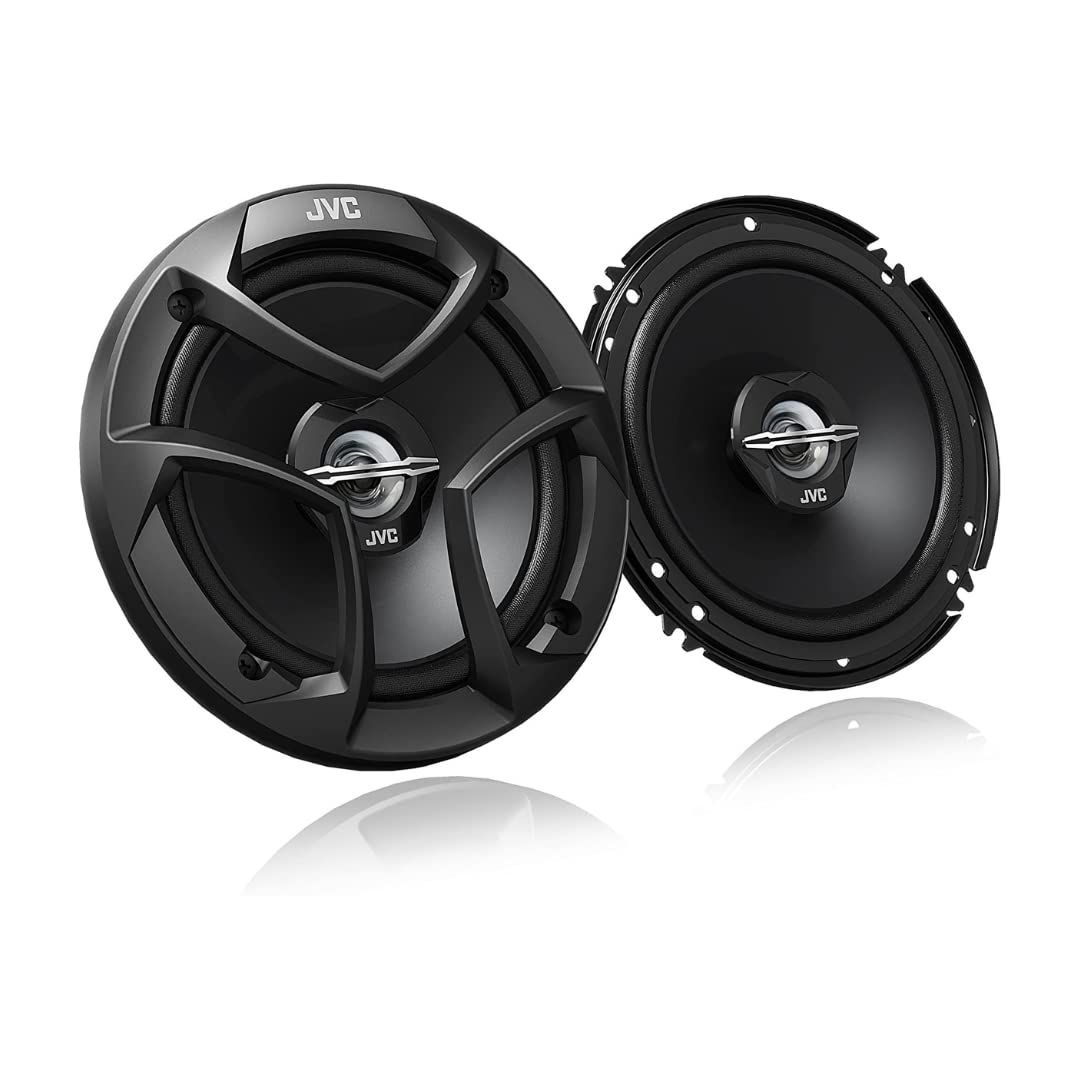
Prices verified Aug 11 · Always confirm at the retailer before buying.
Quick answer
For US shoppers comparing JVC CS-J620 and BOSS CH6530 car speakers (JVC captured June 5, 2026; BOSS captured August 4, 2026), the captured registry lists JVC at $36.95 and BOSS at $28.99. BOSS is $7.96 cheaper. Both captured titles identify 6.5-inch coaxial pairs with a 300W peak label; JVC is labeled 2-way and BOSS 3-way. JVC is recorded at 4.4 stars from 23,554 captured reviews, while BOSS is recorded at 4.3 stars from 17,467. Choose BOSS for the lower price and 3-way label. Choose JVC for the higher rating and larger captured review pool. Neither was independently tested for sound, power handling, durability, installation, amplifier compatibility, or vehicle fit. Verify the exact vehicle opening, depth, bracket, grille, connector, polarity, and impedance before ordering.
BOSS is $7.96 cheaper; JVC has the higher current rating. Both are labeled 6.5-inch coaxial pairs; verify exact vehicle fitment.
Mubboo Verdict
Best for most people
BOSS Audio Systems CH6530 6.5-Inch 3-Way Coaxial Car Speakers, Pair
BOSS is $7.96 cheaper and its current title identifies a 3-way 6.5-inch pair.
Pick the JVC CS-J620 300W 6.5-inch 2-Way Coaxial Car Speakers, Set of 2 instead if
- You prefer the JVC 2-way label.
- You value the higher current rating and larger review pool.
- Your exact vehicle fitment is verified.
JVC CS-J620 300W 6.5-inch 2-Way Coaxial Car Speakers, Set of 2 vs BOSS Audio Systems CH6530 6.5-Inch 3-Way Coaxial Car Speakers, Pair, side by side
JVC CS-J620 300W 6.5-inch 2-Way Coaxial Car Speakers, Set of 2

Pros:
- Current title identifies a 6.5-inch 2-way pair
- Higher captured registry rating
- Larger captured review pool
Cons (honest weight):
- $7.96 higher captured registry price
- Exact vehicle fitment must be checked
- No independent sound or installation test
BOSS Audio Systems CH6530 6.5-Inch 3-Way Coaxial Car Speakers, Pair

Pros:
- Lower captured registry price
- Current title identifies a 3-way format
- Same 300W peak label as JVC
Cons (honest weight):
- Lower captured registry rating
- Exact vehicle fitment must be checked
- No independent sound or installation test
Where each one wins
8 dimensions scored head-to-head. JVC CS-J620 takes 2; BOSS Audio takes 2.
| Dimension | JVC CS-J620 300W 6.5-inch 2-Way Coaxial Car Speakers, Set of 2 | BOSS Audio Systems CH6530 6.5-Inch 3-Way Coaxial Car Speakers, Pair | Winner |
|---|---|---|---|
| Current US registry priceBOSS is $7.96 lower in the captured registry records (JVC/NX694 June 5; BOSS/KICKER August 4, 2026). | $36.95 | $28.99 | BOSS Audio |
| Nominal size and packageBoth captured titles identify 6.5-inch coaxial pairs; vehicle opening and mounting measurements still control fit. | 6.5-inch, set of 2 | 6.5-inch, pair | Tie |
| Driver layout labelBOSS lists 3-way and JVC lists 2-way in the current titles; this does not establish better sound. | 2-way | 3-way | BOSS Audio |
| Peak power labelBoth titles list 300W; the label is not a controlled loudness, durability, or amplifier-compatibility result. | 300W | 300W | Tie |
| Registry ratingJVC has the higher captured registry rating; ratings are marketplace signals only. | 4.4 / 5 | 4.3 / 5 | JVC CS-J620 |
| Captured review poolJVC has the larger captured review pool, not proof of sound quality or fit. | 23,554 | 17,467 | JVC CS-J620 |
| Vehicle fitmentCheck year, make, model, trim, location, opening, depth, bracket, grille, connector, polarity, and impedance. | Verify exact vehicle | Verify exact vehicle | Tie |
| Sound and installation resultNo controlled test established frequency response, sensitivity, distortion, volume, tonal balance, or installation ease. | Not independently tested | Not independently tested | Tie |
| Overall | 2 wins | 2 wins | Tie |
Fitment comes before sound claims
For US shoppers, the captured registry lists JVC at $36.95 and BOSS at $28.99. BOSS is $7.96 lower. Both captured titles identify 6.5-inch coaxial speaker pairs, but that label alone does not prove they fit a particular vehicle.
Before ordering, verify year, make, model, trim, speaker location, factory opening, mounting depth, bracket or adapter needs, grille clearance, connector, polarity, wiring, and impedance. A retailer fit guide or the vehicle manual can help, but the exact installation still controls.
JVC: 2-way 6.5-inch title format
JVC is listed at $36.95. Its current title identifies a 300W 6.5-inch 2-way coaxial pair, a mica cone woofer, a 1-inch PEI tweeter, and easy-installation wording. These are listing labels, not a guarantee of sound, fit, or installation time.
JVC is recorded at 4.4 stars from 23,554 captured reviews. The rating and review pool are marketplace signals. They do not establish tonal balance, bass extension, volume, distortion, longevity, or compatibility with a factory head unit.
Choose JVC when the 2-way format and current rating signal fit your priorities. Confirm the exact mounting depth, terminals, included hardware, adapter needs, and vehicle opening before buying. Do not reuse the retired article’s exact sensitivity, frequency-response, RMS, warranty, or sound claims without current exact-model evidence.
BOSS: 3-way 6.5-inch title format
BOSS is listed at $28.99 and is $7.96 cheaper. Its current title identifies a 300W 6.5-inch 3-way coaxial pair with tweeters and full-range wording. A 3-way label does not by itself prove clearer vocals, stronger bass, louder output, or better imaging.
BOSS is recorded at 4.3 stars from 17,467 captured reviews. That is a marketplace signal only. It does not establish durability, sound quality, amplifier tolerance, or a universal fit.
Verify the exact mounting depth, basket and grille clearance, terminals, included hardware, and impedance on the live listing. Check the amplifier or head-unit output and use the vehicle-specific wiring and adapter requirements. Do not force a speaker into an opening that needs a bracket or different size.
2-way versus 3-way
The current titles identify JVC as 2-way and BOSS as 3-way. That describes the labeled driver arrangement, not a guaranteed listening result. Crossover design, driver quality, enclosure or door treatment, placement, source material, equalization, amplifier output, and installation all affect what a listener hears.
Do not convert the 300W peak label into safe continuous power, real loudness, or amplifier advice. Check the exact RMS and impedance documentation for the model and match it to the vehicle audio system. This comparison does not certify either speaker for a specific amplifier.
Vehicle installation boundaries
“6.5-inch” is not a universal direct-fit guarantee. Some vehicles use a nominal size with unusual brackets, shallow depth, connectors, tweeter clearance, or factory grilles. Door moisture, wiring polarity, and mounting stability also matter.
Disconnect power as appropriate, protect the vehicle wiring, and follow the manual or a qualified installer when the fit or electrical requirements are uncertain. Do not drill, cut, bypass factory safety systems, or alter wiring based on a generic product title alone.
Ratings and reviews
JVC is recorded at 4.4 stars from 23,554 captured reviews; BOSS is recorded at 4.3 stars from 17,467. JVC has the higher rating and larger captured review pool. Neither statistic is a controlled audio or fitment test.
Read recent reviews for the exact ASIN and vehicle context. Look for reports about bracket gaps, depth, connector adapters, grille interference, distortion, rattles, and missing hardware, but keep those anecdotes separate from verified specifications.
Alternatives
The BOSS NX694 is a separate 6x9-inch four-way pair and may suit a different factory opening. The KICKER DSC650 is a separate 6.5-inch pair whose title lists 4-ohm. Neither is a silent replacement for the JVC or BOSS pair; verify vehicle and amplifier fitment independently.
What this comparison does not establish
No independent test established sound quality, frequency response, sensitivity, distortion, power handling, bass, volume, durability, installation time, vehicle fit, amplifier compatibility, or wiring safety. The recommendation is limited to current US registry facts and exact title labels.
Bottom line: choose BOSS for the lower price and 3-way label. Choose JVC for the higher current rating, larger review pool, and 2-way label. Verify exact vehicle fitment and system requirements before ordering either pair.
Which should you buy?
| Your situation | Pick | Why |
|---|---|---|
| Lower price | BOSS Audio Systems CH6530 6.5-Inch 3-Way Coaxial Car Speakers, Pair | BOSS is $7.96 cheaper. |
| 2-way format | JVC CS-J620 300W 6.5-inch 2-Way Coaxial Car Speakers, Set of 2 | JVC current title identifies 2-way. |
| 3-way format | BOSS Audio Systems CH6530 6.5-Inch 3-Way Coaxial Car Speakers, Pair | BOSS current title identifies 3-way. |
| Verified vehicle fit | JVC CS-J620 300W 6.5-inch 2-Way Coaxial Car Speakers, Set of 2 | Neither received a fitment test. |
| 6x9 alternative | JVC CS-J620 300W 6.5-inch 2-Way Coaxial Car Speakers, Set of 2 | BOSS NX694 is the separate 6x9 option. |
| 4-ohm alternative | BOSS Audio Systems CH6530 6.5-Inch 3-Way Coaxial Car Speakers, Pair | KICKER DSC650 is the separate 4-ohm option. |
BOSS is $7.96 cheaper.
JVC current title identifies 2-way.
BOSS current title identifies 3-way.
Neither received a fitment test.
BOSS NX694 is the separate 6x9 option.
KICKER DSC650 is the separate 4-ohm option.
What if neither is right?
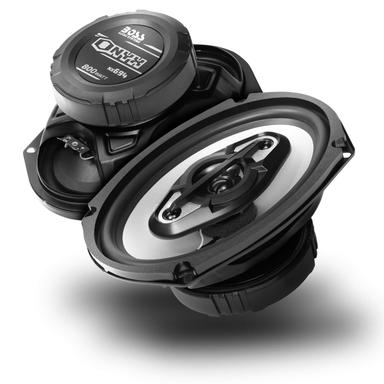
BOSS Audio Systems NX694 6 x 9 Inch 4-Way Coaxial Car Speakers, Pair
$54.99
A separate 6x9-inch four-way pair; it is not a silent replacement for a 6.5-inch opening.
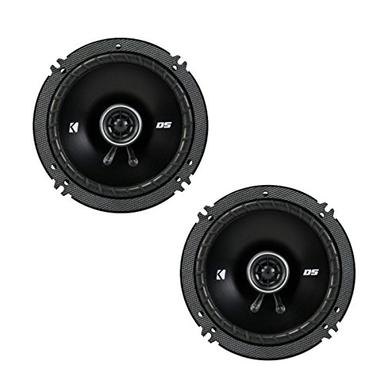
KICKER DSC650 6.5-Inch Coaxial Speakers, 4-Ohm Pair
$84.99
A separate 6.5-inch pair whose title lists 4-ohm; verify vehicle, amplifier, bracket, and connector fit.
Frequently Asked Questions
Which is better, JVC CS-J620 or BOSS CH6530?
BOSS is $7.96 cheaper and carries the 3-way title label. JVC has the higher current rating and larger captured review pool. No independent sound or fitment winner was established.
Which car speakers are cheaper?
BOSS is listed at $28.99 versus $36.95 for JVC, a $7.96 difference in the captured registry snapshot.
Will these 6.5-inch speakers fit my vehicle?
Not automatically. Verify year, make, model, trim, speaker location, opening, depth, bracket, grille clearance, connector, polarity, and impedance for the exact vehicle.
Does 3-way sound better than 2-way?
The labels describe driver arrangement only. Sound depends on design, placement, crossover, source, amplifier, vehicle, and installation; this comparison did not perform an audio test.
Can the 300W label be used to choose an amplifier?
No. Peak power is not a complete amplifier-matching specification. Verify exact RMS, impedance, head-unit output, and manufacturer guidance.
Did Mubboo test installation or sound?
No. This comparison uses current US registry facts and exact title labels; it does not include sound, fitment, installation, durability, or amplifier testing.
How we compared. This is a listing-level comparison using current US product records.
Primary sources. Exact listing details were checked against Amazon US product listing (B00OO1ENP4); Amazon US product listing (B000J1FABY); Manufacturer product page. Product-family context comes from the linked manufacturer pages; prices, stock, ratings, and review counts are volatile registry fields and should be checked again before purchase.
Who wrote this and where's the data from?
Mubboo Editorial Team - independent US-market consumer research. This comparison separates registry facts, driver labels, and untested audio and fitment claims.