Prices verified Aug 4 · Always confirm at the retailer before buying.
Quick answer
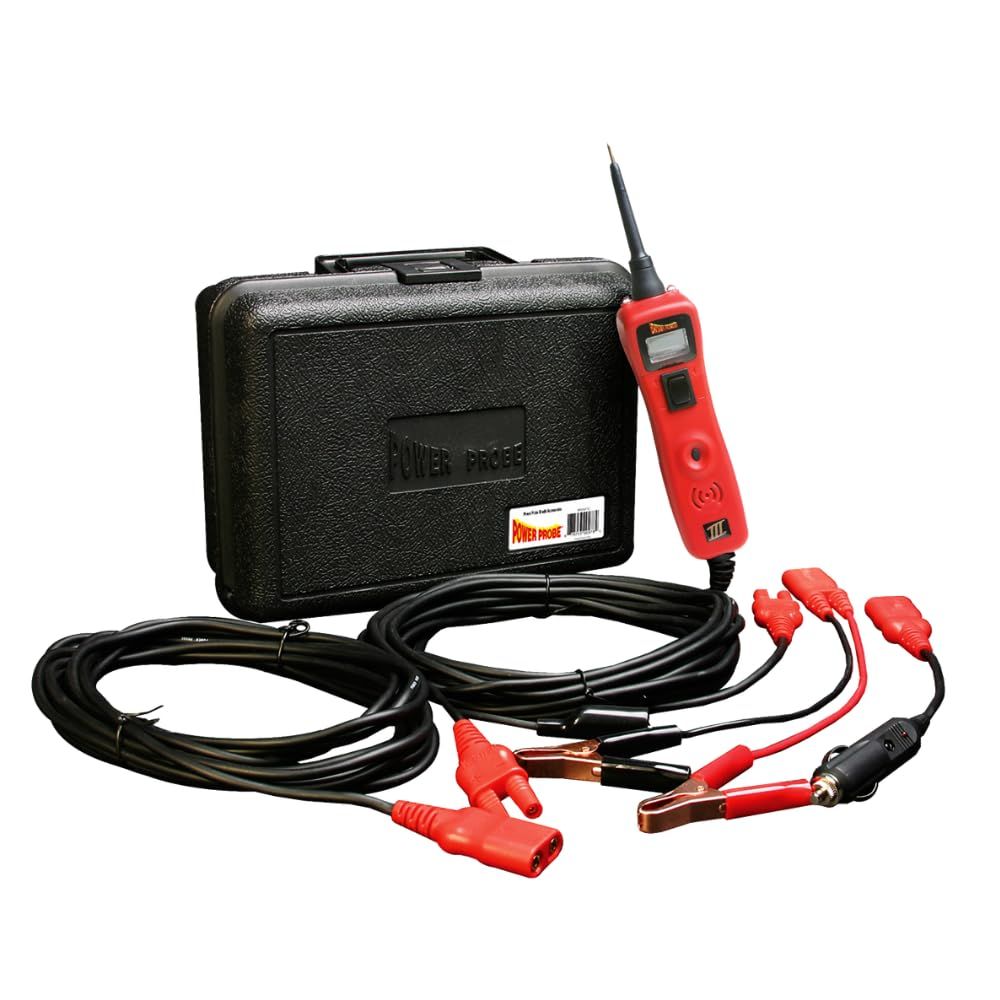
For US shoppers comparing these electrical test tools, Power Probe III is listed at $225.21 and JASTIND 3–65V at $17.57, making JASTIND $207.64 lower in the current registry snapshot. Power Probe is the broader automotive circuit probe: its manufacturer describes voltage, continuity, polarity, and power/ground functions for compatible 12–24V automotive sources. JASTIND is a low-cost digital test-light format with a stated 3–65V DC range. Choose by the diagnostic task, not price alone. A voltage range is not a mains-safety certification or universal vehicle-fit guarantee. Follow the exact manual and vehicle service information. No independent accuracy, circuit-protection, electrical-safety, vehicle-fit, or repair-success test was performed.
Power Probe is the broader automotive diagnostic tool; JASTIND is the low-cost 3–65V tester and costs $207.64 less. Match the exact manual and voltage context to the circuit before testing.
Mubboo Verdict
Best for most people
Power Probe III with Case & Accessories (PP319FTC)
Scoped to automotive users who need the broader manufacturer-described circuit functions and have verified the vehicle and circuit instructions.
Pick the JASTIND Heavy Duty 3-65V Backlit Digital LCD Circuit Tester instead if
- You only need a basic low-voltage reading rather than power/ground functions.
- The 3–65V DC range matches the exact circuit you are testing.
- The $207.64 lower current price matters and you have confirmed the tool is not being used for mains or unsupported circuits.
Power Probe III with Case & Accessories (PP319FTC) vs JASTIND Heavy Duty 3-65V Backlit Digital LCD Circuit Tester, side by side
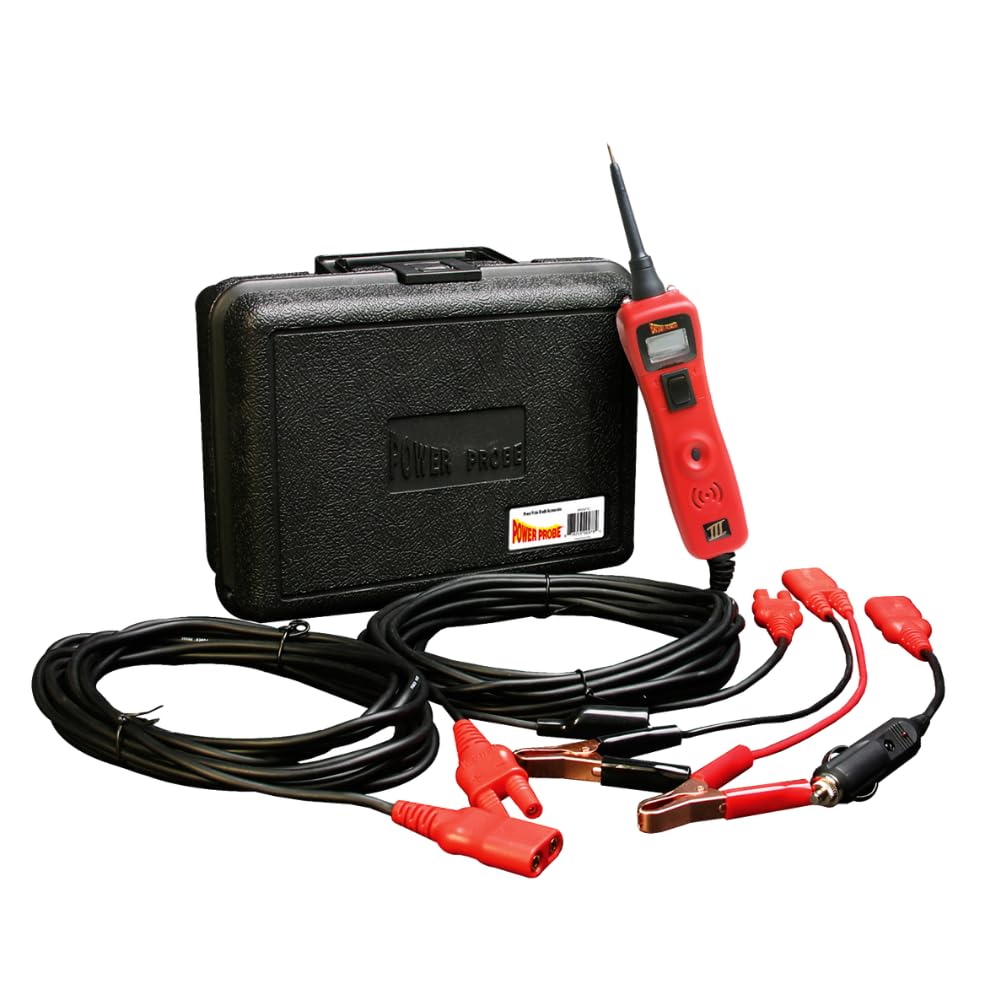
Power Probe III with Case & Accessories (PP319FTC)
Pros:
- Broader stated automotive diagnostic functions
- Manufacturer describes power and ground capability
- Higher captured marketplace rating
Cons (honest weight):
- $207.64 higher current snapshot price
- Requires careful vehicle/circuit compatibility checks
- No independent accuracy or safety test here
JASTIND Heavy Duty 3-65V Backlit Digital LCD Circuit Tester

Pros:
- $207.64 lower current snapshot price
- 3–65V DC range stated by the product source
- Long 140-inch wire stated by the product source
Cons (honest weight):
- Narrower stated function set
- Do not infer compatibility with mains or every vehicle circuit
- No independent accuracy or safety test here
Where each one wins
6 dimensions scored head-to-head. Power Probe takes 2; JASTIND Heavy takes 1.
| Dimension | Power Probe III with Case & Accessories (PP319FTC) | JASTIND Heavy Duty 3-65V Backlit Digital LCD Circuit Tester | Winner |
|---|---|---|---|
| Current US priceJASTIND is $207.64 lower in the current registry snapshot. | $225.21 | $17.57 | JASTIND Heavy |
| Primary formatThese are different tool levels; the correct choice depends on the diagnostic task. | Automotive circuit probe with voltage, continuity, and power/ground functions | Low-voltage automotive digital test light with LCD display | Tie |
| Stated voltage contextA stated range does not establish compatibility with every vehicle, circuit, or accessory. | Official product information describes 12–24V automotive sources | Official product information describes 3–65V DC testing | Tie |
| Automotive diagnostic scopePower Probe offers broader stated automotive diagnostic functions; use the manual and vehicle documentation. | Can supply power and ground and perform continuity/polarity checks per the manufacturer description | Reads low-voltage circuit values and uses a probe/test-light format | Power Probe |
| Captured marketplace signalPower Probe has the higher captured rating; review signals are not controlled accuracy or repair tests. | 4.8 / 5 from 5,918 reviews | 4.6 / 5 from 6,506 reviews | Power Probe |
| Independent accuracy or electrical-safety test hereNo independent accuracy, circuit-protection, vehicle-fit, or safety test was performed. | Not performed | Not performed | Tie |
| Overall | 2 wins | 1 win | Power Probe |
The functional gap matters more than the price gap
Power Probe is listed at $225.21 and JASTIND at $17.57, so JASTIND is $207.64 lower in the current US registry snapshot. Power Probe is the broader automotive diagnostic tool: its manufacturer describes voltage, continuity, polarity, and power/ground functions for compatible automotive sources. JASTIND is a lower-cost digital test-light format with a stated 3–65V DC range. These are not equivalent tool levels.
Power Probe's PP3 product page describes the automotive probe's functions and vehicle-battery connection. JASTIND's product page identifies the 3–65V low-voltage test-light format and 140-inch wire. These sources support the stated function difference; they do not independently test accuracy, circuit protection, vehicle fit, or repair success.
Choose based on the circuit task
Choose Power Probe when the diagnostic workflow calls for the manufacturer-described power/ground and continuity functions and the vehicle documentation supports the connection. Choose JASTIND when a basic low-voltage reading is enough and its 3–65V DC range matches the circuit. Neither product should be presented as a household mains tester or a universal diagnostic solution.
Voltage range is not a safety certification
A printed voltage range does not prove that a tool is suitable for every source, circuit, vehicle, transient, fuse arrangement, or operator. Follow the exact manual, vehicle service information, and circuit limits. Disconnect power when the procedure requires it, avoid shorting terminals, and use a qualified technician when the diagnosis involves uncertain wiring or safety-critical systems.
Price and ratings are limited marketplace signals
Power Probe is recorded at 4.8 stars from 5,918 reviews; JASTIND is recorded at 4.6 stars from 6,506. These are listing signals. They do not measure voltage accuracy, circuit protection, durability, installation ease, or successful repairs.
What this comparison does not test
No independent accuracy, vehicle-fit, circuit-protection, electrical-safety, short-circuit, or repair-success test was performed. Recommendations are limited to current registry facts and linked manufacturer product descriptions.
Which should you buy?
| Your situation | Pick | Why |
|---|---|---|
| Broader diagnostics | Power Probe III with Case & Accessories (PP319FTC) | Broader stated automotive diagnostic functions. |
| Basic low-voltage reading | JASTIND Heavy Duty 3-65V Backlit Digital LCD Circuit Tester | Basic 3–65V DC test-light format. |
| Current price | JASTIND Heavy Duty 3-65V Backlit Digital LCD Circuit Tester | Lower by $207.64 in the current snapshot. |
| Verified accuracy | JASTIND Heavy Duty 3-65V Backlit Digital LCD Circuit Tester | No independent accuracy test. |
| Verified electrical safety | JASTIND Heavy Duty 3-65V Backlit Digital LCD Circuit Tester | No independent safety test. |
Broader stated automotive diagnostic functions.
Basic 3–65V DC test-light format.
Lower by $207.64 in the current snapshot.
No independent accuracy test.
No independent safety test.
What if neither is right?
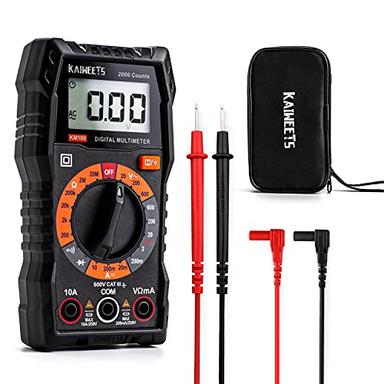
KAIWEETS Digital Multimeter with Case
$13.99
A different measurement format; verify the exact ranges, leads, fuses, and intended application.
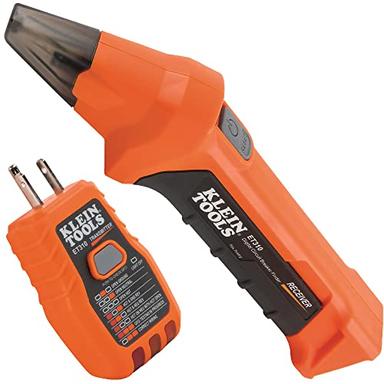
Klein Tools ET310 AC Circuit Breaker Finder
$44.97
A household AC circuit-finder format, not a substitute for an automotive low-voltage probe.
Frequently Asked Questions
Which is better, Power Probe III or JASTIND 3-65V?
Power Probe is the scoped pick for broader compatible automotive diagnostic functions. JASTIND is the lower-cost choice for a basic 3–65V DC test-light task. Neither was independently accuracy- or safety-tested.
Which electrical tester is cheaper?
JASTIND is listed at $17.57 versus $225.21 for Power Probe, a $207.64 difference in the current snapshot. Verify live prices.
What can Power Probe III do?
The manufacturer describes voltage, continuity, polarity, and power/ground functions for compatible automotive sources. Follow the exact manual and vehicle service information.
What voltage range does JASTIND 3-65V cover?
The linked JASTIND product page describes a 3–65V low-voltage digital circuit tester. Confirm the exact model and intended DC application before testing.
Can either tester be used on household mains?
This comparison does not make that claim. These products are discussed in an automotive low-voltage context; follow the exact manual and use a properly rated instrument and qualified professional for mains work.
Did Mubboo test these electrical tools?
No. There was no independent accuracy, circuit-protection, electrical-safety, vehicle-fit, short-circuit, or repair-success test.
Primary sources: Current price, rating, review count, stock, and product images use the exact US listing records for Power Probe III and JASTIND. Function and voltage context is linked from Power Probe's product page and JASTIND's product page. These descriptions are not independent accuracy, circuit-protection, electrical-safety, vehicle-fit, or repair-success tests.
Who wrote this and where's the data from?
Author: Mubboo Editorial Team. Independent US-market consumer research using current registry records and linked product-page information. Last verified: 2026-08-04.