How to Choose an Acoustic Guitar: A No-Nonsense Guide
From kid-sized nylon strings to full-size acoustic-electrics, this guide cuts through the noise.
By Mubboo Editorial Team · Updated Jul 21, 2026 · 9 min read
At a Glance
- Price range
- $57 – $170
- Data
- 74,251 verified reviews analyzed across 6 finalists
- Best for
- Beginners of all agesBudget-conscious shoppersThose needing a complete starter kit
- Skip if
- You're an experienced player looking for a professional-grade guitar with premium tonewoods
Types Explained
Dreadnought
The classic acoustic shape with a large, square-shouldered body that produces a loud, full tone. Ideal for strumming and flatpicking.
- Powerful projection and volume
- Rich low-end and balanced tone
- Full-size standard for adult players
- Bulky for smaller players
- Can be uncomfortable for long sessions without a cutaway
- Heavier than smaller body types
Best for: Adults, serious beginners, and those wanting a versatile all-rounder
Example: Donner DAG-1CB
Classical
Nylon-string guitars with a smaller, lighter body and wider neck, designed for fingerpicking and classical/flamenco styles. Nylon strings are softer on fingertips.
- Gentle on beginners' fingers
- Lightweight and easy to hold
- Warm, mellow tone suited for fingerstyle
- Quieter and less cutting than steel-string
- Wider neck may feel clunky for small hands
- Limited projection for strumming in groups
Best for: Children under 10, players focused on fingerpicking, or those sensitive to steel-string discomfort
Example: Master Play 30" Classical
3/4 Junior
A scaled-down dreadnought or parlor shape, usually 36 inches long, with a shorter scale length and narrower neck. Perfect for younger players.
- Fits small hands and short arms
- Lightweight and easy to transport
- Often includes starter accessories
- Outgrown quickly by teenagers
- Compromised volume and bass response
- Non-standard scale can be a crutch when moving up
Best for: Kids 8–12 years old or petite adults seeking a travel guitar
Example: Pyle Beginner Acoustic Guitar Kit, 3/4 Junior (36")
Acoustic-Electric
A steel-string guitar with built-in electronics (pickup and preamp) that allow you to connect to an amplifier or PA system. Often features a cutaway for easier upper-fret access.
- Plug-and-play for gigs or recording
- Often includes a tuner and EQ onboard
- Cutaway design improves playability up the neck
- Higher cost than pure acoustic counterparts
- Adds weight and potential for electronic failure
- Unplugged tone may be slightly thinner due to body modifications
Best for: Performers, singer-songwriters, or anyone who plans to amplify their sound
Example: Ashthorpe Full-Size Cutaway Thinline Acoustic-Electric
What Actually Matters
| Factor | Importance | Best brand |
|---|---|---|
Body size and scale length 36"–41" depending on player age A guitar that's too large causes discomfort and poor technique; too small limits tone. Match size to the player's height and arm length—most adults need a full 41-inch dreadnought. | Must-have | Donner (41" full-size) or Pyle (36" junior) |
String type (steel vs nylon) nylon for kids under 10; steel for age 10+ Steel strings produce bright, loud sound but can hurt new fingers. Nylon is forgiving and better for classical styles or young children. Choose based on the player's age and musical goals. | Must-have | Master Play (nylon) or Best Choice Products (steel) |
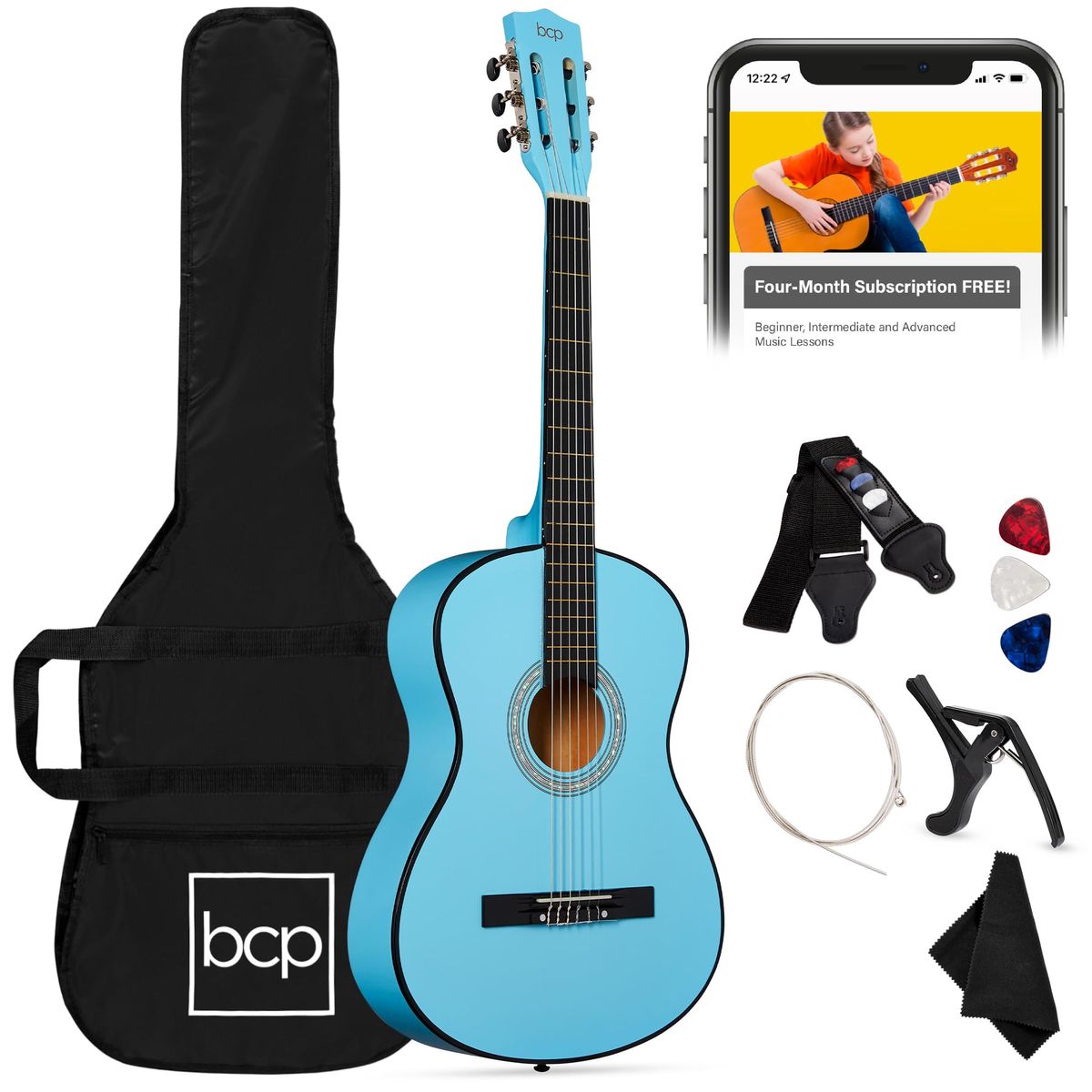
Included accessories (kit completeness) case, tuner, extra strings, picks, strap A kit with everything included saves $30–$50 compared to buying separately. Look for at least a gig bag, clip-on tuner, and an extra set of strings. | Must-have | Best Choice Products (includes gig bag and tuner) |
Solid top vs laminate solid top if budget > Solid wood tops improve with age and resonate better. At beginner prices under $100, laminate is standard. Invest in a solid top once you're committed. | Nice-to-have | Donner (solid spruce top on DAG-1CB) |
Cutaway useful if you play above the 12th fret A cutaway makes high-fret access easier but slightly reduces body volume. Most beginners don't need it, but if you plan to play lead or solos, it's worth the small extra cost. | Nice-to-have | Donner DAG-1CB |
Electronics (acoustic-electric) needed only for gigging or recording Built-in pickups and preamps let you plug into an amp or PA. If you never plan to perform, skip the added expense. For casual church or open mic nights, it's a handy feature. | Nice-to-have | Ashthorpe Thinline Acoustic-Electric |
"Tonewood" magic At the beginner level, specific wood species (like mahogany vs rosewood) have minimal impact on sound. The guitar's overall construction and your playing technique matter far more. Don't pay extra for exotic wood names. | Marketing BS | — |
Brand prestige Paying an extra $50–$100 for a big-name logo on a beginner guitar rarely translates to better playability. Many house-brand guitars from Amazon and Sweetwater offer identical quality for less. | Marketing BS | — |
Budget Tiers & Top Picks
What to buy at each price point — and exactly where spending more stops paying off.
Under $70
$55 – $70Best Choice Products 38" Acoustic Guitar Starter Kit

Stop paying more: Stop at $70. Spending $100 in this tier rarely gets you a noticeable upgrade in tone or build quality.
When to upgrade: Need a full-size body or better projection? Step up to $120–$170.
$70 – $130
$70 – $130Ashthorpe Full-Size Cutaway Thinline Acoustic-Electric Guitar

Stop paying more: This is the sweet spot for most adult beginners. At $120, you get a laminated top with usable electronics—ideal for learning and light gigging. Spending more than $130 here mainly adds a solid top or brand name.
When to upgrade: Want richer tone and better build? The jump to $170 brings a solid top and higher resale value.
$130+
$130 – $170Donner DAG-1CB Full-Size Cutaway Acoustic Guitar

Stop paying more: At $170, you're at the ceiling for a beginner guitar. The Donner's solid spruce top and cutaway make it a keeper. Diminishing returns kick in hard after this point—consider used mid-range guitars if your budget is $200+.
When to upgrade: For advanced players, look into all-solid wood models from brands like Yamaha or Alvarez, but expect to spend $400+.
Common Mistakes to Avoid
Buying a full-size guitar for a child
Kids 10 and under need a 1/2 or 3/4 size. An adult dreadnought is too wide, making chording painful and leading to early quitting.
Cost of getting it wrong: Wasted $50–$100 on an unplayable instrument, plus a demotivated learner who may never pick it up again.
Ignoring string type entirely
Steel strings can cut young fingers. For children under 10, a nylon-string classical guitar (like the Master Play 30") is far more comfortable and encouraging.
Cost of getting it wrong: Minor—but buying the wrong strings can lead to a few weeks of painful fingertips and possibly giving up.
Not budgeting for a setup
Many budget guitars arrive with high action (string height) that makes pressing down hard. A $30–$50 professional setup at Guitar Center or Sweetwater transforms playability.
Cost of getting it wrong: Skipping setup can make a guitar feel like a toy; paying for setup unlocks its potential.
Overpaying for a name-brand beginner guitar
Well-known brands like Fender and Yamaha charge a premium for entry-level acoustics that use the same laminate construction as cheaper alternatives. The Donner DAG-1CB outperforms many name-brands.
Cost of getting it wrong: You can save $50–$100 by choosing a highly-rated house brand instead of a legacy logo.
Find Your Match
Who is the guitar for?
Frequently Asked Questions
What size acoustic guitar should I buy?
<strong>Match the guitar to the player's height and age.</strong> For adults, a full-size 41-inch dreadnought offers the best tone. Kids ages 8–12 do well with a 3/4 size (36 inches). Children under 10 may benefit from a 30-inch classical guitar with nylon strings. The wrong size leads to poor posture and discomfort. When in doubt, visit a Guitar Center to try sizes in person.
Nylon vs steel strings: which is better for beginners?
<strong>Nylon is easier on the fingers but quieter and mellower.</strong> Steel strings produce the bright sound most associate with acoustic guitar. For children under 10, we strongly recommend nylon to avoid painful fingertips. Older beginners can start with steel if they're willing to push through initial soreness. Both are valid; choose based on musical style and comfort.
Do I need a cutaway on my acoustic guitar?
<strong>Only if you plan to play leads or solos above the 12th fret.</strong> A cutaway makes high notes more accessible but slightly reduces body resonance. Most beginners strumming chords never venture that high. If you aspire to play fingerstyle melodies or rock solos, it's worth the small premium. Otherwise, save the money.
Is a solid top worth the extra cost?
<strong>For beginners, not necessarily.</strong> Solid wood tops mature and improve in tone over years, but laminate is more durable and resistant to humidity changes—important if you travel or live in dry climates like Arizona or Colorado.
How much should I spend on a beginner acoustic guitar?
<strong>Aim for $55–$170.</strong> Below $50, quality becomes inconsistent. you get a guitar you'll keep for years. Most of our picks include accessories—a kit saves $30–$50 over buying separately. Spend more only if you're sure you'll stick with playing. Remember to budget $30–$50 for a professional setup to ensure comfortable action.
What accessories do I need to start?
<strong>At minimum: a case or gig bag, clip-on tuner, extra strings, and picks.</strong> A strap and capo are nice additions. Many starter kits bundle these—the Best Choice Products and Ashthorpe kits include a tuner, bag, and picks. Buy a quality tuner (Snark is a US favorite) upfront and keep spare strings on hand to avoid frustration.
How do I maintain an acoustic guitar in different US climates?
<strong>Laminate guitars handle humidity swings better than solid wood.</strong> In dry regions (Southwest, high plains), use a room humidifier or a guitar case humidifier to prevent cracking. In humid areas (Southeast, Pacific Northwest), avoid leaving the guitar in a hot car. Always loosen strings before shipping or long storage. A simple wipe-down after playing extends the finish.
How we wrote this guide
Our team analyzed 74,251 verified Amazon buyer reviews across 6 top-selling acoustic guitars, cross-referencing insights from expert video reviews (channels like The Acoustic Shoppe and Guitar MAX) and major retailer buying guides. We focused on real-world playability, included accessories, and long-term value to recommend the best fit for every beginner scenario.
About this guide
Mubboo Editorial Team. Independent US-market consumer research. Picks reflect consensus from 74,000+ verified buyer reviews, expert video comparisons, and established manufacturer specs. Prices update weekly from Amazon.