The Engine Coolant Guide That Could Save You $2,000 in Repairs
Picked from 33,000+ verified Amazon reviews and backed by automotive experts
By Mubboo Editorial Team · Updated Jul 21, 2026 · 8 min read
At a Glance
- Price range
- $18 – $57
- Budget pick
- Zerex Asian Vehicle Blue 50/50 ($18 · 4.8★)
- Data
- From 33,336 verified Amazon reviews across 6 products and expert sources like MotorTrend and Project Farm.
- Best for
- Daily drivers with any make or modelDIYers wanting a no-mess 50/50 pourThose in moderate climates needing reliable freeze/boil protection
- Skip if
- You own a European vehicle requiring silicate hybrid coolant, or you need a concentrate for extreme cold.
Types Explained
Universal 50/50 Coolant
Ready-to-use formula compatible with most vehicles, using modern OAT or HOAT technology. No mixing required.
- Works across many makes and models
- Pre-mixed prevents mixing errors
- Widely available at Walmart and AutoZone
- May not meet specific OE spec for luxury or performance vehicles
- Slightly more expensive per gallon than concentrate when mixed
Best for: Daily drivers, mixed fleets, and DIYers wanting convenience
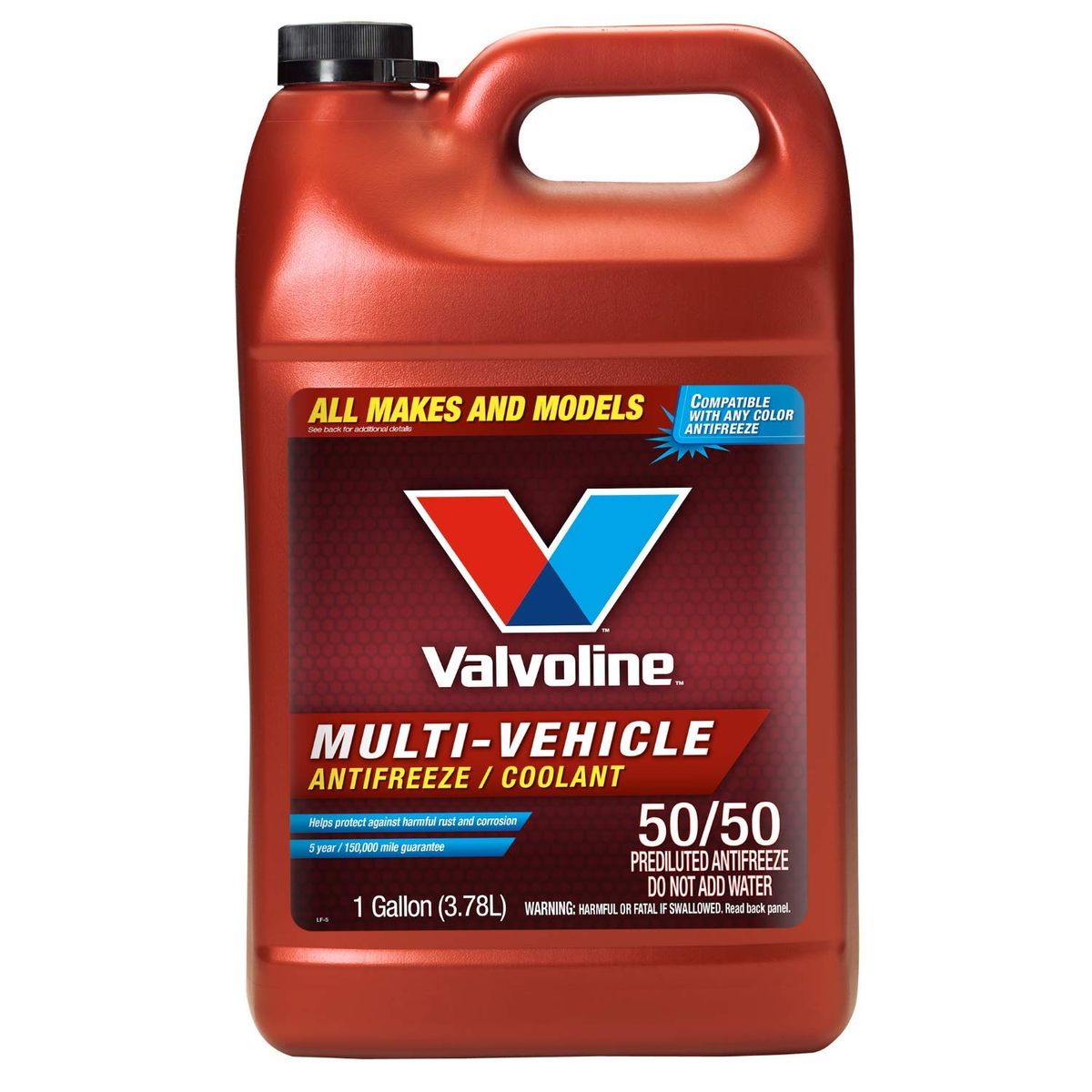
Example: Valvoline Multi-Vehicle 50/50
Asian Vehicle Coolant
Silicate and borate-free formula designed for Honda, Toyota, Nissan, and other Asian imports, using PHOAT or POAT technology.
- Protects water pump seals from silicate damage
- Matches Japanese OEM color and additive specs
- Long service life up to 5 years/50,000 miles
- Not suitable for domestic or European vehicles
- Limited color options may confuse those used to green or orange
Best for: Honda Civic, Toyota Camry, Nissan Altima, and other Asian daily drivers
Example: Zerex Asian Vehicle Blue 50/50
Domestic/Stellantis Coolant
Formulated for Chrysler, Dodge, Jeep, Ram, and other Stellantis vehicles, typically OAT with extended life.
- Matches factory fill for optimal corrosion protection
- Can last up to 10 years/150,000 miles
- Bright purple/orange color easy to identify leaks
- Price premium over universal options
- Only necessary for Stellantis vehicles; overkill for other domestics
Best for: Owners of Jeep Wrangler, Ram 1500, Dodge Charger, and Chrysler minivans
Example: Mopar 10 Year/150,000 Mile Coolant 50/50
High-Performance Coolant
Racing or motorcycle coolant using propylene glycol for lower freezing points and lower toxicity, designed for high-heat applications.
- Reduces engine temperatures under load
- Non-toxic formula safer for pets and environment
- Suitable for track days and heavy towing
- Often sold in smaller sizes, making full fills expensive
- Not intended for daily street use; may lack long-term corrosion inhibitors
Best for: Motorcycles, track cars, and off-road vehicles in extreme heat
Example: Engine Ice High Performance Coolant (/0.5 gal)
What Actually Matters
| Factor | Importance | Best brand |
|---|---|---|
Vehicle Compatibility Match the coolant type specified in your owner’s manual (OAT, HOAT, IAT). Using the wrong type can corrode head gaskets and water pumps. This is the single most important rule. A head gasket job is not worth saving on the wrong bottle. | Must-have | Zerex for Asian, Mopar for Stellantis, Valvoline for universal |
Freeze and Boil Protection Protection to at least -34°F and boil-over protection to 265°F is standard. Verify for your climate. For extreme cold like Minnesota winters, mix concentrate to a 60/40 ratio for -50°F protection. | Must-have | Valvoline Multi-Vehicle meets these across moderate climates |
Prediluted vs. Concentrate Prediluted 50/50 is convenient but concentrates allow custom ratios for extreme cold (e.g., -50°F). If you live in a moderate climate and value convenience, prediluted is worth the slight premium. | Nice-to-have | Valvoline Multi-Vehicle (prediluted) for ease; any concentrate for custom |
Color of Coolant Color does not guarantee compatibility. A universal red may be a different chemistry than Asian red. Many owners mistakenly buy by color and cause dangerous mixing. | Marketing BS | — |
“Extended Life” Claims All modern coolants are long-life. “150,000 miles” claims assume a perfect flush and refill. For most, a 5-year/50,000 mile change is safer; coolant still degrades over time. | Marketing BS | — |
Brand Reputation Well-known brands like Valvoline, Zerex, and Mopar have extensive testing and widespread retail support. Off-brand coolants may meet minimum specs but may lack the corrosion inhibitor package of a major brand. | Nice-to-have | Valvoline (33,000+ reviews), Zerex (6,200+ reviews) |
Budget Tiers & Top Picks
What to buy at each price point — and exactly where spending more stops paying off.
Under $20
$18 – $20Zerex Asian Vehicle Blue 50/50

Stop paying more: Don’t spend more than $20 for a gallon of premixed coolant unless your vehicle requires a specific formula. Universal options like Valvoline are under $19 and cover most cars.
When to upgrade: If your vehicle calls for a unique chemistry (like European HOAT), buy the specific formula even if it costs more.
$20 – $30 (Mid-Range)
$18.58 – $19.77Valvoline Multi-Vehicle 50/50

Stop paying more: Paying more than $25 for a universal premix is rarely worth it—this covers 90% of vehicles.
When to upgrade: Step up to a specialized formula only if your owner’s manual mandates it.
$30+ (High-Performance & Accessories)
$29.99 – $56.78Engine Ice High Performance Coolant

Stop paying more: Stop at $30 for a ½ gallon if you race. For routine use, stick to $20 universal coolants. Boating winterizing kits are a one-time purchase.
When to upgrade: If you tow heavy loads in Texas summers, consider a high-performance additive or coolant.
Common Mistakes to Avoid
Mixing incompatible coolant types
Combining an OAT with an IAT or a silicate-free Asian coolant with a universal green can turn into gel, clog the radiator, and cause overheating. Always flush the system if changing types.
Cost of getting it wrong: $200–$1,200 for a clogged heater core or radiator replacement.
Using tap water to dilute concentrate
Minerals in tap water cause scale buildup and reduce heat transfer. Always use distilled water.
Cost of getting it wrong: Up to $800 for premature water pump failure.
Ignoring the manufacturer’s coolant spec
Using a universal coolant in a 2018+ Honda can damage the water pump seals, leading to leaks. Universal coolants are not always chemically compatible.
Cost of getting it wrong: $400–$900 for water pump replacement.
Filling without a spill-free funnel
Air pockets in the cooling system after refill cause hotspots and engine damage. A spill-free funnel burps the system safely.
Cost of getting it wrong: Blown head gasket can exceed.
Running pure water in summer or mild winters
Even in warm climates, water alone causes corrosion and offers no boil-over protection above 212°F. Coolant additives are necessary.
Cost of getting it wrong: Rust leads to $500 radiator replacement.
Find Your Match
What type of vehicle do you drive?
Frequently Asked Questions
How do I know which coolant is right for my car?
Check your owner’s manual or the cap on your coolant reservoir for type and color. Most Asian vehicles need a silicate-free Phosphate-HOAT (like Zerex Asian), while Stellantis vehicles require a purple OAT (Mopar). If in doubt, a universal 50/50 like Valvoline Multi-Vehicle works for most daily drivers, but avoid mixing types.
Can I mix different coolant colors?
No. Color is not a reliable indicator of chemistry. Mixing, for example, an Asian blue HOAT with a universal orange OAT can create a gel that clogs the radiator. Always use the same type or perform a full flush before switching. When in doubt, use a universal coolant and flush thoroughly.
What’s the difference between prediluted 50/50 and concentrate?
Prediluted coolant is ready to pour—no mixing needed, reducing the risk of wrong ratios. Concentrate is half the liquid, making it cheaper per gallon after mixing with distilled water, and allows custom freeze protection (e.g., 60/40 for -50°F). For most, prediluted is convenient and foolproof.
How often should I flush my coolant?
Refer to your owner’s manual. Most vehicles require a coolant flush every 5 years or 50,000–100,000 miles, even if labeled “lifetime.” Coolant degrades over time, losing corrosion inhibitors. A flush is far cheaper than a heater core replacement.
Is it okay to use tap water with concentrate?
Never. Tap water contains minerals that cause scale and corrosion. Always use distilled water, which is per gallon at Walmart or any grocery store. A gallon of distilled water plus concentrate makes two gallons of 50/50 for less money than two premixed gallons.
What’s the best coolant for extreme cold winters?
For cold climates like Minnesota, use a concentrate mixed to a 60/40 ratio (coolant to water) to achieve protection below -50°F. Valvoline Zerex G-05 or a universal concentrate adjusted appropriately are good choices. Premixed 50/50 protects down to -34°F, which suffices for most of the US.
Can I use a high-performance coolant like Engine Ice in my daily driver?
Engine Ice is designed for motorcycles and track use; it sacrifices long-term corrosion protection for heat transfer. For daily driving, stick to a standard automotive formula. Using it in a regular car may void the warranty and lead to premature water pump wear.
How we wrote this guide
We analyzed 33,000+ verified Amazon reviews across 6 popular coolants and reviewed recommendations from automotive experts like MotorTrend, The Drive, and the Bob Is The Oil Guy community. Our picks prioritize real-world reliability, manufacturer specs, and performance data from Project Farm’s testing. Prices update weekly from Amazon and major auto parts retailers.
About this guide
Mubboo Editorial Team. Picks based on analysis of 33,000+ verified purchases, manufacturer specifications, and cross-referenced expert sources including MotorTrend and The Drive.