Athletic Socks Buying Guide 2026: How to Choose Without Overpaying
From crew to compression, here's what actually matters for your workouts.
By Mubboo Editorial Team · Updated May 27, 2026 · 8 min read
At a Glance
- Price range
- $14.99 – $15.99
- Data
- 591,627 verified reviews across 6 finalists
- Best for
- runninggymeveryday wearrecovery
- Skip if
- You only need one pair for occasional use
Types Explained
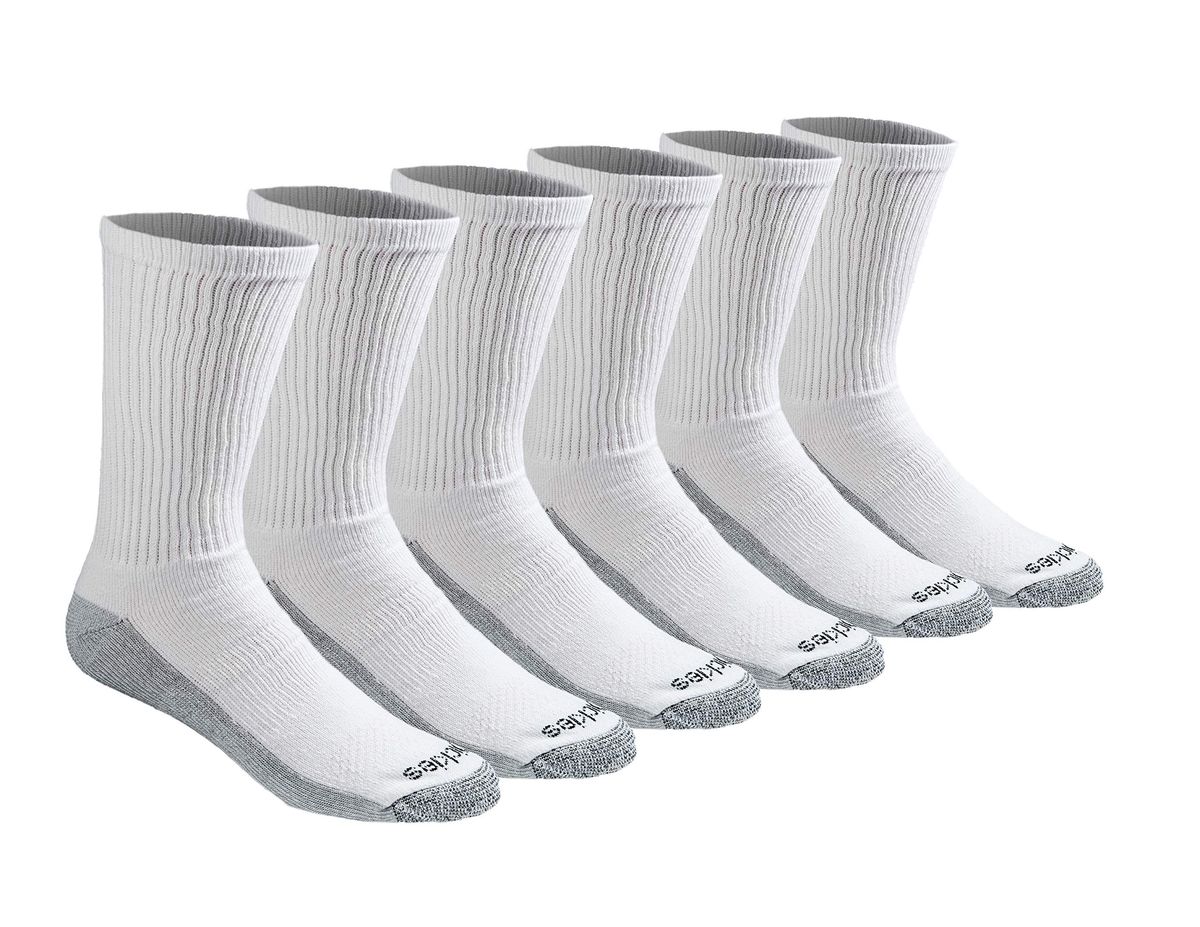
Crew Socks
Mid-calf length socks providing full coverage and protection.
- Stay in place during activity
- Good ankle protection
- Available in multipacks
- May feel warm in summer
- Not ideal for low-cut shoes
Best for: Everyday wear, hiking, and sports requiring ankle coverage
Example: Dickies Dri-tech Crew Socks
No-Show Socks
Low-cut socks that sit below the ankle, invisible in low-top sneakers.
- Invisible in shoes
- Breathable mesh options
- Great for gym and running
- May slip off without heel tab
- Less ankle support
Best for: Running, gym workouts, casual sneakers
Example: Saucony RunDry No-Show Socks
Compression Socks
Knee-high socks with graduated compression to improve blood flow.
- Aids recovery after exercise
- Reduces swelling during long flights
- Copper-infused options reduce odor
- Can feel tight
- Not for all-day casual wear
- Higher cost per pair
Best for: Recovery, long travel, pregnancy, circulation issues
Example: FuelMeFoot Copper Compression Socks
What Actually Matters
| Factor | Importance | Best brand |
|---|---|---|
Moisture Wicking Polyester or nylon blends Look for 'Dri-tech' or 'RunDry' labels to keep feet dry. | Must-have | Saucony, Dickies |
Heel Grip Heel tab or silicone grip A heel tab prevents slipping during high-impact sports. | Must-have | Saucony |
Cushioning Light cushion for running, medium for hiking Extra cushioning adds comfort but can reduce breathability. | Nice-to-have | Gold Toe |
Breathability Mesh ventilation panels Mesh panels help in hot climates or intense workouts. | Nice-to-have | Saucony |
Durability Reinforced heel and toe Reinforced areas extend sock life through many washes. | Must-have | Dickies |
Copper-Infused Fabric No scientific proof copper reduces odor more than standard moisture-wicking. | Marketing BS | — |
Graduated Compression Only needed for medical or travel use For casual wear, compression is overkill—choose only if prescribed. | Marketing BS | FuelMeFoot |
Budget Tiers & Top Picks
What to buy at each price point — and exactly where spending more stops paying off.
Under $15
$14.99Saucony Women's RunDry Performance Heel Tab Socks

Stop paying more: At $14.99 for 8 pairs, these are the best value per pair. Spending more for crew socks doesn't add performance.
When to upgrade: Need crew length or men's sizing? Move to mid-tier Dickies or Gold Toe.
$15 – $16 (Mid-Range)
$15 – $15.99Dickies Men's Dri-tech Moisture Control Crew Socks

Stop paying more: The Dickies crew socks deliver proven moisture control at just $15. Paying more than $16 for similar cotton-poly blends is unnecessary.
When to upgrade: For no-show or compression, jump to premium tier.
Premium (Recovery & Specialty)
$14.99FuelMeFoot Copper Compression Socks (3 Pairs)

Stop paying more: Compression socks under $20 perform similarly to expensive medical brands. A coupon is currently available.
When to upgrade: If you don't need compression, save money and stick with mid-tier.
Common Mistakes to Avoid
Buying cheap no-name socks without reviews
Unknown brands often lack moisture-wicking and wear out in weeks.
Cost of getting it wrong: Replacing worn-out socks costs more than buying quality multipacks upfront.
Choosing fashion over function
Trendy colors don't keep feet dry. Moisture-wicking should be priority.
Cost of getting it wrong: Sweaty feet lead to blisters and potential doctor visits.
Ignoring heel tabs for active use
Socks without heel tabs slip down inside shoes, causing discomfort and blisters.
Cost of getting it wrong: Heel tab socks cost about the same; avoid the hassle.
Assuming all cotton is bad
Cotton is fine for casual wear but not for sweaty workouts. Blends work best.
Cost of getting it wrong: Pure cotton socks shrink faster and hold moisture.
Find Your Match
What's your primary activity?
Frequently Asked Questions
What are the best athletic socks for running?
For running, prioritize moisture-wicking crew or no-show socks with a heel tab. Our top picks: Saucony RunDry No-Show (men) and Saucony Women's RunDry (women) both offer heel grip and mesh ventilation.
What are the best no-show socks for gym workouts?
Saucony Men's RunDry No-Show socks ($14.99 for 6 pairs) feature a heel tab and silicone grip to stay put. They earned 4.6 stars from 62,564 reviews.
Are cotton socks bad for exercise?
Cotton is fine for casual wear but retains moisture during exercise, increasing blister risk. Opt for polyester or nylon blends for sweaty activities.
How often should I replace athletic socks?
Replace when they lose elasticity, develop holes, or stop wicking moisture — typically every 6-12 months with regular use.
Do compression socks work for recovery?
Graduated compression can aid blood flow and reduce muscle soreness after workouts. They also help during long flights to prevent swelling.
What's the difference between crew and no-show socks?
Crew socks reach mid-calf and provide ankle coverage, while no-show socks sit below the ankle. Crew is better for hiking; no-show for running or low-cut shoes.
How much should I spend on athletic socks?
Quality multipack socks cost $15–$20. Spending more than $20 per pack rarely adds performance value for most activities.
How we wrote this guide
We evaluated 6 top-rated athletic sock brands based on Amazon verified reviews, material analysis, and user feedback. Our picks focus on moisture control, fit, and durability.
About this guide
Mubboo Editorial Team.
Affiliate disclosure: This does not affect our editorial picks.