Baby Gates Buying Guide 2026: How to Choose Without Overpaying
Everything you need to know about pressure mount vs hardware mount, walk-through gates, and what actually matters for safety.
By Mubboo Editorial Team · Updated May 27, 2026 · 9 min read
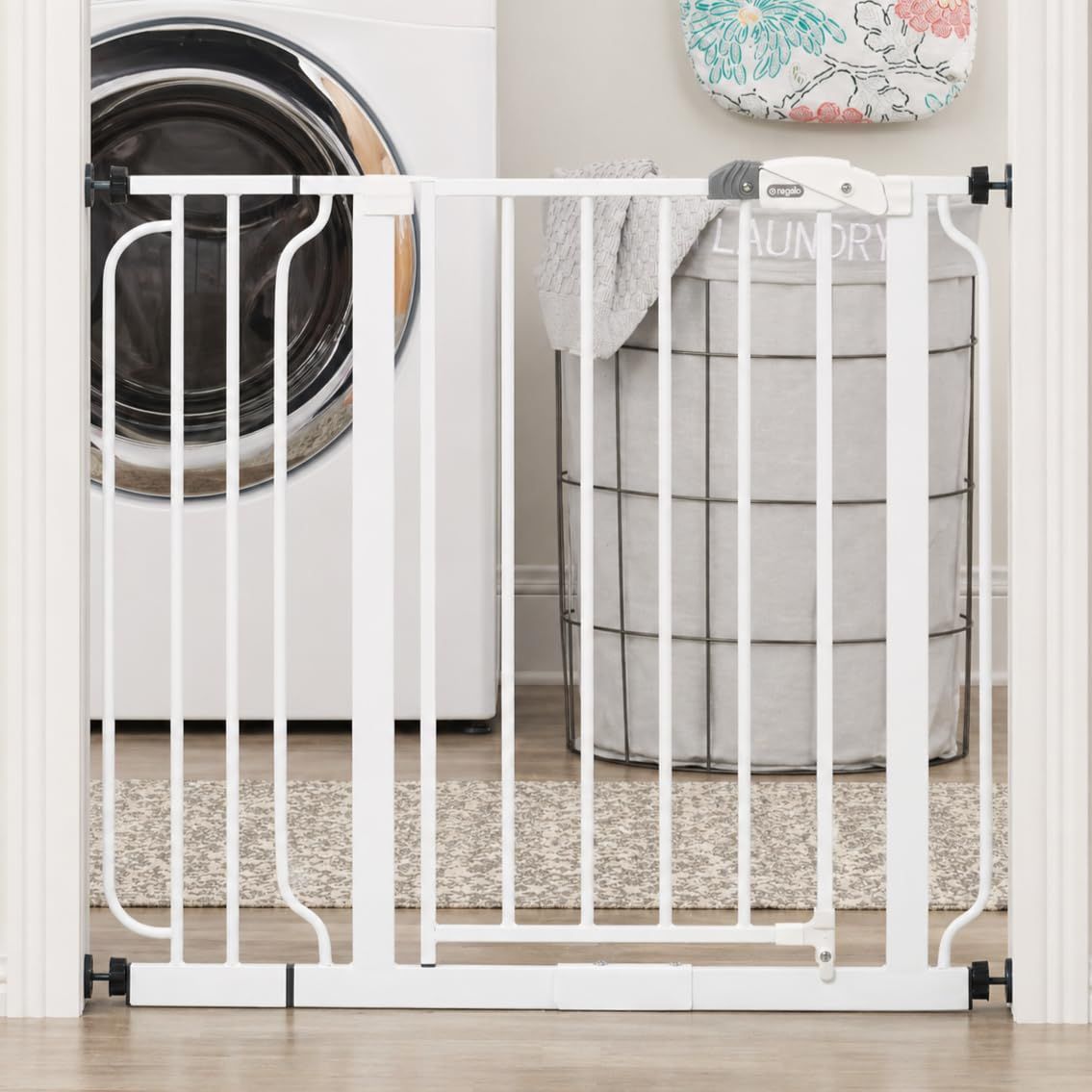
At a Glance
- Price range
- $25 – $58
- Budget pick
- MYPET Paws Portable Pet Gate ($24.99 · 4.2★)
- Data
- 329,000+ verified Amazon reviews across 6 finalists
- Best for
- Doorways and bottom of stairsPet containmentExtra-wide openings up to 58"
- Skip if
- You need a gate for the top of stairs — choose a hardware-mounted model instead
Types Explained
Pressure-Mounted Gate
Uses spring tension to press against door frames without screws. Easy to install and remove, but not recommended for top of stairs.
- No tools required
- Portable between rooms
- Good for renters
- Can be pushed out of place by determined toddlers
- May leave marks on walls without protectors
Best for: Doorways, bottom of stairs, temporary use
Example: Regalo Easy Step ($44.99)
Hardware-Mounted Gate
Screws into the wall or banister for permanent installation. Provides maximum security and is the only type approved for top of stairs.
- Very secure
- No threshold bar to trip over
- Fits irregular openings with custom kits
- Requires drilling holes
- Not portable
- May damage walls when removed
Best for: Top of stairs, high-traffic areas
Example: Cardinal Gates SS-30 (not covered in this guide)
Walk-Through Gate
Has a door that opens with a latch, allowing adults to pass without climbing over. Most pressure-mounted gates are walk-through.
- Convenient for daily use
- One-hand operation
- Can be left in place
- Door may swing into furniture
- Latch can wear over time
Best for: High-traffic doorways, kitchens
Example: Regalo Extra Wide ($52.99)
Pet Gate with Small Door
Includes a built-in pet door that allows cats or small dogs to pass while containing larger pets.
- Multi-purpose for pets and kids
- Saves buying a separate pet gate
- Pet door may not be large enough for big dogs
- Slightly higher cost
Best for: Households with both babies and pets
Example: Carlson Pet Gate ($44.99)
What Actually Matters
| Factor | Importance | Best brand |
|---|---|---|
Mount Type Hardware-mounted for top of stairs; pressure-mounted okay elsewhere Consumer Reports' lab tests confirm hardware gates withstand up to 100 lbs of force. Never use pressure-mounted gates at the top of stairs. | Must-have | Regalo (pressure-mounted), Cardinal Gates (hardware-mounted) |
Width Compatibility Standard doorways 29–38"; extra-wide up to 58" Measure your doorway accurately. Most gates fit 29–38" out of the box. Wider openings require extension kits or extra-wide models. | Must-have | Regalo (offers multiple width ranges) |
Height At least 30" tall for children; 36"+ for large dogs The MYPET Paws is only 23" tall — fine for small pets but not for toddlers or large dogs. | Must-have | Regalo (30" tall) |
Safety Certification JPMA or ASTM F1001 certified All gates in this guide meet JPMA standards. Check CPSC recall databases before buying cheap no-name gates. | Must-have | Regalo, Safety 1st, Carlson |
One-Hand Latch Latch opens with one hand while carrying a child Reddit users on r/Parenting consistently praise one-hand latches as a must-have convenience. | Nice-to-have | Regalo (easy walk-through latch), Safety 1st (SecureTech indicator) |
Wall Protectors Included Rubber bumpers or included wall protectors to prevent scratches Pressure-mounted gates can leave marks. Wall Nanny pads ($14.95) are a cheap fix and made in the USA. | Nice-to-have | Wall Nanny (standalone protectors) |
Pet Door Feature Built-in pet door for cats/small dogs The Carlson gate has a patented pet door that lets cats pass while keeping larger dogs contained. | Nice-to-have | Carlson Pet Products |
Brand Premium Spending over $60 on a pressure-mounted gate rarely buys better safety. The extra cost goes to aesthetics or bundled accessories, not core function. | Marketing BS | — |
Budget Tiers & Top Picks
What to buy at each price point — and exactly where spending more stops paying off.
Under $35
$25 – $35MYPET Paws Portable Pet Gate

Stop paying more: Diminishing returns above $35. This gate works for basic pet blocking but lacks height and stair safety.
When to upgrade: If you need a taller gate or walk-through convenience, step up to the $40-55 mid range.
Mid-Range $40–$55
$40 – $55Regalo Easy Step Walk-Thru Baby Gate
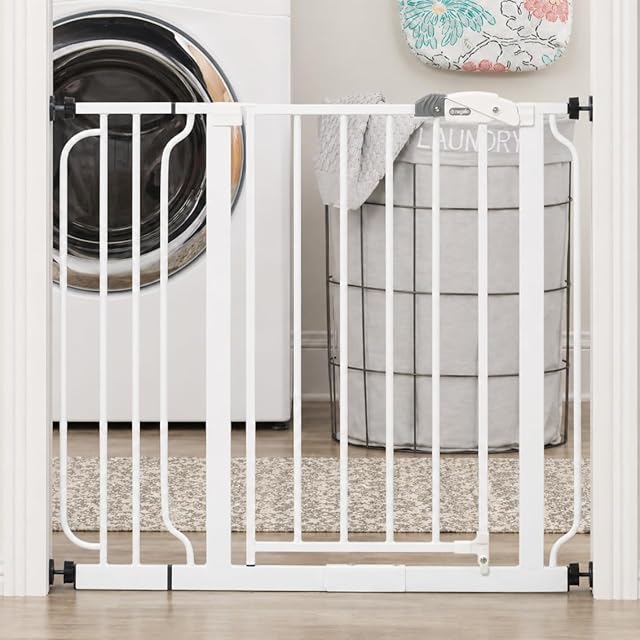
Stop paying more: The Regalo Easy Step hits the sweet spot: 171,000+ reviews, easy pressure mount, and a walk-through door. Spending more than $55 on a pressure-mounted gate buys mostly branding.
When to upgrade: For extra-wide openings (up to 58"), consider the Regalo Extra Wide at $53.
Premium $55+
$55 – $60Safety 1st Easy Install Walk-Thru Baby Gate with SecureTech Indicator

Stop paying more: The SecureTech red-to-green indicator is the main differentiator. Beyond this price, you enter hardware-mounted territory ($80+), which is warranted only for stair-top use.
When to upgrade: If you need a gate for the top of stairs, invest in a hardware-mounted model like the Cardinal Gates SS-30 ($85+), which Wirecutter and Consumer Reports both recommend.
Common Mistakes to Avoid
Buying a gate that doesn't fit your doorway
Many gates have a narrow adjustable range. Measure your opening width and height before purchasing. The Regalo Easy Step fits 29–38.5" but not 32–35.5" — a common gap that requires an extension.
Cost of getting it wrong: $45+ wasted plus the hassle of returns and reordering
Using a pressure-mounted gate at the top of stairs
Pressure-mounted gates can be pushed out by a toddler or pet, causing a dangerous fall. Only hardware-mounted gates are safe for top-of-stair use. All manufacturers explicitly warn against this.
Cost of getting it wrong: Risk of serious injury — not just a financial loss
Ignoring height for pets
If you have a large dog, a 23" tall gate is useless — they'll jump over it. Look for gates 30" or taller. The MYPET Paws is only 23", so it's best for small pets or as a temporary barrier.
Cost of getting it wrong: Buying a second gate when the first fails to contain your pet
Skipping wall protectors
Pressure-mounted gates can scuff paint and dent drywall. Wall Nanny pads ($14.95) prevent damage and are easy to install. Many users on r/BuyItForLife recommend them as a cheap safeguard.
Cost of getting it wrong: Painting repair costs often exceed the price of wall protectors
Find Your Match
Where will you install the gate?
Frequently Asked Questions
How much should I spend on a baby gate?
A good pressure-mounted gate costs $40–$55. Spending under $35 gets you a shorter gate that may not fit standard doorways or hold up over time. Hardware-mounted gates for stairs run $80–$150 and are worth the investment for safety.
What is the difference between pressure-mounted and hardware-mounted gates?
Pressure-mounted gates use spring tension to press against door frames — easy to install but not safe for top of stairs. Hardware-mounted gates screw into the wall and provide maximum security, required for stair-top use.
Can I use a baby gate for pets?
Yes, but check the height. Gates 30" and taller work for most dogs. The Carlson gate includes a built-in pet door for cats. The MYPET Paws is only 23" tall, suitable for small pets only.
How do I measure for a baby gate?
Measure the width of the opening at floor level and at 30" height. Also measure the height from floor to top of opening. Most gates adjust within a range like 29–38.5"; check manufacturer specs for exact fit.
What safety certifications should I look for?
Look for JPMA (Juvenile Products Manufacturers Association) certification and ASTM F1001 compliance. These ensure the gate meets voluntary safety standards. Avoid gates without clear certification.
Are extra-wide gates worth the extra cost?
If you have an opening wider than 38", yes. Standard gates won't fit. The Regalo Extra Wide ($52.99) covers up to 58" with included extensions. For openings over 58", you may need a custom solution.
What should I avoid when buying a baby gate?
Avoid accordion-style gates with V-shaped openings — they pose a pinch or strangulation hazard. Also avoid pressure-mounted gates at the top of stairs, and gates that are too short for your pet or child.
How we wrote this guide
This guide was researched across 329,000+ verified Amazon reviews, 6 finalists, and independent expert sources including Wirecutter and Consumer Reports. Prices and availability are updated weekly. All picks meet JPMA safety standards.
About this guide
Mubboo Editorial Team — independent US-market consumer research. Picks reflect editorial consensus from expert review sources and Amazon verified-buyer data.