Baby Rocker Buying Guide 2026: How to Choose Without Overpaying
Find the safest, most soothing swing for your baby — whether you need portability, multiple motions, or just a simple budget-friendly seat.
By Mubboo Editorial Team · Updated May 27, 2026 · 8 min read
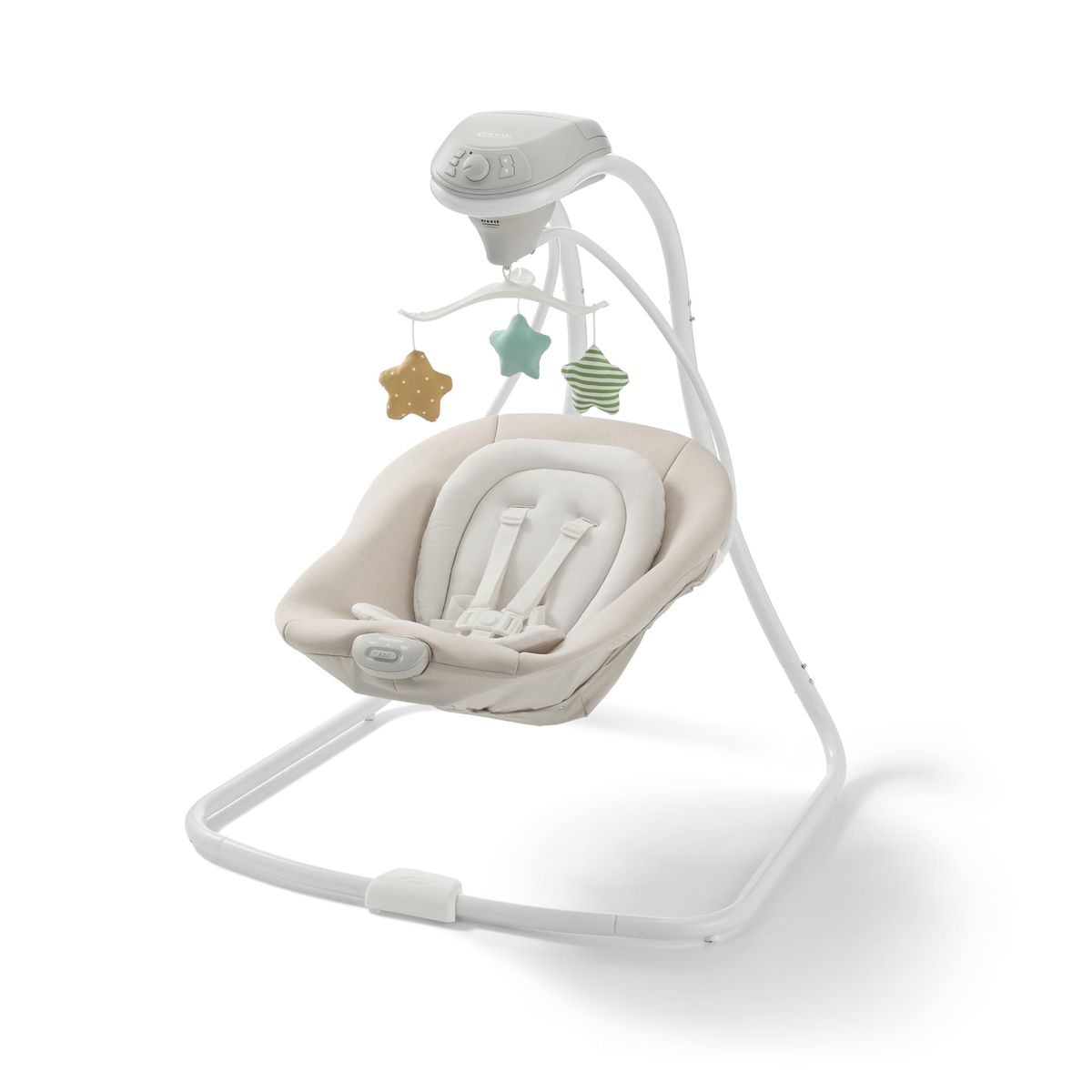
At a Glance
- Price range
- $70 – $210
- Data
- 74,515+ verified Amazon reviews across 6 finalists
- Best for
- small apartmentson-the-go usemulti-level homes
- Skip if
- You want a rocker-only seat or need a toddler swing
Types Explained
Full-Size Swing
A stationary swing with a fixed base, offering multiple speeds, sounds, and often a toy bar. Best for home use.
- Sturdy and stable
- Higher weight limits (up to 30 lbs)
- More sound and motion options
- Bulky footprint
- Harder to move between rooms
Best for: Babies who need a consistent soothing environment at home
Example: Graco Simple Sway ($139.99)
Portable Compact Swing
A lightweight, foldable swing that can be easily stored or taken on trips. Often battery-powered.
- Folds flat for storage
- Lightweight and easy to carry
- Fits in small spaces
- Lower weight limit (usually 20 lbs)
- Fewer features than full-size swings
Best for: Families who travel often or have limited floor space
Example: Ingenuity Soothe 'n Delight ($69.99)
Convertible Swing-Rocker
A swing with a removable seat that doubles as a rocker, giving two uses in one product.
- 2-in-1 design saves space
- Portable rocker for around the house
- Often includes carry handle
- May not excel as either a swing or rocker
- Higher price point
Best for: Parents who want a swing and rocker without buying two products
Example: Graco DuetSoothe ($209.99)
Multi-Direction Swing
A swing that can move side-to-side, front-to-back, or in a 180° rotation, giving varied motion.
- Multiple motion directions potentially soothe better
- Often includes rotating seat
- Compact design with wheels
- May require more assembly
- Higher price
Best for: Babies who seem to prefer different motion types
Example: Ingenuity SimpleComfort 2-in-1 ($139.99)
What Actually Matters
| Factor | Importance | Best brand |
|---|---|---|
Safety Certification JPMA certified and meets ASTM F2085-12 standards Look for the JPMA seal — it means the swing passed independent testing for US safety standards. | Must-have | Graco, Ingenuity |
Ease of Cleaning Removable and machine-washable seat pad Babies spit up and leak diapers. A non-removable pad turns into a bacteria farm. | Must-have | Graco, Ingenuity |
Portability Folds flat and weighs under 10 lbs If you move between rooms or travel, a foldable frame is worth the extra $30. | Nice-to-have | Ingenuity |
Power Source AC adapter included or available Battery-only swings eat through batteries fast. Always prefer a model that can plug in. | Must-have | Graco (many models include AC adapter portion) |
Variety of Speeds & Sounds At least 6 speeds and 10+ melodies Babies have preferences. More speeds mean you can find the right rhythm without returning the product. | Nice-to-have | Graco, Ingenuity |
Smartphone App Connectivity We found zero evidence that controlling your swing from a phone makes you a better parent. Save the $50. | Marketing BS | — |
Budget Tiers & Top Picks
What to buy at each price point — and exactly where spending more stops paying off.
Budget (Under $100)
$50 – $100Ingenuity Soothe 'n Delight Compact Portable Baby Swing

Stop paying more: Stop at $100. Spending more in this tier buys you nothing essential — the Ingenuity covers all basics.
When to upgrade: If you need portability with a 2-in-1 rocker, step up to $85–$140.
Mid-Range ($100 – $150)
$100 – $150Graco Simple Sway Portable Baby Swing
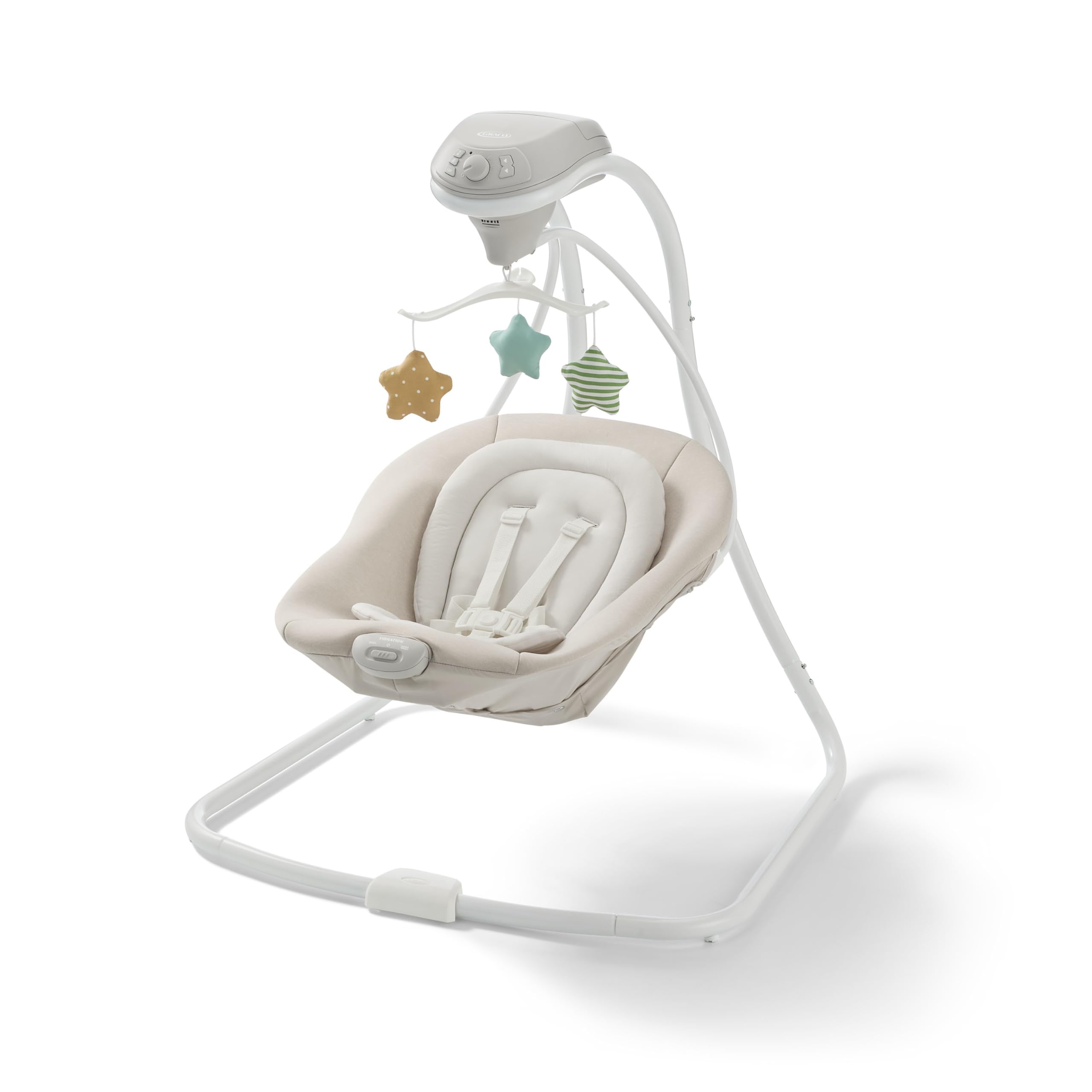
Stop paying more: Diminishing returns above $150. Extra features like multi-direction motion are nice but not essential.
When to upgrade: If your baby needs varied motion or you want a rocker, step up to $200+.
Premium (Over $150)
$150 – $250Graco DuetSoothe 2 in 1 Portable Baby Swing & Baby Rocker
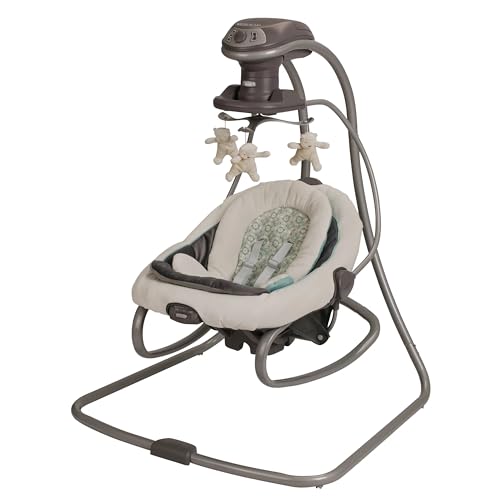
Stop paying more: Above $210, you get premium features like rocker conversion; the quality gap narrows significantly.
When to upgrade: Consider this if you value a rocker. Otherwise, mid-tier covers most needs.
Common Mistakes to Avoid
Buying a swing without removable, washable seat pads
Babies have blowouts and spit-ups constantly. If the seat pad doesn't come off, you'll be scrubbing around a frame.
Cost of getting it wrong: Replacing a stained, unsanitary swing — $50–$200 wasted.
Choosing battery-only when a plug-in option is available
AA and C batteries drain in a week with daily use. A swing that can plug in saves you $50–$100 a year in batteries.
Cost of getting it wrong: Battery costs: $50–$100/year vs free plug-in.
Ignoring weight limits
Most swings max out at 20 lbs, which babies reach around 9 months. If you want longer use, look for 30 lb models like the Graco Simple Sway.
Cost of getting it wrong: Buying a second swing at month 9 — $70–$150 spent again.
Overlooking assembly requirements
Some swings require 30+ minutes of assembly. Read reviews for assembly difficulty before buying.
Cost of getting it wrong: Returning a swing you can't set up — shipping costs and hassle.
Find Your Match
How will you primarily use the swing?
Frequently Asked Questions
How much should I spend on a baby swing?
For most families, $100–$150 hits the sweet spot — enough to get multiple speeds, sounds, and a removable pad. Premium swings above $200 offer rocker conversion but aren't necessary. Budget picks under $100 are portable but have lower weight limits.
What should I avoid when buying a baby swing?
Avoid swings with non-removable seat pads, battery-only power (if plug-in is available), and weight limits under 20 lbs if you want long-term use. Also skip overpriced swings that tout smartphone app connectivity — it adds cost without proven benefit.
What is the safest baby swing?
Look for a swing that is JPMA certified and meets ASTM F2085-12 safety standards. Brands like Graco and Ingenuity consistently pass these requirements. Always use the included 5-point harness and stop using the swing once your baby reaches the weight limit.
Are battery swings better than plug-in?
No. Battery-only swings drain batteries quickly — expect to replace C or D cells every 1-2 weeks with daily use. A swing that can plug in is much more convenient and cost-effective. Many models offer both options.
How do I choose a swing for small spaces?
Look for a compact, foldable design like the Ingenuity Soothe 'n Delight or the Graco Simple Sway. Measure your floor space before buying — a full-size swing typically needs a 30" x 30" footprint. Portable swings fold flat for storage.
What features matter most in a baby swing?
Prioritize safety certification, removable machine-washable seat pad, multiple swing speeds (at least 6), and a variety of sounds/melodies. A timer with auto-shutoff is also important for sleep safety. Ignore gimmicks like Bluetooth or app control.
Which baby swing is best for travel?
The Ingenuity Soothe 'n Delight folds flat and weighs under 7 lbs, making it the top portable pick. The Ingenuity ConvertMe also folds and converts to a seat. Both fit in a car trunk and are easy to carry.
How we wrote this guide
Our editorial team analyzed 74,515+ verified Amazon reviews, video reviews from Smart Picked and 10 Best Reviews, and manufacturer specification sheets to build this guide. We cross-referenced features against CPSC safety standards and community feedback from r/beyondthebump.
About this guide
Mubboo Editorial Team — independent US-market consumer research. Picks reflect editorial consensus from Amazon verified-buyer reviews and expert video analyses.