Back Brace Buying Guide 2026: How to Choose the Right Support for Your Pain
Expert picks from 191,000+ verified reviews — find the best brace for sciatica, heavy lifting, or all-day wear.
By Mubboo Editorial Team · Updated May 27, 2026 · 9 min read
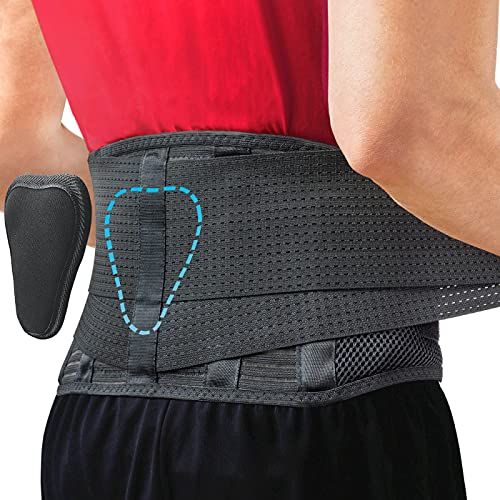
At a Glance
- Price range
- $16.97 – $33.99
- Data
- 191,427 verified reviews across 6 finalists
- Best for
- Lower back pain reliefSciaticaHerniated discHeavy liftingAll-day wearSports recovery
- Skip if
- You only need occasional support for light activity – a less bulky brace may suffice.
Types Explained
Basic Lumbar Support Braces
Simple, adjustable braces with foam or spring stays for general lower back pain relief during everyday activities.
- Affordable ($16-$27)
- Easy to put on and remove
- Breathable options available
- Fewer stays (4-8) may not suffice for heavy lifting
- Some models lack removable lumbar pad
Best for: Mild to moderate back pain, daily desk work, light activity
Example: Mueller Adjustable Back Brace ($16.97)
Sports & Activity Braces
Designed for active users, these braces use steel springs and mesh fabrics to provide support without hindering movement.
- Targeted compression with steel springs
- Odor-resistant fabric for high performance
- Removable lumbar pad for concentrated support
- May feel bulky under activewear
- Limited size range (28"-50")
Best for: Running, gym workouts, sports recovery
Example: Mueller Lumbar Back Brace with Removable Pad ($25.99)
Heavy-Lifting Braces
Robust belts with multiple support strips (4+) and extra lumbar padding for 360° support during manual labor or weight lifting.
- 360° support keeps posture proper
- Breathable fabric prevents overheating
- Great for injury prevention
- Bulkier than other types
- Velcro may lose adhesion over time
Best for: Construction workers, warehouse employees, heavy gym lifting
Example: FEATOL Back Brace Support Belt ($28.99)
All-Day Discreet Braces
Low-profile braces with multiple stays and anti-slip silicone straps designed to stay put under clothing during extended wear.
- Anti-slip silicone keeps it in place
- Dual adjustment straps for customized fit
- 8 firm stays for sufficient support
- May be warm in hot climates
- Sizing requires careful measurement
Best for: Office workers, long drives, all-day comfort under clothes
Example: BraceUP Back Brace for Men and Women ($25.99)
What Actually Matters
| Factor | Importance | Best brand |
|---|---|---|
Support Level (stays count) ≥4 stays for moderate support, ≥6 for heavy lifting More stays provide better stability but may reduce flexibility. For heavy lifting, look for 4+ strips or 6+ stays. | Must-have | Mueller (steel springs) |
Breathability Mesh or breathable fabric preferred Breathable materials prevent sweat buildup during all-day wear. Neoprene-only braces can get hot quickly. | Must-have | Sparthos (nylon mesh) |
Adjustability Dual straps or hook-and-loop closure for custom fit Proper fit is critical for effective support; measure your waist at navel level, not your pants size. | Must-have | BraceUP (dual adjustment straps) |
Copper-Infused Fabric No scientific evidence supports copper-infused fabrics for pain relief. Don't pay extra. | Marketing BS | — |
One-Size-Fits-All Claims Back braces are not one-size-fits-all. Most brands offer multiple sizes; measure your waist circumference at navel level. | Marketing BS | — |
Budget Tiers & Top Picks
What to buy at each price point — and exactly where spending more stops paying off.
Under $20
$16.97Mueller Sports Medicine Adjustable Back Brace
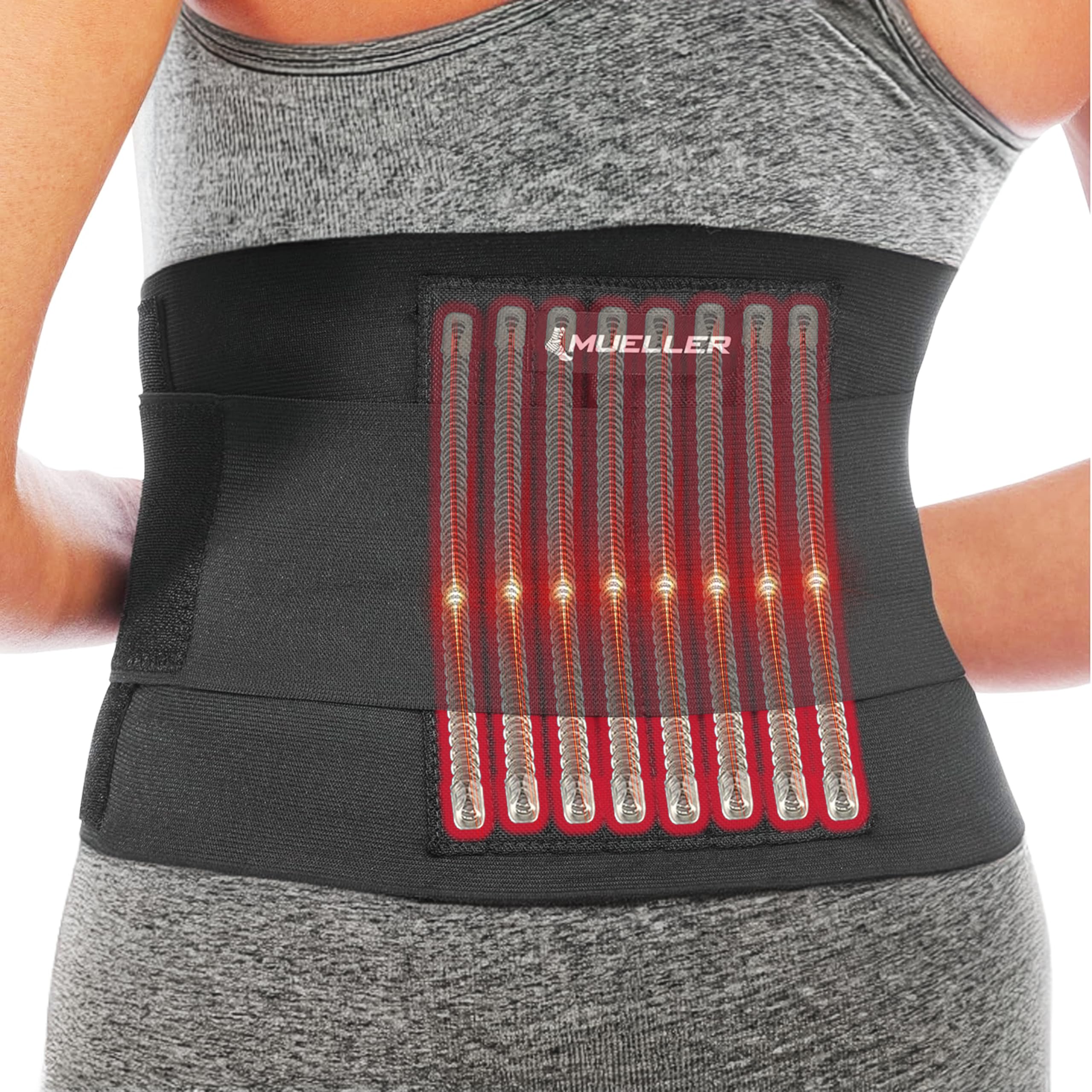
Stop paying more: Diminishing returns below $20 – you get basic support, but lacks removable lumbar pad and breathable mesh.
When to upgrade: Spending $25-$30 gets you more features like removable pads and better breathability.
$20 - $30
$25.99 – $28.99Sparthos Back Brace for Lower Back Pain
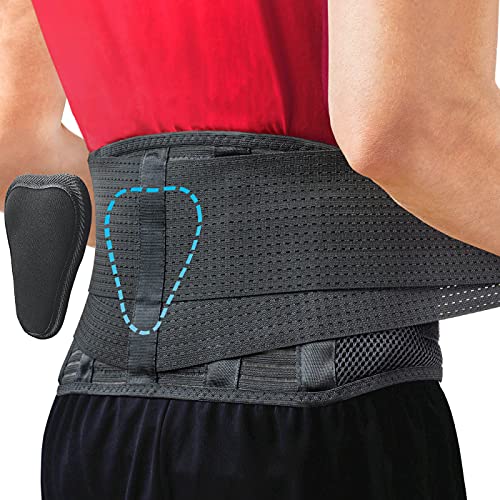
Stop paying more: The sweet spot for most buyers. Additional features like removable lumbar pad and breathable fabric deliver significant value.
When to upgrade: If you need maximum support for heavy lifting, step up to $33.99 for a 6-stay brace.
Over $30
$33.99FREETOO Back Brace for Lower Back Pain Relief with 6 Stays

Stop paying more: At $33.99 you get 6 stays for 360° vertical support. Spending more yields negligible gains – the FEATOL also offers 4 supports for $28.99.
When to upgrade: This tier covers the most demanding needs; no need to spend more.
Common Mistakes to Avoid
Choosing based on pant size instead of actual waist measurement
Many buyers rely on their pants size, which often doesn't match waist circumference at navel level. This leads to a brace that's too loose or too tight, reducing effectiveness.
Cost of getting it wrong: Wasted purchase – $16-$35 lost, plus discomfort.
Ignoring breathability
Braces made entirely of neoprene can trap heat and moisture, causing skin irritation and discomfort during extended wear. Look for mesh panels or breathable fabrics.
Cost of getting it wrong: Re-buying a breathable brace – $25-$35 extra.
Buying a brace with non-adjustable straps
Fixed straps cannot be fine-tuned for different activities or changes in swelling. Adjustable hook-and-loop closures allow you to dial in the right compression.
Cost of getting it wrong: Limited usability – may need to replace sooner.
Oversized braces that restrict movement
Some braces are too bulky, making it hard to bend or sit comfortably. Measure your waist accurately and choose a slim profile if you need all-day wear.
Cost of getting it wrong: Discomfort and reduced compliance – brace ends up unused in a drawer.
Find Your Match
What is your primary activity?
Frequently Asked Questions
How much should I spend on a back brace?
Most effective back braces fall between $16 and $34. Under $20 gets you basic support (like the Mueller Adjustable at $16.97). The $25-$30 range (Sparthos, BraceUP) offers the best balance of features — breathability, adjustable pads, and multiple stays. Spending over $30 (FREETOO) adds more stays for heavy lifting but isn't necessary for everyday wear.
What should I avoid when buying a back brace?
Avoid one-size-fits-all claims — measure your waist at navel level for a proper fit. Skip copper-infused or magnetic braces; there's no evidence they help. Also avoid fully neoprene braces if you plan to wear them all day — they trap heat and moisture. Stick to breathable mesh designs.
Are back braces good for sciatica?
Yes, many users with sciatica find relief from braces that provide firm lumbar support and compression. Look for a model with a removable lumbar pad, like the Sparthos, to target the lower back. Braces with multiple steel springs (e.g., Mueller Adjustable) also help redistribute pressure off the sciatic nerve.
Can I wear a back brace while sleeping?
Most braces are not recommended for sleep use because they can restrict movement and cause discomfort. If you need nighttime support, consider a specialized posture brace or a soft lumbar belt. Always check the manufacturer's instructions.
How tight should a back brace be?
The brace should be snug but not cutting off circulation. You should be able to slip two fingers under the brace. Adjustable straps (hook-and-loop or dual straps) allow you to fine-tune compression. Too tight can cause skin irritation or bruising; too loose won't provide adequate support.
How long can I wear a back brace each day?
Most users can wear a brace for 4-8 hours during activity. For all-day use, choose a breathable, low-profile model (like BraceUP) with anti-slip features. Take breaks every few hours to move your back naturally — prolonged use can weaken core muscles. Consult your doctor if you plan to wear it daily for weeks.
Are back braces covered by FSA/HSA?
Yes, many back braces are FSA/HSA eligible if they are intended for medical purposes (e.g., treating a herniated disc or sciatica). Look for braces that specify FSA/HSA eligibility on the product page. Copper Fit X is explicitly FDA registered and HSA/FSA approved, but other models like Sparthos may qualify as well — check with your provider.
How we wrote this guide
We analyzed 191,000+ verified Amazon reviews, three expert sources (Wirecutter, Spine-health, Verywell Health), and four community discussions (r/backpain, r/Sciatica, r/Fitness, r/ChronicPain) to bring you this guide. We also evaluated six top-rated back braces based on support level, breathability, adjustability, and real-world feedback.
About this guide
Mubboo Editorial Team.