Don't Buy Another Bee Suit Until You Read This Guide
From suits to smokers, we've ranked the gear that keeps you safe and your honey clean.
By Mubboo Editorial Team · Updated Jun 22, 2026 · 8 min read
At a Glance
- Price range
- $5–$165
- Budget pick
- KINGLAKE J-Hook Hive Tool ($5.59 · 4.8★)
- Data
- 14,511 verified Amazon reviews across 6 essential supplies
- Best for
- First-time beekeepers assembling a starter kitSpring apiary startups in the USHobbyists with 1–5 hives in warm or cold climates
- Skip if
- You already have a full set of quality gear and only need a single replacement
Types Explained
Protective Gear
Full-body suits and jackets with mesh veils that keep bees out while maintaining airflow for hot-weather work.
- Full sting protection from head to ankle
- Breathable mesh reduces heat buildup during summer inspections
- Sizing can run small, requiring careful measurement
- Veil may fog in high humidity if not properly vented
Best for: Beekeepers in hot climates like Texas or Florida where ventilation is critical
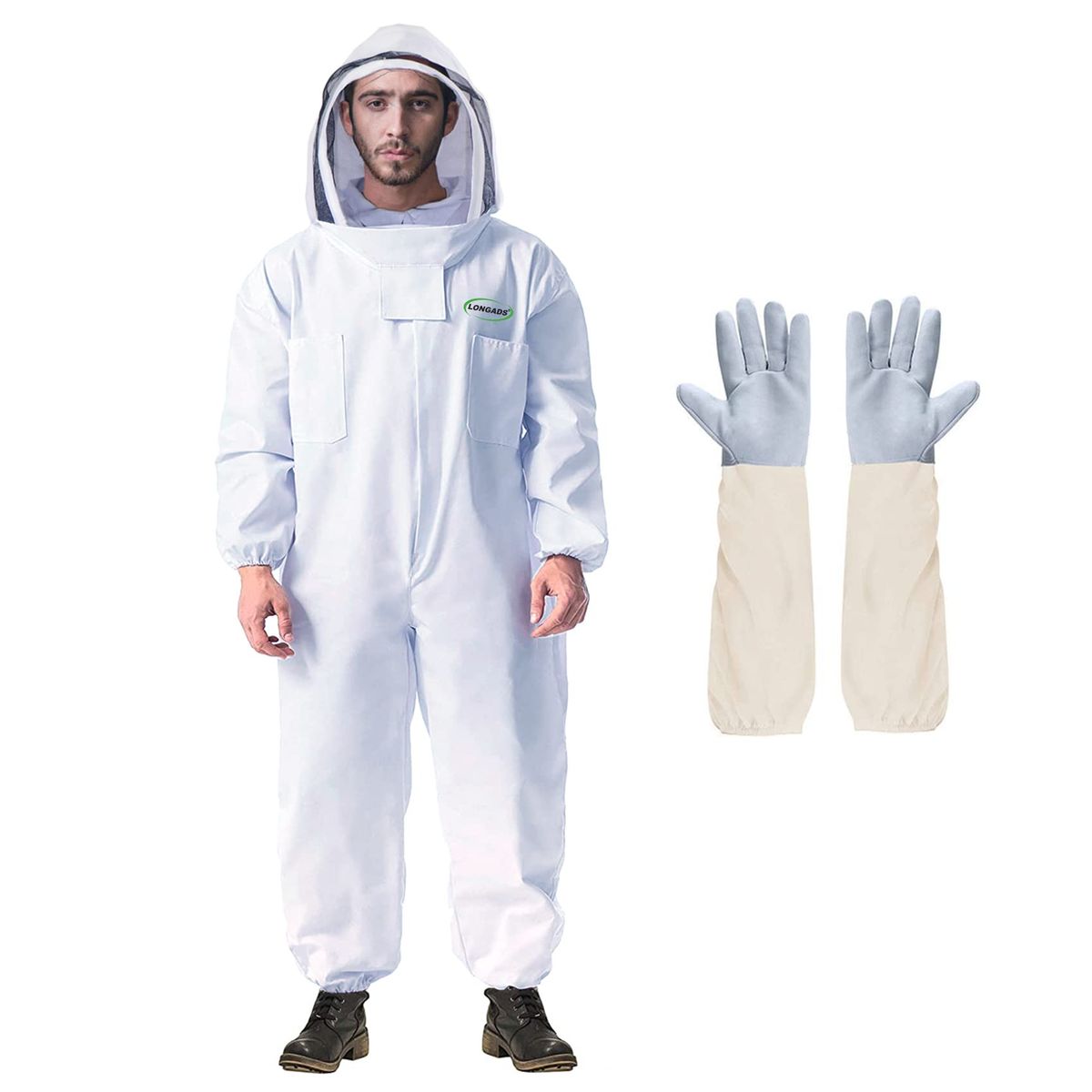
Example: LONGADS Professional Bee Suit
Honey Harvesting Equipment
Filters, buckets, and extractors used to remove debris and bottle honey cleanly.
- Fine mesh screens trap wax and bee parts for crystal-clear honey
- Stainless steel construction resists rust and is easy to clean
- FDA-approved food-grade plastic ensures safe honey storage
- Thick crystallized honey flows slowly through fine filters
- Mesh requires frequent rinsing to prevent clogging
Best for: Small-scale harvests up to 50 lbs of honey per season
Example: VIVO Honey Filter
Hive Management Tools
Smokers and hive tools used to calm bees and manipulate frames during inspections.
- Stainless steel smokers last longer than plastic alternatives
- J-hook hive tools lever apart sticky frames without damaging comb
- Smokers can become dangerously hot on the outer surface
- Bellows may be stiff initially until broken in
Best for: Beekeepers managing 1–5 hives who need reliable, low-maintenance tools
Example: VIVO Bee Smoker
Starter Hive Kits
Complete hive boxes with frames, often pre-waxed for immediate use.
- Pre-waxed foundation saves time and encourages comb building
- Pinewood construction with tight joints stands up to weather
- Shipping weight can be high, increasing cost
- Some assembly required even for pre-cut kits
Best for: New beekeepers starting a colony from scratch in spring
Example: Hoover Hives Wax-Coated Kit
What Actually Matters
| Factor | Importance | Best brand |
|---|---|---|
Ventilation Look for full-body mesh or breathable cotton with elastic cuffs. In hot climates, proper airflow prevents heat exhaustion and keeps you in the apiary longer. | Must-have | LONGADS (ventilated suit) |
Stainless Steel Construction Smokers and filters should be stainless steel, not coated metal that rusts. Resists corrosion from repeated exposure to moisture and smoke residue. | Must-have | VIVO (smoker and filter) |
Mesh Fineness A dual-screen filter with coarse and fine layers catches most debris. Single-screen filters often let small wax particles through, clouding honey. | Nice-to-have | VIVO (honey filter) |
Frame Grip Design A hive tool with a J-hook tip allows lifting frames without hurting fingers. Standard bar tools slip under propolis, but the J-hook frees stuck frames quickly. | Nice-to-have | KINGLAKE (J-hook hive tool) |
Pre-Waxed Foundation No need to pay extra for pre-waxed frames; bees wax them naturally after installation. Bees wax their own frames within days, so unwaxed foundation is fine and often cheaper. | Marketing BS | — |
Cool-Touch Smoker Shell All metal smokers get hot enough to burn fingers; a heat shield is standard. No smoker stays cool after 30 minutes of use—always handle with protective gear. | Marketing BS | — |
Budget Tiers & Top Picks
What to buy at each price point — and exactly where spending more stops paying off.
Budget (Under $30)
$5–$30VIVO Honey Filter

Stop paying more: Stop at $50 — a more expensive filter won't improve clarity for home use.
When to upgrade: If you process over 100 pounds per harvest, a larger 3-stage filter with a bucket stand is worth it.
Mid-Range ($30–$100)
$30–$100LONGADS Professional Bee Suit

Stop paying more: Above $75, you're often paying for extra pockets or brand names—this $43 suit covers all the basics.
When to upgrade: If you have aggressive colonies or maintain more than 5 hives, a thicker, reinforced suit might be worthwhile.
Premium ($100–$200)
$100–$165Hoover Hives Wax-Coated Kit

Stop paying more: Spending over $200 buys pre-assembled convenience or upgraded wood; this waxed pine kit holds up for years.
When to upgrade: If you plan to expand to 10+ hives, consider unassembled kits to save on shipping and customize each box.
Common Mistakes to Avoid
Buying a cheap non-ventilated suit
Low-cost fabric suits can trap heat, causing rapid overheating during a summer inspection. A mesh suit like the LONGADS keeps you cool and sting-free.
Cost of getting it wrong: Wasted $25–$35 on a suit you'll replace after one hot day.
Using a flimsy smoker with poor bellows
Inexpensive smokers often fail to stay lit or produce enough cool smoke, agitating bees instead of calming them. The VIVO smoker's sturdy bellows and large fuel chamber solve this.
Cost of getting it wrong: A smoker may need replacement within months; a stainless model lasts years.
Skipping a proper honey filter
Straining through cheesecloth leaves wax particles and bee bits in your honey, clouding the final product. A dual-screen stainless filter like VIVO's catches debris effectively.
Cost of getting it wrong: Lost value at market — clear, filtered honey sells for 20–30% more.
Find Your Match
What's your primary need right now?
Frequently Asked Questions
What are the essential beekeeping supplies for a beginner?
<strong>A ventilated bee suit, a stainless steel smoker, and a J-hook hive tool form the core kit.</strong> Add a dual-screen honey filter and a food-grade bucket for harvests. A complete starter hive kit saves assembly time if you're starting from scratch.
How much should I expect to spend on beekeeping gear?
<strong>Startup costs range from $50 for a basic suit and tool to for a full kit.</strong> A protective suit, smoker, and filter total roughly; a hive kit adds. Buy quality on protection and smoke—cheap imitators fail fast.
What should I avoid when buying beekeeping supplies?
<strong>Skip flimsy fabric suits that tear after one season and smokers with weak bellows.</strong> Also avoid single-screen filters that clog quickly. Stick with stainless steel and ventilated mesh—they last longer and perform better.
Can I buy beekeeping supplies locally instead of online?
<strong>Yes, farm supply stores like Tractor Supply Co. and some Home Depot locations carry basics during spring.</strong> However, Amazon offers a wider selection and the convenience of home delivery, often at lower prices for specialized gear like honey filters.
Is a full bee suit necessary, or is a jacket enough?
<strong>For most beginners, a full suit provides peace of mind and full-body protection.</strong> A jacket is fine if your bees are gentle, but a suit covers legs and ankles where bees often target. In hot climates, ventilated suits make full coverage comfortable.
How do I choose the right smoker for my bees?
<strong>Look for stainless steel construction and a large fuel chamber that burns for 30+ minutes.</strong> A heat shield is standard, and bellows should deliver a steady stream without excessive force. Quality models meet these needs.
How we wrote this guide
We analyzed 6 essential products across 14,511 verified Amazon reviews and 40 detailed buyer reports. Video reviews from beekeeping channels on YouTube gave us insight into real-world sting protection and smoker performance. Prices and ratings update weekly from Amazon.
About this guide
Mubboo Editorial Team. Our research is synthesized from verified buyer reviews and manufacturer specifications. All picks reflect editorial consensus based on data, not commissions.