Binoculars Buying Guide 2026: How to Choose Without Overpaying
Picked from 2026's most-reviewed Amazon models
By Mubboo Editorial Team · Updated May 28, 2026 · 9 min read
At a Glance
- Price range
- $24.95 – $249
- Data
- 118,210 verified Amazon reviews across 6 finalists
- Best for
- Bird watchingHikingSports eventsTravel
- Skip if
- You only need reading glasses for distance
Types Explained
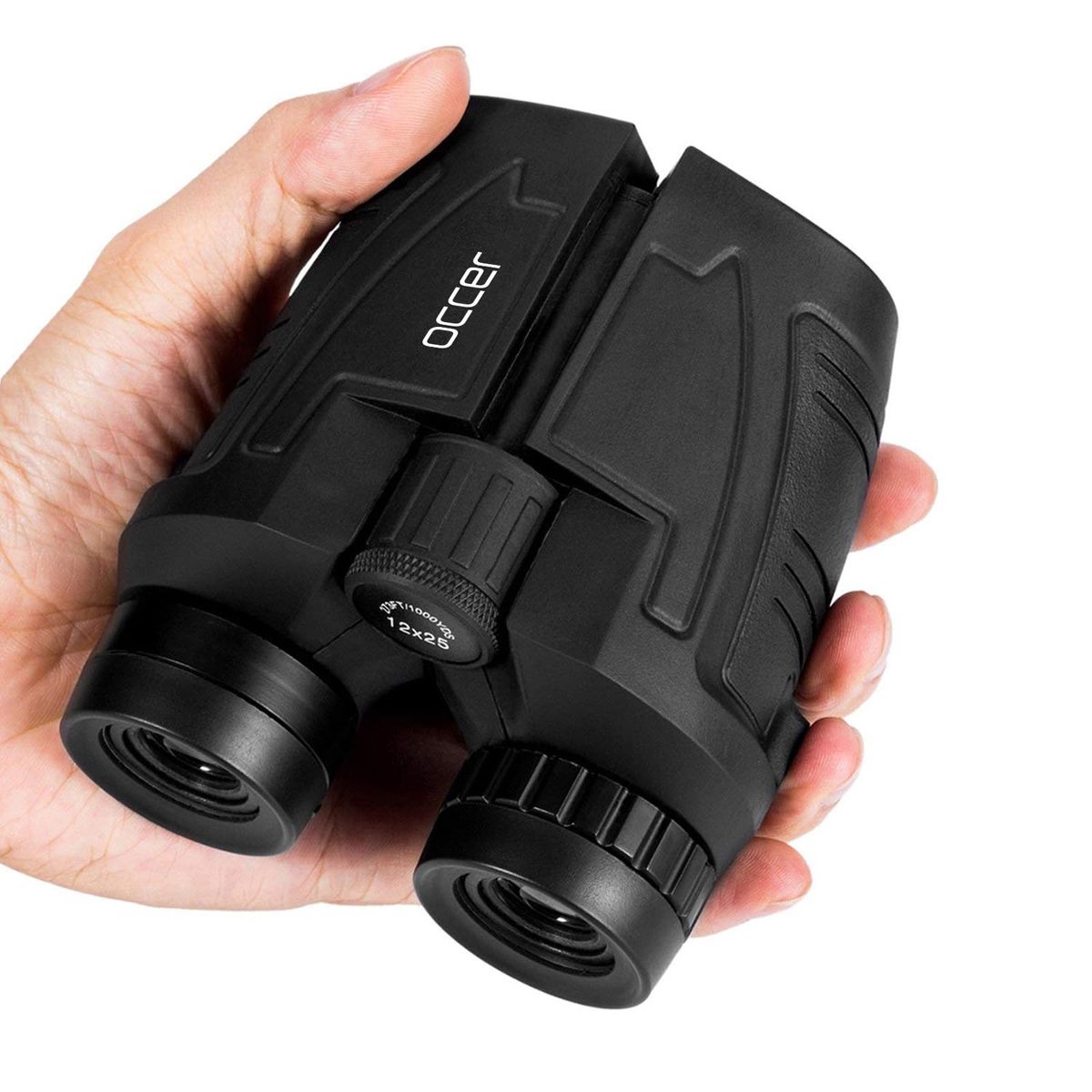
Compact Binoculars
Lightweight, pocket-friendly models with 25mm or smaller objective lenses. Ideal for day hikes, concerts, and travel.
- Weigh under 1 lb
- Fits in a jacket pocket
- Good for casual use
- Poor low-light performance
- Narrower field of view
Best for: Hikers, travelers, and daytime events
Example: Occer 12x25 ($35.98)
Full-Size Binoculars
Standard 42mm objective lens binoculars that balance light gathering and portability. Suitable for birding, hunting, and stargazing.
- Bright images in low light
- Wide field of view
- Often include phone adapters
- Heavier (1–1.5 lbs)
- Bulkier to carry
Best for: Serious birders, hunters, and outdoor enthusiasts
Example: Adassion 12x42 HD ($59.86)
Premium HD Binoculars
High-definition glass with dielectric or phase-corrected coatings for maximum clarity and color accuracy. Often include lifetime warranties.
- Exceptional resolution
- Low chromatic aberration
- Fog-proof and waterproof
- Expensive ($150+)
- Heavier build
Best for: Enthusiasts who demand the best optical performance
Example: Vortex Diamondback HD 10x42 ($249)
What Actually Matters
| Factor | Importance | Best brand |
|---|---|---|
Magnification 8x–10x for handheld use; 12x+ needs tripod Higher magnification narrows the field of view and amplifies hand shake. 10x is the sweet spot for most. | Must-have | Vortex, Nikon |
Objective lens diameter ≥42mm for low-light, 25mm is fine for daytime Larger lenses gather more light, making images brighter at dawn/dusk. 42mm is the standard for all-around use. | Must-have | Vortex, Celestron |
Field of view ≥330 ft at 1000 yards A wider field helps you track birds or athletes. 10x42 models typically offer 300–360 ft. | Nice-to-have | N/A |
Optical coatings Fully multi-coated (FMC) or better Coatings reduce glare and improve light transmission. 'Fully multi-coated' is the minimum for decent image quality. | Must-have | Vortex (Dielectric coating on Diamondback) |
Weight and portability Under 1.5 lbs for hiking; under 1 lb for travel A heavy binocular stays in the car. Compact models like the Occer 12x25 (0.86 lbs) are easy to carry all day. | Must-have | Occer, Hontry |
Waterproof and fog-proof IPX7 or nitrogen/argon purged Essential for coastal fog or rain. Nitrogen purging prevents internal fogging in temperature changes. | Must-have | Vortex, Adasion |
Zoom ratio beyond 10x Marketing often pushes 12x as 'more powerful', but the trade-off in shake and narrower view makes 10x better for most. True zoom binoculars are rare in this price range. | Marketing BS | — |
Budget Tiers & Top Picks
What to buy at each price point — and exactly where spending more stops paying off.
Under $50
$24.95 – $49.99Occer 12x25 Compact Binoculars

Stop paying more: Stop at $50. Spending more in this tier rarely improves optical quality significantly.
When to upgrade: Need better low-light performance or a wider field? Step up to the $50–$150 range.
Mid-Range $50–$150
$49.99 – $149Adasion 12x42 HD Binoculars with Phone Adapter and Tripod
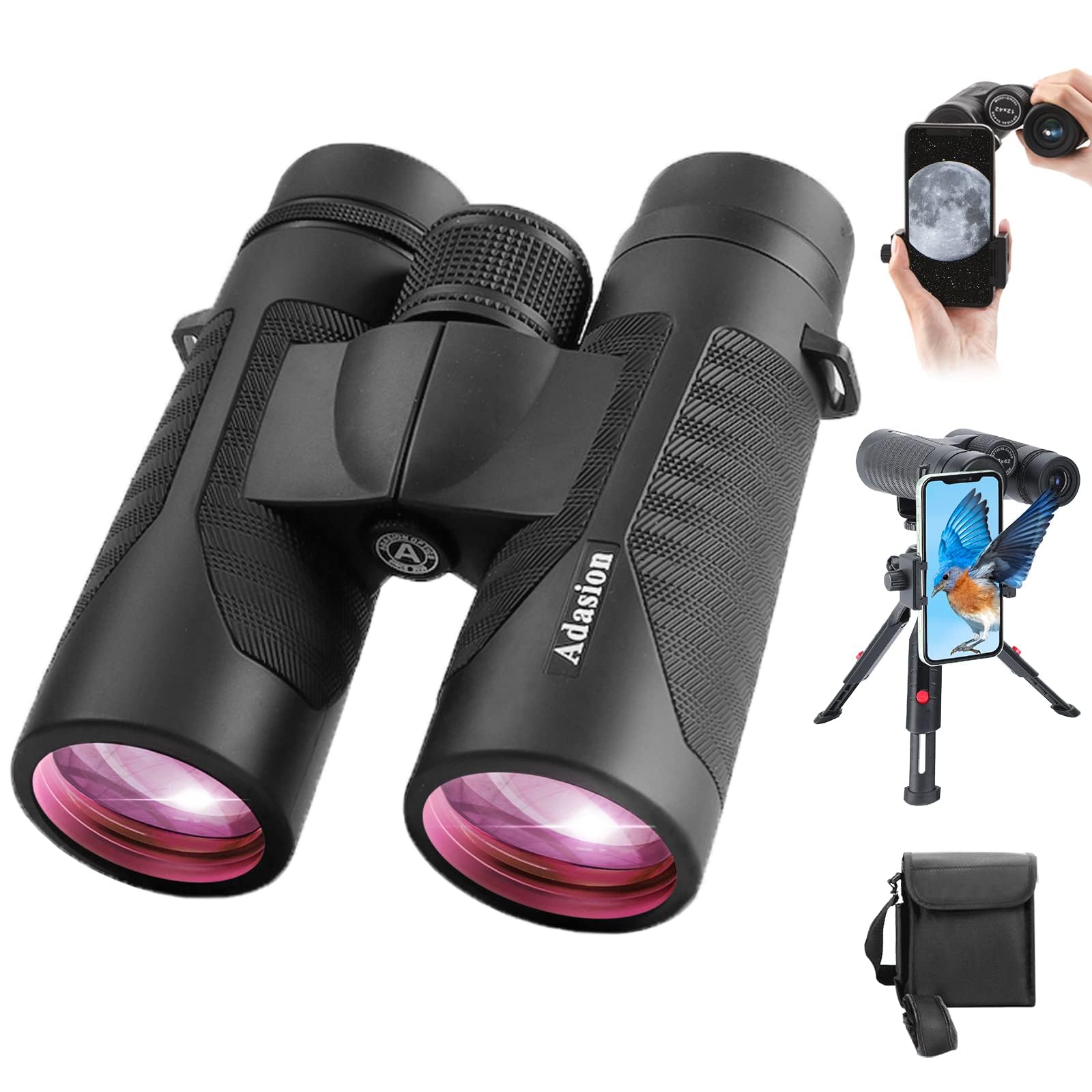
Stop paying more: At $60 you get IPX7 waterproofing, a phone adapter, and a tripod. Diminishing returns above $100 unless you need HD glass.
When to upgrade: If you're a serious birder or hunter, the Vortex Diamondback HD at $249 offers HD glass and a lifetime warranty.
Premium $150+
$149 – $249Vortex Optics Diamondback HD 10x42 Binoculars

Stop paying more: Beyond $250, you're paying for premium glass and lifetime warranty—worth it if you use them weekly.
When to upgrade: This is the top tier. No need to look further unless you want a spotting scope.
Common Mistakes to Avoid
Buying too much magnification
12x or 16x sounds powerful, but hand shake makes it impossible to hold steady. Most buyers end up using a tripod, which defeats portability. 8x or 10x is enough for birding and sports.
Cost of getting it wrong: Wasted $50–100 on a shaky view, then buy a tripod.
Ignoring exit pupil for low-light use
Exit pupil = objective diameter / magnification. For twilight, aim for ≥4mm. 10x42 gives 4.2mm; 12x25 gives only 2.1mm. Small exit pupil = dark images at dusk.
Cost of getting it wrong: Missed sightings during golden hour or overcast days.
Overlooking weight on long hikes
A 1.5 lb binocular may seem fine in-store, but after 5 miles on the trail, it becomes a burden. Compact models under 1 lb are much more comfortable.
Cost of getting it wrong: Leaves binoculars at home after one hike.
Find Your Match
What will you mainly watch?
Frequently Asked Questions
How much should I spend on binoculars?
For occasional use, $30–$50 gets a decent compact pair. For regular birding or sports, plan $50–$150. Premium models over $150 offer HD glass and lifetime warranties. Most people are well-served in the $50–$100 range.
What should I avoid when buying binoculars?
Avoid very cheap models under $20 with plastic lenses — image quality is poor. Also avoid high magnification (12x+) if you won't use a tripod. And don't ignore weight: a heavy pair will stay at home.
What are the best compact binoculars for bird watching?
The Occer 12x25 ($35.98) is a solid budget option for daytime birding. For better low-light performance, the Adorrgon 12x42 ($49.99) with phone adapter is a great value. Serious birders should consider the Vortex Diamondback HD ($249).
Which binoculars are best for eyeglass wearers?
Look for long eye relief (0.59 inches or more). The Vortex Diamondback HD has 0.59 inches eye relief and twist-up eyecups. The Occer 12x25 offers 0.79 inches eye relief and adjustable eyecups that work well with glasses.
What is the best binoculars under $50?
The Occer 12x25 is the top seller with 33,000+ reviews and a 4.4-star rating. It's compact, waterproof, and offers 12x magnification. For a bit more, the Adorrgon 12x42 at $49.99 includes a phone adapter.
Are binoculars with phone adapters worth it?
Yes, if you want to capture what you see. The Adorrgon 12x42 and Adasion 12x42 both include phone adapters and tabletop tripods. They're great for sharing bird sightings or moon shots on social media.
How do I choose between 10x and 12x magnification?
10x is more versatile — steady handheld, wider field, and better in low light. 12x gives more reach but requires a steady hand or tripod. For most users, 10x is the sweet spot.
How we wrote this guide
Researched across 118,000+ verified Amazon reviews and manufacturer specifications. Prices update weekly from Amazon, Best Buy, and REI.
About this guide
Mubboo Editorial Team — independent US-market consumer research. Picks reflect verified buyer reviews and manufacturer data. Prices update weekly from Amazon, Best Buy, and REI.