Bookshelf Speaker Buying Guide 2026: How to Choose Without Overpaying
From budget to premium, find the right speakers for your space and source.
By Mubboo Editorial Team · Updated May 28, 2026 · 10 min read
At a Glance
- Price range
- $99 – $200
- Data
- 45,779 verified reviews across 6 finalists
- Best for
- Most householdsDesktop setupsSmall to medium rooms
- Skip if
- You need deep sub-bass for home theater without a subwoofer
Types Explained
Passive Speakers
Passive speakers require an external amplifier or AV receiver to power them. They offer more flexibility for upgrades and typically deliver better sound quality at higher budgets, but add cost and complexity.
- Upgradable components (amp/speakers separate)
- Often higher build quality and sound fidelity
- Requires separate amplifier (adds $100–500)
- More cables and setup effort
Best for: Audiophiles and home theater enthusiasts who want maximum performance and future flexibility
Example: Polk Audio T15 ($149/pair)
Active (Powered) Speakers
Active speakers have a built-in amplifier, so you connect them directly to your source (phone, TV, computer). They are simpler to set up and often more affordable for a complete system.
- All-in-one convenience, no extra amp needed
- Compact and desktop-friendly
- Limited upgrade path (cannot change amp)
- Typically lower power than separates
Best for: Desktop users, casual listeners, and those on a budget
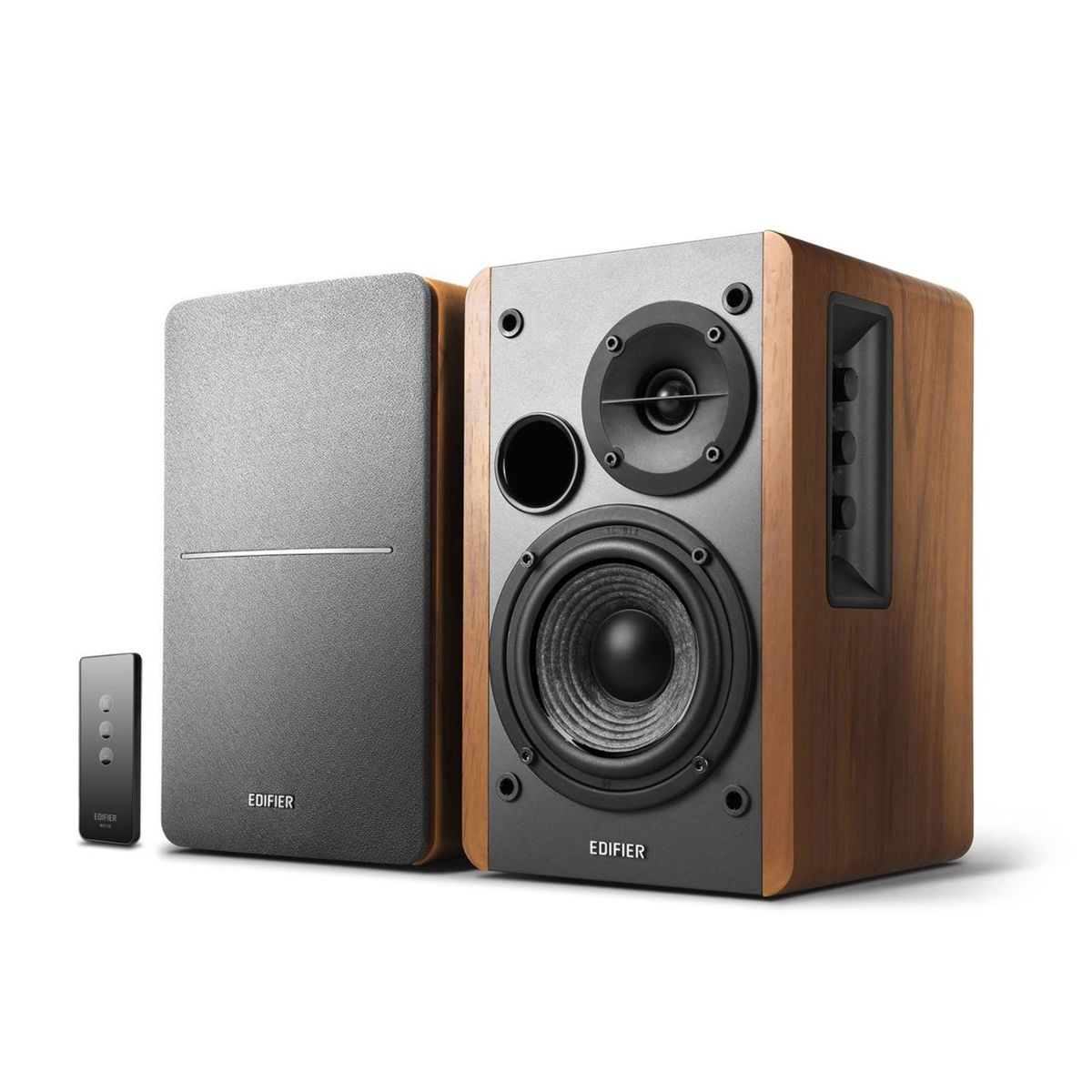
Example: Edifier R1280T ($150/pair)
Wireless / Bluetooth Speakers
Wireless bookshelf speakers include Bluetooth or Wi-Fi connectivity for streaming from your phone or computer without physical cables. Ideal for clutter-free setups.
- Freedom from wires for music streaming
- Often include optical/coaxial inputs for TV
- Audio quality may be slightly lower than wired
- Relies on wireless standards that may become outdated
Best for: TV audio upgrades and casual listeners who prioritize convenience
Example: Edifier R1280DBs ($160)
What Actually Matters
| Factor | Importance | Best brand |
|---|---|---|
Sound quality and driver design Dedicated tweeter and woofer, frequency response below 80Hz for bass A 1-inch tweeter and 4–5.25-inch woofer is the sweet spot for bookshelf speakers. | Must-have | Edifier (balanced), Klipsch (crisp highs) |
Power output (RMS watts) At least 25W RMS for small rooms, 40W+ for medium rooms Higher wattage fills larger spaces without distortion. | Must-have | Edifier (42W on R1280T), Klipsch (50W continuous) |
Connectivity options At least RCA and 3.5mm input; Bluetooth or optical is a plus Bluetooth is great for streaming, but wired is always more reliable for sound quality. | Nice-to-have | Edifier R1280DBs (Bluetooth 5.0, optical, coaxial) |
Size and placement Dimension under 8" wide, 12" tall, 8" deep for standard bookshelves Measure your space before buying — larger speakers need room to breathe. | Must-have | Edifier (compact 4" woofer, 5.75" wide on R1280T) |
Built-in voice assistants Voice control on bookshelf speakers is a gimmick. You'll use your phone or a smart speaker instead. | Marketing BS | — |
Budget Tiers & Top Picks
What to buy at each price point — and exactly where spending more stops paying off.
Budget: Under $120
$99 – $119Edifier R980T Active Bookshelf Speakers

Stop paying more: Stop at $120. Spending more in this tier gets you little extra — the R980T already delivers solid sound and wooden cabinets.
Mid-Range: $120 – $180
$120 – $179Edifier R1280T Powered Bookshelf Speakers
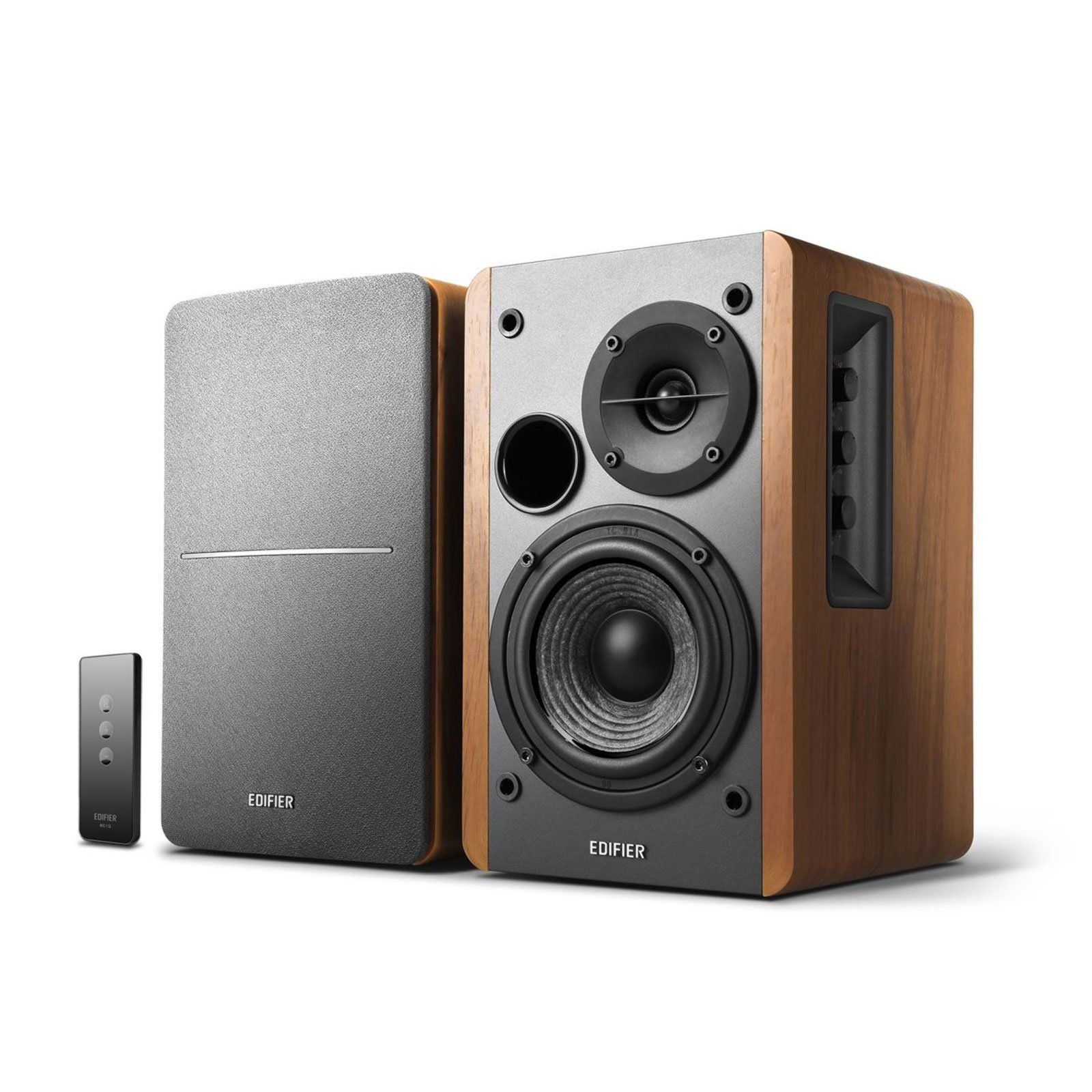
Stop paying more: The R1280T is the sweet spot. Beyond $150, you're paying for extra inputs or brand — not big sound gains.
Premium: Over $180
$179 – $200Klipsch R-41M Reference Bookshelf Speakers
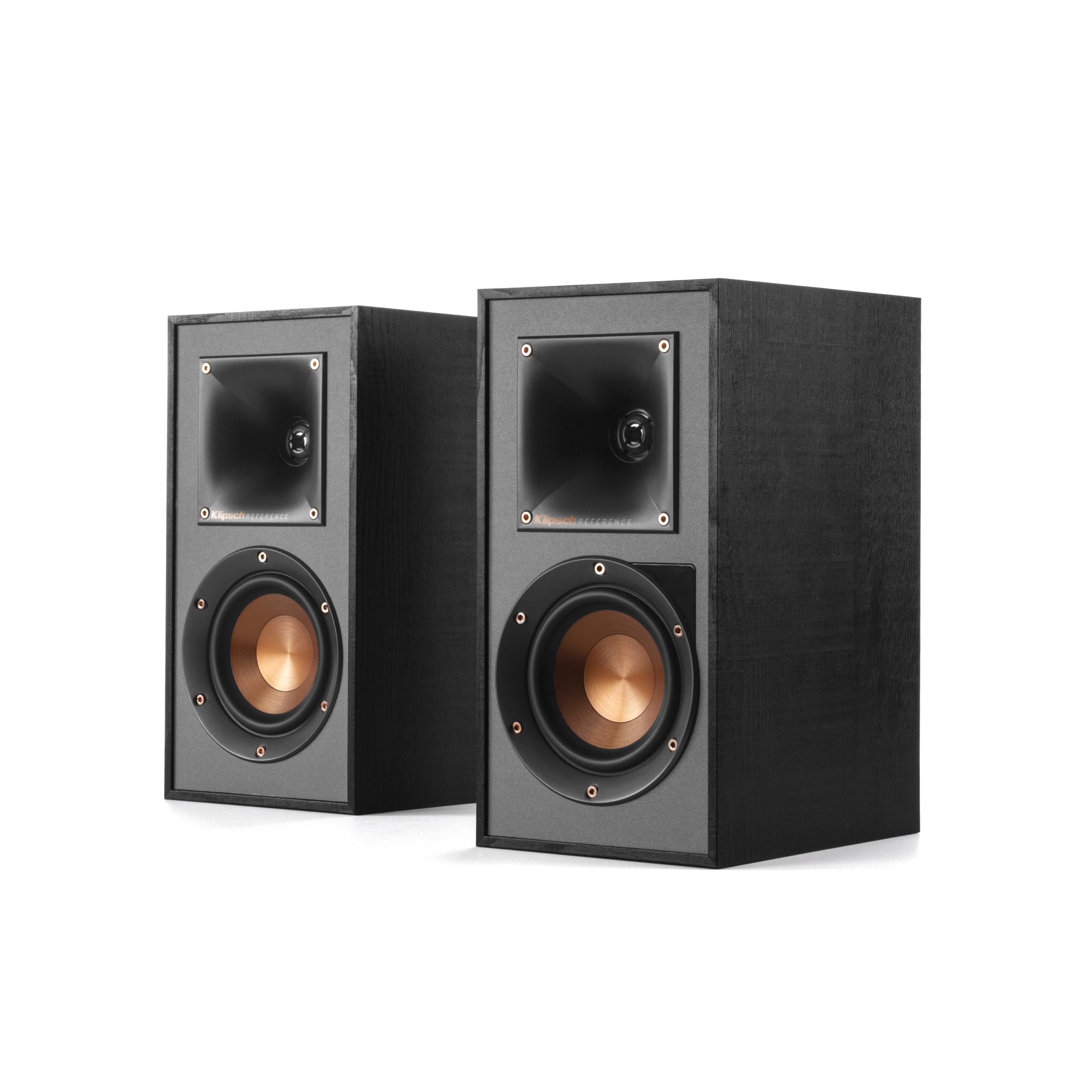
Stop paying more: Diminishing returns above $180. Klipsch gives you horn-loaded tweeter precision, but you'll need a good amp.
Common Mistakes to Avoid
Buying passive speakers without an amplifier
Passive speakers like the Polk T15 or Klipsch R-41M need a separate AV receiver or stereo amp. Many first-time buyers forget this and can't get sound.
Cost of getting it wrong: You'll spend an extra $100–300 on an amp, turning a $150 purchase into $250+.
Overpaying for Bluetooth you don't need
If your TV, computer, or turntable is already connected via cable, Bluetooth adds cost with no benefit. The Edifier R1280DBs costs $10 more than the R1280T but adds wireless you may never use.
Cost of getting it wrong: You can save $10 by skipping wireless — or spend wisely if you actually stream from your phone.
Neglecting room size when choosing power
24W speakers like the R980T work fine for a desk or bedroom, but will struggle to fill a 400 sq ft living room. Match power to your space.
Cost of getting it wrong: Underpowered speakers lead to distortion and disappointment — you'll end up buying louder ones.
Find Your Match
What is your primary use?
Frequently Asked Questions
How much should I spend on bookshelf speakers?
Most people get excellent sound for $100–$200 per pair. Below $100 you lose some bass and build quality; above $200 you start paying for incremental refinement that only audiophiles will notice.
What should I avoid when buying bookshelf speakers?
Avoid passive speakers if you don't already own an amplifier or receiver — you'll need to budget an extra $100–300. Also skip built-in voice assistants and gimmicky features like RGB lights — they add cost without improving sound.
How do I know if I need active or passive speakers?
If you want a simple setup with fewer cables, choose active (powered) speakers. If you plan to build a home theater or upgrade components over time, go passive. Active speakers are better for desktop and casual listening; passive for serious systems.
Do I need Bluetooth in bookshelf speakers?
Only if you plan to stream music wirelessly from your phone or tablet. If your TV, computer, or turntable is already connected via cable, Bluetooth adds cost without benefit.
Can I use bookshelf speakers for home theater?
Yes, but you'll typically need a subwoofer for movie effects. Passive models like Polk T15 work well as front or surround speakers with an AV receiver. Powered speakers can also work if your TV has a line-level output.
What size room are bookshelf speakers suitable for?
For larger spaces, choose a 5.Power below 30W may struggle in open-plan living areas.
How does this guide work?
Answer the questions in the decision helper above, and we'll match you to the best speaker based on your use case, budget, and setup. Each recommendation links to our in-depth best-of roundup for full product details.
How we wrote this guide
We analyzed 45,779 verified reviews across 6 bookshelf speaker models and cross-referenced with expert sources including Wirecutter and CNET. Prices update weekly from Amazon.
About this guide
Mubboo Editorial Team — independent US-market consumer research. Picks reflect verified buyer data and expert consensus from 3 independent review sources.