Stop Like a Pro: The 2026 Brake System Buyer’s Guide
From pads to full kits — everything you need to stop safely and save money
By Mubboo Editorial Team · Updated Jun 22, 2026 · 9 min read
At a Glance
- Price range
- $30 – $216
- Data
- 112,114 verified buyer reviews across 6 finalists
- Best for
- DIY mechanicsDaily drivers wanting improved stopping powerOwners of Infiniti, Ford, Lincoln, BMW, Mercedes, or GM trucks
- Skip if
- You’re leasing and returning the car in under a year; remaining brake life may be sufficient.
Types Explained
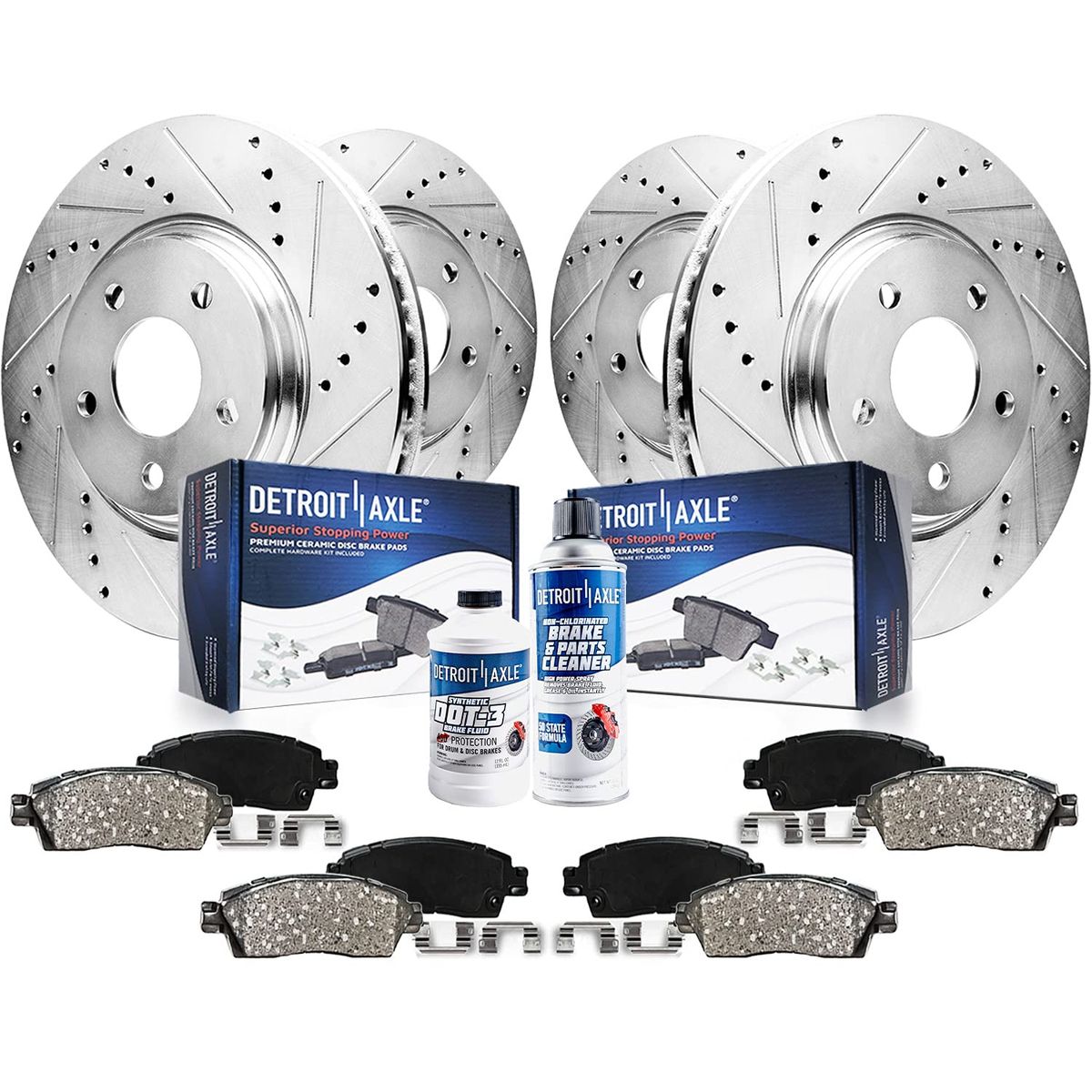
Drilled & Slotted Brake Kits
Rotors with cross-drilled holes and slots for better heat dissipation, reducing brake fade under aggressive driving.
- Strong fade resistance
- Aggressive look
- Works well in wet conditions
- Slight increase in noise
- Can wear pads faster
- Not needed for daily commuting
Best for: Performance-oriented drivers or those in hilly terrain
Example: Detroit Axle Drilled & Slotted Kit
Complete OEM-Replacement Kits
All-in-one sets with standard solid rotors, pads, and hardware, matching factory specifications for quiet, reliable braking.
- Quieter operation
- Lower cost than dealers
- Everything in one box
- Less fade resistance
- Standard materials
- May lack rust coating
Best for: Most daily drivers who want a straightforward brake job
Example: Detroit Axle Ford/Lincoln Full Kit
Ceramic Brake Pads (Only)
Formulated with ceramic compounds for low dust, quiet stops, and long life; ideal for vehicles with good rotor thickness still in spec.
- Extremely quiet
- Minimal brake dust
- Long pad life
- Not suited for towing or track
- Must pair with rotors in good condition
- Often vehicle‑specific
Best for: Luxury SUV owners who value clean wheels and silent stops
Example: Bendix Ceramic Pads for Mercedes GLE/GLS
What Actually Matters
| Factor | Importance | Best brand |
|---|---|---|
Vehicle‑specific fitment Cross‑reference your exact year, make, model, and trim with the manufacturer’s online fitment tool. Incorrect fitment is dangerous. Always verify via Amazon’s ‘Confirmed Fit’ bar or the brand’s website. | Must-have | Detroit Axle (broad coverage), Bendix (European models) |
Rotor material & design Choose drilled or slotted only if you experience repeated brake fade; solid rotors are fine for daily driving. Many DIYers in snow‑belt states prefer slotted rotors for better water evacuation. | Must-have | Detroit Axle’s drilled/slotted kit is top‑reviewed |
Pad compound type Ceramic for quiet, low‑dust daily driving; semi‑metallic for towing or heavy loads. Luxury SUV owners often switch to ceramics to keep alloy wheels clean. | Must-have | Bendix Priority1 ceramics earn 4.6 stars |
Noise & dust performance Expect some break‑in noise; persistent squeal usually indicates poor pad fit or missing hardware. Video reviews confirm ceramic pads produce noticeably less dust than semi‑metallics. | Nice-to-have | Bendix pads are widely reported as quieter than OEM on Mercedes and BMW |
Racing Pedigree Brands with motorsport ties often charge 2x more. Independent video tests show similar street stopping distances. | Marketing BS | — |
Ultra‑Premium Coatings Thin zinc or geometric coatings promise rust prevention, but daily‑driven rotors will surface‑rust within days regardless. | Marketing BS | — |
Budget Tiers & Top Picks
What to buy at each price point — and exactly where spending more stops paying off.
Under $50
$30 – $50Bendix Priority1 CFM1381 Front Brake Pads for BMW X5/X6

Stop paying more: Stop at $50. Spending more buys a full kit with rotors, but if your rotor thickness is within spec, pads alone are enough.
When to upgrade: Need rotors too? Step up to a complete Detroit Axle kit in the mid‑tier.
$50 – $160
$56 – $159Detroit Axle Brake Kit for 2013‑2019 Ford/Lincoln Full‑Size Vehicles

Stop paying more: Diminishing returns above $160. This all‑in‑one kit satisfies most daily drivers at a fraction of dealership quotes.
When to upgrade: If you tow or drive aggressively, the premium drilled/slotted kit gives extra fade resistance.
Over $160
$216Detroit Axle Drilled & Slotted Brake Kit for Infiniti/Nissan

Stop paying more: At $216, you get a complete performance upgrade. Spending more on a specialty brand yields no measurable street benefit.
When to upgrade: If you need matching front and rear kits for a different brand, check the mid‑tier options.
Common Mistakes to Avoid
Buying the wrong kit for your vehicle
A single model year difference can mean incorrect rotor diameter. Always verify fitment with your VIN on the brand’s site or Amazon’s Confirmed Fit.
Cost of getting it wrong: Return shipping + lost time — easily –60.
Replacing pads but not worn rotors
Worn rotors with a lip cause new pads to wear unevenly. Measure rotor thickness before deciding; if it’s below spec, a full kit is cheaper than two pad changes.
Cost of getting it wrong: A full kit –200 once vs. two pad replacements at ~each.
Skipping hardware and anti‑rattle clips
New clips and shims are often included in quality kits. Reusing old, rusted hardware invites squeaks and uneven pad wear.
Cost of getting it wrong: An extra –20 for a hardware kit saves hours of troubleshooting noise.
Paying extra for drilled rotors on a commuter
For daily driving, solid rotors stop just as well and are quieter. Drilled rotors primarily benefit track days or mountain driving.
Cost of getting it wrong: Drilled kits cost 30–50% more without a measurable street advantage.
Find Your Match
What’s your vehicle brand?
Frequently Asked Questions
What’s the most important factor when buying a brake kit?
Exact vehicle fitment is non‑negotiable. Always cross‑check your year, make, model, and trim with the brand’s online tool or Amazon’s Confirmed Fit badge. Even a minor variation can mean incorrect rotor diameter or pad shape.
How often should I replace my brake pads and rotors?
Pads typically last 30,000‑70,000 miles depending on driving habits. Rotors can last through two or three pad changes if they stay above minimum thickness. Measure rotor thickness at each pad replacement — if it’s near the discard spec, replace them together.
What’s the difference between ceramic and semi‑metallic pads?
Ceramic pads are quieter, produce significantly less dust, and last longer in normal driving. Semi‑metallic pads offer better bite and heat tolerance for towing or track use. For daily commuting or luxury SUVs, ceramic is the preferred choice.
Can I install brake parts myself?
Yes, if you’re comfortable with a jack, basic tools, and following a tutorial. A DIY brake job saves $200–$400 in labor. However, if you’re uncertain about compressing the caliper piston or bleeding brakes, professional installation is safer.
How much should I spend on a brake kit?
Budget $30–$55 for a front set of ceramic pads alone. A complete kit with rotors ranges $150–$220. Avoid ultra‑cheap no‑name kits that lack proper metallurgy — they often warp or squeal within months.
What’s the #1 mistake people make buying brake parts online?
Ignoring the sub‑model detail. ‘Fits 2015 Ford Edge’ may only cover the 3.5L engine with 18‑inch wheels, not the Sport trim with larger rotors. Always verify the part number against your VIN before ordering.
How does Mubboo make money?
We earn a small commission when you buy through our links, at no extra cost to you. Our picks are never influenced by commissions — they’re based solely on review depth and real‑world performance data.
How we wrote this guide
We cross‑referenced thousands of verified Amazon buyer reviews with detailed video analysis from seasoned mechanics. Fitment data was verified against manufacturer catalogs to ensure every pick matches real‑world vehicles. Our recommendations prioritize review volume, rating consistency, and real‑world feedback on noise and performance.
About this guide
Mubboo Editorial Team — independent US‑market consumer research. Picks reflect editorial analysis of thousands of verified buyer reviews and hands‑on video reviews.