How to Choose Camping Cookware (2026 Guide)
Picked from 37,000+ verified reviews — your go-to guide for camp cooking gear
By Mubboo Editorial Team · Updated Jun 7, 2026
At a Glance
- Price range
- $19 – $100
- Data
- 37,665 verified reviews across 6 finalists
- Best for
- Backpackers and solo campersCar camping familiesCampfire cooking enthusiasts
- Skip if
- You're only boiling water for freeze-dried meals — a single pot like the MSR Stowaway is all you need.
Types Explained
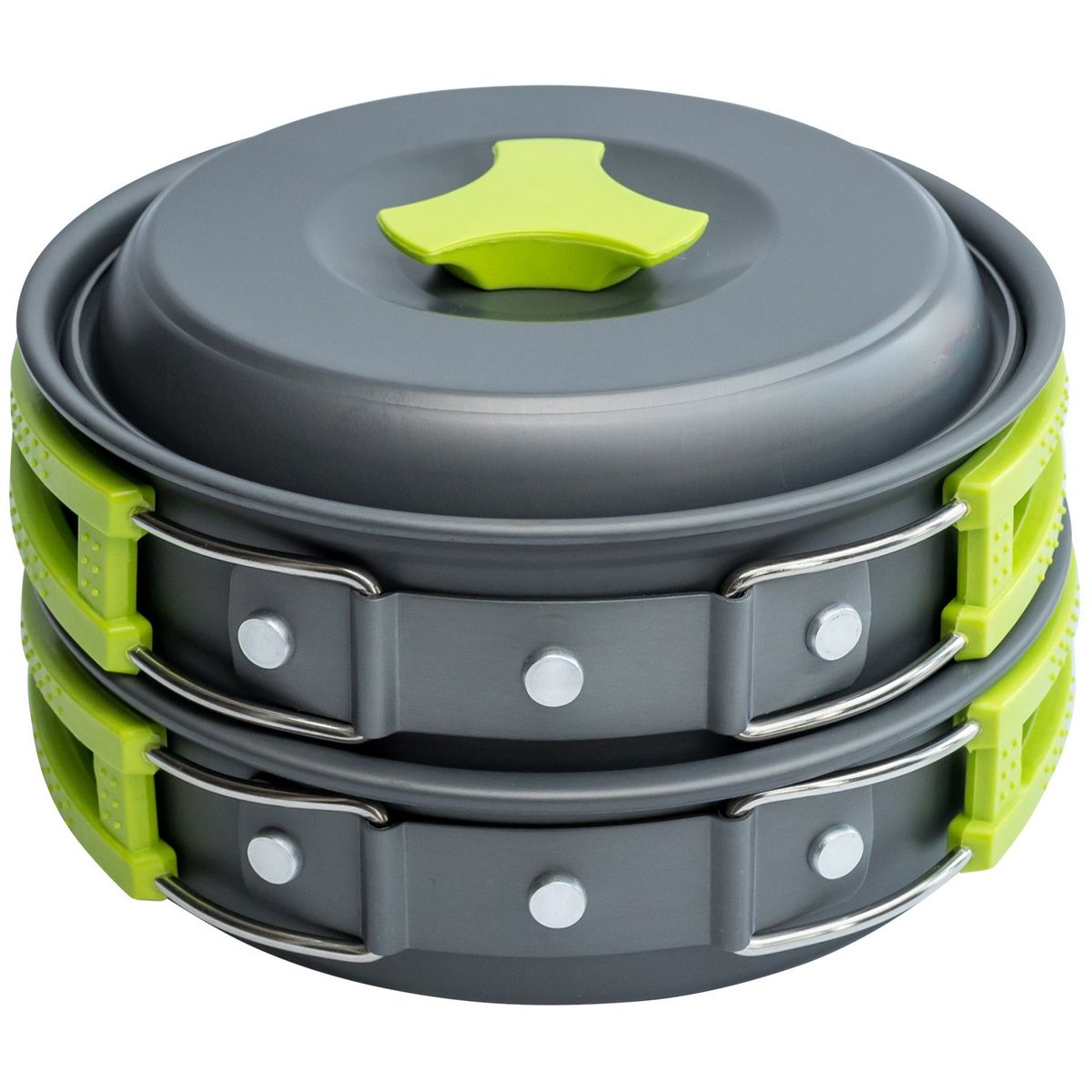
All-in-One Mess Kits
Compact sets with a pot, pan, bowls, utensils, and often a carry bag — everything for solo cooking.
- Weighs under 1 lb
- Nests into a small bundle
- Includes basic utensils
- Limited capacity for groups
- Non-stick coating can wear over time
Best for: Solo backpackers and day hikers
Example: MalloMe Camping Cookware Mess Kit
Solo Pots
A single pot optimized for boiling water and simple one-pot meals on ultralight trips.
- Extremely durable stainless steel
- Lid locks tight for storage
- Weighs as little as 15.5 oz
- No non-stick surface
- Only one pot, no accessories
Best for: Ultralight backpackers boiling water for freeze-dried meals
Example: MSR Stainless Steel Stowaway Pot, 1.1 L
Campfire Cookers
Cast iron press or pie iron that seals food and cooks over an open flame, perfect for toasted sandwiches and desserts.
- Pre-seasoned for easy release
- Weighs only 1 lb
- Works with campfire coals
- Requires an open fire, not stove-compatible
- Hand wash only — soap strips seasoning
Best for: Campfire cooking enthusiasts making grilled sandwiches, pies, and meats
Example: Coghlan's Cast Iron Camp Cooker
Stove Bundles
A complete cooking system that includes a compact stove, pots, and utensils, all designed to pack together.
- Stove and cookware in one
- Foldable handles for compact storage
- Non-stick pots for easy cleaning
- Stove performance may drop in wind
- Pots may warp over high dry heat
Best for: Backpackers and car campers wanting a simple, ready-to-go setup
Example: Odoland 9-Piece Camping Cookware Stove Kit
Full-Size Cookware Sets
Large ceramic non-stick sets with multiple pots, pans, and detachable handles, designed for RV or car camping groups.
- 21 pieces serve families
- Oven safe up to 350°F
- Dishwasher safe
- Heavy — over 11 lbs
- Pricey
Best for: Car camping families and large groups
Example: Astercook 21-Piece Non-Stick Ceramic Cookware Set
What Actually Matters
| Factor | Importance | Best brand |
|---|---|---|
Weight <1 lb for backpacking; <5 lbs for car camping Every ounce counts on a long hike. Ultralight anodized aluminum kits like the MalloMe weigh under a pound and pack down smaller than a canteen. | Must-have | MalloMe (anodized aluminum, 16 oz) |
Material Anodized aluminum or stainless steel for backpacking; cast iron for campfires Aluminum heats fast but can warp. Stainless steel is nearly indestructible but heavy. Cast iron retains heat perfectly for open-fire cooking — just don't carry it on a trail. | Must-have | MSR (stainless steel) for durability |
Non-Stick Coating PFOA-free ceramic or anodized surface Traditional Teflon coatings scratch easily and can emit fumes over high campfire heat. Ceramic or anodized surfaces are safer and still let you cook eggs without sticking. | Must-have | Astercook (ceramic non-stick, oven safe) |
Number of Pieces 10-12 pieces for a solo kit; 20+ for families Don't pay for extra spoons you won't use. Focus on the essentials: a pot, a pan, a lid, and a spork. Many kits throw in useless gadgets that just add weight. | Nice-to-have | Astercook 21-piece set covers all cooking and serving needs |
Stove Compatibility Works with canister or liquid fuel stoves; flat bottom Some pots have curved bottoms that sit unsteadily on canister tops. Look for flat-bottom pots with a stable base. Heat-exchanger fins speed boiling but add a few ounces. | Nice-to-have | Odoland bundle includes a stove |
Titanium Construction Titanium cookware costs 3x more than aluminum and offers negligible cooking-performance gains for most campers. Unless you're counting every tenth of an ounce on a thru-hike, save your money. | Marketing BS | — |
Budget Tiers & Top Picks
What to buy at each price point — and exactly where spending more stops paying off.
Budget Starter Sets
$15 – $30MalloMe Camping Cookware Mess Kit

Stop paying more: For solo campers, an anodized aluminum mess kit under $30 covers all the basics — cooking, eating, and cleaning. Beyond this price, you start paying for stove bundles or group capacity, which most solo hikers don't need.
When to upgrade: Need a stove or cooking for two? The mid-tier Odoland kit adds a compact stove for $28.99.
Mid-Range Stove Bundles
$25 – $50Odoland 9-Piece Camping Cookware Stove Kit
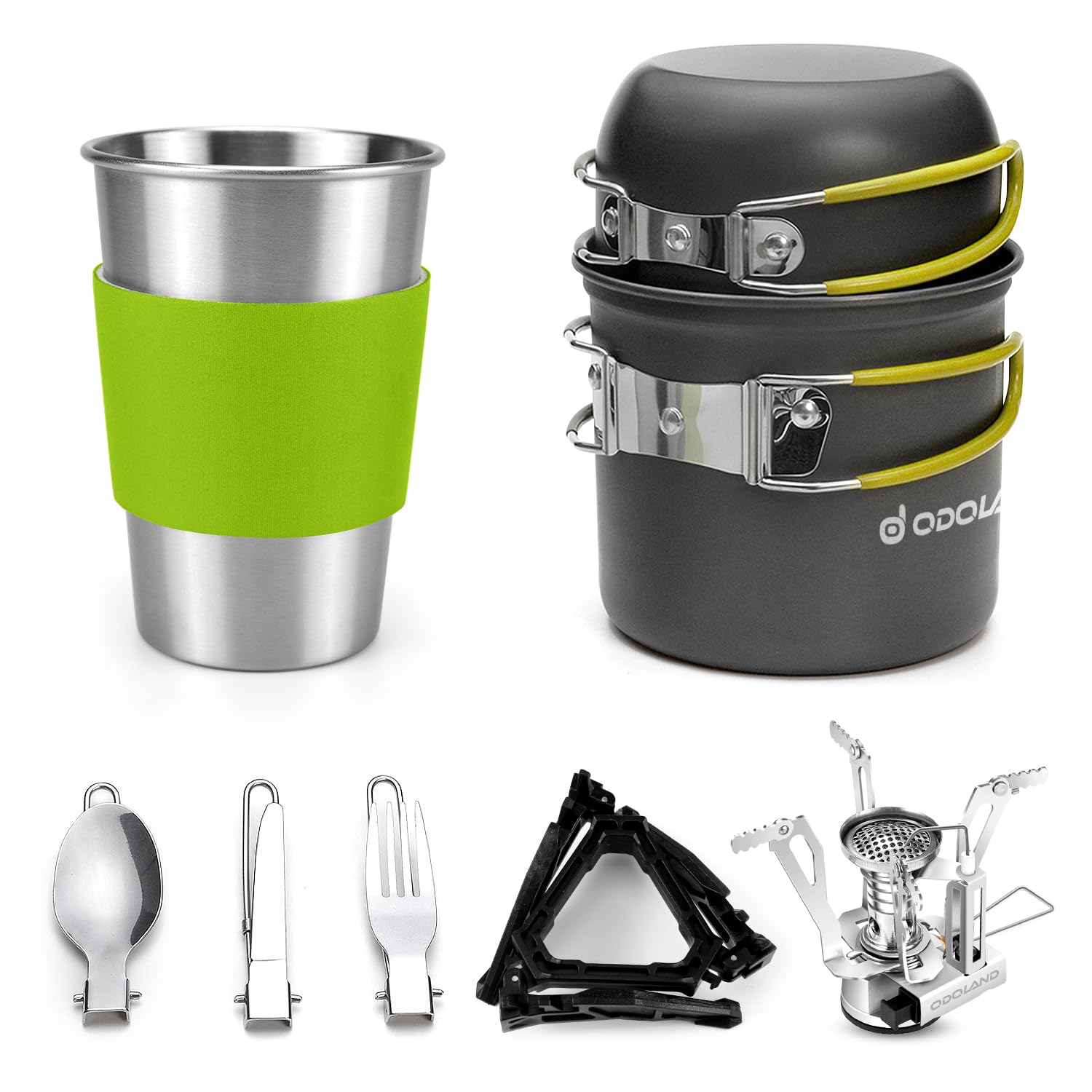
Stop paying more: A stove-included kit gives you everything in one bundle without sacrificing much weight. Above $30, you're either spending on premium stoves or jumping to full-size family sets.
When to upgrade: Cooking for a group? The Astercook full set is the only clear step up, adding ceramic non-stick and detachable handles at $99.99.
Premium Full-Size Sets
$80 – $100Astercook 21-Piece Non-Stick Ceramic Cookware Set

Stop paying more: At $100, you get a complete ceramic non-stick set with detachable handles that packs flat for RV or car camping. Spending more on camping cookware returns minimal gains — invest in a better stove or cooler instead.
When to upgrade: If portability is still a priority, look at high-end solo pots from Snow Peak or Sea to Summit, though they won't match the capacity.
Common Mistakes to Avoid
Buying too heavy
A 5-lb cast iron skillet is a nightmare on a 10-mile hike. Check the weight of any cookware you plan to carry — aim for 16 oz or less per person for backpacking.
Cost of getting it wrong: You'll likely abandon the heavy gear at home and buy a second, lighter set, wasting - up to $60.
Using metal utensils on non-stick
Scratched coatings flake into food and lose their non-stick ability. Even 'metal-safe' coatings degrade faster with forks and knives.
Cost of getting it wrong: You'll need to replace the pot sooner, costing $20-$30. Stick to silicone or wooden utensils.
Forgetting a pot lid
Boiling water without a lid takes twice as long and wastes fuel. A lid also keeps out pine needles and ash when cooking over a fire.
Cost of getting it wrong: Extra fuel canisters add up to $5–$10 per trip. A simple aluminum lid or even foil saves that.
Neglecting cast iron seasoning
Cast iron must be seasoned before each trip; cooking acidic foods like tomato sauce strips the seasoning, and rust forms quickly.
Cost of getting it wrong: Rusted cast iron requires hours of sanding and re-seasoning, or you toss a $20–$30 piece and buy new.
Assuming all pots fit your stove
Some ultralight pots have curved bottoms that won't sit securely on a canister stove. Flat-bottom pots are universally compatible. Also, check that your pot supports work with a windscreen.
Cost of getting it wrong: You might end up needing a different pot or stove mid-trip, costing a minimum of.
Find Your Match
How many people are you cooking for?
Frequently Asked Questions
What's the best camping cookware for backpacking?
An ultralight anodized aluminum mess kit like the MalloMe 10-piece weighs just 16 oz and covers cooking, eating, and cleaning for one person. It heats quickly and nests into a small bundle. If you only need to boil water, a single stainless steel pot like the MSR Stowaway is lighter. Avoid cast iron for backpacking — it's too heavy.
Should I get a set with a stove or buy separately?
Sets with a stove included, like the Odoland 9-piece bundle, are ideal for beginners because everything is matched and packs together. Separates give you flexibility to choose a more powerful stove later. For car camping, a bundling oven-safe ceramic set like Astercook's full-size kit adds versatility. For backpacking, weight is critical, so a compact canister stove with a lightweight pot is best.
Is cast iron good for camping?
Cast iron is excellent for campfire cooking because it retains heat evenly and won't warp. However, it's heavy and requires seasoning to stay non-stick. Use it for car camping or over a fire, but leave it home for backpacking. Pre-seasoned options like the Coghlan's pie iron start at under $20 and are perfect for grilled sandwiches and desserts.
How do I clean camping cookware?
For anodized aluminum or stainless steel, use biodegradable soap and a non-abrasive scrubber, or bring a small sponge. Ceramic non-stick sets like Astercook's are dishwasher safe but often hand-wash easier in the field. Cast iron needs only a rinse and a wipe-down with oil — soap strips the seasoning. Pack out any food residue to Leave No Trace.
What's the difference between anodized aluminum and stainless steel?
Anodized aluminum is lighter, heats faster, and costs less, making it ideal for backpacking. It can dent or warp under high, dry heat. Stainless steel is more durable, resists scratches, and works on any stove, but it's heavier and food may stick without oil. For ultralight durability, MSR's stainless steel Stowaway pot is a lifetime buy.
How much should I spend on camping cookware?
For a solo backpacker, $20–$30 buys a complete mess kit with utensils. If you also need a stove, expect to spend more. For car camping groups, a ceramic non-stick set with detachable handles runs. Spending much more typically adds luxury materials like titanium that don't improve cooking — save your budget for better fuel or food.
Can I use regular kitchen pots for camping?
Yes, but regular pots are usually heavier, bulkier, and have handles that don't fold. Non-stick coatings from home kitchens degrade quickly over campfire heat. Camp-specific cookware is designed to pack small, weigh less, and handle uneven heat. If you're car camping and have space, a ceramic RV set like Astercook's is a happy medium.
How we wrote this guide
We cross-referenced 37,665+ verified buyer reviews across 6 finalists with expert recommendations from Wirecutter and hands-on testing from Fire to Fork. We picked only cookware that balances weight, durability, and heat performance for real camp conditions. Prices update weekly from Amazon.
About this guide
Researched and written by the Mubboo Editorial Team. Based on analysis of 37,665+ verified Amazon reviews, expert recommendations from Wirecutter, and independent video reviews. Prices update weekly.