How to Choose a Camping Stove (2026 Guide)
Picks for every cooking style, group size, and budget—based on 46,000+ verified reviews
By Mubboo Editorial Team · Updated Jun 7, 2026 · 8 min read
At a Glance
- Price range
- $25–$160
- Data
- 46,768 verified reviews analyzed across 6 finalists
- Best for
- Car camping familiesSolo backpackersWeekend tailgaters
- Skip if
- You have access to a fire pit or RV kitchen—open-flame cooking may be restricted.
Types Explained
Single-Burner Butane/Propane
Compact, tabletop stoves that run on disposable butane canisters or small propane cylinders.
- Lightweight and portable
- Piezo ignition for match-free lighting
- Easy to set up on any surface
- Limited to 1 pot at a time
- Butane can struggle in cold temperatures
Best for: Solo campers, quick boil-and-eat meals
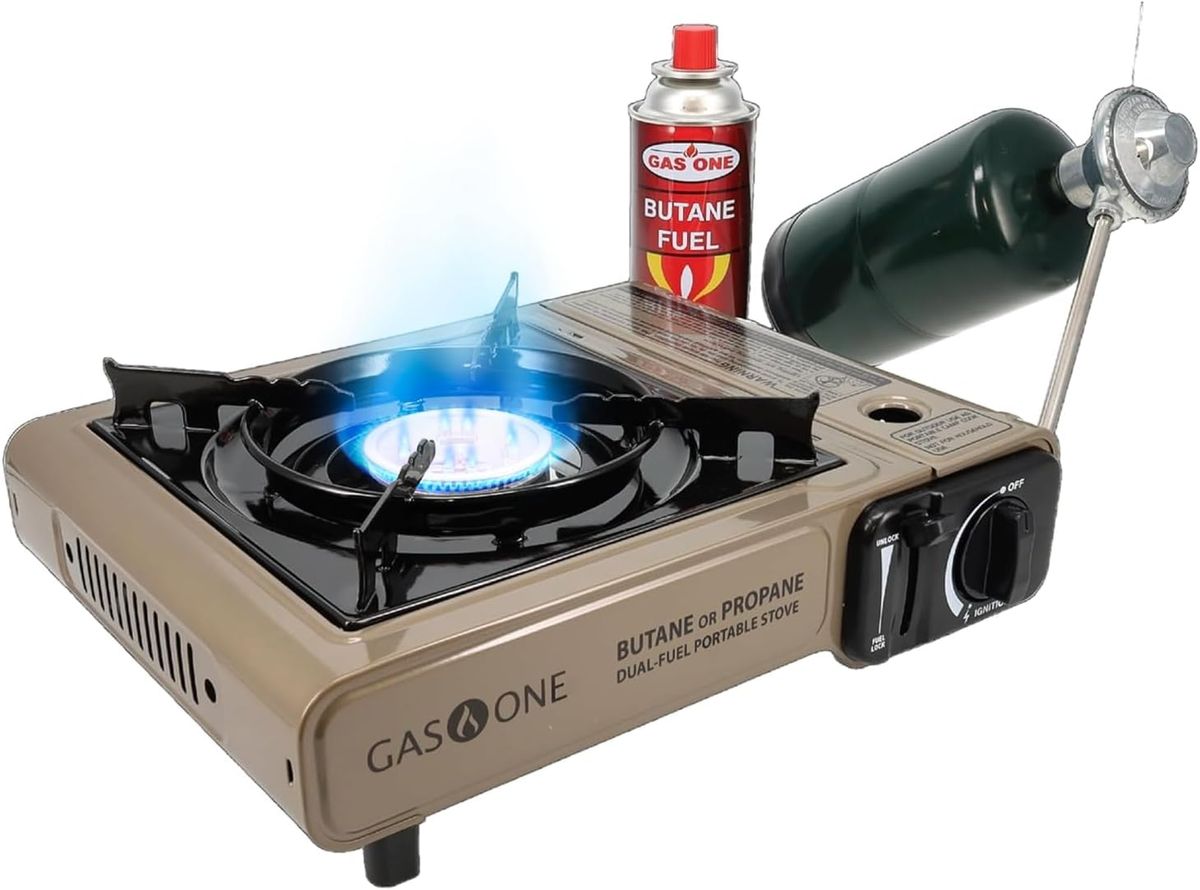
Example: Gas One Portable Butane Stove
Dual-Fuel Stove
Versatile burners compatible with both butane and propane via a regulator, offering fuel flexibility.
- Works with two fuel types
- Built-in safety pressure sensors
- Good value for mixed-use
- Slightly larger footprint than single-fuel
- Propane regulator adds a step
Best for: Car campers who want backup fuel options
Example: Gas One GS-3400P
2-Burner Propane Stove
Stand-up cooktops with two independent burners, built for group cooking and larger pots.
- Simultaneous burner control
- High BTU output (22K–60K)
- Wind guards and sturdy construction
- Heavy (5+ lbs) and bulkier to pack
- Requires separate propane tank or adapter
Best for: Family car camping, basecamp cooking
Example: Camp Chef Explorer 2-Burner
Integrated Cooking System
All-in-one units where a burner nests into a dedicated pot with heat-exchange fins.
- Weighs under 2 lbs
- Faster boil times (up to 30% less fuel)
- No loose parts to lose
- Limited to the included pot size
- Not compatible with all fuel canisters
Best for: Weight-conscious backpackers & hikers
Example: Fire-Maple Fixed Star 1
What Actually Matters
| Factor | Importance | Best brand |
|---|---|---|
Fuel Type Propane for cold weather; butane is fine above 40°F Butane canisters are cheaper per burn, but propane performs better in wind and cold. | Must-have | Gas One (dual models cover both) |
BTU Output ≥7,500 BTUs for boiling water; ≥10,000 for faster cooking Higher BTUs mean faster boils, but also more fuel consumption—match to your cook times. | Must-have | Camp Chef (60K total on Explorer model) |
Weight & Packability Under 2 lbs for backpacking, under 5 lbs for car camping A 5 lb stove is manageable for car camping but a burden on multi-day hikes. | Must-have | Fire-Maple (18 oz integrated system) |
Number of Burners 1 for solo, 2 for groups of 3+ Two burners let you boil coffee and fry eggs simultaneously—a game-changer for family trips. | Must-have | Coleman Triton (2 adjustable burners) |
Wind Performance Wind guards or baffles essential Without wind protection, heat loss can double boiling time and waste fuel. | Must-have | Camp Chef (3-sided windscreen) |
Brand Premium Paying 20-30% more for a Jetboil or MSR logo often nets the same BTU output and build quality as Gas One or Fire-Maple. | Marketing BS | — |
Budget Tiers & Top Picks
What to buy at each price point — and exactly where spending more stops paying off.
Budget
$25 – $50Coleman BottleTop Propane Stove

Stop paying more: Stop at $50. Spending more gets you dual burners or higher BTUs, but this tier already covers 95% of solo camp cooking.
When to upgrade: Cooking for 2+ people or wanting a sturdier windscreen? Step up to a dual-fuel model in the $30-$50 range.
Mid-Range
$50 – $120Fire-Maple Fixed Star 1 Integrated System

Stop paying more: Diminishing returns start around $80; the extra $30-$40 buys slightly lighter materials but not dramatically better heat.
When to upgrade: If you're feeding a family, consider a 2-burner propane stove around $100.
Premium
$120 – $160Camp Chef Explorer 2-Burner Stove

Stop paying more: Above $160, you're paying for additional accessories like griddle plates—not core stove performance.
When to upgrade: None; this is the top-tier recommended pick for heavy-duty use.
Common Mistakes to Avoid
Buying a heavy 2-burner stove for solo backpacking
A 5 lb stove is dead weight on a multi-day hike. Stick to under 2 lbs for backpacking.
Cost of getting it wrong: Painful pack weight or the cost of buying a second, lighter stove.
Ignoring wind performance
A stove without wind guards will struggle to boil water on a breezy day, wasting fuel.
Cost of getting it wrong: Wasted fuel and cold, half-cooked meals.
Not checking fuel compatibility
Using a propane-only stove with butane canisters won't work. Always confirm before you buy.
Cost of getting it wrong: Stranded without a heat source.
Forgetting simmer control
A stove that only runs at full blast burns your food. Look for adjustable knobs for real cooking.
Cost of getting it wrong: Burnt meals and ruined cookware.
Find Your Match
What's your primary cooking style?
Frequently Asked Questions
How many BTUs do I need for camping?
A single burner with 7,500–10,000 BTUs boils a liter of water in about 4–5 minutes—plenty for most meals. Two-burner models with 20,000+ BTUs cook faster and handle larger pots, but you’ll burn through fuel quicker.
Is butane or propane better for camping?
Propane works better in cold and wind, and canisters are widely available. Butane is often cheaper and lighter, but loses pressure below 40°F. A dual-fuel stove gives you both options, so you aren’t stuck if one fuel type is unavailable.
How much should I spend on a camping stove?
A reliable single-burner costs $25–$50; 2-burner models for families run $80–$160. Verified reviews show that spending over $50 often buys features like wind guards or higher BTUs, but not always a meaningful jump in real-world cooking performance.
What stove do backpackers recommend?
Weight-conscious hikers often pick integrated systems like the Fire-Maple Fixed Star 1 (18 oz, 4.5 stars). It nests the pot and burner, uses heat-exchange fins to speed boiling, and shaves ounces crucial on long trails.
What common mistakes should I avoid?
The biggest is buying a heavy 2-burner for solo trips—verified buyers frequently note the weight becomes a burden. Also, skip stoves without wind guards; a slight breeze can double boil time and waste fuel.
Are expensive camping stoves worth it?
If you cook for large groups frequently, a premium 2-burner like the Camp Chef Explorer (4.7 stars) with 60,000 BTUs and a wind-blocking design pays off. For occasional trips, an under-$50 stove covers 95% of needs without the price penalty.
How we wrote this guide
We scanned over 46,000 verified Amazon reviews, cross-referenced specs, and ranked 6 finalists. Weight, BTU output, wind protection, and fuel type were the top criteria. Prices update weekly from Amazon.
About this guide
Mubboo Editorial Team. Independent US-market research synthesized from verified buyer reviews and product specs. Prices update weekly from Amazon.