How to Choose a Car Charger (2026 Guide)
Don't buy another slow charger—here's what actually matters for fast, reliable power on the road.
By Mubboo Editorial Team · Updated Jun 7, 2026 · 8 min read
At a Glance
- Price range
- $8 – $29
- Data
- 111,405+ verified reviews analyzed across 6 finalists
- Best for
- Daily commutersFamilies with multiple devicesRoad trip travelersTech‑savvy drivers
- Skip if
- You already have a charger with USB‑C PD that fast‑charges your phone; older USB‑A only chargers will not hold up.
Types Explained
Basic USB‑A Chargers
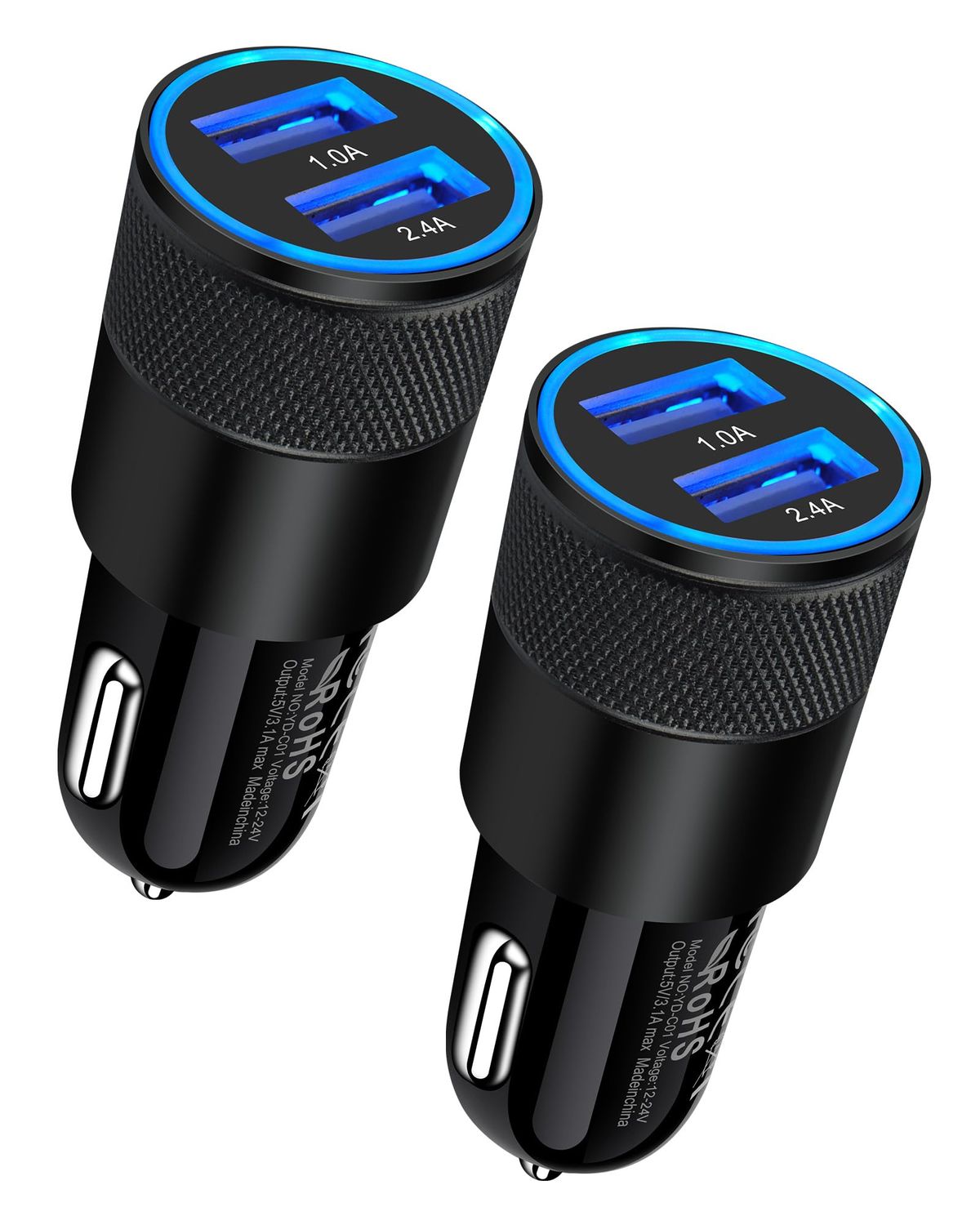
Dual USB‑A ports outputting 5V/3.4A (17W) shared. No fast‑charging protocols.
- Dirt cheap (often sold in 2‑packs)
- Compact and flush fit
- Wide compatibility with older cables
- Cannot fast‑charge modern iPhones or Android phones
- Slow charging speed for tablets
- No safety features beyond basic fusing
Best for: Single‑device users on a tight budget or as a backup charger in a second car.
Example: AILKIN 2‑Pack Dual USB Car Charger
Fast USB‑C PD Chargers
At least one USB‑C port supporting Power Delivery 3.0 with 30W+ output, often paired with a QC USB‑A port.
- Charges iPhone 16 to 50% in 25 minutes
- Works with flagship Samsung and Google Pixel phones
- Compact size fits any car
- Typically only 2 ports, limiting simultaneous devices
- No cable management; loose cables on dash
- Some lack PPS protocol for Samsung Super Fast Charging
Best for: iPhone or Android owners who want a fast, minimal setup.
Example: Anker 323 USB‑C Car Charger + Cable
Multi‑Port Retractable Chargers
4‑in‑1 designs with built‑in retractable Lightning and USB‑C cables plus extra USB ports, pushing 69–84W total.
- Charge up to 4 devices at once
- No tangled cables—retractable cables tuck away
- High total wattage supports tablets and even laptops
- 180° rotating plug for awkward outlets
- Larger body may block adjacent air vents
- Old Lightning retractable cable may not fit newer iPhones without adapter
- Higher cost
Best for: Families, ride‑share drivers, and anyone with multiple gadgets.
Example: LISEN Retractable 84W Car Charger
What Actually Matters
| Factor | Importance | Best brand |
|---|---|---|
USB‑C Power Delivery (PD) 30W PD for fast charging phones; 45W+ for tablets Without PD, an iPhone 16 charges at half speed. Look for ‘USB‑C PD 3.0’ in the specs—older USB‑A ports top out at 12W. | Must-have | Anker, LISEN (both offer 30W‑45W PD ports) |
Total Power Output ≥50W for charging 2+ devices at high speed Wattage is shared among ports. A 54W charger delivering 36W PD + 18W QC can fast‑charge two devices simultaneously. | Must-have | LISEN (84W and 69W models) |
Number of Ports 2 ports minimum; 4 ports ideal for families Each extra port means one fewer argument over who gets to charge. Think about how many devices your car needs to power on a typical trip. | Nice-to-have | LISEN (retractable models offer 4 ports) |
Build Quality & Certifications Must carry CE, FCC, or UL marks; metal housing preferred Cheap plastic chargers without safety certifications can overheat or short‑circuit. Amazon buyer reviews consistently call out fragile plugs and loose fits. | Must-have | All recommended brands here meet safety standards. |
Cable Management Retractable cables or a very compact plug Built‑in retractable cables eliminate dashboard clutter and make it easy to hand a phone to a passenger. | Nice-to-have | LISEN (built‑in retractable cords) |
Extra LEDs and Voltage Displays A small LED to show power is fine, but large always‑on displays distract at night. Most drivers don’t need to monitor car battery voltage while charging a phone. | Marketing BS | — |
Budget Tiers & Top Picks
What to buy at each price point — and exactly where spending more stops paying off.
Under $15
$8 – $15LISEN 69W USB‑C Car Charger 2‑Pack
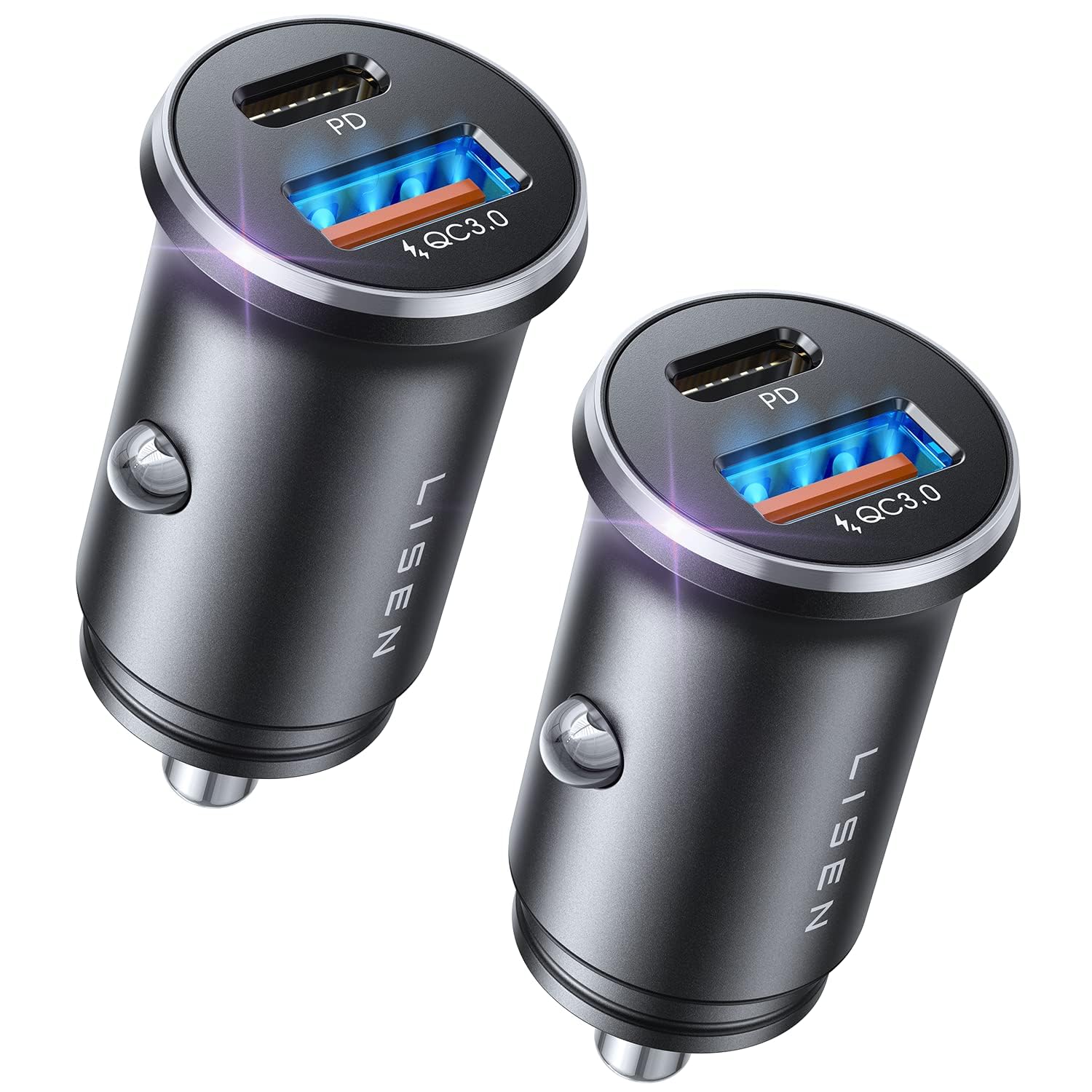
Stop paying more: Stop at $10—the LISEN 2‑pack delivers 36W PD for less than a single Anker. Spending more in this tier buys you nothing but a brand name.
When to upgrade: Need to charge three or four devices? Jump to the $15–$25 tier.
$15 – $25
$15 – $25LISEN Retractable 84W Car Charger

Stop paying more: At $16, you get a 45W PD port, two retractable cables, and two extra ports—enough for a full car. Diminishing returns kick in above $20.
When to upgrade: Anker’s 52.5W charger at $19.99 includes a cable and a longer warranty, but lacks cable management.
$25 and up
$25 – $30LISEN Retractable 69W Car Charger (Premium)
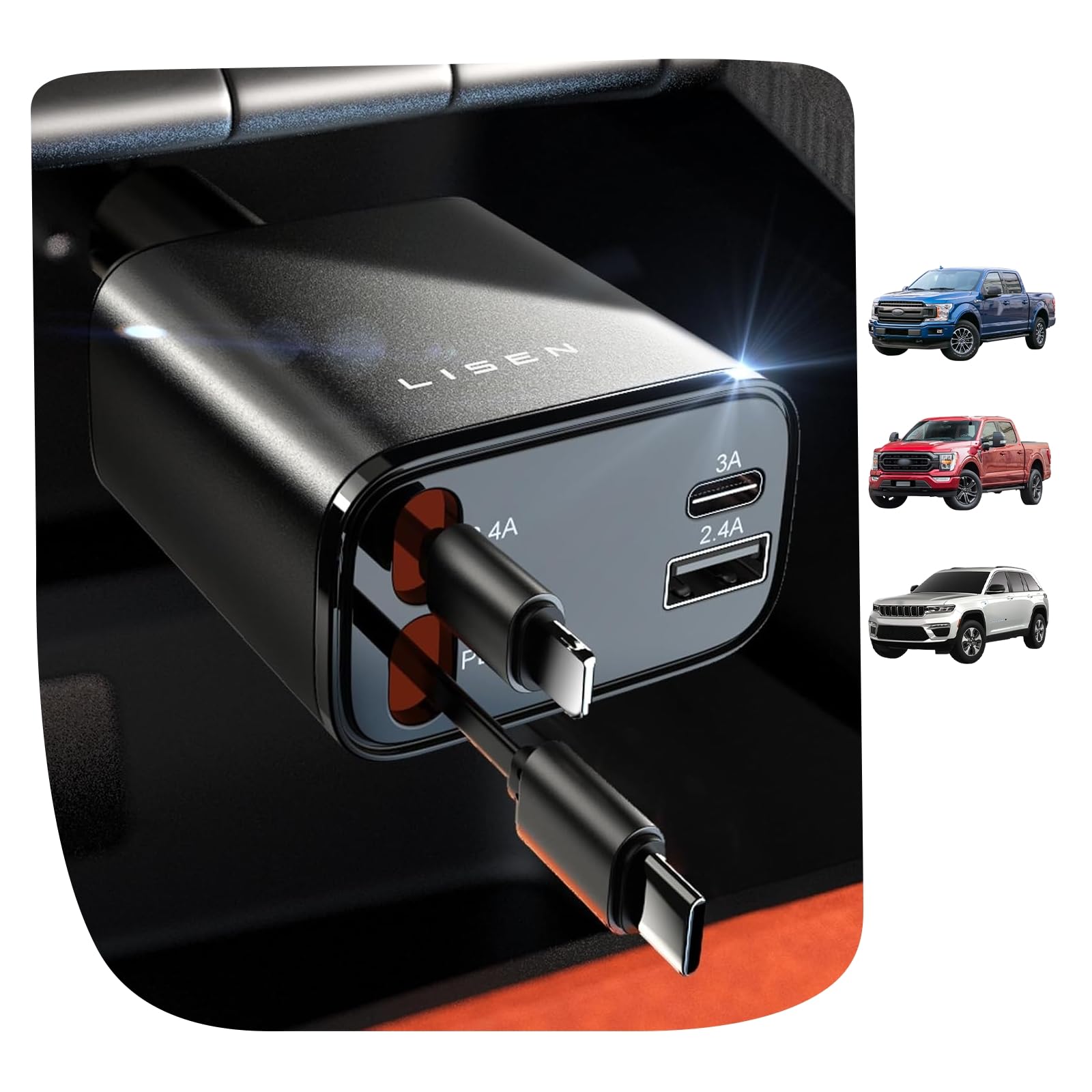
Stop paying more: Spending more than $28 buys marginal aesthetic upgrades. The performance gap from $16 to $28 is small.
When to upgrade: If you want advanced safety like Anker’s ActiveShield, consider the Anker 323 with cable at $19.99 instead.
Common Mistakes to Avoid
Buying a charger without USB‑C PD
Many cheap 2‑packs only have USB‑A ports that output 5V/2.4A—fine for 2018 phones but half the speed of today’s PD chargers.
Cost of getting it wrong: You’ll eventually buy a new charger, wasting. Plus, your phone charges slower during every drive.
Getting a single‑port charger for a multi‑device household
Only one USB‑C port means you can charge your phone, but your passenger’s phone or the kids’ tablets are out of luck.
Cost of getting it wrong: You’ll end up buying a second charger or a multi‑port adapter, costing another $10–$15.
Ignoring build quality and safety certs
Verified Amazon reviews frequently report fragile plugs that snap off or lose connection after a few weeks. Chargers without CE/FCC/UL marks may not protect against over‑current.
Cost of getting it wrong: A failing charger can damage your phone’s battery or charging port, leading to a repair bill of or more.
Removing the charger from the outlet too often
Amazon buyer reports show that repeatedly inserting and removing a charger can break the plug or loosen the socket connection.
Cost of getting it wrong: A loose connection causes intermittent charging and eventually a dead charger—spend another.
Find Your Match
How many devices do you usually charge in the car?
Frequently Asked Questions
How much should I spend on a car charger in 2026?
Reliable fast chargers start at $10–$15. For multi‑device families, $16–$20 gets you a great retractable model. Avoid anything under $5 that lacks safety certifications—they’re a gamble.
What should I avoid when buying a car charger?
Steer clear of no‑name brands without CE, FCC, or UL marks. Fragile plastic plugs that snap off after a few uses are another red flag in reviews. Also skip chargers without USB‑C PD if you have a modern phone.
Do I need a USB‑C car charger for my iPhone?
Yes, if you want fast charging. The iPhone 15 and later require USB‑C. A 30W PD USB‑C port will charge your iPhone to 50% in about 25 minutes, versus over an hour on an old USB‑A port.
Can I charge multiple devices at once with one car charger?
Multi‑port chargers with 4 ports, like the LISEN 84W Retractable, can power your phone, a passenger’s phone, a dash cam, and a tablet simultaneously. Just make sure the total wattage is sufficient—at least 50W shared.
What safety features should a good car charger have?
Look for over‑current, over‑voltage, and short‑circuit protection. Metal housings dissipate heat better than plastic. Brands like Anker (ActiveShield 2.0) and LISEN include temperature monitoring to prevent overheating.
Will a fast car charger work with my older car?
Yes, as long as your car has a standard 12V cigarette lighter socket, any USB charger will work. Fast charging depends on your device’s compatibility, not the car’s age.
How we wrote this guide
We scoured 111,405+ verified buyer reviews across the 6 most‑purchased car chargers on Amazon. We also watched in‑depth testing from YouTube reviewers like Daily Top Picks, who measured real‑world output and heat dissipation. We cross‑referenced specs, safety certifications, and common failure points reported by owners. No single brand dominates—our picks reflect which charger works best for your specific dashboard setup.
About this guide
Mubboo Editorial Team — independent US‑market consumer research. Picks are based on analysis of 111,405+ Amazon reviews and video testing from Daily Top Picks. Prices update weekly from Amazon.