Car Seat Buying Guide 2026: How to Choose Without Overpaying
Everything you need to know about infant seats, convertibles, and boosters
By Mubboo Editorial Team · Updated May 27, 2026 · 9 min read
At a Glance
- Price range
- $135 – $232
- Data
- 102,501 verified reviews across 6 finalists
- Best for
- Multi-vehicle households needing easy installationParents who prioritize machine-washable fabricsFamilies wanting a seat that grows with the child
- Skip if
- You need a seat that transitions to a booster without buying another — the budget pick is infant-only.
Types Explained
Infant Car Seats
Rear-facing only seats designed for newborns and small babies, typically from 4 up to 30–35 lbs. They come with a carrying handle and often click into a stroller base.
- Lightweight and portable
- Snap into travel systems
- Washable fabrics
- Outgrown quickly — need a convertible by 1 year old
- Limited to rear-facing only
Best for: Newborns and parents who frequently switch cars or use strollers
Example: Safety 1st OnBoard FLX ($134.99)
Convertible Car Seats
Seats that start rear-facing and later convert to forward-facing. They stay in the car and have higher weight limits, often lasting until age 4.
- Higher rear-facing limits (up to 50 lbs)
- Extended use (3–5 years)
- Better long-term value
- Heavier and harder to move between cars
- No booster mode — need a separate booster later
Best for: Parents who want the longest rear-facing period and don't mind buying a booster
Example: Diono Radian 3R ($226.13)
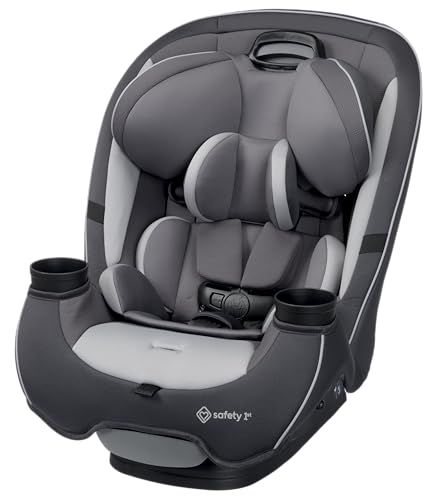
All-in-One (3-in-1) Seats
Seats that work in three modes: rear-facing, forward-facing, and booster. They aim to cover the entire span from birth to seatbelt-ready (usually up to 100–120 lbs).
- Single purchase covers all stages
- Most cost-effective in the long run
- Many are slim for 3-across fits
- Heavier and bulkier than dedicated seats
- Some have lower booster seat limits
- May not fit all vehicles as booster
Best for: Families wanting one seat from birth to booster
Example: Safety 1st Grow and Go ($159.99)
What Actually Matters
| Factor | Importance | Best brand |
|---|---|---|
Safety Ratings and Certifications Meets FMVSS 213, side impact protection, NHTSA approved All seats sold in the US meet federal standards, but top-rated seats exceed minimums. Look for steel reinforcement and side impact energy-absorbing foam. | Must-have | Safety 1st, Diono, Graco |
Weight and Height Limits Rear-facing ≥40 lbs recommended, forward-facing ≥65 lbs for extended use The longer you can keep your child rear-facing, the safer. Seats with 50 lb rear limits let you hit age 4 before turning forward. | Must-have | Diono (rear-facing 50 lbs) |
Ease of Installation LATCH system with push-button release, clear level indicators A difficult install increases misuse risk. Look for snap-in LATCH connectors and a built-in level. | Nice-to-have | Safety 1st (QuickFit harness, LATCH) |
Cleaning Convenience Machine-washable seat pad and dishwasher-safe cupholders Spills happen daily. A seat that uninstalls for washing is a time-saver. Avoid fabric that only spot-cleans. | Nice-to-have | Safety 1st (machine-washable pad, dishwasher-safe cupholders) |
Price Budget $130–$160, mid $160–$200, premium $200+ Spending more doesn't always buy more safety. Over $200, you pay for extra features like steel frames or rotating bases. | Nice-to-have | Safety 1st (best value at $160) |
Fabric Quality and Color Options Fabric durability matters, but 'premium' fabrics are often marketing. Focus on washability and side impact protection instead. | Marketing BS | — |
Smart Features (App Connectivity, Sensors) Bluetooth temperature sensors and buckling alerts add complexity with little safety benefit. A properly installed seat is what matters. | Marketing BS | — |
Budget Tiers & Top Picks
What to buy at each price point — and exactly where spending more stops paying off.
Budget (Under $150)
$130 – $150Safety 1st OnBoard FLX Infant Car Seat

Stop paying more: Stop at $150. At this price, you get a safe, lightweight infant seat. Spending more on an infant seat adds only color options or a higher weight limit that you'll outgrow anyway.
When to upgrade: If you'd rather buy one seat that covers multiple stages, move to the Mid tier ($150–$200) for an all-in-one like the Safety 1st Grow and Go.
Mid ($150 – $200)
$150 – $200Safety 1st Grow and Go All-in-One Slim Convertible Car Seat

Stop paying more: Stop at $200. The $160 Safety 1st Grow and Go delivers all the functions you need. Paying $200 for a Graco TriRide adds slightly higher booster limits but identical rear-facing. The sweet spot is $160.
When to upgrade: If you need a steel frame or 50 lb rear-facing limit for long-term safety, step up to the Premium tier ($200+).
Premium ($200+)
$200 – $250Diono Radian 3R 3-in-1 Convertible Car Seat
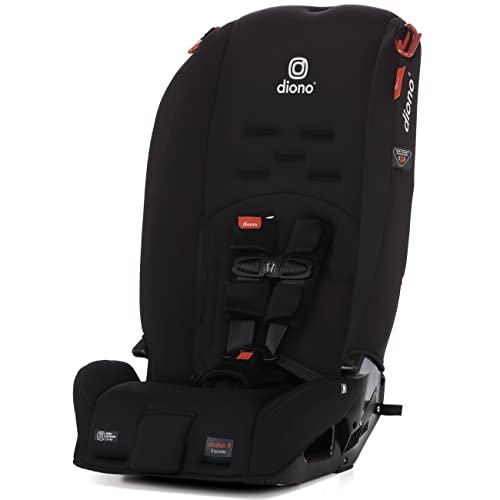
Stop paying more: Stop at $250. The Diono's steel core and 50 lb rear limit justify the premium if you plan to keep your child rear-facing until age 4. Above $250, you enter rotating seat territory (e.g., Evenflo Revolve 360 at $350), which adds convenience but doesn't improve safety.
When to upgrade: If you want a rotating seat for easier access, consider the Evenflo Revolve 360 Extend ($350) — but know you're paying for convenience, not safety.
Common Mistakes to Avoid
Buying the cheapest seat without checking safety features
Sub-$100 seats often lack side impact protection, energy-absorbing foam, or steel reinforcement. A budget seat should still meet FMVSS 213 and have a JPMA certification.
Cost of getting it wrong: Rebuying a safer seat after a crash or recall — $130–$200 wasted.
Ignoring the seat's expiration date
Car seats expire 6–10 years from manufacture date. UV exposure and temperature cycling degrade plastic. Using an expired seat can compromise crash protection.
Cost of getting it wrong: Full price of a new seat — $160–$250 down the drain if you need to replace early.
Choosing a seat with fabric that's impossible to clean
Embroidery, velvet, or non-removable covers trap crumbs and spills. Machine-washable pads are a must for daily use.
Cost of getting it wrong: Professional cleaning or replacement cover — $50–$80 extra.
Find Your Match
What is your child's age and weight?
Frequently Asked Questions
How much should I spend on a car seat in 2026?
A quality seat starts around $130. For an all-in-one that lasts from birth to booster, budget $150–$200. Spending over $250 adds premium materials or rotating bases but doesn't significantly improve safety.
What is the most important safety feature?
A seat that meets or exceeds FMVSS 213 is the baseline. Beyond that, look for side impact protection (energy-absorbing foam) and a high rear-facing weight limit (40–50 lbs) to keep your child rear-facing longer.
Is a rotating car seat worth the extra cost?
Rotating seats (e.g., Evenflo Revolve 360) are convenient for easy in/out, costing $350–$400. They don't offer better safety than a well-installed convertible. Worth it if you have back pain or a small car, but not necessary for everyone.
How long do car seats last?
Most expire 6–10 years from manufacture. Check the label on the bottom. Never use a seat past its expiry date, as plastic can degrade and compromise crash protection.
What should I avoid when buying a car seat?
Avoid the cheapest seat without side impact protection, seats with non-removable covers (hard to clean), and seats that are too heavy to transfer between cars. Also reject any seat that doesn't fit your vehicle snugly.
How we wrote this guide
Researched across 102,501 verified Amazon reviews, expert evaluations from Consumer Reports and Wirecutter, and community discussions on r/Parenting and r/carseats. We evaluated 6 finalist seats on safety, weight limits, ease of installation, cleaning, and value for money.
About this guide
Mubboo Editorial Team.