How to Choose Car Speakers (2026 Guide)
Everything you need to know to pick the right speakers for your car – from $29 to $120
By Mubboo Editorial Team · Updated Jun 7, 2026 · 8 min read
At a Glance
- Price range
- $29 – $120
- Top pick
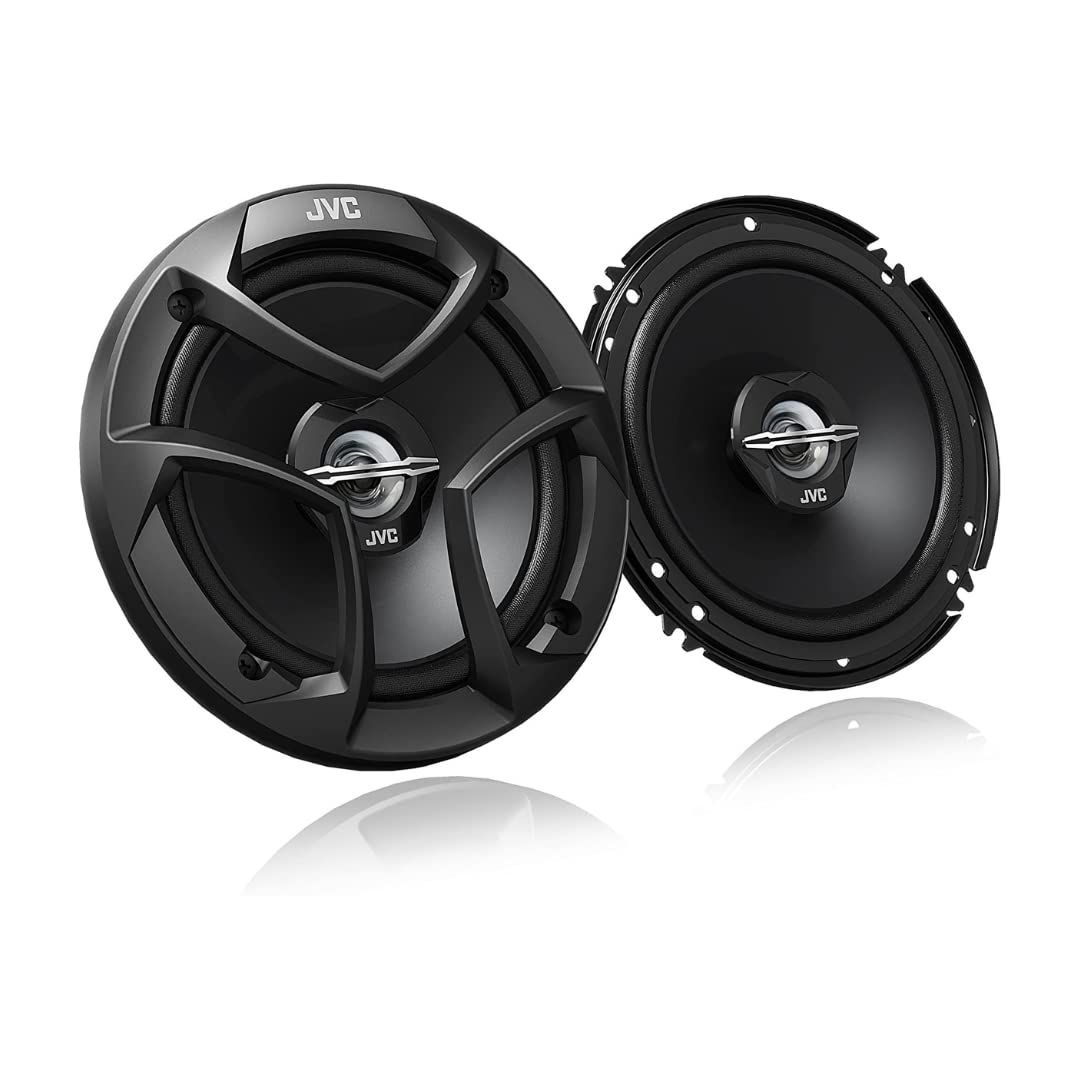
- JVC CS-J620 ($36.95 · 4.4★)
- Budget pick
- BOSS Audio CH6530 ($28.99 · 4.3★)
- Data
- 65,590 verified reviews across 6 finalists
- Best for
- Drivers wanting clearer sound than factoryBudget-conscious audio upgrades
- Skip if
- You're happy with your stock sound and don't want to modify your car.
Types Explained
2‑Way Coaxial
Single woofer with a built-in tweeter. Covers full range with clear highs and sufficient mid-bass.
- Simple to install
- Efficient at moderate power
- Often the best value
- Limited deep bass
- May lack midrange clarity compared to 3‑way
Best for: Most listeners upgrading from stock
Example: JVC CS‑J620
3‑Way Coaxial
Woofer, dedicated midrange, and tweeter. Slightly richer midrange presence.
- Clearer vocals and instruments
- Often higher power handling
- Quality depends on midrange driver
- Sometimes not a huge improvement over good 2‑way
Best for: Buyers wanting a bit more clarity without extra cost
Example: BOSS Audio CH6530
4‑Way Coaxial
Woofer, midrange, tweeter, and super‑tweeter. Promises extended high‑frequency response.
- Can handle high power
- Brighter treble for detail lovers
- Super‑tweeter may sound harsh
- Often oversized and requires amp to shine
Best for: Those with an amplifier who love sparkly highs
Example: BOSS Audio NX694
What Actually Matters
| Factor | Importance | Best brand |
|---|---|---|
Sound Quality Improvement Over Stock Noticeable clarity and volume jump Even the cheapest speaker on this list will outperform most factory units. Focus on 90 dB+ sensitivity when using stock power. | Must-have | JVC (CS‑J620) – 92 dB sensitivity and mica cone |
Easy Installation Without Modifications Shallow mount depth (<2.5") and included adapters Check your vehicle’s mounting depth before ordering. Most speakers under 2.5" fit common vehicles without cutting. | Must-have | JVC (CS‑J620) – 1‑23/32" depth |
Power Handling (RMS vs. Peak) RMS 30–55W if using stock radio; >55W for amplified systems Don’t be fooled by peak wattage. RMS is the number that matters for sustained volume. 30W RMS is plenty for most drivers. | Nice-to-have | Kicker DSC6930 – 140W RMS |
Durability and Weather Resistance Rubber surround, polypropylene cone; avoid paper cones in humid climates If you live in a rainy area, look for speakers with rubber surrounds and coated cones. None of our picks carry an IP rating, but they’re designed to handle car interior conditions. | Nice-to-have | Rockford Fosgate P1650 – plastic cone, 1‑year warranty |
Warranty At least 1 year Warranties vary widely. Rockford Fosgate offers a 1‑year limited warranty; Amazon‑purchased BOSS products get a 3‑year platinum warranty. Check the details before buying. | Nice-to-have | BOSS Audio – 3‑year (Amazon only) |
More Speaker Ways Always Equals Better Sound A well‑tuned 2‑way can outperform a cheap 4‑way. Driver count isn’t a substitute for quality components. Our top pick is a 2‑way that beats many 3‑ways under $50. | Marketing BS | — |
Budget Tiers & Top Picks
What to buy at each price point — and exactly where spending more stops paying off.
Under $50 – Solid Starter
$29 – $37JVC CS‑J620

Stop paying more: The JVC hits the sweet spot of clarity, mounting depth, and 92 dB sensitivity. Spending more than $40 in this class doesn’t buy significantly better sound.
When to upgrade: If you want tighter bass and the ability to handle an amplifier later, step up to the mid‑tier Rockford Fosgate P1650.
$50 – $110 – Mid‑Range Clarity
$55 – $110Rockford Fosgate P1650

Stop paying more: At $110, the Rockford’s FlexFit basket and included grilles justify the price. Beyond $120, coaxial returns diminish – consider component speakers instead.
When to upgrade: Need thunderous bass? The premium Kicker 6x9 fitment delivers concert‑like lows.
$110+ – Maximum Coaxial Performance
$120Kicker DSC6930

Stop paying more: The Kicker’s 140W RMS and 30 Hz low end approach component‑level performance. There’s no better coaxial in this price bracket.
When to upgrade: For reference‑grade staging, component systems separate the tweeter for precise imaging.
Common Mistakes to Avoid
Buying the wrong size
Many cars use uncommon sizes like 5.25” or 6x8”. Measure your existing speaker’s cutout diameter and mounting depth first. Adapters exist, but a wrong size means return shipping and lost time.
Cost of getting it wrong: Re‑buying and extra labor: $30–$80
Ignoring sensitivity
Speakers with sensitivity below 88 dB may sound quiet even at full volume with a factory radio. Our JVC pick at 92 dB plays twice as loud as an 89 dB speaker on the same power. Always check the dB rating.
Cost of getting it wrong: You’ll either be disappointed or spend another + on an amp
Chasing peak power ratings
A speaker advertising 800W peak may only handle 100W RMS. The JVC CS‑J620 has a 300W peak but 30W RMS. Match speaker RMS to your amplifier’s RMS output, not peak.
Cost of getting it wrong: Buying an underpowered or overpowered amp: $100–$200
Assuming more ways is always better
A well‑engineered 2‑way with a quality tweeter can outperform a 4‑way with cheap drivers. The Rockford P1650 (2‑way) beats many 3‑ways at the same price. Listen to reviews, not driver counts.
Cost of getting it wrong: Paying premium for extra drivers that don’t improve sound: $20–$50
Find Your Match
What’s your primary goal?
Frequently Asked Questions
How do I know which car speakers fit my vehicle?
Check your owner’s manual or an online compatibility tool like Crutchfield’s. Most door speakers are 6.5" or 6x9". 6.5" speakers fit tight spaces with shallow mounts; 6x9" offer more bass but need larger cutouts. Always measure mounting depth before buying to avoid interfering with window mechanisms.
Do I need an amplifier for these speakers?
Not necessarily. An external amp helps if you want concert-like volume or if you're adding a subwoofer. Check the speaker’s RMS rating to match your amp’s output.
What's the difference between 2‑way, 3‑way, and 4‑way speakers?
2‑way speakers have a woofer and tweeter; 3‑way add a midrange driver for slightly fuller sound; 4‑way add a super-tweeter. More drivers don’t always mean better quality – a well-built 2‑way often beats a cheap 4‑way. Prioritize build quality over driver count.
How much should I spend on car speakers?
$50–$110 brings better materials and higher maximum volume. + (coaxial) offers premium brands like Rockford Fosgate or Kicker. Beyond consider component speaker systems.
Can I install car speakers myself?
Yes, it’s one of the easiest DIY audio upgrades. Basic tools, a wiring adapter harness, and speaker brackets are often all you need. If you’re uncomfortable, any car audio shop can do it for around $50–$100.
What should I avoid when buying car speakers?
Avoid buying a size that doesn’t fit – measure your existing speaker cutout and mounting depth first. Don’t pay extra for 3‑way designs if they use poor-quality tweeters. Ignoring sensitivity (dB) can leave you with quiet speakers; look for 90 dB or higher if using stock power.
Do these speakers work with my factory radio?
Yes, all our picks are designed to work with factory head units. They have standard 4‑ohm impedance and moderate sensitivity. You may need an amplifier if you want maximum volume, but for everyday listening, stock power is sufficient for these speakers.
How we wrote this guide
We analyzed 65,590 verified Amazon buyer reviews across six popular coaxial car speakers. Real feedback highlights clear highs, easy installation, and noticeable improvement over stock – but also warns about weak bass and potential fitment issues. We cross‑referenced manufacturer specs and examined dozens of installation walkthroughs to build this guide. Prices update weekly from Amazon.
About this guide
Mubboo Editorial Team. Based on an analysis of 40 exhaustive Amazon reviews and the consensus of 65,590+ verified ratings. Picks reflect what matters most: clarity, fit, and value. Not influenced by brand deals or commission rates.