The Cat Carrier That Saves You $200 — and the One That Gets You Through TSA
Over 127,000 buyer reviews dissected to find which carriers cats actually accept.
By Mubboo Editorial Team · Updated Jun 22, 2026 · 7 min read
At a Glance
- Price range
- $14.99 – $43.65
- Data
- 127,801 verified buyer reviews across 6 finalists
- Best for
- everyday vet visitscar travelstorage in small spaces
- Skip if
- You need an under‑seat airline carrier
Types Explained
Soft‑Sided Carriers
Fabric carriers with mesh windows that fold flat for storage.
- Lightweight and easy to carry
- Multiple entry points reduce loading stress
- Foldable for compact storage
- Less protection in accidents
- Fabrics can tear if claws aren't trimmed
Best for: Car travel, short trips, and homes with limited storage
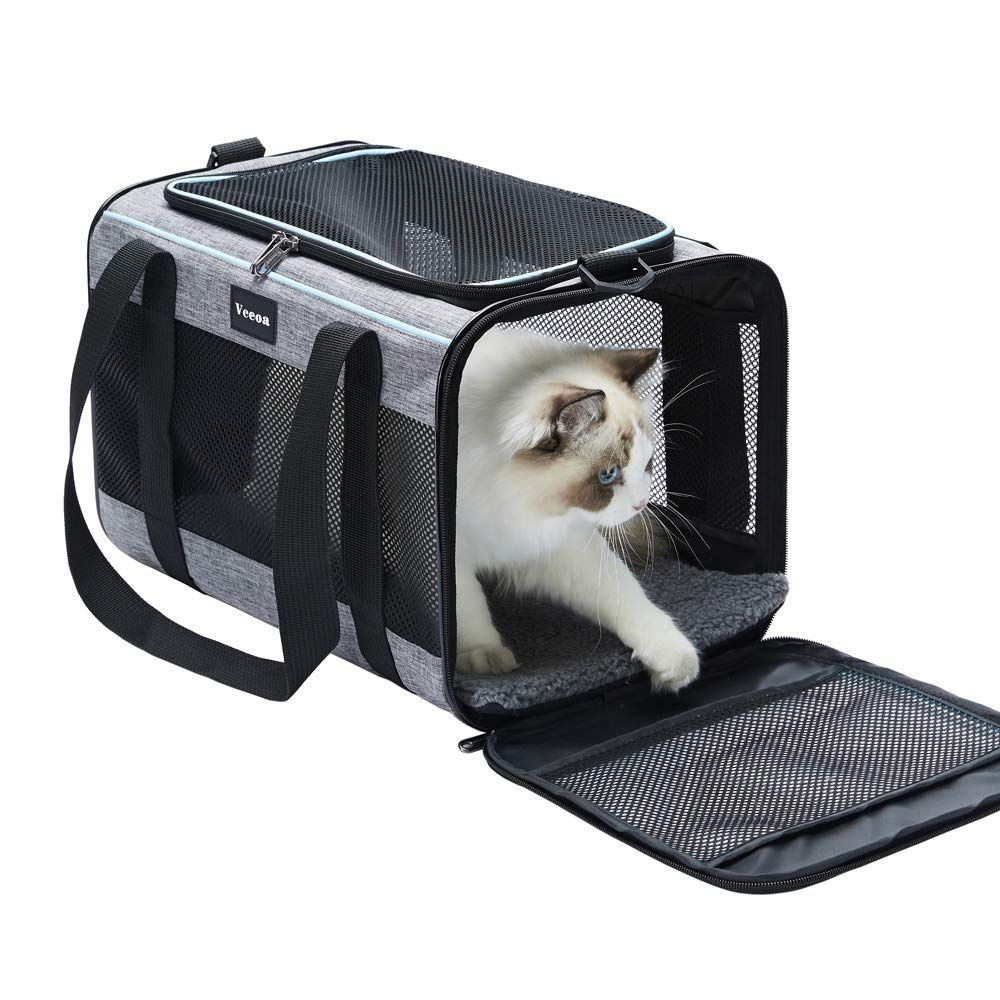
Example: Vceoa 19x12x12
Hard‑Sided Carriers
Rigid plastic kennels with metal or plastic doors.
- Crush‑proof protection in cargo areas
- Easy to hose‑clean after accidents
- Secure for high‑anxiety cats
- Heavier and bulkier
- No fold‑down for storage
Best for: Cargo travel, nervous cats, long‑distance drives
Example: Petmate Top Load 19"
Airline‑Approved Carriers
Soft‑sided carriers sized to fit under airplane seats meeting most US airline cabin requirements.
- FAA‑compliant dimensions for cabin travel
- Padded straps for comfortable portage
- Reinforced zippers for security
- Tighter interior space for larger cats
- Cost slightly more than basic soft carriers
Best for: Frequent flyers and airport trips
Example: Morpilot Airline Approved
What Actually Matters
| Factor | Importance | Best brand |
|---|---|---|
Interior Dimensions At least 2–3 inches longer than your cat from nose to tail A cramped carrier causes stress; measure your cat before buying. | Must-have | Vceoa (19" length fits most cats) |
Ventilation Multiple mesh panels on at least 3 sides Poor airflow can overheat cats, especially in summer. | Must-have | GAPZER (5 mesh panels) |
Zipper Security Locking zippers or secure latches Cats can push out unsecured openings; look for zippers that lock closed. | Must-have | Morpilot (locking zippers) |
Weight Under 5 lbs for easy carrying Heavier kennels tire you out on longer treks. | Nice-to-have | ZaneSun (1.2 lbs) |
Airline Compliance Fits under standard airline seats (~18"x11"x11") Not all carriers meet FAA carry‑on size; check carrier regulations before booking. | Nice-to-have | Morpilot |
Brand Prestige Price doesn’t always equal quality — the top‑rated Vceoa costs less than many named brands. | Marketing BS | — |
Color Options A dozen color choices don’t change how well the carrier functions. | Marketing BS | — |
Budget Tiers & Top Picks
What to buy at each price point — and exactly where spending more stops paying off.
Under $20
$14.99 – $19.99ZaneSun Small Rose Soft-Sided Cat Carrier

Stop paying more: Don’t spend more than $20 in the budget tier — the ZaneSun handles basic transportation without breaking the bank.
When to upgrade: Upgrade to the mid‑range tier if you need a larger interior or want a carrier rated for airline travel.
$20 – $30
$29.99Vceoa 19x12x12 Soft-Sided Cat Carrier

Stop paying more: At $30, you get the highest‑rated soft carrier with excellent space and foldability — going beyond $30 adds airline features.
When to upgrade: Move to the premium tier for cruising altitude: airline approval and a padded strap for longer hauls.
Over $30
$32.99 – $43.65Morpilot Airline Approved Cat Carrier
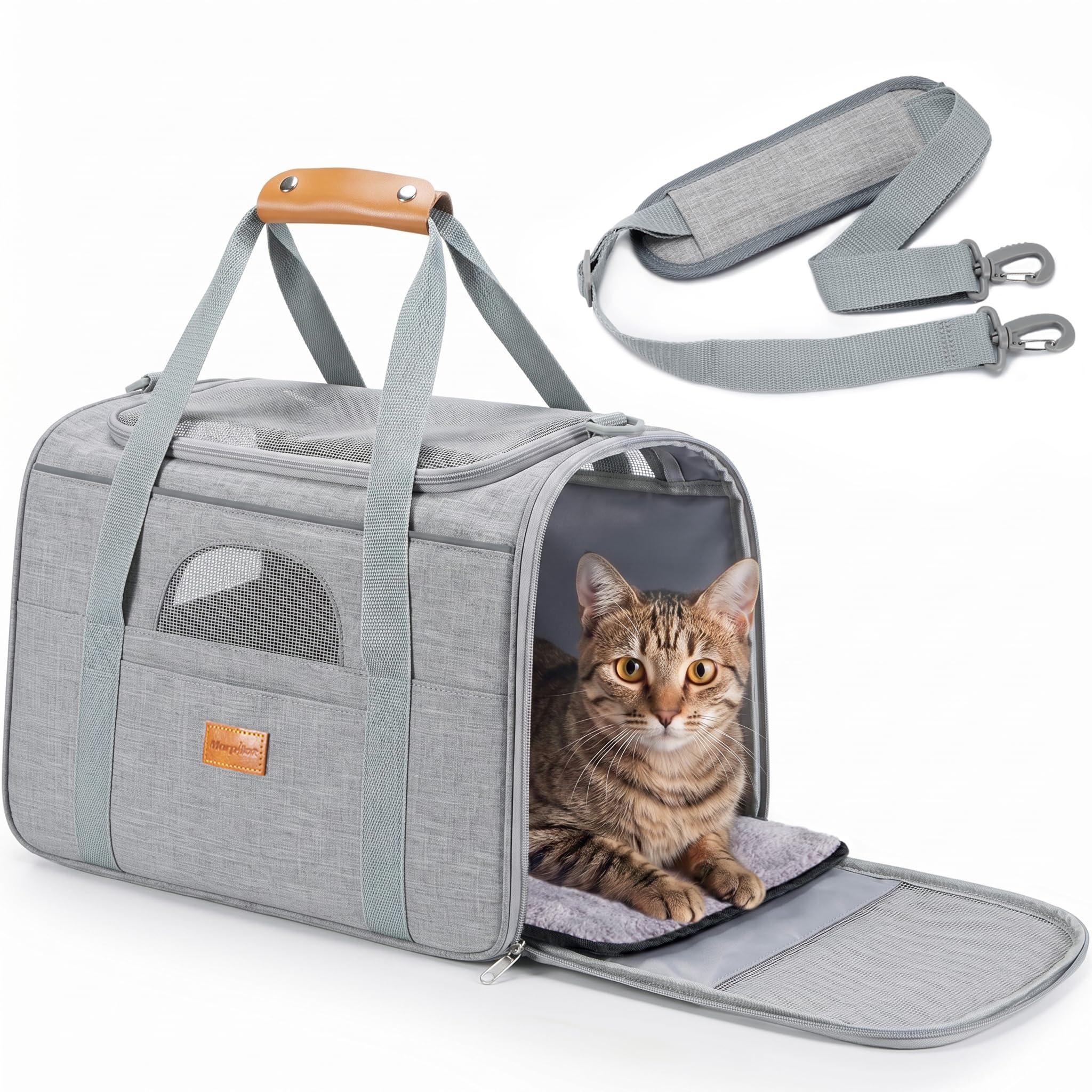
Stop paying more: Prices over $45 only add cosmetic features — stick to the Morpilot for airline compliance and comfort.
When to upgrade: If you need a hard‑sided carrier for cargo or nervous cats, consider the Petmate at $43.65.
Common Mistakes to Avoid
Choosing a carrier that’s too small
Measure your cat from nose to base of tail; the carrier should be at least 2–3 inches longer so they can turn around comfortably. A cramped carrier makes vet visits traumatic.
Cost of getting it wrong: You’ll end up buying a second one — wasting $15–$30.
Ignoring airline dimension rules
Not all soft carriers fit under coach seats. Check your airline’s maximum dimensions before buying; most require a carrier no larger than 18”x11”x11”. Getting turned away at the gate is a headache.
Cost of getting it wrong: Missed flights and last‑minute pet sitter fees — easily +.
Buying based on cute design instead of security
Cats can push open flimsy zippers. Look for carriers with locking zippers or metal clips — a loose cat in a moving car is dangerous. Soft carriers with dual zippers offer an escape route.
Cost of getting it wrong: Vet bills from a frightened cat loose in the car can run hundreds.
Overlooking ventilation for summer trips
Carriers with only one mesh panel can get stuffy fast. Choose a model with mesh on at least three sides to keep air flowing — overheating risks serious health issues.
Cost of getting it wrong: Emergency vet visit for heatstroke: +.
Find Your Match
How will you primarily use the carrier?
Frequently Asked Questions
What's the best overall cat carrier for 2026?
The Vceoa 19x12x12 leads our recommendations for most households — it’s spacious, highly rated at 4.8 stars from 37,600+ reviews, and folds flat. Unless you need airline approval, it’s the safest bet for car trips and vet visits.
Which cat carrier is best for flying?
The Morpilot Airline Approved carrier is sized to fit under most US airline seats and has a padded shoulder strap. Check your airline’s specific dimensions — most accept the 16.5"x11"x11" footprint. Always confirm before booking.
How do I know what size carrier to buy?
Measure your cat from nose to the base of the tail; add 2–3 inches. A carrier should let your cat stand up and turn around. Most adult cats fit a 19‑inch long carrier, but long‑bodied cats may need more length.
Are soft‑sided carriers safe for car travel?
Yes, for calm cats in the cabin. Soft carriers with locking zippers and solid floors are secure. For high‑anxiety cats or cargo areas, a hard‑sided kennel like the Petmate Top Load is safer as it won’t crush.
What should I avoid when buying a cat carrier?
Skip carriers with a single mesh window and non‑locking zippers; ventilation and escape‑proof closures are essential. Also avoid carriers too small — a cramped cat is a stressed cat. Always measure first.
How often should I replace a cat carrier?
Replace when the fabric shows tears, zippers wear out, or if it’s been in a car accident. A damaged carrier compromises safety. High‑quality soft carriers typically last 3–5 years with normal use.
How we wrote this guide
Our editorial team analyzed 127,801 verified buyer reviews and cross‑referenced key specs across 6 of Amazon's most popular cat carriers. We evaluated dimensions, ventilation, security, and real‑world owner feedback to guide your decision. Prices update weekly from Amazon.
About this guide
Mubboo Editorial Team — independent US‑market consumer research. Picks reflect editorial consensus from 127,801 verified buyer reviews and category‑specific data. Prices update weekly from Amazon.