How to Choose a Cat Tree (2026 Guide)
Picks based on 109,000+ verified reviews and expert testing
By Mubboo Editorial Team · Updated Jun 7, 2026 · 9 min read
At a Glance
- Price range
- $40 – $130
- Data
- 109,446 verified reviews across 6 finalists
- Best for
- Multi-cat householdsBudget shoppersCat owners seeking vertical space
- Skip if
- You have large breed cats over 15 lbs — most budget trees aren't sturdy enough for them
Types Explained
Multi-Level Condo Tree
Tall cat towers with multiple platforms, perches, and enclosed condos, designed for active cats that enjoy climbing and hiding.
- Maximizes vertical territory
- Multiple cats can share without conflict
- Often includes scratching posts integrated
- Takes up more floor space
- Can be unstable if not properly anchored
- Heavier and harder to move
Best for: Multi-cat homes and energetic climbers
Example: Feandrea 59.5in Cat Tower
Suspension/Hammock Tree
Trees that feature hanging hammocks or suspended baskets, catering to cats that love to lounge and sway.
- Unique comfort for cats that love hammocks
- Soft, cozy lounging spots
- Often includes playful rope ladders
- Limited climbing platforms for active cats
- Hammocks can sag over time
- Typically higher price for the feature
Best for: Loungers and cats that prefer soft beds over perches
Example: Smouatou 3-Tier Cat Tree
Designer/Decorative Tree
Cat trees that prioritize aesthetic appeal, often resembling furniture or plants, suitable for style-conscious owners with small to medium cats.
- Blends with home décor
- Compact footprint for small apartments
- Encourages use by being visually appealing
- Often narrower and less stable
- Not suitable for large cats
- May sacrifice scratching surface area
Best for: Small cats and owners who care about interior design
Example: AIWIKIDE Cactus Cat Tree
What Actually Matters
| Factor | Importance | Best brand |
|---|---|---|
Stability & anti-tip features Wide base with anti-tip wall strap If the tree wobbles when your cat jumps, they'll avoid it. Look for reinforced bases and always use the included wall anchor. | Must-have | Heybly HCT200SG (steel tube base) |
Durable sisal scratching posts At least 4 sisal-wrapped posts Sisal is the only material cats reliably scratch; carpeted posts shred quickly and can snag claws. | Must-have | Amazon Basics (7 jute posts) |
Multi-level design At least 3 distinct levels above the floor Cats love vertical territory; more levels keep multiple cats from squabbling over prime spots. | Nice-to-have | Yaheetech (7 levels) |
Soft perches and caves At least one enclosed condo Enclosed spaces give shy cats a secure hideaway; open perches satisfy natural surveying instincts. | Nice-to-have | AIWIKIDE Cactus (twin condos) |
Replaceable parts Replaceable dangling toys or posts Toys eventually fall apart; trees with replaceable parts save you from buying a whole new unit. | Nice-to-have | Smouatou (replaceable balls) |
Premium brand name Your cat can't read logos. A well-built tree with thick sisal and a stable base beats a name-brand tree with fragile parts. | Marketing BS | — |
Budget Tiers & Top Picks
What to buy at each price point — and exactly where spending more stops paying off.
Budget (Under $50)
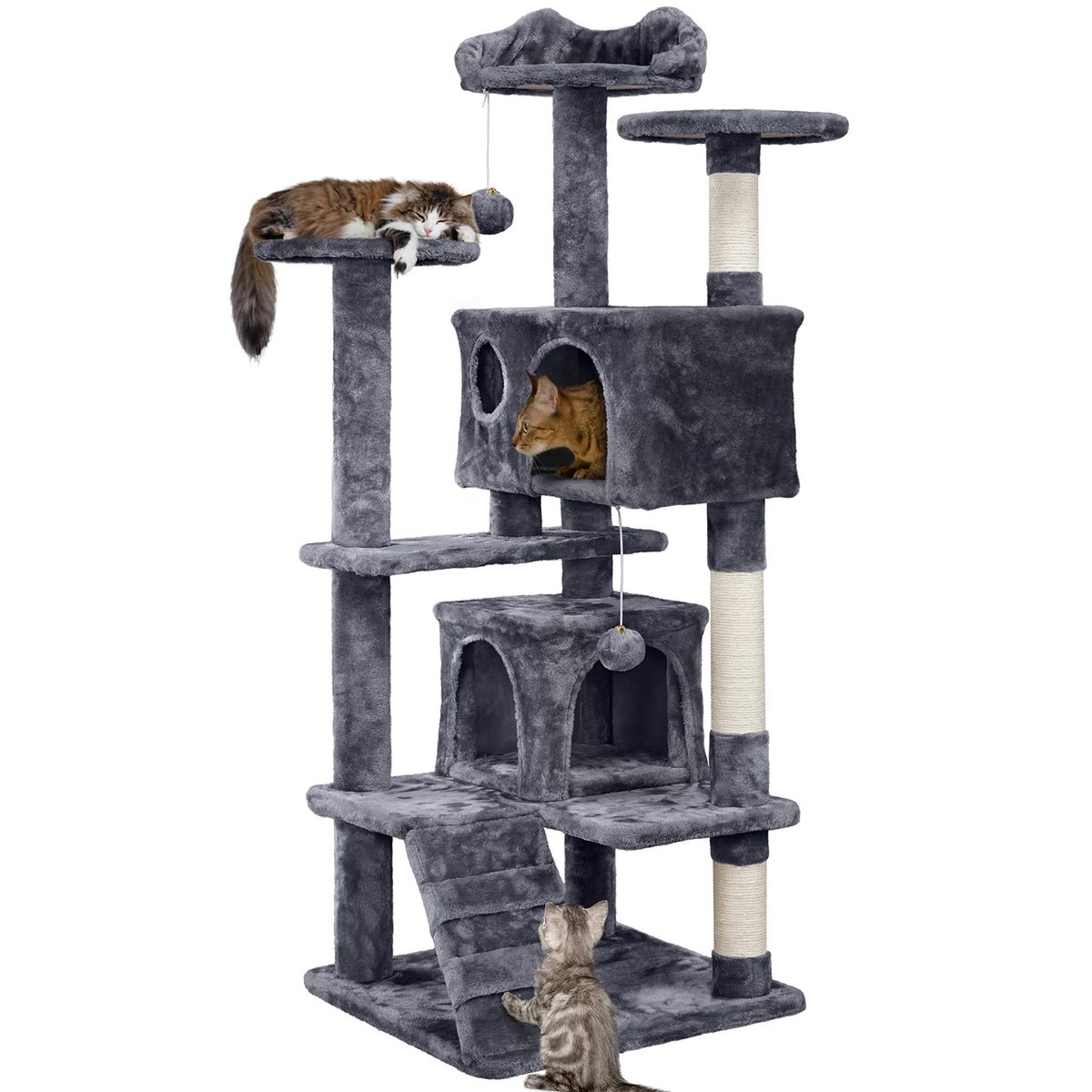
$40 - $50Yaheetech 54in Cat Tree

Stop paying more: Stop at $50. Under $50, the Yaheetech gives you 7 levels and 2 condos — more than enough for most cats. Spending more won't gain significant stability or features.
When to upgrade: If your cat is over 10 lbs or you need a wider, more stable base, move to the mid-range tier ($50-$70).
Mid-Range ($50-$80)
$50 - $80Feandrea 59.5-Inch Tall Cat Tower
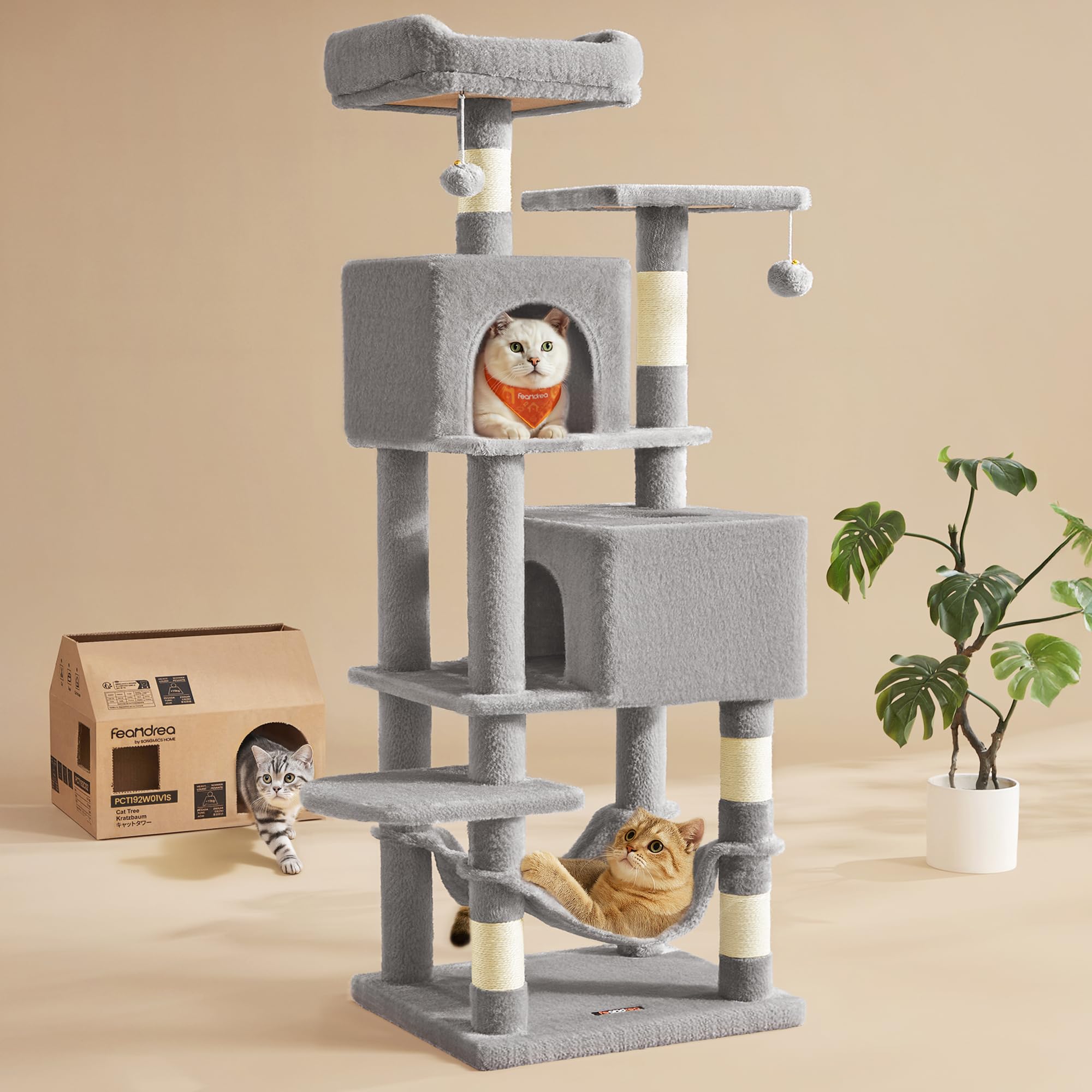
Stop paying more: For most homes, the Feandrea under $55 hits the sweet spot of height, stability, and multi-cat capacity. Spending more won't get you a taller tree unless you go premium.
When to upgrade: For large cats over 15 lbs or owners wanting a statement piece, the premium tier offers heavy-duty options.
Premium ($80+)
$80 - $130Smouatou 3-Tier Cat Tree with Hammocks

Stop paying more: At $130, you're paying for unique design and hammocks. If your cat doesn't use hammocks, you're overpaying.
When to upgrade: If you need a tree that blends with modern décor and your cat adores hammocks, this is the pick. Otherwise, the mid-tier Feandrea offers better value.
Common Mistakes to Avoid
Buying too small for your cat's size
A cat tree rated for cats under 10 lbs won't support a 15-lb Maine Coon. The tree will wobble or tip over.
Cost of getting it wrong: You'll need to buy a second, larger tree — wasting $50-$100.
Choosing style over stability
Cute cactus-shaped or narrow-base trees look great but may tip when your cat jumps. Cats will avoid an unstable tree, defeating the purpose.
Cost of getting it wrong: Wasted $40-$80 on a tree your cat won't use.
Ignoring sisal quality
Trees with carpeted posts instead of sisal will shred in months and can snag claws. Cats may then scratch your furniture.
Cost of getting it wrong: Replacing the tree prematurely ($30-$100) plus potential furniture damage.
Not anchoring to the wall
Even the sturdiest trees can tip if a large cat leaps. Always use the included wall strap.
Cost of getting it wrong: Risk of injury to your cat and damage to your floor/walls.
Find Your Match
How many cats do you have?
Frequently Asked Questions
How tall should a cat tree be?
Aim for at least 45 inches for most adult cats. Multi-cat homes need 54 inches or taller to provide enough vertical territory. For small apartments, compact 37-inch models work if your cat is under 10 lbs. Always check weight limits and ensure the height matches your ceiling clearance.
Are cat trees safe for kittens?
Yes, but choose trees with low platforms and gentle slopes. Avoid tall trees without easy step access until your kitten is 6 months old. The Amazon Basics and AIWIKIDE trees are great kitten options with stable, accessible designs. Always supervise young kittens.
Do cats really use cat trees?
Absolutely — cats instinctively seek high vantage points and scratching surfaces. A well-designed tree reduces furniture damage and stress. If your cat ignores a new tree, try placing it near a window, sprinkling catnip, or attaching a favorite toy. Some cats may take a week to adjust.
How do I stop my cat tree from wobbling?
First, use the included wall anchor strap. Tighten all screws regularly. Place the tree on a level surface and consider adding anti-slip pads under the base. The Heybly cat tree features a steel tube base that inherently resists wobble—ideal for large, energetic cats.
Can I put a cat tree near a window?
Yes, window placement is excellent for bird-watching and sunlight. Ensure the tree is anchored to the wall to prevent tipping if your cat leaps at the glass. Keep cords and blinds out of reach. The Feandrea's anti-tip kit makes it a safe choice for window-side placement.
How do I clean a cat tree?
Vacuum the plush fabric weekly to remove fur and dander. For spot cleaning, use a damp cloth with pet-safe cleaner. Many trees have removable, machine-washable covers—check your model's care instructions. The Smouatou's hammock covers can be unzipped and washed separately.
How we wrote this guide
Our analysis draws on 109,446 verified buyer reviews across 6 top-rated cat trees, along with expert insights from Wirecutter and video testing by Harper & Max. We focused on stability, sisal quality, and real-world cat behavior to recommend trees that cats will actually use. Prices update weekly from Amazon.
About this guide
Mubboo Editorial Team — independent US-market consumer research. Picks reflect editorial consensus from 109,446+ verified buyer reviews and expert evaluations from Wirecutter.