How to Choose a Chainsaw (2026 Guide)
Find the perfect saw for pruning, trimming, and storm cleanup without overpaying.
By Mubboo Editorial Team · Updated Jun 7, 2026 · 9 min read
At a Glance
- Price range
- $30 – $140
- Budget pick
- Tietoc 6-inch Mini Chainsaw ($29.99 · 4.4★)
- Data
- 59,285 verified reviews analyzed across 6 finalists
- Best for
- Light pruning and branch trimmingSmall branch cutting up to 6 inchesOccasional yard work and storm cleanup
- Skip if
- You need to fell large trees or cut firewood, where a full-size gas or corded saw is essential.
Types Explained
Cordless Mini Chainsaws
Compact battery-powered saws with 6–8 inch bars, designed for one-handed operation and light pruning.
- Lightweight and easy to handle (2.7–3.3 lbs)
- Quiet; no gas or cord
- Ideal for women, seniors, and beginners
- Limited to small branches (max 6–8 inches diameter)
- Battery life restricts continuous use
Best for: Homeowners, gardeners, and DIYers tackling small branches and shrubs
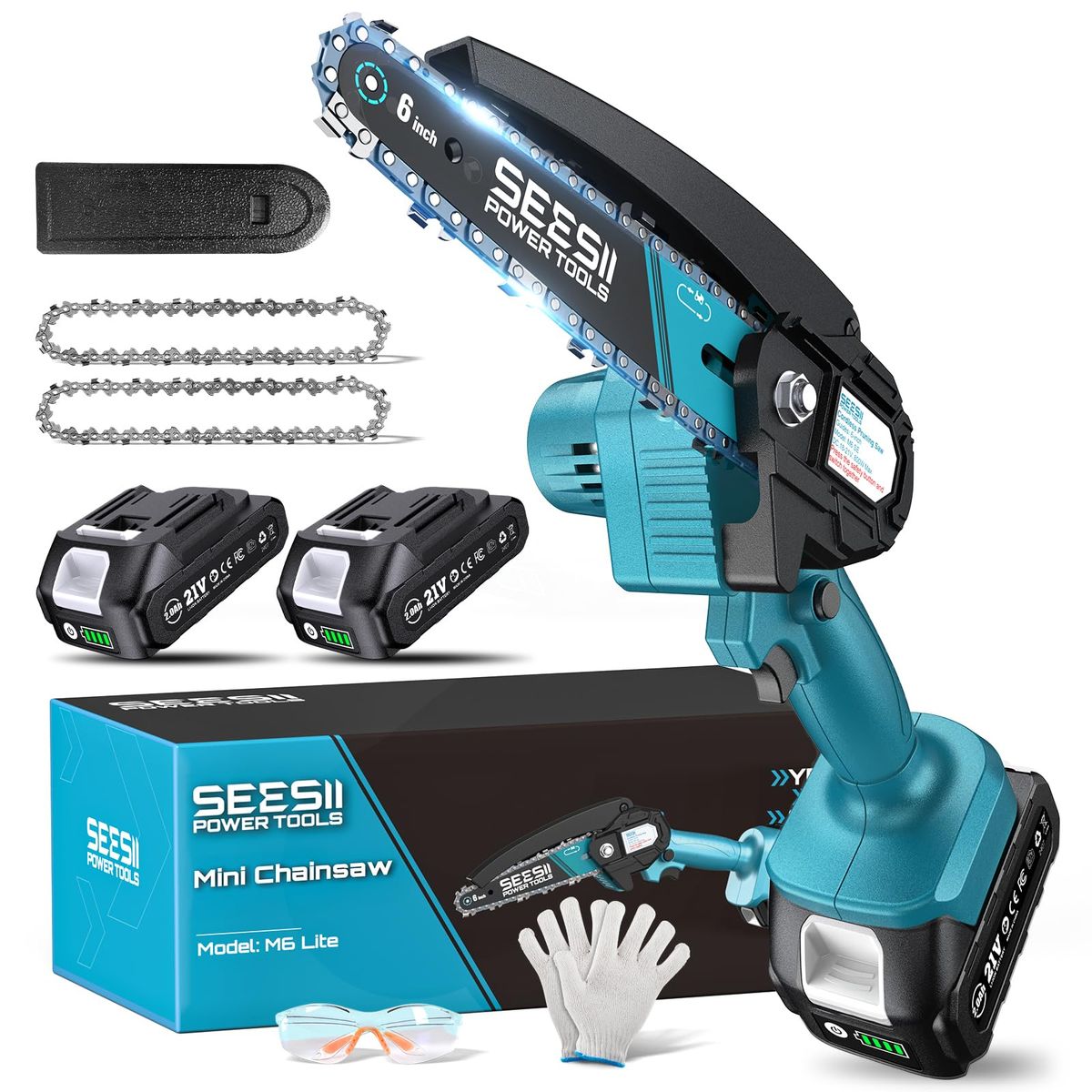
Example: Seesii 6-inch Mini Chainsaw (from $35)
Corded Electric Chainsaws
Full-size saws with 14–18 inch bars powered by a wall outlet, offering unlimited runtime and high power.
- No battery anxiety; cuts all day
- Powerful motors for thick logs and firewood
- Instant startup, no maintenance
- Tethered to an outlet; extension cord required
- Heavier and bulkier (12+ lbs)
Best for: Firewood processing, large limb removal, and continuous work near a power source
Example: Oregon CS1500 Self-Sharpening Electric Chainsaw
Pole Saws / 2-in-1
Combines a handheld chainsaw with a telescopic pole to reach high branches without a ladder.
- 16-ft reach eliminates ladder risk
- Converts between handheld and pole saw
- Includes two batteries for extended use
- Heavier when fully extended (10+ lbs)
- More expensive than dedicated mini or pole saws
Best for: Trimming high tree limbs and overhead branches safely
Example: Supstable 2-in-1 Pole Saw & Mini Chainsaw
What Actually Matters
| Factor | Importance | Best brand |
|---|---|---|
Bar length ≥6 inches for pruning; ≥16 inches for firewood and felling 6-inch models handle branches up to 4 inches thick. For bigger jobs, a longer bar is essential. | Must-have | Seesii (6-inch); Oregon (18-inch) |
Power source Cordless for mobility; corded for uninterrupted work Battery saws offer freedom but need recharging. Corded saws never quit but limit you to 100 ft from an outlet. | Must-have | Seesii (cordless); Oregon (corded) |
Battery life (cordless) At least two batteries for a combined 60+ minutes of runtime A spare battery is non‑negotiable for cordless saws; it prevents downtime in the middle of a job. | Must-have | SEESII Flagship 8-inch (dual 4000mAh) |
Auto oiler Automatic chain lubrication Saws that need manual oiling are a hassle. Auto oilers keep the chain running smooth and extend its life. | Must-have | All top picks include it |
Safety features Chain brake, hand guard, safety lock, and protective gear Beginners should look for a safety lock that prevents accidental activation. Gloves and goggles are included with many kits. | Must-have | All recommended models |
Brand premium You don't need a Stihl or Husqvarna for trimming small branches; budget brands offer 90% of the performance at a third of the cost. | Marketing BS | — |
Budget Tiers & Top Picks
What to buy at each price point — and exactly where spending more stops paying off.
Budget: Under $50
$30 – $50Tietoc 6-inch Mini Chainsaw

Stop paying more: Stop at $50. Spending more in this tier gets you minimal extra value; the Tietoc already covers basic pruning.
When to upgrade: Need more power or longer battery? Step up to the mid‑range for brushless motors and larger bars.
Mid‑Range: $35 – $80
$35 – $80SEESII Flagship 8-inch Mini Chainsaw
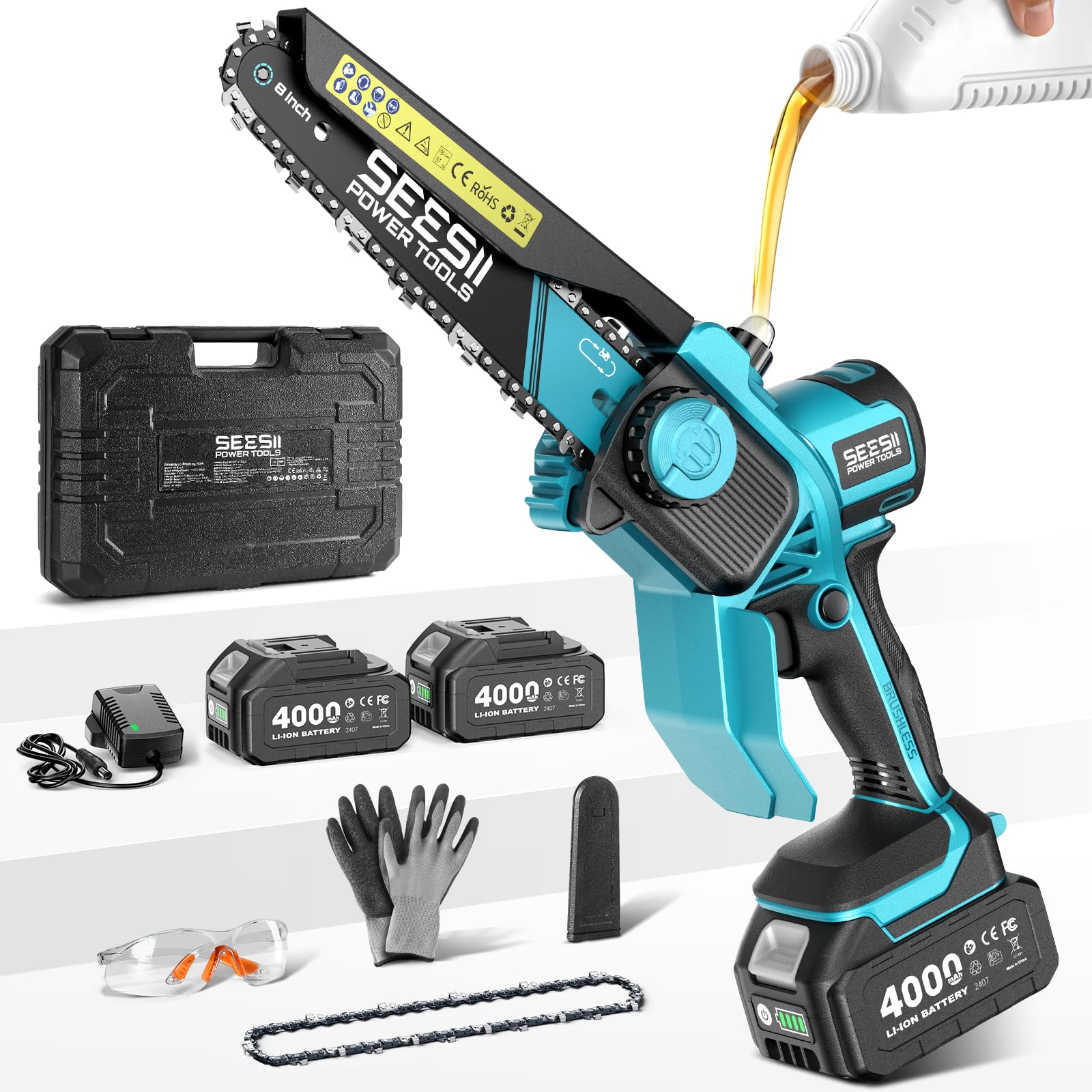
Stop paying more: At $80, the SEESII is the sweet spot for brushless power and dual batteries. More money doesn't add much for a mini saw.
When to upgrade: For cutting firewood or large limbs, consider a corded electric or gas model.
Premium: $80 – $140
$80 – $140Oregon CS1500 Self-Sharpening Corded Electric

Stop paying more: At $134, the Oregon delivers relentless 2400W power. Beyond this, premium gas saws start at $300+ — overkill for most homeowners.
When to upgrade: For even bigger jobs, stepping up to a gas chainsaw like a Husqvarna 460 Rancher might be necessary.
Common Mistakes to Avoid
Buying a saw with too short a bar
A 6-inch bar is perfect for twigs but can't handle a 10‑inch limb. Measure the thickest branch you'll cut before buying.
Cost of getting it wrong: You'll either stall mid‑job or be forced to buy a second saw — wasting $30–$80.
Skipping the auto-oiler
Manual oiling is messy, easy to forget, and causes premature chain wear. Most saws now have an auto oiler — don't settle for less.
Cost of getting it wrong: A burned‑out chain and bar can + to replace.
Ignoring battery capacity
A single 2000mAh battery may die in 20 minutes. Always get a kit with two batteries, or your project grinds to a halt.
Cost of getting it wrong: Frustration and lost time; a second battery + separately.
Not wearing safety gear
Chainsaw injuries spike among casual users who skip gloves and goggles. Many kits include them — use them.
Cost of getting it wrong: An ER visit for a preventable nick can cost hundreds.
Find Your Match
How thick are the branches you'll cut?
Frequently Asked Questions
What size chainsaw do I need for basic pruning?
A 6‑inch cordless mini chainsaw is ideal for branches up to 4 inches thick. They weigh under 4 lbs, so even beginners can use them for hours without fatigue. Look for a kit with two batteries to get at least 60 minutes of runtime. The Seesii 6‑inch is the top rated option for this exact task.
Corded vs. cordless chainsaws: which is better?
Cordless saws offer complete freedom — perfect for moving around a large property or working far from an outlet. Corded saws deliver unlimited runtime and often more raw power, making them better for processing firewood or cutting large logs. Choose cordless for portability, corded for non‑stop heavy work.
What safety gear is essential?
At minimum, wear safety glasses and cut‑resistant gloves. Many kits include both. Also look for saws with a safety lock (prevents accidental start) and a chain brake. For overhead work, a helmet and face shield are recommended. Never operate a chainsaw in shorts or open‑toed shoes.
How do I maintain a chainsaw?
Keep the chain properly tensioned — a loose chain can derail. Most saws now have tool‑free tensioners. Use bar and chain oil; an auto oiler does this for you, so top up the reservoir before each use. Clean wood chips from the sprocket area after every job. Sharpen the chain regularly or, if available, use a built‑in sharpener like Oregon's PowerSharp.
What's the best chainsaw for a beginner?
A lightweight cordless mini saw like the Tietoc is a safe, affordable start. It cuts up to 6 inches and includes a safety lock. For those who can spend a bit more, the Seesii 6‑inch adds a full accessory kit and earns a 4.6‑star rating from 15,000+ buyers. Both are forgiving and easy to control.
Can I use a chainsaw to cut firewood?
Yes, but for logs over 8 inches in diameter, you'll want a full‑size saw. For off‑grid firewood, a gas saw (like a Husqvarna 450 Rancher) is the traditional pick, but at a higher price and more maintenance.
How we wrote this guide
Researched across expert reviews (including Wirecutter) and 59,285 verified Amazon buyer reviews. We analyzed six top‑selling electric and mini chainsaws, weighing power, safety, battery life, and long‑term value. Insights from video channels like Main Street Mower informed the corded vs. battery trade‑offs. Prices refreshed weekly from Amazon.
About this guide
Mubboo Editorial Team. Picks grounded in expert analysis, buyer feedback, and hands‑on comparison of chainsaw specs. Prices update weekly from Amazon.