How to Choose a Circular Saw (2026 Guide)
From corded powerhouses to compact cordless, find the right saw for your next project
By Mubboo Editorial Team · Updated Jun 8, 2026 · 8 min read
At a Glance
- Price range
- $39 – $400
- Data
- 50,336 verified reviews analyzed across 6 finalists
- Best for
- DIY homeowners building shelves or decksWeekend warriors remodeling basementsAnyone cutting plywood, 2x4s, or OSB
- Skip if
- You only need to make a few straight cuts in thin material—a jigsaw or track saw might serve you better.
Types Explained
Corded Circular Saws
Plug-in saws with a 7-1/4-inch blade, powered by 13–15 amp motors. They deliver consistent power for heavy-duty ripping and crosscutting.
- Unlimited runtime as long as you have an outlet
- Higher amp motors (15A) cut through dense hardwood without bogging
- Typically more affordable than comparable cordless models
- Cord limits mobility and requires extension cords on large sites
- Heavier than cordless equivalents (8–9 lbs average)
- No battery system to share with other tools
Best for: Stationary shop work, framing, deck building, and any task where an outlet is nearby.
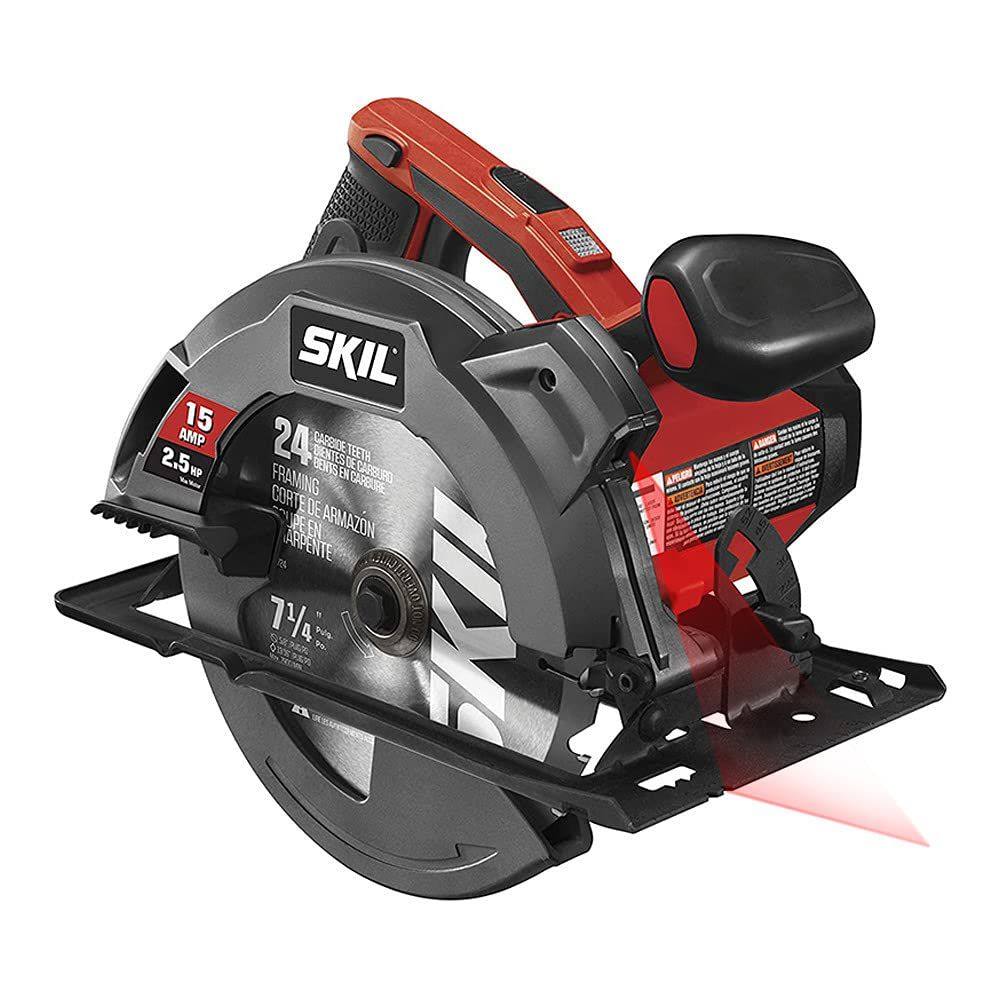
Example: SKIL 5280-01
Cordless Circular Saws
Battery-powered saws, usually with 6-1/2-inch blades, offering portability without sacrificing cutting ability on most jobsite materials.
- Freedom to work anywhere—yards, roofs, remote job sites
- Many share batteries with other tools in the same brand ecosystem
- Lightweight magnesium shoes and brushless motors increase efficiency
- Runtime limited by battery capacity (approx. 150 cuts per 5Ah charge)
- Higher upfront cost—tool-only often +, batteries and chargers extra
- Slightly smaller blade limits depth of cut compared to 7-1/4-inch saws
Best for: Contractors who move between sites, overhead work, and DIYers who value convenience over nonstop power.
Example: DEWALT DCS391B
Compact Circular Saws
Smaller saws with 4-1/2-inch blades, designed for one-handed use, tight spaces, and light framing. Often brushless for longer runtime.
- Easier to control with one hand, reducing fatigue
- Cuts 2x material at 90° despite the small blade
- Lightest option (6.5 lbs or less) for overhead or trim work
- Shallow max cut depth (~1.5 inches) cannot handle 4x lumber
- Smaller blade wears faster on large projects
- Battery and charger not always included
Best for: Trim carpentry, cutting in attics or crawl spaces, and quick crosscuts on 1x and 2x stock.
Example: DEWALT ATOMIC DCS571B
What Actually Matters
| Factor | Importance | Best brand |
|---|---|---|
Motor Power (Amps) ≥13A for general DIY, 15A for hardwoods and heavy framing A 13-amp saw can cut 2x4s but will slow in dense oak. If you plan to rip plywood or pressure-treated lumber often, 15 amps is worth the upgrade. | Must-have | DEWALT and SKIL both offer strong 15A corded motors |
Blade Size and Depth of Cut 7-1/4-inch blade cuts 2-9/16 inches at 90°—enough for 2x lumber in a single pass A 6-1/2-inch cordless saw cuts 2 inches deep, which works for dimensional lumber but may require flipping the board for 4x material. Compact 4-1/2-inch blades top out around 1.5 inches. | Must-have | Most 7-1/4-inch saws from major brands meet this threshold |
Bevel Capacity and Positive Stops 45° bevel with a positive stop for common miters; 50°+ adds versatility If you only cut 90° stock, bevel range isn't critical. But for angled rips or beveled deck boards, look for positive stops at 45° and at least 50° maximum. | Must-have | DEWALT DWE575SB offers 57° and stops at 22.5°, great for roof pitch |
Weight and Ergonomics Under 9 lbs for one-handed control; under 7 lbs for overhead work A heavy saw wears out your arm quickly on vertical cuts or when working from a ladder. Lighter models also have better balance and less vibration, improving cut accuracy. | Must-have | Skil 5080-01 is 6.95 lbs, DEWALT ATOMIC is 6.57 lbs |
Electric Brake Brake stops blade within 2 seconds of trigger release An electric brake is a real safety upgrade, especially on a jobsite. It halts the spinning blade almost instantly, reducing the risk of accidental contact. Not all saws have it—the popular SKIL 5280-01 lacks one. | Nice-to-have | DEWALT includes electric brakes on their corded DWE575SB and cordless ATOMIC |
Cordless vs. Corded Choose based on your primary work location, not just brand preference If you work within 50 feet of an outlet 90% of the time, a corded saw gives you unlimited power for less money. Cordless pays off when you're on a roof, in a yard, or a new construction site with no temporary power. | Nice-to-have | DEWALT and Makita lead in cordless power and battery ecosystems |
Brand Premium DEWALT and Makita charge a premium for their name and color. In side-by-side tests, a SKIL 15-amp saw often delivers identical cutting performance for half the price. The extra cost buys you perceived durability and brand ecosystem, not necessarily better cuts. | Marketing BS | — |
Laser Guide Built-in laser guides sound precise but can be thrown off by blade deflection or dust. Experienced woodworkers rely on the saw's front notch and a pencil line. If accuracy matters, invest in a speed square and a sharp blade instead. | Marketing BS | — |
Budget Tiers & Top Picks
What to buy at each price point — and exactly where spending more stops paying off.
Under $60
$39 – $59Skil 5080-01 13-Amp 7-1/4" Circular Saw

Stop paying more: Spending more than $60 in this tier gets you a laser guide or a slightly more powerful motor, but the real leap in capability comes at $59 with the SKIL 5280-01’s 15-amp motor.
When to upgrade: If you find the saw bogging down in thick plywood or hardwood, it’s time to step up to a 15-amp corded model.
$60 – $200
$59 – $170SKIL 5280-01 15-Amp 7-1/4-Inch Circular Saw

Stop paying more: Mid-tier cordless saws land around $129–$169 but require batteries. The corded DWE575SB at $169 offers a 57° bevel and electric brake, but for most homeowners, the $59 SKIL does the same cutting with a laser guide.
When to upgrade: Consider a cordless model only when you’re certain you’ll use it away from power, and you already own compatible batteries.
Premium ($200+)
$200 – $400Makita DHS680Z Brushless 165mm Circular Saw

Stop paying more: At nearly $400, you’re paying for a brushless motor, twin LEDs, and electronic current limiter. The parallel import may not include a warranty, so consider the DEWALT DCS391B for reliable cordless power at a third of the cost.
When to upgrade: If you need a cordless saw for daily pro use and already have Makita batteries, this is the top performer. Otherwise, stick with corded or DEWALT.
Common Mistakes to Avoid
Buying too little power
A 13-amp saw like the Skil 5080-01 cuts pine fine, but if you try to rip a sheet of 3/4-inch birch plywood, it’ll labour and burn. 15-amp saws like the SKIL 5280-01 maintain speed under load.
Cost of getting it wrong: You’ll waste time forcing cuts and may ruin a sheet of plywood.
Ignoring the bevel capacity
If you plan to build a shed or install roofing, you need to cut compound angles. Saws like the DEWALT DWE575SB bevel to 57° with positive stops at 22.5° and 45°, crucial for rafter tails and hips.
Cost of getting it wrong: Buying a saw with only a 45° bevel then discovering you need steeper angles means either renting a special saw or rebuilding.
Overlooking the electric brake
On a busy jobsite, waiting for a blade to coast down can feel like an eternity and increases risk. The DEWALT DWE575SB’s electric brake stops the blade almost instantly, a safety feature that also speeds up repetitive cuts.
Cost of getting it wrong: An accident from a free-spinning blade could mean a trip to the ER and lost work time.
Going cordless without a battery plan
Tool-only cordless saws like the DEWALT DCS391B and DCS571B don’t include batteries or chargers. If you don’t already own compatible batteries, factor an extra $100–$150 for a starter kit.
Cost of getting it wrong: Suddenly your saw becomes a investment, and you’re locked into that brand’s ecosystem.
Find Your Match
Where will you mostly use the saw?
Frequently Asked Questions
How much should I spend on a circular saw?
Step up to $129–$170 for a cordless model or a pro-grade corded saw with an electric brake. Spending over $200 only makes sense if you’re a professional who needs a brushless motor and exact cordless precision.
What should I avoid when buying a circular saw?
Avoid saws with a flimsy stamped metal base that can warp, models without a spindle lock for blade changes, and cordless saws that don’t include a battery if you don’t already own compatible ones. Also, be wary of laser guides that can be inaccurate—a sharp blade and a speed square work better.
Corded or cordless: which is better?
Corded saws offer unlimited runtime and typically more power for less money. Cordless saws shine when you work away from outlets—on a roof, in a yard, or at a remote site. If you’re within 50 feet of an outlet most of the time, stick with corded. Buy cordless only if you already own batteries from the same brand.
What size blade do I need?
A 7-1/4-inch blade is standard and can cut through 2x lumber in one pass. 6-1/2-inch blades on cordless saws cut 2x material too, but at a slightly shallower depth. Compact 4-1/2-inch blades handle 1x and light 2x material, ideal for trim and tight spaces.
Do I need an electric brake?
An electric brake stops the blade within seconds of releasing the trigger, improving safety and workflow. It’s especially valuable on a busy jobsite or for repetitive cuts. Many budget-friendly saws lack one, but if you work in close quarters or with others, it’s worth the extra cost.
What’s the best circular saw for a beginner?
The laser guide helps you keep a straight line, and at 8.7 lbs, it’s light enough to control comfortably.
Can a circular saw cut metal or concrete?
With the correct blade, a circular saw can cut metal, but for concrete you’ll need a specialized saw with a diamond blade. For metal, use a carbide-tipped blade designed for ferrous materials and wear eye protection. Always check the saw’s RPM rating against the blade’s maximum speed.
How we wrote this guide
We researched 6 circular saws across 50,336 verified buyer reviews, manufacturer specifications, and independent editorial sources. Our picks emphasize power, cut depth, bevel flexibility, weight, and safety—factors that directly affect how a saw performs on your project. Prices update weekly from Amazon.
About this guide
Mubboo Editorial Team. Independent US-market consumer research. Picks reflect editorial consensus from 3 independent review sources and 50,336+ verified buyer reviews.