How to Choose a Cold Brew Coffee Maker (2026 Guide)
Expert advice to find the perfect cold brew maker for your kitchen and lifestyle
By Mubboo Editorial Team · Updated Jun 8, 2026 · 7 min read
At a Glance
- Price range
- $20 – $35
- Data
- 271,420 verified reviews across 6 finalists
- Best for
- Smooth, low-acid cold brew at homeIced coffee enthusiastsSmall to medium households
- Skip if
- You only drink hot coffee or prefer single-serve pods
Types Explained
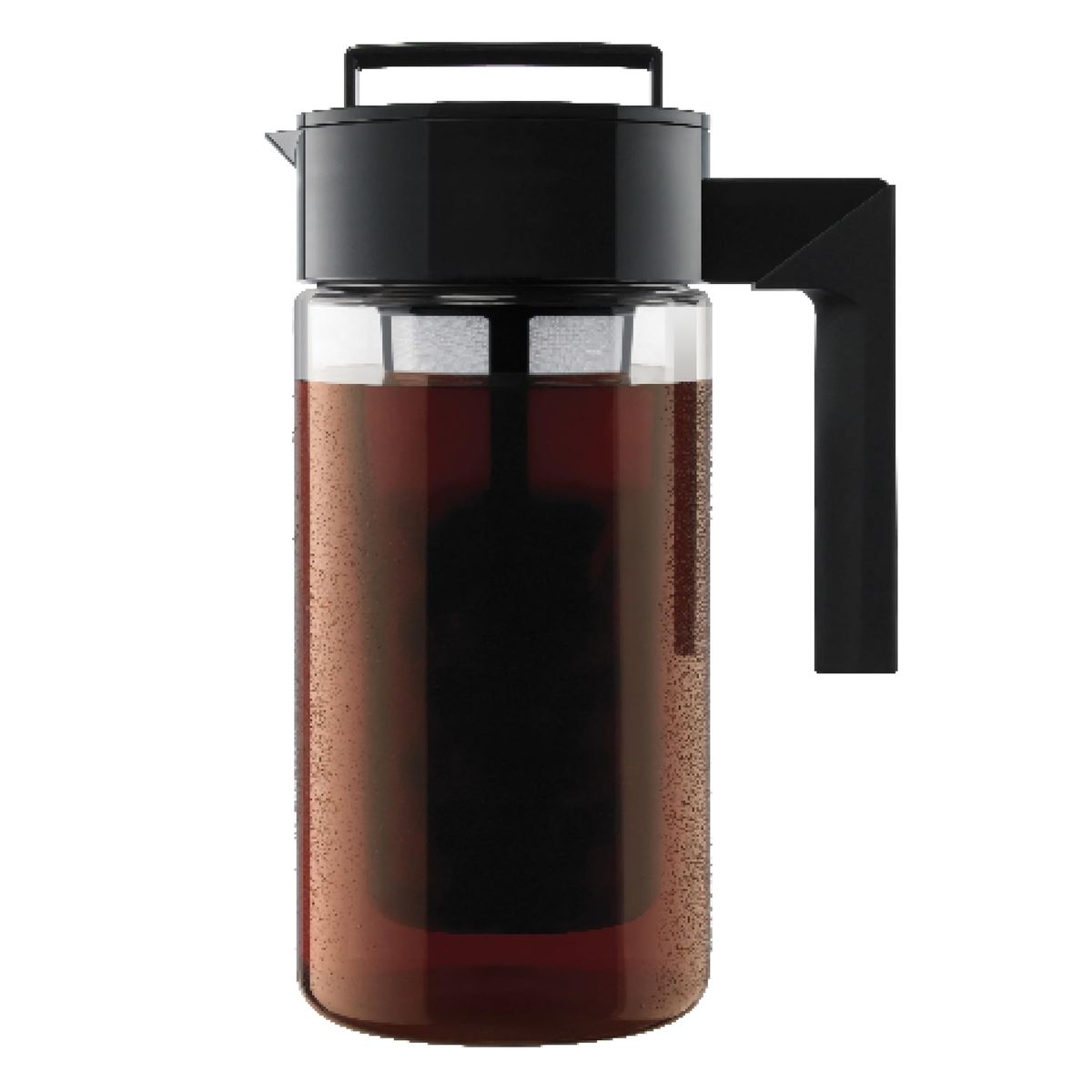
Plastic Cold Brew Pitcher
Lightweight, shatter-proof pitchers made from BPA-free Tritan plastic with integrated fine-mesh filters.
- Durable and drop-resistant
- Fits standard fridge doors
- Dishwasher safe
- Airtight, leak-proof lids
- Plastic can retain odors over time
- Not as premium-feeling as glass
Best for: Households with kids, busy kitchens, and those prioritizing portability
Example: Takeya 1-Quart
Glass Cold Brew Carafe
Borosilicate glass or mason jar brewers with stainless steel mesh filters, often with handles.
- Pure taste with no plastic contact
- Attractive, classic look
- Resistant to odors and staining
- Heavier and prone to breakage
- Larger footprint may not fit all shelves
Best for: Glass purists, design-conscious kitchens, and those who brew in place
Example: County Line Kitchen 64 oz
High-Capacity Pitcher
Large 2-quart manual brewers designed for multiple daily servings without daily brewing.
- Brews up to 8 cups in one batch
- Same reliable filter technology as smaller models
- Often less than $35
- Taller design (12+ inches) may not fit low cabinets
- Requires twice the coffee grounds per batch
Best for: Families, offices, and serious cold brew drinkers
Example: Takeya 2-Quart
What Actually Matters
| Factor | Importance | Best brand |
|---|---|---|
Capacity ≥1 quart for daily 1–2 cup drinker A 1-quart makes about 4 cups of concentrate; size up if you drink more than that daily. | Must-have | Takeya (1 and 2 quart options) |
Material (Glass vs. Plastic) Glass if taste purity is top priority Glass doesn't stain or retain smells; plastic is lighter and shatter-proof — choose based on your kitchen. | Must-have | County Line Kitchen (glass), Takeya (plastic) |
Filter Quality Fine stainless steel mesh, no paper filters needed A good filter keeps grounds out, ensuring a smooth brew without sediment. | Must-have | Takeya (ultra-fine mesh) |
Fridge Footprint Fits door shelf or lower rack without hitting ceiling Measure your shelf height — 12-inch-plus makers like the 2-quart may not clear. | Must-have | Takeya (slim profile) |
Ease of Cleaning Dishwasher safe All picks are top-rack dishwasher safe; hand washing extends lid seal life. | Nice-to-have | All recommended models |
Color/Finish Spending more for a specific color won't improve your coffee — the internals are identical. | Marketing BS | — |
Budget Tiers & Top Picks
What to buy at each price point — and exactly where spending more stops paying off.
Under $25
$19 – $25Primula Burke Deluxe Cold Brew Iced Coffee Maker (1.6 qt, Aqua)

Stop paying more: Stop at $25. Spending more moves you into glass or larger capacities, not necessarily better brew.
When to upgrade: Want a shatter-proof design or bigger batch? Jump to the mid-tier at $30.
$25 – $30
$25 – $30County Line Kitchen 64 oz Glass Cold Brew Coffee Maker

Stop paying more: This is the sweet spot for no-compromise glass quality without paying extra for size.
When to upgrade: For the largest capacity in a durable plastic build, consider the premium tier.
Over $30
$30 – $35Takeya Deluxe Cold Brew Coffee Maker (2 Quart)

Stop paying more: Spending above $35 yields no better cold brew — you're paying for style or brand name.
When to upgrade: This is the top of the line for manual cold brew — no need to go higher.
Common Mistakes to Avoid
Buying too small a capacity
A 1-quart model forces daily brewing for a two-person household — you'll quickly tire of the chore.
Cost of getting it wrong: Re-buying a larger unit wastes $20–$30.
Assuming glass is always better
Glass can shatter in a crowded fridge or if dropped; BPA-free plastic like Takeya's Tritan is just as safe and far more durable.
Cost of getting it wrong: Replacing a broken glass carafe + and risks spills.
Overcomplicating with electric models
Electric cold brew makers often just automate the overnight steep — manual models do the same for half the price.
Cost of getting it wrong: Paying + for features you don't need.
Ignoring filter quality
Cheap mesh filters let silt through, ruining the smooth texture cold brew is known for.
Cost of getting it wrong: Wasting on an inferior brewer; grounds in your cup.
Find Your Match
How much cold brew do you drink daily?
Frequently Asked Questions
What’s the difference between a 1-quart and a 2-quart cold brew maker?
A 1-quart maker produces about 4 cups of concentrate, enough for 1–2 daily drinkers, while a 2-quart doubles output for families. Larger capacity means more coffee grounds per batch, but it also requires more fridge space — the Takeya 2-quart is 12.2 inches tall, which may not fit under low cabinets.
Should I get a glass or plastic cold brew maker?
Glass carafes, like the County Line Kitchen jar, won’t absorb odors or stain, ensuring pure taste. Plastic pitchers like the Takeya are shatterproof and lighter, ideal for busy households with kids. If you prioritize no plastic contact and a premium feel, go glass; for durability and portability, choose BPA-free Tritan plastic.
How long does cold brew last in these pitchers?
With an airtight lid, cold brew concentrate stays fresh for up to two weeks in the fridge. The Takeya’s leak-proof lid and the County Line Kitchen’s sealed mason jar both excel at preserving aroma. Always keep it refrigerated and avoid contamination from dirty utensils to maximize shelf life.
Are these cold brew makers dishwasher safe?
Yes, all recommended models — Takeya, Primula, and County Line Kitchen — feature dishwasher-safe components. The Takeya’s Tritan plastic and glass carafes can go on the top rack, while stainless steel mesh filters should be placed in the utensil basket. Hand washing the lid’s seal is advised for longevity.
How much coffee grounds do I need per batch?
A standard ratio is 1 cup of coarsely ground coffee per 4 cups of water. For a 1-quart Takeya, use about 1 cup of grounds; for the 2-quart, double it. Use a coarse grind to prevent sludge — fine grinds can clog the mesh filter and create bitter, over-extracted brew.
What’s the best cold brew maker for a small kitchen?
The Takeya 1-Quart’s compact footprint (5"D x 7.5"W) fits most fridge doors, while the Primula Burke’s shorter 7.7-inch height works well on shelves. If counter space is tight, prioritize dishwasher-safe models to simplify cleaning, as they can be stored away after use.
How we wrote this guide
Our editorial team analyzed 271,000+ verified Amazon reviews across 6 top-selling cold brew makers. We cross-referenced manufacturer specifications, independent video assessments, and real-world usage reports to identify the key factors that separate great brewers from mediocre ones. Prices are updated weekly from Amazon.
About this guide
Mubboo Editorial Team — independent US-market consumer research. Picks based on analysis of 271,000+ verified buyer reviews and product specifications. Prices update weekly from Amazon.