Compression Socks Buying Guide 2026: How to Choose Without Overpaying
What actually matters in compression socks, from medical grades to budget packs.
By Mubboo Editorial Team · Updated May 27, 2026 · 8 min read
At a Glance
- Price range
- $12.49 – $19.99
- Data
- 506,872 verified Amazon reviews across 6 finalists
- Best for
- Travel and long flightsDaily wear and office workMedical recovery after surgery
- Skip if
- You don't need compression — just want fashion or novelty socks.
Types Explained
Medical-Grade Compression Socks (20-30 mmHg)
Highest over-the-counter compression level, typically prescribed for deep vein thrombosis prevention, post-surgery recovery, and chronic venous insufficiency.
- Clinically effective for serious circulation issues
- Stronger support reduces swelling faster
- Can be too tight for casual or first-time users
- Harder to put on and remove
Best for: Post-surgery patients, frequent flyers on long-haul flights, anyone with doctor-recommended compression
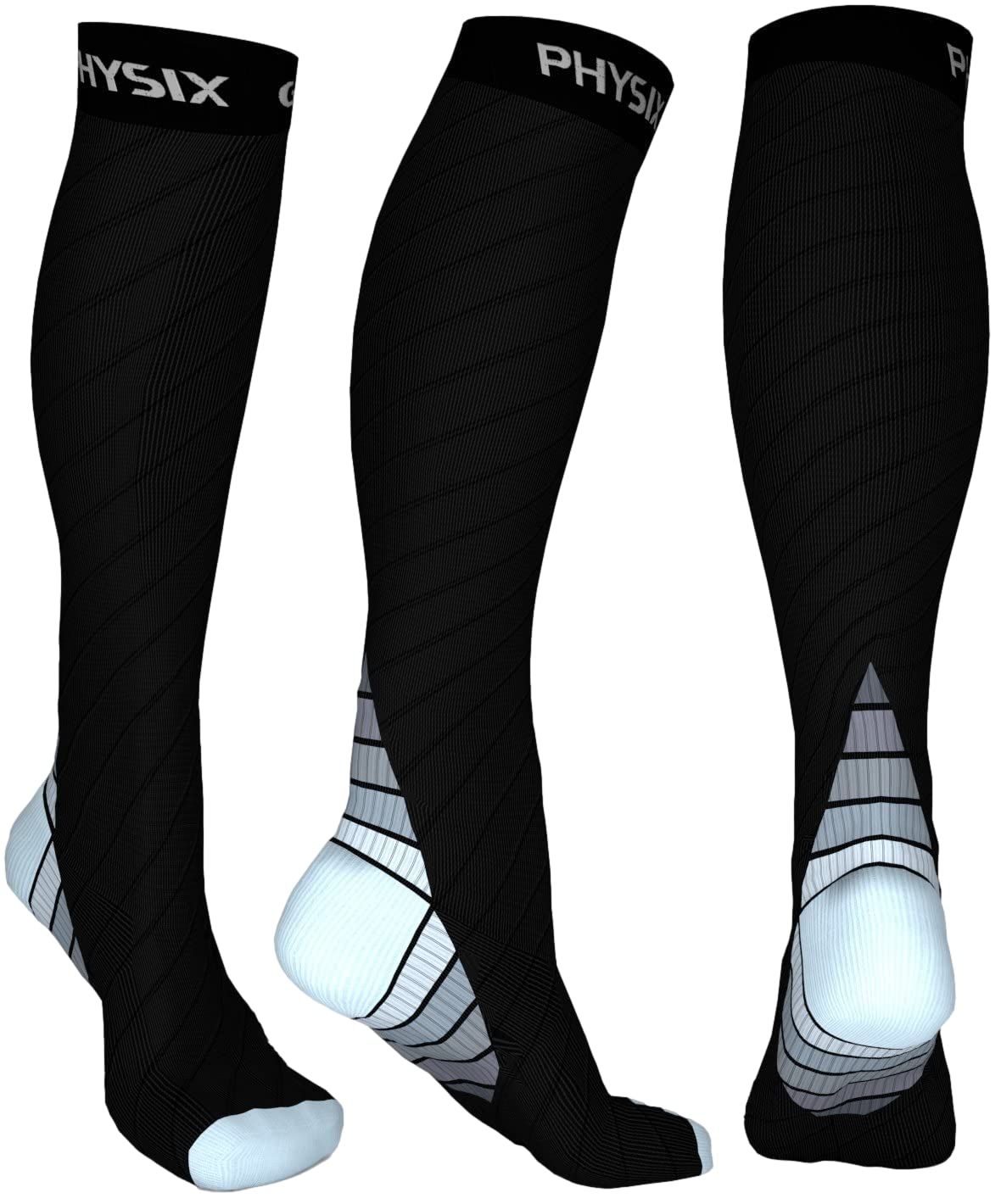
Example: Physix Gear 20-30 mmHg ($18.82)
Mild Compression Socks (15-20 mmHg)
Moderate compression for daily wear, travel, and athletic recovery. Reduces leg fatigue and minor swelling without being uncomfortable.
- Comfortable enough for all-day use
- Wide variety of styles and pack sizes
- Not strong enough for medical conditions
- Less effective on long-haul flights over 6 hours
Best for: Office workers, casual travelers, runners, pregnant women
Example: CHARMKING 3-Pack 15-20 mmHg ($12.49)
Copper-Infused Compression Socks
Socks infused with copper fibers that claim to reduce odor, improve circulation, and kill bacteria. No rigorous studies confirm medical benefits over regular compression.
- Odor control for sweaty feet
- Soft and comfortable fabrics
- Copper claims lack scientific backing
- Often lower compression levels or unclear specifications
Best for: People who prioritize odor control and want mild compression for casual use
Example: Bluemaple 6-Pack Copper ($19.95)
What Actually Matters
| Factor | Importance | Best brand |
|---|---|---|
Compression level (mmHg) 15-20 mmHg for daily use, 20-30 mmHg for medical/travel Compression level is the single most important spec. Below 15 mmHg, socks offer little more than a snug fit. | Must-have | Physix Gear (medical-grade verified) |
Graduated vs. uniform compression Graduated (tightest at ankle, looser up calf) improves blood flow Non-graduated socks can actually hinder circulation. Always choose graduated compression. | Must-have | All products in our lineup use graduated design |
Number of pairs in pack 3 pairs minimum for rotation; 6-8 pairs ideal for weekly use More pairs lower the cost per pair. A 3-pack at $12.49 costs $4.16 per pair; an 8-pack at $18.99 costs $2.37 per pair. | Nice-to-have | CHARMKING offers 3, 6, and 8-pair options |
Material breathability and moisture-wicking Cotton blends are fine; avoid 100% cotton for athletic use Sweaty feet can cause blisters and odor. Look for moisture-wicking fabrics like nylon, spandex, or merino wool blends. | Nice-to-have | Bluemaple copper socks use breathable blends |
Toe seam comfort Flat or no seams to avoid irritation Rough seams cause blisters on long walks or runs. Check for flat-seam construction. | Must-have | All products in our roundup use smooth toe seams |
Copper infusion No clinical evidence shows copper socks improve circulation or recovery. Odor control is the only plausible benefit, and it's achievable with regular washing. | Marketing BS | — |
Fashion colors and patterns Fancy designs don't improve compression. If you want style, buy a basic functional pair and overlay with colorful calf sleeves. | Marketing BS | — |
Budget Tiers & Top Picks
What to buy at each price point — and exactly where spending more stops paying off.
Budget ($12 – $15)
$12.49 – $14.99CHARMKING Compression Socks 15-20 mmHg (3 Pairs)
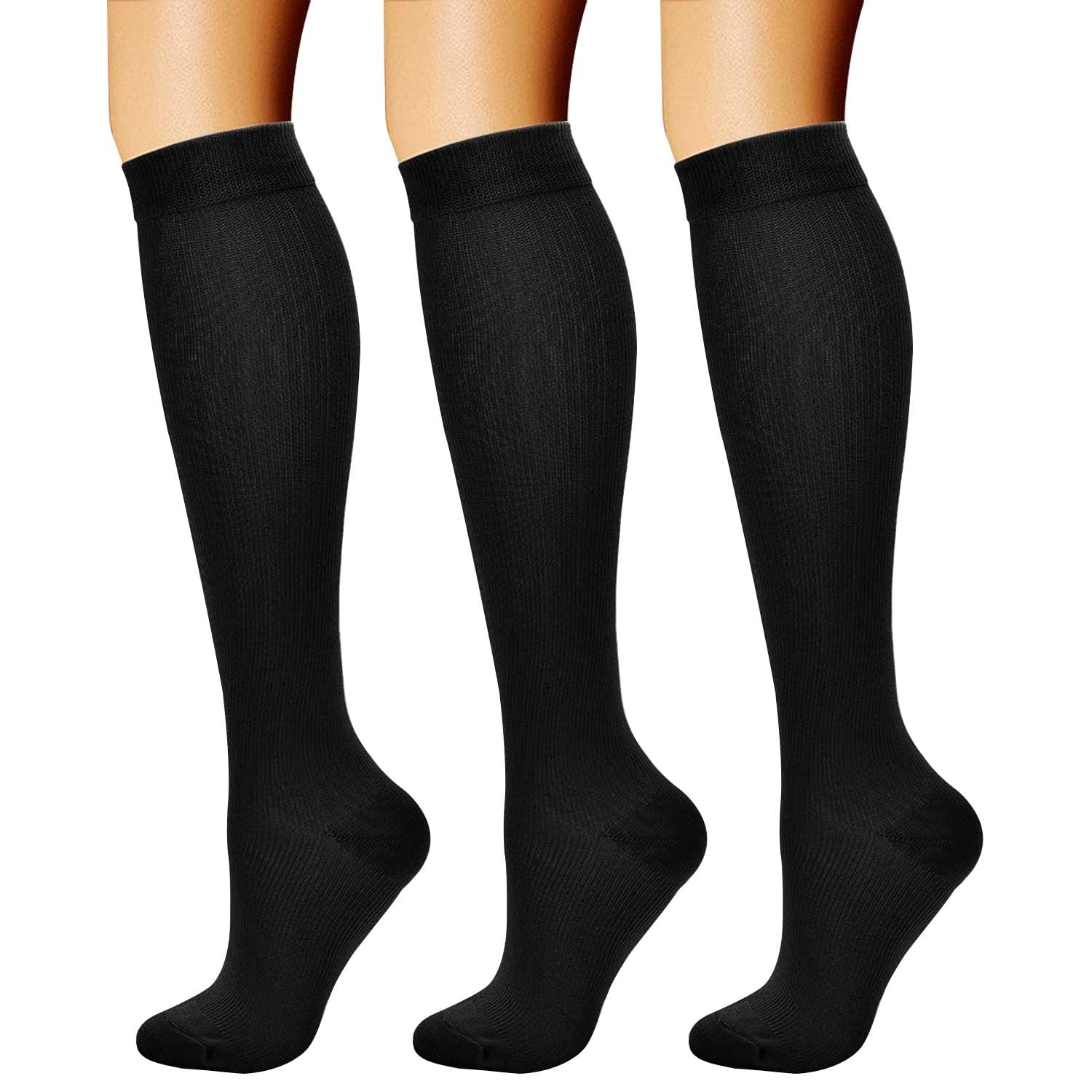
Stop paying more: At $12.49 for three pairs, this is the best value in the category. Spending more than $15 per pack doesn't buy better compression up to this tier.
When to upgrade: If you need stronger compression or more pairs, step up to the mid tier ($18-19) for medical-grade or bulk options.
Mid ($15 – $19)
$18.82 – $18.99Physix Gear Compression Socks 20-30 mmHg

Stop paying more: At $18.82, this is the sweet spot for medical-grade compression. Spending over $20 per pack doesn't improve compression performance.
When to upgrade: If you need a larger rotation of mild compression, consider the premium tier for more pairs.
Premium ($19+)
$19.95 – $19.99Bluemaple 6 Pack Copper Compression Socks

Stop paying more: At $19.95 for six pairs, this is $3.33 per pair — reasonable. But copper adds no proven medical benefit. Stop here; spending above $20 on compression socks is unnecessary.
When to upgrade: If you don't need copper, the mid-tier Physix Gear provides better compression for less money per pair.
Common Mistakes to Avoid
Buying cheap fashion socks instead of compression socks
Regular socks may look like compression but provide zero gradient pressure. They don't improve circulation and can actually cause bunching that restricts blood flow.
Cost of getting it wrong: Wasted $15-20 on socks that don't work. Plus potential health risk if you rely on them for travel or medical needs.
Choosing too low a compression level (<15 mmHg)
Socks labeled 'support' or 'light compression' often fall below 15 mmHg. They feel snug but don't provide therapeutic benefits for swelling, DVT prevention, or recovery.
Cost of getting it wrong: You lose the benefits you paid for. Upgrading to proper 15-20 mmHg costs another $10-15.
Ignoring graduated compression in favor of uniform compression
Uniform compression socks squeeze the calf uniformly, which can trap blood in the lower leg. Graduated compression (tightest at ankle, decreasing up the calf) actively pushes blood upward.
Cost of getting it wrong: Potential discomfort and reduced effectiveness. Many buyers return uniform socks after realizing they don't help.
Overbuying on copper gimmicks
Copper-infused socks cost $5-10 more than equivalent non-copper options. While they may reduce odor, no study proves they improve circulation or recovery beyond standard compression.
Cost of getting it wrong: You pay a 25-50% premium for unproven claims. A pack of plain graduated compression socks costs less and does the same job.
Find Your Match
What compression level do you need?
Frequently Asked Questions
How much should I spend on compression socks?
For reliable compression, expect to spend $12 to $20 per pack. A 3-pack at $12.49 offers the best value for mild compression. Medical-grade socks cost $18-$19. Spending over $20 adds no compression benefit — you're paying for branding or extras like copper.
What compression level do I need?
Socks below 15 mmHg are not therapeutic.
Are copper compression socks worth it?
Copper socks can reduce odor due to antimicrobial properties, but no evidence shows they improve circulation or recovery better than standard graduated compression. If odor is your main concern, they're a reasonable choice. Otherwise, save $5-10 with plain compression socks.
How many pairs of compression socks should I buy?
Buy at least 3 pairs for rotation so you always have a clean pair. Athletes or nurses on their feet all day benefit from 6-8 pairs. Bulk packs (6-8 pairs) cost less per pair — around $2.37 per pair vs $4.16 for a 3-pack.
Can I wear compression socks while sleeping?
Generally not recommended unless prescribed by a doctor. Compression socks are designed for daytime wear when you're upright. Wearing them at night can restrict blood flow and cause discomfort. If you need compression at rest, consult a specialist.
How long do compression socks last?
Most pairs last 3-6 months with regular use and proper washing (gentle cycle, air dry). Signs of wear include loss of elasticity, pilling, or loosening of the compression. Rotating pairs extends overall life.
What should I avoid when buying compression socks?
Avoid socks that lack a graduated compression claim — they may be fashion socks. Avoid compression under 15 mmHg for therapeutic use. Also avoid socks that bunch at the ankle or slip down, as they won't provide consistent pressure.
How we wrote this guide
We analyzed 506,872 verified Amazon reviews across 6 top-rated compression sock models to identify what actually matters. We cross-referenced specs for compression level, material, and pack size. Community feedback from Reddit's r/CompressionSocks and r/nursing shaped our real-world use cases.
About this guide
Mubboo Editorial Team. Our research updates monthly as prices and reviews change.