How to Choose a Cookware Set (2026 Guide)
From nonstick to induction-ready pots, here’s what actually matters for your kitchen in 2026.
By Mubboo Editorial Team · Updated Jun 8, 2026 · 9 min read
At a Glance
- Price range
- $110 – $230
- Data
- Based on analysis of 166,282 verified Amazon reviews across 6 top‑rated cookware sets. Note: T‑Fal’s 13‑piece and 17‑piece sets share a common review pool of 42,442 ratings, reflecting consistent buyer satisfaction across the line.
- Best for
- Families and frequent home cooksNew homeowners outfitting their kitchenAnyone replacing scratched or worn‑out pans
- Skip if
- You mainly cook with one or two pans — buy individual pieces instead.
Types Explained
Hard‑Anodized Nonstick
Aluminum pans hardened through an electrochemical process and coated with a durable nonstick layer, often reinforced with titanium.
- Excellent nonstick release
- Dishwasher safe and easy to clean
- Oven safe up to 400°F
- Not induction compatible
- Cannot sear at very high heat
- Lids often less heat‑resistant (350°F max)
Best for: Everyday cooking for families who want low‑maintenance, versatile pots and pans.
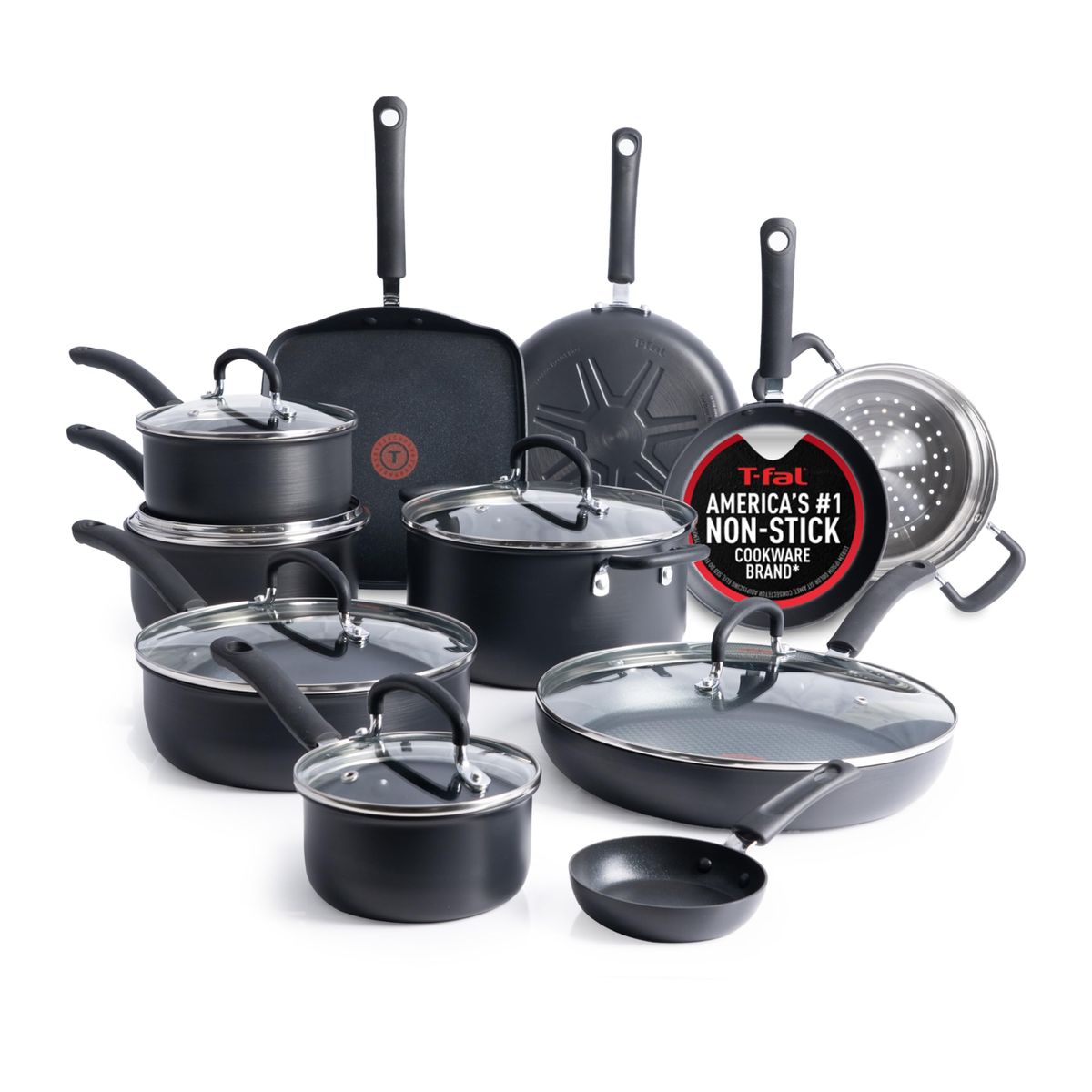
Example: T‑Fal Ultimate Hard‑Anodized 17‑Piece
Traditional Nonstick
Lightweight aluminum or steel pans with a PTFE‑based nonstick coating, typically more affordable and suitable for basic stovetop tasks.
- Very affordable
- Dishwasher safe
- Good for delicate foods like eggs
- Coating can wear faster
- Lower oven temperature limit (~350°F)
- Not induction ready
Best for: First apartments, budget shoppers, or those who cook simply.
Example: T‑Fal Signature 12‑Piece
Granite Nonstick
Pans with a speckled, stone‑look finish made from ceramic‑particle‑reinforced coating, often free of PFOA and PFOS.
- Induction compatible
- PFOA‑ and PFOS‑free
- Modern aesthetic
- Hand wash only
- Not oven safe
- Coating may be less durable with metal utensils
Best for: Cooks seeking induction compatibility and a trendy look without synthetic chemicals.
Example: Carote 21‑Piece Granite
Stainless Steel
Uncoated 18/10 stainless steel pans that rely on proper preheating and oil to create a natural nonstick patina, prized for searing and high‑heat durability.
- Induction and oven safe up to 500°F
- Dishwasher safe
- No coating to scratch or wear
- Food can stick without technique
- Heavier than nonstick
- Smaller sets often missing key pieces
Best for: Searing enthusiasts, induction users, and those who want a lifetime investment.
Example: Jamie Oliver by T‑fal Stainless Steel 10‑Piece
What Actually Matters
| Factor | Importance | Best brand |
|---|---|---|
Material Material dictates durability, heating, and compatibility. Hard‑anodized nonstick offers the best all‑round performance; stainless excels at high‑heat tasks. | Must-have | T‑fal (hard‑anodized), Carote (granite), Jamie Oliver (stainless) |
Number of Pieces ≥10 for essentials, ≥13 for families More pieces add versatility, but only if you’ll use them. Avoid sets padded with mini fry pans or duplicate ladles. | Nice-to-have | T‑fal 17‑piece covers most needs |
Induction Compatibility Required if you own or plan to buy an induction cooktop Non‑induction sets limit you to gas/electric. Check the label before buying; many popular T‑fal sets are not induction compatible. | Must-have | Carote (full line induction‑ready) |
Oven Safety ≥400°F for roasts and braises Oven safety opens up one‑pot meals and finishing techniques. Nonstick lids rarely tolerate the highest oven temperatures. | Nice-to-have | Jamie Oliver by T‑fal (500°F max) |
Dishwasher Safety Labeled dishwasher‑safe While convenient, hand washing prolongs the life of any nonstick, even when the manufacturer says dishwasher‑safe. | Nice-to-have | T‑fal (hard‑anodized and Signature lines) |
Included Accessories Utensils, pan protectors, and steamer inserts inflate piece counts but rarely match the quality of standalone tools. Focus on the pans and lids, not the freebies. | Marketing BS | — |
Budget Tiers & Top Picks
What to buy at each price point — and exactly where spending more stops paying off.
Budget: Under $130
$110 – $130T-Fal Signature Nonstick 12-Piece Cookware Set

Stop paying more: Diminishing returns kick in above $130 — you may gain an extra pan or two, but the core performance and coating quality stay similar.
When to upgrade: Ready for a tougher nonstick and more pieces? Step up to a hard‑anodized set like T‑fal’s 13‑piece Ultimate.
Mid‑Range: $130 – $200
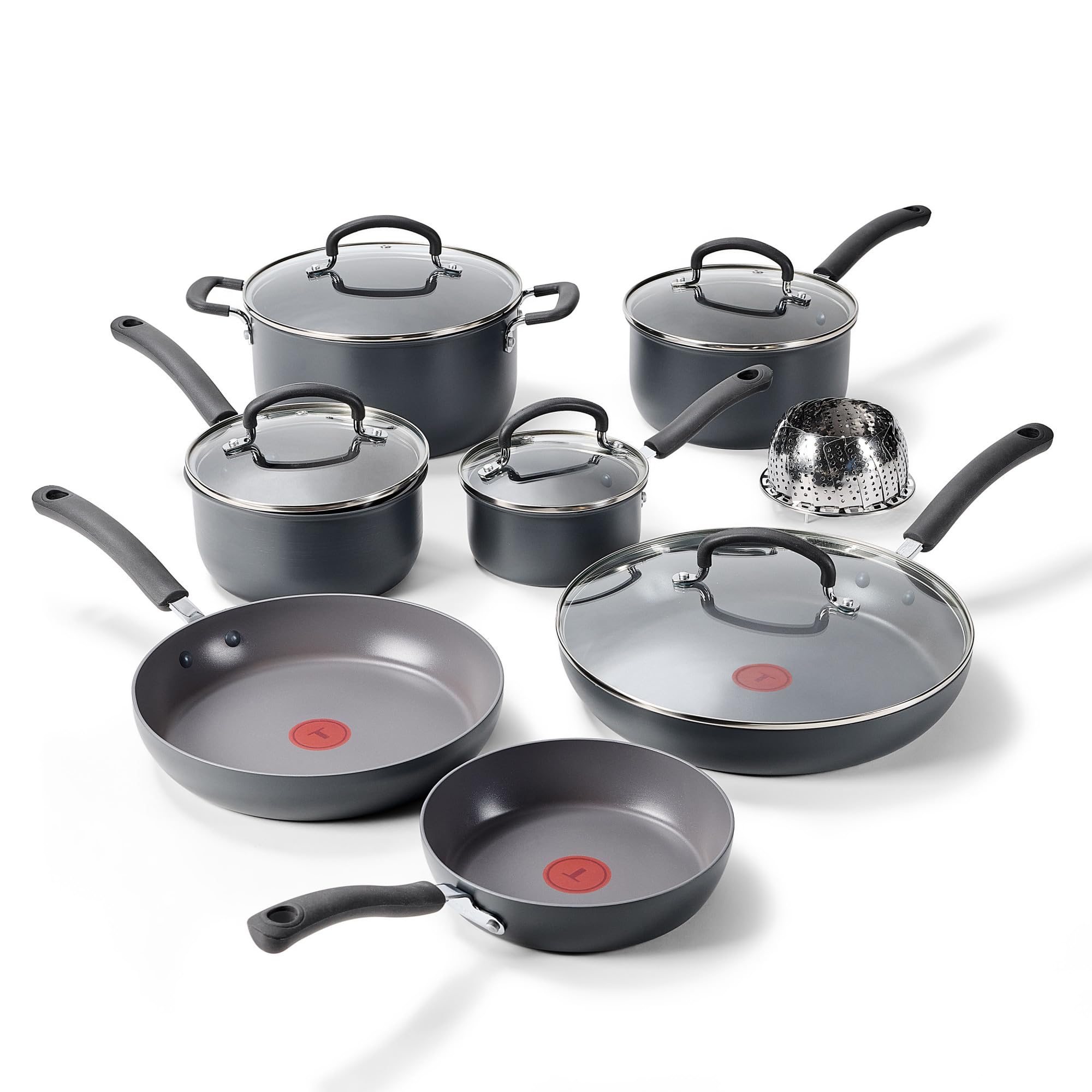
$130 – $200T-Fal Ultimate Hard Anodized Nonstick 13-Piece Cookware Set
Stop paying more: Spending beyond $200 mostly adds more pieces or induction capability, while the core nonstick quality plateaus.
When to upgrade: Need induction and a larger set? The Carote 21‑piece granite set is affordable and induction‑ready. Prefer stain‑less steel? The Jamie Oliver by T‑fal 10‑piece offers professional searing.
Premium: Above $200
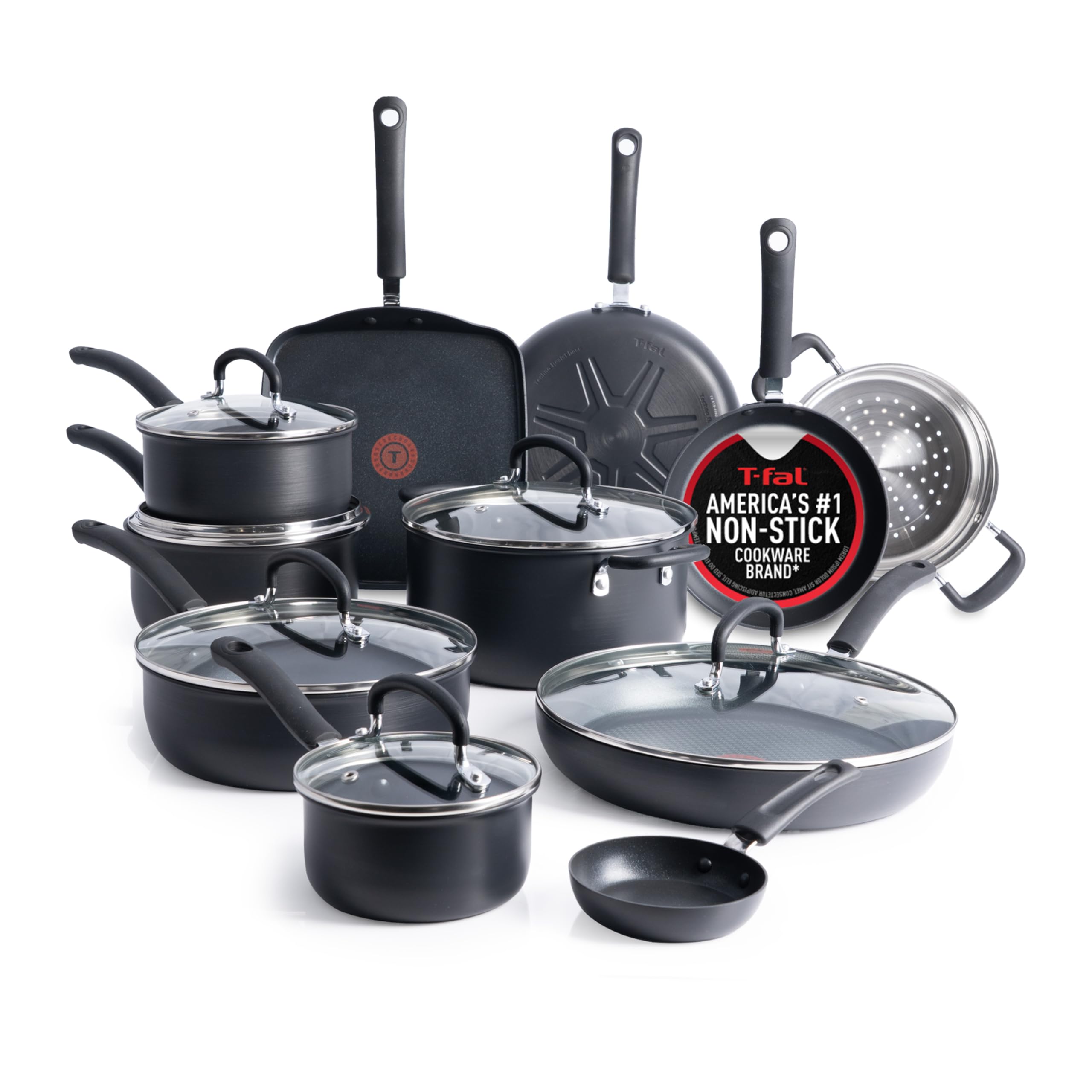
$200 – $250T-Fal Ultimate Hard Anodized 17-Piece Cookware Set
Stop paying more: Stop at $250 — sets above that offer marginal upgrades like luxury branding or extra utensils rather than real performance improvements.
When to upgrade: Craving a stainless steel upgrade? The Jamie Oliver by T‑fal 10‑piece handles 500°F oven roasting and induction.
Common Mistakes to Avoid
Buying a set with pieces you’ll never use
A 26‑piece set often includes a tiny egg pan, duplicate utensils, and a steamer insert that sits unused. The average home cook really needs two fry pans, two saucepans, and a stockpot.
Cost of getting it wrong: You’re paying for clutter — roughly $20‑$30 extra — while the pans you actually need wear out sooner because you lack spares.
Choosing nonstick for high‑heat searing
Nonstick coatings begin to break down above 400°F, releasing fumes and losing their release properties. For steak, burgers, or oven‑finishing, you need stainless steel or cast iron.
Cost of getting it wrong: Ruined nonstick pans need replacement within a year, turning a set into a recurring expense.
Ignoring induction compatibility
Many buyers upgrade to an induction stovetop later and discover their entire cookware set won’t work. Induction‑compatible sets like Carote granite are affordable now and future‑proof your kitchen.
Cost of getting it wrong: Replacing every pan when switching to induction can easily + and is entirely avoidable.
Using metal utensils on nonstick
Metal spatulas, whisks, and forks scratch the coating, creating weak spots where food sticks and the pan deteriorates. Silicone or wooden tools are essential.
Cost of getting it wrong: A scratched pan loses its nonstick ability within months; the whole set may need early replacement.
Find Your Match
What type of stovetop do you use?
Frequently Asked Questions
How much should I spend on a cookware set?
You can get a reliable starter set while a premium nonstick or stainless collection runs up to $230. The sweet spot for long‑term durability and a useful piece count is between $130 and $200. Spending beyond adds marginal pieces or luxury branding rather than meaningful performance gains.
What’s the difference between nonstick and stainless steel?
Nonstick pans excel at eggs, pancakes, and delicate foods, requiring less oil and making cleanup effortless. Stainless steel, like the Jamie Oliver by T‑fal set, handles high‑heat searing, oven roasting up to 500°F, and works on induction. The trade‑off is that stainless demands proper preheating and oil to prevent sticking.
Are all cookware sets induction compatible?
No. Many nonstick sets, including popular T‑fal hard‑anodized lines, work only on gas and electric stoves. If you have or plan to upgrade to an induction cooktop, look for sets explicitly labeled induction‑safe, such as the Carote 21‑piece Granite collection, which uses a magnetic base.
How many pieces do I really need?
For a couple or small apartment, a 10‑ to 12‑piece set covers essentials without clutter. Families of three or more benefit from a 17‑ to 26‑piece collection that includes multiple fry pans, saucepans, and a large stockpot. Avoid sets overstuffed with rarely used extras like mini egg pans or cheap utensils.
Is it okay to put nonstick pans in the dishwasher?
Many nonstick sets are labeled dishwasher‑safe, but hand washing extends the coating’s life. Harsh detergents and high heat can degrade the nonstick layer over time. T‑fal’s hard‑anodized sets are officially dishwasher‑safe, while Carote granite sets recommend hand washing only.
What should I avoid when buying a cookware set?
Steer clear of sets that include pieces you won’t use, such as tiny 6‑inch fry pans or duplicate sauté pans. Also avoid nonstick pans if you frequently sear at high heat, as coatings break down above 400°F. Finally, check induction compatibility now to avoid an expensive replacement later.
How we wrote this guide
We evaluated 6 top cookware sets using 166,282 verified Amazon reviews, comprehensive specification sheets, and video analysis from Prudent Reviews and Best Product Quest. We prioritized nonstick durability, even heating, oven safety, induction compatibility, and real‑world buyer satisfaction. Sets with widespread complaints about coating failure, warping, or mismatched pieces were excluded from consideration.
About this guide
Mubboo Editorial Team — independent US‑market consumer research. Recommendations are based on analysis of 166,282 verified Amazon buyer reviews and detailed spec comparisons across leading cookware sets shipped to American homes.