How to Choose a Dehydrator (2026 Guide)
Learn what wattage, tray count, and features matter most — and which models our research picks for every budget.
By Mubboo Editorial Team · Updated Jun 8, 2026 · 9 min read
At a Glance
- Price range
- $40 – $200
- Top pick
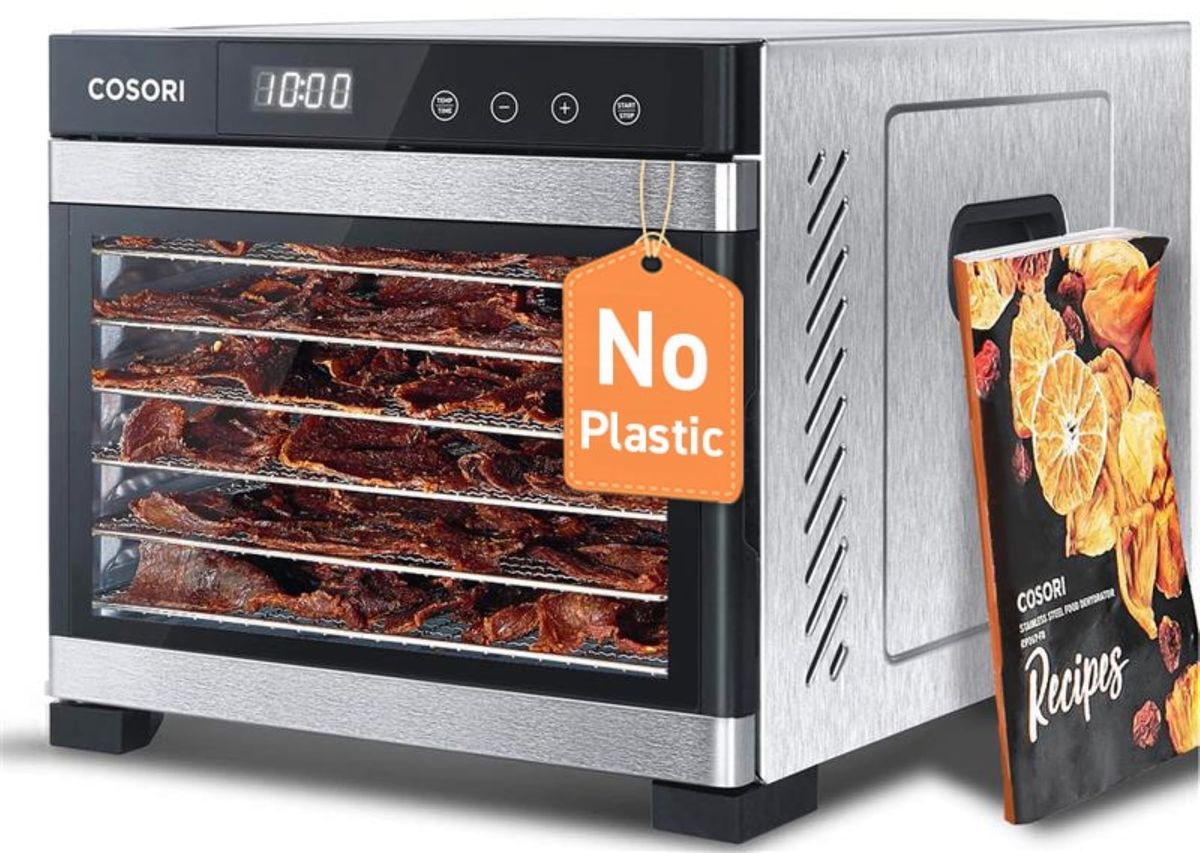
- Cosori CP267-FD ($139.96 · 4.7★)
- Budget pick
- NESCO Snackmaster Pro ($89.99 · 4.6★)
- Data
- 68,793 verified Amazon reviews analyzed across 6 finalists
- Best for
- Preserving garden harvestsMaking jerkyDrying fruits and herbs
- Skip if
- You only need a one‑time small batch — consider your oven instead
Types Explained
Basic Round Stackable
Trays stack vertically with a top or bottom fan; expandable by adding more trays.
- Affordable
- Expandable capacity
- Compact storage
- Often plastic trays
- May require tray rotation
- Lower wattage in budget models
Best for: Beginners and occasional users
Example: NESCO Snackmaster Pro
Premium Cabinet-style
Rectangular box with rear‑mounted fan providing consistent horizontal airflow.
- Even drying without rotation
- Stainless steel trays
- Higher wattage and digital controls
- Heavier and bulkier
- More expensive
- Non‑expandable
Best for: Regular dehydrators and serious cooks
Example: Cosori CP267-FD
Compact Personal
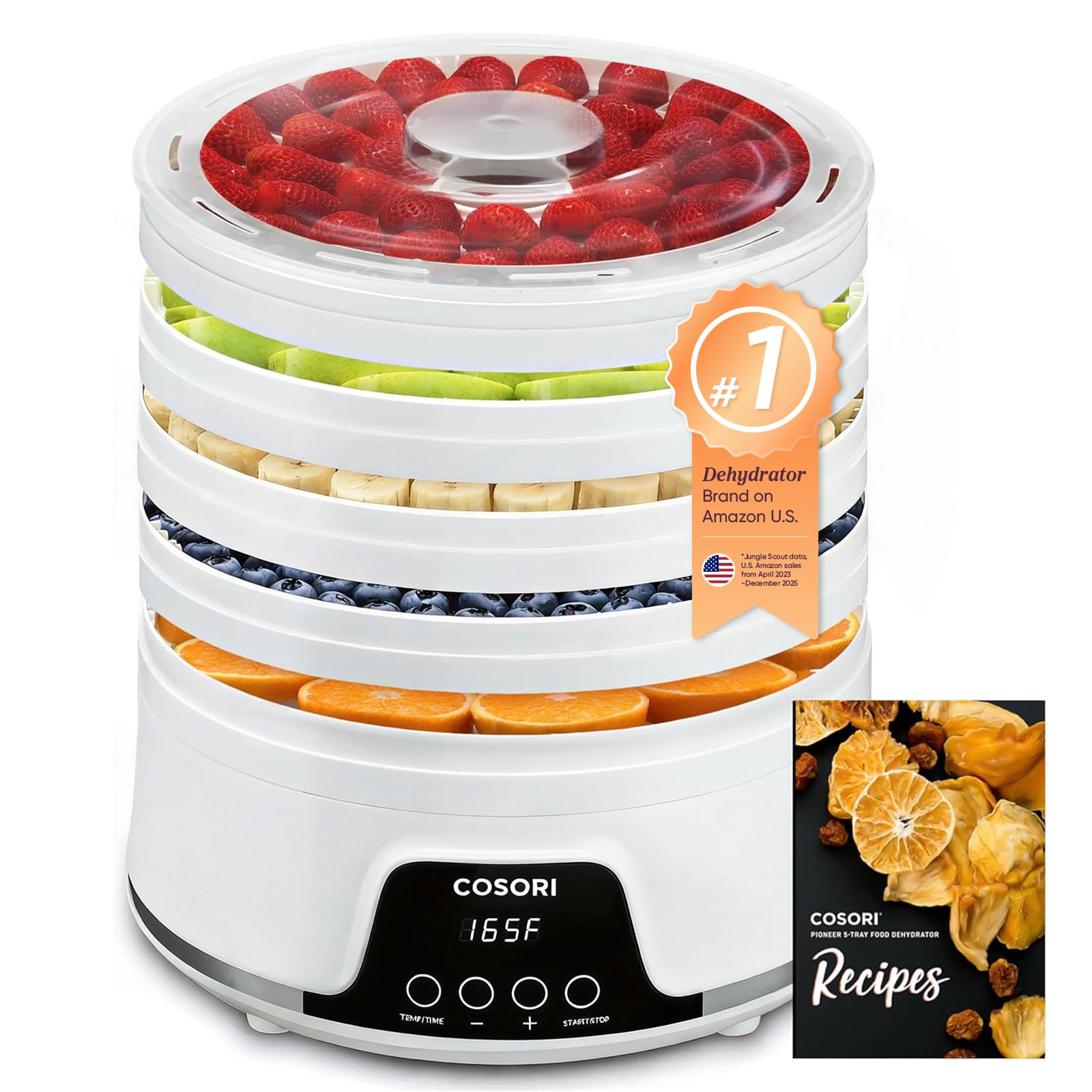
Small round or square units under 13" wide, typically 350W, 5 trays.
- Very affordable
- Fits small kitchens
- Quiet operation
- Limited capacity
- Slower drying
- Max 158–165°F
Best for: Singles, apartments, drying herbs
Example: Cosori CFD-N051-W
What Actually Matters
| Factor | Importance | Best brand |
|---|---|---|
Wattage ≥600W for even drying Below 400W leads to uneven results and longer times. | Must-have | Cosori, NESCO (600W models) |
Temperature range 95°F–165°F minimum; 176°F for jerky Below 158°F cannot safely dry ground meat. | Must-have | Magic Mill (176°F) |
Tray material Stainless steel preferred Plastic trays can warp over time. | Must-have | Cosori, Magic Mill |
Timer & auto shutoff Essential for unattended overnight drying. | Nice-to-have | Cosori, Magic Mill |
Capacity (tray count) 6+ for regular use, 15 for bulk 5 trays can suffice for singles. | Nice-to-have | Magic Mill (15 trays) |
Color / finish options A silver or black box won't affect your jerky. | Marketing BS | — |
Budget Tiers & Top Picks
What to buy at each price point — and exactly where spending more stops paying off.
Under $50
$40 – $50Cosori CFD-N051-W
Stop paying more: Stop at $50. Spending more doesn't get you bigger capacity in this tier — jump to $90 for 600W and expandable trays.
When to upgrade: Need faster drying or larger batches? Step up to $90+ for a 600W model.
$50 – $100
$90NESCO Snackmaster Pro

Stop paying more: At $90, you get reliable 600W drying and expandability to 12 trays. Above $100, you start paying for stainless steel and digital timers.
When to upgrade: Want stainless steel trays and precision digital control? Go to $140.
$100 – $200
$140 – $200Cosori CP267-FD

Stop paying more: Diminishing returns above $140. The extra $60 for 15 trays only makes sense if you process 10+ lbs at once.
When to upgrade: Need 15‑tray capacity? The Magic Mill 15‑tray at $200 is the only way up.
Common Mistakes to Avoid
Buying too small a capacity
A 5‑tray 350W unit can’t handle a batch of 10 lbs of apples for a family of four in one cycle. You’ll end up running multiple loads, wasting time and electricity.
Cost of getting it wrong: Re‑buying a larger machine later wastes $50–$100.
Ignoring airflow design
Round stackable models with bottom fans often require tray rotation; skipping it leads to uneven drying and spoiled batches. Rear‑fan cabinet models avoid this entirely.
Cost of getting it wrong: Repeat batches or food loss can + in wasted produce.
Not checking max temperature for jerky
The USDA recommends 165°F for ground meat jerky to kill bacteria. Many budget units max out at 158°F, making them unsuitable for safe jerky.
Cost of getting it wrong: Risk of foodborne illness or needing to buy a second machine.
Overlooking timer and auto shutoff
Without a timer, you must be present to turn off the machine, risking over‑dried or burnt food if forgotten.
Cost of getting it wrong: A ruined batch of meat or produce.
Find Your Match
What will you mostly dehydrate?
Frequently Asked Questions
How much should I spend on a dehydrator?
Serious home dehydrators should budget for a stainless steel cabinet‑style model like the Cosori CP267-FD. Large families or gardeners processing bushels might need a 15‑tray model. Spending more than gets you little extra beyond capacity.
What should I avoid when buying a dehydrator?
Skip models below 400W, as they dry unevenly and take twice as long. Avoid round stackable designs with bottom‑mounted fans, which often need tray rotation. Steer clear of plastic trays that can warp at high heat, and never buy a unit without a high enough temperature range—165°F minimum for safe jerky.
How many trays do I need?
A 5‑tray unit fits a single person or couple drying occasional batches. For a family of four, 6–7 trays handle a typical harvest session. Gardeners preserving bulk produce need 10+ trays or a 15‑tray cabinet. Expandable models like the NESCO let you start small and add trays later, saving counter space until you need more.
Are stainless steel trays worth it?
Yes, for frequent use. Stainless steel trays don't warp at high temperatures, clean faster, and resist staining from dark fruits. They’re standard on premium models like Cosori and Magic Mill. Plastic trays are fine for occasional use, but over time high heat can cause warping.
What temperature is safe for dehydrating meat?
The USDA recommends 165°F for jerky to kill bacteria. Many budget dehydrators max out at 158°F, so always check the spec. For extra safety, preheat meat in an oven before dehydrating, or choose a unit like the Magic Mill MFD-7700 that reaches 176°F.
Is a timer necessary?
A timer with auto shutoff is very convenient if you dehydrate overnight or while away from home. Without one, you must manually turn off the machine when the food is done, risking over‑dried or burnt batches. Most digital models include a 48‑hour timer, allowing set‑and‑forget operation.
Can I use my oven instead of a dehydrator?
Yes, for occasional drying. Set your oven to the lowest temperature (usually 170°F) and prop the door open slightly for airflow. Results are less consistent, energy use higher, and you can’t leave it running overnight. A dedicated dehydrator is more efficient and safer for regular use.
How we wrote this guide
We consulted expert testers, video reviewers, and thousands of verified Amazon buyer reviews to assemble this guide. The team compared key specs across 6 popular dehydrators, focusing on wattage, temperature range, tray material, and real‑world ease of use. Insights from Wirecutter's exhaustive testing of 168 pounds of produce and meat highlight rear‑fan models for even drying. Video reviewers like The Purposeful Pantry confirm cabinet‑style units are the top choice for serious users. Our picks reflect only products with strong buyer feedback and proven reliability.
About this guide
Mubboo Editorial Team. Independent US‑market consumer research. Picks based on verified buyer reviews, expert analysis, and up‑to‑date Amazon pricing data.