How to Choose a Dental Care Kit (2026 Guide)
Find the right tools for plaque removal, pain relief, and a brighter smile—without overspending or hurting your gums.
By Mubboo Editorial Team · Updated Jul 21, 2026 · 7 min read
At a Glance
- Price range
- $6–$15
- Data
- 155,531 verified reviews across 6 finalists
- Best for
- At-home plaque and tartar removalThose wanting to save on dental cleaningsPeople comfortable using professional-style instruments
- Skip if
- You have significant gum disease, are uncomfortable handling sharp tools, or expect instant whitening.
Types Explained
All-Purpose Dental Hygiene Kits
Multi-tool sets designed for thorough at-home plaque and tartar removal, often including scalers, mirrors, and probes.
- Includes tools for multiple oral care tasks
- Emulates professional dental cleaning
- Often comes with a storage case
- Requires careful handling to avoid gum damage
- Can be intimidating for first-time users
Best for: Those wanting comprehensive home cleaning between dentist visits
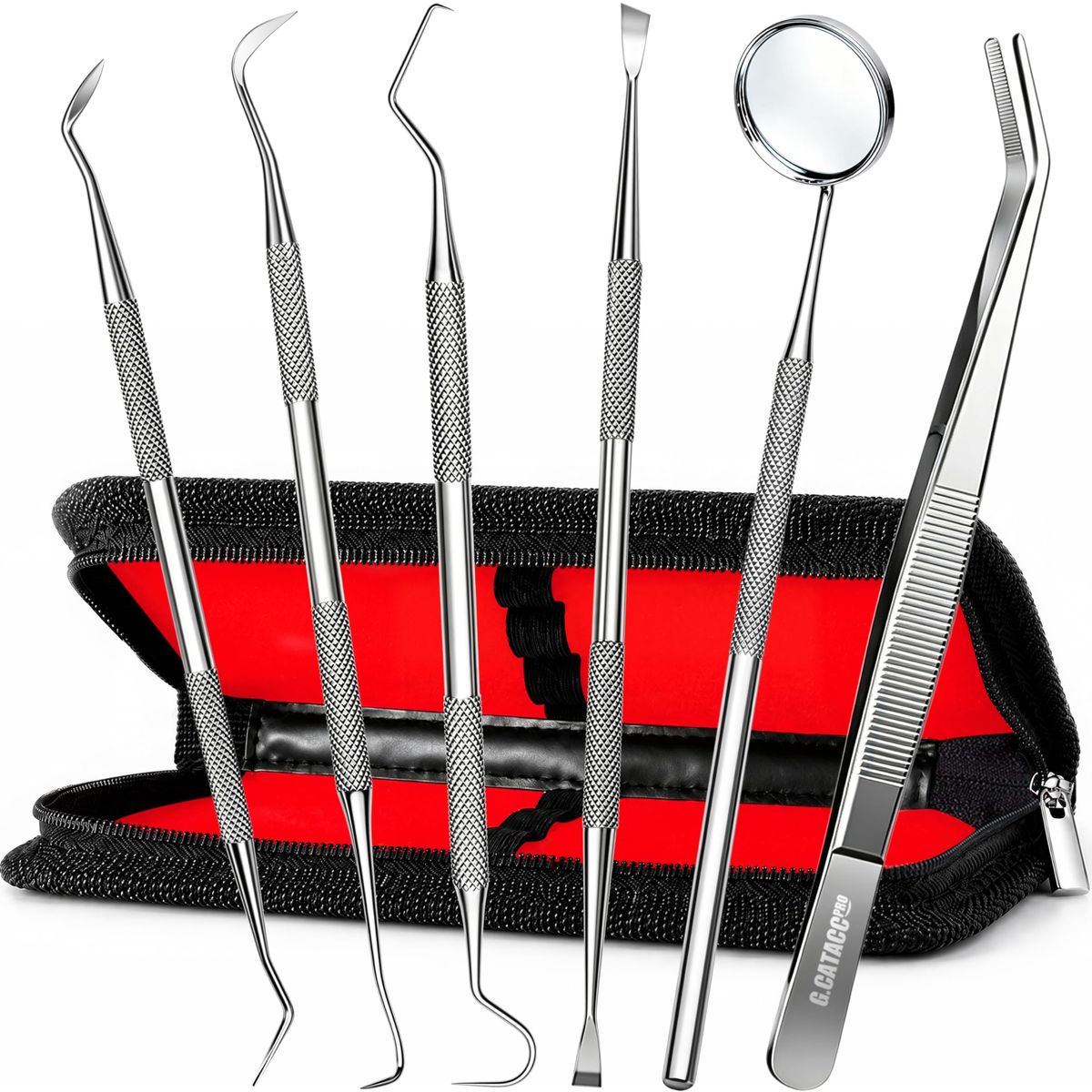
Example: G.CATACC Dental Tools Hygiene Kit
Pain Relief Kits
Focused applications like benzocaine applicators or medicated tips for immediate toothache and canker sore relief.
- Fast-acting pain relief
- Easy to apply
- Very affordable
- Addresses symptoms, not underlying causes
- May have an unpleasant taste or temporary numbness
Best for: Immediate relief from toothaches, canker sores, or gum irritation
Example: DenTek Instant Oral Pain Relief Applicators
Compact Essentials Kits
Minimal sets with only the essential tools (scaler, mirror, tweezers) for travel or quick touch-ups.
- Portable and easy to store
- Simpler to use, less intimidating
- Low price point
- Limited tool variety may not address all needs
- Often lacks a mirror or specialized scalers
Best for: Travelers or those wanting a simple maintenance kit
Example: HOKIN 4-Piece Dental Care Kit
What Actually Matters
| Factor | Importance | Best brand |
|---|---|---|
Tool Quality and Material Stainless steel with smooth, burr-free edges Cheap stainless steel with rough edges can scratch enamel. Hold out for finely finished instruments. | Must-have | G.CATACC |
Tool Variety At least a scaler, mirror, and probe A basic kit with only two tools may not effectively remove stubborn plaque or reach back teeth. | Must-have | G.CATACC (10-Piece Set) |
Included Carrying Case Hard case with individual tool slots A case keeps tools organized, sanitary, and travel-ready. Many top kits include one. | Nice-to-have | Dental Duty |
Ease of Sterilization Withstands boiling or disinfecting alcohol soaks Plastic-handled tools may warp with heat. Full stainless steel is safer for repeated sterilization. | Must-have | DenTek Professional |
"Dentist Recommended" Labels This phrase carries no standardized meaning and is often slapped on packaging without verification. | Marketing BS | — |
"Whitening" Claims Scraping off calculus removes surface stains but does not intrinsically whiten teeth. Manage expectations. | Marketing BS | — |
Budget Tiers & Top Picks
What to buy at each price point — and exactly where spending more stops paying off.
Under $8
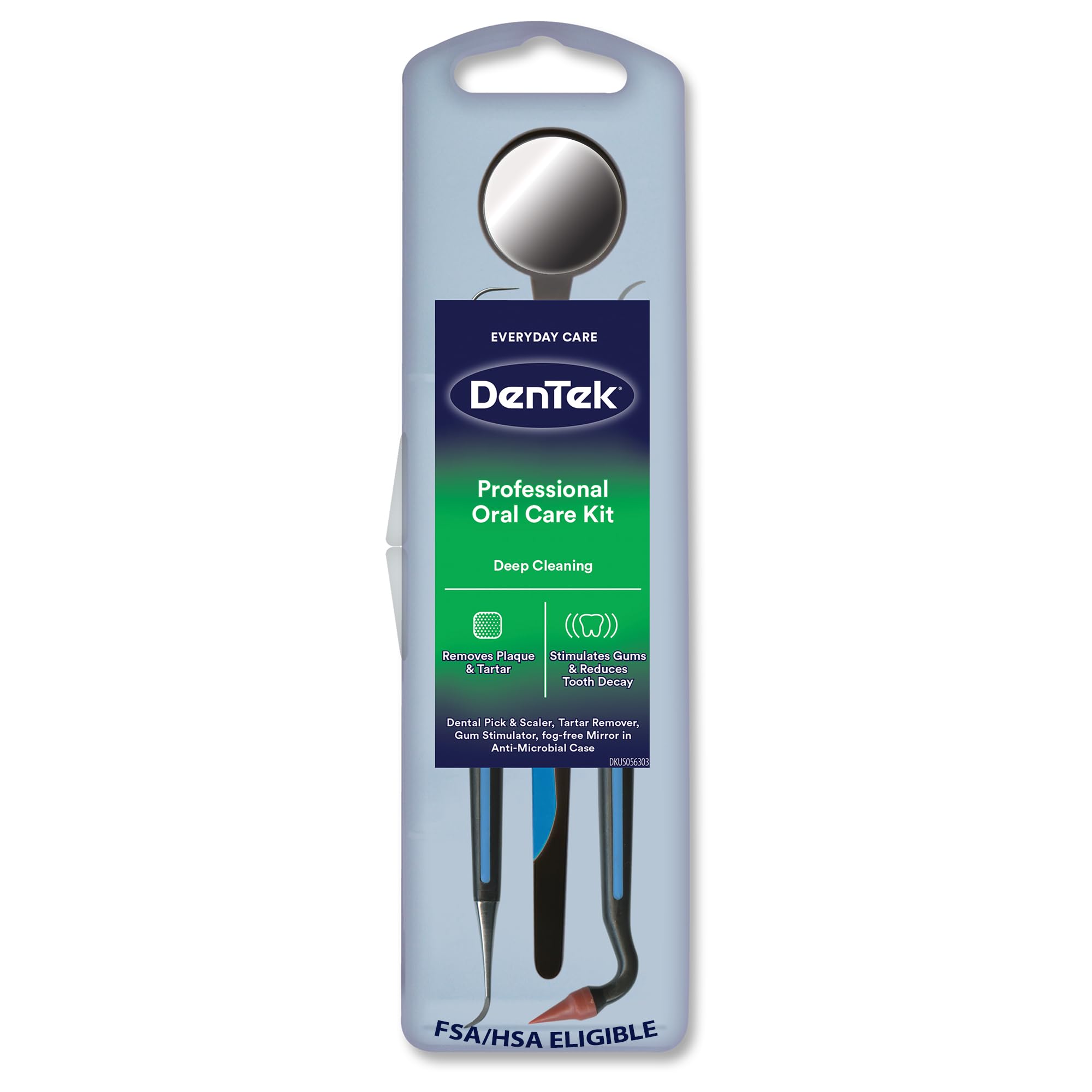
$5.99–$7.99DenTek Professional Oral Care Kit
Stop paying more: Stop at $8; spending more in this tier does not add significant quality.
When to upgrade: Ready for a broader set? Step up to $10–$12 for a 10-piece kit.
$8–$12
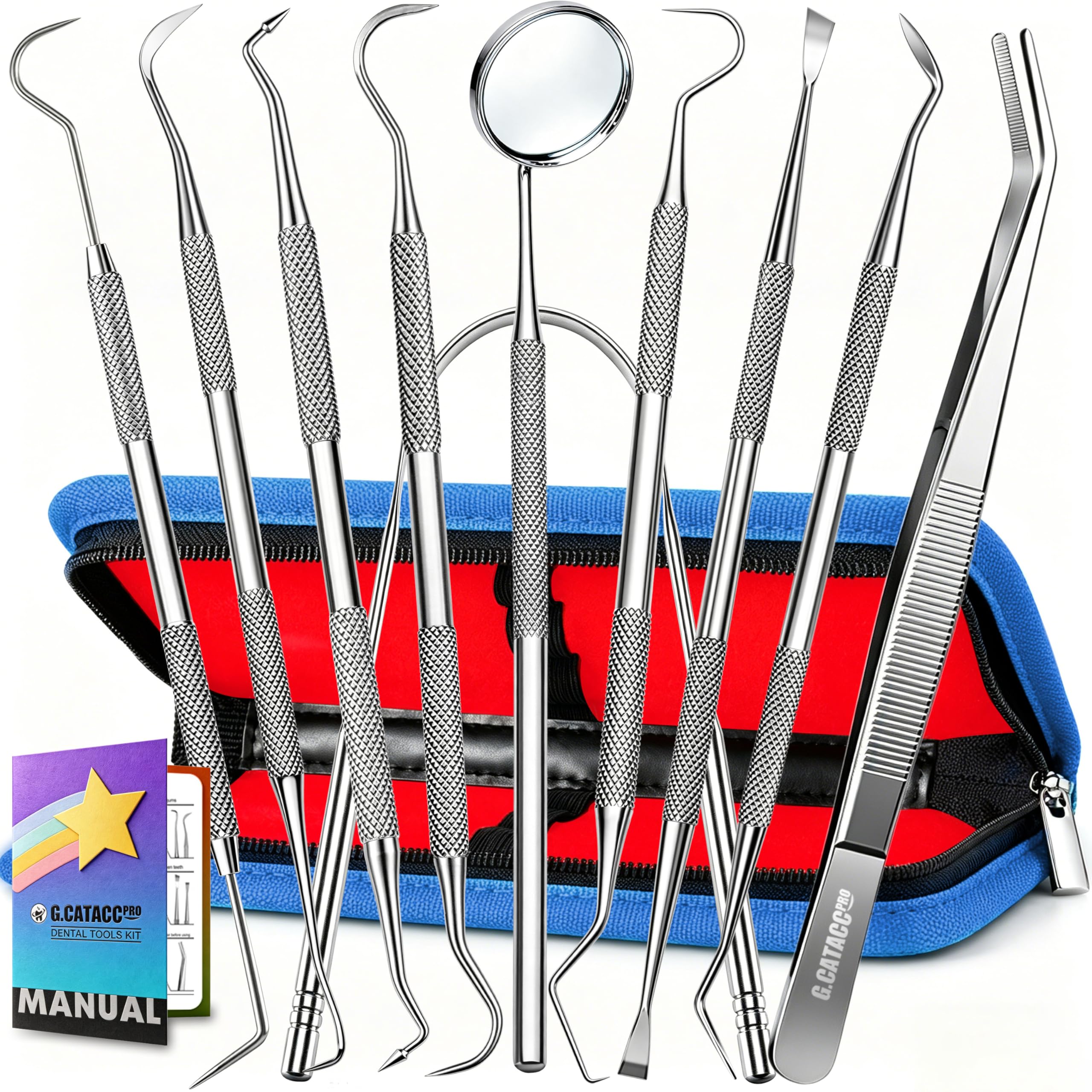
$9.97G.CATACC 10-Piece Dental Tools Set
Stop paying more: Spending past $12 gives you the best-selling full kit with proven popularity.
When to upgrade: Move to the premium tier for the most reviewed kit with the highest user count.
Over $12
$14.77–$14.97G.CATACC Dental Tools Hygiene Kit
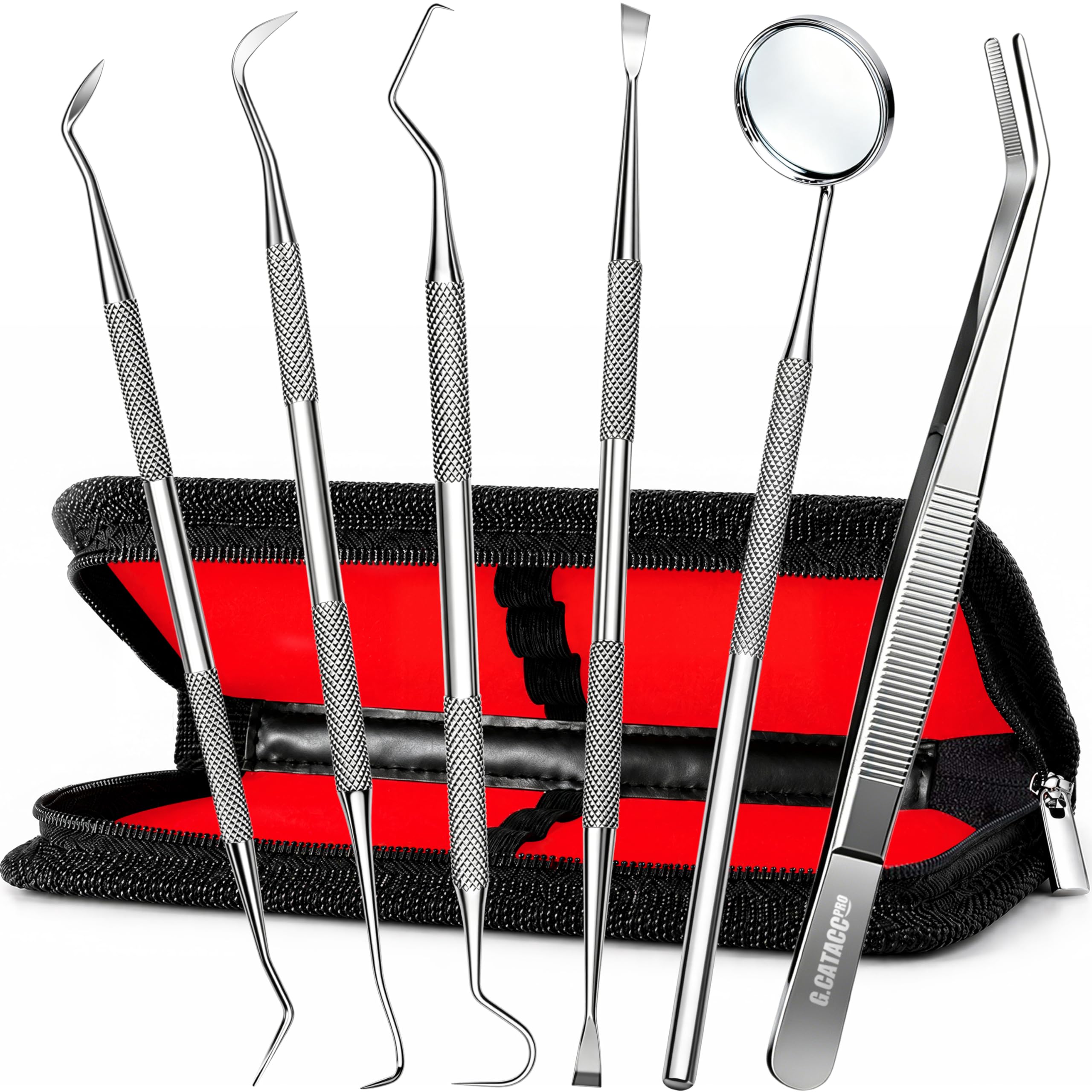
Stop paying more: This is the best value in the market; you gain immense user validation for a few dollars more.
When to upgrade: If you need a comprehensive kit, there's no better value above this.
Common Mistakes to Avoid
Buying a kit without a carrying case
Tools can get lost, dirty, or damaged without proper storage, leading to hygiene issues and tool degradation.
Cost of getting it wrong: Losing a tool means buying an entire replacement kit—$10–$15 wasted.
Using tools too aggressively
Scraping too hard can damage enamel, cause gum recession, or lead to infection.
Cost of getting it wrong: Potential dental repair costs run into hundreds of dollars, far exceeding the kit's price.
Assuming all tools are the same
Poorly finished stainless steel with rough edges can scratch enamel, while plastic alternatives wear down quickly.
Cost of getting it wrong: Spending on a cheap kit may require a pricier dental visit later.
Expecting whitening miracles
At-home scalers remove surface stains from coffee and tea but do not change the natural shade of your teeth.
Cost of getting it wrong: You may end up paying for professional whitening anyway—$200–$600 per session.
Find Your Match
What's your primary need?
Frequently Asked Questions
How much should I spend on a dental care kit?
Most quality kits with stainless steel tools and a carrying case cost between $6 and $15. You don't need to spend more—the top-rated G.CATACC kit is. Avoid ultra-cheap sets under $5 as they often have poorer build quality.
Are at-home dental tools safe?
When used gently, they are safe for removing soft plaque and light tartar. Always angle the scaler toward the tooth, away from gums, and stop if you see bleeding. As reviewed by dental professionals, beginners should start with a simple 4-piece kit and a mirror.
What should I avoid when buying a dental care kit?
Skip kits without a hard carrying case—they gather bacteria and lose tools. Also avoid rough-edged stainless steel that can scratch enamel, single-use plastic picks, and any kit that claims to replace professional cleanings entirely.
Can these tools replace a dentist visit?
No. At-home kits are for maintenance between professional cleanings, not as a substitute. They cannot treat cavities, advanced gum disease, or perform X-rays. The ADA recommends seeing a dentist at least once a year for a full exam.
How do I sterilize my dental tools?
Boil tools in water for 10 minutes or soak them in 70% isopropyl alcohol for 30 minutes. Stainless steel handles are simplest to sterilize; avoid harsh scrubbing that could damage the finish. Dry immediately to prevent rust.
Which kit is best for removing plaque?
The G.CATACC Dental Tools Hygiene Kit is our top recommendation. Its variety of scalers and probes covers front teeth, back molars, and gumline. For maximum tool variety, the 10-piece set provides additional curettes and a double-ended mirror.
What's the difference between a scaler and a curette?
A scaler has a sharp triangular tip for removing tartar above the gumline, while a curette has a rounded toe for subgingival cleaning. Use scalers for visible build-up and curettes only if you're experienced—they require a lighter touch.
How we wrote this guide
Researched across 155,000+ verified Amazon buyer reviews, product specifications, and instructional dental videos. We compared 6 finalists on tool quality, variety, safety, and value. Prices update weekly from Amazon.
About this guide
Mubboo Editorial Team — independent US-market consumer research. Picks reflect editorial consensus from product analysis and verified buyer data. Prices update weekly from Amazon.